

P0305 on 2017-2021 Ford GT: Cylinder 5 Misfire Causes and Fixes
P0305 indicates a misfire in cylinder 5. On the Ford GT, before replacing parts, consider the official Ford Technical Service Bulletins (TSBs) which link this code to rough running after multiple cold engine starts, a condition that can foul spark plugs. If that's not the cause, the most likely culprits are a faulty ignition coil or spark plug. For 2020+ models, note that Ford installed higher-energy ignition coils from the factory. Due to the engine's layout, cylinder 5 is on the driver's side
- P0305 means cylinder 5 is misfiring.
- On a 2017-2021 Ford GT, first check if the car has been started many times without being driven long enough to warm up, as per Ford TSBs.
- The most common failed parts are the ignition coil and the spark plug for cylinder 5.
- A flashing check engine light signals a severe misfire; stop driving to prevent expensive damage to the catalytic converter.
- Due to the car's value and complexity, professional service is highly recommended for this issue.
What's Unique About the 2017-2021 Ford GT
The 2017-2021 Ford GT uses a high-output, mid-mounted 3.5L twin-turbocharged EcoBoost V6 engine. While the code itself is generic, Ford has issued specific TSBs for this exclusive model. These bulletins suggest that misfire codes, including P0305, can be triggered by specific usage patterns, such as repeated cold starts without the engine reaching full operating temperature. This is a unique consideration that should be investigated before assuming a component has failed. The mid-engine layout also makes accessing the cylinders (especially the driver's side bank 2, where cylinder 5 is located) more difficult than on front-engine platform mates like the F-150. For the 2020 model year, Ford introduced mechanical upgrades including 'higher-energy ignition coils' and revised engine calibration, which could affect diagnosis and part selection.
Diagnostic Flowchart
Tap your situation to follow the diagnostic path that matches what you're seeing on this vehicle.
Symptoms You May Notice
- Rough or shaky idle
- Engine hesitation or stumbling during acceleration
- Noticeable loss of power
- Flashing Check Engine Light
- Engine backfiring when revved
- Fuel smell from the exhaust due to unburnt fuel
- Replacing fuel injectors before thoroughly testing the ignition system (spark plugs and coils), which are more common and easier to diagnose.
- Assuming a major engine failure without first considering the TSBs related to cold start conditions, which may resolve the issue with no parts required.
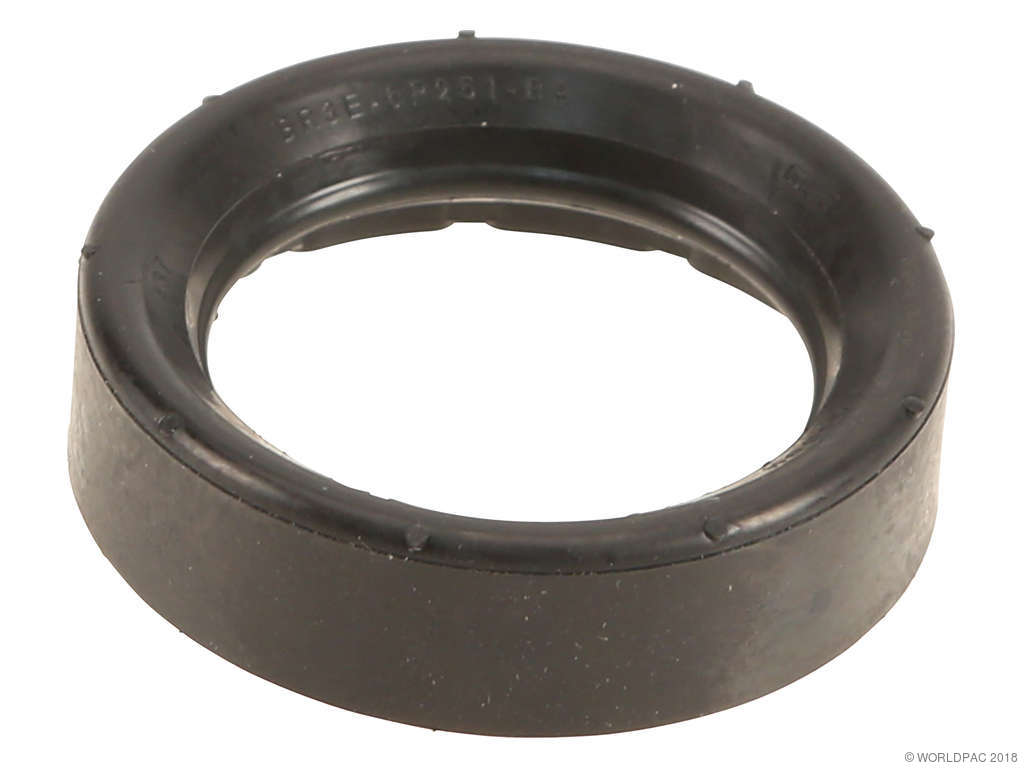
- Replacing only the spark plug when the ignition coil boot is also faulty. A bad boot can cause the spark to arc to the cylinder head instead of the plug, and a new plug won't fix this.
Most Likely Causes
- Spark Plug Fouling from Usage Patterns 🔴 High Probability → Shop Spark Plug Ford TSBs #SSM 50616, #SSM 49536, and #SSM 49028 specifically state that rough running and misfire DTCs on the 2017-2021 Ford GT can result from 'multiple cold engine starts.' This usage pattern, common for exotic cars, involves rich fuel mixtures that can lead to fuel-fouled spark plugs if the engine isn't brought to full operating temperature.
How to confirm: Review the vehicle's recent usage. If it has been started and stopped many times without being driven long enough to fully warm up, this is a likely cause. A visual inspection of the spark plug from cylinder 5 would show black, sooty deposits.
Typical fix: Allow the engine to reach full operating temperature by driving it for an extended period (20-30 minutes). If this doesn't resolve the issue, the spark plug for cylinder 5 may need to be cleaned or replaced.
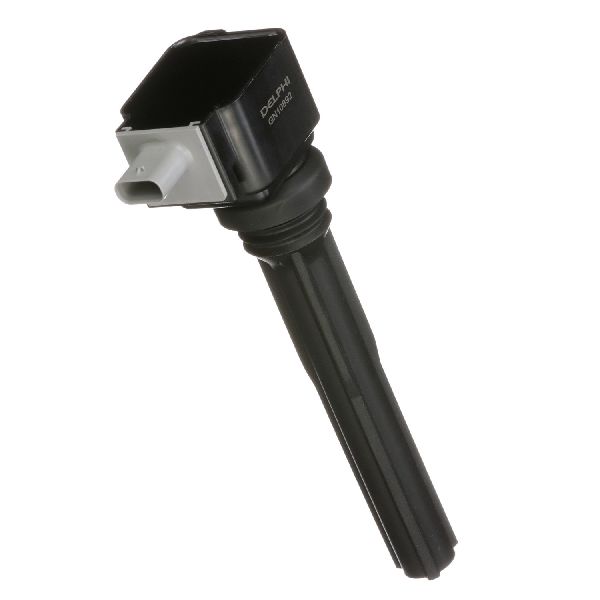
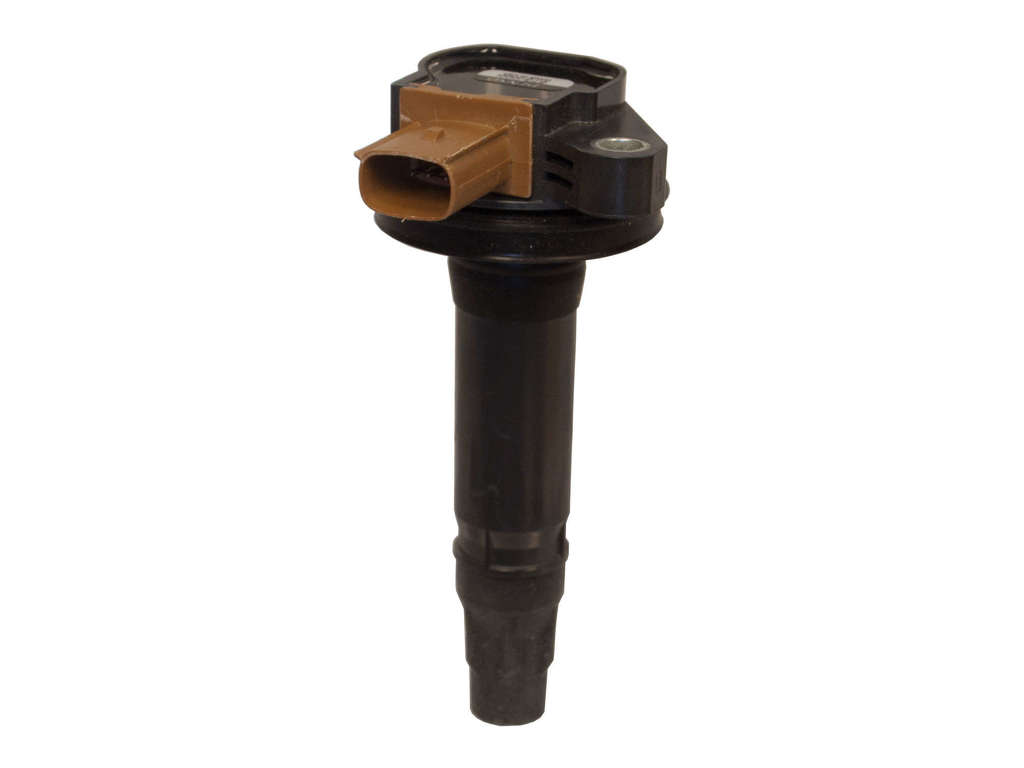
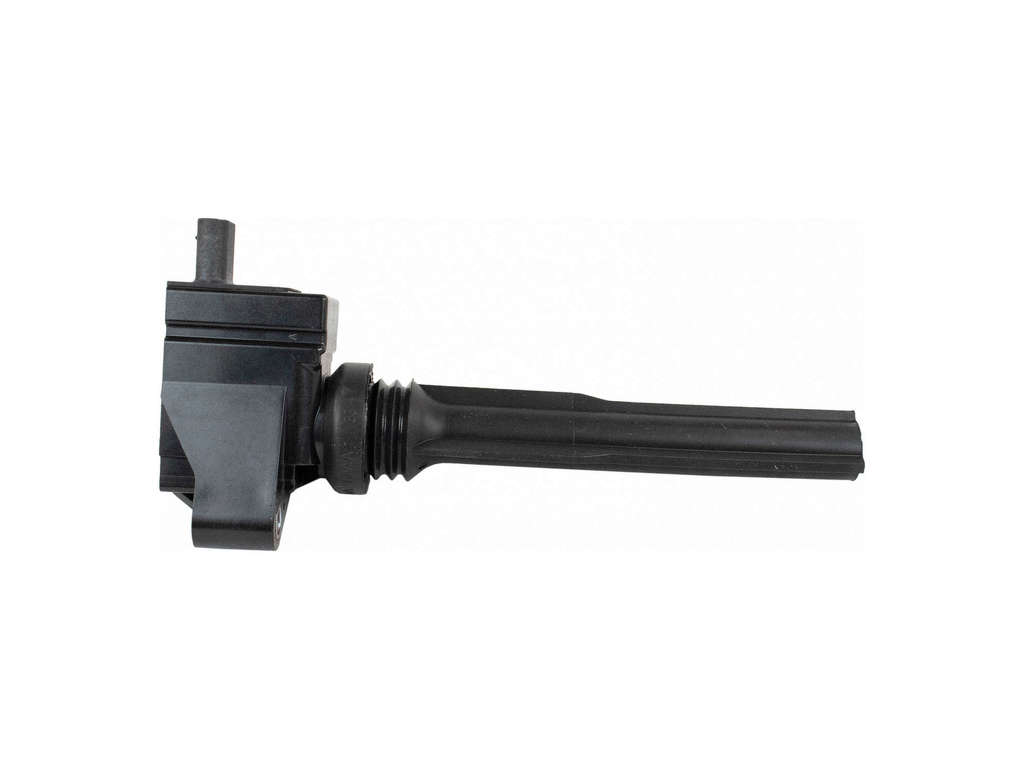
Est. part cost: $20-$50 - Faulty Ignition Coil 🔴 High Probability → Shop Ignition Coil Ignition coils are a common failure point on most modern direct-injection, coil-on-plug engines, including the 3.5L EcoBoost. The high heat environment of the Ford GT's mid-engine bay can contribute to a shorter lifespan for electronic components like ignition coils. Note that 2020 and newer models were equipped with upgraded 'higher-energy' ignition coils from the factory.
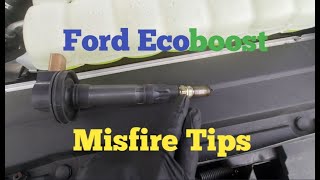
How to confirm: Swap the ignition coil from cylinder 5 with one from another cylinder (e.g., cylinder 4). Clear the codes and drive the vehicle. If the code changes to P0304, the ignition coil is faulty. 🎬 Watch: Troubleshooting tips for EcoBoost misfire codes P0301 through P0306.
Typical fix: Replace the faulty ignition coil. It is often recommended to replace the corresponding spark plug and coil boot at the same time.
Est. part cost: $50-$100 - Worn or Defective Spark Plug 🟡 Medium Probability → Shop Spark Plug Spark plugs are a standard maintenance item. High-performance turbocharged engines like the one in the GT place high demands on spark plugs, potentially shortening their lifespan. The 3.5L EcoBoost engine uses indexed spark plugs that must be torqued correctly. A cracked porcelain insulator is a common failure mode.
How to confirm: After ruling out the ignition coil, remove the spark plug from cylinder 5. Inspect it for wear, damage (cracked porcelain), or heavy deposits. Compare it to a new plug. A gap that is too wide can also cause misfires under load.
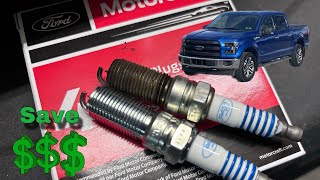
Typical fix: Replace the spark plug. Given the performance nature of the engine, it's best practice to replace all six spark plugs at the same time with high-quality OEM parts. 🎬 See this DIY guide for replacing EcoBoost spark plugs and coils.
Est. part cost: $20-$50 per plug - Faulty Fuel Injector ⚪ Low Probability → Shop Fuel Injector Direct fuel injectors operate under high pressure and can become clogged or fail electronically over time. While less common than ignition issues, it is a known failure point on the 3.5L EcoBoost platform.
How to confirm: This is more difficult to diagnose and typically requires professional tools. A mechanic can perform a fuel injector balance test, check fuel trims, or listen for the injector's clicking sound with a stethoscope. Swapping injectors between cylinders is a definitive but labor-intensive test.
Typical fix: Replace the faulty fuel injector. This is a more labor-intensive job.
Est. part cost: $100-$300
Rare But Worth Checking
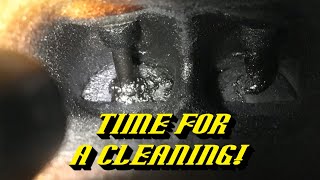
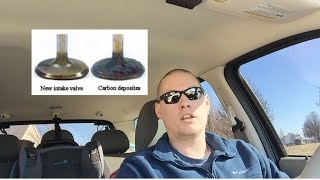
- Carbon Buildup on Intake Valves: As a direct-injection engine, the 3.5L EcoBoost does not spray fuel over the intake valves, which can lead to carbon deposits over time. This buildup can restrict airflow, causing misfires, rough idle, and loss of power. This is a known issue on higher-mileage EcoBoost engines and is typically resolved by professional walnut blasting of the intake ports and valves. 🎬 Learn more about how carbon deposits affect EcoBoost engine performance.
- Low Engine Compression: This indicates a serious internal engine problem, such as a bad valve, piston ring, or head gasket. A compression test is needed to confirm. While rare, it should be investigated if ignition and fuel system issues are ruled out.
- Vacuum Leak: A leak in the intake manifold or a vacuum hose near cylinder 5 can lean out the air/fuel mixture, causing a misfire. This can sometimes be found by listening for a hissing sound or using a smoke machine to test the intake system.
Diagnosis Steps
- Read the trouble codes with an OBD-II scanner and note any other codes present. A professional scanner can also access Mode $06 data, which shows raw misfire counts per cylinder and can confirm the issue even before a code is set.
- Review the vehicle's recent driving habits. Per TSBs #SSM 50616, #SSM 49536, and #SSM 49028, determine if the vehicle has been subjected to multiple cold starts without reaching full operating temperature.
- If cold start usage is suspected, drive the vehicle for 20-30 minutes to allow the engine to fully warm up and potentially clear any spark plug fouling. Clear the codes and see if P0305 returns.
- If the code returns, locate cylinder 5. On the 3.5L V6, the passenger side bank is Bank 1 (cylinders 1-2-3, front to back) and the driver's side bank is Bank 2 (cylinders 4-5-6, front to back). Cylinder 5 is the middle cylinder on the driver's side.
- Swap the ignition coil from cylinder 5 with an adjacent, easier-to-access cylinder (e.g., cylinder 4). Clear the codes and run the engine. If the code changes to P0304, the ignition coil is the faulty part and must be replaced.
- If the code remains P0305, swap the spark plug from cylinder 5 with the one from the cylinder you previously used. If the code now moves, the spark plug is faulty. Inspect the old plug for cracks in the porcelain or excessive wear.
- If the misfire still remains on cylinder 5, inspect the ignition coil's wiring connector for damage or corrosion. Check the coil boot for carbon tracking (black lines), which indicates the spark is leaking.
- If the ignition system is confirmed to be working, the problem may be with the fuel injector or a mechanical engine issue (like carbon buildup or low compression). Professional diagnosis with tools like a borescope, compression tester, or fuel pressure gauge is recommended at this stage.
Parts You'll Likely Need
- Ignition Coil
(OEM #HL3Z-12029-D)— This is a very common cause for isolated cylinder misfires on modern Ford engines. The part number HL3Z-12029-D (also known as DG585) is specified for the 3.5L EcoBoost in vehicles like the F-150 and Expedition. Note that 2020+ Ford GTs use 'higher-energy' coils, which may have a different part number.
Trusted brands: Motorcraft
OEM price range: $60-$100
Aftermarket price range: $40-$70 - Spark Plug
(OEM #Motorcraft SP-580 / SP-580X)— Spark plugs are a regular wear item and can become fouled or fail, especially under the conditions described in the TSBs or in a high-performance engine. SP-580 has been superseded by SP-580X for many 3.5L EcoBoost applications.
Trusted brands: Motorcraft
OEM price range: $20-$40
Aftermarket price range: $10-$25
Related Codes That Often Appear With This One
- P0300 — This code means 'Random/Multiple Cylinder Misfire Detected.' It often appears alongside a specific cylinder misfire code like P0305 if the misfire is intermittent or affecting other cylinders.
- P0316 — This code means 'Misfire Detected on Startup (First 1000 Revolutions).' The Ford TSBs for the GT specifically mention this code appearing with the P030x series, linking the misfire to the startup sequence.
Technical Service Bulletins (TSBs) & Recalls
- SSM 50616: Notes that 2017-2022 Ford GTs may exhibit rough running or hard starts with misfire codes due to multiple cold engine starts.
- SSM 49536: An earlier version of the same bulletin for 2017-2021 models, highlighting the same issue.
- SSM 49028: The earliest version of the same bulletin for 2017-2020 models, with the same guidance.
Platform-Specific Known Issues
- Ford issued Technical Service Bulletins #SSM 50616, #SSM 49536, and #SSM 49028 for the 2017-2021 Ford GT, indicating that misfire codes can be caused by multiple cold engine starts without the engine reaching full operating temperature. This should be the first diagnostic consideration.
Mechanic-Grade Diagnostic Values
- Ignition Coil Primary Resistance — expected: ~0.5 Ohms. Failure: A significantly higher or lower reading indicates a faulty coil winding.
- Ignition Coil Secondary Resistance — expected: ~6.0k - 6.2k Ohms. Failure: A reading outside this range suggests a breakdown in the secondary coil windings.
- High-Pressure Fuel System (Direct Injection) — expected: 1,500 - 2,175 PSI at wide-open throttle. Can reach over 2,900 PSI.. Failure: Pressure that lags requested pressure by more than 200 PSI under load can indicate a failing High-Pressure Fuel Pump (HPFP).
- Low-Pressure Fuel System (Tank Pump) — expected: 40 - 60 PSI at idle.. Failure: Low pressure here indicates a problem with the in-tank fuel pump, not the HPFP, but will starve the HPFP and cause misfires.
- Spark Plug Gap — expected: 0.030 - 0.033 inches (Workshop Manual: 0.028" - 0.037"). Failure: An incorrect or wide gap can cause misfires under high boost conditions. Some owners report success using a tighter gap of 0.028".
Hidden / Shadow Codes Worth Checking
- Mode $06, Test ID $82, Component ID $01-$0C: This is not a 'code' but raw data from the PCM's misfire monitor. Advanced scan tools (including FORScan) can display the raw misfire count for each cylinder. This allows a technician to see which cylinder is misfiring, and how often, even if the misfire count isn't high enough to set a P030x code. For a V6, the component IDs would correspond to cylinders 1 through 6. (see via An OBD-II scanner with Mode $06 capability, or Ford-specific software like FORScan.)
Scan Tool Commands That Help
- Ford IDS (Integrated Diagnostic System): Power Balance Test — This is a cylinder contribution test that graphically displays the performance of each cylinder in real-time. A cylinder with a significant drop compared to others confirms a misfire or lack of contribution. It's used to definitively identify the misfiring cylinder and assess the severity of the issue after a P0305 code is logged.
Wiring & Ground Locations
- Engine Block to Chassis Ground Strap — Typically a braided strap connecting the engine block to the vehicle's frame/chassis. While the exact Ford GT location is not documented publicly, this is a critical ground for all engine electronics.. A loose, corroded, or broken main engine ground can create electrical noise and voltage drops, causing erratic behavior from ignition coils and injectors, leading to misfire codes.
- PCM Grounds — The Powertrain Control Module (PCM) has multiple ground pins in its main connectors (e.g., Pins 40 & 60 on some Ford models). These are typically grounded to the chassis near the PCM's location.. A poor PCM ground can affect the operation of the coil and injector drivers within the computer, potentially causing misfires on one or more cylinders.
Real Owner Repair Stories
- Reddit user on r/f150 (2014 Ford F-150 3.5L EcoBoost) — P0305 - Misfire on cylinder 5.
❌ Tried (didn't work) Swapping the ignition coil and boot from cylinder 5 to cylinder 4; the misfire remained on cylinder 5.
✅ What actually fixed it Reducing the spark plug gap to 0.028 inches, which is tighter than the commonly recommended 0.030-0.032 inches. This resolved the misfire completely. - Ford F150 Forum user (2013 Ford F-150 3.5L EcoBoost) — Rough jumpy idle, pronounced lag, poor MPG.
❌ Tried (didn't work) Initial diagnosis pointed towards common EcoBoost issues like intercooler condensation.
✅ What actually fixed it Upon inspection, the spark plug on the rear passenger side cylinder had two vertical cracks through the porcelain insulator. Replacing the cracked spark plug resolved the symptoms.
OEM Part Supersession History
Motorcraft SP-580→Motorcraft SP-580X— Likely a minor revision in manufacturing or materials. Functionally interchangeable for most applications, but SP-580X is the current recommended part.
Heads up: No known incompatibilities; SP-580X is the correct replacement for SP-580 in 3.5L EcoBoost applications.
Model Year Variations Within This Range
- 2020-2021: Ford updated the 3.5L EcoBoost engine for the 2020 model year GT, increasing power from 647 to 660 hp. The mechanical upgrades included 'gallery-cooled pistons and higher-energy ignition coils.' This means a 2020-2021 GT has different factory ignition coils than a 2017-2019 model, which is a critical consideration when diagnosing a P0305 and sourcing replacement parts.
Helpful Videos

We Have This Part in Stock


The information in this article is provided for general reference and educational purposes only. Vehicle specifications, procedures, and part compatibility can vary by production date, trim level, and region. Always consult your vehicle's factory service manual and verify part numbers before purchasing or performing repairs. Safety-critical components such as airbags, seat belts, and braking systems should be installed by a qualified professional.
- Ford GT:
- 🧭 Diagnostic Flowchart
- 🎬 Helpful Videos
- 🛍️ Shop This Part
- What's Unique About the 2017-2021 Ford GT
- Symptoms You May Notice
- Most Likely Causes
- Rare But Worth Checking
- Diagnosis Steps
- Parts You'll Likely Need
- Related Codes That Often Appear With This One
- Technical Service Bulletins (TSBs) & Recalls
- Platform-Specific Known Issues
- Mechanic-Grade Diagnostic Values
- Hidden / Shadow Codes Worth Checking
- Scan Tool Commands That Help
- Wiring & Ground Locations
- Real Owner Repair Stories
- OEM Part Supersession History
- Model Year Variations Within This Range
- 🎟️ Get 5% Off