

P0305 on 2010-2019 Ford Taurus 3.5L EcoBoost: Cylinder 5 Misfire Causes and Fixes
On a 2010-2019 Ford Taurus with the 3.5L EcoBoost engine, code P0305 is most often caused by a faulty ignition coil or a worn-out spark plug for cylinder 5. Cylinder 5 is on the front, radiator-side bank, making it relatively easy to access. Expect to pay around $30-$80 for an OEM coil and plug.
- P0305 on a Ford Taurus EcoBoost means cylinder 5 is misfiring.
- The most likely cause is a bad ignition coil or a worn spark plug.
- A simple diagnostic test is to swap the coil from cylinder 5 with another cylinder and see if the misfire code follows.
- Do not drive if the check engine light is flashing to avoid expensive catalytic converter damage.
- Be aware that cylinder 5 is on the rear bank of the engine, and replacing its coil or plug requires removing the intake manifold, making it a more involved job than on other cylinders.
What's Unique About the 2010-2019 Ford Taurus
The 3.5L EcoBoost V6 in the Ford Taurus is a twin-turbocharged, direct-injection engine. This technology, while powerful, places high demand on ignition components and can be susceptible to carbon buildup on intake valves over time, which can also lead to misfires. Unlike many other vehicles, the cylinder numbering for this transverse engine places cylinders 4, 5, and 6 on the bank closer to the radiator, making them the easiest to access. Cylinders 1, 2, and 3 are on the rear bank against the firewall and require removing the upper intake manifold to service.
Symptoms You May Notice
- Rough or vibrating idle
- Hesitation or stumbling during acceleration
- Reduced engine power
- Flashing or solid Check Engine Light
- Poor fuel economy
- Fuel smell from the exhaust
- Replacing the Powertrain Control Module (PCM). A PCM failure is extremely rare and should only be considered after all other possibilities have been exhaustively ruled out. A 'permanent' code status on a scanner does not mean the PCM is bad.
Most Likely Causes
- Faulty Ignition Coil 🔴 High Probability → Shop Ignition Coil The coil-on-plug design is a common failure point on many modern engines. Heat and vibration eventually cause the internal windings to fail. The EcoBoost's higher cylinder temperatures can accelerate this wear.
How to confirm: Swap the ignition coil from cylinder 5 with another cylinder on the same bank (e.g., cylinder 4 or 6). Clear the codes with a scanner and drive the vehicle. If the code changes to P0304 or P0306, the ignition coil is confirmed to be the faulty part.
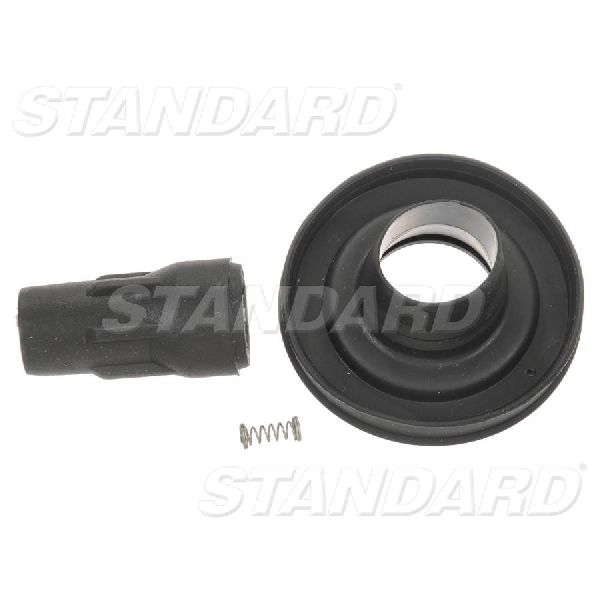
Typical fix: Replace the faulty ignition coil. The OEM part is Motorcraft DG-542, which has been superseded by DG-552. It is often recommended to replace the corresponding spark plug at the same time.
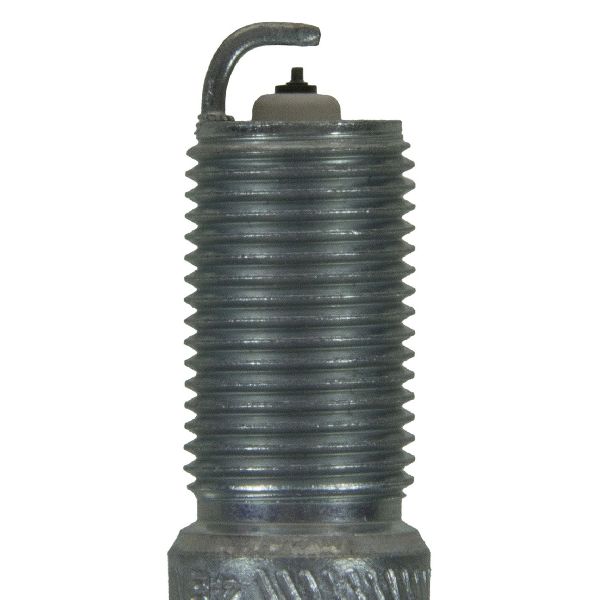
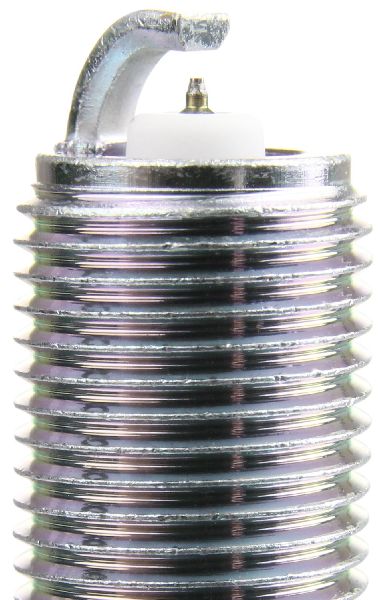
Est. part cost: $40-$75 for OEM - Worn or Fouled Spark Plug 🔴 High Probability → Shop Spark Plug EcoBoost engines are known to be hard on spark plugs due to higher cylinder pressures from turbocharging. Ford specifies a gap of .030-.033 inches. Plugs must be gapped correctly before installation, as even new plugs can be incorrect out of the box.
How to confirm: After confirming the coil is good, remove the spark plug from cylinder 5. Inspect it for wear (eroded electrode), carbon fouling, oil, or damage to the porcelain insulator. A cracked insulator is a common failure.
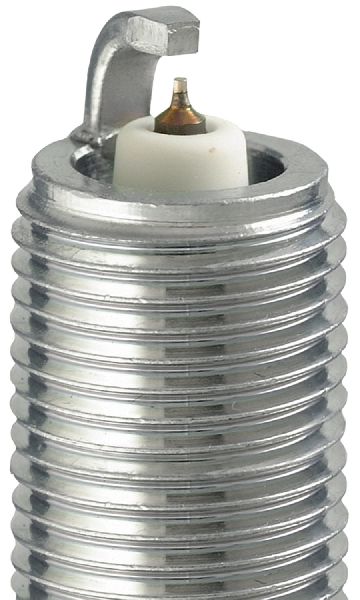
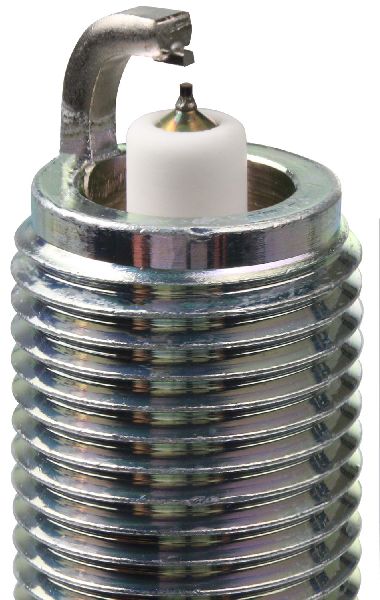
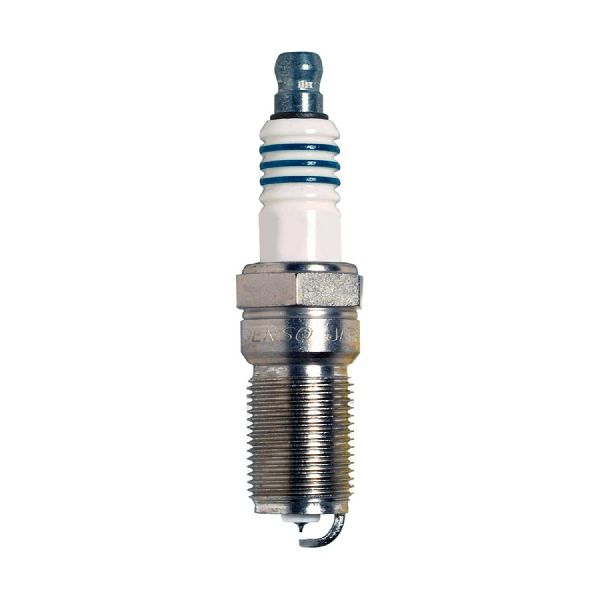
Typical fix: Replace the spark plug. The OEM part is Motorcraft SP-534, which was superseded by SP-580. It is best practice to replace all six spark plugs at the same time 🎬 See this walkthrough on how to change your Taurus spark plugs. to ensure consistent performance and avoid future misfires.
Est. part cost: $12-$20 per plug for OEM - Clogged or Leaking Fuel Injector 🟡 Medium Probability → Shop Fuel Injector As a direct-injection engine, the fuel injectors are located inside the combustion chamber and are exposed to extreme heat and pressure, which can lead to failure or clogging over time.
How to confirm: This is more difficult to diagnose. A professional may use a scan tool to monitor fuel trims or perform a fuel injector balance test. A DIY method involves swapping the injector with another cylinder, but this is a much more involved job than swapping a coil.
Typical fix: Replace the faulty fuel injector. This often requires special tools and replacement of seals.
Est. part cost: $60-$150 - Carbon Buildup on Intake Valves ⚪ Low Probability Direct-injection engines spray fuel directly into the cylinder, so fuel detergents don't wash over the intake valves. Over many miles, oil vapor from the PCV system can bake onto the valves, restricting airflow and causing misfires, especially on cold starts.
How to confirm: Requires visual inspection using a borescope inserted into the intake port, which usually means removing the intake manifold.
Typical fix: The intake valves must be cleaned, typically through a process called walnut blasting. This is a labor-intensive job.
Est. part cost: $0 (if cleaning existing parts), but labor is high ($500-$1000).
Rare But Worth Checking
- Low Engine Compression: If ignition and fuel system checks don't reveal the problem, a compression test is the next step. An owner report in NHTSA ODI #11652376 noted a P0305 code caused by low compression on cylinder #5 (110 PSI) compared to healthy cylinders at 145-150 PSI.
- Vacuum Leak: A leak in the intake manifold gasket or a vacuum hose near cylinder 5 could lean out the air/fuel mixture enough to cause a misfire. This can sometimes be found by listening for a hissing sound or using a smoke machine.
- Crankshaft Pulley Torque: Manufacturer Bulletin #SSM 46391 notes that some Ford engines may exhibit multiple misfire codes, including P0305, due to an under-torqued crankshaft pulley bolt.
Diagnosis Steps
- Read the trouble codes with an OBD-II scanner to confirm P0305 and check for any other codes.
- Note the freeze frame data, which shows engine conditions when the code was set. NHTSA ODI #10587634 describes an intermittent stumble or misfire on acceleration from highway cruise in humid or damp conditions with possible DTC P0305.
- Identify cylinder 5. It is on the front bank 🎬 Watch this simple explanation of a Cylinder 5 misfire fix. (closest to the radiator), the middle cylinder.
- To test the ignition coil, swap the coil from cylinder 5 with the coil from cylinder 4 or 6. Clear the codes and drive the vehicle.
- Re-scan for codes. If P0304 or P0306 appears, the ignition coil is faulty and needs replacement.
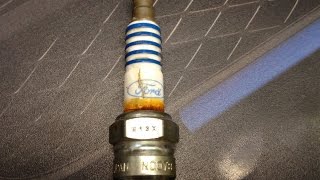
- If the P0305 code returns, the coil is likely good. Next, remove the spark plug from cylinder 5. Inspect it and check its gap. The correct gap is 0.030"-0.033". 🎬 Watch a pro demonstrate EcoBoost spark plug replacement and gapping. Even if it looks okay, swap it with the plug from the cylinder you previously used for the coil swap.
- Clear codes and drive. If the code moves to the other cylinder, the spark plug is the issue. Replace all six spark plugs.
- If P0305 persists, the problem is likely with the fuel injector or a mechanical issue. Inspect the wiring and connector for the cylinder 5 fuel injector for any damage.
- If wiring is intact, a more advanced diagnosis is needed to check the fuel injector, look for vacuum leaks, or perform a compression test on cylinder 5.
Parts You'll Likely Need
- Ignition Coil
(OEM #Motorcraft DG-542)— This is one of the most common failure points for a single-cylinder misfire. Heat and vibration cause them to fail over time.
Trusted brands: Motorcraft, NGK, Denso
OEM price range: $40-$75
Aftermarket price range: $25-$50 - Spark Plug
(OEM #Motorcraft SP-534 (or superseding part SP-580))— Spark plugs are a regular maintenance item and are often the cause of misfires as they wear out. The high pressures in the EcoBoost engine can accelerate wear. Recommended gap is 0.030"-0.033".
Trusted brands: Motorcraft, NGK Iridium IX
OEM price range: $12-$20
Aftermarket price range: $8-$15
Related Codes That Often Appear With This One
- P0300 — If the misfire is intermittent or starting to affect other cylinders, a P0300 (Random/Multiple Cylinder Misfire) may be stored alongside P0305.
- P0316 — This code indicates a 'Misfire Detected on Startup (First 1000 Revolutions)' and often appears with specific cylinder misfire codes if the problem is present immediately after starting the engine. Manufacturer Bulletin #SSM 46363 links P0316 and P0305 to potential issues with cylinder heads.
Technical Service Bulletins (TSBs) & Recalls
- TSB 15-0137: While not a direct cause of P0305, this TSB is relevant to the broader platform (though primarily documented for F-150s). It addresses an issue where the fuel pump fuse (Fuse 27) can overheat and melt, causing stalling or a no-start condition. This is a good preventative fix for any owner of a vehicle with this engine family.
- Bulletin #SSM 46363: This bulletin notes that vehicles exhibiting P0305 along with excessive oil consumption may have faulty cylinder heads.
- Bulletin #SSM 46391: A manufacturer service bulletin notes that engines built within a specific window may exhibit multiple misfire codes, including P0305, due to an under-torqued crankshaft pulley bolt.
Platform-Specific Known Issues
- Cylinder 5 Location and Access: Contrary to what might be assumed, cylinder 5 is on the front bank of the engine (the one closest to the radiator), positioned between cylinders 4 and 6. This makes it one of the easier cylinders to access for replacing a spark plug or ignition coil, without the need to remove the intake manifold.
Mechanic-Grade Diagnostic Values
- Low-Side Fuel Pressure (at idle) — expected: 40-60 PSI. Failure: Significantly lower pressure can indicate a weak low-pressure fuel pump, potentially causing lean misfires under load.
- High-Side Fuel Pressure (Direct Injection) — expected: 250-2150 PSI, varying with engine load.. Failure: Pressure that does not respond to engine load or is consistently low suggests a failing high-pressure fuel pump (HPFP).
- Mode $06 Misfire Count (Cylinder 5) — expected: Value near zero in a healthy engine.. Failure: A high or rapidly increasing count for Test ID $A6 (Cylinder 5) confirms the misfire, even if the Check Engine Light is not yet on.
Hidden / Shadow Codes Worth Checking
- Mode $06, Test IDs $A2-$AD: These are not trouble codes but onboard test results for the misfire monitor. Each ID corresponds to a cylinder (e.g., $A2 for Cyl 1, $A6 for Cyl 5). Viewing this data allows a technician to see raw misfire counts per cylinder for the current and last 10 driving cycles. (see via A professional scan tool (like Ford IDS) or an advanced consumer scanner (like FORScan) that can display Mode $06 data.)
Scan Tool Commands That Help
- Ford IDS (or equivalent professional scanner): Power Balance Test — This is the definitive test for a live misfire. It graphically displays the power contribution of each cylinder. A cylinder with a misfire will show a significant drop on the graph. The technician can then disable the injector to that cylinder to confirm; if there's no change in RPM, it proves that cylinder wasn't contributing power.
Wiring & Ground Locations
- G104 — Typically located on the front right of the engine compartment, near the firewall or inner fender.. This is a primary engine-to-chassis ground. A loose or corroded connection at G104 can cause a wide range of erratic electronic issues, including weak or inconsistent spark, which can manifest as an intermittent misfire on any cylinder.
- Cylinder 5 Ignition Coil Connector — On the front (radiator side) bank of the engine, middle position.. The wiring harness in this area is exposed to significant heat. Over time, the wiring or connector can become brittle, leading to a poor connection or a break in the trigger signal wire from the PCM, causing a P0305.
Real Owner Repair Stories
- Ranger-Forums user report (adapted for Taurus) (Ford with V6 engine, symptoms on cold start) — On most mornings, the engine sputters or hesitates on initial acceleration, then smooths out. Intermittent P0305 code appeared.
❌ Tried (didn't work) Spark plugs and wires had been replaced less than a year prior.
✅ What actually fixed it The symptoms pointed towards a failing fuel injector on cylinder 5 that was likely leaking or not atomizing fuel correctly when cold. - Aggregated from multiple EcoBoost forum discussions (Ford 3.5L EcoBoost, various models) — Persistent P0305 misfire, sometimes under load.
❌ Tried (didn't work) Replaced ignition coil on cylinder 5., Replaced spark plug on cylinder 5.
✅ What actually fixed it Upon close inspection of the old spark plug, a hairline crack was found in the porcelain insulator. This crack would allow spark to arc to the cylinder head instead of jumping the plug gap, but was nearly invisible without magnification. - NHTSA ODI #11407153 — An owner reported that the engine started misfiring both while stationary and in motion. After pulling code P0305, they replaced the coils and spark plugs, but the engine continued to misfire.
OEM Part Supersession History
Motorcraft SP-534→Motorcraft SP-580— The SP-580 is an updated design for improved durability and performance in the high-stress environment of a direct-injected, turbocharged engine. The original SP-528 plugs used prior to the SP-534 were known to have insulators that could crack.
Heads up: Both are compatible, but it is recommended to use the latest SP-580 version and replace all six plugs at once for consistency.Motorcraft DG-542→Motorcraft DG-552— Standard part evolution for improved reliability and manufacturing efficiency.
Heads up: The parts are interchangeable. Aftermarket cross-references include Standard Ignition UF622 and NGK U5178.
Model Year Variations Within This Range
- 2010-2012: First-generation 3.5L EcoBoost engines in these early years are noted to be more susceptible to timing chain stretch, carbon buildup on intake valves, and intercooler condensation issues, all of which can lead to misfires.
- 2013-2019: Starting with the 2013 model year refresh, the 3.5L EcoBoost received updates (sometimes called Gen 1.5), including slightly different turbochargers and a power increase to 288 hp for the standard V6. While the fundamental causes of P0305 remain the same, these later engines are generally considered more refined than the earliest versions.
Diagnostic Flowchart
Other Known Issues on This Vehicle
Issues unrelated to this code that are worth knowing about as an owner of this generation:
- Internal Water Pump Failure 🔴 High — Common after 80,000 miles. The pump is located inside the engine and driven by the timing chain. Failure can cause coolant to mix with engine oil, leading to catastrophic engine damage if not caught immediately.
- Power Transfer Unit (PTU) Overheating/Failure (AWD Models) 🔴 High — Frequent issue due to the unit's proximity to the hot exhaust and lack of a drain plug for service. Fluid cooks, leading to bearing and gear failure. Symptoms include a grinding/whining noise, binding in turns, and a distinct burnt gear oil or propane-like smell.
- Timing Chain Stretch & Phaser Rattle 🟠 Medium — More common on earlier (pre-2015) Gen 1 EcoBoost engines. Presents as a 'marbles-in-a-can' rattle on cold starts. Caused by a stretched primary timing chain, worn guides, or faulty VCT phasers.
- Intake Valve Carbon Buildup 🟠 Medium — A known issue for all Gen 1 direct-injection engines. Oil vapor from the PCV system bakes onto the back of intake valves, causing rough idle and stumbling on light acceleration, which can eventually lead to misfires. Typically requires cleaning (walnut blasting) every 60,000-100,000 miles.
Used vs. New Parts: Buying Guide for This Vehicle
When a used part is the smart pick: Using a known-good used ignition coil from a junkyard is a cost-effective way to perform the 'swap test' for diagnosis. However, for the final repair, a new part is recommended due to the high failure rate of coils. Structural engine components or wiring harness connectors are generally safe to source used.
Donor-vehicle mileage cap: roughly under 80000 miles for the part to have meaningful remaining life.
What to inspect on the donor part:
- For an ignition coil, check for any cracks in the plastic housing or corrosion on the electrical connector pins.
- Ensure the rubber boot is pliable and not dry-rotted or swollen.
- Ask for the donor vehicle's mileage and avoid parts from high-mileage engines if possible.
OEM-only on this vehicle (don't cheap out):
- Fuel Injectors: Due to the precision and high pressures of the direct injection system, remanufactured or used injectors are a significant gamble and can cause persistent issues. It is highly recommended to use new OEM injectors if one is found to be faulty.
Aftermarket brands forum-validated for this vehicle:
- Ignition Coils: Motorcraft (OEM), NGK, Denso.
- Spark Plugs: Motorcraft (OEM), NGK Iridium IX.
Brands owners have reported issues with on this vehicle:
- Unnamed or 'white box' ignition coil sets sold on online marketplaces. These often have a very high premature failure rate and can cause more diagnostic headaches.
Real Owner Stories
Aggregated from forums and TSBs cited above. Mileages and costs reflect what owners reported in those sources.
2010-2019 Ford Taurus SHO 3.5L EcoBoost
Symptoms: Owner experienced a 'burnt gear oil smell' and 'crunching/grinding/knocking' noises that could be confused with severe engine problems.
What fixed it: Diagnosis of the Power Transfer Unit (PTU) failure, a common issue on AWD models where fluid cooks due to proximity to the exhaust.
Source hint: shoforum.com: A thread titled 'PTU failure'
Related OBD-II Codes
Frequently Asked Questions
Where is cylinder 5 located on my 2010-2019 Ford Taurus 3.5L EcoBoost?
What are the specific Motorcraft spark plug part numbers for my EcoBoost engine?
Which ignition coil should I buy for my Taurus SHO?
Does TSB 15-0137 apply to my Taurus misfire issue?
I smell burnt gear oil or propane while driving; is this related to my P0305 code?
Can I fix a P0305 by cleaning the intake valves?
Helpful Videos

Used OEM Parts in Stock
New Aftermarket Parts Available

The information in this article is provided for general reference and educational purposes only. Vehicle specifications, procedures, and part compatibility can vary by production date, trim level, and region. Always consult your vehicle's factory service manual and verify part numbers before purchasing or performing repairs. Safety-critical components such as airbags, seat belts, and braking systems should be installed by a qualified professional.
- Ford Taurus:
- 🧭 Diagnostic Flowchart
- 🎬 Helpful Videos
- 🛍️ Shop This Part
- What's Unique About the 2010-2019 Ford Taurus
- Symptoms You May Notice
- Most Likely Causes
- Rare But Worth Checking
- Diagnosis Steps
- Parts You'll Likely Need
- Related Codes That Often Appear With This One
- Technical Service Bulletins (TSBs) & Recalls
- Platform-Specific Known Issues
- Mechanic-Grade Diagnostic Values
- Hidden / Shadow Codes Worth Checking
- Scan Tool Commands That Help
- Wiring & Ground Locations
- Real Owner Repair Stories
- OEM Part Supersession History
- Model Year Variations Within This Range
- Other Known Issues on This Vehicle
- Used vs. New Parts: Buying Guide for This Vehicle
- Real Owner Stories
- 2010-2019 Ford Taurus SHO 3.5L EcoBoost
- Related OBD-II Codes
- Frequently Asked Questions
- 🎟️ Get 5% Off