

P0305 on 2019-2025 Genesis G70 3.3T: Cylinder 5 Misfire Causes and Fixes
P0305 on a Genesis G70 3.3T is a misfire in cylinder 5, almost always caused by a bad ignition coil or a worn spark plug. Cylinder 5 is on the difficult-to-access rear bank against the firewall, making this a labor-intensive repair. It is highly recommended to replace all three rear coils and all six spark plugs at the same time to avoid repeat labor costs.
- P0305 indicates a misfire on cylinder 5, which is on the rear, passenger side of the engine.
- The most likely causes are a bad ignition coil or a spark plug that is past its 42,000-mile service life.
- Repair is labor-intensive and expensive because the intake manifold must be removed to access cylinder 5.
- If the check engine light is flashing, stop driving immediately to prevent catalytic converter damage.
- To save money on future repairs, it is strongly recommended to replace all three rear ignition coils and all six spark plugs at the same time.
What's Unique About the 2019-2025 Genesis G70
The key issue for a P0305 code on the G70 3.3T is the physical location of cylinder 5. It is part of the rear bank of cylinders (Bank 1), which is tucked under the intake manifold against the firewall. Accessing the ignition coil and spark plug for this cylinder officially requires the complete removal of the upper intake manifold, a process that takes 3-4 hours of labor. Because of this high labor cost, the standard repair practice is to replace all three ignition coils on the rear bank (cylinders 1, 3, and 5) and all six spark plugs at the same time. This 'While You're In There' approach prevents paying for the same job again if another rear coil fails. However, some skilled mechanics and DIYers have developed a shortcut using a combination of wobble extensions and swivel sockets to access the rear bank without removing the manifold, though it is a tight and difficult procedure.
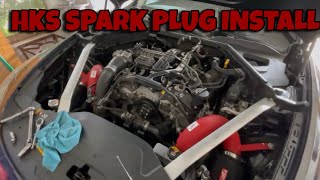
🎬 Watch: How to replace spark plugs without removing the intake manifold.Symptoms You May Notice
- Check Engine Light is on (may be flashing)
- Rough or vibrating idle
- Engine stumbling or hesitating during acceleration
- Noticeable loss of power
- Poor fuel economy
- Smell of raw fuel from the exhaust
- Replacing only the cylinder 5 coil and plug. While this fixes the immediate code, the high labor cost will likely be incurred again when another rear-bank coil fails soon after.
- Assuming the issue is software-related. Unlike the 2.5T Genesis engines which have a TSB for false misfires, a P0305 on the 3.3T almost always indicates a real hardware failure.
Most Likely Causes
- Faulty Ignition Coil 🔴 High Probability → Shop Ignition Coil Ignition coil failure is a very common issue on the Lambda 3.3T engine as it ages. The rear bank of cylinders is exposed to high heat, which can cause the internal windings or the plastic housing to fail. A recall for the left turbo oil feed pipe (019G) highlights the extreme heat in this area, which is a contributing factor to component failure.
How to confirm: The standard diagnostic test is to swap the cylinder 5 ignition coil with a coil from an easily accessible cylinder on the front bank (e.g., cylinder 4). If the misfire code changes to P0304, the coil is confirmed bad. However, this is very labor-intensive for a rear-bank cylinder and often skipped in favor of preventative replacement.
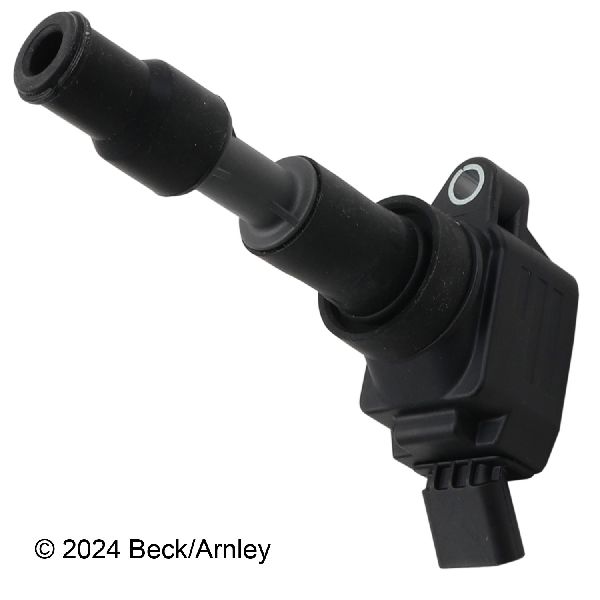
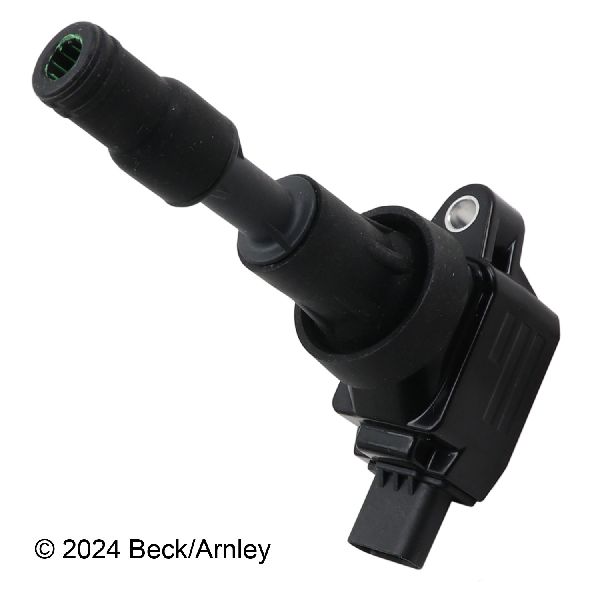
Typical fix: Replace the faulty ignition coil. It is highly recommended to replace all three rear bank coils (Part No. 27310-3L000) at the same time due to the labor involved in accessing them.
Est. part cost: $50-$90 per coil - Worn or Fouled Spark Plug 🔴 High Probability → Shop Spark Plug The recommended replacement interval for spark plugs on the 3.3T engine is 42,000 miles. Misfires are common as the vehicle approaches or exceeds this mileage. A failing ignition coil can also foul the spark plug with unburnt fuel, causing it to fail.
How to confirm: Visually inspect the spark plug after removal. Look for a worn electrode, heavy carbon deposits ('bllllackkkkk' as one tech noted), or oil fouling. Given the labor to access cylinder 5, it's often more practical to replace it as a primary suspect rather than for inspection alone.
Typical fix: Replace the spark plug. It is best practice to replace all six spark plugs at the same time, especially if they are near or past their service life.
Est. part cost: $15-$30 per plug
Rare But Worth Checking
- Clogged or Faulty Fuel Injector: → Shop Fuel Injector As a Gasoline Direct Injection (GDI) engine, the injectors are under high pressure and can become clogged with carbon deposits or fail electronically. A Reddit user with a 2019 G70 reported a persistent P0305 and a smell of gas after replacing ignition components, leading them to suspect a faulty injector. If ignition parts are replaced and the misfire persists on cylinder 5, the injector is the next likely culprit.
- Intake Manifold Gasket Leak: → Shop Engine Intake Manifold When the intake manifold is removed for service, the gaskets (Part No. 28411-3L100) should always be replaced. If they are old, damaged, or improperly installed, they can cause a vacuum leak that leans out the air-fuel mixture in one or more cylinders, leading to a misfire.
- Low Engine Compression: This is a serious mechanical issue, such as a bad valve, worn piston ring, or damaged head gasket. It is very unlikely on a well-maintained, newer vehicle but can be confirmed with a compression test after all ignition and fuel-related causes have been ruled out.
Diagnosis Steps
- Confirm the P0305 code with an OBD-II scanner and check for any other stored codes.
- Note the mileage. If the vehicle is near or over 42,000 miles, suspect worn spark plugs.
- If you are not performing the repair yourself, take it to a professional. The following steps involve significant labor or require specialized tools and experience.
- To gain access to the rear bank (1, 3, 5), either remove the upper intake manifold OR attempt the shortcut method with a series of wobble extensions and swivel sockets.
- At this point, the most cost-effective strategy is to stop diagnosing and start replacing parts.
- Replace all three ignition coils on the rear bank (cylinders 1, 3, 5).
- Replace all six spark plugs (cylinders 1-6). 🎬 See this DIY guide for gapping and installing plugs the right way.
- If the intake manifold was removed, inspect and replace the gaskets (Part No. 28411-3L100) to prevent vacuum leaks.
- Reassemble the engine and clear the trouble codes.
- If the misfire persists after this comprehensive service, further diagnosis of the cylinder 5 fuel injector, wiring harness, or the engine's mechanical health is required.
Parts You'll Likely Need
- Ignition Coil (Rear Bank)
(OEM #27310-3L000)— This is the most common cause of a P0305 misfire. Cylinder 5 is on the rear bank, which uses this specific coil. It is different from the front bank coil (27310-3L030).
Trusted brands: Genesis (OEM), Bosch, Delphi
OEM price range: $70-$90
Aftermarket price range: $50-$75 - Spark Plug
(OEM #18852-09070 (NGK SILKR8A-S))— This is a primary ignition component and a scheduled maintenance item at 42,000 miles. It is always recommended to replace plugs when replacing coils. Some owners upgrade to NGK Ruthenium HX plugs (Part No. 95125).
Trusted brands: NGK (OEM supplier), Denso
OEM price range: $20-$30
Aftermarket price range: $15-$25 - Upper Intake Manifold Gasket Set
(OEM #28411-3L100)— These are single-use gaskets that must be replaced anytime the intake manifold is removed to prevent vacuum leaks.
Trusted brands: Genesis (OEM), Fel-Pro
OEM price range: $20-$40
Aftermarket price range: $15-$30
Related Codes That Often Appear With This One
- P0300 — If the misfire becomes more widespread due to multiple failing coils or a systemic issue like a failing fuel pump, a P0300 (Random/Multiple Cylinder Misfire) code may appear.
- P0301, P0303 — Misfire codes for other cylinders on the same rear bank (Bank 1) often appear together or are used in diagnosis. Seeing them together can indicate a common problem like a batch of failing coils or a vacuum leak on that side of the intake manifold.
Technical Service Bulletins (TSBs) & Recalls
- Recall 019G / TSB 24-01-032G: While not directly for misfires, this recall replaces the left-hand turbocharger oil feed pipe. The failure of this part contributes to the high-heat environment at the rear of the engine that causes premature ignition coil failure.
Platform-Specific Known Issues
- The primary issue is the labor-intensive nature of accessing the rear bank (Bank 1) of cylinders, where cylinder 5 is located. This requires removing the intake manifold, turning a simple coil or plug replacement into a multi-hour job. 🎬 Watch: Lessons learned from a G70 spark plug replacement gone wrong.
- A 'shortcut' method exists to avoid removing the intake manifold, but it requires specific tools (swivel sockets, wobble extensions) and dexterity, as shown in several online videos.
Mechanic-Grade Diagnostic Values
- High-Pressure Fuel Pump (HPFP) Output Pressure — expected: Up to 150 Bar (2175 PSI). Failure: Significantly lower pressure under load can starve the injectors and cause misfires.
- Low-Pressure In-Tank Fuel Pump Pressure — expected: 40 to 60 PSI. Failure: Low pressure from the in-tank pump will cause the HPFP to perform poorly, leading to hesitation and misfires.
Scan Tool Commands That Help
- Hyundai GDS (Global Diagnostic System): Misfire Graphic / Cylinder Misfire Count — To watch for live misfire events on cylinder 5 during a test drive or while performing a 'power balance' test. This helps confirm if the misfire is constant or only occurs under specific conditions (e.g., high load, high RPM) after initial parts replacement has failed.
Wiring & Ground Locations
- Engine Harness Grounds — Typically bolted to the cylinder heads or engine block near the firewall. Specific locations (e.g., G102) require consulting the factory electrical wiring diagram for the specific model year.. The ignition coils and fuel injectors for all cylinders rely on a clean ground path. A loose or corroded engine ground can introduce electrical noise or resistance, potentially causing weak spark or erratic injector behavior leading to misfires on one or more cylinders.
- ECM/PCM Connectors — The Engine Control Module is typically located in the engine bay. The specific connector and pin for the cylinder 5 ignition coil and fuel injector must be identified using a factory wiring diagram.. To perform advanced diagnostics, such as checking for voltage and ground signals directly at the ECM. This can isolate a wiring harness break or a faulty ECM driver circuit if the coil, plug, and injector are known-good.
Real Owner Repair Stories
- Go-Parts.com article citing a dealer diagnosis (2021 Genesis G70 3.3T (CPO)) — Popping noise, exhaust leak sound, multiple misfire codes (P0301, P0302, etc.)
❌ Tried (didn't work) The owner took the vehicle directly to the dealership for diagnosis rather than attempting DIY repairs.
✅ What actually fixed it The dealership diagnosed a faulty fuel injector on cylinder 1 (same bank as cylinder 5). The service advisor noted they had seen cases where the injector seal expands with temperature changes, causing irregular fuel flow. The dealer replaced all injectors on the affected bank under warranty, which resolved the misfire.
When the Usual Fixes Don't Work
- While the vast majority of P0305 codes are fixed by replacing the ignition coil and spark plug, there are documented cases where the misfire persisted. In one such instance involving a similar cylinder on the same engine, the root cause was identified by a dealer as a faulty fuel injector whose seal was failing at operating temperature, leading to improper fueling. This highlights that if the standard ignition service does not resolve the code, the fuel injector for cylinder 5 should be the next primary suspect.
OEM Part Supersession History
27310-3L000→No supersession found.— The part has remained consistent throughout the production years.
Model Year Variations Within This Range
- 2022-2025: The G70 received a facelift. While the core 3.3T engine and ignition system are unchanged, an optional variable-valve active exhaust was added. This has no impact on the diagnosis of a P0305 code.
- 2021-2025: Premium fuel (91 octane or higher) became a requirement, whereas it was only recommended for 2019-2020 models. Consistently using lower octane fuel could potentially accelerate carbon buildup over the long term, a rare cause of misfires.
Diagnostic Flowchart
Other Known Issues on This Vehicle
Issues unrelated to this code that are worth knowing about as an owner of this generation:
- Left Turbocharger Oil Feed Pipe Leak 🔴 High — Common enough to warrant a recall (Hyundai Recall 019G). Affects 2019-2022 models. The deteriorating pipe can leak oil onto hot exhaust components, increasing fire risk. (Ref: Recall 019G (replaces 19V-538).)
- High-Pressure Fuel Pump (HPFP) Failure 🟠 Medium — Some owners have experienced HPFP failure, which can cause stalling or loss of power. A recall was issued for some model years to address a sticking fuel control valve plunger. (Ref: Recall for some model years.)
- Headliner, Sunroof, and Interior Rattles 🟡 Low — A widely discussed issue in owner forums. Rattles often emanate from the sunroof assembly, sunglasses holder, or plastic trim behind the rearview mirror, especially in hot weather. (Ref: At least one TSB exists that involves installing foam padding in the headliner area.)
- Premature Brake Rotor Warping 🟡 Low — Commonly reported on the platform-mate Kia Stinger, owners complain of steering wheel vibration under braking, indicating warped front rotors.
- Rough Automatic Transmission Shifting 🟡 Low — A minority of owners report harsh shifting or lurching as the vehicle slows to a stop. This is sometimes addressed with a software update or, more rarely, a transmission cooler issue.
Used vs. New Parts: Buying Guide for This Vehicle
When a used part is the smart pick: Using a tested, low-mileage used part is only recommended for major, high-cost mechanical components like a cylinder head or a complete engine block in the rare event of a compression-related failure. For all common P0305 causes, new parts are required.
Donor-vehicle mileage cap: roughly under 40000 miles for the part to have meaningful remaining life.
What to inspect on the donor part:
- For a major component like an engine, request a video of a compression test if possible.
- Check for evidence of overheating (discolored metal, melted plastic).
- Ensure the donor vehicle was not in a flood.
OEM-only on this vehicle (don't cheap out):
- Fuel Injectors: GDI injectors are high-precision components. Aftermarket versions can have inconsistent spray patterns or flow rates, causing performance issues. OEM is strongly recommended.
- High-Pressure Fuel Pump (HPFP): This is a critical component for the GDI system. Stick with the OEM part for reliability and correct pressure delivery.
Aftermarket brands forum-validated for this vehicle:
- Ignition Coils (Performance): Worms Racing is a brand mentioned in enthusiast forums for those seeking higher spark energy than OEM.
- Spark Plugs (Performance): HKS (M45IL) and Denso Iridium (IKH24) are cited as popular 'one step colder' upgrade options for tuned vehicles.
Brands owners have reported issues with on this vehicle:
- No-name ignition coil sets from online marketplaces. While cheap, they have a high failure rate and are not worth the risk given the high labor cost to access the rear bank.
Real Owner Stories
Aggregated from forums and TSBs cited above. Mileages and costs reflect what owners reported in those sources.
2019 G70 3.3t
Symptoms: The car began to shake and lose power under load after refueling, accompanied by a Check Engine Light and a smell of raw gas during hard acceleration.
What fixed it: The owner replaced all spark plugs and swapped ignition coils between cylinders 5 and 4 to diagnose, but the P0305 code persisted, leading to a suspicion of a faulty fuel injector.
Source hint: reddit.com/r/GenesisG70/comments/s29qj8/2019_g70_33t_code_p0305/
2019-2025 Genesis G70 3.3T
Symptoms: Owner performed a full spark plug service on all six cylinders to address maintenance and potential misfires.
What fixed it: Successfully replaced all six spark plugs without removing the intake manifold by using a specific combination of swivel sockets and wobble extensions.
Source hint: reddit.com/r/GenesisG70/comments/x7dfp9/just_did_spark_plug_service/
Related OBD-II Codes
Frequently Asked Questions
Does the 019G recall for the turbo oil feed pipe affect my 2019 G70's ignition coils?
What is the recommended spark plug replacement interval for the 3.3L Twin-Turbo V6?
Can I replace the cylinder 5 ignition coil without removing the intake manifold?
Which part number should I use for the ignition coils on my G70 3.3T?
If I remove the intake manifold to fix a P0305 code, are there other parts I should replace?
Is the P0305 misfire issue common on other Genesis or Kia models?
Helpful Videos
Used OEM Parts in Stock
New Aftermarket Parts Available


The information in this article is provided for general reference and educational purposes only. Vehicle specifications, procedures, and part compatibility can vary by production date, trim level, and region. Always consult your vehicle's factory service manual and verify part numbers before purchasing or performing repairs. Safety-critical components such as airbags, seat belts, and braking systems should be installed by a qualified professional.
- Genesis G70:
- 🧭 Diagnostic Flowchart
- 🎬 Helpful Videos
- 🛍️ Shop This Part
- What's Unique About the 2019-2025 Genesis G70
- Symptoms You May Notice
- Most Likely Causes
- Rare But Worth Checking
- Diagnosis Steps
- Parts You'll Likely Need
- Related Codes That Often Appear With This One
- Technical Service Bulletins (TSBs) & Recalls
- Platform-Specific Known Issues
- Mechanic-Grade Diagnostic Values
- Scan Tool Commands That Help
- Wiring & Ground Locations
- Real Owner Repair Stories
- When the Usual Fixes Don't Work
- OEM Part Supersession History
- Model Year Variations Within This Range
- Other Known Issues on This Vehicle
- Used vs. New Parts: Buying Guide for This Vehicle
- Real Owner Stories
- 2019 G70 3.3t
- 2019-2025 Genesis G70 3.3T
- Related OBD-II Codes
- Frequently Asked Questions
- 🎟️ Get 5% Off