

P0305 on 2021-2026 Genesis GV80 3.5T: Cylinder 5 Misfire Causes and Fixes
On a 2021-2026 Genesis GV80 3.5T, P0305 is almost always a faulty ignition coil or a worn spark plug in cylinder 5. A DIY-friendly coil swap is the best first diagnostic step. Expect to pay ~$60-$90 for an OEM coil and ~$25-$40 for an OEM iridium spark plug. However, a pattern of GDI fuel injector failures on this engine means a persistent misfire may require professional injector replacement.
- P0305 on the GV80 3.5T is a misfire in the rearmost cylinder on the passenger side.
- The most likely cause is a bad ignition coil or spark plug, which are easy to access and diagnose with a simple 'coil swap' test.
- Do NOT drive if the check engine light is flashing, as this can quickly ruin your catalytic converters, leading to a much more expensive repair.
- If new plugs and coils don't solve the problem, a failing fuel injector is a known issue on this engine and should be investigated by a professional.
- Before replacing a failed coil, check the spark plug tube for oil, which indicates a leaking valve cover gasket that must also be fixed.
What's Unique About the 2021-2026 Genesis GV80
Unlike many V6 engines where rear cylinders are difficult to access, the Smartstream 3.5T V6 in the GV80 provides surprisingly good access to all six ignition coils after removing the top plastic engine cover. This makes diagnosing a P0305 much easier for a DIYer. However, this engine has shown a documented pattern of GDI fuel injector failures, which can cause a persistent misfire that won't be fixed by new plugs or coils. A technician on YouTube documented a case on a 3.5T where a faulty injector on one cylinder showed a resistance of 9.8 kΩ, far outside the normal ~2.0 ohm range, confirming an internal failure. It's also critical not to confuse this with the software-related misfire issue (TSB 25-01-051G) that only affects the 2.5L 4-cylinder GV80.
Symptoms You May Notice
- Flashing or solid Check Engine Light
- Rough or vibrating idle
- Hesitation or stumbling during acceleration
- Noticeable loss of engine power
- Reduced fuel economy
- A smell of fuel from the exhaust
- Shaking or shuddering from the engine bay
- Applying the TSB for the 2.5T engine to the 3.5T engine. The software update for misfires (TSB 25-01-051G) is ONLY for the 4-cylinder engine and will not solve any issues on the V6.
Most Likely Causes
- Faulty Ignition Coil 🔴 High Probability → Shop Ignition Coil Coil-on-plug systems are common failure points on modern engines due to constant exposure to high heat and vibration. Owners of the G70 and Kia Stinger with the similar 3.3T engine report premature coil failures, suggesting a pattern for these V6 platforms.
How to confirm: Swap the ignition coil from cylinder 5 with the coil from cylinder 3 (middle, passenger side). Clear the codes. If the code returns as P0303, the coil is bad. A technician video on a 2021 GV80 3.5T confirmed this exact method successfully diagnosed an intermittent misfire.
Typical fix: Replace the faulty ignition coil. It is best practice to also replace the spark plug in that cylinder at the same time.
Est. part cost: $60-$90 - Worn or Fouled Spark Plug 🔴 High Probability → Shop Spark Plug Spark plugs are a regular maintenance item. The service interval for the original iridium plugs is approximately 48,000 miles, and exceeding this increases misfire risk. A rich condition from another issue, like a leaky injector, can also foul the plug, causing it to fail.
How to confirm: After confirming the coil is good, remove the spark plug from cylinder 5. Inspect it for a worn electrode, cracks in the porcelain, or heavy carbon/oil fouling. A severely fouled ('bllllackkkkk') plug was noted alongside a failed coil in a similar platform repair.
Typical fix: Replace the spark plug. It is highly recommended to replace all six spark plugs as a set to ensure consistent performance.
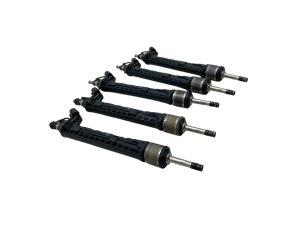
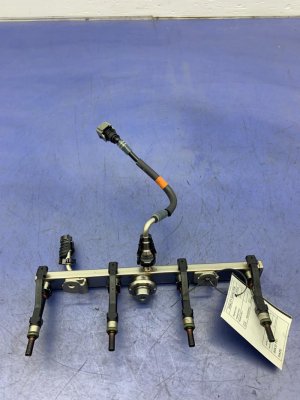
Est. part cost: $25-$40 per plug - Clogged or Faulty Fuel Injector 🟡 Medium Probability → Shop Fuel Injector There are multiple owner and technician reports of premature GDI fuel injector failure on the Smartstream 3.5T engine, leading to persistent misfires. One technician documented a GV80 3.5T with multiple injector failures, measuring one bad injector with an open circuit (9.7 kΩ) versus a good one (~2.1 Ω).
How to confirm: If a new coil and plug do not fix the misfire on cylinder 5, the injector is the next suspect. A professional can perform a resistance test on the injector's terminals or a flow test. A DIY check is to smell the oil dipstick; a strong gasoline odor can indicate a leaking injector is diluting the engine oil.
Typical fix: Replace the fuel injector for cylinder 5. Some shops may recommend replacing all three injectors on Bank 1. This is an advanced repair due to the high-pressure fuel system.
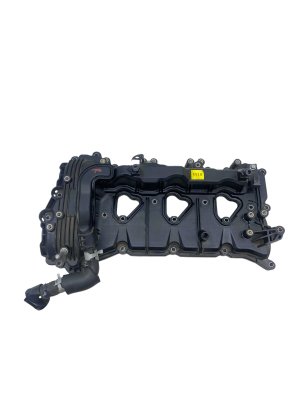
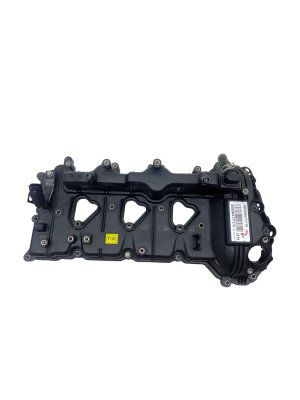
Est. part cost: $100-$200 per injector - Leaking Valve Cover Gasket ⚪ Low Probability → Shop Engine Valve Cover The spark plug tube seals, which are part of the valve cover gasket assembly, can harden and allow oil to leak into the spark plug well, which saturates and destroys the ignition coil.
How to confirm: When you remove the ignition coil from cylinder 5, look for liquid engine oil in the spark plug tube or coating the coil boot.
Typical fix: Replace the Bank 1 (passenger side) valve cover gasket and spark plug tube seals. The oil-fouled ignition coil and spark plug must also be replaced.
Est. part cost: $45-$60 for the gasket set
Rare But Worth Checking
- Low-Pressure Fuel Pump Failure: A recall (NHTSA 23V-630 / Genesis recall 022G) was issued for 2022-2023 models for a faulty low-pressure fuel pump that can cause a loss of power. The impeller can deform in high heat, leading to fuel starvation. While this typically causes multiple/random misfire codes (P0300), it's a known issue to be aware of.
- Internal Coolant Leak: In a documented case, a technician chased a recurring misfire on a GV80 3.5T and found coolant in the cylinder. The source was suspected to be a leak in the water-to-air charge air cooler (intercooler), allowing coolant to be ingested by the engine. This is a complex and rare failure mode.
- Low Compression: In rare cases on high-mileage engines, a mechanical issue like a burnt valve or worn piston rings could cause a persistent misfire. This would require a compression test to confirm and likely involves major engine repair.
Diagnosis Steps
- Verify the code with an OBD-II scanner. Note if the Check Engine Light is flashing.
- Remove the plastic engine cover (pulls off). Locate cylinder 5, which is the rearmost cylinder on the passenger side.
- Swap the ignition coil from cylinder 5 with the coil from cylinder 3 (the middle cylinder on the same passenger side bank).
- Clear the codes and drive the vehicle until the Check Engine Light returns. If the code changes to P0303, the ignition coil is faulty and must be replaced.
- If the code remains P0305, the coil is likely good. Return the coils to their original positions.
- Remove the ignition coil from cylinder 5 again and inspect the spark plug well for any signs of engine oil. If oil is present, the valve cover gasket is leaking and must be replaced.
- If no oil is present, remove the spark plug from cylinder 5. Inspect it for wear, damage, or heavy fouling. If it appears worn or is near its 48,000-mile service life, replace it. It is best to replace all six plugs.
- If the misfire persists after confirming the coil and plug are good, the issue is likely a faulty fuel injector or a more complex mechanical problem. Check the oil dipstick for a strong smell of gasoline, which points to a leaking injector. Further diagnosis requires professional tools to test injector resistance and fuel pressure.
Parts You'll Likely Need
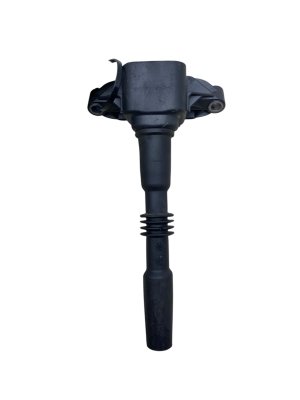
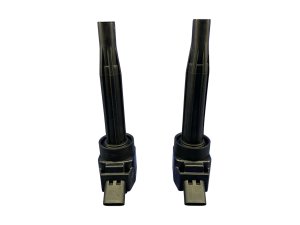
- Ignition Coil
(OEM #27310-3N290)— This is the most common hardware failure causing a single-cylinder misfire on the 3.5T engine and is easily accessible.
Trusted brands: Hyundai/Genesis Genuine, NGK, Delphi
OEM price range: $60-$90
Aftermarket price range: $40-$70 - Iridium Spark Plug
(OEM #18877-09085)— Spark plugs are a routine maintenance item that can cause misfires when worn. The service interval is ~48,000 miles.
Trusted brands: Hyundai/Genesis Genuine, NGK
OEM price range: $25-$40
Aftermarket price range: $15-$30 - GDI Fuel Injector
(OEM #35310-3L500)— A known failure pattern on the 3.5T engine can cause a persistent misfire that is not resolved by new plugs or coils.
Trusted brands: Hyundai/Genesis Genuine
OEM price range: $120-$200
Aftermarket price range: Not Recommended - Valve Cover Gasket (Bank 1)
(OEM #22441-3L100)— Required if an oil leak into the spark plug tube is the root cause of the ignition coil failure. This part number may cover both banks; verify with VIN.
Trusted brands: Hyundai/Genesis Genuine
OEM price range: $45-$60
Aftermarket price range: $30-$50
Related Codes That Often Appear With This One
- P0300 — If the misfire is intermittent or affects other cylinders, a P0300 (Random/Multiple Misfire) code may appear alongside P0305.
- P0363 — This code for 'Misfire Detected – Fueling Disabled' may be set with P0305 if the misfire is severe enough for the ECM to shut off the fuel injector to protect the catalytic converter.
- P0172 — 'System Too Rich (Bank 1)' may appear if a leaking fuel injector on cylinder 5 is the root cause, dumping excess fuel into the bank.
Platform-Specific Known Issues
- A pattern of premature GDI fuel injector failures has been observed by owners and technicians on the 3.5L Twin-Turbo V6, which can cause persistent misfire codes.
- A recall (NHTSA 23V-630) was issued for 2022-2023 models for a faulty low-pressure fuel pump that can cause fuel starvation and misfires.
Mechanic-Grade Diagnostic Values
- GDI Fuel Injector Resistance — expected: ~1.9 - 2.2 Ohms. Failure: An open circuit (OL), a reading in the kOhm range, or a variance of more than ~0.3 Ohms from other injectors. A failed injector in a documented case showed 1.9 Ohms.
- Ignition Coil Primary Winding Resistance — expected: ~0.8 - 1.2 Ohms. Failure: A reading significantly outside this range or an open circuit (OL).
- Ignition Coil Secondary Winding Resistance — expected: ~6 - 10 kOhms (kilo-ohms). Failure: A reading significantly outside this range or an open circuit (OL).
- Low-Pressure Fuel Pump (LPFP) Pressure — expected: ~50 - 80 PSI. Failure: Pressure significantly below 50 PSI can indicate a failing in-tank fuel pump, which is subject to a recall on 2021-2023 models.
- High-Pressure Fuel Pump (HPFP) Pressure at Idle — expected: 2,000 - 2,500+ PSI. Failure: Pressure that fails to build to this specification can indicate a failing high-pressure fuel pump. The fuel injection pressure was improved from 200 bar to 250 bar (2900 to 3625 PSI) in the Smartstream 3.5T T-GDi.
Hidden / Shadow Codes Worth Checking
- Mode $06, Test ID $A2-$AF: These test IDs store the raw misfire counts for each cylinder. This data is more sensitive than the threshold required to set a P030x code, allowing a technician to see small or intermittent misfires before they trigger a Check Engine Light. (see via An advanced OBD-II scan tool with Mode $06 capability.)
Scan Tool Commands That Help
- Genesis GDS (Global Diagnostic System): Power Balance Test — This bidirectional test sequentially disables the fuel injector for each cylinder, causing an RPM drop. If disabling cylinder 5 causes little or no change in RPM, it confirms that cylinder is not contributing, pinpointing the misfire.
- Genesis GDS (Global Diagnostic System): Misfire Graphic / Cylinder Misfire Count — Allows for watching live misfire events on cylinder 5 during a test drive or while performing other tests to see if the misfire is constant or only occurs under specific conditions (e.g., high load).
- Genesis GDS (Global Diagnostic System): Injector Coding/Calibration — When replacing a GDI fuel injector, the new injector's specific flow characteristics must be programmed into the ECU for precise fuel control. Failure to do so can result in continued poor performance or fault codes.
Wiring & Ground Locations
- Engine Compartment Fuse Box — Located in the engine bay; the cover is removed by pressing a tab and pulling up.. Contains fuses and relays critical to the engine control system, including power for the ECU, ignition coils, and fuel injectors. A failure here could cause a misfire.
- Passenger Compartment Fuse Box — Located in the driver's side panel bolster, accessible by opening a cover.. Houses fuses for various control modules, including the Data Link Connector (DLC), which is necessary for scanning codes.
Real Owner Repair Stories
- Reddit user on r/GenesisG70 (2019 Genesis G70 3.3t (mechanically similar Lambda engine)) — Car would shake and lose power under load, CEL came on, and a smell of gas was present during acceleration.
❌ Tried (didn't work) Replaced all spark plugs., Swapped ignition coil from cylinder 5 to cylinder 4.
✅ What actually fixed it The user suspected a faulty fuel injector was the remaining likely cause after the spark plug and coil swap did not resolve the P0305 code. The gas smell strongly points to a leaking injector. The final resolution was not posted, but the diagnosis path aligns with known injector issues. - YouTube channel '2CarPros' (2021 Genesis GV80 3.5T) — Multiple misfire codes, including on cylinder 4, with rough running.
❌ Tried (didn't work) Initial diagnosis pointed to potential ignition or spark issues.
✅ What actually fixed it The technician measured the resistance of the fuel injectors and found multiple failures. One injector on cylinder 4 measured 1.9 ohms, while a known good one was 2.1-2.2 ohms. Replacing all six spark plugs and the failed injectors resolved the misfires.
OEM Part Supersession History
27301-3L100→27310-3N290— Part number evolution and potential design update for the ignition coil assembly.35310-2T000→35310-3NTA0— Part number update for the GDI fuel injector for the 3.5L engine.
Heads up: Always verify fitment with VIN, as injector part numbers can be highly specific.
Model Year Variations Within This Range
- 2022-2023: These model years were subject to recall NHTSA 23V-630 (Genesis recall 022G) for a low-pressure fuel pump whose impeller could deform, causing fuel starvation, loss of power, and potential misfires.
- 2024+: A facelift for the 2024/2025 model year introduced significant interior changes, including a 27-inch OLED screen and redesigned console, but the core 3.5L Twin-Turbo V6 powertrain remains mechanically similar to earlier years. However, engineering updates in later models have reportedly mitigated some of the earlier fuel injector concerns.
Diagnostic Flowchart
Other Known Issues on This Vehicle
Issues unrelated to this code that are worth knowing about as an owner of this generation:
- Rear Differential Whine/Hum 🟠 Medium — Very common. Noise typically appears between 40-60 mph. Many owners report the issue, even on low-mileage vehicles. Some have had multiple replacements. (Ref: TSB 23-DS-004G instructs dealers to first re-torque a pinion nut, and if that fails, replace the entire rear differential assembly.)
- Low-Pressure Fuel Pump Failure 🔴 High — Widespread enough to trigger a major safety recall. Affects 2022-2023 models. Can cause sudden loss of power while driving. (Ref: NHTSA Recall 23V-630, expanded by Genesis Recall 022G.)
- GDI Fuel Injector Failure 🟠 Medium → Shop Fuel Injector — A notable pattern observed by technicians and owners, though not universal. Can cause persistent misfires, rough idle, and engine shaking. Not yet addressed by a specific recall for the 3.5T.
- Excessive Oil Consumption 🟡 Low — Some owners report needing to monitor oil levels closely, a general concern for many modern GDI/turbo engines. Not as widespread as on older Hyundai engines, but worth noting. (Ref: Hyundai has a general TSB for oil consumption inspection (21-EM-003H), but nothing specific to the 3.5T engine.)
- Infotainment/Electrical Glitches 🟡 Low — Some owners report sporadic issues like the infotainment screen resetting, buggy over-the-air (OTA) updates causing suspension errors, or distorted parking camera views. (Ref: A recall for the rearview camera (NHTSA 24V-584) exists for some 2024-2025 models.)
Used vs. New Parts: Buying Guide for This Vehicle
When a used part is the smart pick: For this modern, high-tech engine, used electronic parts are generally risky. A used ignition coil from a low-mileage, verified-running donor vehicle could be a cost-effective diagnostic tool (to confirm a failure) or a temporary fix, but it's not recommended for a permanent repair due to unknown remaining lifespan.
Donor-vehicle mileage cap: roughly under 30000 miles for the part to have meaningful remaining life.
What to inspect on the donor part:
- For an ignition coil, check for cracks in the plastic housing, corrosion on the electrical connector pins, and ensure the rubber boot is pliable and free of oil contamination.
- Verify the donor vehicle's VIN to ensure it had the same 3.5T engine and was not part of a major recall or known for electrical issues.
- Ask for a short warranty (e.g., 30 days) from the salvage yard if possible.
OEM-only on this vehicle (don't cheap out):
- GDI Fuel Injector: Due to the high pressures, precise calibration requirements (coding), and a known pattern of premature failure on this engine, only new OEM injectors should be used. Aftermarket or used injectors are a significant gamble.
- Low-Pressure Fuel Pump: Given the safety recall related to this part, installing a used one is strongly discouraged. Only a new OEM part ensures the updated, non-defective design is installed.
Aftermarket brands forum-validated for this vehicle:
- Ignition Coils: NGK and Delphi are reputable OEM suppliers and their aftermarket coils are generally considered reliable alternatives to the Genuine Genesis part.
- Spark Plugs: NGK is the original equipment provider, and their plugs are the recommended choice.
Brands owners have reported issues with on this vehicle:
- Unbranded/white-box ignition coils and fuel injectors from online marketplaces should be avoided. Their failure rates are high, and they can cause performance issues or even damage to the engine control module.
Real Owner Stories
Aggregated from forums and TSBs cited above. Mileages and costs reflect what owners reported in those sources.
2021 Genesis GV80 3.5T
Symptoms: Intermittent misfire confirmed by a technician video.
What fixed it: Swapping the ignition coil from the misfiring cylinder to another cylinder confirmed the coil was bad; replacing the faulty ignition coil resolved the issue.
Source hint: A technician video on a 2021 GV80 3.5T confirmed this exact method successfully diagnosed an intermittent misfire.
2022 Genesis GV80 3.5T
Symptoms: Vehicle experienced smoking, shaking, and shuddering even after initial repair attempts.
What fixed it: Replacement of faulty fuel injectors.
Source hint: California Lemon Law Attorneys: 2022-2023 Genesis GV70, GV80 Recall, Problems and Complaints
2021-2024 Genesis GV80 3.5T
Symptoms: Recurring misfires; technician measured a failed injector at 9.7 kΩ (open circuit) compared to a healthy 2.1 kΩ.
What fixed it: Replacement of multiple GDI fuel injectors.
Source hint: YouTube: GENESIS GV80 V6 TURBO MULTIPLE GDI INJECTORS FAILURE - PART 2
2021-2024 Genesis GV80 3.5T
Symptoms: Misfire returned after initial repairs; technician discovered coolant inside the cylinder.
What fixed it: Diagnosis pointed to a leak from the liquid-cooled intercooler.
Source hint: YouTube: GENESIS GV80 V6 TURBO - ENGINE MISIFRE COMEBACK
Related OBD-II Codes
Frequently Asked Questions
Is there a recall for my 2022-2023 Genesis GV80 that could cause a P0305 misfire?
How often should I replace the spark plugs on my 3.5T GV80 to prevent misfire codes?
I have a P0305 code and hear a humming noise from the back of my GV80; are they related?
Can I swap parts to diagnose which component is causing the P0305 on my 3.5T V6?
Is the fuel injector failure a known problem for the Genesis 3.5T engine?
Could a leaking valve cover gasket cause my P0305 code?
Helpful Videos

We Have This Part in Stock

The information in this article is provided for general reference and educational purposes only. Vehicle specifications, procedures, and part compatibility can vary by production date, trim level, and region. Always consult your vehicle's factory service manual and verify part numbers before purchasing or performing repairs. Safety-critical components such as airbags, seat belts, and braking systems should be installed by a qualified professional.
- Genesis GV80:
- 🧭 Diagnostic Flowchart
- 🎬 Helpful Videos
- 🛍️ Shop This Part
- What's Unique About the 2021-2026 Genesis GV80
- Symptoms You May Notice
- Most Likely Causes
- Rare But Worth Checking
- Diagnosis Steps
- Parts You'll Likely Need
- Related Codes That Often Appear With This One
- Platform-Specific Known Issues
- Mechanic-Grade Diagnostic Values
- Hidden / Shadow Codes Worth Checking
- Scan Tool Commands That Help
- Wiring & Ground Locations
- Real Owner Repair Stories
- OEM Part Supersession History
- Model Year Variations Within This Range
- Other Known Issues on This Vehicle
- Used vs. New Parts: Buying Guide for This Vehicle
- Real Owner Stories
- 2021 Genesis GV80 3.5T
- 2022 Genesis GV80 3.5T
- 2021-2024 Genesis GV80 3.5T
- 2021-2024 Genesis GV80 3.5T
- Related OBD-II Codes
- Frequently Asked Questions
- 🎟️ Get 5% Off