

P0305 on 2017-2022 GMC Acadia 3.6L V6: Cylinder 5 Misfire Causes and Fixes
P0305 on a 2017-2022 GMC Acadia with the 3.6L V6 engine indicates a misfire in cylinder 5. The most common cause is a failed ignition coil or a worn spark plug. Since cylinder 5 is on the difficult-to-access rear bank, expect higher labor costs ($300-$500) for what is otherwise a simple part replacement. In some cases, a faulty oil control valve solenoid can also be the culprit, as noted in a GM service bulletin.
- P0305 signifies a misfire on cylinder 5, which is on the rear bank of the 3.6L V6 engine.
- The most probable cause is a bad ignition coil or spark plug.
- Repair is labor-intensive because the intake manifold must be removed to access cylinder 5.
- Due to the high labor cost, it is highly recommended to replace all three ignition coils, all six spark plugs, and the intake gaskets at the same time.
- If the check engine light is flashing, stop driving immediately to prevent catastrophic damage to your catalytic converter.
What's Unique About the 2017-2022 Gmc ACADIA
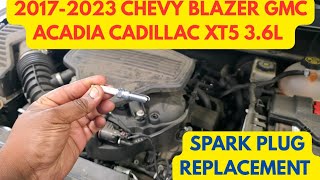
On the second-generation Acadia with the 3.6L V6 (LGX engine), a P0305 code points to a misfire on the rear, firewall-side of the engine. Unlike many other vehicles, accessing this cylinder's ignition coil and spark plug requires removing the entire upper intake manifold 🎬 Watch: Step-by-step guide to removing the manifold and plugs., significantly increasing the labor time and cost for the repair. While ignition components are the usual suspects, GM Technical Service Bulletin #21-NA-036 specifically identifies a damaged oil control valve (OCV) solenoid as a cause for this code. This valve is part of the Active Fuel Management (AFM) system 🎬 See how a faulty solenoid causes this specific misfire code., and its failure can cause cylinder 5 to misfire.
Diagnostic Flowchart
Tap your situation to follow the diagnostic path that matches what you're seeing on this vehicle.
Symptoms You May Notice
- Engine shaking or running rough, especially at idle.
- Flashing or solid Check Engine Light.
- Noticeable loss of power and hesitation when accelerating.
- Poor fuel economy.
- A smell of gasoline from the exhaust.
- Sputtering or stumbling feeling during acceleration.
- Replacing only the cylinder 5 spark plug without replacing the other rear bank plugs. The high labor cost of removing the intake manifold makes it inefficient to not service all accessible components at once.
- Assuming a timing chain issue. While prevalent on the older LLT/LFX engines, the LGX has a revised timing system and a single-cylinder misfire is less likely to be the primary symptom of a chain problem.
Most Likely Causes
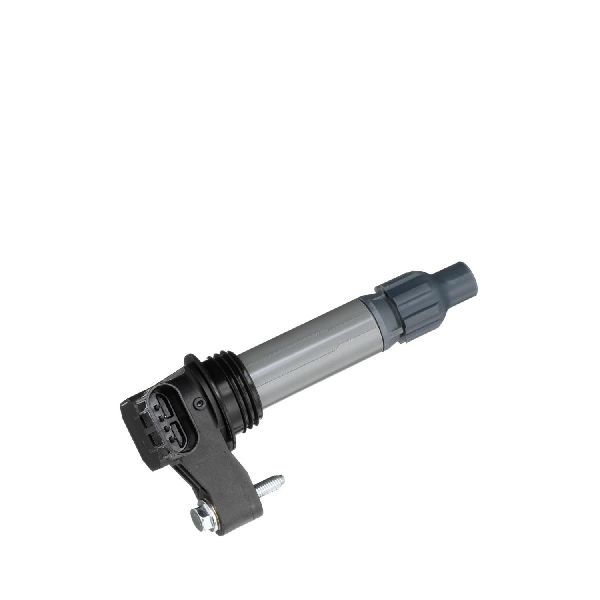
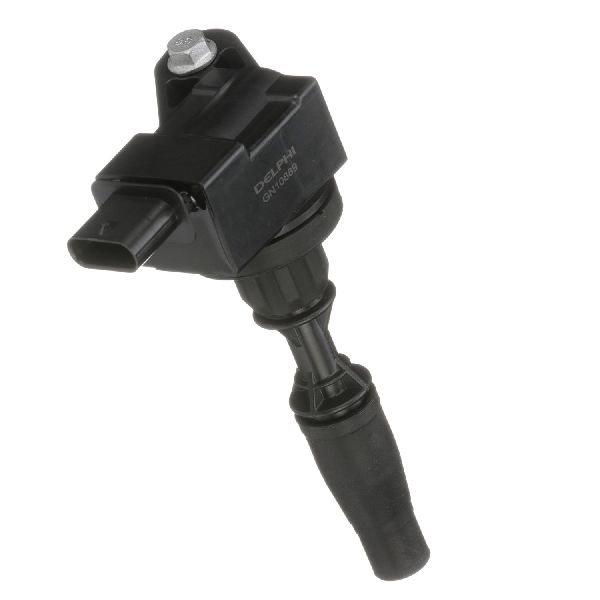
- Faulty Ignition Coil 🔴 High Probability → Shop Ignition Coil Ignition coils are a common failure item on the GM 3.6L V6. The rear bank coils (1, 3, 5) are exposed to more heat and have a higher failure rate.
How to confirm: Swap the cylinder 5 ignition coil with another cylinder's coil (e.g., cylinder 3 on the same bank). If the code changes to P0303, the coil is bad. This requires removing the intake manifold.
Typical fix: Replace the faulty ignition coil. It is strongly recommended to replace all three coils and spark plugs on the rear bank at the same time due to the labor involved in accessing them.
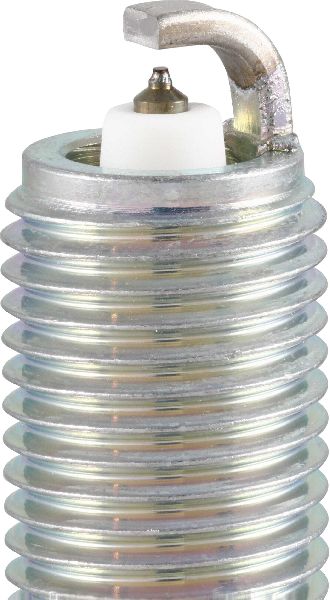
Est. part cost: $40-$90 - Worn or Fouled Spark Plug 🔴 High Probability → Shop Spark Plug Spark plugs are a routine maintenance item with a typical service life of 60,000-100,000 miles. On direct injection engines, they can become fouled by carbon or oil deposits, leading to a weak or inconsistent spark.
How to confirm: After removing the intake manifold and ignition coil, remove the spark plug and inspect it for wear on the electrode, carbon tracking (a black line on the white ceramic), oil fouling, or cracks.
Typical fix: Replace the spark plug. Given the labor to access cylinder 5, it is best practice to replace all six spark plugs at once, or at a minimum, all three on the rear bank.
Est. part cost: $10-$25 per plug - Clogged or Failed Fuel Injector 🟡 Medium Probability → Shop Fuel Injector
How to confirm: If swapping the coil and replacing the plug does not resolve the P0305 code, the fuel injector is the next likely cause. A mechanic can perform a fuel injector balance test to confirm it's not delivering the correct amount of fuel. Swapping injectors is possible but highly labor-intensive.
Typical fix: Replace the faulty fuel injector. The intake manifold must be removed for this repair. This is a more expensive repair, with parts and labor potentially exceeding $1,000.
Est. part cost: $50-$150 - Carbon Buildup on Intake Valves 🟡 Medium Probability The 3.6L LGX is a gasoline direct-injection (GDI) engine. Fuel is injected directly into the cylinder, so it never washes over the intake valves. Oil vapor from the PCV system can bake onto the valves, restricting airflow and causing misfires, especially on cold starts.
How to confirm: This requires a borescope to visually inspect the intake valves, which is best done with the intake manifold removed.
Typical fix: The intake valves must be cleaned, typically through walnut blasting. This is a labor-intensive professional service.
Est. part cost: $0 (if done during other service), $400-$800 for standalone service - Damaged Camshaft Position Actuator Solenoid (OCV) ⚪ Low Probability → Shop Engine Camshaft TSB #21-NA-036 and PIP5493 specifically call out this part as a potential cause for misfires on cylinders 2 and 5. These are the cylinders deactivated by the Active Fuel Management (AFM) system, and a damaged solenoid can leak oil or fail to properly control the valvetrain, causing a misfire.
How to confirm: Visually inspect the OCV solenoid for signs of oil leakage around it. The solenoid is located on the cylinder head cover. The TSB notes the end of the solenoid can break off inside the camshaft cover.
Typical fix: Replace the damaged OCV solenoid and clean up any leaked oil. Ensure any broken pieces are removed from the bore.
Est. part cost: $40-$100
Rare But Worth Checking
- Intake Manifold Gasket Leak: → Shop Engine Intake Manifold When the intake manifold is removed to service the rear bank, using old gaskets or improperly seating the new ones can cause a vacuum leak, leading to misfires on that bank.
- Low Compression: If ignition and fuel system checks pass, a mechanical issue like a worn piston ring, bad valve, or head gasket failure could be the cause. A compression test on cylinder 5 will confirm this.
- Cylinder Head Porosity: → Shop Engine Cylinder Head A rare but documented issue in TSB #21-NA-147 describes how porosity in the cylinder head casting can allow oil or coolant to leak into the spark plug tube, fouling the plug and causing a misfire. If oil is found in the spark plug well, this is a possibility.
Diagnosis Steps
- Use an OBD-II scanner to confirm P0305 and check for any other pending or stored codes.
- If possible, view live misfire data on the scanner to confirm cylinder 5 is the primary offender.
- Remove the engine cover and begin the process of removing the upper intake manifold to access the rear cylinder bank (Bank 1).
- Swap the ignition coil from cylinder 5 with the coil from cylinder 1 or 3.
- Reassemble the intake manifold using the OLD gaskets for this test. Clear the codes and drive the vehicle. If the code returns as P0301 or P0303, the ignition coil is faulty.
- If the code remains P0305, the coil is likely good. Disassemble again and proceed to replace the spark plug in cylinder 5 (and ideally, cylinders 1 and 3 as well).
- Inspect the old spark plug for signs of oil, fuel, or carbon fouling, which can provide clues to the engine's health.
- While the intake is off, inspect the Bank 1 exhaust OCV solenoid for any signs of oil leakage as noted in TSB #21-NA-036.
- If the misfire persists, the next step is to test the fuel injector and its wiring.
- When reassembling for the final time, use NEW intake manifold gaskets. Tighten the manifold bolts in the correct sequence to the specified torque, which is typically 18 lb-ft (25 Nm) for the main bolts. Note that some repair data may be incorrect; always use common sense with bolt sizes and torque values.
- If all else fails, perform a cylinder compression test to check for mechanical engine problems.
Parts You'll Likely Need
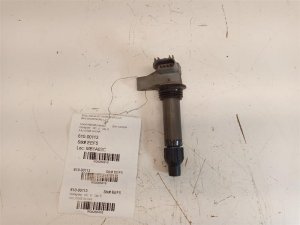
- Ignition Coil
(OEM #12674754)— This is the most common failure part for a single-cylinder misfire on the 3.6L V6 engine.
Trusted brands: ACDelco, Delphi, NGK
OEM price range: $60-$90
Aftermarket price range: $40-$70 - Iridium Spark Plug
(OEM #41-123)— Spark plugs are a wear item and the second most likely cause. It is highly recommended to replace them when servicing the coils.
Trusted brands: ACDelco, NGK, Bosch
OEM price range: $15-$25
Aftermarket price range: $10-$20 - Intake Manifold Gasket Set
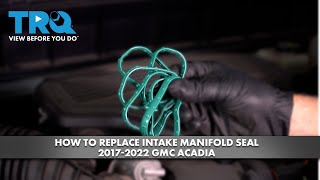
(OEM #12678529)— These are single-use gaskets that MUST be replaced anytime the intake manifold is removed 🎬 Watch: How to properly replace and seat the manifold seals. for service, which is required to access cylinder 5.
Related Codes That Often Appear With This One
- P0300 — If the cause of the misfire (like a vacuum leak or fuel delivery issue) is starting to affect other cylinders, a P0300 (Random Misfire) may appear alongside P0305.
- P0301, P0303 — Misfires on other cylinders in the same bank (Bank 1) can occur if the root cause is shared, such as a leaking intake manifold gasket or a clogged catalytic converter for that bank.
- P0087 — If the misfire is caused by a fuel delivery problem, a code like P0087 (Fuel Rail Pressure Too Low) might also be present, although this would typically cause random misfires (P0300) rather than a single cylinder misfire.
Technical Service Bulletins (TSBs) & Recalls
- 21-NA-036: Mentions a damaged OCV solenoid can cause an oil leak and misfire, setting DTCs including P0305. Details that the end of the solenoid can break off in the camshaft cover.
- PIP5493: An earlier bulletin that also discusses misfires on cylinders 2 or 5 and recommends replacing the Rocker Arm Oil Control Valve (OCV) if ignition or fuel issues are not found.
Platform-Specific Known Issues
- A known issue documented in TSB #21-NA-036 indicates that a damaged Oil Control Valve (OCV) solenoid can leak oil or break, causing misfires and setting codes P0300, P0302, and/or P0305.
- As a direct-injection engine, the LGX V6 is prone to carbon buildup on the intake valves over time, which is not cleaned by fuel spray. This can restrict airflow and lead to misfire codes like P0305.
Mechanic-Grade Diagnostic Values
- Fuel Injector Coil Resistance — expected: 11 to 14 Ohms (Ω) on a cold engine.. Failure: A reading outside this range indicates a faulty injector coil.
- Ignition Coil Primary Resistance — expected: 0.49 to 0.57 Ohms (Ω) at 68°F (20°C).. Failure: A reading outside this very low range suggests a bad primary winding. Note: Most standard multimeters are not accurate enough for this measurement.
- Ignition Coil Secondary Resistance — expected: 9,500 to 11,100 Ohms (9.5-11.1 kΩ).. Failure: A reading outside this range indicates a faulty secondary winding.
- Low-Side Fuel Pressure (KOEO - Key On, Engine Off) — expected: 50-100 PSI (345-690 kPa).. Failure: Pressure below this range indicates a weak fuel pump or a leak in the low-pressure system.
- Low-Side Fuel Pressure (at idle) — expected: Approx. 58 PSI (400 kPa).. Failure: Significantly lower pressure can starve the high-pressure fuel pump, leading to misfires under load.
- Injector Balance Test (via Scan Tool) — expected: The fuel pressure drop for each injector should be within 1.5 PSI (10 kPa) of each other.. Failure: An injector with a significantly smaller or larger pressure drop is likely clogged or leaking.
Hidden / Shadow Codes Worth Checking
- Misfire History / Misfire Counter: This is not a specific code, but a live data parameter available in professional scan tools like the GM GDS2. It shows a running count of misfire events for each individual cylinder. A high count on cylinder 5, even without the Check Engine Light on, can confirm an intermittent issue. (see via GM GDS2 (dealership tool) or high-end professional scan tool with GM-specific software.)
Scan Tool Commands That Help
- GDS2 / Tech2: Cylinder Power Balance — To graphically display the relative power contribution of each cylinder at idle. A weak cylinder 5 will show a noticeable drop compared to the others, helping to confirm the misfire is currently active.
- GDS2 / Tech2: Injector Balance Test — After confirming an ignition issue is not the cause, this test helps diagnose a faulty fuel injector. The tool commands each injector to fire and measures the resulting drop in fuel rail pressure. If cylinder 5's pressure drop is different from the others, the injector is suspect.
- GDS2 / Tech2: Crankshaft Position Variation Learn — This procedure should be performed after major engine work (like replacing a crankshaft sensor or timing components) to recalibrate the ECM's baseline for detecting misfires. Failure to do this can sometimes lead to false misfire codes.
Wiring & Ground Locations
- G102 / G104 — Located on the rear of the cylinder heads. G104 is often a ground strap from the driver's side (Bank 1) cylinder head to the firewall.. These are primary ground points for the ignition system. A loose or corroded ground at G104 can cause a weak or intermittent spark on the entire rear bank (cylinders 1, 3, 5), leading to misfires like P0305.
- Cylinder 5 Ignition Coil Connector — On the cylinder 5 ignition coil, under the intake manifold against the firewall.. The connector and its wiring can be stressed or damaged during intake manifold removal/installation. A poor connection here will directly cause a P0305. Check for spread pins or harness damage.
- Cylinder 5 Fuel Injector Connector — On the cylinder 5 fuel injector, under the intake manifold.. Similar to the coil connector, this wiring is vulnerable during major service. A fault in the high voltage supply or control circuit wire will disable the injector, causing a P0305.
Real Owner Repair Stories
- Synthesized from multiple owner forums and YouTube diagnostic videos (2018 GMC Acadia 3.6L V6, ~85,000 miles) — Flashing check engine light under acceleration, rough idle, feels like it's 'choking' when trying to pass. Codes P0305 and sometimes P0300.
❌ Tried (didn't work) Replaced the spark plug in cylinder 5 - no change., Swapped ignition coil from cylinder 5 to cylinder 3 - code remained P0305., Replaced the fuel injector for cylinder 5 - slight improvement at idle but misfire returned under load.
✅ What actually fixed it A technician traced the ignition coil ground circuit and found the G104 ground strap on the rear of the driver's side cylinder head was loose. The 8mm bolt had backed off slightly, causing an intermittent ground for the entire bank under engine torque. Tightening the ground bolt resolved the misfire completely.
"I Checked Everything" — The Actual Cause
- A torn PCV hose or cracked PCV tube, especially the one located on the back of the engine near the firewall, can cause a lean condition and misfires. This may not be found with a standard smoke test if the tear is small and only opens when the engine torques, or if the technician doesn't specifically check that hidden area.
- A cracked flexplate can cause engine shaking and a noise that changes with RPM, which is often misdiagnosed as a severe engine misfire. Since this is a mechanical issue between the engine and transmission, all ignition, fuel, and air diagnostic tests will come back clean.
OEM Part Supersession History
12674754→12726023— This is a common supersession for GM ignition coils, typically indicating minor internal revisions for improved durability or manufacturing efficiency.
Heads up: The new part number (12726023) is a direct replacement for the old one and should be used for repairs.
Model Year Variations Within This Range
- 2020-2022: For the 2020 model year, the Acadia received a facelift and the 6-speed automatic transmission was replaced with a new 9-speed automatic. This change in transmission and associated control modules could potentially alter how the vehicle's computer detects and responds to engine load and misfires.
- 2022: For the 2022 model year, the base 2.5L 4-cylinder engine was discontinued, making the 2.0L Turbo the new standard engine. While this doesn't directly affect the 3.6L V6 LGX engine, it marks a shift in the platform's powertrain lineup.
Helpful Videos

Used OEM Parts in Stock
New Aftermarket Parts Available


The information in this article is provided for general reference and educational purposes only. Vehicle specifications, procedures, and part compatibility can vary by production date, trim level, and region. Always consult your vehicle's factory service manual and verify part numbers before purchasing or performing repairs. Safety-critical components such as airbags, seat belts, and braking systems should be installed by a qualified professional.
- Gmc ACADIA:
- 🧭 Diagnostic Flowchart
- 🎬 Helpful Videos
- 🛍️ Shop This Part
- What's Unique About the 2017-2022 Gmc ACADIA
- Symptoms You May Notice
- Most Likely Causes
- Rare But Worth Checking
- Diagnosis Steps
- Parts You'll Likely Need
- Related Codes That Often Appear With This One
- Technical Service Bulletins (TSBs) & Recalls
- Platform-Specific Known Issues
- Mechanic-Grade Diagnostic Values
- Hidden / Shadow Codes Worth Checking
- Scan Tool Commands That Help
- Wiring & Ground Locations
- Real Owner Repair Stories
- "I Checked Everything" — The Actual Cause
- OEM Part Supersession History
- Model Year Variations Within This Range
- 🎟️ Get 5% Off