

P0305 on 2010-2013 GMC Yukon Denali: Cylinder 5 Misfire Causes and Fixes
A P0305 code on a 2010-2013 GMC Yukon Denali indicates a misfire in cylinder 5, which is the third cylinder back on the driver's side. Common causes are a bad spark plug, faulty ignition coil, or a loose spark plug wire, as noted in GM TSB #PIP4819A. However, a more serious and well-documented issue for this specific 6.2L V8 engine is a failed Active Fuel Management (AFM) lifter, which is a more complex and expensive repair.
- P0305 on a Yukon Denali is a misfire on cylinder 5, the third cylinder back on the driver's side.
- Always start diagnosis with the simple, common fixes: check the spark plug wire connection (per TSB #PIP4819A), inspect the spark plug, and swap the ignition coil.
- Be aware that this engine has a known issue with Active Fuel Management (AFM) lifters failing. If basic ignition and fuel checks don't solve the problem, the cause is likely a more serious mechanical issue with a lifter.
- Do not ignore a flashing check engine light, as it can lead to costly catalytic converter damage.
What's Unique About the 2010-2013 Gmc YUKON DENALI
The 6.2L V8 engine (RPO codes L94, L9H) in the third-generation Yukon Denali is equipped with Active Fuel Management (AFM). This system deactivates cylinders (1, 4, 6, and 7) to improve fuel economy but is a known weak point. The hydraulic lifters associated with the AFM system are prone to failure, often becoming stuck or collapsing. While cylinder 5 is not an AFM cylinder, the overall valvetrain complexity and issues within the system, such as oil pressure problems related to the Valve Lifter Oil Manifold (VLOM), can contribute to failures in non-AFM cylinders as well. Therefore, while standard ignition issues are more common, a persistent P0305 on this vehicle that isn't resolved by ignition or fuel system checks should raise suspicion of a mechanical valvetrain problem, which is a much more involved repair.
Diagnostic Flowchart
Tap your situation to follow the diagnostic path that matches what you're seeing on this vehicle.
Symptoms You May Notice
- Check Engine Light is on (may be flashing if the misfire is severe)
- Rough or shaky engine idle
- Engine hesitation or stumbling during acceleration
- Reduced engine power
- Poor fuel economy
- A noticeable smell of fuel from the exhaust
- A distinct ticking, chirping, or squeaking noise from the engine bay, which may increase with RPM. 🎬 Listen: Hear what a failing AFM lifter actually sounds like.
- Replacing only the spark plug when the ignition coil or wire is the actual cause.
- Replacing ignition and fuel parts when the underlying issue is a mechanical failure, such as an AFM lifter or worn camshaft lobe.
- Assuming the problem cannot be a lifter because cylinder 5 is not an AFM cylinder; related valvetrain issues are still common on this engine.
Most Likely Causes
- Loose or Faulty Spark Plug Wire 🔴 High Probability → Shop Spark Plug A General Motors Technical Service Bulletin (TSB #PIP4819A) specifically calls out inspecting and replacing loose spark plug wires for this model year range to resolve misfire codes, including P0305. Some owners report that aftermarket wires can be too long and rub against the steering shaft, causing damage.
How to confirm: Visually inspect the spark plug wire for cylinder 5 (third from the front on the driver's side) for damage, charring, or a loose connection at the coil and the spark plug. Ensure it 'clicks' into place on both ends.
Typical fix: Replace the spark plug wire or the full set of wires. If using aftermarket wires, ensure they are routed away from the steering shaft.
Est. part cost: $50-$100 for a quality set - Worn or Fouled Spark Plug 🔴 High Probability → Shop Spark Plug
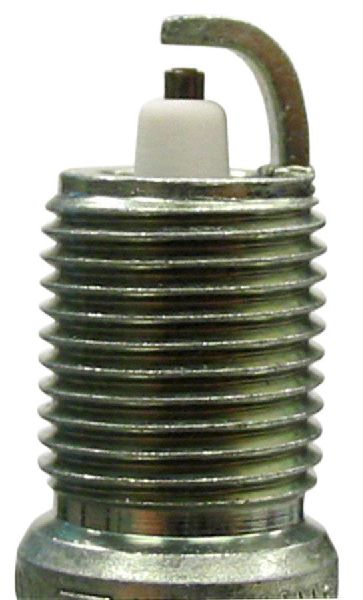
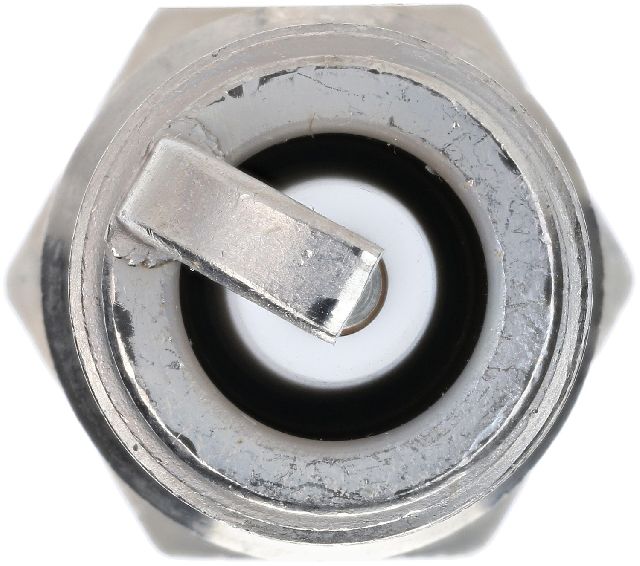
How to confirm: Remove the spark plug from cylinder 5. Inspect it for wear on the electrode, carbon buildup, oil fouling, or cracks in the porcelain.
Typical fix: Replace the spark plug. It is best practice to replace all 8 spark plugs at the same time to maintain consistent performance.
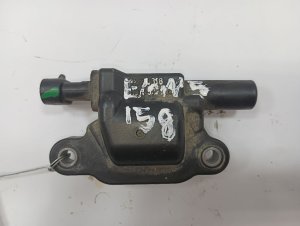
Est. part cost: $8-$20 per plug - Faulty Ignition Coil 🟡 Medium Probability → Shop Ignition Coil
How to confirm: Swap the ignition coil from cylinder 5 with another cylinder (e.g., cylinder 1 or 3). Clear the codes and drive the vehicle. If the code changes to P0301 or P0303, the coil is bad.
Typical fix: Replace the faulty ignition coil.
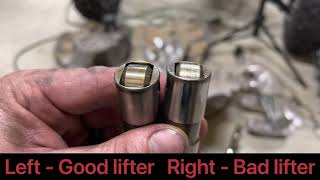
Est. part cost: $40-$110 - Failed Active Fuel Management (AFM) Lifter or Valvetrain Component 🟡 Medium Probability → Shop Engine Valve Lifter The AFM system in the 6.2L V8 uses special collapsible lifters that are a known failure point. A stuck or collapsed lifter prevents the valve from opening correctly, causing a misfire. This issue is so common it has resulted in class-action lawsuits. While cylinder 5 is not an AFM cylinder, related issues like a worn camshaft lobe can also cause this code.
How to confirm: This is an advanced diagnosis. A persistent ticking or chirping noise from the engine that changes with RPM is a strong indicator. If ignition and fuel checks fail, a compression test on cylinder 5 is the next step. Low compression points to an internal mechanical issue. A mechanic can also use a scope to analyze valve movement.
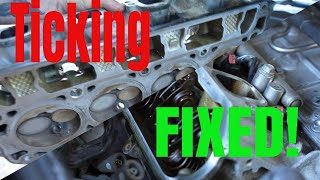
Typical fix: This is a major repair that involves removing the cylinder head to replace 🎬 See this walkthrough on removing the head and replacing lifters. the failed lifter(s) and lifter guides. Due to the high failure rate, many owners opt to perform an 'AFM delete,' replacing all AFM components with standard, more robust parts. Often, the camshaft is also damaged and requires replacement.
Est. part cost: $200-$800 for lifters, guides, and gaskets. A full AFM delete kit with a new camshaft can cost over $1,000. Labor costs are significant, often exceeding $2,000-$3,000. - Clogged or Faulty Fuel Injector ⚪ Low Probability → Shop Fuel Injector
How to confirm: Swap the fuel injector from cylinder 5 with another cylinder. If the misfire code follows the injector, the injector is the problem. This is more labor-intensive than swapping a coil and requires relieving fuel pressure first.
Typical fix: Replace the faulty fuel injector.
Est. part cost: $50-$150
Rare But Worth Checking
- Intake Manifold Gasket Leak: → Shop Engine Intake Manifold A vacuum leak near the intake runner for cylinder 5 can lean out the air/fuel mixture and cause a misfire. This can be diagnosed with a smoke test. Some owners on forums have traced their P0305 to this cause.
- Low Engine Compression: Beyond a failed lifter, issues like a worn piston ring, a broken valve spring, or a bad valve can cause low compression, leading to a misfire. A compression test will confirm this. One owner on a forum reported a broken intake valve on cylinder 5 causing a P0305 code.
- Valve Lifter Oil Manifold (VLOM) Failure: The VLOM directs oil to the AFM lifters. It has a small screen that can get clogged, leading to oil pressure issues that can cause lifter failure. Sometimes, the VLOM itself fails. A symptom can be a P0300 code that eventually isolates to a specific cylinder.
Diagnosis Steps
- Read the code with an OBD-II scanner to confirm P0305 and check for any other codes.
- Check for a flashing Check Engine Light, which indicates a severe misfire requiring immediate attention to prevent catalytic converter damage.
- Locate cylinder 5. On the GMC V8, the driver's side bank is cylinders 1, 3, 5, 7, from front to back.
- As per TSB #PIP4819A, inspect the spark plug wire for cylinder 5. Ensure it is securely connected at both the ignition coil and the spark plug. Check for any visible damage, rubbing against the steering shaft, or arcing.
- Swap the ignition coil from cylinder 5 with an adjacent one, such as cylinder 3. Clear the codes and run the engine. If the code returns as P0303, the ignition coil is faulty and needs replacement.
- If the code remains P0305, remove and inspect the spark plug for wear, fouling, or damage. Replace if necessary. Even new plugs can be faulty.
- If ignition components are good, listen carefully for a ticking or chirping noise from the engine, especially from the driver's side valve cover area. A noise that increases with engine speed is a strong indicator of a valvetrain problem.
- If a valvetrain noise is present or the misfire persists, perform a compression test on cylinder 5. A significant loss of compression compared to other cylinders points towards an internal engine problem (lifter, cam, valve, piston ring).
- If all else fails, consider a fuel system issue. Swapping the fuel injector is an option, but it is more labor-intensive. A professional diagnosis with a smoke machine to check for vacuum leaks may be warranted.
Parts You'll Likely Need
- Spark Plug
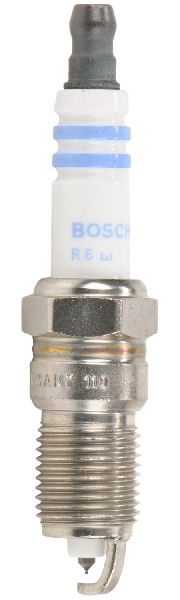
(OEM #19417055)— Spark plugs are a routine maintenance item and a primary cause of single-cylinder misfires.
Trusted brands: ACDelco, NGK
OEM price range: $15-$25
Aftermarket price range: $8-$15 - Ignition Coil
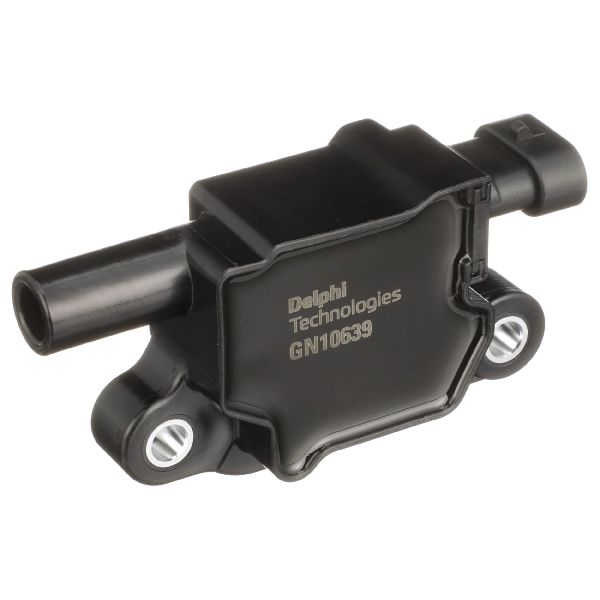
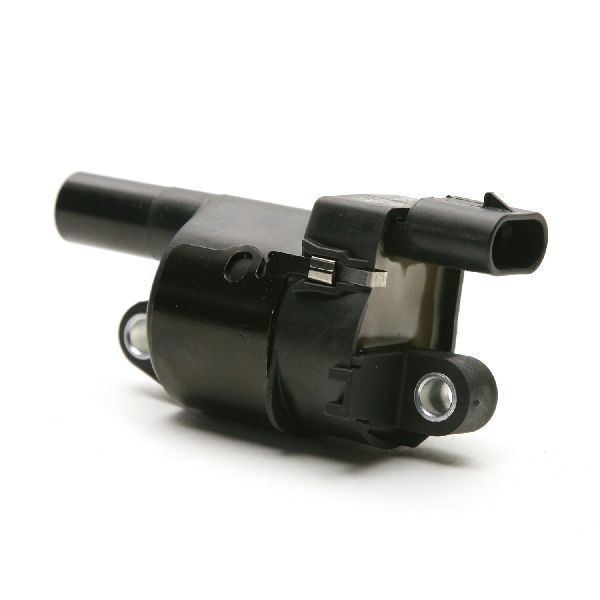
(OEM #12619161)— The coil-on-plug ignition system is robust, but individual coils can fail, causing a misfire in that specific cylinder.
Trusted brands: ACDelco, Delphi, NGK
OEM price range: $70-$110
Aftermarket price range: $40-$80 - Spark Plug Wire Set
(OEM #19351595)— A GM Technical Service Bulletin points to loose or faulty spark plug wires as a direct cause for this code on these vehicles.
Trusted brands: ACDelco, Delphi
OEM price range: $70-$120
Aftermarket price range: $50-$90 - AFM Valve Lifter
(OEM #12645725 (often superseded by 12740071))— If the cause is mechanical, a failed AFM lifter is a very common culprit on this specific engine, requiring replacement. It is highly recommended to replace all AFM
Related Codes That Often Appear With This One
- P0300 — If the misfire is intermittent or affecting multiple cylinders, a P0300 (Random/Multiple Cylinder Misfire Detected) code may appear alongside P0305, often pointing towards a systemic issue like a vacuum leak or a failing AFM system.
Technical Service Bulletins (TSBs) & Recalls
- Bulletin #PIP4819A: Notes that a Service Engine Soon lamp with misfire codes (P0300-P0308) can be caused by loose spark plug wires, and instructs technicians to inspect and replace them as needed.
- Bulletin #19-NA-219: A diagnostic tip bulletin that supersedes older ones like PIP4138R. It details troubleshooting for misfires and engine noises, listing potential causes as worn cam/lifter, sticking valve, valve leakage, broken valve spring, or a collapsed AFM lifter.
- Bulletin #PIP4568 Series (e.g., PIP4568M): Specifically addresses engine misfires on cylinders 1, 4, 6, or 7 and/or a tick noise resulting from a failed AFM lifter. It guides technicians on diagnosis and replacement of lifters, guides, and the VLOM.
Platform-Specific Known Issues
- Active Fuel Management (AFM) Lifter Failure: The most significant vehicle-specific issue. The 6.2L V8 engine uses AFM to deactivate cylinders under light loads. The special lifters used for this system are a known weak point and can become stuck or collapse, leading to a constant misfire on the affected cylinder. This is a labor-intensive repair often requiring replacement of the lifters, lifter guides, and sometimes the camshaft. The issue has led to multiple TSBs and class-action lawsuits against GM.
Mechanic-Grade Diagnostic Values
- Fuel Injector Resistance — expected: 11 to 14 Ohms. Failure: A reading outside this range, especially an open circuit (infinite resistance), indicates a failed injector coil.
- Ignition Coil Resistance (Secondary) — expected: Approximately 2.0k Ohms. Failure: Significant deviation from this value suggests a faulty coil winding.
- Mass Airflow (MAF) Sensor Reading at Idle — expected: Approximately 5.5 to 8.0 grams/second (g/s) with the engine fully warmed up and in gear.. Failure: A significantly lower reading could indicate a vacuum leak downstream of the sensor, while a significantly higher or erratic reading could indicate a faulty sensor.
- Fuel Pressure (Key On, Engine Off) — expected: 55-62 PSI for non-Flex Fuel models.. Failure: Pressure that is significantly lower or bleeds off quickly can indicate a weak fuel pump or a leak in the system.
- Fuel Injector Pulse Width at Idle — expected: ~1.2 milliseconds (ms). Failure: While not a definitive failure metric on its own, comparing the pulse width of cylinder 5 to other cylinders can reveal if the ECM is attempting to compensate for a lean/rich condition on that specific cylinder.
Hidden / Shadow Codes Worth Checking
- Live Misfire Counters: While not a hidden code, professional scan tools like the GM Tech 2 or GDS2 provide access to live data showing individual misfire counts for each cylinder in real-time. This is the mechanic-grade equivalent of Mode $06, Test ID $A2 data and is essential for confirming the misfire is isolated to cylinder 5 and observing its frequency. (see via Access the Engine Control Module (ECM) data list with a GM-specific scan tool (Tech 2, GDS2) or a high-end professional scanner with enhanced GM data.)
Scan Tool Commands That Help
- GDS2 (GM Global Diagnostic System 2): Cylinder Power Balance Test — This is a primary diagnostic step to confirm a P0305. The test graphically displays the RPM contribution of each cylinder. A significant drop or lack of contribution from cylinder 5 confirms it is the source of the misfire before swapping any parts.
- GDS2 / Tech 2: Fuel Injector Balance Test — After ruling out spark, this command can be used to test the cylinder 5 fuel injector. The tool commands the injector to fire and measures the corresponding drop in fuel rail pressure. A smaller pressure drop compared to other cylinders indicates a clogged or failing injector.
Wiring & Ground Locations
- G104 — On the rear of the driver's side (left) cylinder head, near the firewall.. This is a primary engine-to-chassis ground point. A loose or corroded G104 can cause intermittent and difficult-to-diagnose electrical issues, including weak spark or erratic sensor readings for the driver's side of the engine, which includes cylinder 5.
- G102 — Located at the left rear of the engine block.. This ground is specifically designated for the 8 ignition coils. A poor connection here could directly cause weak or inconsistent spark on one or more cylinders, including cylinder 5.
- Cylinder 5 Ignition Coil Control Wire — Pin 51 (White/Green wire) on the X1 connector of the Engine Control Module (ECM).. If a coil swap doesn't resolve the issue, a technician can perform a continuity test on this specific wire between the ECM and the cylinder 5 ignition coil connector to rule out a wiring break or short.
Real Owner Repair Stories
- Tahoe Yukon Forum user 'Greybullit' (2007 Yukon 5.3L (similar GMT900 platform and engine architecture)) — Persistent P0305 misfire code.
❌ Tried (didn't work) Replaced spark plugs, Swapped ignition coils, Swapped spark plug wires, Swapped fuel injectors
✅ What actually fixed it A compression test revealed only 5 PSI in cylinder 5. A subsequent leak-down test pointed to an exhaust-side failure. Upon removing the cylinder head, a burned exhaust valve with a hole in it was found. Replacing the cylinder head resolved the misfire. - BobIsTheOilGuy Forum user 'jdw1222' (2010 Denali 6.2L, ~135k-140k miles) — Engine failure with low oil pressure warnings after a history of AFM issues.
❌ Tried (didn't work) An AFM delete tuner was used to disable the system electronically.
✅ What actually fixed it The user had previously had the AFM lifters and VLOM replaced by a dealer at 90,000 miles. The engine later failed again, highlighting that even after repair, the underlying oiling system design can lead to repeat failures. This story emphasizes the severity and recurring nature of valvetrain issues on this engine.
"I Checked Everything" — The Actual Cause
- In one detailed diagnostic thread on a Tahoe/Yukon forum, the owner performed a smoke test and also replaced the intake manifold gaskets, which corrected a lean condition indicated by his long-term fuel trims. However, this did NOT fix the persistent P0305 misfire, indicating the misfire was caused by a separate, deeper mechanical issue rather than a simple vacuum leak.
OEM Part Supersession History
12645725→12740071— This is the OEM part number for the Active Fuel Management (AFM) valve lifter. GM frequently updates part numbers to reflect design improvements or manufacturing changes aimed at increasing durability for these known failure-prone components.
Model Year Variations Within This Range
- 2010-2013: The 2010-2013 Yukon Denali uses the 6.2L L94 V8 engine, which is equipped with Active Fuel Management (AFM). This is a key distinction from the 2007-2008 models which used the non-AFM L92 engine. The presence of AFM makes the 2010+ models specifically susceptible to misfires caused by failed AFM lifters, a problem not present in the earlier 6.2L engines.
Helpful Videos
Used OEM Parts in Stock
New Aftermarket Parts Available

The information in this article is provided for general reference and educational purposes only. Vehicle specifications, procedures, and part compatibility can vary by production date, trim level, and region. Always consult your vehicle's factory service manual and verify part numbers before purchasing or performing repairs. Safety-critical components such as airbags, seat belts, and braking systems should be installed by a qualified professional.
- Gmc YUKON DENALI:
- 🧭 Diagnostic Flowchart
- 🎬 Helpful Videos
- 🛍️ Shop This Part
- What's Unique About the 2010-2013 Gmc YUKON DENALI
- Symptoms You May Notice
- Most Likely Causes
- Rare But Worth Checking
- Diagnosis Steps
- Parts You'll Likely Need
- Related Codes That Often Appear With This One
- Technical Service Bulletins (TSBs) & Recalls
- Platform-Specific Known Issues
- Mechanic-Grade Diagnostic Values
- Hidden / Shadow Codes Worth Checking
- Scan Tool Commands That Help
- Wiring & Ground Locations
- Real Owner Repair Stories
- "I Checked Everything" — The Actual Cause
- OEM Part Supersession History
- Model Year Variations Within This Range
- 🎟️ Get 5% Off