

P0305 on 2020-2025 Hyundai Palisade: Cylinder 5 Misfire Causes and Fixes
P0305 on a Hyundai Palisade means cylinder 5 is misfiring. The most common cause is a failed ignition coil or a worn spark plug. This is a difficult DIY repair because cylinder 5 is on the rear bank against the firewall, requiring intake manifold removal. Expect a shop to charge between $500 and $900 for the repair.
- P0305 signifies a misfire in cylinder 5, which is on the hard-to-reach rear bank of the engine.
- The most likely cause is a bad ignition coil, followed by a worn spark plug.
- Due to the high labor cost of removing the intake manifold, it is critical to replace all three rear coils and all six spark plugs at the same time.
- Owners of 2024 models must check for Recall 255 regarding defective valve springs before attempting any repairs.
- Do not drive with a flashing check engine light, as this can quickly lead to expensive catalytic converter damage.
What's Unique About the 2020-2025 Hyundai Palisade
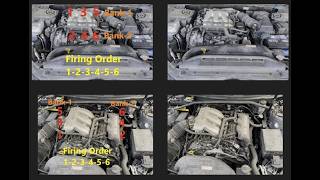
The key challenge with a P0305 code on the Palisade's 3.8L V6 is the location of cylinder 5. It is on the rear cylinder bank (Bank 1), which is positioned against the firewall. Accessing the ignition coil and spark plug is not possible without first removing the entire upper intake manifold, making this a significantly more labor-intensive and complex job than a misfire on the front bank. Because of the high labor cost, the standard recommendation is to replace all three ignition coils and spark plugs on the rear bank (cylinders 1, 3, and 5) at the same time.
Symptoms You May Notice
- Rough idling or engine vibrations
- Hesitation or stumbling during acceleration
- Reduced engine power
- Flashing Check Engine Light (indicates a severe misfire)
- Poor fuel economy
- Fuel smell from the exhaust
- Replacing only the spark plug in cylinder 5 without replacing the ignition coil, or vice-versa. Given the high labor cost, it's prudent to replace both, along with the other rear bank coils and plugs.
- Assuming a fuel system problem (like a bad fuel pump) when it's a single-cylinder misfire. A fuel pump issue would typically affect multiple cylinders or cause random misfire codes (P0300).
- Overlooking a vacuum leak from a reused or improperly installed intake manifold gasket after a previous repair, leading to a repeat of the P0305 code.
Most Likely Causes
- Failed Ignition Coil 🔴 High Probability → Shop Ignition Coil Ignition coils are a common failure item on modern engines due to constant exposure to heat and vibration. Forum members and technicians report coil failure as a primary cause for single-cylinder misfires on this platform. A Reddit user with a 2021 Palisade confirmed a bad #5 coil was the cause of their P0305 code.
How to confirm: The most definitive test is to swap the ignition coil from cylinder 5 with an easily accessible cylinder on the front bank (e.g., cylinder 2). This requires removing the intake manifold. If the code changes to P0302 after clearing codes and driving, the coil is faulty.
Typical fix: Replace the failed ignition coil. It is highly recommended to replace all three coils on the rear bank (cylinders 1, 3, 5) at the same time due to the labor involved in accessing them.
Est. part cost: $50-$100 per coil - Worn or Fouled Spark Plug 🟡 Medium Probability → Shop Spark Plug Spark plugs are a standard maintenance item. While modern iridium plugs have a long life, they can still fail or become fouled by carbon deposits or oil, especially on GDI engines which are known for carbon buildup on intake valves.
How to confirm: After removing the intake manifold and ignition coil, inspect the spark plug for wear, damage, or fouling (black, sooty, or oily deposits).
Typical fix: Replace the spark plug in cylinder 5. As with the ignition coils, it is strongly recommended to replace all six spark plugs at the same time to avoid repeating the labor-intensive intake manifold removal.
Est. part cost: $15-$30 per plug - Clogged or Faulty Fuel Injector ⚪ Low Probability → Shop Fuel Injector The Lambda II is a Gasoline Direct Injection (GDI) engine, and while generally reliable, the injectors can be susceptible to carbon buildup over time which can affect their spray pattern and lead to misfires. This is a less common cause for a single-cylinder misfire compared to ignition components.
How to confirm: This is more difficult to diagnose. It involves checking fuel trims with a scan tool and potentially swapping injectors between cylinders, which is a labor-intensive job requiring intake manifold removal.
Typical fix: Clean or replace the fuel injector for cylinder 5. This also requires intake manifold removal.
Est. part cost: $80-$150 per injector
Rare But Worth Checking
- Fractured Engine Valve Spring (Certain 2024 Models): Hyundai issued Recall 255 (NHTSA ID: 24V-106) for a batch of 2024 Palisades built between August 21, 2023, and October 12, 2023. Defective valve springs can fracture due to fatigue, causing a misfire, sudden loss of power, and potentially a hole in the engine block, which increases the risk of a crash or fire. The fix is a complete engine sub-assembly replacement performed by a dealer at no charge.
- Intake Manifold Gasket Leak: → Shop Engine Intake Manifold When the intake manifold is removed for service, the gaskets must be replaced. Reusing old gaskets or improperly installation can cause a vacuum leak near cylinder 5, disrupting the air-fuel ratio and causing a misfire. A recurring P0305 after a repair is often due to a pinched or improperly seated gasket.
- Low Engine Compression: This indicates an internal mechanical engine problem, such as worn piston rings, a leaking head gasket, or a valve sealing issue. A compression test on cylinder 5 is required to diagnose this. It is uncommon on a newer vehicle but possible, especially if the engine has overheated or has high mileage.
- Intake Valve Carbon Buildup: As a GDI engine, the Lambda II V6 is prone to carbon accumulation on the intake valves over time (typically >60,000 miles), as fuel does not wash over them. Severe buildup can restrict airflow to a specific cylinder, causing misfires. The fix is a professional 'walnut blasting' intake cleaning service.
Diagnosis Steps
- For 2024 models, immediately check the vehicle's VIN for Hyundai Recall 255 (NHTSA 24V-106) before any diagnosis. If the vehicle is part of the recall, contact a Hyundai dealer for a free engine sub-assembly replacement.
- For early 2020 models experiencing misfires on cold starts, inquire with a dealer about a potential ECM software update. The sister vehicle, Kia Telluride, had a TSB (ENG228) for this issue which addressed overly sensitive misfire detection.
- Confirm the P0305 code is present using an OBD-II scanner. Check freeze-frame data to see the engine conditions when the misfire occurred.
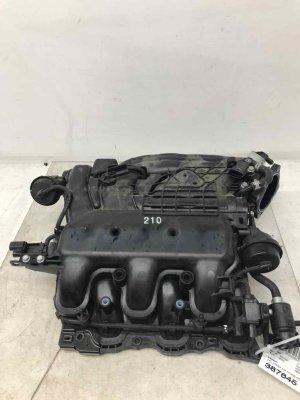
- Plan for intake manifold removal. This is a complex job. Purchase new upper intake manifold gaskets, as they are single-use.
- Once the manifold is off, access cylinder 5 (rear bank, driver's side). Swap the ignition coil from cylinder 5 with the coil from cylinder 2 (front bank, passenger's side).
- While the manifold is off, it is highly recommended to replace all three ignition coils and all six spark plugs to avoid future high labor costs.
- Consider inspecting the intake valves for heavy carbon buildup with a borescope while the manifold is removed.
- Reinstall the intake manifold with new gaskets and torque all bolts to factory specifications.
- Clear the trouble codes with the scanner and perform a test drive.
- If the code returns as P0302, the original ignition coil from cylinder 5 is faulty. If the code remains P0305, the issue is likely the spark plug, fuel injector, or a mechanical problem in cylinder 5.
Parts You'll Likely Need
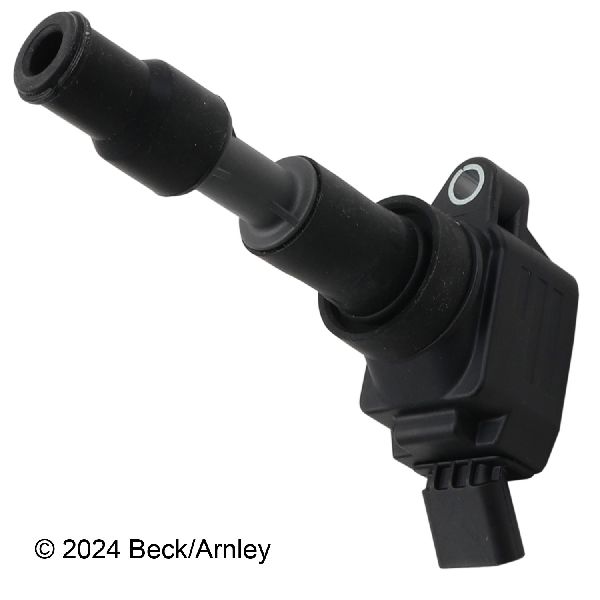
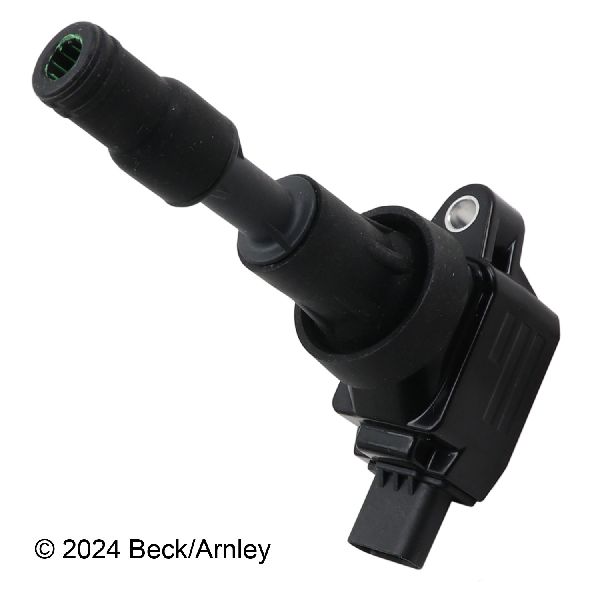
- Ignition Coil (Rear Bank)
(OEM #27310-3L000)— This is the most common part to fail and cause a P0305 misfire. Cylinder 5 is on the rear bank.
Trusted brands: Hyundai (OEM), NGK, Denso
OEM price range: $95-$140
Aftermarket price range: $50-$100 - Iridium Spark Plug
(OEM #18849-11070)— A worn or fouled spark plug is the second most likely cause. It should always be replaced when the labor-intensive job of removing the intake manifold is performed.
Trusted brands: Hyundai/Kia (OEM), NGK
OEM price range: $25-$35
Aftermarket price range: $15-$30 - Upper Intake Manifold Gasket Set
(OEM #29215-3CFA1)— These are single-use gaskets that are required to be replaced anytime the intake manifold is removed to prevent vacuum leaks. The previous part number was 29215-3CFA0.
Trusted brands: Hyundai (OEM), Fel-Pro, Mahle
OEM price range: $30-$50
Aftermarket price range: $20-$40
Related Codes That Often Appear With This One
- P0300 — If the misfire is intermittent or other cylinders are also misfiring, a P0300 (Random/Multiple Cylinder Misfire) code may accompany P0305.
- P0301, P0303 — If the root cause is affecting the entire rear bank (e.g., a vacuum leak from the intake manifold gasket on that side), you may see misfire codes for the other rear cylinders as well.
Technical Service Bulletins (TSBs) & Recalls
- Kia TSB ENG228: Addresses overly sensitive misfire detection on early 2020 Kia Tellurides, potentially applicable to Palisades.
- Hyundai TSB 21-01-003H / 21-BD-003H: Addresses wind noise from the front door/mirror area on 2020-2021 models.
- Hyundai TSB 24-01-039H-2: Provides the service procedure for replacing the engine sub-assembly under Recall 255.
Platform-Specific Known Issues
- Recall 255 (NHTSA 24V-106): A specific batch of 2024 Palisades are recalled for defective engine valve springs that can fracture, causing misfires and potential engine failure. The remedy is an engine sub-assembly replacement.
- ECM Software Sensitivity (Early 2020 Models): The platform-mate Kia Telluride had a TSB (ENG228) for early 2020 models where the ECM's misfire detection was too sensitive, especially on cold starts. A software update at the dealer could resolve the issue without replacing parts. It is worth inquiring about a similar update for the Palisade.
Diagnostic Flowchart
Other Known Issues on This Vehicle
Issues unrelated to this code that are worth knowing about as an owner of this generation:
- Excessive Wind Noise 🟡 Low — Common on 2020-2021 models. Noise comes from the front doors/side mirrors at highway speeds. (Ref: TSB 21-01-003H, 21-BD-003H, 19-BD-010H)
- Excessive Oil Consumption 🔴 High — Reported by numerous owners of 2020-2022 models, sometimes starting at low mileage (e.g., 16,200 miles). Can lead to engine stalling and eventual engine failure. Hyundai's official tolerance is often cited as 1 quart per 1,000 miles.
- Tow Hitch Wiring Fire Risk 🔴 High — Affects 2020-2022 models equipped with a tow hitch. Debris and moisture can short the circuit board. (Ref: Recall (Affects 244,980 units))
- Windshield Wipers May Fail 🟠 Medium — Affects 2020-2021 models. The driver's side wiper motor may become inoperative. (Ref: Recall (Affects 122,949 units))
- Hazy/Cloudy Side Windows 🟡 Low — Common complaint on 2022-2023 models, particularly the double-paned rear side windows, impacting visibility in certain light.
Real Owner Stories
Aggregated from forums and TSBs cited above. Mileages and costs reflect what owners reported in those sources.
2024 Hyundai Palisade 3.8L V6 — 10400 miles
Symptoms: Started the car and it began to 'shake like hell' and then threw the code within 30 seconds of starting.
What fixed it: Vehicle was dropped off at the dealer for warranty repair (related to Recall 255/NHTSA 24V-106).
Source hint: r/HyundaiPalisade - Throwing code P030500. Car is only 7 months old!?
2021 Hyundai Palisade 3.8L V6
Symptoms: Cylinder 5 misfire detected.
What fixed it: Replacement of the faulty ignition coil on cylinder 5.
Source hint: r/MechanicAdvice - '2021 Palisade. P0305 cylinder 5 misfire detected.'
Hyundai Owner Report — NHTSA ODI #10520742
Symptoms: The vehicle would quickly slow down from 70 MPH to 35 MPH without warning, accompanied by the engine light displaying code P0305.
What fixed it: The owner reported this as a continuing problem with no immediate fix at the time of filing, resulting in several near misses on the road.
Hyundai Service Report — NHTSA ODI #10508566
Symptoms: Multiple misfire codes detected, including P0302, P0303, P0304, P0305, and P0306.
What fixed it: A service writer verbally advised the owner that the misfires were occurring across multiple cylinders.
Related OBD-II Codes
Frequently Asked Questions
I have a 2024 Palisade with a P0305 code and severe shaking. Is there a recall for this?
My early 2020 Palisade misfires only on cold starts. Do I need to replace the ignition coils?
Why is the labor for replacing a single Cylinder 5 spark plug so expensive on the 3.8L V6?
Should I replace all the coils if only the one for Cylinder 5 is bad?
Can carbon buildup cause a P0305 code on the Lambda II GDi engine?
Are there any other recalls I should be aware of while my 2020-2022 Palisade is in the shop for a misfire?
Helpful Videos



Used OEM Parts in Stock
New Aftermarket Parts Available


The information in this article is provided for general reference and educational purposes only. Vehicle specifications, procedures, and part compatibility can vary by production date, trim level, and region. Always consult your vehicle's factory service manual and verify part numbers before purchasing or performing repairs. Safety-critical components such as airbags, seat belts, and braking systems should be installed by a qualified professional.
- Hyundai Palisade:
- 🧭 Diagnostic Flowchart
- 🎬 Helpful Videos
- 🛍️ Shop This Part
- What's Unique About the 2020-2025 Hyundai Palisade
- Symptoms You May Notice
- Most Likely Causes
- Rare But Worth Checking
- Diagnosis Steps
- Parts You'll Likely Need
- Related Codes That Often Appear With This One
- Technical Service Bulletins (TSBs) & Recalls
- Platform-Specific Known Issues
- Other Known Issues on This Vehicle
- Real Owner Stories
- 2024 Hyundai Palisade 3.8L V6 — 10400 miles
- 2021 Hyundai Palisade 3.8L V6
- Hyundai Owner Report — NHTSA ODI #10520742
- Hyundai Service Report — NHTSA ODI #10508566
- Related OBD-II Codes
- Frequently Asked Questions
- 🎟️ Get 5% Off