

P0305 on 2006-2010 Hyundai Sonata 3.3L V6: Cylinder 5 Misfire Causes and Fixes
The most common cause for a P0305 code on a 3.3L V6 Sonata is a failed ignition coil or spark plug. Because cylinder 5 is on the rear bank under the intake manifold, it's highly recommended to replace all three rear coils, spark plugs, and the intake gasket at the same time to save on future labor costs.
- P0305 indicates a misfire on cylinder 5, which is located on the rear bank against the firewall.
- Accessing cylinder 5 requires removing the upper intake manifold, a 2.5-4 hour job.
- The most common causes are a failed ignition coil or a worn/fouled spark plug.
- Best practice is to replace all three rear coils, all six spark plugs, and the intake manifold gaskets simultaneously to avoid repeat labor.
- Check for oil in the spark plug well, as a leaking valve cover gasket is a common related problem that can cause the misfire.
What's Unique About the 2006-2010 Hyundai Sonata
On the 3.3L Lambda V6 engine in the Sonata, the cylinders are arranged with 2-4-6 at the front (near the radiator) and 1-3-5 at the rear (against the firewall). This means cylinder 5 is on the difficult-to-access rear bank. Any repair to cylinder 5's ignition or fuel components requires removing the entire upper intake manifold 🎬 Watch this step-by-step V6 spark plug and ignition tune-up guide., a process which involves disconnecting the throttle body, fuel lines, and various sensors, making the job significantly more labor-intensive than a misfire on the front bank.
Symptoms You May Notice
- Flashing or solid Check Engine Light
- Rough or shaking idle
- Engine stumbling or hesitation during acceleration
- Noticeable loss of power
- Potential fuel smell from the exhaust
- Poor fuel economy
- Replacing only the cylinder 5 coil and/or plug. While this may fix the immediate issue, another rear coil or plug could fail soon after, requiring the expensive intake manifold removal labor all over again. This is a common regret shared on owner forums.
Most Likely Causes
- Failed Ignition Coil 🔴 High Probability → Shop Ignition Coil Coil-on-plug ignition systems are a common failure point on many vehicles as they age. Given the significant labor to access the rear bank, failure of one coil often prompts replacement of all three rear coils as a preventative measure.
How to confirm: The standard diagnostic procedure is to swap the ignition coil from cylinder 5 with a coil from an accessible cylinder on the front bank (e.g., cylinder 2). Clear the codes and drive. If the misfire code changes to P0302, the coil is confirmed bad. However, this is not practical for P0305 due to the intake manifold. Diagnosis is typically done by replacing the coil as the first step after disassembly.
Typical fix: Replace the faulty ignition coil. It is strongly recommended to replace all three rear ignition coils (cylinders 1, 3, 5) and spark plugs at the same time due to the labor involved in removing the intake manifold.
Est. part cost: $30-$70 per coil - Worn or Fouled Spark Plug 🔴 High Probability → Shop Spark Plug Spark plugs are a maintenance item. Often, the rear bank plugs are neglected due to the difficult access. A common related issue is a leaking valve cover gasket, which allows oil to seep into the spark plug tubes, fouling the plug and causing a misfire.
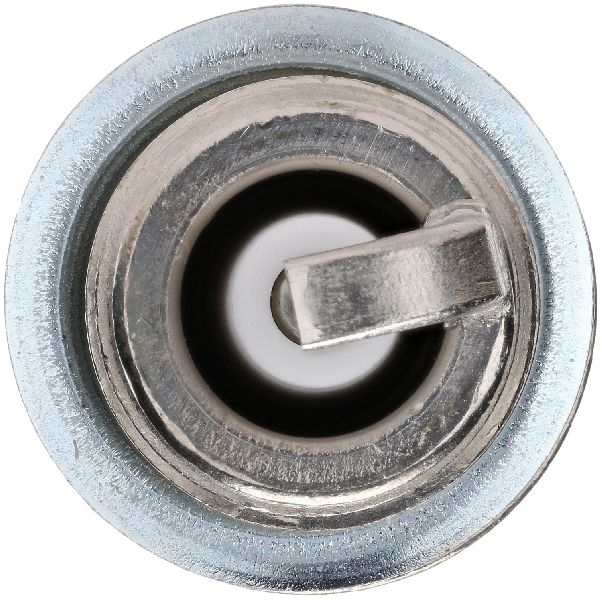
How to confirm: After removing the intake manifold and ignition coil, remove the spark plug. Inspect it for wear (worn electrode), carbon buildup, oil fouling, or damage to the ceramic insulator. Oil in the spark plug well is a clear sign of a leaking valve cover gasket.
Typical fix: Replace the spark plug. As with the ignition coils, it is best practice to replace all six spark plugs if they are near the end of their service life, and especially the three on the rear bank during a P0305 repair.
Est. part cost: $10-$25 per plug - Clogged or Failed Fuel Injector 🟡 Medium Probability → Shop Fuel Injector
How to confirm: If coils and plugs are good, the fuel injector is the next suspect. A technician can perform a fuel injector balance test. A DIY method involves listening to the injector with a mechanic's stethoscope to ensure it's clicking. The injector's resistance can also be tested with a multimeter.
Typical fix: Replace the fuel injector for cylinder 5. This also requires removing the intake manifold.
Est. part cost: $50-$150 - Intake Manifold Gasket Leak ⚪ Low Probability → Shop Engine Intake Manifold
How to confirm: With the engine running, spray a small amount of brake cleaner or starting fluid around the intake manifold runner for cylinder 5. If the engine RPM changes, a vacuum leak is present. This test is difficult for the rear bank but can sometimes identify a large leak.
Typical fix: Replace the intake manifold gaskets. This is always done as a required step whenever the intake manifold is removed for another repair, as the gaskets are single-use. 🎬 See how to properly remove and replace the intake manifold gasket.
Est. part cost: $20-$50 for the set
Rare But Worth Checking
- Low Engine Compression: This is a serious mechanical issue. If ignition and fuel systems check out, a compression test should be performed on cylinder 5 to rule out problems like a burnt valve, worn piston rings, or a head gasket failure.
Diagnosis Steps
- Confirm code P0305 with an OBD-II scanner and check for any other stored codes. Note if the Check Engine Light is flashing.
- Identify cylinder 5. It is the middle cylinder on the rear bank, against the firewall.
- Plan for intake manifold removal. This is a required step for any work on cylinder 5. This involves disconnecting the battery, air intake, throttle body, vacuum hoses, and electrical connectors.
- Once the intake manifold is removed, the primary suspects are immediately accessible. Remove the ignition coil and spark plug for cylinder 5.
- Best Practice: While the intake manifold is off, replace all three rear ignition coils (cylinders 1, 3, 5), all three rear spark plugs, and the upper intake manifold gaskets. Inspect the spark plug tubes for oil; if present, replace the valve cover gasket as well. 🎬 Watch a walkthrough on replacing valve covers, plugs, and coils.
- If the misfire persists after replacing coils and plugs, the next step is to inspect the fuel injector and its wiring connector for cylinder 5.
- If the injector is functioning, check for vacuum leaks around the intake port for cylinder 5, ensuring the new gasket is seated correctly.
- As a final step for a persistent misfire, perform a compression test on cylinder 5 to check for internal mechanical engine problems.
Parts You'll Likely Need
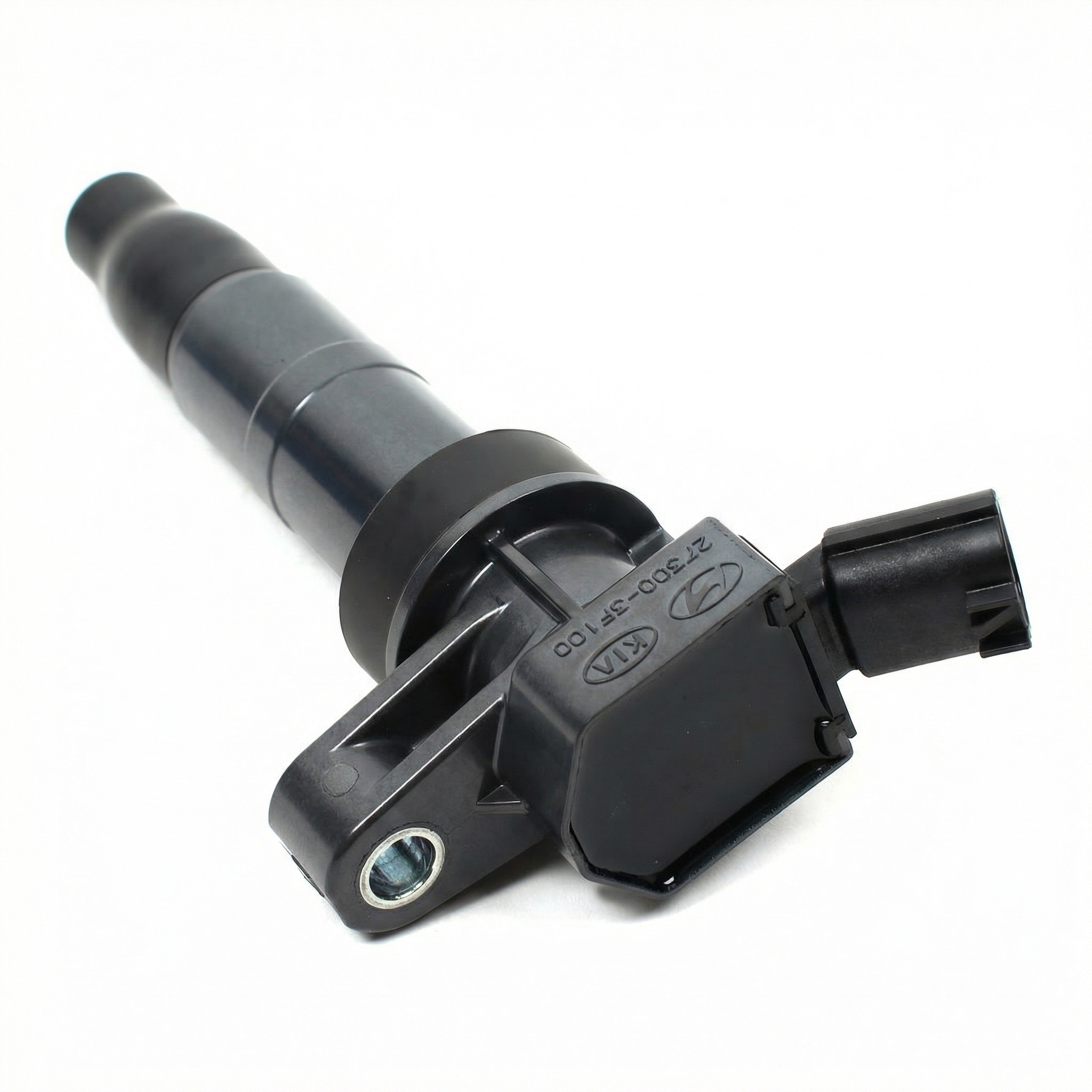
- Ignition Coil
(OEM #27301-3C000)— This is the most common cause of a single-cylinder misfire. Due to the labor to access cylinder 5, it's wise to replace all three rear coils.
Trusted brands: Denso, NGK, Delphi, Mando
OEM price range: $70-$100
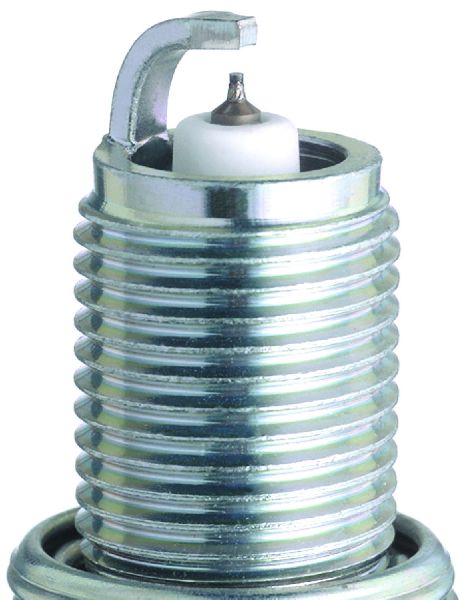
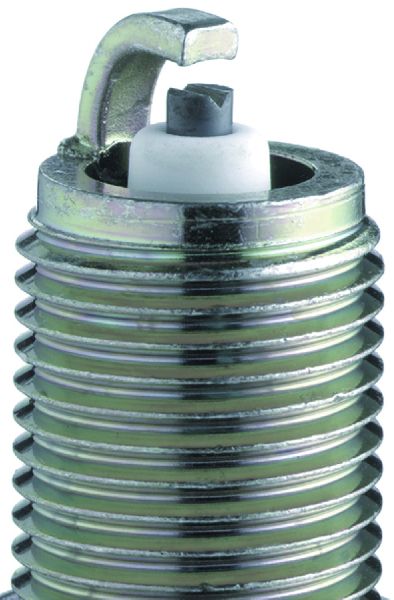
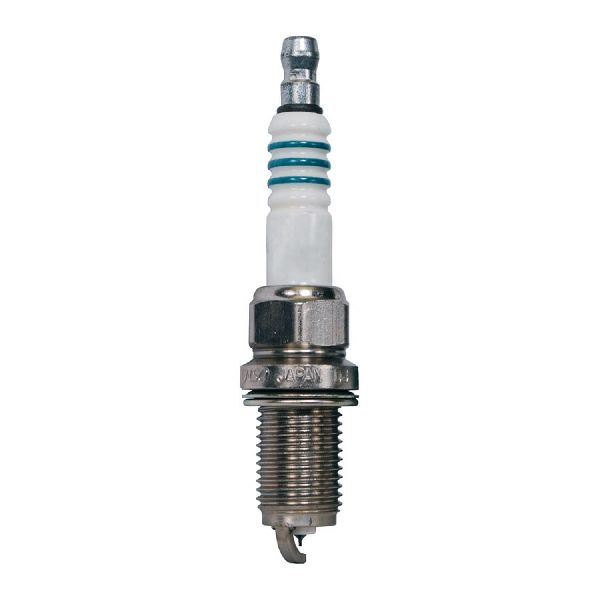
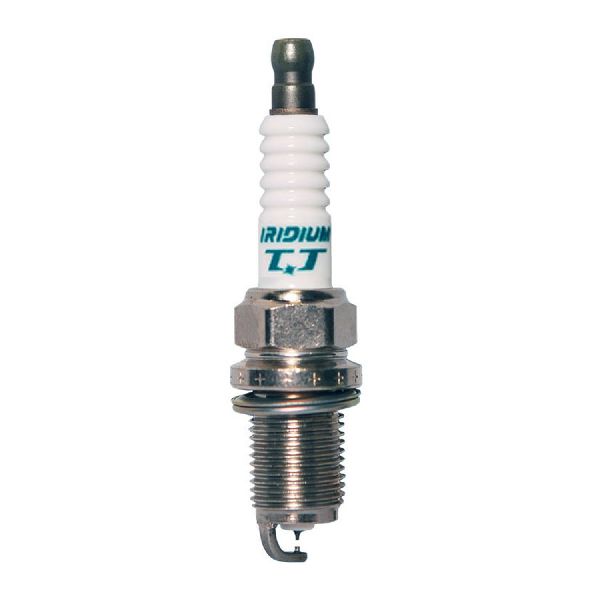
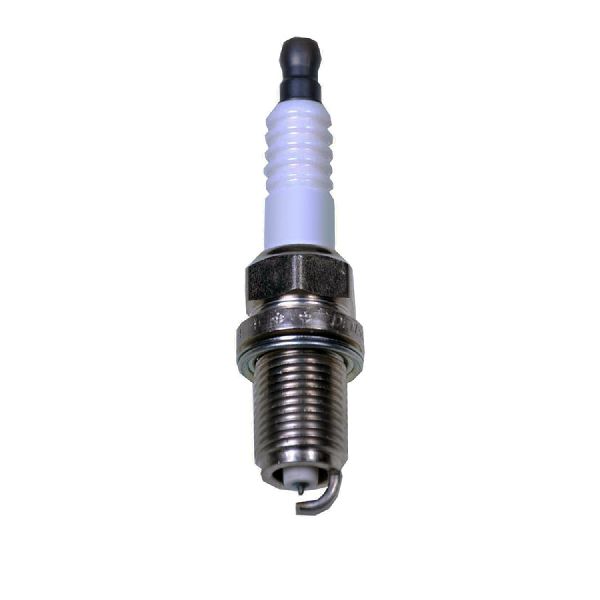
Aftermarket price range: $30-$70 - Spark Plugs (Set of 6)
(OEM #NGK IFR5G-11)— Worn spark plugs are a primary cause of misfires. They should always be replaced when servicing the ignition coils, especially the hard-to-reach rear bank.
Trusted brands: NGK, Denso
OEM price range: $15-$25 per plug
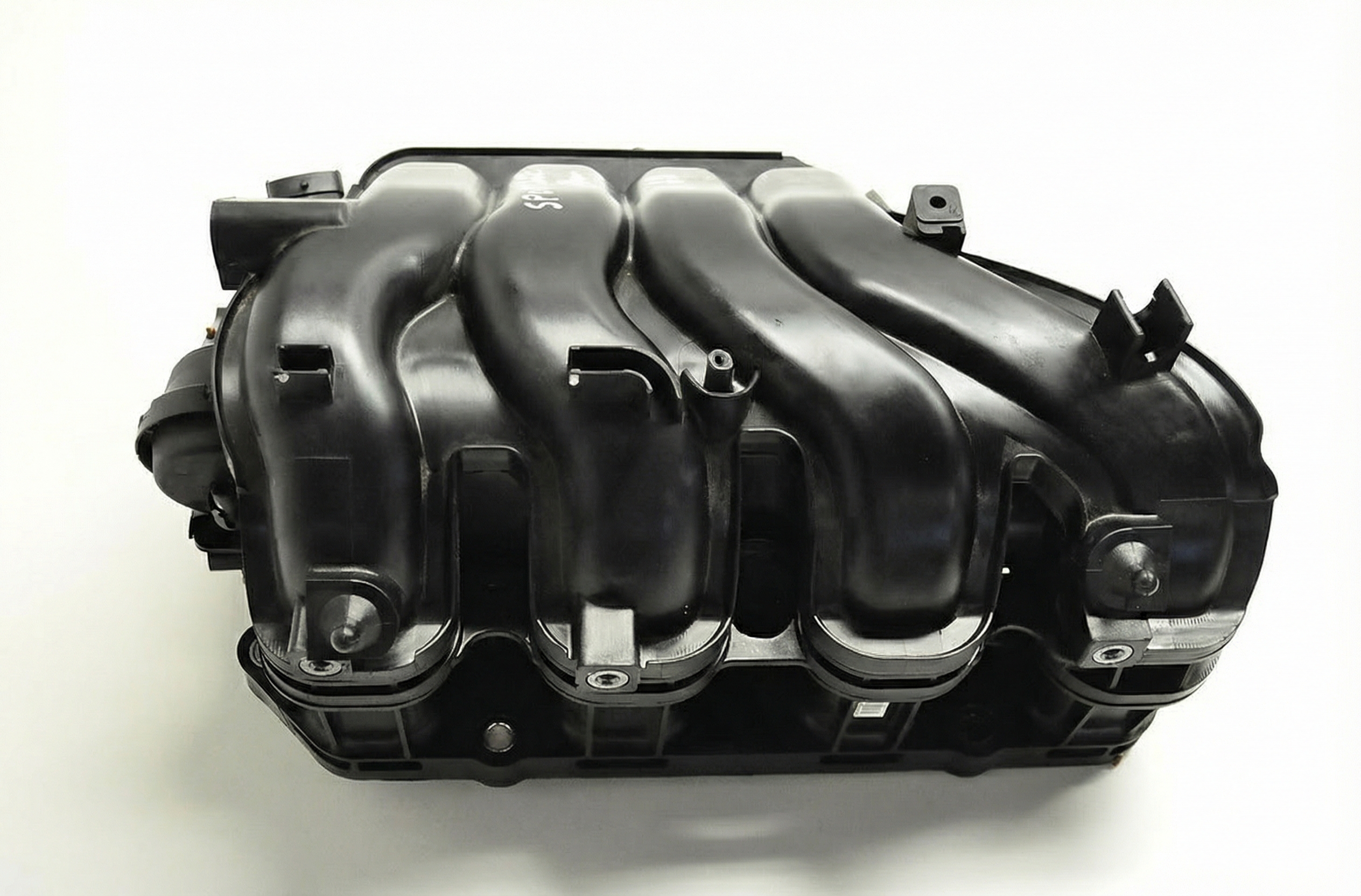
Aftermarket price range: $10-$18 per plug - Intake Manifold Gasket Set (Upper)
(OEM #29215-3C100)— The intake manifold must be removed to access cylinder 5. The gaskets are single-use and must be replaced to prevent vacuum leaks.
Trusted brands: Fel-Pro, Mahle, Hyundai OEM
OEM price range: $40-$60
Aftermarket price range: $20-$40
Related Codes That Often Appear With This One
- P0300 — If the misfire is intermittent or affects multiple cylinders, a P0300 (Random/Multiple Cylinder Misfire) may be stored alongside P0305.
- P0301, P0303 — If there is a systemic issue affecting the rear bank, such as a vacuum leak from the intake gasket on that side, you may see misfire codes for the other rear cylinders (1 and 3) as well.
Technical Service Bulletins (TSBs) & Recalls
- TSB 15-01-031 / Service Campaign 936: While officially for the 2007-2009 Santa Fe 3.3L, this TSB addresses replacing the valve cover gasket due to oil leaks and inspecting the alternator for oil contamination. The engine design and gasket failure mode are identical to the Sonata, making this TSB relevant context for a potential root cause of oil-fouled plugs.
Platform-Specific Known Issues
- A common related failure on the 3.3L V6 is a leaking valve cover gasket. When the rear gasket fails, it often leaks oil directly into the spark plug tubes for cylinders 1, 3, and 5. This oil can foul the spark plug and short out the ignition coil boot, directly causing a P0301, P0303, or P0305 misfire code. It is highly recommended to inspect for oil in the spark plug wells when addressing this code.
Mechanic-Grade Diagnostic Values
- Ignition Coil Primary Resistance — expected: 0.56 - 0.68 Ohms. Failure: A reading outside this range indicates a faulty coil winding.
- Ignition Coil Secondary Resistance — expected: 5950 - 8050 Ohms. Failure: A reading outside this range suggests an internal break or short in the secondary coil winding.
- Fuel Injector Resistance — expected: 11.4 - 12.6 Ohms. Failure: Resistance outside this range points to a failing injector coil. A reading of infinity indicates an open circuit, while a reading near zero indicates a short.
- Fuel System Pressure (MPI) — expected: 3.8 bar (approx. 55 PSI). Failure: Significantly lower pressure indicates a weak fuel pump or clogged filter, which could starve the injector.
- Crankshaft Position Sensor Resistance — expected: 630 - 770 Ohms. Failure: An incorrect resistance can cause erratic misfire detection by the PCM, although it would typically set other codes as well.
Hidden / Shadow Codes Worth Checking
- Mode 6, Test ID $53: This is not a 'code' but a data stream accessible with advanced scan tools. It contains the raw misfire count for each cylinder during the current and last driving cycle. A high count for cylinder 5, even before the P0305 code is officially set, can confirm the misfire and help diagnose intermittent issues. (see via An advanced OBD-II scanner or the Hyundai GDS (Global Diagnostic System) is required to view Mode 6 data.)
Scan Tool Commands That Help
- Hyundai GDS (or equivalent advanced scanner): Power Balance Test — This function allows a technician to disable one cylinder at a time and observe the corresponding drop in RPM. If disabling cylinder 5 results in little or no change in RPM, it confirms that cylinder is not contributing power, verifying the misfire.
- Hyundai GDS: Reset Adaptive Values — After replacing components like fuel injectors or cleaning carbon buildup, resetting the engine's long-term fuel trim and other learned values is crucial. This forces the PCM to relearn parameters with the new parts, preventing it from running on old, incorrect adjustments.
- Hyundai GDS: Actuation Test (Fuel Injector) — This command forces the fuel injector for a specific cylinder to operate. It can be used with a stethoscope to confirm the injector is mechanically clicking, helping to differentiate between a clogged injector, a dead injector, or a wiring problem.
Wiring & Ground Locations
- Engine Block to Chassis Ground — Typically a braided strap located between the engine block (often near the alternator or starter) and the vehicle's firewall or frame rail.. A corroded or loose main engine ground can cause insufficient voltage to the ignition coils, leading to a weak spark and misfires. The PCM and ignition system rely on a solid ground path to function correctly.
- PCM/ECM Ground — Often grounded to the chassis near its mounting location, which can be in the engine bay or behind the dashboard/kick panel.. A poor ground at the Powertrain Control Module itself can cause a wide range of erratic behavior, including false misfire detection. Verifying this ground is clean and tight is a key step in diagnosing persistent electronic issues.
- Cylinder Head Grounds — Smaller ground wires are often attached directly from the wiring harness to the cylinder heads or valve covers.. These grounds are critical for the components mounted on the engine itself, including the ignition coils and fuel injectors. The rear bank's ground is particularly susceptible to being missed or improperly reconnected during intake manifold service.
Real Owner Repair Stories
- Common narrative from Hyundai-Forums.com (2007 Hyundai Sonata 3.3L V6, ~115,000 miles) — Check engine light on with code P0305. Engine has a noticeable shake at idle and feels down on power during acceleration.
❌ Tried (didn't work) The owner initially considered only replacing the single ignition coil and spark plug for cylinder 5 to save money.
✅ What actually fixed it Upon removing the upper intake manifold, the owner found a significant amount of engine oil in the spark plug tube for cylinder 5. The root cause was a failed rear valve cover gasket leaking oil onto the plug and coil boot. The final, successful repair involved replacing the rear valve cover gasket, the spark plug tube seals, all three rear ignition coils, and all three rear spark plugs. Replacing all components at once prevented a repeat of the labor-intensive intake removal. - NHTSA ODI #10520742 — An owner reported that their vehicle would quickly slow down from 70 MPH to 35 MPH without warning, sometimes accompanied by the engine light and code P0305. The owner noted several "near misses" due to this continuing problem.
- NHTSA ODI #10508566 — A service writer advised an owner regarding multiple misfire codes including P0302, P0303, P0304, P0305, and P0306, indicating a widespread misfire condition across both engine banks.
OEM Part Supersession History
27301-3C000→27301-3C010— Product improvement/revision. The parts are functionally identical and interchangeable.
Heads up: There are no known incompatibilities; 27301-3C010 is a direct replacement for 27301-3C000.
Model Year Variations Within This Range
- 2006-2008 (G6DB Engine): This initial 'Lambda I' engine features Continuous Variable Valve Timing (CVVT) on the intake camshafts only and uses an aluminum intake manifold with a two-stage Variable Intake System (VIS).
- 2009-2010 (G6DF Engine): This updated 'Lambda II' engine features Dual CVVT (on both intake and exhaust camshafts) for improved performance and emissions. It also uses a lighter plastic intake manifold with a more advanced three-stage VIS. While the P0305 repair procedure is identical, a technician should be aware of the different intake manifold design and the presence of an additional OCV for the exhaust cam on the rear bank.
Diagnostic Flowchart
Other Known Issues on This Vehicle
Issues unrelated to this code that are worth knowing about as an owner of this generation:
- Front/Rear Subframe Corrosion 🔴 High — Very common in 'Salt Belt' regions, leading to an NHTSA investigation and recall/settlement programs. (Ref: NHTSA Recall 09V124000, Hyundai Campaign 089.)
- Timing Chain Cover Oil Leak 🟠 Medium — A very common leak point on the 3.3L Lambda V6 as it ages. The sealant fails, causing oil to drip.
- Valve Cover Gasket Leak 🟠 Medium → Shop Engine Valve Cover — Common on higher-mileage vehicles. The rear gasket is more labor-intensive to replace. A leak can drip oil onto the alternator or into spark plug tubes, causing other failures. (Ref: Related to Service Campaign 936 (TSB 15-01-031) for Santa Fe, but the issue is identical on Sonata.)
- Faulty Accelerator Pedal Position Sensor 🟡 Low — Reported in some 2006-2010 models, can cause the ESC light to come on and limit acceleration.
- Rattling on Startup (Timing Chain Tensioner) 🔴 High — Some owners report rattling noises on startup, which can be an early sign of a failing timing chain tensioner. If it fails, it can lead to catastrophic engine damage.
Used vs. New Parts: Buying Guide for This Vehicle
When a used part is the smart pick: For this repair, using used parts is generally not recommended due to the high labor cost of accessing the rear bank. However, if the plastic upper intake manifold itself were cracked or damaged during service, a used manifold from a reputable auto recycler would be a cost-effective replacement.
Donor-vehicle mileage cap: roughly under 80000 miles for the part to have meaningful remaining life.
What to inspect on the donor part:
- For an intake manifold, ensure all mounting points are intact and there are no visible cracks or heat warping.
- Check that all threaded inserts for bolts are present and not stripped.
- Avoid parts from vehicles with signs of major engine fire or heavy front-end collision damage.
OEM-only on this vehicle (don't cheap out):
- While not strictly required, using OEM or OEM-supplier (Denso, NGK) ignition coils and spark plugs is highly advisable. The labor cost to access cylinder 5 is too high to risk using low-quality electronics that might fail prematurely.
Aftermarket brands forum-validated for this vehicle:
- Ignition Coils: Denso, NGK, Delphi
- Spark Plugs: NGK, Denso
- Gaskets: Fel-Pro, Mahle, Victor Reinz
Brands owners have reported issues with on this vehicle:
- Unbranded, 'white-box' ignition coils and fuel injectors from online marketplaces. While inexpensive, their failure rates are notoriously high, and a premature failure on the rear bank would require repeating the entire expensive repair.
Real Owner Stories
Aggregated from forums and TSBs cited above. Mileages and costs reflect what owners reported in those sources.
2006-2010 Hyundai Sonata 3.3L V6
Symptoms: The owner experienced a misfire code on the rear bank and discovered oil had leaked into the spark plug tubes.
What fixed it: Replacement of the valve cover gasket to stop oil from fouling the spark plugs and shorting the ignition coil boots.
Source hint: vehicle_specific_issues
2007-2009 Hyundai Santa Fe 3.3L V6
Symptoms: Oil contamination from a leaking valve cover gasket affecting engine components.
What fixed it: Replacement of the valve cover gasket as described in Service Campaign 936.
Source hint: TSB 15-01-031 / Service Campaign 936
2006-2010 Hyundai Sonata 3.3L V6
Symptoms: The vehicle's subframe was inspected for prevalence of rust in a salt-belt state.
What fixed it: Inspection and potential replacement of the subframe under the rust recall program.
Source hint: hyundai-forums.com thread titled 'sonata frame rust recal'
Related OBD-II Codes
Frequently Asked Questions
Where is cylinder 5 located on my 2006-2010 Sonata 3.3L V6?
Does Service Campaign 936 (TSB 15-01-031) regarding oil leaks apply to my Sonata?
Why is the labor for a P0305 code more expensive than other misfire codes?
Should I replace all the coils if only cylinder 5 is misfiring?
Can a leaking valve cover gasket cause my P0305 code?
Is there a recall for the subframe rust I noticed while checking for this misfire?
Helpful Videos
Used OEM Parts in Stock
New Aftermarket Parts Available

The information in this article is provided for general reference and educational purposes only. Vehicle specifications, procedures, and part compatibility can vary by production date, trim level, and region. Always consult your vehicle's factory service manual and verify part numbers before purchasing or performing repairs. Safety-critical components such as airbags, seat belts, and braking systems should be installed by a qualified professional.
- Hyundai Sonata:
- 🧭 Diagnostic Flowchart
- 🎬 Helpful Videos
- 🛍️ Shop This Part
- What's Unique About the 2006-2010 Hyundai Sonata
- Symptoms You May Notice
- Most Likely Causes
- Rare But Worth Checking
- Diagnosis Steps
- Parts You'll Likely Need
- Related Codes That Often Appear With This One
- Technical Service Bulletins (TSBs) & Recalls
- Platform-Specific Known Issues
- Mechanic-Grade Diagnostic Values
- Hidden / Shadow Codes Worth Checking
- Scan Tool Commands That Help
- Wiring & Ground Locations
- Real Owner Repair Stories
- OEM Part Supersession History
- Model Year Variations Within This Range
- Other Known Issues on This Vehicle
- Used vs. New Parts: Buying Guide for This Vehicle
- Real Owner Stories
- 2006-2010 Hyundai Sonata 3.3L V6
- 2007-2009 Hyundai Santa Fe 3.3L V6
- 2006-2010 Hyundai Sonata 3.3L V6
- Related OBD-II Codes
- Frequently Asked Questions
- 🎟️ Get 5% Off