

P0305 on 2009-2014 Jaguar XF: Cylinder 5 Misfire Causes and Fixes
On a 2009-2014 Jaguar XF, a P0305 code is most often caused by a failed ignition coil or a worn spark plug in cylinder 5. This is a relatively simple DIY fix, with a coil costing between $40 and $100. If that doesn't solve it, suspect a more complex fuel injector issue, which is a known problem on these engines.
- P0305 on a Jaguar XF indicates a misfire in cylinder 5, which is located on the passenger side of the engine.
- The most likely cause is a bad ignition coil or spark plug. Always diagnose by swapping the coil to another cylinder before buying parts.
- If the Check Engine Light is flashing, pull over immediately to prevent expensive damage to the catalytic converter.
- If new coils and plugs do not fix the problem, the cause could be a faulty fuel injector, which is a known issue on these engines and can be a very difficult and costly repair due to seizure.
What's Unique About the 2009-2014 Jaguar XF
For the V6 (AJ126) and V8 (AJ133) engines in the X250-generation XF, P0305 points to common ignition system wear but can also be a symptom of a more serious, platform-specific issue with the direct fuel injectors. The AJ126 V6 is a unique design, as it's essentially the AJ133 V8 with two cylinders blanked off, meaning it shares the same block and many characteristics. The GDI injectors are known to become clogged or fail, and are notoriously difficult to remove as they often seize in the cylinder head, turning a moderate repair into a costly, labor-intensive job. A Jaguar Technical Service Bulletin (SSM-63697) specifically links misfire codes on the 5.0L V8 to poor fuel quality restricting fuel injectors, a finding corroborated by owner experiences. Another potential, though less common, cause for misfires on the 5.0L engine is related to the timing chain system. Early AJ133 engines had timing chain guide rails made of a softer aluminum that could be worn down by the steel tensioner, leading to slack in the chain, which can cause misfires and correlation codes.
Diagnostic Flowchart
Tap your situation to follow the diagnostic path that matches what you're seeing on this vehicle.
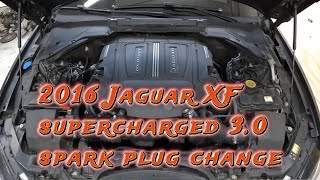
Generation note: This range covers the entire first generation (X250) of the Jaguar XF, including the significant 2012 facelift. Pre-facelift models (2009-2011) primarily used 4.2L and 5.0L V8 engines. Post-facelift models (2012-2014) introduced the 3.0L Supercharged V6 🎬 See how to change spark plugs on the 3.0L engine. (AJ126) and continued with the 5.0L V8s (AJ133). The causes of P0305 are similar across these engines, with ignition coils, spark plugs, and fuel injectors being the primary culprits. However, the 5.0L V8 (AJ133) is known for timing chain guide issues, particularly in pre-2015 models, which can also lead to misfires.
Symptoms You May Notice
- Rough or vibrating idle.
- Hesitation or stumbling during acceleration.
- Noticeable loss of engine power.
- Flashing or solid Check Engine Light, often with a 'Restricted Performance' message.
- Reduced fuel economy.
- A smell of raw fuel from the exhaust, especially if an injector is stuck open.
- Replacing only the spark plug when the ignition coil is bad (or vice-versa). It's crucial to swap components to isolate the true cause before spending money on parts.
- Assuming the fuel injector is good without testing, especially after a coil/plug replacement doesn't fix the issue. On these engines, the injector is a common secondary culprit.
- Replacing parts without checking for underlying issues like a valve cover gasket leak that will cause the new coil to fail prematurely.
Most Likely Causes
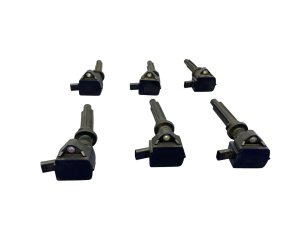
- Faulty Ignition Coil 🔴 High Probability → Shop Ignition Coil Ignition coils are a very common failure item on the AJ126 and AJ133 engines due to constant heat cycling and high voltage stress.
How to confirm: Swap the ignition coil from cylinder 5 with another cylinder (e.g., cylinder 1). Clear the codes and run the engine. If the code changes to P0301, the coil is faulty. Cylinder 5 is the rearmost cylinder on the passenger side (Bank 1) on the 3.0L V6, and the third cylinder back on the passenger side on the 5.0L V8.
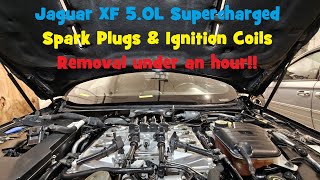
Typical fix: Replace the faulty ignition coil. It is held in by a single T30 Torx 🎬 Watch: Quick walkthrough for removing 5.0L coils and spark plugs. or 8mm bolt. Many owners on forums recommend replacing all coils and spark plugs on the affected bank (or all of them) at the same time as preventative maintenance.
Est. part cost: $40 - $100 - Worn or Fouled Spark Plug 🔴 High Probability → Shop Spark Plug
How to confirm: After ruling out the ignition coil, remove the spark plug from cylinder 5. Inspect it for wear (eroded electrode), carbon fouling, oil, or coolant contamination. A healthy plug should be light tan or grey. The recommended spark plug is often an NGK Laser Iridium model.
Typical fix: Replace the spark plug. The OEM-recommended plug is typically NGK 93476 (SILZKAR7E8S). It is best practice to replace all plugs at once, especially if their service history is unknown.
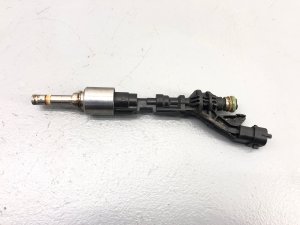
Est. part cost: $15 - $30 per plug - Clogged or Failed Fuel Injector 🟡 Medium Probability → Shop Fuel Injector The direct injection (GDI) fuel injectors on the AJ126 (V6) and AJ133 (V8) engines are a known weak point. TSB SSM-63697 explicitly states they can become restricted by fuel contaminants, leading to misfires. Forum discussions confirm that injector failure is a common diagnosis after coils and plugs are replaced.
How to confirm: This is more difficult for a DIYer. A professional can perform a fuel injector balance test. Swapping injectors between cylinders is possible but is a much more involved job than swapping coils due to their location and the risk of seizure. The presence of code P1316 (Injector Circuit / IDM codes detected) alongside P0305 strongly points to an injector issue.
Typical fix: Replace the fuel injector for cylinder 5. This repair often requires a special slide-hammer puller tool (JLR-310-197) and new seals. Due to the high risk of the injector breaking or seizing in the cylinder head, this is often best left to a professional or experienced DIYer.
Est. part cost: $100 - $250 per injector - Leaking Valve Cover Gasket ⚪ Low Probability → Shop Engine Valve Cover
How to confirm: When you remove the ignition coil from cylinder 5, inspect the spark plug tube and the coil boot for the presence of engine oil. Oil in the spark plug well is a clear sign of a leaking valve cover gasket or spark plug tube seal. This is a frequently mentioned check in forum repair threads.
Typical fix: Replace the valve cover gasket for Bank 1 (passenger side). The oil must be thoroughly cleaned from the spark plug tube, and the oil-soaked ignition coil and spark plug should be replaced as the oil will have damaged them.
Est. part cost: $50 - $150 for the gasket set
Rare But Worth Checking
- Vacuum Leak: A leak in a vacuum hose or intake manifold gasket near cylinder 5 can lean out the air/fuel mixture and cause a misfire. A smoke test is the best way to identify the source of a leak.
- Low Engine Compression: Internal engine issues like a burnt valve, worn piston rings, or a failed head gasket can cause a loss of compression in cylinder 5. This is the least likely cause and should only be investigated after all ignition and fuel system possibilities have been exhausted. A compression test will confirm this.
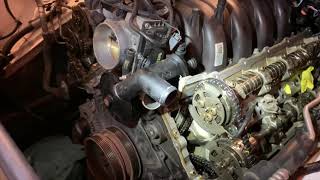
- Worn Timing Chain Components: On the 5.0L V8 (AJ133), worn timing chain guides or a failing tensioner can cause the camshaft timing to be slightly off, leading to misfires on one or more cylinders. This is often preceded by a rattling noise from the front 🎬 Watch: Detailed guide on 5.0L timing chain and guide repairs. of the engine on cold starts. If misfires are accompanied by codes like P0016 or P0017, the timing system is the likely culprit.
- Intake Valve Carbon Buildup: Like many direct injection engines, the AJ126 and AJ133 are prone to carbon buildup on the intake valves. Since fuel is injected directly into the cylinder, it doesn't wash over and clean the valves. Excessive buildup can restrict airflow into cylinder 5, disrupting the air/fuel mixture and causing a misfire. This is often resolved by walnut blasting the intake ports.
Diagnosis Steps
- Read the codes with an OBD-II scanner to confirm P0305 and note any other codes present, especially P1316 or P0316.
- Identify Cylinder 5. For both the 3.0L V6 and 5.0L V8, this is on the passenger side (Bank 1). It is the rearmost cylinder on the V6 and the third one back from the front on the V8.
- Swap the ignition coil from cylinder 5 with the coil from cylinder 1 (front-most on the same bank). This is the most common DIY diagnostic step recommended on forums.
- Clear the codes, start the engine, and let it idle. Re-scan for codes.
- If code P0301 appears, the ignition coil is bad and needs replacement.
- If code P0305 returns, the coil is likely good. Proceed to inspect the spark plug.
- While the coil is out, inspect the spark plug well for any oil. Oil indicates a leaking valve cover gasket which must be repaired.
- Remove the spark plug from cylinder 5. Check for excessive wear, fouling, or damage. If it looks bad or is of an unknown age, replace it. It's best to replace all plugs at once.
- If the coil and plug are good but P0305 persists (especially if code P1316 is also present), the issue is likely the fuel injector or its wiring.
- At this point, given the difficulty of injector replacement on these engines, professional diagnosis is recommended. A mechanic can perform a fuel system test or a compression test to rule out fuel delivery or internal engine problems.
Parts You'll Likely Need
- Ignition Coil
(OEM #AJ813732)— This is the most common failure point for a single-cylinder misfire on these engines.
Trusted brands: Bosch, Delphi, NGK, Standard Motor Products
OEM price range: $70 - $120
Aftermarket price range: $40 - $80 - Spark Plug
(OEM #C2Z28434 (NGK 93476 / SILZKAR7E8S))— Spark plugs are a routine maintenance item and a primary cause of misfires as they wear out.
Trusted brands: NGK (OEM supplier), Bosch
OEM price range: $20 - $35
Aftermarket price range: $15 - $25 - Fuel Injector
(OEM #5.0L V8: C2D55183 or LR011964; 3.0L V6: AJ813648)— A known failure point on these direct-injection engines, susceptible to clogging from fuel contaminants as noted in TSB SSM-63697.
Related Codes That Often Appear With This One
- P0300 — This code for 'Random/Multiple Cylinder Misfire' may appear if the misfire is intermittent or beginning to affect other cylinders.
- P1315 — This is a Jaguar-specific code for 'Persistent Misfire,' which can be triggered alongside a specific cylinder misfire code like P0305, indicating the fault is severe enough to potentially damage the catalytic converter.
- P1313 / P1316 — These Jaguar-specific codes indicate a catalyst-damaging misfire (P1313) and an injector circuit fault (P1316). Seeing P1316 with P0305 is a strong indicator that the fuel injector on cylinder 5 is the root cause, not the coil or plug.
- P0316 — This code indicates a 'Misfire Detected on Startup (First 1000 Revolutions).' It is often stored with other P030x codes as noted in TSB JTB00533NAS1, which points to a potential fuel injection calibration issue on cold starts.
- P0087 — This code for 'Fuel Rail/System Pressure - Too Low' can appear with misfires on an entire bank if a high-pressure fuel pump is failing or if there's a significant fuel delivery issue.
Technical Service Bulletins (TSBs) & Recalls
- Fuel Injector Concerns 5.0 AJ133 Gasoline: → Shop Fuel Injector Links misfire codes (including P0305) on the 5.0L V8 to poor fuel quality or contaminants restricting fuel injectors. It asks technicians to return faulty injectors for engineering analysis.
- Engine Misfire / MIL Illuminated After Cold-Start: Addresses misfire codes (including P0305) and P0316 that occur on cold starts (below 75°C / 167°F). The bulletin suggests the cause may be a fuel injection calibration issue and the fix is to update the Powertrain Control Module (PCM) software.
Platform-Specific Known Issues
- Seized Fuel Injectors: Both the AJ126 V6 and AJ133 V8 engines are known for having their direct fuel injectors seize in the cylinder heads due to carbon and corrosion. Attempting to remove them without a special slide-hammer tool can result in the injector breaking, requiring a much more complex and expensive repair.
- Fuel Quality Issues: TSB SSM-63697 specifically identifies that poor fuel quality or contaminants can restrict fuel injectors on the 5.0L engine, leading to misfire codes, including P0305.
Mechanic-Grade Diagnostic Values
- High-Pressure Fuel Rail Pressure (Direct Injection) — expected: Approximately 500-600 PSI (3.4-4.1 MPa) at idle, increasing to over 2100 PSI (14.5 MPa) under load.. Failure: Pressure that is significantly lower than expected under load (e.g., 550 PSI at WOT) or does not increase with engine speed can indicate a failing high-pressure fuel pump.
- Low-Pressure Fuel Pump Pressure (In-Tank) — expected: Approximately 60-65 PSI.. Failure: Pressure significantly below this range indicates a failing in-tank pump or clogged filter. Unusually high pressure (e.g., 100 PSI) could indicate a faulty fuel pressure sensor or a blockage downstream.
- Live Misfire Data Counts — expected: Ideally zero at all times. However, a few sporadic counts on various cylinders may be recorded by sensitive knock sensors and are not necessarily indicative of a fault.. Failure: A continuously and rapidly incrementing counter for a single cylinder (Cylinder 5 in this case) confirms a persistent misfire that needs investigation.
Hidden / Shadow Codes Worth Checking
- N/A: Unlike some German manufacturers, Jaguar's SDD software does not typically display proprietary 'shadow' or 'sub-codes' for misfires. Diagnosis relies on standard P-codes, Jaguar-specific codes (like P1315/P1316), and live data analysis. Some forum users have reported that even the dealer-level SDD/IDS software does not have live individual cylinder misfire counters, making it difficult to spot intermittent misfires that don't set a code. (see via Jaguar SDD/IDS Software)
Scan Tool Commands That Help
- Jaguar SDD or advanced bidirectional scanner (e.g., Autel, YOUCANIC): Cylinder Power Balance Test — This test is crucial when a misfire is felt but no code is set, or to confirm the problematic cylinder. The tool disables one fuel injector at a time, and the technician observes the RPM drop. A cylinder that causes little or no RPM drop when disabled is the one not contributing power, confirming it as the source of the misfire.
- Jaguar SDD or advanced bidirectional scanner: Fuel Injector Test / Active Test — After confirming the misfire is on cylinder 5, this function allows the technician to individually command the fuel injector for that cylinder on and off while monitoring fuel pressure or listening for the injector's click with a stethoscope. This helps differentiate between a clogged/failed injector and a wiring/driver issue.
Wiring & Ground Locations
- G1D120 — Located at the right rear of the engine compartment.. This is a primary engine ground. A poor connection here can cause unstable voltage for various engine sensors and actuators, including the ignition coils and fuel injectors on Bank 1 (which includes cylinder 5), potentially leading to misfires.
- G1D123 — Located at the left rear of the engine compartment.. This is the primary engine ground for the opposite bank. While less likely to cause a single misfire on cylinder 5, checking all major engine grounds is good practice for any electrical-related fault.
- Alternator-to-Bulkhead Connection Box — Behind the right-side wheel arch liner (passenger side in US).. This junction box where the main power cable passes through the bulkhead is known to fill with road debris and corrode, especially in regions that use road salt. This can cause arcing to ground and widespread electrical issues, including voltage instability that could manifest as misfires.
Real Owner Repair Stories
- JaguarForums user 'Jininy' (2012 Jaguar XF 5.0L NA) — Car jerked, flashing CEL, Restricted Performance mode. Codes P0301, P0303, P0305, P0307 (misfires on all of Bank 1). Strong smell of gasoline from right side exhaust with white smoke.
❌ Tried (didn't work) The owner had a shop replace the valve cover gasket, intake manifold gasket, and fuel injector O-rings to fix an oil leak immediately before the problem started.
✅ What actually fixed it The diagnosis pointed towards a stuck open fuel injector on Bank 1, corroborated by the presence of code P0087 (low fuel rail pressure) and the strong fuel smell. The combination of misfires on an entire bank plus a fuel pressure code strongly suggested a fuel delivery problem rather than an ignition issue. - JaguarForums user 'casey744' (Jaguar S-Type (details similar to XF)) — P0305 misfire on cylinder 5, car goes into restricted performance mode when speed is increased.
❌ Tried (didn't work) A garage replaced the ignition coil and spark plug on cylinder 5 after a coolant leak sprayed the engine bay. The misfire persisted.
✅ What actually fixed it The resolution was not posted in the thread, but the key takeaway was the advice given: even if a part is new, it can be faulty. The standard diagnostic procedure of swapping the new coil with a known-good coil from another cylinder was recommended to confirm if the new part was defective out of the box.
OEM Part Supersession History
AJ812988→C2Z28434— Standard part revision/update.
Heads up: The new part number, C2Z28434, is the correct replacement for the original AJ812988 and also supersedes Land Rover part number LR050998. It is used across the 3.0L V6 and 5.0L V8 engines in this platform.
Model Year Variations Within This Range
- 2009-2014 (Early 5.0L V8s): Early AJ133 5.0L V8 engines were fitted with timing chain guide rails made of a softer aluminum. The steel tensioner could wear a groove into the guide, causing chain slack, which could lead to misfires. JLR released a revised guide with a steel insert to fix this, but the changeover year is cited as late as 2015, meaning most XF models in this range could have the original design.
Helpful Videos
We Have This Part in Stock

The information in this article is provided for general reference and educational purposes only. Vehicle specifications, procedures, and part compatibility can vary by production date, trim level, and region. Always consult your vehicle's factory service manual and verify part numbers before purchasing or performing repairs. Safety-critical components such as airbags, seat belts, and braking systems should be installed by a qualified professional.
- Jaguar XF:
- 🧭 Diagnostic Flowchart
- 🎬 Helpful Videos
- 🛍️ Shop This Part
- What's Unique About the 2009-2014 Jaguar XF
- Symptoms You May Notice
- Most Likely Causes
- Rare But Worth Checking
- Diagnosis Steps
- Parts You'll Likely Need
- Related Codes That Often Appear With This One
- Technical Service Bulletins (TSBs) & Recalls
- Platform-Specific Known Issues
- Mechanic-Grade Diagnostic Values
- Hidden / Shadow Codes Worth Checking
- Scan Tool Commands That Help
- Wiring & Ground Locations
- Real Owner Repair Stories
- OEM Part Supersession History
- Model Year Variations Within This Range
- 🎟️ Get 5% Off