

P0305 on 2010-2014 Jaguar XJ: Cylinder 5 Misfire Causes and Fixes
P0305 on a 2010-2014 Jaguar XJ most often indicates a failed ignition coil or a worn spark plug on cylinder 5. Expect to pay $35-$120 for a coil and $15-$30 for a spark plug for a DIY fix. In some cases, a clogged or seized fuel injector can be the cause, which is a more complex and expensive repair.
- P0305 on a 2010-2014 XJ is a misfire on cylinder 5, which is on the passenger side of the engine.
- The most probable cause is a bad ignition coil, followed closely by a worn spark plug.
- Always diagnose before buying parts. Swapping the coil from cylinder 5 to another cylinder is a free and effective way to confirm a bad coil.
- Be aware that fuel injectors on these engines can fail and are notoriously difficult to remove if seized, which can significantly increase repair costs.
- Do not drive with a flashing check engine light, as this can cause expensive damage to the catalytic converter.
What's Unique About the 2010-2014 Jaguar XJ
The high-performance V8 and V6 engines in the X351 generation XJ are sophisticated and can be sensitive to component quality. A Jaguar-issued Technical Service Bulletin (SSM-63697) specifically notes that poor fuel quality can lead to misfire codes, including P0305, suggesting these engines perform best with high-quality fuel. Furthermore, the fuel injectors on these engines are known to become clogged or, more severely, seize in the cylinder head, turning a straightforward repair into a major job. This is particularly noted on platform-mate F-Type models where hood vents can allow water to drip onto the engine, causing corrosion.
Diagnostic Flowchart
Tap your situation to follow the diagnostic path that matches what you're seeing on this vehicle.
Symptoms You May Notice
- Rough or vibrating idle
- Hesitation or stumbling during acceleration
- Noticeable loss of engine power
- Solid or flashing Check Engine Light
- Possible smell of gasoline from the exhaust
- Engine struggling or bogging down above 2500 RPM, especially when warm
- Replacing oxygen (O2) sensors without first diagnosing the ignition system. A misfire will often cause an O2 sensor to report unusual readings, but the sensor itself is not the root cause.
- Assuming a new part is a good part. Faulty ignition coils straight out of the box, especially inexpensive aftermarket ones, are a known issue. Always perform the 'swap test' to confirm the part is the problem.
Most Likely Causes
- Faulty Ignition Coil 🔴 High Probability → Shop Ignition Coil Coil-on-plug systems are a common failure point on many modern engines, including Jaguar's AJ133 V8 and AJ126 V6. Constant heat and vibration cause the internal windings to fail over time. Oil leaks from the valve cover gasket can also seep into the spark plug tubes and damage the coil boot.
How to confirm: The easiest way to confirm a bad coil is to swap the ignition coil from cylinder 5 with one from another cylinder (e.g., cylinder 1). Clear the codes and run the engine. If the code changes to P0301, the coil is faulty. This is a definitive, no-cost diagnostic step.
Typical fix: Replace the failed ignition coil. Many technicians recommend replacing the corresponding spark plug at the same time. While some owners replace all coils at once as a preventative measure, it is not strictly necessary. Using OEM or a reputable brand like Denso is highly recommended, as some aftermarket coils can be unreliable.
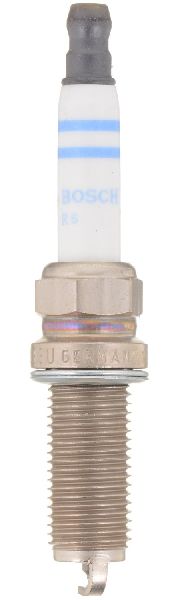
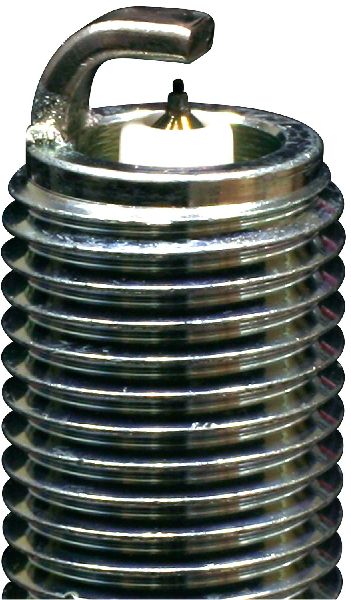
Est. part cost: $35-$120 - Worn or Fouled Spark Plug 🔴 High Probability → Shop Spark Plug Spark plugs are a regular maintenance item with a finite lifespan. High-performance, direct-injection engines are less tolerant of worn plugs, leading to misfires as the electrode gap widens or becomes fouled with carbon or oil.
How to confirm: After ruling out the ignition coil, remove the spark plug from cylinder 5. Inspect it for wear (worn electrode), carbon fouling (black, sooty), oil contamination, or damage to the ceramic insulator. A dropped plug during installation can also cause a misfire.
Typical fix: Replace the spark plug. It is best practice to replace all spark plugs as a set if they are near the end of their service life to ensure consistent performance.
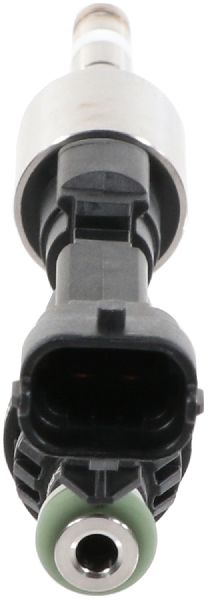
Est. part cost: $15-$30 per plug - Clogged or Faulty Fuel Injector 🟡 Medium Probability → Shop Fuel Injector These direct-injection engines are susceptible to fuel injector issues. TSB SSM-63697 directly links misfires to poor fuel quality causing clogs. More seriously, injectors on the 5.0L and 3.0L engines are known to seize in the cylinder head due to corrosion, making removal extremely difficult and potentially very expensive.
How to confirm: This is more complex. A professional can perform a fuel injector balance test. A DIY method involves listening to the injector with a mechanic's stethoscope to ensure it's clicking. Swapping injectors between cylinders is possible but is a much more involved job than swapping coils. In some cases, a seized injector must be broken to be removed.
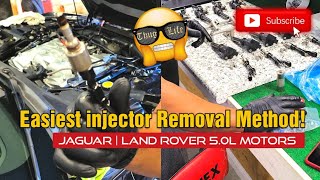
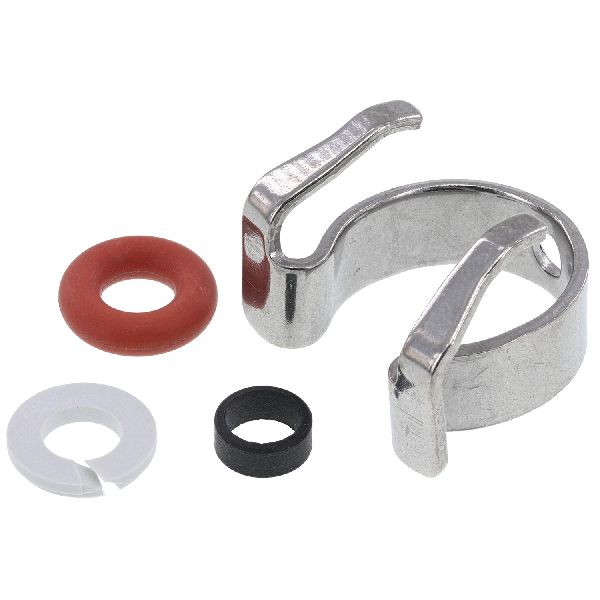
Typical fix: Replace the faulty fuel injector. It is often recommended to replace all injectors on the same bank at the same time. This repair may require a special slide-hammer tool 🎬 Watch: The easiest way to extract and replace these injectors. (JLR Part No. 310-197) for removal and software (JLR SDD) to calibrate the new injector.
Est. part cost: $60-$200 per injector, plus potential for significant labor costs if seized. - Poor Fuel Quality ⚪ Low Probability Jaguar TSB SSM-63697 and Land Rover TSB LTB00525v2 both directly link misfire codes (P0301-P0308) to poor fuel quality or contaminants, which can restrict fuel injector flow rate.
How to confirm: This is difficult to confirm directly but can be suspected if the misfire appeared shortly after refueling at a different or questionable station.
Typical fix: Try a tank of high-quality, top-tier premium gasoline, possibly with a reputable fuel system cleaner additive like GM Fuel System Treatment Plus, as recommended in related service bulletins.
Est. part cost: $0 (beyond fuel cost)
Rare But Worth Checking
- Vacuum Leak: A leak in the intake manifold gasket or a cracked vacuum hose near cylinder 5 can introduce unmetered air, leaning out the air/fuel mixture and causing a misfire. A smoke test is the most effective way to diagnose a vacuum leak.
- Low Engine Compression: This is a more serious mechanical issue, such as a worn piston ring, leaking valve, or bad head gasket. A compression test is needed to diagnose this. One owner of a related F-Type found low compression in cylinders 4 & 5 was the ultimate cause of their misfire codes after replacing plugs, coils, and injectors.
- Intake Valve Carbon Buildup: As direct-injection engines, the 5.0L and 3.0L are prone to carbon buildup on the back of the intake valves. This can disrupt airflow into the cylinder, leading to misfires, especially on cold starts. This issue typically appears after higher mileage and may require professional walnut blasting to clean the valves.
Diagnosis Steps
- Read the code with an OBD-II scanner to confirm P0305 and check for any other codes like P0300 or P0316.
- Note if the Check Engine Light is flashing, which indicates a severe, catalyst-damaging misfire. 🎬 See how to diagnose a dead misfire and flashing light. Avoid driving if possible.
- Locate cylinder 5. For the 5.0L V8, it's the third cylinder from the front on the passenger side (Bank 1). For the 3.0L V6, it's the middle cylinder on the passenger side (Bank 1).
- Swap the ignition coil from cylinder 5 with the coil from another cylinder (e.g., cylinder 1). This requires an 8mm socket or T30 Torx bit.
- Clear the codes, start the engine, and let it run for a few minutes. A short drive may be necessary.
- Re-scan for codes. If the code is now P0301, the ignition coil is the problem. Replace the bad coil.
- If the code remains P0305, the coil is likely good. Proceed to inspect the spark plug. Remove the plug from cylinder 5 and check for wear, fouling, or damage.
- If the spark plug looks worn or is due for replacement, replace it. It's best to replace the full set.
- If the code still remains P0305, the issue is likely with the fuel injector, wiring, or a mechanical problem with the cylinder.
- Inspect the wiring and connector for the cylinder 5 coil and injector for any damage or corrosion. Wiggle the connector with the engine running to see if it induces a stumble.
- Listen to the fuel injector with a mechanic's stethoscope; you should hear a consistent clicking sound.
- If ignition, spark, and wiring are good, the next steps are a fuel injector test or a compression test, which may require a professional mechanic.
Parts You'll Likely Need
- Ignition Coil
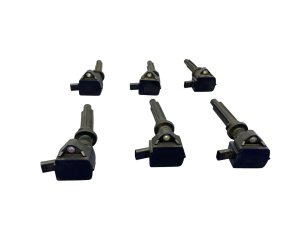
(OEM #C2Z18619)— This is the most common cause of a single-cylinder misfire due to failure from heat and vibration over time.
Trusted brands: Jaguar (OEM), Denso, Bosch, NGK
OEM price range: $90-$120
Aftermarket price range: $35-$85 - Spark Plug
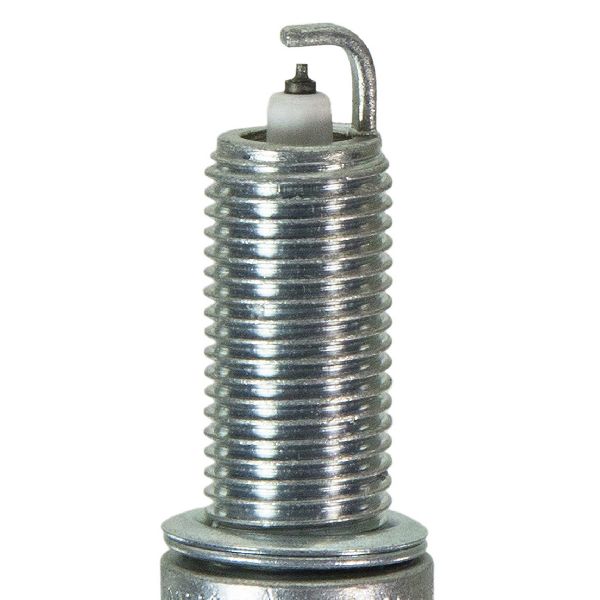
(OEM #ILKAR7C10)— As a standard wear item, a worn or fouled spark plug is the second most likely cause of a misfire.
Trusted brands: NGK, Bosch, Denso
OEM price range: $20-$30
Aftermarket price range: $15-$25 - Fuel Injector
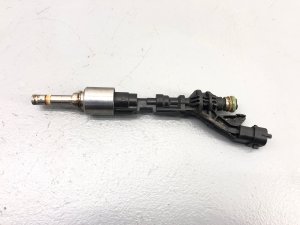
(OEM #C2D24386)— A clogged or failed fuel injector is a moderately common cause. These are known to be a problem area on this engine family, sometimes seizing in the head.
Trusted brands: Jaguar (OEM), Bosch
OEM price range: $150-$200
Aftermarket price range: $60-$120
Related Codes That Often Appear With This One
- P0300 — If the misfire is intermittent or affects multiple cylinders, a P0300 (Random/Multiple Cylinder Misfire) code may be stored alongside P0305.
- P0316 — This code means "Misfire Detected on Startup (First 1000 Revolutions)". Jaguar TSB JTB00533NAS1 and owner experiences explicitly mention this code appearing with cylinder-specific misfires like P0305.
Technical Service Bulletins (TSBs) & Recalls
- JTB00533NAS1: Mentions P0305 as one of several potential misfire codes that can be stored along with P0316 (misfire on startup).
- SSM-63697: Cites poor fuel quality or fuel contaminants as a potential cause for misfire codes P0301 through P0308.
- LTB00525v2 (Land Rover): A related TSB for the same engine family that also points to poor fuel quality causing clogged injectors and misfires.
Platform-Specific Known Issues
- TSB SSM-63697 notes that poor fuel quality or contaminants can cause misfire codes on these engines.
- TSB JTB00533NAS1 documents that P0305 can appear with code P0316, indicating a misfire present at startup.
- Fuel injectors on the 3.0L V6 and 5.0L V8 engines are known to seize in the cylinder heads due to corrosion, which can dramatically increase repair time and cost. Soaking the injector with penetrating oil overnight before attempting removal is recommended.
- On the related F-Type, water ingress from the hood vents is a known cause of corrosion around the injectors, leading to failure.
Mechanic-Grade Diagnostic Values
- High-Pressure Fuel System Pressure at Idle — expected: ~970 PSI. Failure: Significant drops in pressure under load or inability to maintain pressure at idle.
- Fuel Injector Pulse Width at Idle (5.0L SC) — expected: ~1.14 to ~1.24 ms. Failure: A reading for one injector that is significantly different from the others on the same bank may indicate a clog or electrical fault. The PCM will adjust pulse width based on fuel trims.
- Engine Compression Ratio (Static) — expected: 11.5:1 (Naturally Aspirated V8) or 9.5:1 (Supercharged V8/V6). Failure: A compression test result for cylinder 5 that is significantly lower than other cylinders indicates a mechanical engine problem (e.g., piston rings, valves, head gasket).
- Spark Plug Gap — expected: 0.9mm - 1.0mm (~0.035" - 0.039"). Failure: An incorrect or excessively wide gap due to wear can cause weak spark and misfires.
Scan Tool Commands That Help
- Jaguar SDD (Symptom Driven Diagnostics): Injector Pulse Width Test / Live Data Monitoring — After ruling out the ignition coil and spark plug, monitoring the pulse width of the injector for cylinder 5 compared to others on the same bank can reveal if the PCM is attempting to compensate for a flow issue, or if the injector is not responding correctly.
- Jaguar SDD (Symptom Driven Diagnostics): Actuator Activation / Component Test — This function, found in the 'Recommendation Tab' of SDD, allows a technician to command a specific component, like the fuel injector for cylinder 5, to operate. This can help determine if the injector is mechanically stuck or electrically non-responsive without having to remove it from the engine.
Wiring & Ground Locations
- G1D124AL — Right side of the engine compartment.. This is a primary ground point for the engine management system. A poor connection here can cause erratic behavior in sensors and actuators, including the ignition coils and fuel injectors, potentially leading to misfire codes.
- Cylinder 5 Injector Wiring — Connector at the fuel injector, third from the front on the passenger side.. The injector is activated when the Powertrain Control Module (PCM) provides a switched ground signal. One pin will have constant 12V+ with the engine running, and the other will be pulsed to ground by the PCM. Checking for this signal with a noid light or oscilloscope can confirm if the injector is receiving the command to fire.
Real Owner Repair Stories
- Jaguar Forums user (2016 Jaguar F-Type R, 5.0L SC V8, 60,000 miles) — Severe misfire on cylinder 5 (P0305) that only occurred after the engine was fully warmed up (10-15 minutes of driving). On a cold start, the engine ran perfectly with no misfires, even at wide-open throttle.
❌ Tried (didn't work) Replacing spark plugs (tried two different heat ranges), Replacing ignition coils on cylinders 4 and 5, Reverting to the factory ECU tune
✅ What actually fixed it Another user with the same engine reported identical symptoms of a misfire only appearing when hot, and confirmed the cause was a faulty fuel injector. The original poster's symptoms strongly point to an injector failing electronically or mechanically once it reaches operating temperature. - Jaguar Forums user (2003 Jaguar S-Type R, 148,000 miles) — P0305 (Cylinder 5 misfire) along with P0175 (Bank 2 system too rich) and P1316.
❌ Tried (didn't work) Changing air filter, Cleaning MAF sensor, Replacing MAF sensor
✅ What actually fixed it Replacing the ignition coil on cylinder 5 resolved the P0305 code and the misfire.
"I Checked Everything" — The Actual Cause
- In one documented case of a persistent misfire on a 5.0L SC engine, the owner performed a smoke test to check for vacuum leaks and found none. Despite the clean smoke test, the misfire and fuel trim imbalances persisted, leading the diagnosis away from vacuum leaks and towards other potential causes like faulty fuel injectors or a partially clogged catalytic converter.
When the Usual Fixes Don't Work
- While the most common fixes for P0305 are the ignition coil and spark plug, a notable failure pattern on the 5.0L engine involves the fuel injector. In cases where the misfire only appears after the engine has reached full operating temperature, the cause is more likely to be a failing fuel injector rather than an ignition component. One owner replaced plugs and coils to no effect, while another with identical symptoms confirmed the fix was a new injector.
OEM Part Supersession History
C2P16489→C2D24386, C2D45732, C2D55183— Standard part evolution and supplier changes for the 5.0L V8 direct fuel injector.
Heads up: These part numbers are generally considered interchangeable for the specified 2010-2014 model years.
Model Year Variations Within This Range
- 2013-2014: For the 2013 model year, the naturally aspirated 5.0L V8 was discontinued and replaced by the new 3.0L Supercharged V6 (AJ126). The 5.0L Supercharged V8 remained available.
- 2010-2014 (Early Models): Early production AJ133 5.0L engines were fitted with timing chain tensioner guides made of a softer aluminum. These were prone to premature wear from the steel tensioner plunger. While a full failure is a major issue, advanced wear could potentially lead to slight timing deviations that contribute to misfires before a more catastrophic failure occurs.
Helpful Videos

Used OEM Parts in Stock
New Aftermarket Parts Available

The information in this article is provided for general reference and educational purposes only. Vehicle specifications, procedures, and part compatibility can vary by production date, trim level, and region. Always consult your vehicle's factory service manual and verify part numbers before purchasing or performing repairs. Safety-critical components such as airbags, seat belts, and braking systems should be installed by a qualified professional.
- Jaguar XJ:
- 🧭 Diagnostic Flowchart
- 🎬 Helpful Videos
- 🛍️ Shop This Part
- What's Unique About the 2010-2014 Jaguar XJ
- Symptoms You May Notice
- Most Likely Causes
- Rare But Worth Checking
- Diagnosis Steps
- Parts You'll Likely Need
- Related Codes That Often Appear With This One
- Technical Service Bulletins (TSBs) & Recalls
- Platform-Specific Known Issues
- Mechanic-Grade Diagnostic Values
- Scan Tool Commands That Help
- Wiring & Ground Locations
- Real Owner Repair Stories
- "I Checked Everything" — The Actual Cause
- When the Usual Fixes Don't Work
- OEM Part Supersession History
- Model Year Variations Within This Range
- 🎟️ Get 5% Off