

P0305 on 2010-2014 Jaguar XK: Cylinder 5 Misfire Causes and Fixes
P0305 indicates a misfire on cylinder 5. On the 2010-2014 Jaguar XK with the 5.0L V8, this is most often caused by a failed ignition coil or a worn-out spark plug. Cylinder 5 is on the passenger side (right-hand bank), third from the front. A DIY fix is possible, with a coil costing $40-$120 and a plug costing $15-$30.
- P0305 on a 2010-2014 XK is a misfire on cylinder 5, most likely due to a bad ignition coil or spark plug.
- Always diagnose the problem before buying parts. Swapping the cylinder 5 ignition coil with another is a free and effective first step.
- Do not drive with a flashing check engine light, as this can cause rapid and expensive damage to your catalytic converter.
- Be aware that a faulty fuel injector is a possible cause, and replacement can be complicated if the injector is seized in the cylinder head.
- Using high-quality fuel may help prevent injector-related issues as noted in a manufacturer TSB.
What's Unique About the 2010-2014 Jaguar XK
The 2010-2014 Jaguar XK uses the AJ133 5.0L V8 engine. While ignition components are the primary suspects for a P0305 code, this platform has known issues that can complicate diagnosis. A Jaguar Technical Service Bulletin (SSM-63697, also issued as Land Rover TSB LTB00525v3) directly links misfire codes (P0301-P0308) to poor fuel quality or contaminants restricting fuel injectors. Furthermore, the direct-injection fuel injectors on these engines are notoriously difficult to remove if they become seized in the cylinder head due to carbon and corrosion, a common occurrence. This can turn a simple injector replacement into a major repair requiring special slide-hammer puller tools. Lastly, as a direct-injection engine, the AJ133 can be susceptible to carbon buildup on the intake valves over time, which can impede airflow and contribute to misfires, especially on cold starts.
Diagnostic Flowchart
Tap your situation to follow the diagnostic path that matches what you're seeing on this vehicle.
Symptoms You May Notice
- Rough or vibrating idle, which may feel 'lumpy' on a cold start.
- Hesitation or stumbling during acceleration.
- Flashing or solid Check Engine Light.
- Vehicle enters 'Restricted Performance' mode.
- Noticeable loss of power.
- Smell of unburned gasoline from the exhaust.
- Excessive black soot on the tailpipes.
- Replacing only the spark plug when the ignition coil is the actual cause.
- Replacing ignition components when the true fault is a clogged or failed fuel injector, especially if code P1316 is also present.
- Assuming a new part is good. Defective new coils or spark plugs (especially from no-name brands) are possible.
Most Likely Causes
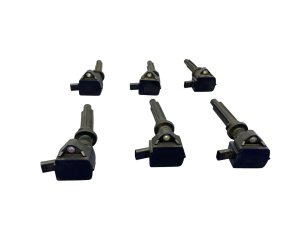
- Faulty Ignition Coil 🔴 High Probability → Shop Ignition Coil Coil-on-plug ignition systems are a common failure point on modern engines, and the AJ133 V8 is no exception. Heat and vibration lead to eventual failure. Owners on JaguarForums.com frequently cite coil failure as the number one cause for single-cylinder misfires.
How to confirm: Swap the ignition coil from cylinder 5 with another cylinder (e.g., cylinder 1, on the same bank). Clear the codes and run the engine. If the code changes to P0301, the coil is faulty. The coil is held on by a single 8mm or T30 Torx bolt.
Typical fix: Replace the failed ignition coil. It is often recommended to replace the corresponding spark plug 🎬 Watch: This quick walkthrough shows how to swap coils and plugs. at the same time. While some owners replace all 8 coils preventatively, it is usually not necessary.
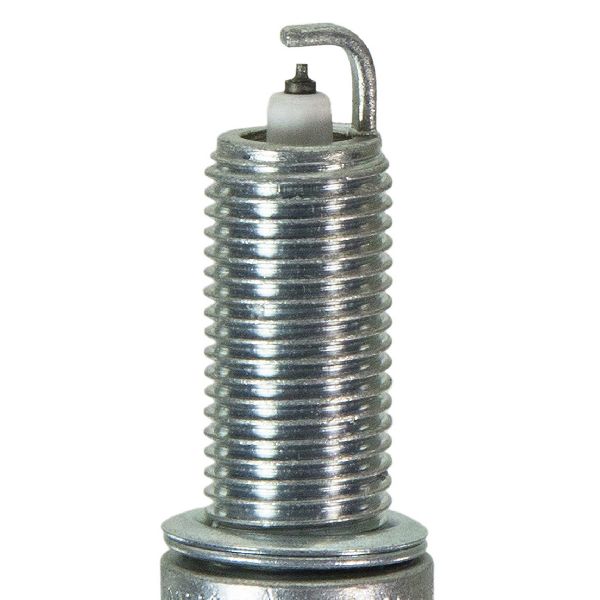
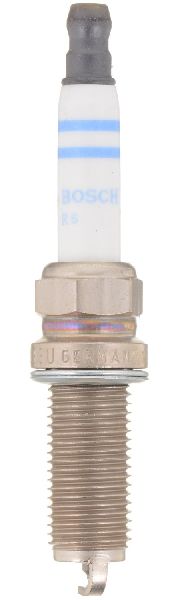
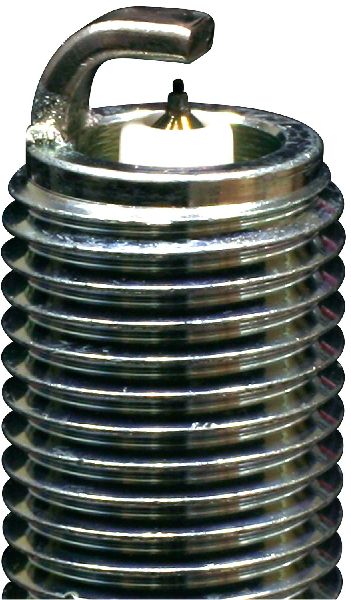
Est. part cost: $40-$120 - Worn or Fouled Spark Plug 🔴 High Probability → Shop Spark Plug Spark plugs are a routine maintenance item with a finite lifespan (Jaguar specifies replacement at 105,000 miles, but many fail sooner). An old, oil-fouled (from a leaking valve cover gasket), or fuel-fouled plug can fail to produce a strong enough spark.
How to confirm: After confirming the coil is good, remove the spark plug from cylinder 5. Inspect it for wear (worn electrode), carbon buildup, oil or fuel fouling, or a cracked porcelain insulator. Compare it to a new plug. A dropped plug can also have an invisible internal fracture.
Typical fix: Replace the spark plug. It is best practice to replace all eight spark plugs as a set to ensure even performance and avoid future misfires.
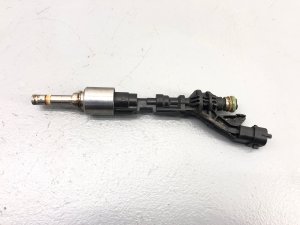
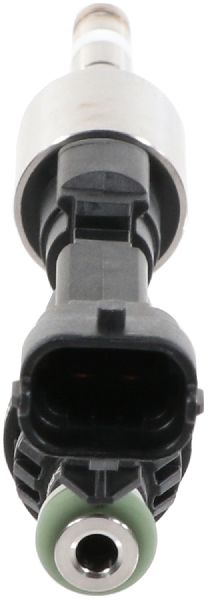
Est. part cost: $15-$30 per plug - Clogged or Faulty Fuel Injector 🟡 Medium Probability → Shop Fuel Injector Jaguar TSB SSM-63697 explicitly states that poor fuel quality can restrict fuel injectors, causing misfires. These direct injectors are also a known failure point and can stick open or closed. The presence of code P1316 alongside P0305 strongly points towards an injector issue.
How to confirm: Listen to the injector with a mechanic's stethoscope for a consistent clicking sound. A more advanced test involves measuring fuel trims with a scan tool or performing a flow test. Due to the difficulty of removal, these tests are recommended before attempting replacement.
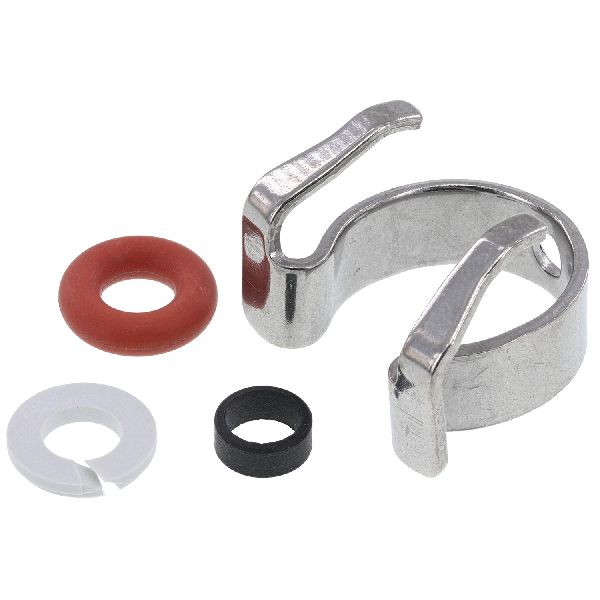
Typical fix: Replace the faulty fuel injector and its Teflon seal. This is a complex job due to the high risk of the injector being seized in the cylinder head. Soaking with penetrating oil and using a specialized slide hammer puller 🎬 See how to safely remove these injectors with the right tools. (like JLR tool 310-206) is often required.
Est. part cost: $100-$250
Rare But Worth Checking
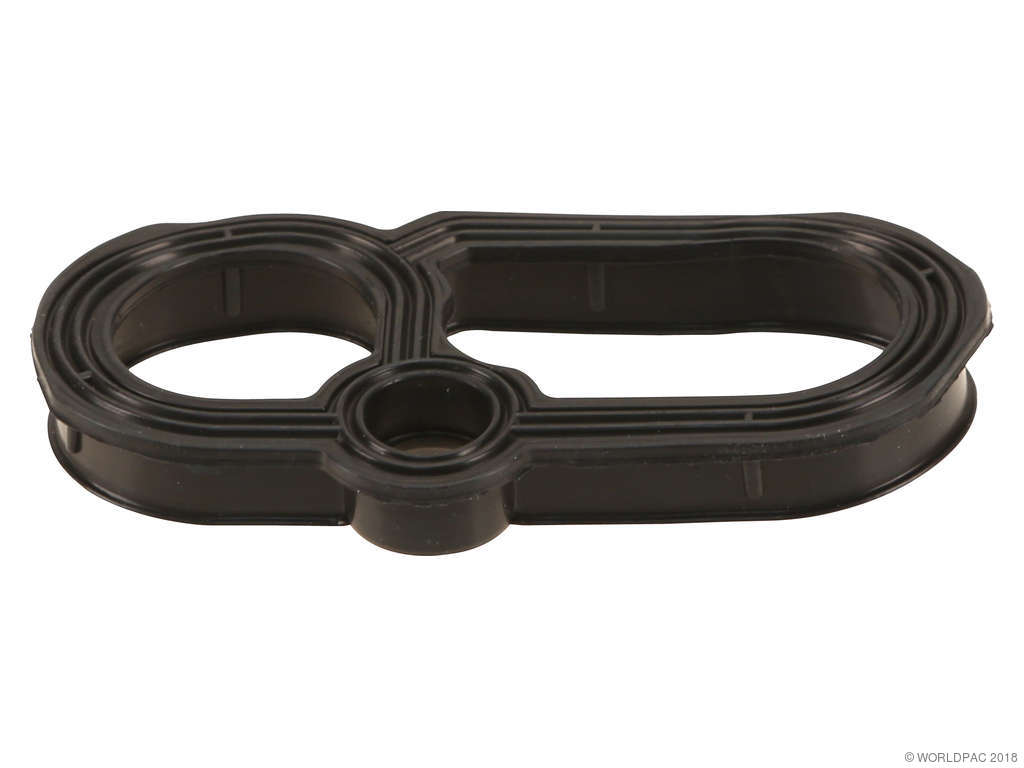
- Intake Manifold Gasket Leak: → Shop Engine Intake Manifold A vacuum leak from a failed intake manifold gasket near cylinder 5 can lean out the air/fuel mixture and cause a misfire. A smoke test is the most effective way to diagnose this.
- Low Cylinder Compression: A mechanical engine problem, such as a burnt valve, worn piston rings, or issues related to the timing chain 🎬 Watch: A deep dive into common mechanical failures on this engine. (a known problem on early 5.0L engines) can cause a loss of compression and a persistent misfire. A compression test followed by a leak-down test is needed to confirm this.
- Leaking Supercharger Intercooler: On supercharged XKR models, a coolant leak from the internal intercooler (charge cooler) can drip coolant into the cylinders, fouling the spark plug and causing a misfire. This is often accompanied by unexplained coolant loss.
- Carbon Buildup on Intake Valves: As a direct-injection engine, the intake valves are not cleaned by fuel spray. Over many miles, carbon can build up, restricting airflow and causing a rough idle and misfires, particularly when the engine is cold. This typically requires professional cleaning via walnut blasting.
Diagnosis Steps
- Read all trouble codes with an OBD-II scanner. Note any Jaguar-specific codes like P1313, P1315, or P1316, as they provide important context.
- Identify cylinder 5: On the 5.0L V8, it is the third cylinder from the front on the passenger side (right bank).
- Swap the ignition coil from cylinder 5 with an adjacent, easily accessible cylinder (e.g., cylinder 1 on the same bank). The coil is held by one T30 Torx or 8mm bolt.
- Clear the codes, start the engine, and see if the misfire code moves to the other cylinder (e.g., P0301). If it does, the ignition coil is bad.
- If the code remains P0305, inspect the spark plug well for oil, which indicates a leaking valve cover gasket that must be replaced.
- If no oil is present, swap the spark plug from cylinder 5 with the one from the other cylinder.
- Clear the codes again and check if the misfire moves. If it does, the spark plug is bad. If it's old, replace the full set.
- If the misfire remains on cylinder 5, inspect the wiring and connector for the ignition coil and fuel injector for damage, corrosion, or looseness.
- Listen to the fuel injector on cylinder 5 with a mechanic's stethoscope. It should have a regular, audible clicking sound. Compare its sound to an adjacent injector.
- If the cause is still not found, professional diagnosis is recommended. This may involve a smoke test for vacuum leaks, a fuel pressure test, or a compression/leak-down test to check for mechanical engine issues.
Parts You'll Likely Need
- Ignition Coil
(OEM #AJ811373 / LR011202)— This is the most common cause of a single-cylinder misfire on this engine. The Land Rover part number is often identical and more readily available.
Trusted brands: Bosch, Denso, Delphi, NGK
OEM price range: $80-$120
Aftermarket price range: $40-$75 - Spark Plug
(OEM #C2P16994)— Spark plugs are a maintenance item and can cause misfires when worn or fouled. The OEM plugs are typically made by NGK.
Trusted brands: NGK (ILKAR7C10), Bosch
OEM price range: $20-$30
Aftermarket price range: $15-$25 - Fuel Injector
(OEM #C2D24386 / LR079542)— A known issue, especially with poor fuel quality, as noted in a Jaguar TSB. Failure often triggers code P1316.
Trusted brands: Bosch
OEM price range: $150-$250
Aftermarket price range: $100-$180
Related Codes That Often Appear With This One
- P0316 — Indicates a misfire was detected within the first 1,000 engine revolutions at startup. It often accompanies a specific cylinder misfire code like P0305 and is mentioned in JLR TSBs related to misfires.
- P1313 / P1315 / P1316 — These are Jaguar-specific codes indicating a 'catalyst-damaging misfire' or 'persistent misfire.' P1316 in particular often points to an injector circuit fault rather than a simple spark issue, highlighting the severity.
- P0300 — This code for 'Random/Multiple Cylinder Misfire' may appear if the issue causing P0305 (like a vacuum leak or fuel pressure problem) is also intermittently affecting other cylinders.
Technical Service Bulletins (TSBs) & Recalls
- SSM-63697 / LTB00525v3: Notes that misfire codes may be stored due to poor fuel quality or contaminants restricting fuel injectors.
- JTB00533NAS1: Documents that P0305 can appear with code P0316, indicating a misfire present at startup, and may point to a cold start fuel calibration issue.
Platform-Specific Known Issues
- Seized Fuel Injectors: → Shop Fuel Injector The direct injectors on the 5.0L V8 are known to become seized in the cylinder head due to carbon and corrosion. Removal often requires significant force with a specialized slide hammer (JLR tool 310-206 or equivalent) and may require soaking the injector base in penetrating oil for hours beforehand. Attempting removal without the correct tool can break the injector, complicating the repair.
- Fuel Quality Sensitivity: TSB SSM-63697 directly links misfire codes (P0301-P0308) to poor fuel quality or
Mechanic-Grade Diagnostic Values
- High-Pressure Fuel System (Direct Injection) — expected: Varies from ~34 bar (500 psi) at idle to ~145 bar (2,100 psi) under load.. Failure: A P0087 code (Fuel Rail/System Pressure - Too Low) accompanying misfire codes points to a failing high-pressure fuel pump (HPFP) or a leaking injector.
- Injector Pulse Width (at idle) — expected: A user with a healthy bank reported ~1.21 to 1.24 ms.. Failure: The same user's misfiring bank showed ~1.14 to 1.18 ms, indicating the PCM was attempting to correct a condition by altering fuel delivery. Significant deviation from the norm or between banks suggests a problem.
- Ignition Coil Primary Resistance — expected: Approximately 1.0-1.1 ohms.. Failure: A reading that is significantly higher, open (infinite), or shorted (near zero) indicates a faulty coil.
Scan Tool Commands That Help
- Jaguar SDD (Symptom Driven Diagnostics): Power Balance Test — After confirming coils and plugs are good, this test allows a technician to individually disable cylinder 5 to see if it has any effect on engine RPM. If disabling the cylinder causes no change, it confirms it is not contributing power, pointing towards a fuel, compression, or timing issue.
- Jaguar SDD (Symptom Driven Diagnostics): Actuator Activation / Component Test — This allows the technician to command the fuel injector for cylinder 5 to operate. Listening with a stethoscope during this test can confirm if the injector is mechanically stuck or if the electrical circuit is functioning.
- Jaguar SDD (Symptom Driven Diagnostics): Fuel Injector Calibration — This is a required step after replacing a fuel injector on the 5.0L GDI engine to ensure the PCM has the correct data for precise fuel delivery.
Wiring & Ground Locations
- G1D120 — Located at the right rear of the engine compartment.. A poor ground at this location can cause unstable voltage to various engine components, potentially including the ignition system or its related sensors, leading to intermittent or persistent misfires.
- Main Engine Ground Strap — Typically found on the right (US passenger) side, connecting the lower vehicle frame to the transmission bell housing or engine block.. This is the primary ground path for the entire engine. Corrosion or looseness here can cause a wide range of difficult-to-diagnose electrical issues, including weak spark and misfires that appear to have no other cause.
Real Owner Repair Stories
- PistonHeads UK forum user 'carl0s' (2014 Jaguar XFR, 5.0L Supercharged V8, 41,000 miles) — Sudden rough running, smoke from exhaust, and misfires logged for cylinders 5, 6, 7, and 8 (an entire bank).
❌ Tried (didn't work) Initial diagnosis focused on individual cylinder components.
✅ What actually fixed it The user reported codes P0305, P0306, P0307, P0308, and P228F (Fuel pressure regulator too high). Forum experts immediately identified this combination not as an injector or coil issue, but as a classic symptom of a jumped or failing timing chain, which is a known major issue on this engine. The fix is a full timing chain and tensioner replacement, not individual component swaps.
"I Checked Everything" — The Actual Cause
- In one documented case on JaguarForums, an owner with a rebuilt 5.0L SC engine chased a persistent misfire on one bank even after a smoke test showed no vacuum leaks. Despite replacing plugs and coils, the issue remained. Live data from a scan tool was the key, revealing imbalanced fuel trims (+10% on one bank, -10% on the other) and different injector pulse widths between banks. This indicated the PCM was trying to compensate for a deeper problem the smoke test couldn't find, such as a partially clogged catalytic converter, incorrect mechanical timing from the rebuild, or a VVT system fault.
When the Usual Fixes Don't Work
- While a P0305 code most commonly points to a simple coil or plug failure on cylinder 5, a high-value counter-example exists for this engine. If P0305 appears alongside other misfire codes on the same bank (e.g., P0307, P0301) and especially with a fuel pressure-related code (like P228F), a technician should immediately suspect a systemic timing chain issue rather than multiple simultaneous component failures. In this scenario, continuing to replace individual coils or injectors would be a misdiagnosis that fails to address the root cause, which is a major mechanical repair.
OEM Part Supersession History
C2P16489 (Fuel Injector)→C2D24386, then C2D45732— Standard part revision and improvement by the manufacturer.AJ812420 / AJ822419 (Timing Chain Blade & Tensioner)→Final recommended upgrade parts are C2Z28431 (Blade) and AJ813898 (Tensioner).— The original aluminum-backed guides were prone to premature wear from the steel tensioner piston. Several revisions were made, with the final version featuring a more durable design to prevent wear and loss of chain tension.
Heads up: Using older-style parts will lead to repeat failure.
Model Year Variations Within This Range
- 2010 - approx. 2013 (up to VIN B52835): These earlier models were factory-fitted with timing chain guides and tensioners that were prone to premature wear, where the tensioner piston would wear a hole in the aluminum guide. This is a primary cause of timing-related misfires. Models from VIN B52836 onwards were fitted with the final, more robust versions of these parts.
Helpful Videos
Used OEM Parts in Stock
New Aftermarket Parts Available

The information in this article is provided for general reference and educational purposes only. Vehicle specifications, procedures, and part compatibility can vary by production date, trim level, and region. Always consult your vehicle's factory service manual and verify part numbers before purchasing or performing repairs. Safety-critical components such as airbags, seat belts, and braking systems should be installed by a qualified professional.
- Jaguar XK:
- 🧭 Diagnostic Flowchart
- 🎬 Helpful Videos
- 🛍️ Shop This Part
- What's Unique About the 2010-2014 Jaguar XK
- Symptoms You May Notice
- Most Likely Causes
- Rare But Worth Checking
- Diagnosis Steps
- Parts You'll Likely Need
- Related Codes That Often Appear With This One
- Technical Service Bulletins (TSBs) & Recalls
- Platform-Specific Known Issues
- Mechanic-Grade Diagnostic Values
- Scan Tool Commands That Help
- Wiring & Ground Locations
- Real Owner Repair Stories
- "I Checked Everything" — The Actual Cause
- When the Usual Fixes Don't Work
- OEM Part Supersession History
- Model Year Variations Within This Range
- 🎟️ Get 5% Off