

P0305 on 2018-2023 Kia Stinger 3.3T: Cylinder 5 Misfire Causes and Fixes
P0305 indicates a misfire in cylinder 5. On the Stinger 3.3T, this is almost always a faulty ignition coil or a worn spark plug. Cylinder 5 is on the rear passenger side of the engine, requiring intake manifold removal for access. Due to the high labor cost (~$300-$500+), it is strongly recommended to replace all three rear coils and all six spark plugs at the same time.
- P0305 on a Stinger 3.3T points to a misfire on the rear, passenger-side cylinder.
- The most likely cause is a bad ignition coil or a worn spark plug.
- Repair is labor-intensive and expensive because the intake manifold must be removed.
- To save on future labor costs, replace all three rear ignition coils and all six spark plugs at the same time.
- If the Check Engine Light is flashing, stop driving immediately to prevent catalytic converter damage.
What's Unique About the 2018-2023 Kia Stinger
The primary challenge with a P0305 code on the Stinger 3.3T is the location of cylinder 5. It's part of the rear bank of cylinders tucked against the firewall, underneath the upper intake manifold (surge tank). This placement, combined with the high heat from the twin turbochargers, can contribute to a shorter lifespan for ignition components. Unlike a simple fix on an inline-four engine, accessing the coil and plug for cylinder 5 is a labor-intensive job that significantly increases repair costs. This issue is identical on its platform-mate, the Genesis G70 3.3T.
Symptoms You May Notice
- Rough or vibrating idle
- Hesitation or stumbling during acceleration
- Noticeable loss of engine power
- Flashing or solid Check Engine Light
- Reduced fuel economy
- Smell of raw fuel from the exhaust
- Replacing only the single spark plug or ignition coil on cylinder 5. While this fixes the immediate problem, the high labor cost will likely be incurred again when another rear-bank component fails soon after.
- Assuming a software issue is to blame. Unlike some other engines, misfire codes on the 3.3T are almost always due to a real hardware or mechanical fault.
Most Likely Causes
- Faulty Ignition Coil 🔴 High Probability → Shop Ignition Coil Owner forums for the Stinger and Genesis G70 are filled with reports of premature ignition coil failures causing misfires on the rear bank. The high-heat environment at the rear of the engine bay, where cylinder 5 is located, is believed to contribute to a shorter lifespan for the coil.
How to confirm: A technician will swap the cylinder 5 coil with another cylinder's coil (e.g., cylinder 3) after removing the intake manifold. If the misfire code moves to the new cylinder (e.g., P0303), the coil is confirmed bad.
Typical fix: Replace the faulty ignition coil. It is highly recommended to replace all three rear-bank coils (cylinders 1, 3, 5) at the same time due to the high labor cost of access.
Est. part cost: $50-$80 per coil - Worn or Fouled Spark Plug 🔴 High Probability → Shop Spark Plug The manufacturer's recommended service interval is relatively short at 42,000 miles. Misfires, especially under boost, are common as the vehicle approaches this mileage. Many owners who tune their vehicles opt for one-step-colder plugs like the HKS M45iL to prevent detonation. In other Kia models, excessive oil consumption has been noted to foul spark plugs and cause active misfires on cylinder 5 (NHTSA ODI #11717327).
How to confirm: Visually inspect the spark plug after removal. Look for a worn electrode, heavy carbon deposits, oil fouling, or a cracked porcelain insulator. A fouled or worn plug is a clear sign it needs replacement.
Typical fix: Replace the spark plug. It is best practice to replace all six spark plugs as a set to ensure even performance and avoid repeating the labor-intensive intake manifold removal in the near future. Some owners use NGK Ruthenium plugs as a longer-lasting alternative to OEM Iridium.
Est. part cost: $15-$30 per plug - Carbon Buildup on Intake Valves 🟡 Medium Probability As a Gasoline Direct Injection (GDI) engine, fuel is sprayed directly into the cylinder, not over the intake valves. This allows oil and combustion byproducts from the PCV system to bake onto the valves, restricting airflow and causing misfires. This typically becomes an issue after 40,000-80,000 miles, with some service centers recommending cleaning every 60,000-80,000 km (approx. 37,000-50,000 miles).
How to confirm: This requires a visual inspection of the intake valves using a borescope after the intake manifold has been removed.
Typical fix: A professional 'walnut blasting' service is the most effective way to clean the valves. This involves blasting crushed walnut shells into the intake ports to scrub away deposits without damaging metal surfaces. Some dealers offer this service for around $400.
Est. part cost: $0 (service only) - Faulty Fuel Injector ⚪ Low Probability → Shop Fuel Injector While less common than ignition issues, GDI injectors operate under very high pressure and can become clogged or fail electronically. A cross-manufacturer report in NHTSA ODI #10320360 highlights that a P0305 can be triggered by a faulty fuel injector and its associated wiring, specifically affecting Bank 1.
How to confirm: This is typically diagnosed by a professional after ruling out ignition and compression issues. A fuel injector balance test can identify a poorly performing injector. They can also be very difficult to remove if seized.
Typical fix: Replace the faulty fuel injector for cylinder 5. The Teflon seal and retaining clip should also be replaced.
Est. part cost: $100-$150 per injector
Rare But Worth Checking
- Low Engine Compression: In higher-mileage engines, a mechanical issue like a burnt valve or failing piston ring could cause a persistent misfire. This is diagnosed with a compression or leak-down test after all other causes are ruled out.
- Leaking Intake Manifold Gasket: → Shop Engine Intake Manifold A vacuum leak from a failed intake manifold gasket, specifically on the rear bank, could introduce unmetered air and cause a lean misfire on cylinders 1, 3, and/or 5. This is why the gasket must be replaced anytime the manifold is removed.
Diagnosis Steps
- Confirm the P0305 code is present using an OBD-II scanner. Check for any other codes.
- Due to the difficult access, professional service is recommended. The following steps describe a professional's process.
- Remove the upper intake manifold to gain access to the rear cylinder bank (Bank 1). This requires disconnecting various hoses and electrical connectors.
- Visually inspect the wiring and connector for the ignition coil on cylinder 5 for any signs of damage or corrosion.
- Swap the ignition coil from cylinder 5 with the coil from cylinder 3.
- Temporarily reinstall the manifold, start the engine, and check if the misfire code has moved to P0303. If it has, the ignition coil is faulty.
- If the code remains P0305, the issue is likely the spark plug, fuel injector, or a compression problem.
- Remove and inspect the spark plug from cylinder 5. If it is worn, fouled, or past its service life, it is the likely cause.
- Given the labor involved, the most cost-effective repair is to replace all three rear ignition coils, all six spark plugs, and the intake manifold gasket set at this stage.
- If the problem persists, further diagnosis of the fuel injector and engine compression will be needed by a professional.
Parts You'll Likely Need
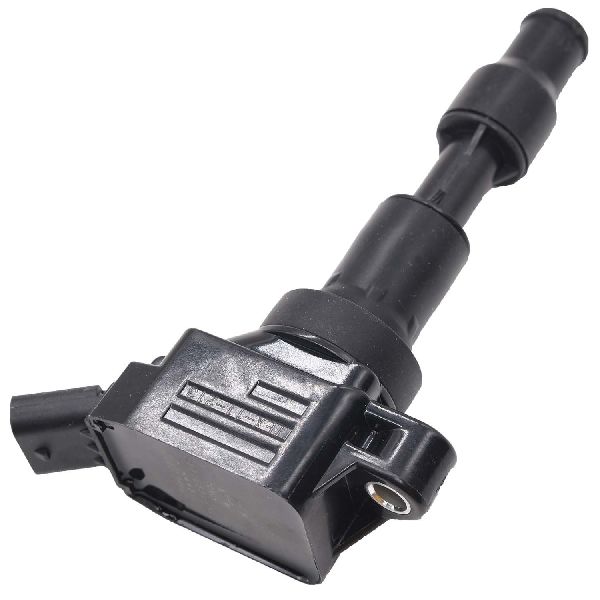
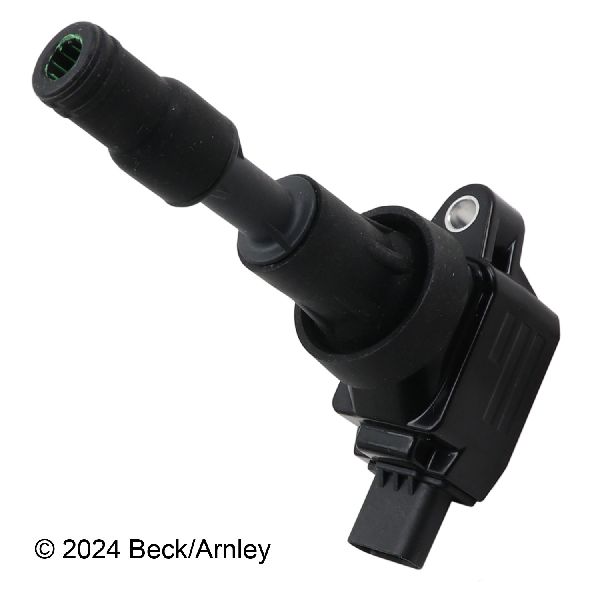
- Ignition Coil (Rear Bank)
(OEM #27310-3L000)— This is a primary cause of misfires, and the rear bank coils are subjected to high heat. It is highly recommended to replace all three on the rear bank at once.
Trusted brands: Kia (OEM), Bosch, Delphi
OEM price range: $70-$90
Aftermarket price range: $50-$75 - Iridium Spark Plug
(OEM #18852-09070)— Spark plugs are a common failure point with a 42,000-mile replacement interval. It is best practice to replace all six when the intake manifold is removed.
Trusted brands: NGK (OEM), HKS M-Series Super Fire Racing (M45iL - one step colder), NGK Ruthenium HX (95125)
OEM price range: $20-$25
Aftermarket price range: $15-$30 - Intake Manifold Gasket Set
(OEM #28411-3L100)— The intake manifold must be removed to access cylinder 5. The gaskets are considered single-use and must be replaced to prevent vacuum leaks.
Trusted brands: Kia (OEM), Mahle, Victor Reinz
OEM price range: $10-$15 per gasket
Aftermarket price range: $5-$10 per gasket
Related Codes That Often Appear With This One
- P0300 — If the misfire is severe or intermittent across other cylinders, a P0300 (Random/Multiple Cylinder Misfire) code may be stored as well.
- P0301, P0303 — These codes indicate misfires on the other rear-bank cylinders (Bank 1). Seeing them together can point to a common issue like a vacuum leak on that bank's intake gasket or suggest that all rear ignition components are failing around the same time.
Technical Service Bulletins (TSBs) & Recalls
- Recall SC284 (NHTSA 23V652000): This recall is for a potential electrical short in the Hydraulic Electronic Control Unit (HECU) that can cause a fire while parked or driving. It is NOT directly related to the P0305 misfire code but is a critical safety recall for the vehicle.
- Manufacturer TSB ENG222: While originally issued for other models, this bulletin defines oil consumption over 1 quart per 1,000 miles as abnormal, a condition that can lead to fouled plugs and misfire codes like P0305 (Ref: NHTSA ODI #11717327).
Platform-Specific Known Issues
- The rear bank of cylinders (1, 3, 5) is in a high-heat area due to proximity to the firewall and turbochargers, potentially leading to premature failure of ignition coils.
- As a GDI engine, carbon buildup on intake valves is a known long-term issue that can lead to misfires if not addressed through services like walnut blasting.
Mechanic-Grade Diagnostic Values
- Low-Pressure Fuel Pump (In-Tank) — expected: 25-30 psi. Failure: Pressure below this range indicates a failing in-tank pump, which supplies the high-pressure pump.
- High-Pressure Fuel Pump (HPFP) - GDI System — expected: ~2,500-3,000 psi under load. Failure: Pressure significantly below or wildly fluctuating from the desired pressure reading on a scan tool can indicate a failing HPFP, though this is more commonly associated with codes like P0088.
- Fuel Injector Pulse Width (Minimum) — expected: 1.0 ms. Failure: While not a direct failure indicator for a single injector, monitoring pulse width can give insights into the overall fueling strategy and whether the ECU is trying to compensate for other issues.
- Long Term and Short Term Fuel Trims — expected: Within +/- 5% at idle. Failure: Consistently high positive trims on one bank could indicate a vacuum leak affecting that bank, while negative trims could suggest a leaking injector. A Reddit user noted checking this to rule out vacuum leaks.
Scan Tool Commands That Help
- Kia GDS (Global Diagnostic System) / KDS: Injector Disable / Actuation Test — To isolate a misfire cause. After accessing the engine controls, a technician can disable the injector for cylinder 5. If there is no change in engine RPM or smoothness, it confirms that cylinder 5 was not contributing, pointing towards a fuel, spark, or compression issue on that specific cylinder.
- Kia GDS (Global Diagnostic System) / KDS: Resetting Adaptive Values — After replacing a major component like a fuel injector or cleaning intake valves. This command clears the ECU's learned fuel trim and ignition timing adjustments, forcing it to relearn based on the new, properly functioning components.
- Kia GDS (Global Diagnostic System) / KDS: Trigger Module (Flight Record) — For diagnosing intermittent misfires that only occur under specific conditions (e.g., high engine temperature, high load). This function records sensor data over a drive cycle, allowing a technician to analyze what was happening with fuel pressure, ignition timing, and sensor readings at the exact moment the misfire occurred.
Real Owner Repair Stories
- Reddit user on r/kiastinger (Kia Stinger 3.3T (year not specified), stock tune) — Misfire codes for the entire driver's side bank (P0302, P0304, P0306). Misfires would only occur when the engine was fully warm, typically after driving for an extended period (3-4 hours). Letting the car cool down would temporarily resolve the issue.
❌ Tried (didn't work) Replacing all 6 OEM spark plugs, Replacing all 6 OEM ignition coils, Checking for vacuum leaks via fuel trims (which were normal at +/-5%), Visually inspecting all ignition coil connectors
✅ What actually fixed it The user was still diagnosing at the time of the post, but the pattern strongly suggested a heat-soak issue affecting a component common to the entire driver's side bank. Suspects included the bank-specific camshaft position sensor failing when hot, or a wiring harness issue that only manifests with thermal expansion. The key takeaway is that a misfire appearing only after long drives points to a heat-related failure, not a simple plug or coil failure. - NHTSA ODI #10243343 — An owner reported that their vehicle produced misfire codes P0305 and P0300 on the instrument panel. The vehicle was taken to the dealer approximately four times with no resolution.
- NHTSA ODI #11513767 — An owner described a situation where multiple codes appeared, including P0305 and P0087, though the codes would sometimes disappear from the dashboard.
OEM Part Supersession History
Unknown, early-style coil with plastic/rubber boot→27310-3L000 (Right Bank - Cyl 1, 3, 5), 27310-3L030 (Left Bank - Cyl 2, 4, 6)— The updated ignition coils feature an improved, full rubber boot design to provide better sealing and prevent voltage leakage issues that were more common on earlier models.
Heads up: The left and right bank coils have different part numbers and plug angles due to clearance with the intake manifold. They are not interchangeable.
Model Year Variations Within This Range
- 2018-2019: Early models were fitted with a first-generation ignition coil design. Later models (2020+) use an updated coil with a better-sealing, full rubber boot design that is less prone to heat-related issues and voltage leaks. When replacing, it is recommended to use the updated part numbers.
- 2022-2023: For the 2022 model year refresh, the 3.3T engine received a minor power bump to 368 hp from 365 hp, primarily through ECU tuning. This change does not fundamentally alter the diagnosis for a P0305 code.
Diagnostic Flowchart
Other Known Issues on This Vehicle
Issues unrelated to this code that are worth knowing about as an owner of this generation:
- Electronic Wastegate Actuator Rattle/Failure 🟠 Medium — Common issue. A rattling or squeaking noise when the engine is shut off or during light acceleration is a well-documented precursor to failure and potential P0299 underboost codes.
- Paint & Clear Coat Chipping/Peeling 🟡 Low — Widespread complaints, especially on early models (2018-2019). Sunset Yellow and Micro Blue were particularly affected, with Kia even offering buy-backs or repaints for some yellow cars due to a supplier paint adherence issue. (Ref: No official recall, handled on a case-by-case basis by dealers.)
- Failing Oil Pressure Switch 🟠 Medium — A very common failure point, often occurring between 50,000-95,000 miles. It causes the oil pressure light to flicker at warm idle. The sensor is located under the intake manifold, making replacement labor-intensive.
- Cracked Left Turbocharger Oil Feed Pipe 🔴 High — Affects 2018-2023 3.3T models. The original pipe can degrade from engine heat, leak oil, and create a significant fire risk. (Ref: Recall SC300 (NHTSA 24V143000))
- Hatch/Trunk Rattle 🟡 Low — Extremely common on 2018-2019 models. Usually caused by misaligned bump stops, which can be fixed by adding washers or adjusting the stops.
Used vs. New Parts: Buying Guide for This Vehicle
When a used part is the smart pick: For this repair, using used parts is generally not recommended. The primary causes are wear-and-tear ignition and fuel components. The high labor cost to access cylinder 5 means installing a used part with unknown remaining life is a significant financial risk. A used part could fail shortly after installation, requiring the entire expensive job to be repeated.
Donor-vehicle mileage cap: roughly under 30000 miles for the part to have meaningful remaining life.
What to inspect on the donor part:
- For ignition coils, only consider used if they are the updated, full-rubber-boot design (PN 27310-3L000).
- Verify the donor vehicle was not in a front-end collision that could have damaged engine components.
- Ask for maintenance records if possible to see if ignition components were recently replaced.
OEM-only on this vehicle (don't cheap out):
- Ignition Coils: While some aftermarket brands exist, OEM coils (specifically the updated design) are widely trusted in the community for reliability.
- Intake Manifold Gaskets: The cost is low and the risk of a vacuum leak from a used or low-quality gasket is too high to justify savings.
Aftermarket brands forum-validated for this vehicle:
- HKS M-Series Super Fire Racing (M45iL): A popular one-step-colder spark plug for tuned or aggressively driven vehicles.
- NGK Ruthenium HX: Often cited as a durable, long-lasting alternative to the OEM iridium spark plugs.
Brands owners have reported issues with on this vehicle:
- Unbranded or generic ignition coils from online marketplaces. Forum discussions frequently warn against these due to high failure rates, which is especially risky given the labor cost for rear-bank replacement.
Real Owner Stories
Aggregated from forums and TSBs cited above. Mileages and costs reflect what owners reported in those sources.
2019 Genesis G70 3.3T
Symptoms: Owner reported a P0305 code and noted a smell of gas during acceleration (pulls).
What fixed it: The owner suspected a fuel injector issue after the diagnostic process of swapping coils and replacing plugs did not resolve the symptoms.
Source hint: r/GenesisG70 - 2019 G70 3.3t - code p0305
2018-2023 Kia Stinger 3.3L V6 — ~75000 miles
Symptoms: Oil pressure light flickering at warm idle; sensor located under the intake manifold.
What fixed it: Replacement of the oil pressure switch, which is a common failure point often occurring between 50,000-95,000 miles.
Source hint: Known Issues - Failing Oil Pressure Switch
Kia Owner Report — NHTSA ODI #11499800
Symptoms: While driving on the highway, the vehicle began showing multiple codes including P0305, P0300, P0087, and P2096.
What fixed it: The owner noted that the codes eventually disappeared and did not return to the dashboard, though the underlying cause was not specified.
Related OBD-II Codes
Frequently Asked Questions
Does the HECU recall (SC284) explain why my Kia Stinger has a P0305 misfire?
Why is cylinder 5 specifically prone to misfiring on the 3.3L Twin-Turbo V6?
Should I replace all my spark plugs at once if I only have a code for cylinder 5?
Is there a specific spark plug recommendation for tuned Stingers to avoid misfires?
How often should I have the intake valves cleaned to prevent GDI-related misfires?
Can I check the ignition coils on my Stinger without taking it to a shop?
Helpful Videos
Used OEM Parts in Stock
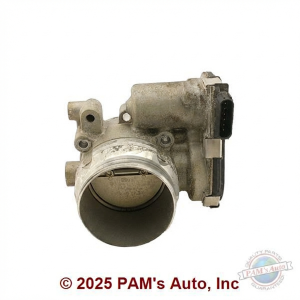
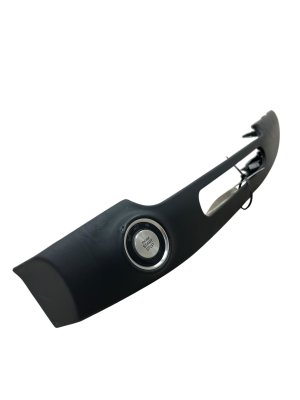
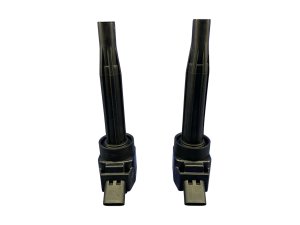
New Aftermarket Parts Available

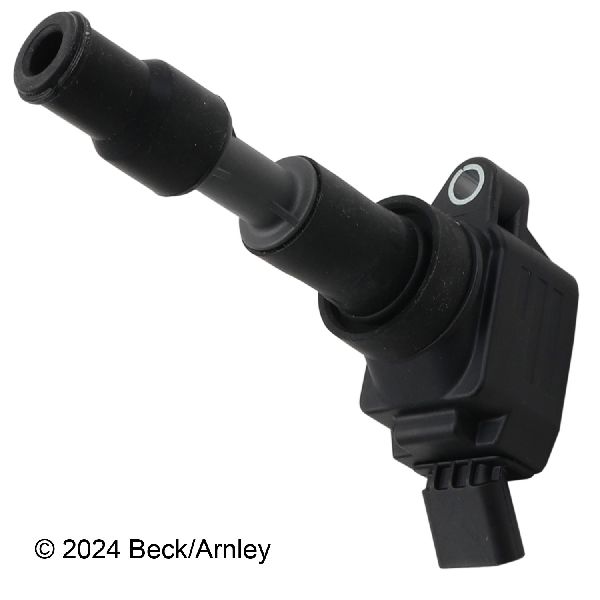

The information in this article is provided for general reference and educational purposes only. Vehicle specifications, procedures, and part compatibility can vary by production date, trim level, and region. Always consult your vehicle's factory service manual and verify part numbers before purchasing or performing repairs. Safety-critical components such as airbags, seat belts, and braking systems should be installed by a qualified professional.
- Kia Stinger:
- 🧭 Diagnostic Flowchart
- 🎬 Helpful Videos
- 🛍️ Shop This Part
- What's Unique About the 2018-2023 Kia Stinger
- Symptoms You May Notice
- Most Likely Causes
- Rare But Worth Checking
- Diagnosis Steps
- Parts You'll Likely Need
- Related Codes That Often Appear With This One
- Technical Service Bulletins (TSBs) & Recalls
- Platform-Specific Known Issues
- Mechanic-Grade Diagnostic Values
- Scan Tool Commands That Help
- Real Owner Repair Stories
- OEM Part Supersession History
- Model Year Variations Within This Range
- Other Known Issues on This Vehicle
- Used vs. New Parts: Buying Guide for This Vehicle
- Real Owner Stories
- 2019 Genesis G70 3.3T
- 2018-2023 Kia Stinger 3.3L V6 — ~75000 miles
- Kia Owner Report — NHTSA ODI #11499800
- Related OBD-II Codes
- Frequently Asked Questions
- 🎟️ Get 5% Off