

P0305 on 2020-2025 Kia Telluride: Cylinder 5 Misfire Causes and Fixes
P0305 means cylinder 5 is misfiring. On the 2020-2025 Telluride, this is most often a bad ignition coil or spark plug. However, for early 2020 models, a simple dealer software update (TSB ENG228) may be the only fix needed. Accessing cylinder 5 (rear bank, driver's side) requires removing the intake manifold, making the repair more complex and costly. The Hyundai Palisade shares this exact issue.
- For a 2020 Telluride, your first step is to ask a Kia dealer about TSB ENG228 before attempting any repairs.
- The most likely cause is a bad ignition coil or spark plug, but cylinder 5 is on the rear bank, requiring removal of the intake manifold for access.
- Due to the high labor involved, it is strongly recommended to replace all three rear ignition coils, all six spark plugs, and the intake gaskets at the same time.
- A flashing Check Engine Light is a serious warning. Stop driving immediately to prevent expensive damage to your catalytic converter.
What's Unique About the 2020-2025 Kia Telluride
The defining challenge for a P0305 code on the Telluride's 3.8L V6 is the location of cylinder 5. It is part of the rear cylinder bank (Bank 1), positioned against the firewall on the driver's side. Accessing its ignition coil and spark plug requires removing the entire upper intake manifold, which significantly increases labor time and cost. For early 2020 models, Kia issued a Technical Service Bulletin (TSB ENG228) to fix overly sensitive misfire detection with a software update, which should be the first item checked for those vehicles.
Symptoms You May Notice
- Rough or shaky idle
- Hesitation or stumbling during acceleration
- Noticeable loss of engine power
- Flashing or solid Check Engine Light
- Poor fuel economy
- Possible fuel odor from the exhaust
- Replacing ignition parts on a 2020 model without first checking for TSB ENG228, which may fix the problem with a free software update.
- Only replacing the single failed coil or plug on cylinder 5. Given the high labor cost to remove the intake manifold, this is a false economy as other rear bank components may fail later, requiring the same expensive labor again.
Most Likely Causes
- Outdated ECM Software (Early 2020 Models) 🔴 High Probability Kia released TSB ENG228 to correct overly sensitive misfire detection logic on 2020 Tellurides built between Jan 9, 2019, and May 19, 2020, which could incorrectly flag a misfire, especially on a cold start.
How to confirm: Contact a Kia dealership and provide your vehicle's VIN. They can check if TSB ENG228 is open and applicable to your vehicle.
Typical fix: A Kia dealer performs a simple software update to the Engine Control Module (ECU). This should be covered under warranty.
Est. part cost: $0 - Faulty Ignition Coil 🔴 High Probability → Shop Ignition Coil Coil-on-plug ignition systems are a common failure point on most modern engines, leading to single-cylinder misfires. This is a frequently cited fix on owner forums for both the Telluride and Palisade.
How to confirm: Swap the ignition coil from cylinder 5 with a coil from an accessible cylinder on the front bank (e.g., cylinder 2, 4, or 6). Clear the codes and drive. If the code changes to P0302, P0304, or P0306, the coil is bad. This requires intake manifold removal.
Typical fix: Replace the faulty ignition coil. Since the intake manifold must be removed, it is highly recommended to replace all three rear coils (cylinders 1, 3, 5) and all six spark plugs at the same time to prevent repeating the high labor cost.
Est. part cost: $50-$100 - Worn or Fouled Spark Plug 🔴 High Probability → Shop Spark Plug
How to confirm: After confirming the coil is good, remove the spark plug from cylinder 5. Inspect it for a worn electrode, damage, or fouling (black, oily, or white deposits). Even new vehicles can have faulty plugs, as reported by some owners. NHTSA ODI #11717327 describes a situation where oil consumption fouled spark plugs and caused active misfires on cylinders 1, 3, 4, and 5.
Typical fix: Replace the spark plug. It is best practice to replace all six spark plugs at once if they are near their service interval (around 100,000 miles) or anytime the intake manifold is removed.
Est. part cost: $15-$25 per plug - Clogged or Faulty Fuel Injector 🟡 Medium Probability → Shop Fuel Injector Gasoline Direct Injection (GDI) injectors operate under very high pressure and can become clogged or fail over time. Some owners have reported leaking injectors causing cold start misfires or rich conditions that can lead to misfires. In a cross-manufacturer reference, NHTSA ODI #10320360 notes that duplicate codes including P0305 and P0273 can indicate a problem affecting the fuel injector and associated wiring on Bank 1.
How to confirm: If the coil and plug swaps do not change the misfire from cylinder 5, the injector is a likely cause. This requires professional diagnosis with specialized tools to test flow rates and electrical function, or swapping the injector, which is a highly involved job.
Typical fix: Replace the faulty fuel injector. This also requires intake manifold removal.
Est. part cost: $100-$200
Rare But Worth Checking
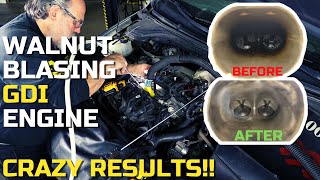
- Intake Valve Carbon Buildup: A known long-term issue on GDI engines. Fuel doesn't wash over the intake valves, allowing carbon to accumulate over 60,000+ miles, restricting airflow and causing misfires. The fix is a professional 'walnut blasting' intake cleaning service.
- Low Engine Compression: This indicates a serious mechanical engine problem like a bad valve, worn piston rings, or a leaking head gasket. A compression test is needed to diagnose this. It is uncommon but severe.
- Broken Valve Spring (2024 Models): A small number of 2024 Tellurides produced between Oct 1, 2023, and Dec 6, 2023, were recalled under SC296 (NHTSA 24V-077) for defective valve springs that could break, causing misfires and potential engine failure. Check your VIN for applicability.
Diagnosis Steps
- For 2020 models, contact a Kia dealer with your VIN to check if TSB ENG228 is applicable. If so, have the ECU update performed first.
- If the TSB doesn't apply or doesn't fix the issue, proceed with diagnosis. Read the code with an OBD-II scanner to confirm P0305 is the primary code present.
- Perform an ignition coil swap. This requires removing the upper intake manifold. Swap the coil from cylinder 5 (rear bank, driver's side) with a coil from the front bank (e.g., cylinder 4, middle front).
- After swapping the coils, reinstall the manifold with new gaskets, clear the codes, and drive the vehicle until the Check Engine Light returns. If the code is now P0304, the ignition coil you moved is faulty.
- Perform a spark plug swap. If the code remains P0305 after the coil swap, the coil is likely good. Put the original coil back. Now, swap the spark plug from cylinder 5 with the one from cylinder 4.
- Clear the codes and drive again. If the code changes to P0304, the spark plug is the culprit.
- If the misfire still stays on cylinder 5 after both swaps, the issue is likely a fuel injector, wiring, or a mechanical engine problem. At this point, professional diagnosis is recommended.
Parts You'll Likely Need
- Ignition Coil
(OEM #27310-3L000 or 27310-3L030)— This is one of the most common failure items causing a single-cylinder misfire.
Trusted brands: Genuine Kia/Hyundai, Mando (OEM Supplier), NGK, Delphi
OEM price range: $70-$120
Aftermarket price range: $40-$80 - Spark Plug
(OEM #18849-11070 (NGK SILZKR7E11))— Spark plugs are a routine maintenance item and a primary cause of misfires as they wear out or become fouled.
Trusted brands: NGK (OEM), Denso
OEM price range: $20-$30
Aftermarket price range: $10-$20 - Upper Intake Manifold Gasket Set
(OEM #29215-3CFA1)— This must be replaced anytime the intake manifold is removed to access cylinder 5, in order to prevent vacuum leaks.
Trusted brands: Genuine Kia/Hyundai, Mahle, Fel-Pro
OEM price range: $40-$60
Aftermarket price range: $20-$40
Related Codes That Often Appear With This One
- P0300 — If the misfire is intermittent or affects other cylinders, a P0300 (Random/Multiple Misfire) code may appear alongside P0305.
- P0301, P0303 — Misfires on other cylinders in the same bank (Bank 1) could indicate a shared problem, like a vacuum leak from the intake manifold gasket on that side, or that it's time to replace all coils/plugs on the rear bank.
Technical Service Bulletins (TSBs) & Recalls
- ENG228 - Addresses overly sensitive misfire detection on early 2020 models (Jan 9, 2019 - May 19, 2020 build dates) with a software update.
- TSB ENG222 - Defines oil consumption over 1 quart per 1,000 miles as abnormal, a condition which NHTSA ODI #11717327 notes can foul spark plugs and cause misfires on cylinder 5.
Platform-Specific Known Issues
- TSB ENG228: Some 2020 models may have overly sensitive misfire detection logic that can be corrected with an ECU software update.
- Recall SC296 (NHTSA 24V-077): Some 2024 models produced between Oct 1, 2023, and Dec 6, 2023, were recalled for valve spring issues that could lead to engine damage and misfires. Check your VIN for applicability.
Mechanic-Grade Diagnostic Values
- Ignition Coil Primary Winding Resistance — expected: 0.49 - 0.57 Ω at 68°F (20°C). Failure: A resistance reading outside this range indicates a faulty coil.
- Ignition Coil Secondary Winding Resistance — expected: 9.5 - 11.1 kΩ. Failure: A resistance reading outside this range indicates a faulty coil.
- High Pressure Fuel System (GDI) — expected: Idling: 40-50 bar (580-725 PSI). Under load: Up to 200 bar (2900 PSI).. Failure: Significantly lower pressure, especially under load, points to a failing high-pressure fuel pump (HPFP), though this would likely cause multiple misfires (P0300), not just P0305.
- Fuel Trim (Short Term and Long Term) — expected: Within +/- 10% at idle and under load.. Failure: High positive fuel trims on one bank (e.g., +12% or more on Bank 1) could suggest a vacuum leak near cylinder 5 after the MAF sensor, such as a leaking intake manifold gasket.
Hidden / Shadow Codes Worth Checking
- Mode $06, Test ID $A2-$A7: Misfire count for each cylinder (Cylinders 1 through 6). The ECM tracks misfires even before they are frequent enough to set a P030x code. This data is crucial for diagnosing intermittent misfires by showing if cylinder 5 has a higher count than others. (see via Advanced OBD-II scanner with Mode $06 capability or the Kia KDS/GDS (Global Diagnostic System) dealer tool.)
Scan Tool Commands That Help
- Kia KDS/GDS: ECU Upgrade / Vehicle S/W Management — Used to perform the TSB ENG228 software update for early 2020 models to correct overly sensitive misfire detection logic.
- Kia KDS/GDS: Resetting Adaptive Values — After a repair, such as replacing a fuel injector or cleaning carbon buildup, resetting the engine's learned fuel trim and other adaptive values can help the ECM adjust to the new components faster.
- Kia KDS/GDS: Actuation Test (e.g., Fuel Injector) — Allows the technician to command a specific fuel injector to operate, helping to confirm if the injector is electronically functional without having to remove it. This is a key step before condemning a hard-to-access injector.
Wiring & Ground Locations
- G01 (Engine Compartment Harness Ground) — In the left fender area of the engine compartment.. A poor or corroded ground at this location can cause intermittent and hard-to-diagnose electrical issues for multiple engine components, including the ignition system for all cylinders.
- Cylinder 5 Ignition Coil Connector — On top of the ignition coil for cylinder 5, located on the rear bank (against the firewall), driver's side. Requires intake manifold removal to access.. This is a 4-pin connector. Checking for 12V power, ground, and the command signal from the ECM at this connector is a key diagnostic step. Damage to the pins, connector, or pigtail harness will directly cause a P0305.
- Cylinder 5 Fuel Injector Connector — On the fuel rail, near the base of the intake port for cylinder 5. Requires intake manifold removal to access.. Damage or corrosion at this connector will prevent the fuel injector from firing, causing a P0305. Verifying the signal with a noid light or multimeter is a critical step if the ignition system checks out.
Real Owner Repair Stories
- Reddit user in r/KiaTelluride (2020 Kia Telluride, 128,000 miles) — Check engine light with misfires on cylinders 5 and 6 (P0305, P0306).
❌ Tried (didn't work) Replaced all ignition coils, Replaced all spark plugs
✅ What actually fixed it The owner discovered oil on the threads of the spark plugs for cylinders 5 and 6. The root cause was a leaking valve cover gasket allowing oil into the spark plug tubes, which shorts out the spark. Replacing the valve cover gasket resolved the misfires. - NHTSA ODI #10243343 — An owner reported that their vehicle was taken to the dealer approximately 4 times for diagnostic tests which produced misfire codes P0305 and P0300, but the issue remained without resolution.
- NHTSA ODI #11499800 — A driver experienced a situation where multiple codes appeared including P0305, P0300, P0087, and P2096, though the codes eventually cleared from the dashboard on their own.
- NHTSA ODI #11513767 — An owner reported a series of codes including P0305, P0087, and P0506 appearing intermittently during vehicle operation.
OEM Part Supersession History
27310-3L000→27310-3L030— Standard part revision, likely for improved durability or manufacturing process changes.
Heads up: The parts are interchangeable. When ordering, you will likely receive the newer 27310-3L030 part number.
Model Year Variations Within This Range
- 2020-2022 vs 2023-2025: The Kia Telluride received a significant facelift for the 2023 model year, including new exterior styling and a redesigned dashboard with dual 12.3-inch screens. However, the core powertrain, the 3.8L V6 engine and 8-speed automatic transmission, remained unchanged. Therefore, the causes and diagnostic procedures for a P0305 code are identical across the entire 2020-2025 range, with the exception of software TSBs specific to early models.
Diagnostic Flowchart
Other Known Issues on This Vehicle
Issues unrelated to this code that are worth knowing about as an owner of this generation:
- Spontaneously Cracking Windshields 🟠 Medium — Widespread complaints, particularly on 2020-2021 models. Can occur without impact and spread rapidly. (Ref: No official recall, but Kia has acknowledged the issue and offered some owners goodwill replacements.)
- Tow Hitch Harness Fire Risk 🔴 High — Affects 2020-2022 models with an official Kia tow hitch harness. Debris and moisture can short the circuit board, causing a fire while parked or driving. (Ref: Recall NHTSA 22V626000)
- Power Seat Motor Fire Risk 🔴 High — Affects 462,869 vehicles across all 2020-2024 model years. A stuck seat adjustment switch can cause the motor to overheat. (Ref: Recall SC316 (NHTSA 24V-404). A 'Park Outside' notice was issued.)
- Driveshaft Disengagement / Rollaway Risk 🔴 High — Affects 2020-2024 models. The intermediate shaft and right front driveshaft may not fully engage, potentially causing a rollaway when the vehicle is in Park. (Ref: Recall NHTSA 24V197000. The fix is a software update that automatically engages the electronic parking brake.)
- Headlight High-Beam Failure 🟠 Medium — Commonly reported on 2020-2022 models. The high beams may fail to operate, requiring replacement of the headlight assembly. A class-action lawsuit has been filed regarding this issue. (Ref: No recall, but numerous NHTSA complaints exist.)
- Instrument Cluster / LCD Screen Goes Blank 🟡 Low — Affects 2022-2023 models due to software glitches or manufacturing defects, leading to a blank gauge cluster or infotainment screen. (Ref: Recalls NHTSA 23V298000 and 22V256000 were issued for specific VIN ranges.)
Used vs. New Parts: Buying Guide for This Vehicle
When a used part is the smart pick: For this repair, buying used parts is generally not recommended due to the high labor cost. The only exception might be a complete, low-mileage engine if a catastrophic failure is diagnosed. Individual components like coils, plugs, and injectors should be purchased new.
Donor-vehicle mileage cap: roughly under 30000 miles for the part to have meaningful remaining life.
What to inspect on the donor part:
- For a used engine, verify mileage with VIN history.
- Check for signs of overheating (discolored metal).
- Inspect for external oil leaks from gaskets or seals.
OEM-only on this vehicle (don't cheap out):
- Ignition Coils: While good aftermarket options exist, the extreme labor involved in accessing the rear bank makes using Genuine Kia/Hyundai coils a strong recommendation to ensure reliability and avoid a repeat job.
- Fuel Injectors: GDI injectors are highly precise components. Given the labor, OEM is the safest choice to guarantee correct flow rates and spray patterns.
- Intake Manifold Gaskets: Never reuse these. Always install new OEM or high-quality aftermarket (Fel-Pro, Mahle) gaskets to prevent vacuum leaks.
Aftermarket brands forum-validated for this vehicle:
- NGK (Ignition Coils and Spark Plugs - often the OEM supplier)
- Delphi (Ignition Coils)
- Fel-Pro (Gaskets)
- Mahle (Gaskets)
Brands owners have reported issues with on this vehicle:
- Unbranded, 'white box' ignition coils and sensors from online marketplaces. The potential for premature failure is too high given the labor cost to replace them.
Real Owner Stories
Aggregated from forums and TSBs cited above. Mileages and costs reflect what owners reported in those sources.
2023 Kia Telluride 3.8L V6 — 8900 miles
Symptoms: The vehicle experienced a misfire and threw a code. Discussion noted that even on very new vehicles, spark plugs are a primary suspect.
What fixed it: Spark plug replacement (though the source notes they should typically last longer).
Source hint: Reddit - r/KiaTelluride: 'Advice Needed: 2023 Telluride Cylinder 4 Misfire'
2020 Kia Telluride 3.8L V6
Symptoms: Overly sensitive misfire detection, particularly during cold starts, leading to a Check Engine Light.
What fixed it: ECU software update per TSB ENG228.
Source hint: TSB ENG228
2024 Kia Telluride 3.8L V6
Symptoms: Engine misfires and potential engine damage due to valve spring issues.
What fixed it: Repair or engine service under Recall SC296.
Source hint: Recall SC296 (NHTSA 24V-077)
Related OBD-II Codes
Frequently Asked Questions
My 2020 Telluride is misfiring on cold starts; could TSB ENG228 be the cause?
Is there a recall for engine misfires on the 2024 Telluride?
Why is the labor cost so high to fix a P0305 on the Telluride 3.8L V6?
Should I replace all the spark plugs if only cylinder 5 is misfiring?
Can a faulty fuel injector cause P0305 on this GDi engine?
Will the ECU update for TSB ENG228 cost me anything?
Helpful Videos
We Have This Part in Stock

The information in this article is provided for general reference and educational purposes only. Vehicle specifications, procedures, and part compatibility can vary by production date, trim level, and region. Always consult your vehicle's factory service manual and verify part numbers before purchasing or performing repairs. Safety-critical components such as airbags, seat belts, and braking systems should be installed by a qualified professional.
- Kia Telluride:
- 🧭 Diagnostic Flowchart
- 🎬 Helpful Videos
- 🛍️ Shop This Part
- What's Unique About the 2020-2025 Kia Telluride
- Symptoms You May Notice
- Most Likely Causes
- Rare But Worth Checking
- Diagnosis Steps
- Parts You'll Likely Need
- Related Codes That Often Appear With This One
- Technical Service Bulletins (TSBs) & Recalls
- Platform-Specific Known Issues
- Mechanic-Grade Diagnostic Values
- Hidden / Shadow Codes Worth Checking
- Scan Tool Commands That Help
- Wiring & Ground Locations
- Real Owner Repair Stories
- OEM Part Supersession History
- Model Year Variations Within This Range
- Other Known Issues on This Vehicle
- Used vs. New Parts: Buying Guide for This Vehicle
- Real Owner Stories
- 2023 Kia Telluride 3.8L V6 — 8900 miles
- 2020 Kia Telluride 3.8L V6
- 2024 Kia Telluride 3.8L V6
- Related OBD-II Codes
- Frequently Asked Questions
- 🎟️ Get 5% Off