

P0305 on 2002-2005 Land Rover Freelander: Cylinder 5 Misfire Causes and Fixes
P0305 on a 2002-2005 Freelander indicates a misfire in cylinder 5. The most common causes are a failed ignition coil or a worn spark plug on the difficult-to-access rear cylinder bank. Access requires removing the intake manifold, so it is highly recommended to replace all three rear coils, spark plugs, and intake gaskets at the same time. A full set of six ignition coils costs between $75 and $150, while a set of quality spark plugs is about $40-$60.
- P0305 means cylinder 5 is misfiring, most likely due to a bad ignition coil or spark plug.
- Cylinder 5 is on the rear bank of the engine, and replacing parts requires removing the intake manifold, making the job difficult.
- To save time and money, it is strongly recommended to replace all three ignition coils, all six spark plugs, and the intake gaskets at the same time.
- If the Check Engine Light is flashing, stop driving to prevent expensive damage to the catalytic converter.
- While ignition parts are the primary suspect, vacuum leaks and low fuel pressure are also possible causes for this code on the Freelander KV6.
What's Unique About the 2002-2005 Land Rover FREELANDER
The 2002-2005 Freelander uses the Rover 2.5L KV6 engine, which has a unique ignition setup. The front three cylinders (2, 4, 6) use individual ignition coils connected to the spark plugs via short wires, while the rear three cylinders (1, 3, 5) have coil-on-plug units. Cylinder 5 is on the rear bank, closer to the firewall. Accessing this rear bank is notoriously difficult as it requires removing the upper intake manifold (plenum). This complexity often leads owners to replace all three rear ignition components (coils, plugs) and the plenum gaskets at once to avoid repeating the labor-intensive job. While the plenum is off, it is also a common time to inspect the two Variable Intake System (VIS) motors, which are a known failure point on the KV6 engine and can cause performance issues.
Diagnostic Flowchart
Tap your situation to follow the diagnostic path that matches what you're seeing on this vehicle.
Symptoms You May Notice
- Rough or shaky engine idle.
- Hesitation or stumbling during acceleration.
- Noticeable loss of power, especially under load like climbing a hill.
- Flashing or solid Check Engine Light.
- Reduced fuel economy.
- Possible smell of fuel from the exhaust.
- Replacing only the spark plug when the ignition coil is the actual cause, requiring the intake manifold to be removed a second time.
- Replacing a single ignition coil on the rear bank instead of all three, leading to another coil failing soon after and repeating the difficult repair.
- Reusing the old intake manifold gaskets after removing the plenum, which almost always results in a vacuum leak and new codes like P0171/P0174 and P0300.
Most Likely Causes
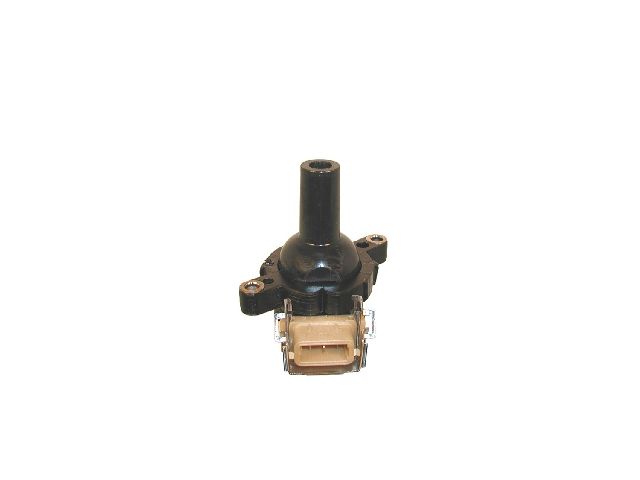
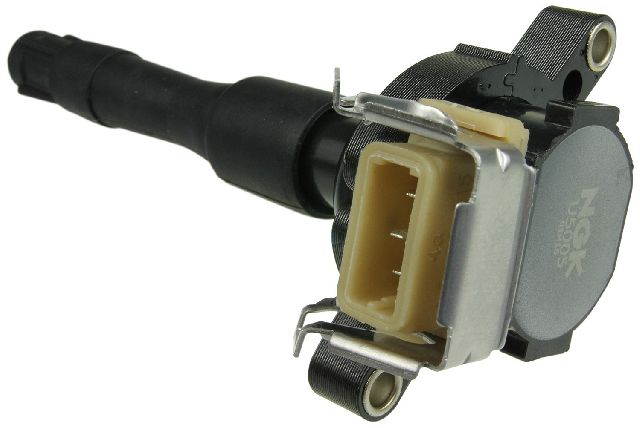
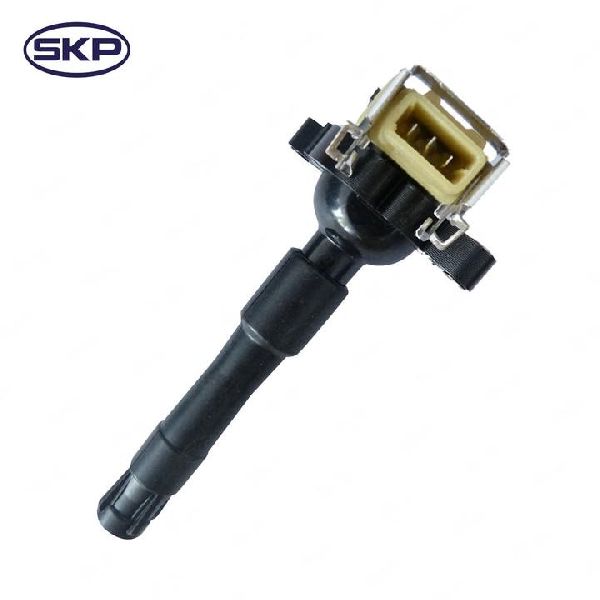
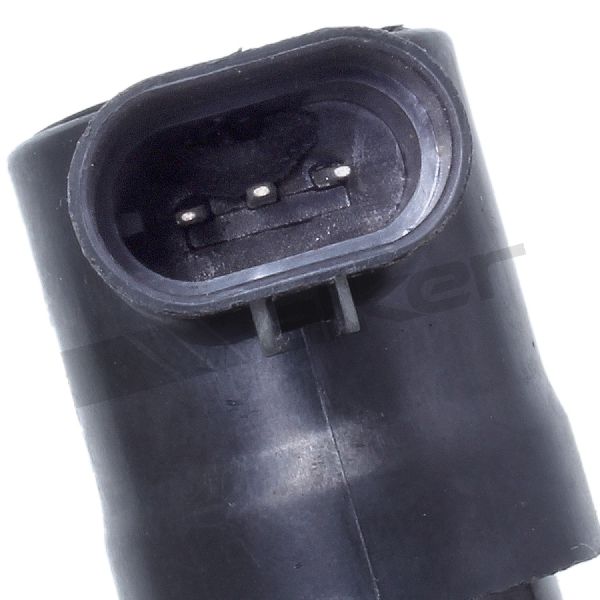
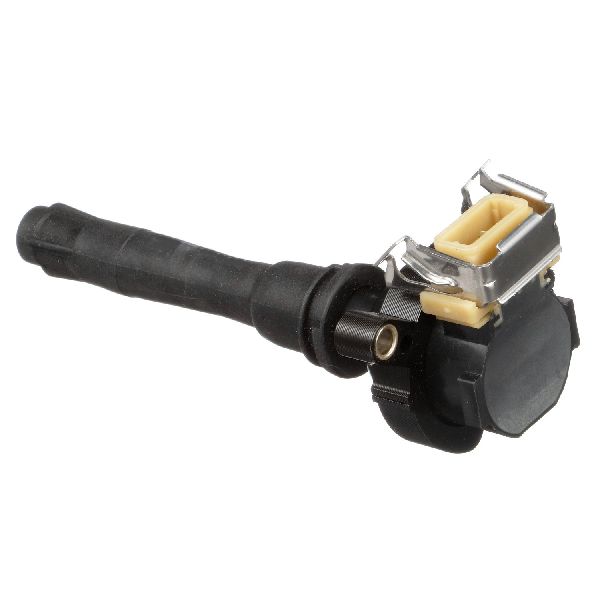
- Failed Ignition Coil 🔴 High Probability → Shop Ignition Coil The coil-on-plug units for the rear bank of cylinders are situated under the intake manifold, where sustained heat can contribute to their failure over time. This is the most common cause reported by owners for a single-cylinder misfire on the rear bank.
How to confirm: The most effective method is to swap the ignition coil from cylinder 5 with another cylinder on the same rear bank (e.g., cylinder 1 or 3). Clear the codes and drive the vehicle. If the code changes to P0301 or P0303, the coil is faulty. However, this requires removing the intake manifold, which is a significant job.
Typical fix: Replace the faulty ignition coil. It is highly recommended to replace all three rear coils at the same time due to the difficult access. Many owners also replace the front three coils and all six spark plugs during this service.
Est. part cost: $20-$40 for a single aftermarket coil, $75-$150 for a set of six. - Worn or Fouled Spark Plug 🔴 High Probability → Shop Spark Plug
How to confirm: After removing the intake manifold and ignition coil, remove the spark plug from cylinder 5. Inspect it for wear (eroded electrode), fouling (black, oily, or white deposits), or an incorrect gap. A white, powdery look can indicate a lean condition or coolant leak.
Typical fix: Replace the spark plug. It is best practice to replace all six spark plugs at the same time. The recommended plugs are often NGK Iridium or Platinum models, such as PFR6N-11 or IFR6J11.
Est. part cost: $40-$70 for a set of six quality NGK plugs. - Vacuum Leak from Intake Manifold Gaskets 🟡 Medium Probability → Shop Engine Intake Manifold The KV6 engine has a complex plastic intake manifold system with multiple gaskets. These gaskets are a mandatory replacement item anytime the manifold is removed for a job like this. Re-using them almost guarantees a vacuum leak, which will cause lean running conditions and misfires (often on multiple cylinders).
How to confirm: With the engine running, listen for hissing sounds around the intake manifold. You can also carefully spray brake cleaner or a propane torch (unlit) around gasket surfaces; a change in engine idle indicates a leak. Often, this is discovered after a repair when the old gaskets were reused.
Typical fix: Replace the intake manifold (plenum) gaskets. The OEM part number for the main set is LKJ100992L. It's also wise to replace the throttle body gasket and other small o-rings while the manifold is off.
Est. part cost: $40-$80 for a complete plenum gasket set. - Failing Fuel Pump or Clogged Fuel Filter ⚪ Low Probability The official Land Rover TSB SWA09013 links multiple misfire codes (including P0305) and lean codes (P0171, P0174) to fuel system issues causing engine hesitation or stalling.
How to confirm: Check the fuel pressure at the fuel rail's test port. For the KV6 engine, the pressure should be approximately 3.5 Bar (50 PSI), not 60-65 PSI as some generic guides suggest. Low pressure indicates a weak pump or clogged filter.
Typical fix: Replace the fuel pump and filter assembly. On the Freelander, the filter is part of the in-tank pump module. Using a quality OEM or brand-name pump is crucial, as cheap replacements are known to fail prematurely.
Est. part cost: $100-$260 for a quality fuel pump assembly.
Rare But Worth Checking
- Clogged or Faulty Fuel Injector: → Shop Fuel Injector If the misfire remains on cylinder 5 after swapping ignition and spark components, the injector could be the issue. It may be clogged or have an electrical fault. This can sometimes be cleaned with a strong in-tank additive as a first step.
- Low Engine Compression: This is a more serious mechanical issue. On the KV6 engine, this could be caused by a burnt exhaust valve, a failed head gasket, or worn piston rings. A compression test is needed to diagnose this. The KV6 is particularly sensitive to coolant loss, which can quickly lead to head gasket failure.
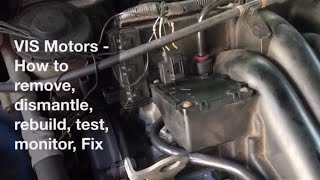
- Faulty VIS Motors: The Variable Intake System (VIS) uses two motors to open and close butterfly valves inside the intake manifold to optimize torque and power. When these motors fail or the internal plastic linkages break, it can cause rough running, lack of power, and sometimes trigger misfire-like symptoms. Since the manifold must be removed to access cylinder 5, it is the perfect time to test and repair the VIS motors. 🎬 See how to test and rebuild your VIS motors here.
Diagnosis Steps
- Confirm P0305 is the primary code using an OBD-II scanner. Note any other codes like P0300, P0171, or P0174.
- Due to the difficult access to cylinder 5, plan to perform a comprehensive service of the rear bank once the intake manifold is removed. Purchase all three rear coils, six spark plugs, and a full plenum gasket set beforehand.
- Carefully remove the upper intake manifold (plenum). Label all vacuum lines and electrical connectors to ensure correct reassembly. Be gentle with plastic clips, which may be brittle.
- With the plenum removed, you now have access to the rear coils and plugs (cylinders 1, 3, 5).
- Swap the ignition coil from cylinder 5 with the coil from cylinder 1 or 3.
- While accessible, replace all six spark plugs with a quality brand like NGK. The recommended plug is NGK PFR6N-11. 🎬 Watch this step-by-step guide to changing your Freelander spark plugs.
- Inspect the two VIS motors on the plenum for proper operation. Kits are available to repair the common internal failures.
- Thoroughly clean the mating surfaces for the intake manifold gaskets. Install the new gaskets (Part No. LKJ100992L).
- Reassemble the intake manifold, ensuring all hoses and connectors are properly seated. Torque bolts to factory specification if possible.
- Clear the codes and run the engine to see if the misfire code has moved to the cylinder where the coil was swapped (e.g., P0301 or P0303). If it has, the original coil is bad. Since you are replacing them all, this is just for confirmation.
- If the code remains P0305 after replacing plugs and coils, the issue is likely the fuel injector or a mechanical problem with cylinder 5.
- Perform a fuel pressure test to rule out a weak fuel pump. Pressure should be around 3.5 Bar (50 PSI).
- As a final step for a persistent misfire, perform an engine compression test on cylinder 5 to check for mechanical engine health. 🎬 Watch this deep dive into KV6 engine heads and valves.
Parts You'll Likely Need
- Ignition Coil
(OEM #NEC000110L)— This is the most frequent failur
Related Codes That Often Appear With This One
- P0300 — Indicates random or multiple cylinder misfires. If seen with P0305, it suggests the problem may be more widespread, like a vacuum leak or low fuel pressure affecting the whole engine.
- P0301, P0303 — Misfire codes for other cylinders on the same rear bank. Seeing them together strongly points to a shared cause like a vacuum leak from the rear plenum gasket or a systemic issue.
- P0171, P0174 — These codes mean 'System Too Lean' for Bank 1 and Bank 2. They often appear with misfire codes when the root cause is a vacuum leak (especially from intake gaskets) or insufficient fuel pressure, which affects the air-fuel ratio for the entire engine.
- P1475 — This code relates to the 'Variable Intake Balance Valve'. It indicates a problem with one of the VIS motors or its circuit. If you see this alongside a misfire, it's a strong clue that the intake manifold system is a source of problems.
Technical Service Bulletins (TSBs) & Recalls
- SWA09013 - Links multiple misfire codes (P0301-P0306) and lean codes (P0171, P0174) to potential fuel system delivery issues, corroborating the 'Fuel Pump' cause.
Platform-Specific Known Issues
- Variable Intake System (VIS) Motors: The KV6 engine is equipped with two VIS motors on the intake manifold that control butterfly valves. These are notoriously unreliable. The plastic components inside can break, or the motors themselves can fail. A failed VIS system leads to poor performance, especially a lack of torque at low RPMs or lack of power at high RPMs. Since the manifold must be removed for a P0305 fix, it is the ideal time to inspect and repair the VIS motors.
- Intake Manifold (Plenum) Removal: → Shop Engine Intake Manifold The single greatest challenge of this repair is the removal of the intake manifold to access the rear bank of cylinders (1, 3, 5). This turns a simple coil/plug replacement into a multi-hour job that requires careful labeling of hoses and connectors and mandatory replacement of gaskets to prevent future vacuum leaks.
Mechanic-Grade Diagnostic Values
- Fuel Injector Resistance — expected: 14.5 ± 0.7 ohms at 20°C (68°F). Failure: A reading that is significantly higher (open circuit) or lower (short circuit) than the specification.
- Ignition Coil Primary Resistance — expected: Approximately 0.4 to 0.61 Ohms (for similar Rover engines, specific KV6 value not found). Failure: A reading outside of the expected range, or one that is inconsistent with the other coils.
- Ignition Coil Secondary Resistance — expected: In the range of 6-11 kOhms (general value, specific KV6 value not found). Failure: A reading of infinity (open circuit) or a value significantly different from other coils.
- Engine Compression — expected: Approximately 150-160 PSI, with consistency across all cylinders.. Failure: Significantly lower pressure in cylinder 5 compared to others, indicating a mechanical issue like a bent valve or head gasket leak.
Wiring & Ground Locations
- Ignition Coil 5 (D237) Connector — On top of the engine, connected to the cylinder 5 ignition coil, under the intake manifold.. This is the direct electrical connector for the failing cylinder's coil. Checking for power, ground, and signal integrity at this connector is a key diagnostic step. A wiring diagram shows a Yellow/Green wire and a Yellow/Grey wire at the connector.
- Fuel Injector 5 (T176) Connector — On the fuel rail, aimed at the intake port for cylinder 5, under the intake manifold.. If the coil and plug are good, the injector is the next logical component. A wiring diagram shows a White wire and a Blue/Red wire at the connector, which can be tested for pulse signals.
- Main Engine Ground Points — Key grounds are located on the inner fender behind the battery, on the frame rail below the battery, and on the cylinder heads. A poor engine ground can cause a weak spark or erratic sensor behavior, leading to misfires.. The ignition system relies on a solid ground path to complete the circuit and generate a strong spark. Corrosion or looseness at these points can cause intermittent and hard-to-diagnose misfires.
- Earth Header 0551 (K108) — This is a common earth header point shown in wiring diagrams that services multiple engine components, including the ignition coils.. A fault at a shared ground header can cause issues on multiple cylinders, but could also present as a single cylinder misfire if the connection for that specific circuit is poor.
Real Owner Repair Stories
- LandyZone forum user (Freelander 1 (TD4, but relevant diagnostic process)) — Smoky start, misfire, and clanking noise around 2,000-2,500 rpm.
❌ Tried (didn't work) The user was suspecting mechanical issues or injectors.
✅ What actually fixed it The user removed the electrical connectors from the injectors and fuel pressure regulator, cleaned them with contact cleaner, and reinstalled them. This resolved the misfire and knocking noise. - LandyZone forum user (Freelander 1 KV6) — Car would not start, cranked but no spark or injection. Fault code P0341 (Cam Sensor) was present.
❌ Tried (didn't work) Replaced crank sensor, replaced cam sensor, tested wiring harness, tested sensors individually.
✅ What actually fixed it The final diagnosis from another user's similar experience pointed to a failed Engine Control Unit (ECU) itself, which can inhibit fuel and spark, mimicking sensor failures.
Helpful Videos


We Have This Part in Stock


The information in this article is provided for general reference and educational purposes only. Vehicle specifications, procedures, and part compatibility can vary by production date, trim level, and region. Always consult your vehicle's factory service manual and verify part numbers before purchasing or performing repairs. Safety-critical components such as airbags, seat belts, and braking systems should be installed by a qualified professional.
- Land Rover FREELANDER:
- 🧭 Diagnostic Flowchart
- 🎬 Helpful Videos
- 🛍️ Shop This Part
- What's Unique About the 2002-2005 Land Rover FREELANDER
- Symptoms You May Notice
- Most Likely Causes
- Rare But Worth Checking
- Diagnosis Steps
- Parts You'll Likely Need
- Related Codes That Often Appear With This One
- Technical Service Bulletins (TSBs) & Recalls
- Platform-Specific Known Issues
- Mechanic-Grade Diagnostic Values
- Wiring & Ground Locations
- Real Owner Repair Stories
- 🎟️ Get 5% Off