

P0305 on 2016-2017 Lincoln MKX: Cylinder 5 Misfire Causes and Fixes
P0305 indicates a misfire on cylinder 5. The most common fixes are replacing the ignition coil or spark plug. However, on 2016-2017 Lincoln MKX models with the 2.7L EcoBoost engine, this code is a critical early warning for a serious internal engine problem related to oil consumption from faulty valve guides, covered by manufacturer TSB 19-2243, which may require cylinder head replacement.
- P0305 means cylinder 5 is misfiring.
- Start your diagnosis with the simple and common causes: the ignition coil and spark plug for cylinder 5.
- On this specific Lincoln MKX, you MUST check the engine oil level. Excessive oil consumption is a known issue that can cause this code.
- If oil consumption is high, be prepared for a major, expensive repair involving the engine's cylinder heads, as documented in official Lincoln/Ford TSBs.
- Do not ignore a flashing Check Engine Light, as it signals a severe misfire that can quickly damage your catalytic converter.
What's Unique About the 2016-2017 Lincoln MKX
For the 2016-2017 Lincoln MKX, particularly those with the 2.7L EcoBoost engine built between April 1, 2016, and January 1, 2017, a P0305 code requires special attention. While standard ignition-related causes are possible, Ford/Lincoln has issued Technical Service Bulletin 19-2243 (superseding earlier versions) that links misfire codes directly to excessive oil consumption. The root cause is often faulty valve guides, which allow oil to leak into the cylinders, fouling spark plugs and causing misfires. This is not a simple tune-up issue; it's an early symptom of a potential internal engine failure that may require cylinder head replacement to fix permanently.
Diagnostic Flowchart
Tap your situation to follow the diagnostic path that matches what you're seeing on this vehicle.
Symptoms You May Notice
- Check Engine Light is on or flashing
- Rough or shaky idle, especially in neutral or park at normal temperature
- Hesitation or stumbling during acceleration
- Reduced engine power
- Noticeable decrease in fuel economy
- Smell of unburned fuel from the exhaust
- White or blue smoke from the exhaust, especially after a hot restart
- Excessive oil consumption (more than 1 quart per 3,000 miles)
- Replacing only the spark plug and ignition coil without checking for oil consumption. If the TSB issue is present, the new plug will quickly become oil-fouled and the misfire will return.
- Attributing the misfire to a simple tune-up need and overlooking the critical signs (oil consumption, blue smoke) of the underlying engine defect described in TSB 19-2243.
Most Likely Causes
- Internal Engine Issues (per TSB 19-2243) 🔴 High Probability TSB 19-2243 specifically identifies 2016-2017 MKX models with the 2.7L EcoBoost (built from April 2016 to Jan 2017) as being prone to excessive oil consumption due to faulty valve guides. This allows oil to foul the spark plug in cylinder 5, causing a P0305 misfire. This is a well-documented factory issue.
How to confirm: Monitor oil consumption closely. If the engine consumes more than one quart of oil in less than 3,000 miles, this TSB applies. Inspect the removed spark plug for heavy, wet oil fouling. A compression test and cylinder leak-down test are the definitive steps to confirm internal engine problems. White or blue exhaust smoke is another key symptom.
Typical fix: This is a major repair. Per TSB 19-2243, the official fix is to replace both left and right cylinder heads. In severe cases where oil pressure codes (P0524, P06DD) are also present, a complete long block replacement might be necessary. The labor time for the cylinder head replacement is estimated at over 26 hours.
Est. part cost: $2000-$7000+ - Faulty Ignition Coil 🟡 Medium Probability → Shop Ignition Coil Coil-on-plug systems are a common failure point on many modern engines. Heat and vibration cause them to fail over time. While a possible cause, it should be investigated after ruling out the TSB-related oil issue.
How to confirm: Swap the ignition coil from cylinder 5 with another cylinder (e.g., cylinder 4). Clear the codes and drive the vehicle. If the code changes to P0304, the ignition coil is the culprit.
Typical fix: Replace the faulty ignition coil. It is often recommended to replace the corresponding spark plug at the same time.
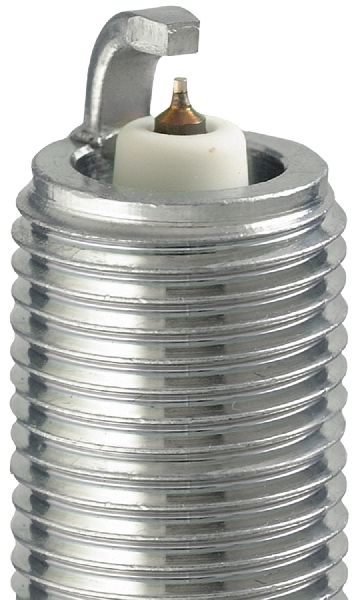
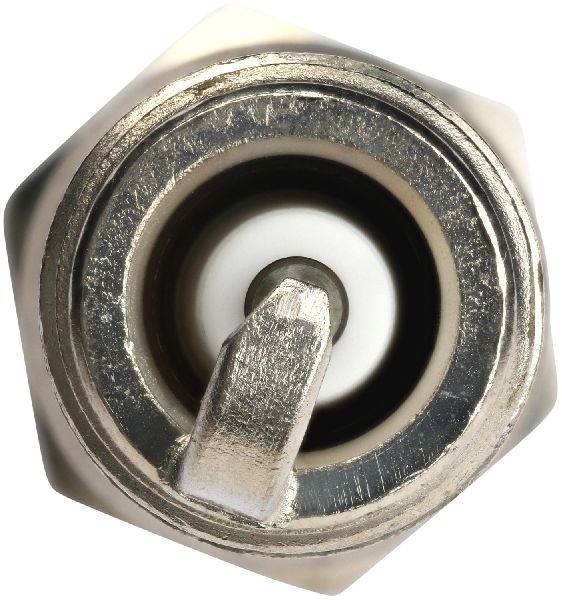
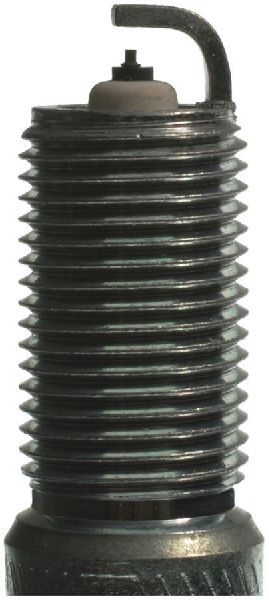
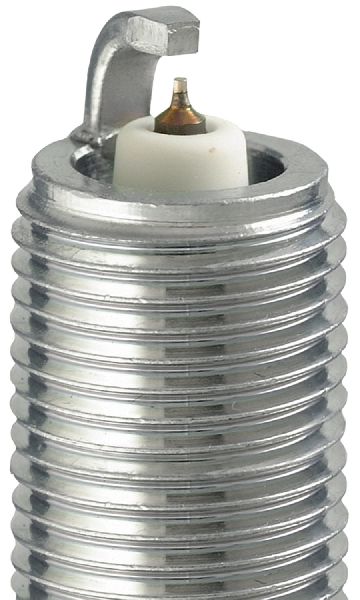
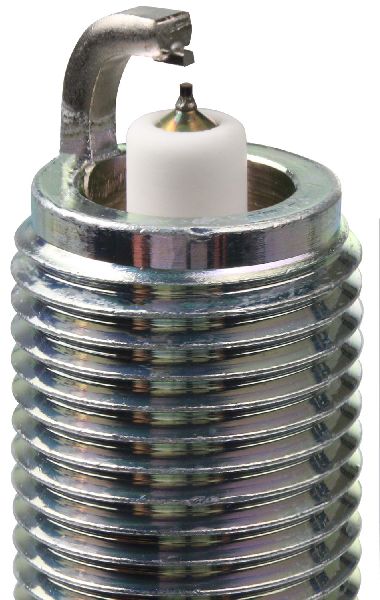
Est. part cost: $40-$90 - Worn or Fouled Spark Plug 🟡 Medium Probability → Shop Spark Plug
How to confirm: Remove the spark plug from cylinder 5 and inspect it. Look for wear on the electrode, carbon buildup, or, critically for this engine, wet oil fouling. An oil-fouled plug is a strong indicator of the internal engine issue described in TSB 19-2243. An incorrect spark plug gap can also cause a misfire.
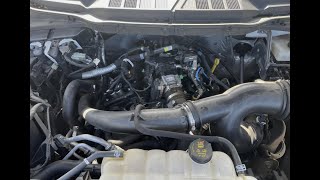
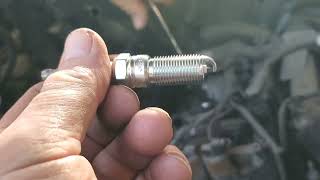
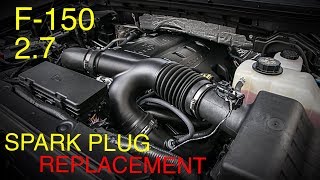
Typical fix: Replace the spark plug. If the plug is fouled with oil, the misfire will return until the root cause (the oil leak into the cylinder) is addressed. It is best practice to replace all spark plugs at the same time. 🎬 Watch: Step-by-step spark plug replacement for the 2.7L engine
Est. part cost: $10-$25 per plug - Faulty Fuel Injector ⚪ Low Probability → Shop Fuel Injector
How to confirm: Listen for a clicking sound from the injector with a mechanic's stethoscope. A more involved test is to swap the fuel injector with another cylinder, similar to the coil swap test, but this is more labor-intensive.
Typical fix: Replace the faulty fuel injector and its seals.
Est. part cost: $70-$150
Rare But Worth Checking
- Vacuum Leak: A vacuum leak near the intake manifold runner for cylinder 5 can lean out the air/fuel mixture and cause a misfire. Check for cracked hoses or a bad intake manifold gasket.
- Low Engine Compression: Beyond the TSB-related issues, low compression due to worn piston rings, a burnt valve, or other mechanical wear can cause a persistent misfire. A compression test is required for diagnosis.
Diagnosis Steps
- Read all stored fault codes with an OBD-II scanner. Note any other codes that are present with P0305, especially P0300, P0524, or P06DD.
- Check the engine oil level and condition. Given the TSBs for this vehicle, an unusually low oil level is a critical diagnostic clue and points towards the internal engine issue.
- Locate cylinder 5. On the 2.7L EcoBoost V6, 🎬 Watch: How to find cylinder locations and firing order the cylinders are numbered 1-2-3 on the bank closer to the firewall (Right Bank) and 4-5-6 on the bank closer to the radiator (Left Bank). Cylinder 5 is the middle cylinder on the front (radiator side) bank.
- Remove the spark plug from cylinder 5. Inspect it carefully. Is it black and sooty (carbon fouled), or is it wet with black oil (oil fouled)? Oil fouling is the key symptom of the TSB 19-2243 issue.
- If the plug is not oil-fouled, perform a coil swap. Swap the ignition coil from cylinder 5 to an adjacent cylinder (e.g., cylinder 4). Clear the codes and run the engine to see if the misfire code moves to P0304. If it does, the coil is bad.
- If the code remains P0305 after the coil swap, the issue is not the coil. Inspect the fuel injector wiring and listen to the injector with a stethoscope. A healthy injector will make a consistent clicking sound.
- If ignition and fuel components seem okay, or if the spark plug was oil-fouled, proceed to mechanical checks. Perform an engine compression test and a cylinder leak-down test. These tests will identify the mechanical sealing problems (bad rings, valves, head gasket) suggested by the TSBs.
- If oil consumption is high (over 1 quart in 3,000 miles) and/or compression/leak-down tests fail, refer to TSB 19-2243 for the recommended repair procedure involving cylinder head replacement.
Parts You'll Likely Need
- Ignition Coil
(OEM #FT4Z-12029-A)— A common failure item for single-cylinder misfires, though less likely than the TSB issue on this specific engine.
Trusted brands: Motorcraft, NGK, Denso
OEM price range: $60-$100
Aftermarket price range: $40-$90 - Spark Plug
(OEM #SP-594 (Motorcraft))— Spark plugs are a routine maintenance item and can wear out or become fouled. On this engine, they are often the first component to show evidence of the oil consumption problem.
Trusted brands: Motorcraft, NGK, Bosch
OEM price range: $15-$30
Aftermarket price range: $10-$25 - Cylinder Head Assembly (Right Side)
(OEM #FT4Z-6049-F)— Required if the misfire is caused by the oil consumption issue related to faulty valve guides, as detailed in TSB 19-2243 for the 2.7L engine. This is the official Ford-recommended repair.
Trusted brands: Motorcraft
OEM price range: $800-$1200
Related Codes That Often Appear With This One
- P0300 — If the misfire is intermittent or affects multiple cylinders due to the widespread nature of the oil consumption issue, a P0300 (Random Misfire) code may appear alongside P0305.
- P0301, P0302, P0303, P0304, P0306 — Other specific cylinder misfire codes may appear if the underlying cause (like the TSB-related engine problem) affects more than just cylinder 5.
- P0524, P06DD — These codes, for 'Engine Oil Pressure Too Low' and 'Engine Oil Pressure Control Circuit Performance/Stuck Off' respectively, are specifically mentioned in TSB 19-2243. If they appear with P0305, it strongly points towards the serious internal engine and oiling system problems requiring cylinder head or long block replacement.
Technical Service Bulletins (TSBs) & Recalls
- TSB 19-2243
- SSM 54504
- SSM 46363
- TSB 19-2384
Platform-Specific Known Issues
- Technical Service Bulletin 19-2243 (supersedes TSB 17-2235) is the most critical issue for this vehicle and code. It details how 2.7L EcoBoost engines built between April 2016 and January 2017 can exhibit misfires due to excessive oil consumption caused by faulty valve guides, requiring cylinder head replacement.
- A
Mechanic-Grade Diagnostic Values
- Ignition Coil Primary Resistance (2.7L EcoBoost, Aftermarket Example) — expected: Approx. 0.49 - 0.64 Ohms. Failure: A reading significantly outside this range (e.g., open circuit or dead short) indicates a faulty coil.
- Ignition Coil Secondary Resistance (2.7L EcoBoost, Aftermarket Example) — expected: Approx. 4.7k - 7.3k Ohms. Failure: A reading significantly outside this range points to a failure in the coil's secondary windings.
- Engine Idle Speed (2.7L EcoBoost) — expected: Approx. 580-625 RPM in drive/neutral. Failure: A rough or fluctuating idle below or around this speed is a primary symptom of a misfire.
- Engine Idle Speed (3.7L V6) — expected: Approx. 600-640 RPM in drive/neutral. Failure: A rough or fluctuating idle is a key symptom of a misfire.
Hidden / Shadow Codes Worth Checking
- Mode $06, Test ID $A2-$AF: This is not a DTC, but a diagnostic monitor in the PCM that tracks the raw count of misfires for each cylinder. For a V6, Test ID $A6 would correspond to Cylinder 5. Viewing this data can show misfires that are occurring but haven't yet reached the threshold to set a P0305 code. (see via An advanced scan tool or software like FORScan that can access OBD-II Mode $06 test results.)
Scan Tool Commands That Help
- Ford IDS, FORScan, or other professional scanners: Power Balance Test (or Cylinder Contribution Test) — This is a crucial diagnostic function to use when a misfire is felt but the specific cylinder is uncertain, or to confirm the severity of the P0305 misfire. The tool graphs the power contribution from each cylinder in real-time. A technician can then command individual fuel injectors off and on to observe the corresponding drop in RPM. If disabling cylinder 5 causes little or no change in RPM, it confirms that cylinder was not contributing power.
Wiring & Ground Locations
- Engine Harness over Valve Cover (2.7L) — The main engine wiring harness is routed over the top of the camshaft/valve covers.. On some 2.7L EcoBoost platforms, this harness is known to chafe against the valve cover. While often associated with VCT solenoid codes, damage to the ignition coil or fuel injector wiring within this harness could also cause an isolated misfire like P0305. A visual and tactile inspection for abrasion is recommended.
- G101 (Example PCM Ground) — On many Ford platforms, a primary engine ground is located on the lower front of the engine block.. A poor ground connection for the Powertrain Control Module (PCM) can cause a wide range of erratic issues, including phantom sensor readings and incorrect actuator control, which could manifest as a misfire. Checking that main engine and PCM grounds are clean and tight is a good step when basic diagnostics fail.
Real Owner Repair Stories
- Reddit user comment (Ford F-150 with 2.7L EcoBoost, 50,000 miles (similar engine and potential issues)) — Vehicle would 'jump like my trans was having issues,' indicating a severe misfire under load.
❌ Tried (didn't work) Not specified, but the issue was diagnosed as a misfire.
✅ What actually fixed it The owner found that one of the ignition coils had bare wires showing from chafing, causing a short. Replacing the damaged coil resolved the issue. This highlights a potential failure point outside of the common TSB or simple part wear-out.
"I Checked Everything" — The Actual Cause
- On the 2.7L direct injection engine, a misfire can be caused by heavy carbon buildup on the back of the intake valves. A standard smoke test, which checks for vacuum leaks in hoses and gaskets, will come back clean because the problem is not an unmetered air leak. The carbon deposits disrupt airflow into the cylinder, leaning out the mixture and causing a misfire, especially on a cold engine. This requires a borescope inspection of the intake ports to diagnose and is typically fixed by walnut shell blasting.
When the Usual Fixes Don't Work
- While the TSB regarding oil consumption is the most serious and well-documented cause for P0305 on the 2.7L EcoBoost, it is not the only cause. Simpler issues can still occur. For example, owners have reported finding chafed wiring on an ignition coil causing a short and a persistent misfire, which was resolved by replacing the single coil. Furthermore, as a direct-injection engine, the 2.7L can be susceptible to carbon buildup on the intake valves over time, which can cause a misfire independent of the oil consumption TSB. Therefore, while the TSB should be the primary concern, standard diagnostic procedures like checking for spark, swapping coils, and inspecting for wiring damage should not be skipped.
OEM Part Supersession History
FT4Z-6049-A, FT4Z-6049-C→FT4Z-6049-F— Part revision and update by the manufacturer. This is the correct cylinder head for the TSB repair on the 2.7L engine's right side (firewall side).
Model Year Variations Within This Range
- 2016 vs 2017: The 2017 Lincoln MKX received the upgraded Sync 3 infotainment system, which is significantly faster and more user-friendly, and includes Apple CarPlay and Android Auto compatibility. The 2016 model uses the older, often criticized MyLincoln Touch system. This does not affect the P0305 code but is a major difference between the model years.
Helpful Videos

Used OEM Parts in Stock
New Aftermarket Parts Available


The information in this article is provided for general reference and educational purposes only. Vehicle specifications, procedures, and part compatibility can vary by production date, trim level, and region. Always consult your vehicle's factory service manual and verify part numbers before purchasing or performing repairs. Safety-critical components such as airbags, seat belts, and braking systems should be installed by a qualified professional.
- Lincoln MKX:
- 🧭 Diagnostic Flowchart
- 🎬 Helpful Videos
- 🛍️ Shop This Part
- What's Unique About the 2016-2017 Lincoln MKX
- Symptoms You May Notice
- Most Likely Causes
- Rare But Worth Checking
- Diagnosis Steps
- Parts You'll Likely Need
- Related Codes That Often Appear With This One
- Technical Service Bulletins (TSBs) & Recalls
- Platform-Specific Known Issues
- Mechanic-Grade Diagnostic Values
- Hidden / Shadow Codes Worth Checking
- Scan Tool Commands That Help
- Wiring & Ground Locations
- Real Owner Repair Stories
- "I Checked Everything" — The Actual Cause
- When the Usual Fixes Don't Work
- OEM Part Supersession History
- Model Year Variations Within This Range
- 🎟️ Get 5% Off