

P0305 on 2003-2008 Mazda 6 3.0L V6: Cylinder 5 Misfire Causes and Fixes
P0305 on a Mazda 6 V6 is a misfire on cylinder 5. This is almost always a bad ignition coil or a worn-out spark plug. Fortunately, cylinder 5 is on the easy-to-reach front bank of the engine, making this a simple and cheap DIY fix. Expect to pay $30-$70 for a new ignition coil.
- P0305 on your Mazda 6 V6 is a misfire in cylinder 5.
- The most likely cause is a bad ignition coil, followed by a worn spark plug.
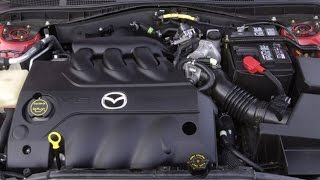
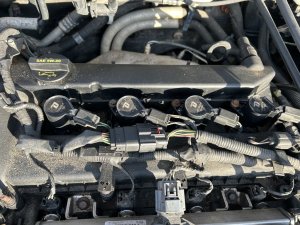
- Cylinder 5 is on the front bank (near the radiator), making the coil and plug extremely easy to access and replace.
- Use the 'swap test' by moving the coil to another cylinder to confirm it's the faulty part before buying a new one.
- Do not drive if the check engine light is flashing, as you can cause expensive damage to your catalytic converter.
What's Unique About the 2003-2008 Mazda 6
The 3.0L V6 in the first-generation Mazda 6 is a Ford Duratec engine, known for reliable performance but also for ignition coils that can fail with age and heat. Many owners experience misfire codes as the vehicle gets older. While replacing coils on the rear bank (cylinders 1-2-3) against the firewall is a difficult job that requires removing the intake manifold, P0305 is a much simpler problem. 🎬 Watch: Why cylinder 5 misfires and how to fix it. Cylinder 5 is on the front bank (cylinders 4-5-6), where the ignition coil and spark plug are directly accessible in minutes.
Symptoms You May Notice
- Rough or shaky idle
- Hesitation or stumbling during acceleration
- Noticeable loss of engine power
- Flashing or solid Check Engine Light
- Decreased fuel economy
- A possible smell of fuel from the exhaust
- Backfiring or popping from the exhaust
- Replacing the catalytic converter. A misfire will destroy a catalytic converter by sending unburned fuel into it, causing it to overheat. However, the converter itself rarely causes a single-cylinder misfire. The misfire is the root cause. Some owners have replaced a cat only to have the misfire persist.
- Replacing the fuel pump. A failing fuel pump would typically cause random misfires on multiple cylinders (P0300) or affect the entire engine, not just cylinder 5.
Most Likely Causes
- Failed Ignition Coil 🔴 High Probability → Shop Ignition Coil The coil-on-plug ignition coils on the Duratec V6 are a very common failure item as they age. Heat and vibration cause the internal electronics to break down. Often, when one coil fails, others are near the end of their service life.
How to confirm: The easiest way is to perform a 'swap test.' Swap the ignition coil from cylinder 5 with an adjacent coil on the same bank (e.g., cylinder 4 or 6). Clear the codes and drive. If the code changes to P0304 or P0306, you have confirmed the coil is bad.
Typical fix: Replace the faulty ignition coil. Since cylinder 5 is on the front bank, this involves removing one 8mm bolt and an electrical connector.
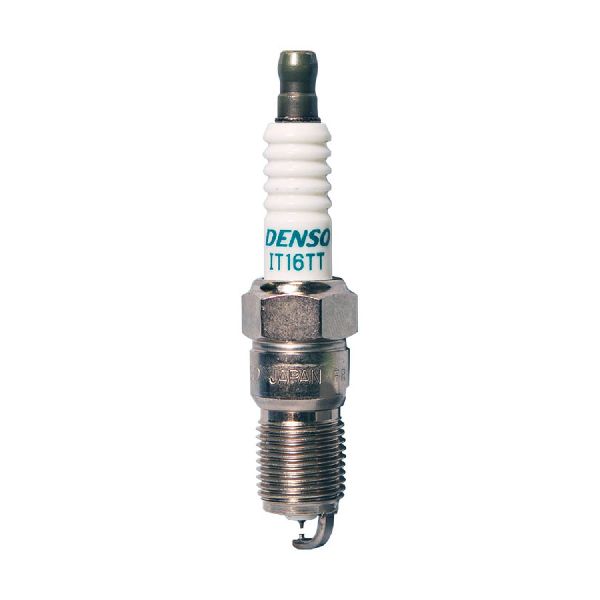
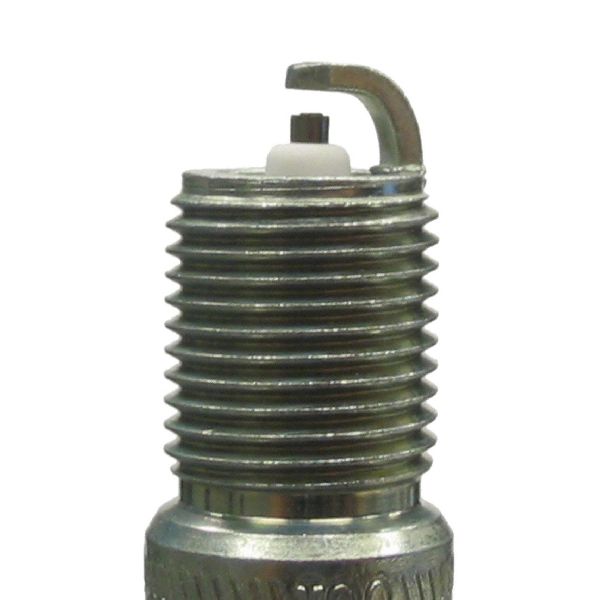
Est. part cost: $30-$70 - Worn Spark Plug 🟡 Medium Probability → Shop Spark Plug Spark plugs are a regular maintenance item. If they are old, have an incorrect gap, or are fouled with oil or carbon, they can cause a weak spark and lead to a misfire.
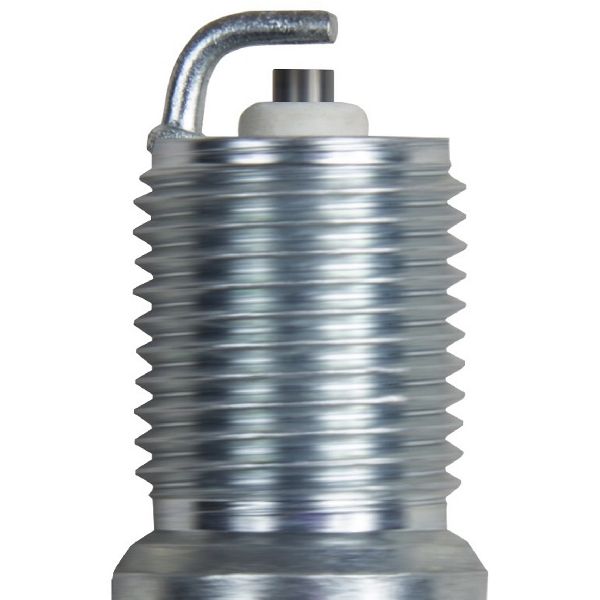
How to confirm: After ruling out the ignition coil, remove the spark plug from cylinder 5. Inspect it for wear, carbon fouling, oil, or damage to the electrode or ceramic. Oil on the plug indicates a leaking valve cover gasket, which must also be replaced. 🎬 Watch: How to replace a leaking valve cover gasket. If the plug is worn or past its service life, it's the likely cause.
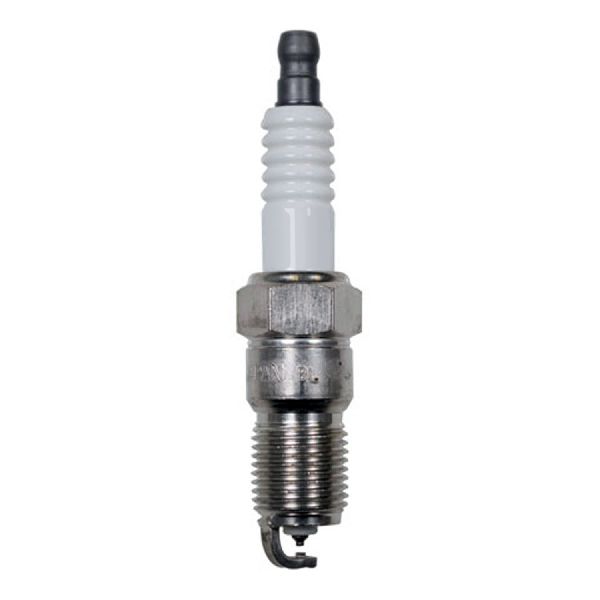
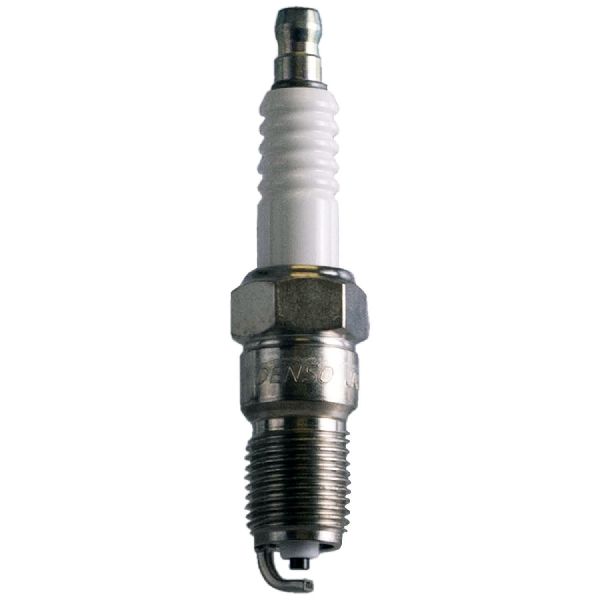
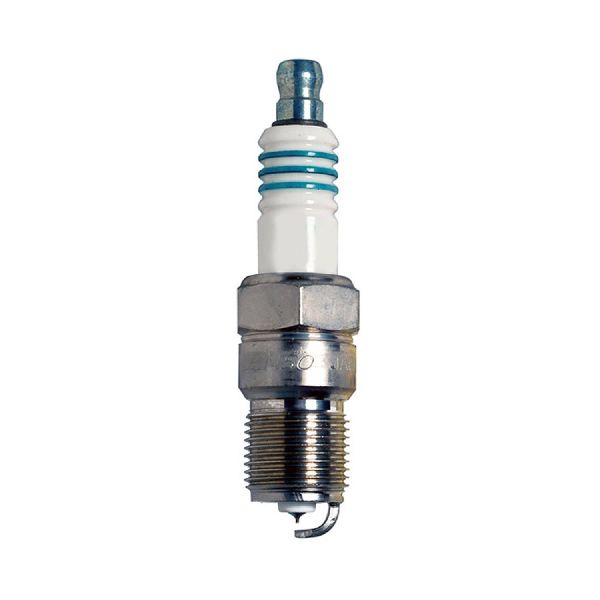
Typical fix: Replace the spark plug. It is best practice to replace all six spark plugs at the same time. Due to the extreme difficulty of accessing the rear bank, always use high-quality, long-life Iridium plugs. 🎬 See this step-by-step spark plug replacement walkthrough.
Est. part cost: $8-$25 per plug - Faulty Fuel Injector ⚪ Low Probability → Shop Fuel Injector Less common than ignition issues, but injectors can become clogged with fuel deposits or fail electronically over time, preventing proper fuel delivery.
How to confirm: Listen to the injector with a mechanic's stethoscope or a long screwdriver held to your ear; you should hear a steady clicking sound. You can also test the injector's resistance with a multimeter or swap it with another cylinder's injector to see if the misfire code follows.
Typical fix: Replace the faulty fuel injector.
Est. part cost: $50-$150 - Vacuum Leak ⚪ Low Probability The plastic intake manifold and its associated vacuum hoses and gaskets can develop cracks or leaks with age, introducing unmetered air and causing a lean misfire. Leaks at the upper and lower intake manifold gaskets are common culprits on the Duratec 3.0L.
How to confirm: With the engine running, spray brake cleaner or a propane torch (unlit) around the intake manifold gaskets and vacuum lines. If the engine idle changes, you have found a leak. A professional smoke test is the most definitive way to find a leak.
Typical fix: Replace the leaking gasket or vacuum hose.
Est. part cost: $10-$100
Rare But Worth Checking
- Low Engine Compression: If ignition and fuel systems are confirmed to be working, a mechanical issue like a burnt valve, worn piston rings, or a bad head gasket could be the cause. This is a more serious engine problem that requires a compression or cylinder leak-down test to diagnose.
- Wiring Harness Damage: The wiring or connector to the ignition coil or fuel injector for cylinder 5 could be damaged or corroded, causing an intermittent connection. Visually inspect the harness for any signs of fraying, melting, or broken clips.
- Failed Powertrain Control Module (PCM): Extremely rare, but a severe failure of an ignition coil can sometimes damage the coil's driver circuit within the PCM. This can cause a persistent misfire on that cylinder even after replacing the coil and plug. This should be the last consideration after all other causes are ruled out.
Diagnosis Steps
- Confirm the P0305 code is present using an OBD-II scanner.
- Identify Cylinder 5: It is the middle cylinder on the front bank of the engine (closest to the radiator). The front bank cylinders are 4-5-6, from passenger to driver side.
- Perform an Ignition Coil Swap: Swap the ignition coil from cylinder 5 with the coil from cylinder 6. Clear the codes with the scanner.
- Test Drive: Drive the vehicle until the check engine light comes back on. Scan for codes again.
- Analyze Results: If the code is now P0306, the ignition coil is faulty and needs replacement. If the code is still P0305, the coil is not the problem.
- Inspect Spark Plug: If the coil is good, remove the spark plug from cylinder 5. Check for wear, damage, or fouling. Check for oil in the spark plug well, which indicates a leaking valve cover gasket that must also be fixed. If in doubt, swap the spark plug with cylinder 6 and repeat the test drive.
- Check Fuel Injector: If the coil and plug are good, check the fuel injector. Listen for a steady clicking sound. If you suspect it's bad, you can perform a resistance test or swap it with another cylinder's injector.
- Check for Vacuum Leaks: If ignition and fuel are good, check for vacuum leaks. Perform a smoke test or carefully spray starter fluid around the intake manifold gaskets near cylinder 5 to check for leaks.
- Perform Compression Test: As a final step for a persistent misfire, a compression or leak-down test will identify any serious mechanical engine problems like bad valves or piston rings.
Parts You'll Likely Need
- Ignition Coil (Coil-on-Plug)
(OEM #AJ51-18-100A)— This is the most common cause of a P0305 misfire on this engine.
Trusted brands: Motorcraft, NGK, Denso, Delphi, Standard Motor Products (SMP)
OEM price range: $60-$90
Aftermarket price range: $30-$70 - Spark Plug
(OEM #NGK ITR5F-13 (Laser Platinum) or equivalent Iridium plug)— A worn or fouled spark plug is the second most likely cause of the misfire. Using long-life Iridium plugs is highly recommended.
Trusted brands: NGK (Iridium IX or Laser Iridium), Motorcraft, Denso (Iridium Long Life)
OEM price range: $12-$25
Aftermarket price range: $8-$18
Related Codes That Often Appear With This One
- P0300 — If the misfire is intermittent or other cylinders are also beginning to fail, a P0300 (Random Misfire Detected) code may appear alongside P0305.
- P0171 / P0174 — If a significant vacuum leak is the cause of the misfire, you may also get 'System Too Lean' codes for one or both engine banks.
- P0301, P0302, P0303, P0304, P0306 — It is common for multiple ignition coils to fail around the same time. You may see other cylinder-specific misfire codes along with P0305.
Technical Service Bulletins (TSBs) & Recalls
- No specific TSBs for P0305 on the 2003-2008 Mazda 6 3.0L V6 were found. A widely-referenced TSB for coil failures, 01-014/16, applies to later model years (2013+) with SkyActiv engines.
Platform-Specific Known Issues
- Difficult Rear Bank Service: While cylinder 5 is on the easy front bank, be aware that cylinders 1, 2, and 3 are on the rear bank against the firewall. Replacing their spark plugs or ignition coils requires removing the entire upper intake manifold, a significantly more complex and time-consuming job. For this reason, if any rear bank component fails, it is strongly recommended to replace all three rear coils and all six spark plugs at the same time using high-quality Iridium plugs.
- Oil Fouling from Leaky Valve Cover Gaskets: → Shop Engine Valve Cover A very common issue on the 3.0L V6 is the valve cover gaskets becoming hard and brittle, allowing engine oil to leak into the spark plug wells. This oil saturates the bottom of the ignition coil boot and fouls the spark plug, causing a misfire. If you remove an ignition coil and find it wet with oil, the valve cover gasket set must be replaced along with the affected coil and plug.
Mechanic-Grade Diagnostic Values
- Ignition Coil Primary Resistance — expected: 0.4 to 2.0 ohms. Failure: A reading outside this range indicates a faulty coil.
- Ignition Coil Secondary Resistance — expected: 6,000 to 10,000 ohms (6k-10k Ω). Failure: A reading outside this range suggests the coil's secondary winding has failed.
- Fuel Injector Resistance — expected: 12.0 to 16.0 ohms (approx. 14.2 ohms is common for OEM Nikki injectors). Failure: A significantly higher or lower reading, or an open circuit (OL), points to a failed injector coil.
- Mode 6 Misfire Counts (per cylinder) — expected: Zero or very low counts during a drive cycle.. Failure: A high number of misfire counts logged for cylinder 5 confirms the PCM is actively detecting the fault, even before the Check Engine Light illuminates for the current drive cycle.
Hidden / Shadow Codes Worth Checking
- Mode 6, Test ID $A2-$A7: This is not a trouble code, but a diagnostic monitor within the OBD-II system. Test IDs $A2 through $A7 correspond to misfire counts for cylinders 1 through 6, respectively. For P0305, a technician would look at Test ID $A6 (Cylinder 5). (see via A professional scan tool or an advanced consumer OBD-II scanner with Mode 6 capability is required to view this data.)
Scan Tool Commands That Help
- Mazda IDS (Integrated Diagnostic System) / Ford IDS: Power Balance Test — This function allows a technician to disable one cylinder at a time while the engine is running. When cylinder 5 is disabled, if there is little to no change in engine RPM and smoothness, it confirms that cylinder 5 was not contributing power, pinpointing the misfire without swapping parts.
Wiring & Ground Locations
- G22 — Right side of the engine.. This is a primary engine ground. A poor connection here can cause erratic behavior in various engine sensors and actuators, including the ignition coils.
- PCM Ground — On the firewall, with a strap that runs under the upper intake manifold and bolts to the lower intake.. The PCM controls the ground-switching for the ignition coils to fire them. A bad PCM ground can cause weak or no spark, leading to misfires that are difficult to diagnose.
- Cylinder 5 Ignition Coil Connector — On the front bank (near radiator), middle coil. The power wire is typically Violet (VT), and the control wire from the PCM is Yellow with a Blue stripe (YE-BU).. Knowing the wire colors allows for targeted testing of power supply and the trigger signal from the PCM directly at the coil connector.
Real Owner Repair Stories
- Reddit user in r/MechanicAdvice (2006 Ford/Mazda with 3.0L V6 Duratec, 222,000 miles) — Persistent misfire on one cylinder (P0303 in this case, but same engine/issue).
❌ Tried (didn't work) Replacing spark plugs, Replacing the ignition coil on the affected cylinder
✅ What actually fixed it The user suspected a known, but rare, issue with the Duratec 3.0L where the camshaft cap bolts can loosen over time. This causes the cam to lift slightly, preventing the valves from actuating fully and leading to a mechanical misfire that ignition/fuel parts won't fix. The fix is to remove the valve cover, inspect the bolts, and torque them to specification.
OEM Part Supersession History
AJ03-18-100→AJ51-18-100A— Updated design/supplier for improved reliability.
Heads up: The parts are interchangeable, but it is recommended to use the later 'AJ51' revision. Aftermarket equivalents often cross-reference both numbers.
Model Year Variations Within This Range
- 2006-2008: For the 2006 model year facelift, the 3.0L V6 engine was slightly detuned from 220 hp to 215 hp to meet stricter emissions standards. This change did not materially affect the causes or diagnosis of a P0305 code.
- 2005-2008: For V6 models, a five-speed automatic was used in 2003-2004. This was replaced by a six-speed automatic transmission starting in 2005 for sedans. This does not affect the engine misfire diagnosis.
Diagnostic Flowchart
Other Known Issues on This Vehicle
Issues unrelated to this code that are worth knowing about as an owner of this generation:
- Pre-Catalytic Converter Failure 🔴 High — A widely-documented and serious issue. The ceramic matrix in the exhaust manifolds can disintegrate, and debris can be sucked back into the cylinders on valve overlap, causing catastrophic engine failure.
- Automatic Transmission Failure (Jatco JF506E) 🔴 High — Commonly reported after 80,000-120,000 miles. Symptoms include hard shifts, slipping between gears, and complete failure, often accompanied by the 'AT' light.
- Leaking Valve Cover Gaskets 🟠 Medium → Shop Engine Valve Cover — Very common as the vehicle ages. The rear (firewall side) gasket is most prone to leaking oil into the spark plug wells, which destroys the ignition coils and spark plugs, leading to misfires.
- Oil Consumption / PCV System Issues 🟠 Medium — Some owners report moderate to high oil consumption between changes. This can be exacerbated by a clogged PCV valve, which is difficult to access on the rear of the engine.
Used vs. New Parts: Buying Guide for This Vehicle
When a used part is the smart pick: A used OEM ignition coil from a low-mileage donor vehicle is a reasonable choice, especially for a quick diagnostic swap or a budget repair. Since cylinder 5 is on the easily accessible front bank, the labor to replace it again if the used part fails is minimal.
Donor-vehicle mileage cap: roughly under 80000 miles for the part to have meaningful remaining life.
What to inspect on the donor part:
- Check for cracks, melting, or corrosion on the coil housing and connector.
- Ensure the rubber boot is pliable and not brittle or swollen.
- Ask for the donor vehicle's mileage if possible.
- Avoid parts from vehicles that show signs of sitting for a long time (e.g., heavy corrosion, water damage).
OEM-only on this vehicle (don't cheap out):
- Powertrain Control Module (PCM) - Used PCMs often have anti-theft (immobilizer) programming that is tied to the original vehicle's keys, making a simple swap impossible without specialized dealer tools.
Aftermarket brands forum-validated for this vehicle:
- NGK
- Denso
- Motorcraft (as it is the Ford OEM equivalent)
- Standard Motor Products (SMP)
- Delphi
Brands owners have reported issues with on this vehicle:
- Unnamed, no-brand ignition coils from online marketplaces are frequently cited in forums as having a high failure rate, sometimes within weeks or months of installation.
Real Owner Stories
Aggregated from forums and TSBs cited above. Mileages and costs reflect what owners reported in those sources.
2004 Mazda 6 3.0L V6
Symptoms: Misfiring and catalytic converter issues.
What fixed it: Replacing the ignition coils. The owner had previously replaced the catalytic converter, but the misfire continued because the bad coils (the root cause) had not been addressed.
Source hint: Reddit r/MechanicAdvice - 'Mazda 6- Misfiring. Cat replaced, STILL MISFIRING!?'
2003-2008 Mazda 6 3.0L V6
Symptoms: Misfires on cylinders 3 and 5.
What fixed it: Replacing all six ignition coils at once, following a mechanic's recommendation that these coils tend to fail in groups and to save on labor for the rear bank.
Source hint: Mazda Forum - 'Ignition coils gone bad on Mazda6'
2004 Mazda 6 3.0L V6
Symptoms: Persistent misfire even after installing a new ignition coil.
What fixed it: The owner noted that a failed ignition coil on this platform can damage the PCM, requiring further electrical repair beyond a simple coil swap.
Source hint: Reddit r/autorepair - 'Air intake manifold, 04 Mazda 6 3.0L'
Related OBD-II Codes
Frequently Asked Questions
Where is cylinder 5 located on the 2003-2008 Mazda 6 3.0L V6?
Does TSB 01-014/16 regarding ignition coil failures apply to my 2003-2008 Mazda 6?
Why is it recommended to replace all six spark plugs if only cylinder 5 is misfiring?
I found oil on my cylinder 5 ignition coil boot; what does this mean?
Can a bad ignition coil on my Mazda 6 damage other components?
Helpful Videos
Used OEM Parts in Stock
New Aftermarket Parts Available

The information in this article is provided for general reference and educational purposes only. Vehicle specifications, procedures, and part compatibility can vary by production date, trim level, and region. Always consult your vehicle's factory service manual and verify part numbers before purchasing or performing repairs. Safety-critical components such as airbags, seat belts, and braking systems should be installed by a qualified professional.
- Mazda 6:
- 🧭 Diagnostic Flowchart
- 🎬 Helpful Videos
- 🛍️ Shop This Part
- What's Unique About the 2003-2008 Mazda 6
- Symptoms You May Notice
- Most Likely Causes
- Rare But Worth Checking
- Diagnosis Steps
- Parts You'll Likely Need
- Related Codes That Often Appear With This One
- Technical Service Bulletins (TSBs) & Recalls
- Platform-Specific Known Issues
- Mechanic-Grade Diagnostic Values
- Hidden / Shadow Codes Worth Checking
- Scan Tool Commands That Help
- Wiring & Ground Locations
- Real Owner Repair Stories
- OEM Part Supersession History
- Model Year Variations Within This Range
- Other Known Issues on This Vehicle
- Used vs. New Parts: Buying Guide for This Vehicle
- Real Owner Stories
- 2004 Mazda 6 3.0L V6
- 2003-2008 Mazda 6 3.0L V6
- 2004 Mazda 6 3.0L V6
- Related OBD-II Codes
- Frequently Asked Questions
- 🎟️ Get 5% Off