

P0305 on 2007-2013 Mitsubishi Outlander 3.0L V6: Cylinder 5 Misfire Causes and Fixes
P0305 means your Outlander's 5th cylinder is misfiring. This is almost always due to a bad ignition coil or a worn-out spark plug. Since cylinder 5 is on the rear bank, accessing it requires removing the upper intake manifold, making the repair more involved and costly than for the front cylinders.
- P0305 on this Outlander points to a misfire on the rearmost cylinder against the firewall.
- The most likely cause is a bad ignition coil, followed by a worn spark plug.
- DIY repair is challenging due to the need to remove the upper intake manifold to access cylinder 5.
- While the intake manifold is off, it is highly cost-effective to replace all three rear ignition coils, all six spark plugs, and the intake gaskets.
- Always confirm the diagnosis by swapping parts with a known good cylinder before buying new ones.
What's Unique About the 2007-2013 Mitsubishi Outlander
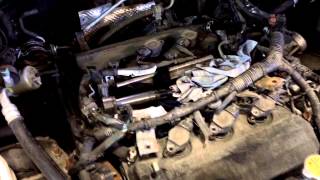
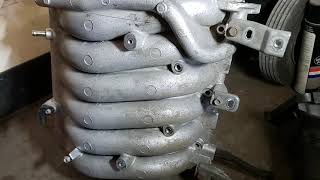
On the Mitsubishi 6B31 V6 engine, the primary challenge with a P0305 code is physical access. Cylinders 1, 3, and 5 are located on the rear bank, tucked under the plastic intake manifold plenum. This means replacing a spark plug or ignition coil on cylinder 5 is not a quick job and requires removing the manifold, 🎬 Watch: Step-by-step guide to removing the manifold and plugs. which adds significant labor time, complexity, and the mandatory replacement of intake gaskets. Additionally, models from 2010-2013 have a higher compression ratio (10.5:1 vs 9.5:1) to achieve 230 HP (up from 220 HP) and recommend premium fuel for optimal performance; running lower octane can subtly affect combustion, though it's not a direct cause of a P0305 code.
Generation note: The 2007-2013 model years all fall within the second generation (CW/ZG/ZH series) of the Mitsubishi Outlander. All V6 models in this generation use the 6B31 engine, so the diagnosis and repair process for a P0305 is identical across these years. A minor engine update in 2010 increased horsepower, but did not change the physical layout.
Symptoms You May Notice
- Rough or vibrating idle
- Hesitation or stumbling during acceleration
- Noticeable loss of engine power
- Solid or flashing Check Engine Light
- A fuel smell from the exhaust
- Reduced fuel economy
- Replacing the fuel injector before confirming the ignition coil and spark plug are good.
- Replacing only the spark plug or coil on cylinder 5 without also replacing the other five plugs and two rear coils, leading to another failure on a different rear cylinder shortly after.
- Forgetting to replace the intake manifold gaskets, or using a low-quality gasket, causing a vacuum leak and a new set of codes after the initial repair.
Most Likely Causes
- Faulty Ignition Coil 🔴 High Probability → Shop Ignition Coil Coil-on-plug systems are common failure points on many vehicles as they age. The rear bank coils, including cylinder 5, are subjected to significant heat soak from the engine and exhaust, which can accelerate the degradation of their internal electronics.
How to confirm: The most effective method is to swap the cylinder 5 ignition coil with one from an accessible front cylinder (e.g., cylinder 2, 4, or 6). Clear the codes and drive the vehicle. If the code changes to P0302, P0304, or P0306, the coil is faulty. This requires removing the intake manifold to access cylinder 5.
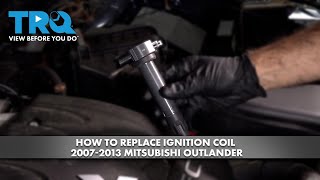
Typical fix: Replace the faulty ignition coil. 🎬 See this walkthrough for replacing the ignition coils. It is strongly recommended to replace all three rear coils and all six spark plugs at the same time, given the significant labor involved in accessing them.
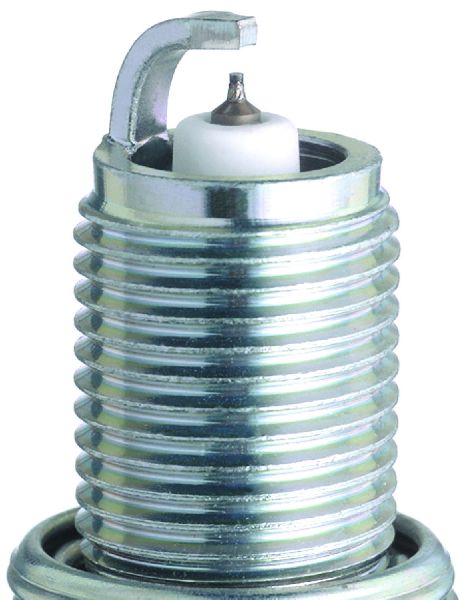
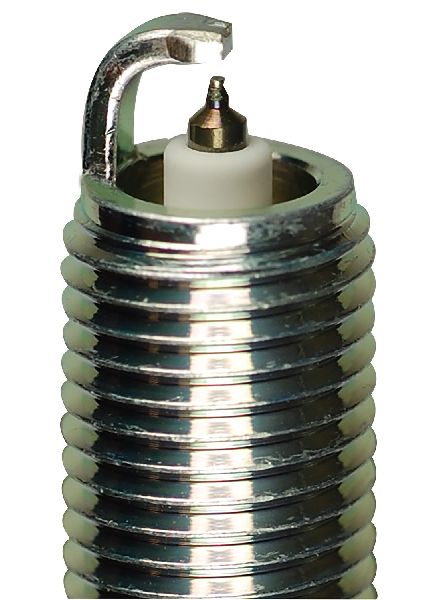
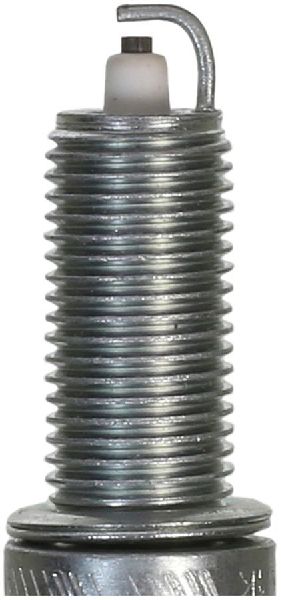
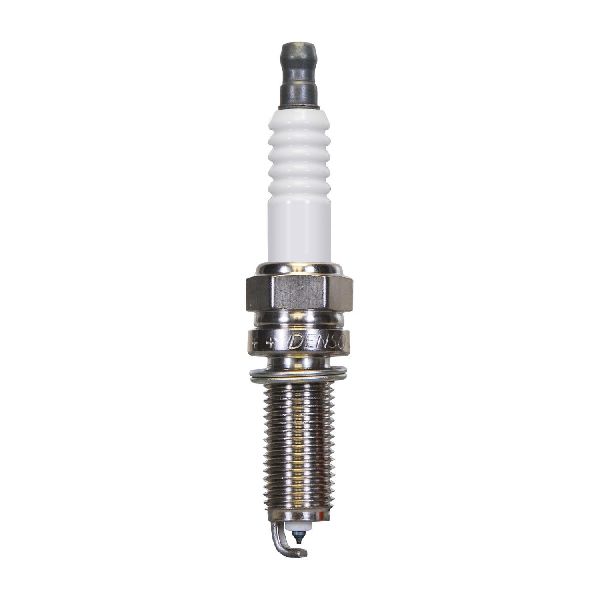
Est. part cost: $40-$110 for one aftermarket coil, OEM can be higher. - Worn or Fouled Spark Plug 🔴 High Probability → Shop Spark Plug Spark plugs are a routine maintenance item with a finite lifespan. The original equipment plugs are long-life iridium, but an excessive electrode gap or carbon/oil fouling can prevent a strong spark, leading to a misfire.
How to confirm: After accessing the cylinder 5 spark plug (which requires intake manifold removal), inspect it for wear, carbon buildup, or oil fouling. Compare its condition to the front plugs. If the ignition coil swap test did not isolate the problem, the spark plug is the next most likely culprit.
Typical fix: Replace the spark plug. It is best practice to replace all six spark plugs at once to ensure balanced engine performance. Given the labor to access the rear bank, it is highly recommended to do this while the intake manifold is off.
Est. part cost: $15-$30 per iridium plug. - Clogged or Faulty Fuel Injector ⚪ Low Probability → Shop Fuel Injector
How to confirm: If ignition components are confirmed to be good, the fuel injector is the next suspect. A professional can perform a fuel injector balance test to measure flow rates. A DIY method involves listening to the injector with a mechanic's stethoscope to ensure it's clicking. This also requires intake manifold removal for access.
Typical fix: Replace the faulty fuel injector. This also requires removing the intake manifold and fuel rail.
Est. part cost: $50-$150 - Intake Manifold Gasket Leak ⚪ Low Probability → Shop Engine Intake Manifold The intake manifold plenum must be removed for rear bank service. If the gaskets are old, brittle, or reused, they can easily fail to seal properly, creating a vacuum leak specific to one or more rear cylinders.
How to confirm: With the engine running, carefully spray brake cleaner or a propane torch (unlit) around the intake manifold sealing area for cylinder 5. If the engine RPM changes, a vacuum leak is present. This test should be done before removing the manifold.
Typical fix: Replace the upper (plenum) and lower intake manifold gaskets. This should be done anytime the manifold is removed for other service. Reusing old gaskets is a common cause of post-repair vacuum leaks.
Est. part cost: $30-$80 for a quality gasket set.
Rare But Worth Checking
- Low Engine Compression: If ignition and fuel systems are ruled out, a mechanical issue like a burnt valve, worn piston rings, or a bad head gasket could be the cause. A compression test is needed to diagnose this. This is a much more serious and expensive repair.
- Low Fuel Level: Mitsubishi TSB-10-13-007 notes that running the vehicle with a very low fuel level can cause fuel aeration, which may lead to misfire codes (P0300-P0306) being set. This is unlikely to isolate to a single cylinder but is worth noting as a possibility if the issue is intermittent and occurs with a near-empty tank.
- Faulty ECM Logic: TSB-13-13-001REV addresses an issue where false P0300 codes could be set at high engine speeds due to improper monitoring thresholds. While this TSB is for a random misfire, it indicates that the ECM logic can be a factor and a software update may be available from a dealer.
Diagnosis Steps
- Confirm the P0305 code is present using an OBD-II scanner. Check for any other stored codes.
- Plan for the removal of the upper intake manifold to gain access to the rear bank of cylinders (1, 3, 5). Purchase a new intake manifold gasket set (upper plenum and lower gaskets) before starting.
- Once the manifold is off, locate cylinder 5 (the rearmost cylinder on the firewall side, driver's side).
- Swap the ignition coil from cylinder 5 with the coil from cylinder 6 (the rearmost cylinder on the radiator side).
- Temporarily reassemble the intake manifold using the old gaskets for this diagnostic test. Clear the codes and run the engine to see if the misfire code has moved to P0306. If it has, the ignition coil is bad.
- If the code remains P0305, disassemble again. It is highly advisable to replace all six spark plugs at this stage, as they are a common failure item and you already have access.
- While everything is apart, inspect the wiring harness for the coils and injectors on the rear bank for any signs of brittleness, chafing, or damage from heat. 🎬 Watch: How to access the rear bank and valve covers.
- If the misfire remains on cylinder 5 after replacing plugs and confirming the coil is good, the problem is likely a fuel injector or a mechanical issue.
- Consider performing a compression test on cylinder 5 before replacing the injector to rule out serious mechanical problems.
- Once the faulty component is identified, perform the final repair using new parts and install the new intake manifold gaskets. Torque all bolts to manufacturer specifications.
Parts You'll Likely Need
- Ignition Coil
(OEM #1832A016)— This is the most common failure part for a single-cylinder misfire. Age and heat cycles cause the internal windings to fail. The OEM part is also used on some Lancer and Outlander Sport models.
Trusted brands: Mitsubishi (OEM), NGK, Denso, Delphi, Aisin
OEM price range: $110-$166
Aftermarket price range: $40-$90 - Iridium Spark Plug
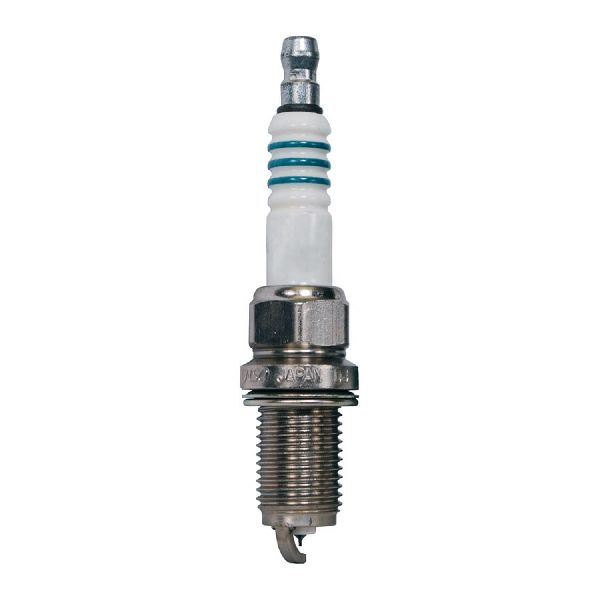
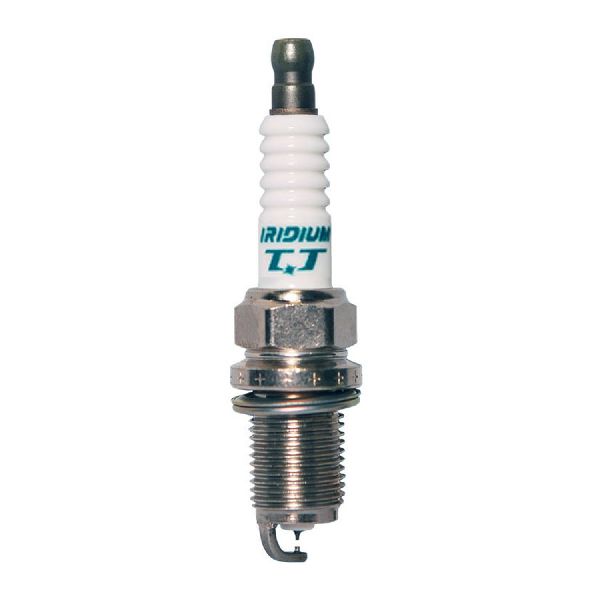
(OEM #1822A067 (cross-references to NGK ILKR7B8))— Spark plugs are a maintenance item and the direct source of ignition. A worn plug cannot create a hot enough spark. It's recommended to replace all six if they are due.
Trusted brands: NGK (ILKR7B8), Denso (SXU22HCR11S)
OEM price range: $20-$30
Aftermarket price range: $15-$22 - Intake Manifold Gasket Set
(OEM #1540A199)— Required for re-installing the intake manifold after accessing the rear cylinders. Reusing old gaskets is a major risk for creating vacuum leaks.
Trusted brands: Mitsubishi (OEM), Fel-Pro (MS 97075), Mahle (MS19840), Victor Reinz
OEM price range: $50-$80
Aftermarket price range: $30-$60
Related Codes That Often Appear With This One
- P0300 — If the misfire is intermittent or affects other cylinders, a P0300 (Random/Multiple Cylinder Misfire) may be stored alongside P0305.
- P0301, P0303 — Since the rear bank of cylinders (1, 3, 5) shares a similar environment and access challenges, a common underlying issue like a vacuum leak from the intake manifold could cause misfires on adjacent cylinders.
Technical Service Bulletins (TSBs) & Recalls
- TSB-10-13-007: Notes that misfire DTCs (P0300-P0306) can be set due to fuel aeration caused by a very low fuel level.
- TSB-13-13-001REV: Addresses a software issue that could cause false P0300 (random misfire) codes at high RPM and provides a software update. While not specific to P0305, it shows a precedent for software-related misfire detection issues.
Platform-Specific Known Issues
- Access to the rear bank of cylinders (1, 3, 5) is blocked by the upper intake manifold, significantly increasing the labor and complexity for diagnosing and fixing misfires on those cylinders.
- Owners report that due to the labor involved, many shops will strongly recommend replacing all three rear coils and all six spark plugs at once to prevent a repeat job for an adjacent cylinder a few months later.
Mechanic-Grade Diagnostic Values
- Engine Compression (2007-2009 models) — expected: Standard: 1,460 kPa (212 psi) at 200 r/min. Failure: Below minimum limit of 1,050 kPa (153 psi), or a difference between cylinders greater than 98 kPa (14 psi).
- Engine Compression (2010-2013 models) — expected: Standard: 1,150 kPa (167 psi) at 300 r/min. Failure: Below minimum limit of 850 kPa (123 psi), or a difference between cylinders greater than 98 kPa (14 psi).
- Ignition Coil Primary Resistance (Older 3.0L V6) — expected: 0.72 - 0.88 ohms. Failure: Reading outside of this range.
- Ignition Coil Secondary Resistance (Older 3.0L V6) — expected: 10.3 - 13.9 kilohms. Failure: Reading outside of this range.
Scan Tool Commands That Help
- Mitsubishi MUT-III: Power Balance Test / Cylinder Misfire Counter — To confirm which cylinder is misfiring in real-time without swapping parts. The MUT-III can command individual injectors to shut off, and the corresponding drop in RPM for each cylinder can be observed to identify a weak or non-contributing cylinder.
- Mitsubishi MUT-III: Engine compression measurement — The factory scan tool has a specific function to crank the engine for a compression test, ensuring consistent test conditions.
Wiring & Ground Locations
- Cylinder 5 Ignition Coil Connector — On the rear bank (firewall side), driver's side cylinder. Requires removal of the intake manifold plenum to access.. The connector and its wiring are subjected to high heat and can become brittle or damaged, leading to an intermittent connection and a P0305 code. The harness should be inspected for chafing or melting when the coil is replaced.
- Engine Ground Straps — Key ground points are typically located on the cylinder heads, from the engine block to the chassis, and near the transmission housing. A service manual diagram is the best source for exact locations.. A poor engine ground can cause a weak spark across all cylinders, but can sometimes manifest as a single cylinder misfire if the resistance issue is borderline. It's a quick check to ensure all ground straps are clean and tight.
Real Owner Repair Stories
- Mitsubishi Forum User (2007 Mitsubishi Outlander XLS 3.0L V6, ~150,000 miles) — P0305 code, rough idle, hesitation on acceleration.
❌ Tried (didn't work) Replaced all 6 spark plugs., Swapped ignition coil from cylinder 5 to cylinder 2 (code did not move)., Replaced fuel injector on cylinder 5.
✅ What actually fixed it Significant carbon buildup was found on the intake valves for cylinder 5. The technician performed a manual valve cleaning service with the intake manifold removed, which resolved the misfire. The theory was that the carbon was absorbing fuel spray and disrupting airflow enough to cause the misfire under certain conditions.
OEM Part Supersession History
1832A016→1832A026— Revision for improved reliability or change in supplier.
Heads up: Both part numbers are generally interchangeable for the 2007-2013 Outlander 3.0L V6, but it is always best to use the latest revision (1832A026) when available.
Model Year Variations Within This Range
- 2010-2013: The engine compression ratio was increased from 9.5:1 to 10.5:1. This resulted in a power increase from 220 hp to 230 hp. While not a direct cause of P0305, this makes the later engines slightly more sensitive to fuel quality and carbon buildup. The compression test specifications are also different for these years.
Diagnostic Flowchart
Other Known Issues on This Vehicle
Issues unrelated to this code that are worth knowing about as an owner of this generation:
- Premature Lower Control Arm Wear 🟠 Medium — Commonly reported; can cause squeaking over bumps, alignment issues, and premature tire wear.
- Water Pump Failure 🔴 High — The water pump is driven by the timing belt. Failure can cause overheating and requires a full timing belt job to replace. Often leaks coolant near the passenger side of the vehicle.
- CVT Transmission Problems (4-cyl models) 🔴 High — While this article covers the V6 with a conventional automatic, the 4-cylinder models of this generation are known for CVT transmission issues like slipping and failure.
- Crankshaft Position Sensor Failure 🟠 Medium — Can cause a no-start condition. The sensor is difficult to access on the back of the engine.
- Broken Exterior Door Handles 🟡 Low — The plastic exterior door handles can become brittle and break over time.
- Failing Oil Pump 🔴 High — Some reports indicate a drop in oil pump performance around 120,000 km (75,000 miles), which can lead to knocking from hydraulic lifters and eventual engine seizure if ignored.
Used vs. New Parts: Buying Guide for This Vehicle
When a used part is the smart pick: For this repair, using a used part is generally not recommended for the electronic components (ignition coil, fuel injector) or wear items (spark plugs, gaskets) due to the significant labor cost of accessing the rear bank. The risk of a premature failure of a used part outweighs the small cost savings. A used intake manifold assembly could be considered if the original is physically damaged, but this is very rare.
Donor-vehicle mileage cap: roughly under 60000 miles for the part to have meaningful remaining life.
What to inspect on the donor part:
- For an ignition coil, check for cracks in the plastic housing or corrosion on the electrical connector.
- Ensure the donor vehicle was not in a front-end collision, which could have damaged engine components.
- Ask for the VIN to verify the donor vehicle's year and mileage.
Aftermarket brands forum-validated for this vehicle:
- Ignition Coils: NGK, Denso, Hitachi
- Spark Plugs: NGK, Denso
- Intake Gaskets: Fel-Pro, Mahle, Victor Reinz
Brands owners have reported issues with on this vehicle:
- Unbranded, no-name ignition coils from online marketplaces are a significant gamble. Failure rates are high, and repeating the intake manifold removal job due to a cheap coil is a costly mistake.
Real Owner Stories
Aggregated from forums and TSBs cited above. Mileages and costs reflect what owners reported in those sources.
2008 Mitsubishi Outlander 3.0L V6
Symptoms: Owner discussed the significant challenge of accessing the rear bank spark plugs and the necessity of removing the intake plenum to reach them.
What fixed it: Removal of the intake plenum to access and replace rear bank components.
Source hint: https://mitsubishiforum.com/forum/mitsubishi-outlander-10/access-rear-bank-spark-plugs-2008-outlander-42318/
Related OBD-II Codes
Frequently Asked Questions
Can a low fuel level cause my 2007-2013 Outlander to trigger a P0305 code?
Is there a software update for misfire issues on the 6B31 3.0L V6 engine?
Why is the labor for replacing the cylinder 5 ignition coil so expensive on this vehicle?
Should I reuse my intake manifold gaskets if I remove the plenum to check cylinder 5?
How can I tell if my P0305 is caused by a vacuum leak instead of a bad coil?
Helpful Videos
We Have This Part in Stock

The information in this article is provided for general reference and educational purposes only. Vehicle specifications, procedures, and part compatibility can vary by production date, trim level, and region. Always consult your vehicle's factory service manual and verify part numbers before purchasing or performing repairs. Safety-critical components such as airbags, seat belts, and braking systems should be installed by a qualified professional.
- Mitsubishi Outlander:
- 🧭 Diagnostic Flowchart
- 🎬 Helpful Videos
- 🛍️ Shop This Part
- What's Unique About the 2007-2013 Mitsubishi Outlander
- Symptoms You May Notice
- Most Likely Causes
- Rare But Worth Checking
- Diagnosis Steps
- Parts You'll Likely Need
- Related Codes That Often Appear With This One
- Technical Service Bulletins (TSBs) & Recalls
- Platform-Specific Known Issues
- Mechanic-Grade Diagnostic Values
- Scan Tool Commands That Help
- Wiring & Ground Locations
- Real Owner Repair Stories
- OEM Part Supersession History
- Model Year Variations Within This Range
- Other Known Issues on This Vehicle
- Used vs. New Parts: Buying Guide for This Vehicle
- Real Owner Stories
- 2008 Mitsubishi Outlander 3.0L V6
- Related OBD-II Codes
- Frequently Asked Questions
- 🎟️ Get 5% Off