

P0305 on 2005-2009 Subaru Legacy 3.0L: Cylinder 5 Misfire Causes and Fixes
P0305 on a Subaru Legacy with the 3.0L H6 engine most commonly indicates a failed ignition coil or a worn spark plug on cylinder #5. Cylinder #5 is the rearmost cylinder on the passenger side. A DIY-friendly diagnostic is to swap the coil with an adjacent cylinder (like #3) to see if the misfire code follows the coil.
- P0305 indicates a misfire on cylinder #5, which is the rearmost cylinder on the passenger side in USDM vehicles.
- The most likely cause is a bad ignition coil, followed by a worn-out spark plug. Both are common wear items.
- The 'coil swap' is the definitive DIY diagnostic test to confirm a bad ignition coil.
- If ignition parts are good, the next most likely causes are a faulty fuel injector or a vacuum leak.
- Driving with a flashing check engine light can cause expensive catalytic converter damage.
What's Unique About the 2005-2009 Subaru Legacy
The Subaru Legacy with the EZ30D engine uses a horizontally-opposed ('boxer') 6-cylinder layout. This design places cylinder #5 at the back of the engine bay on the passenger side, which can make access to its ignition coil and spark plug more challenging compared to the front cylinders. While the cause of the misfire is often a simple component failure, the physical location requires more labor to reach the part. Some owners report that removing the battery and air intake assembly provides better access.
Symptoms You May Notice
- Rough or vibrating idle
- Hesitation or stumbling during acceleration
- Noticeable loss of engine power
- Flashing Check Engine Light (CEL)
- Solid Check Engine Light
- Decreased fuel economy
- Smell of raw fuel from the exhaust
- Replacing the fuel pump for a single-cylinder misfire. A fuel pump issue would typically affect all cylinders, not just one.
- Replacing oxygen sensors. While a faulty O2 sensor can affect the air-fuel mixture, it's less likely to cause a consistent misfire on only one specific cylinder. It would more commonly cause codes like P0171/P0174 along with random misfires.
Most Likely Causes
- Failed Ignition Coil 🔴 High Probability → Shop Ignition Coil Coil-on-plug ignition systems are a common failure point on many vehicles as they age. Heat cycles and vibration, particularly for the rearmost cylinders like #5, can cause the coil's internal windings to fail over time.
How to confirm: Swap the ignition coil from cylinder #5 with the coil from another cylinder on the same bank (e.g., cylinder #3). Clear the codes and drive the vehicle. If the code changes to P0303, the ignition coil is faulty. This is the most common and effective DIY diagnostic step.
Typical fix: Replace the failed failed ignition coil. It is often recommended to replace all spark plugs at the same time if they are near the end of their service life. Some owners choose to replace all six coils for preventative maintenance, but this is not strictly necessary.
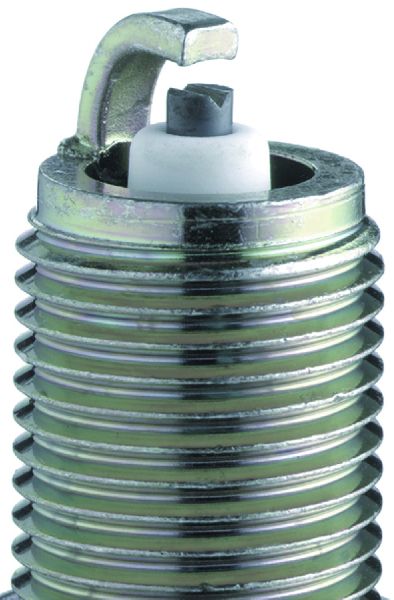
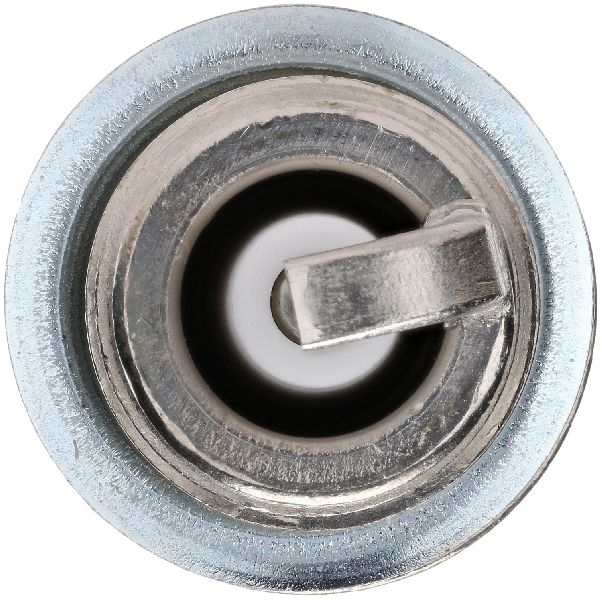
Est. part cost: $50-$110 - Worn or Fouled Spark Plug 🔴 High Probability → Shop Spark Plug Spark plugs are a regular maintenance item with a service life of around 60,000 miles. If they are past their service interval, the electrodes can wear down, increasing the gap and leading to a weak spark and misfires.
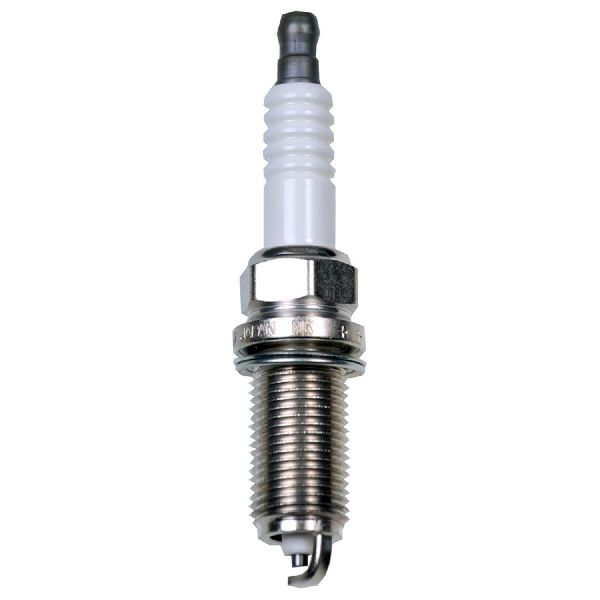
How to confirm: After ruling out the ignition coil, remove the spark plug from cylinder #5. Inspect it for wear (worn electrode), carbon fouling, oil, or damage to the ceramic insulator. The correct OEM plug is an NGK Laser Iridium model ILFR6B. 🎬 Watch: A step-by-step guide to replacing Subaru H6 spark plugs.
Typical fix: Replace the spark plug. It is best practice to replace all six spark plugs at the same time to ensure even performance and avoid future misfires on other cylinders.
Est. part cost: $15-$25 per plug - Clogged or Faulty Fuel Injector 🟡 Medium Probability → Shop Fuel Injector
How to confirm: If swapping the coil and replacing the plug doesn't resolve the issue, the fuel injector is the next likely culprit. A professional can perform a fuel injector balance test. A more involved DIY method is to swap the injector with another cylinder, but this requires de-pressurizing the fuel system and removing the fuel rail. Sometimes, running a high-quality fuel system cleaner (like Subaru's P.E.A. cleaner) can resolve minor clogs.
Typical fix: Replace the faulty fuel injector. In some cases, professional ultrasonic cleaning can restore a clogged injector.
Est. part cost: $80-$200 - Vacuum Leak ⚪ Low Probability The intake manifold gaskets or various vacuum hoses can become brittle and crack over time due to heat and age, allowing unmetered air to enter the engine and disrupt the air-fuel ratio, causing a lean condition and misfires.
How to confirm: With the engine running, carefully spray a small amount of throttle body cleaner or smoke from a smoke machine around the intake manifold gasket near cylinder #5. If the engine's idle speed changes or stumbles, a leak is present.
Typical fix: Replace the leaking gasket or hose. Intake manifold gaskets are a more involved repair.
Est. part cost: $20-$150
Rare But Worth Checking
- Low Engine Compression: This is a more serious mechanical issue, potentially caused by a burnt exhaust valve, worn piston rings, or a leaking head gasket. A compression test followed by a cylinder leak-down test is needed to diagnose this. In a YouTube case on an EZ30, a misfire was traced to a broken valve spring retainer clip, a rare but possible failure. 🎬 See this video for a deep dive into diagnosing EZ30 misfires.
- Faulty AVCS Solenoid or Cam Gear: On Subaru H6 engines, a faulty Active Valve Control System (AVCS) oil control solenoid for one bank can cause misfires, typically across all cylinders on that side (e.g., 1, 3, and 5). While less likely to cause a single cylinder misfire, it's a known issue on the platform and can cause sluggish performance, especially at low RPM.
- Loose or Damaged Coil/Injector Wiring: The wiring harness or connector for the ignition coil or fuel injector can become damaged or loose, leading to an intermittent connection and misfires. Visually inspect the harness for cracks, chafing, or loose pins in the connector.
Diagnosis Steps
- Verify the code with an OBD-II scanner. Note if the Check Engine Light is solid or flashing. A flashing light indicates a severe misfire that can damage the catalytic converter.
- Start with the easiest and most probable cause: the ignition system.
- Swap the ignition coil from cylinder #5 (rear passenger side) with the coil from cylinder #3 (middle passenger side). This requires a 12mm socket to unbolt the coil. 🎬 Watch: How to access and change coils on the H6 engine.
- Clear the codes, start the engine, and let it run for a few minutes or take a short drive. Rescan for codes.
- If the code is now P0303, the ignition coil you moved is faulty and needs to be replaced.
- If the code remains P0305, the coil is likely not the issue. Proceed to inspect the spark plug.
- Remove and inspect the spark plug from cylinder #5. This requires a 5/8" spark plug socket with an extension and swivel. Look for excessive wear, fouling, or damage. If it's old or in poor condition, replace it. It's best to replace all six at once.
- While the coil and plug are out, inspect the wiring and connector for any visible damage.
- If the coil and plug are good, the next step is to investigate the fuel injector. Consider using a bottle of quality fuel injector cleaner first. If that fails, a professional diagnosis or swapping injectors may be necessary.
- If all else fails, check for vacuum leaks around the intake manifold near cylinder #5 and perform an engine compression test to rule out mechanical issues like a burnt valve or bad head gasket.
Parts You'll Likely Need
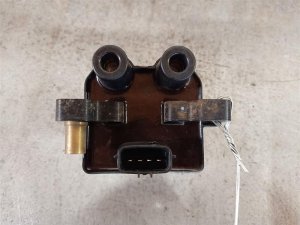
- Ignition Coil
(OEM #22433AA542)— This is the most frequent cause of a single-cylinder misfire on this engine due to age and heat exposure. The original part number 22433AA540 has been superseded by 22433AA541, 22433AA640, and the latest is often 22433AA542 or 22433AA641.
Trusted brands: Subaru (Genuine), Denso, NGK, Hitachi
OEM price range: $90-$130
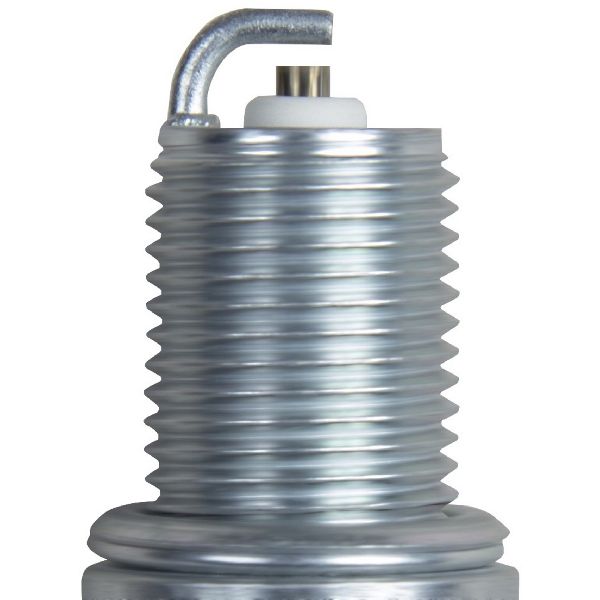
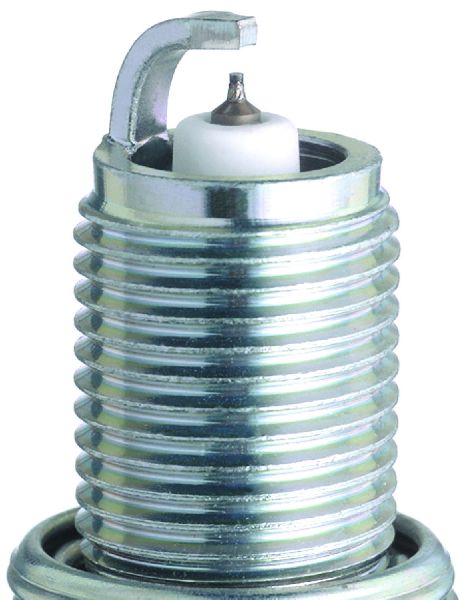
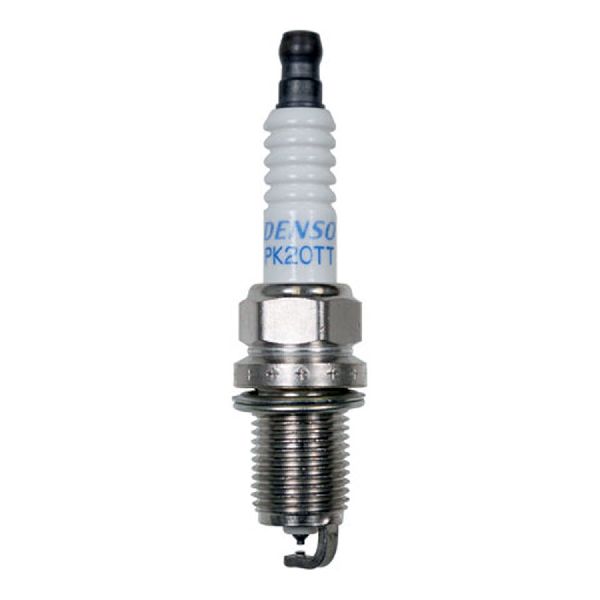
Aftermarket price range: $45-$80 - Spark Plug
(OEM #22401AA630 (NGK ILFR6B))— Spark plugs are a routine wear item and a common cause of misfires if they are past their 60,000-mile service life.
Trusted brands: NGK (ILFR6B), Denso
OEM price range: $18-$28
Aftermarket price range: $12-$20
Related Codes That Often Appear With This One
- P0300 — If the misfire is intermittent or begins to affect other cylinders, a P0300 (Random/Multiple Cylinder Misfire) code may appear alongside P0305.
- P0301, P0303 — If other cylinders on the same bank (passenger side) are also misfiring, it could point to a systemic issue on that bank, such as a clogged catalytic converter, a faulty AVCS solenoid, or a vacuum leak affecting that side of the intake manifold.
Technical Service Bulletins (TSBs) & Recalls
- While no TSB is specific to P0305 on this model, Subaru has issued general service bulletins like 09-79-21R regarding the use of Subaru P.E.A. Carbon Clean chemistry (part number SOA868V9165) to address misfires, rough idle, or lack of power caused by carbon deposits on injectors and valves.
Platform-Specific Known Issues
- Owner Experience: P0305 on a 2008 Legacy 3.0R: A user on LegacyGT.com with a 2008 3.0R experienced a shudder and misfire. After swapping coils and plugs didn't work, the issue was eventually traced to a faulty fuel injector on cylinder #5. This highlights the importance of considering the fuel system if ignition components check out.
- Access to Cylinder #5: Forum users on subaruoutback.org and legacygt.com frequently note that while the diagnostic process is simple, actually reaching the #5 coil and plug can be tight. Removing the airbox and battery is a common tip to create more working room in the engine bay.
Mechanic-Grade Diagnostic Values
- Fuel Injector Resistance — expected: 10-14 Ohms. Failure: A reading of 0 Ohms (short circuit) or infinite/OL (open circuit) indicates a failed injector coil.
- Fuel Pressure (Key On, Engine Off) — expected: ~35 PSI. Failure: Significantly lower pressure indicates a weak fuel pump or clogged filter.
- Fuel Pressure (Engine Idling) — expected: 26-30 PSI (with vacuum hose connected). Failure: Pressure outside this range can indicate a faulty fuel pressure regulator or pump issue.
- Short-Term and Long-Term Fuel Trims — expected: Within +/- 10%. Failure: Consistently high positive trims (e.g., > +15%) on one bank can indicate a vacuum leak affecting that side of the engine.
Hidden / Shadow Codes Worth Checking
- Mode $06, Test ID $A2-$A7: This is not a hidden code, but rather a data monitoring mode. It provides raw misfire counts for each cylinder for the current and last ten drive cycles. For the H6 engine, Test IDs $A2 through $A7 correspond to cylinders 1 through 6. A high count for Component ID $05 (Cylinder 5) confirms the misfire even if it's not severe enough to keep the CEL flashing. (see via Most modern OBD-II scanners with Mode $06 capability.)
Scan Tool Commands That Help
- Subaru Select Monitor (SSM) or equivalent professional scanner: Injector Cut / Power Balance Test — After ruling out spark plugs and coils, this test can confirm if cylinder #5 is not contributing to engine power. The command allows the technician to disable the fuel injector for cylinder #5 while the engine is idling. If there is no change in idle quality or RPM, it confirms that cylinder was already dead, pointing to a fuel, spark, or compression issue specific to that cylinder.
Wiring & Ground Locations
- GE (Engine Ground) — A primary engine ground point is located on the intake manifold, near the throttle body assembly.. A loose or corroded main engine ground can cause a host of intermittent electrical issues, including weak spark or erratic sensor readings that can lead to misfires.
- Engine Ground Strap — There is a main ground strap connecting the engine block (often on the passenger side) to the chassis frame rail.. Corrosion or looseness of this primary strap can cause unstable voltage for the ignition and fuel systems, potentially causing misfires.
- ECM Connector B137 (Pins 4 & 5) — At the Engine Control Module (ECM).. According to wiring diagrams for the EZ30, Pin 4 (LGRN/RED wire) and Pin 5 (GRN/WHT wire) on connector B137 are the trigger signals for ignition coils 5 and 6, respectively. A technician could back-probe these pins to check for a signal from the ECM, helping to diagnose a wiring or ECM driver issue.
Real Owner Repair Stories
- Forum user reports (2005 Subaru Legacy 3.0R) — Flashing check engine light, rough running, P0305 code.
❌ Tried (didn't work) Replaced spark plug on cylinder 5, Swapped ignition coil from cylinder 5 to cylinder 3, Used fuel injector cleaner
✅ What actually fixed it A compression and leak-down test revealed a burnt exhaust valve on cylinder #5. The cylinder head had to be removed and repaired. - Forum user reports on legacygt.com (Subaru Legacy 3.0L H6 with P0303 and P0305) — Misfires on passenger side bank.
❌ Tried (didn't work) Swapping ignition coils, Replacing spark plugs
✅ What actually fixed it The issue was resolved by replacing the front Air/Fuel (O2) sensor for Bank 1 (passenger side). The failing sensor was providing incorrect data, causing the ECM to create a lean condition for the entire bank, which resulted in misfires on the most sensitive cylinders. - YouTube video by 'What did i break?' (2006 Subaru Outback 3.0L EZ30 with P0304 (similar H6 engine)) — Sudden severe misfire.
❌ Tried (didn't work) Replacing ignition coil
✅ What actually fixed it The final cause was a mechanical failure: the valve spring retainer clips had come off, causing the valve to not operate correctly. This is a rare but severe internal engine failure.
"I Checked Everything" — The Actual Cause
- In some documented cases on Subaru forums, a persistent misfire on one bank (e.g., P0301, P0303, P0305) that passes a smoke test for vacuum leaks has been traced back to a failing front Air/Fuel (O2) sensor for that bank. The sensor gives skewed readings that lean out the fuel mixture but is not faulty enough to set its own specific diagnostic code, making it a difficult-to-diagnose cause.
When the Usual Fixes Don't Work
- While the vast majority of P0305 codes are fixed by replacing an ignition coil or spark plug, there are numerous documented cases on forums like legacygt.com where these repairs did not solve the problem. In these instances, the next most common successful fixes were, in order: replacing a clogged or failed fuel injector, replacing the front Air/Fuel sensor for that bank, and, in more severe cases, repairing a burnt exhaust valve found via a compression test.
OEM Part Supersession History
22433AA540→22433AA541, then 22433AA640, then 22433AA641, with 22433AA542 also being a compatible replacement part number in the chain.— Standard part revisions for improved reliability or manufacturing changes.
Heads up: No known incompatibilities within this vehicle's generation. It is always recommended to use the latest available part number. Aftermarket coils from unknown brands are widely reported to have a high failure rate.
Model Year Variations Within This Range
- 2007-2009: Models from 2007 onwards were equipped with SI-DRIVE (Subaru Intelligent Drive). This system primarily affects throttle response mapping and transmission behavior. It does not fundamentally change the components or diagnostic process for a P0305 misfire code.
Diagnostic Flowchart
Other Known Issues on This Vehicle
Issues unrelated to this code that are worth knowing about as an owner of this generation:
- 5EAT Transmission Shudder / Harsh Shifts 🟠 Medium — Common issue, particularly a harsh 2-3 upshift or shuddering from a stop. Can sometimes be improved with a TCM reflash by the dealer or fluid change, but may indicate internal wear or torque converter issues. (Ref: A dealer reflash of the TCM was a common fix when the cars were newer.)
- Head Gasket Failure 🔴 High — While less common on the EZ30D than the 4-cylinder EJ25 engines of the era, head gasket leaks (typically external oil or coolant leaks) can still occur at higher mileage. Overheating significantly increases the risk.
- Rear Wheel Bearing Failure 🟠 Medium — Wheel bearings, particularly in the rear, are a known wear item on this platform and often fail, causing a loud humming or grinding noise that changes with vehicle speed.
- Sticky / Melting Dashboard 🟡 Low — In warmer climates, the dashboard material can become sticky or appear to 'melt' over time. Subaru issued a warranty extension for this issue, but it has since expired. (Ref: Expired Warranty Extension)
- Rear Subframe and Wheel Well Rust 🔴 High — In regions that use road salt, these vehicles are very prone to severe rust in the rear wheel arches, rocker panels, and rear subframe assembly, which can become a major safety and structural problem.
Used vs. New Parts: Buying Guide for This Vehicle
When a used part is the smart pick: For parts like ignition coils and fuel injectors, a used OEM part from a reputable auto recycler can be a cost-effective alternative to a new aftermarket part. These components are generally reliable if sourced from a low-mileage donor vehicle.
Donor-vehicle mileage cap: roughly under 100000 miles for the part to have meaningful remaining life.
What to inspect on the donor part:
- For ignition coils, inspect the plastic housing for any cracks or signs of melting.
- For fuel injectors, check that the electrical connector is intact and the O-rings are not brittle or flattened.
- Ask the recycler for the mileage of the donor vehicle if possible.
OEM-only on this vehicle (don't cheap out):
- While not strictly 'OEM-only', using genuine Subaru or OEM-supplier parts (Denso, NGK) for ignition coils and spark plugs is very strongly recommended for this engine to avoid premature failure and compatibility issues.
Aftermarket brands forum-validated for this vehicle:
- Denso (for coils and A/F sensors)
- NGK (for spark plugs and coils)
- Hitachi (for coils)
Brands owners have reported issues with on this vehicle:
- Unbranded, 'white-box' ignition coils and sensors sold on platforms like eBay and Amazon are frequently reported by owners to fail quickly, sometimes within a few hundred miles.
Real Owner Stories
Aggregated from forums and TSBs cited above. Mileages and costs reflect what owners reported in those sources.
2008 Subaru Legacy 3.0R
Symptoms: The owner experienced a shudder and misfire while driving.
What fixed it: After swapping coils and plugs failed to resolve the issue, the fault was traced to a faulty fuel injector on cylinder #5.
Source hint: LegacyGT.com user experience mentioned in vehicle_specific_issues
2006 Subaru Legacy 3.0L EZ30D
Symptoms: The owner reported a CEL (Check Engine Light) shortly after purchasing the vehicle.
What fixed it: The context mentions the use of Subaru P.E.A. Carbon Clean chemistry (SOA868V9165) as a recommended fix for misfires and rough idle on this platform.
Source hint: club.liberty.asn.au report in owner_reports
Related OBD-II Codes
Frequently Asked Questions
Which specific spark plugs should I use for my 3.0L H6 Legacy to avoid P0305?
Is there a Subaru TSB for using fuel cleaners to fix misfires on the EZ30D?
I'm getting a P0305; is it hard to reach the cylinder #5 coil and plug on this car?
Where is cylinder #5 located on the 2005-2009 Subaru Legacy 3.0L?
Can I just swap parts to diagnose which coil is bad?
My Check Engine Light is flashing while driving my 3.0R; what does that mean?
Helpful Videos
![How to Fix P0305 Engine Code in 3 Minutes [2 DIY Methods / Only $4.53]](https://img.youtube.com/vi/iu7X5E-N1II/mqdefault.jpg)


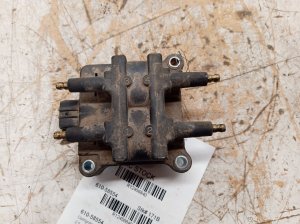
Used OEM Parts in Stock
New Aftermarket Parts Available

The information in this article is provided for general reference and educational purposes only. Vehicle specifications, procedures, and part compatibility can vary by production date, trim level, and region. Always consult your vehicle's factory service manual and verify part numbers before purchasing or performing repairs. Safety-critical components such as airbags, seat belts, and braking systems should be installed by a qualified professional.
- Subaru Legacy:
- 🧭 Diagnostic Flowchart
- 🎬 Helpful Videos
- 🛍️ Shop This Part
- What's Unique About the 2005-2009 Subaru Legacy
- Symptoms You May Notice
- Most Likely Causes
- Rare But Worth Checking
- Diagnosis Steps
- Parts You'll Likely Need
- Related Codes That Often Appear With This One
- Technical Service Bulletins (TSBs) & Recalls
- Platform-Specific Known Issues
- Mechanic-Grade Diagnostic Values
- Hidden / Shadow Codes Worth Checking
- Scan Tool Commands That Help
- Wiring & Ground Locations
- Real Owner Repair Stories
- "I Checked Everything" — The Actual Cause
- When the Usual Fixes Don't Work
- OEM Part Supersession History
- Model Year Variations Within This Range
- Other Known Issues on This Vehicle
- Used vs. New Parts: Buying Guide for This Vehicle
- Real Owner Stories
- 2008 Subaru Legacy 3.0R
- 2006 Subaru Legacy 3.0L EZ30D
- Related OBD-II Codes
- Frequently Asked Questions
- 🎟️ Get 5% Off