

P0305 on 2005-2009 Subaru Outback 3.0L H6: Cylinder 5 Misfire Causes and Fixes
For a 2005-2009 Subaru Outback with the 3.0L H6 engine, code P0305 is almost always caused by a failed ignition coil or a worn spark plug for cylinder 5. This is the most difficult cylinder to access, located at the rear of the engine on the driver's side. Expect to pay $85-$130 for an OEM coil and $15 for a spark plug. Diagnosis is confirmed by swapping the coil with another cylinder.
- P0305 points to a misfire on the rearmost cylinder on the driver's side.
- The most likely cause is a bad ignition coil, which can be diagnosed for free by swapping it with another cylinder's coil.
- Due to tight access, replacing the coil or spark plug for cylinder 5 is a labor-intensive job that may require special tools or lifting the engine slightly.
What's Unique About the 2005-2009 Subaru Outback
The Subaru Outback's horizontally-opposed 'boxer' engine (H6) places the cylinder heads on the sides of the engine bay. This design makes accessing the spark plugs and ignition coils more challenging than on an inline or V-engine. Cylinder 5's location at the rear of the driver's side is particularly tight, sometimes requiring a technician to loosen an engine mount and slightly raise the engine to gain enough clearance for the repair. Many owners report success using a combination of specific tools like 1/4" drive ratchets, universal swivel joints, and various extension lengths to navigate the tight space without lifting the engine.
🎬 See this walkthrough for changing H6 plugs the easy waySymptoms You May Notice
- Rough or shaking idle
- Hesitation or stumbling during acceleration
- Noticeable loss of engine power
- Flashing Check Engine Light
- Reduced fuel economy
- Smell of unburned gasoline from the exhaust
- Replacing all spark plugs and coils without first confirming the faulty component. The coil-swapping diagnostic step 🎬 Watch: A mechanic's guide to diagnosing an EZ30 misfire can save money by pinpointing the exact cause.
- Assuming a flashing CEL always means catalytic converter failure. While it indicates a risk of damage, the root cause is the misfire itself, which must be fixed first.
Most Likely Causes
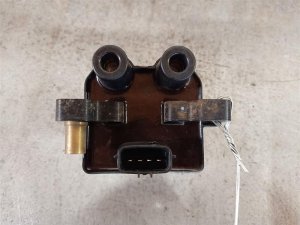
- Faulty Ignition Coil 🔴 High Probability → Shop Ignition Coil Coil-on-plug units are a common failure item on many vehicles as they age due to constant heat cycles and vibration. The #5 cylinder coil is in a tight, hot location, which may contribute to its failure rate.
How to confirm: Swap the ignition coil from cylinder 5 with the coil from another cylinder (e.g., cylinder 3). Clear the codes and drive the vehicle. If the code changes to P0303 (Cylinder 3 Misfire), the ignition coil is confirmed to be faulty. This is the most definitive and cost-effective diagnostic step.
Typical fix: Replace the faulty ignition coil. It is often recommended to replace the corresponding spark plug at the same time.
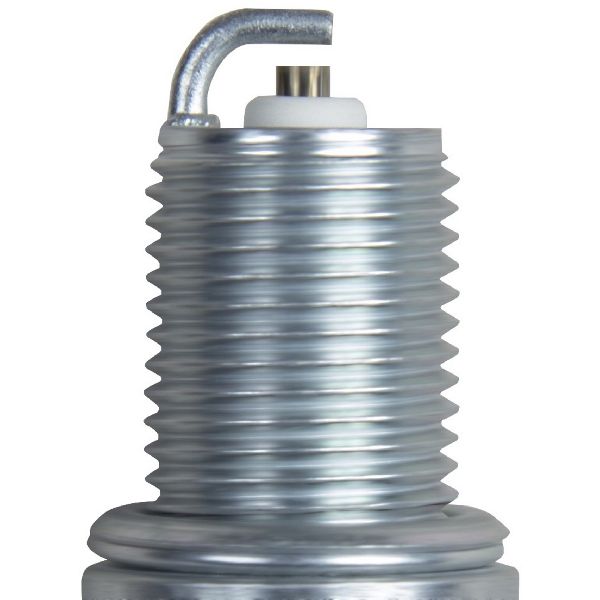
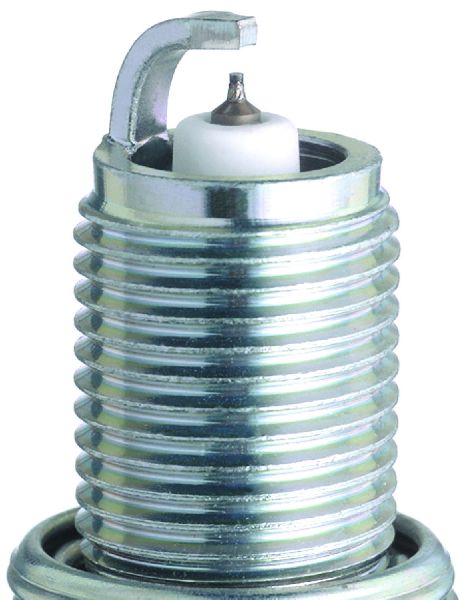
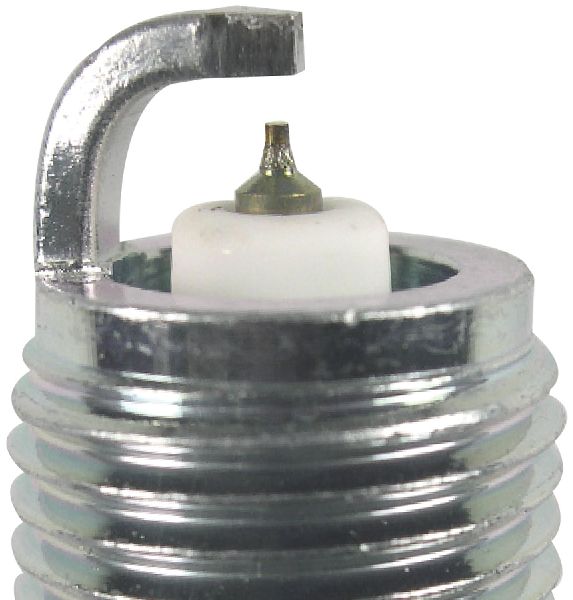
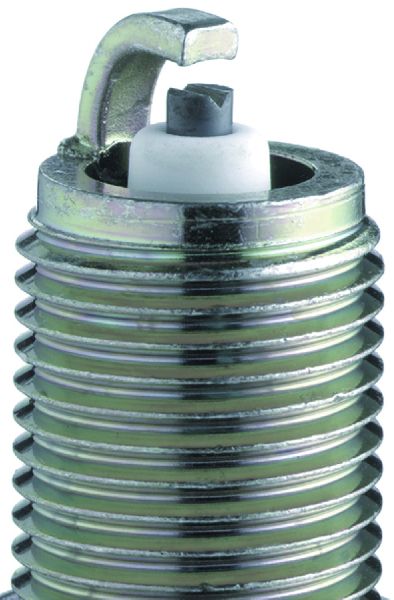
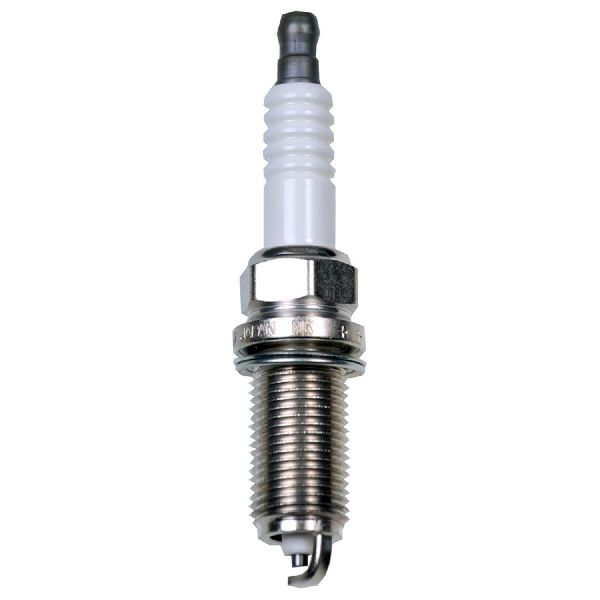
Est. part cost: $85 - $130 for OEM, $40 - $70 for aftermarket - Worn or Fouled Spark Plug 🟡 Medium Probability → Shop Spark Plug Spark plugs are a normal wear item. The service interval for the OEM Iridium plugs is 60,000 miles. Due to the labor-intensive nature of the job on the H6 engine, this maintenance is sometimes postponed, leading to misfires.
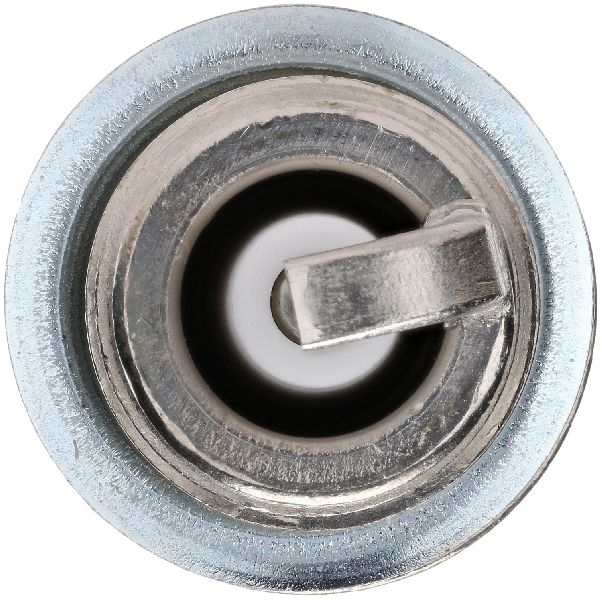
How to confirm: After ruling out the ignition coil, remove the spark plug from cylinder 5. Inspect it for signs of wear (worn electrode), carbon or oil fouling, or damage to the ceramic insulator.
Typical fix: Replace the spark plug. It is best practice to replace all six spark plugs at the same time to ensure even performance and avoid repeated labor.
Est. part cost: $10 - $20 per plug - Clogged or Faulty Fuel Injector ⚪ Low Probability → Shop Fuel Injector Fuel injectors can become clogged with deposits over time, preventing them from delivering the correct amount of fuel. This is less common than ignition failures but is a known possibility.
How to confirm: Listen to the injector with a mechanic's stethoscope; it should make a consistent clicking sound. You can also test its resistance with a multimeter or perform a fuel injector balance test. Swapping injectors between cylinders is also possible but is much more labor-intensive than swapping coils.
Typical fix: Clean or replace the fuel injector for cylinder 5.
Est. part cost: $70 - $150
Rare But Worth Checking
- Vacuum Leak: A leak in the intake manifold gasket near the runner for cylinder 5 could cause a lean condition and misfire. This is less common than ignition or fuel component failure.
- Low Compression: A mechanical engine issue such as a burnt exhaust valve, worn piston rings, or a failing head gasket could cause a loss of compression in cylinder 5. This is the least likely cause and should only be investigated after ruling out ignition and fuel system problems.
- Faulty ECU Ignition Driver: In very rare cases, the driver chip within the Engine Control Unit (ECU) responsible for firing the cylinder 5 coil can fail. This is often due to a cold solder joint on the circuit board. This should be the last resort after all other possibilities are exhausted. A similar issue is documented for cylinder 6 on these ECUs.
Diagnosis Steps
- Use an OBD-II scanner to confirm the P0305 code is present and check for any other codes.
- Swap the Ignition Coil: The most effective first step is to swap the ignition coil from cylinder 5 (rear, driver's side) with another cylinder, such as cylinder 3 (middle, driver's side). This requires a 12mm socket.
- Clear the codes with the scanner and start the engine. Let it run and drive it briefly until the check engine light returns.
- Re-scan the codes. If the code has moved to P0303, the ignition coil is the faulty component and needs to be replaced.
- Inspect the Spark Plug: If the code remains P0305, the coil is likely good. Turn off the engine and remove the coil and spark plug from cylinder 5. Inspect the spark plug for wear, fouling, or damage. If it is old or looks bad, replace it. A thin-walled 5/8" spark plug socket is required.
- Check the Fuel Injector: If the coil and plug are known to be good and the misfire persists on cylinder 5, the next likely cause is the fuel injector. Check for a steady clicking sound from the injector with the engine running.
- Check for Mechanical Faults: If ignition and fuel are ruled out, a compression test should be performed on cylinder 5 to check for mechanical issues like a bad valve or head gasket.
- Consider ECU Fault: If all other tests pass, investigate the rare possibility of a failed ECU ignition driver.
Parts You'll Likely Need
- Ignition Coil
(OEM #22433AA531)— This is the most common failure point for a single-cylinder misfire on the EZ30D engine.
Trusted brands: Subaru (OEM), Denso, NGK
OEM price range: $85 - $130
Aftermarket price range: $40 - $70 - Iridium Spark Plug
(OEM #22401AA630)— Spark plugs are a maintenance item that wear out over time and are the second most likely cause. It is best practice to replace the plug when replacing the coil.
Trusted brands: NGK (ILFR6B), Denso (VKH20Y)
OEM price range: $15 - $25
Aftermarket price range: $10 - $18
Platform-Specific Known Issues
- Access to cylinder 5 is restricted by the brake master cylinder and other components. Some mechanics find it necessary to loosen the driver's side engine mount and carefully raise the engine with a jack to create enough clearance to remove the ignition coil and spark plug.
- Forum users on subaruoutback.org and legacygt.com confirm that the driver's side cylinders (1, 3, 5) are significantly harder to work on than the passenger side (2, 4, 6) due to component placement. 🎬 Watch: How to fix misfires on cylinders 1, 3, and 5
Mechanic-Grade Diagnostic Values
- Ignition Coil Secondary Resistance — expected: Approx. 9.5 kΩ - 12.9 kΩ at room temperature. Failure: A reading significantly outside of this range (open circuit or short) indicates a faulty coil. This is a general specification for Subaru coils of this type.
- Long Term Fuel Trim (LTFT) at Idle — expected: -10% to +10%. Failure: Consistently high positive values (e.g., > +15%) on the corresponding bank (Bank 1 for cylinder 5) suggest a vacuum leak, while high negative values suggest a leaking injector.
- Mode $06 Misfire Count — expected: Near zero for each cylinder over a drive cycle.. Failure: A significantly higher misfire count for cylinder 5 compared to others, even without a P0305 code being set, indicates an intermittent or borderline issue.
Hidden / Shadow Codes Worth Checking
- Mode $06, TID $53 (example): Mode $06 data can reveal misfire counts for each specific cylinder before they are high enough to trigger a P030x trouble code. The specific Test ID (TID) and Component ID (CID) for Subaru may vary and often require a professional scan tool or dealer software (Subaru Select Monitor) to interpret correctly. (see via Professional-grade OBD-II scanner with Mode $06 capability.)
Scan Tool Commands That Help
- Subaru Select Monitor (or equivalent pro scanner): Fuel Injector Balance Test — To identify a clogged or failing fuel injector by measuring the RPM drop when each injector is individually disabled. This is used after ruling out ignition problems.
- Subaru Select Monitor (or equivalent pro scanner): Reset Memory / Clear Learned Values — After replacing a component like a fuel injector or O2 sensor, this command forces the ECU to relearn fuel trims from a baseline, which can resolve lingering performance issues more quickly than waiting for the system to adapt.
Wiring & Ground Locations
- ECU Connector B137, Pin 4 — At the Engine Control Module (ECU), which is typically located in the passenger footwell area behind the glove box.. This is the specific pin that sends the trigger signal to the ignition coil for cylinder 5. A technician can back-probe this pin to check for a signal from the ECU, helping to differentiate between a wiring problem and a rare internal ECU fault.
Real Owner Repair Stories
- YouTube channel 'What did i break?' (2006 Subaru Outback 3.0L EZ30) — Rough running, engine shaking, P0304 (Cylinder 4 Misfire).
❌ Tried (didn't work) Replacing the ignition coil for the misfiring cylinder., Swapping coils between cylinders.
✅ What actually fixed it The root cause was a mechanical failure. The valve spring retaining clips for cylinder 4 had broken and fallen off, preventing the valve from operating correctly. This required removing the valve cover to diagnose and repair. - Reddit user on r/Subaru_Outback (2001 Outback H6 3.0L (EZ30D)) — Sudden onset of severe misfire. Codes P0301, P0303, P0305 (misfire on all of Bank 1).
❌ Tried (didn't work) Checked compression (was OK)., Checked for spark (was present)., Cleaned fuel injectors.
✅ What actually fixed it The user suspected a slipped timing chain or a failed tensioner, as a full-bank misfire often points to a base timing issue affecting that entire side of the engine. The resolution was to inspect the timing components.
OEM Part Supersession History
22433AA441, 22433AA530→22433AA531— Part revision and consolidation for Legacy, Outback, and Tribeca models with the H6 engine.
Heads up: The newer part number (22433AA531) is the correct replacement for the specified vehicle range. Using older stock is not recommended.
Model Year Variations Within This Range
- 2007-2009: A facelift for the 2007 model year introduced the 'Subaru Intelligent Drive' (SI-DRIVE) system for 3.0L models. This involved refinements to the ECU and throttle control logic. While the root causes of P0305 remain the same, diagnostic behavior or live data parameters related to throttle and engine load may differ slightly from 2005-2006 models.
Diagnostic Flowchart
Other Known Issues on This Vehicle
Issues unrelated to this code that are worth knowing about as an owner of this generation:
- Front Lower Control Arm Bushing Failure 🔴 High — Very common failure item, often needing replacement between 70,000 and 120,000 miles. The large, vertical rear bushing is the typical point of failure.
- Oil Consumption 🟠 Medium — Some EZ30 engines may consume oil, though less commonly than the 2.5L 4-cylinder models of the era. Consumption of up to 1 quart per 1,200 miles is considered within Subaru's spec, but owners should monitor levels closely.
- AVCS Solenoid/Filter Issues 🟡 Low — The Active Valve Control System (AVCS) solenoids or their filters can become clogged, leading to rough running or codes like P0011/P0021, sometimes accompanied by misfire codes.
- 5EAT Automatic Transmission Valve Body/Torque Converter Issues 🟠 Medium — The 5-speed automatic transmission (5EAT) paired with the H6 engine can develop issues with the valve body or torque converter, leading to harsh shifting or shuddering.
- Rattling Exhaust Heat Shields 🟡 Low — Heat shields on the exhaust system are prone to rusting at the welds and causing a metallic rattling noise. This is often a simple fix with a new clamp.
Used vs. New Parts: Buying Guide for This Vehicle
When a used part is the smart pick: An ignition coil is a good candidate for a used part, provided it is a genuine OEM part (Subaru/Denso branded) from a reputable salvage yard with a known low-mileage donor vehicle. A used ECU is also a viable, and often the only, cost-effective option if an ECU fault is confirmed, but the part number must be an exact match.
Donor-vehicle mileage cap: roughly under 80000 miles for the part to have meaningful remaining life.
What to inspect on the donor part:
- For ignition coils, check for cracks in the plastic housing, corrosion on the electrical connector pins, and damage to the rubber boot.
- For an ECU, ensure the case is not damaged and there are no signs of water intrusion on the connectors.
- Verify the donor vehicle was not in a front-end collision that could have damaged engine components.
OEM-only on this vehicle (don't cheap out):
- Engine Control Unit (ECU): Aftermarket ECUs are not available; a used OEM unit with an exact part number match is the only alternative to a new dealer part.
- Fuel Injectors: While some aftermarket brands exist, OEM injectors are recommended for proper flow rates and reliability. Remanufactured OEM injectors are a good compromise.
Aftermarket brands forum-validated for this vehicle:
- Ignition Coils: Denso, NGK (often the OEM supplier)
- Spark Plugs: NGK (ILFR6B), Denso (VKH20Y)
Brands owners have reported issues with on this vehicle:
- Unbranded, 'white-box' ignition coils and sensors from online marketplaces. These often have high failure rates and may not perform to OEM specifications, causing persistent issues.
Real Owner Stories
Aggregated from forums and TSBs cited above. Mileages and costs reflect what owners reported in those sources.
2008 Subaru Outback 3.0R — 130000 miles
Symptoms: CEL with flashing cruise control light, occasional rough idle, especially when cold. Codes P0301, P0303, P0305, and P0420.
What fixed it: The user planned to start by replacing spark plugs and ignition coils on that bank (no final resolution reported).
Source hint: subaruoutback.org thread on H6 misfire
2007 Subaru Legacy 3.0R
Symptoms: Rough idle and misfire with codes P0301, P0303, and P0305 occurring together.
What fixed it: Suspected to be related to AVCS issues indicating a full bank misfire.
Source hint: legacygt.com - 'P0021/P0011, rough idle and misfire - any ideas?'
2006 Subaru Legacy 3.0L
Symptoms: Misfires on the entire driver's side bank (P0301, P0303, P0305) that worsen as the engine warms up.
What fixed it: Pointed towards systemic issues like AVCS or a clogged catalytic converter.
Source hint: club.liberty.asn.au - 'Misfire on cylinders 1, 3 and 5'
Related OBD-II Codes
Frequently Asked Questions
Why is cylinder 5 specifically mentioned as being harder to service on the EZ30D engine?
I have P0305 along with P0301 and P0303. What does this indicate for my Outback?
Is there a trick to removing the ignition coil on the driver's side of a 2005-2009 Outback H6?
What spark plugs should I use for my 3.0L H6, and how often should they be changed?
Can a faulty AVCS system cause a P0305 code?
How can I tell if my P0305 is a bad coil or a bad injector without buying parts?
Helpful Videos
Used OEM Parts in Stock
New Aftermarket Parts Available

The information in this article is provided for general reference and educational purposes only. Vehicle specifications, procedures, and part compatibility can vary by production date, trim level, and region. Always consult your vehicle's factory service manual and verify part numbers before purchasing or performing repairs. Safety-critical components such as airbags, seat belts, and braking systems should be installed by a qualified professional.
- Subaru Outback:
- 🧭 Diagnostic Flowchart
- 🎬 Helpful Videos
- 🛍️ Shop This Part
- What's Unique About the 2005-2009 Subaru Outback
- Symptoms You May Notice
- Most Likely Causes
- Rare But Worth Checking
- Diagnosis Steps
- Parts You'll Likely Need
- Platform-Specific Known Issues
- Mechanic-Grade Diagnostic Values
- Hidden / Shadow Codes Worth Checking
- Scan Tool Commands That Help
- Wiring & Ground Locations
- Real Owner Repair Stories
- OEM Part Supersession History
- Model Year Variations Within This Range
- Other Known Issues on This Vehicle
- Used vs. New Parts: Buying Guide for This Vehicle
- Real Owner Stories
- 2008 Subaru Outback 3.0R — 130000 miles
- 2007 Subaru Legacy 3.0R
- 2006 Subaru Legacy 3.0L
- Related OBD-II Codes
- Frequently Asked Questions
- 🎟️ Get 5% Off