

P0305 on 2004-2010 Toyota Sienna 3.3L V6: Cylinder 5 Misfire Causes and Fixes
Code P0305 on a Toyota Sienna with the 3.3L V6 is most often a failed ignition coil on cylinder 5. This cylinder is located on the difficult-to-access rear bank against the firewall. Expect to pay ~$50-90 for an OEM-quality Denso coil. Many owners and mechanics recommend replacing all three rear coils and spark plugs at once to save on future labor, as accessing them often requires removing the upper intake manifold.
- P0305 means cylinder #5 is misfiring.
- The most likely cause is a bad ignition coil, followed by a worn spark plug.
- Cylinder 5 is on the rear bank against the firewall and is difficult to access. The job requires removing the upper intake manifold.
- Due to the high labor involved, it is strongly recommended to replace all three rear ignition coils, spark plugs, and the intake plenum gasket at the same time.
- Do not drive if the Check Engine Light is flashing, as this indicates a severe misfire that can quickly damage the expensive catalytic converter.
What's Unique About the 2004-2010 Toyota Sienna
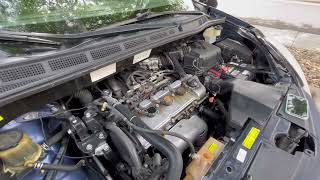
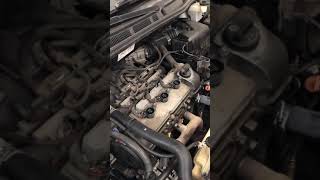
On the 3MZ-FE engine in the Sienna, the V6 is mounted transversely (sideways). This layout places cylinders 2, 4, and 6 at the front of the vehicle, where they are easy to access. However, cylinders 1, 3, and 5 are on the rear bank, tucked against the firewall. Cylinder 5 is in the middle of this rear bank, making it particularly difficult to reach. This turns a simple part replacement, like an ignition coil, into a more labor-intensive job that often requires removing the upper intake manifold plenum to gain access. Some resourceful DIYers have managed to replace the cylinder 5 coil without removing the plenum by using a combination of wrenches and long pliers, but it is a very tight squeeze.
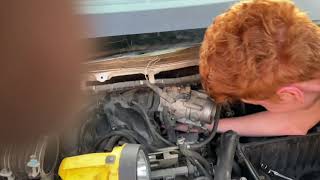
🎬 Watch: How to replace all coils and plugs without removing the manifold.Symptoms You May Notice
- Rough or shaky idle
- Engine hesitation or stumbling during acceleration
- Noticeable loss of power
- Solid or flashing Check Engine Light
- Possible fuel smell from the exhaust
- Engine vibrations that feel like an unbalanced tire, especially at lower RPMs
- Replacing oxygen (O2) sensors before diagnosing the misfire. A misfire will cause abnormal readings on the O2 sensors, but they are not the cause of the P0305 code.
- Replacing the catalytic converter. A misfire can destroy a catalytic converter, but replacing the converter without fixing the root cause of the misfire will only result in the new one failing as well.
Most Likely Causes
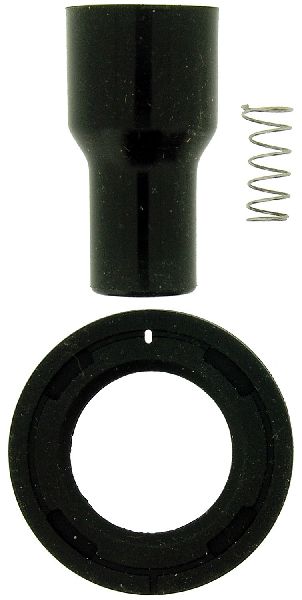
- Failed Ignition Coil 🔴 High Probability → Shop Ignition Coil Coil-on-plug ignition systems are common failure points due to age and extreme heat cycles. The rear bank on the 3MZ-FE engine is packed tightly against the firewall, leading to significant heat soak that can shorten the lifespan of electronic components like ignition coils.
How to confirm: The easiest diagnostic step is to swap the ignition coil from cylinder 5 with an easier-to-access cylinder (e.g., cylinder 2, 4, or 6 in the front). Clear the codes and drive the vehicle. If the misfire code moves to the new cylinder (e.g., P0302, P0304, or P0306), the coil is faulty. This is the universally recommended first step in forums.
Typical fix: Replace the faulty ignition coil. It is highly recommended to replace all three rear ignition coils and spark plugs at the same time due to the difficult access. Many owners also replace the plastic electrical connectors, which often become brittle and break upon removal.
Est. part cost: $50-$90 for one OEM-quality coil - Worn or Fouled Spark Plug 🟡 Medium Probability → Shop Spark Plug Spark plugs are a standard wear item with a service interval of around 100,000-120,000 miles. If they have not been replaced, or if a common valve cover gasket leak has allowed oil to seep into the spark plug tube and foul the plug, a misfire can occur.
How to confirm: After ruling out the ignition coil, the spark plug in cylinder 5 must be removed for inspection. This requires removing the upper intake plenum. Inspect the plug for a worn electrode, heavy carbon deposits, or oil fouling. Compare it to a new plug.
Typical fix: Replace the spark plug. Given the labor to access the rear bank, it is considered essential practice to replace all six spark plugs and the intake plenum gasket at the same time.
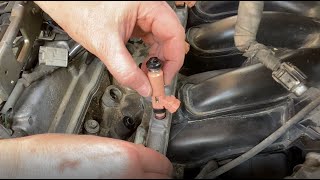
Est. part cost: $10-$25 per iridium spark plug - Clogged or Faulty Fuel Injector ⚪ Low Probability → Shop Fuel Injector Over time, fuel injectors can become clogged with carbon deposits or fail electrically, preventing the correct amount of fuel from being delivered to cylinder 5. Some owners have temporarily resolved a misfire with a high-quality fuel injector cleaner, confirming a clogging issue.
How to confirm: Listen to the injector with a mechanic's stethoscope; it should have a consistent clicking sound. The coil swap test for the ignition system can be conceptually applied here: swap the cylinder 5 injector with a front-bank injector to see if the misfire code follows. However, this is a very labor-intensive job as it requires removing the fuel rail. A resistance test can also be performed; the specification is 13.4 to 14.2 Ohms.
Typical fix: Replace the faulty fuel injector. It's wise to replace the O-rings and seals on all accessible injectors if the fuel rail is removed.
Est. part cost: $70-$150 for one injector
Rare But Worth Checking
- Low Engine Compression: This is a serious mechanical issue. If ignition and fuel systems check out, a compression test is necessary. Standard compression is 178 psi, with a minimum of 142 psi. This could be caused by a burnt exhaust valve, worn piston rings, or a leaking head gasket. A Reddit user with a P0305 on a 2009 Sienna was told a blown head gasket was a possibility after other parts were replaced.
- Vacuum Leak: A leak in the upper intake manifold (plenum) gasket near the runner for cylinder 5 could lean out the air/fuel mixture and cause a misfire. These gaskets are one-time use and must be replaced whenever the plenum is removed. A smoke test is the most effective way to diagnose a vacuum leak.
- Failed PCV Valve or Hose: → Shop PCV Valve The PCV (Positive Crankcase Ventilation) valve and its associated hoses are known weak points on the 3MZ-FE. A stuck-open PCV valve or a cracked/disconnected hose can create a large vacuum leak, leading to lean conditions and misfires. While it often causes random misfires (P0300), it can sometimes manifest as a single-cylinder misfire. It's an inexpensive part to check and replace.
Diagnosis Steps
- Confirm the code P0305 is present using an OBD-II scanner. Note if the Check Engine Light is solid or flashing. 🎬 Watch: A real-world example of diagnosing a P0305 code on a road trip.
- Identify cylinder 5. On the 3MZ-FE, the rear bank (against the firewall) is cylinders 1-3-5, from passenger to driver side. The front bank is 2-4-6.
- Attempt the ignition coil swap. The most common cause is a failed coil. Swap the coil from cylinder 5 with the coil from an easy-to-access front cylinder (e.g., cylinder 2, 4, or 6).
- Some owners have successfully accessed the cylinder 5 coil without removing the intake plenum by reaching behind the engine, sometimes removing the air intake tube for slightly more room. A 10mm wrench is needed for the bolt.
- Clear the codes and drive the vehicle until the Check Engine Light returns.
- Re-scan the codes. If the code has moved to the cylinder where you placed the suspect coil (e.g., P0302), the ignition coil is faulty and needs to be replaced.
- If the code remains P0305, the issue is not the coil. The next step is to inspect the spark plug in cylinder 5. This will require removing the upper intake manifold.
- During plenum removal, carefully label all vacuum hoses and electrical connectors. The plenum support brackets at the rear can be difficult to access; a 12mm or 14mm wrench and extensions are needed.
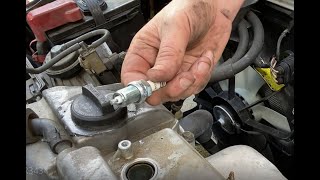
- Once the plenum is off, remove the spark plug and check for excessive wear, damage, or fouling from oil or carbon.
- If the spark plug is bad, replace it. It is highly recommended to replace all three rear plugs, coils, and the plenum gasket at this time due to the labor involved.
- If the coil and plug are good, the next likely cause is the fuel injector. This requires more advanced diagnosis, such as checking resistance (spec: 13.4-14.2 Ω) or swapping injectors, which is a labor-intensive job.
- If ignition and fuel components are confirmed to be working, perform a compression test on cylinder 5 to check for internal mechanical engine problems. Standard pressure is 178 psi.
Parts You'll Likely Need
- Ignition Coil
(OEM #90919-02244 (superseded by 90919-A2001, 90919-02266))— This is the most frequent cause of a single-cylinder misfire on the 3MZ-FE engine.
Trusted brands: Denso (673-1303), NGK, Delphi
OEM price range: $80-$120
Aftermarket price range: $40-$75 - Iridium Spark Plug
(OEM #Denso SK20R11 or NGK IFR6A11)— Spark plugs are a maintenance item and can cause misfires when worn. They should be replaced when accessing the rear bank for any other repair.
Trusted brands: Denso, NGK
OEM price range: $15-$25
Aftermarket price range: $10-$20 - Upper Intake Manifold/Plenum Gasket
(OEM #17176-0P021 (or 17176-20020))— This gasket must be replaced anytime the upper intake manifold is removed to access the rear cylinders. Reusing the old gasket will likely cause a vacuum leak.
Related Codes That Often Appear With This One
- P0300 — If the misfire is intermittent or affecting multiple cylinders, a P0300 (Random/Multiple Cylinder Misfire Detected) may appear alongside P0305.
- P0301, P0303 — Since access to the rear bank is difficult, a problem affecting all rear cylinders (like a vacuum leak from the intake plenum gasket or a shared wiring issue) could cause misfires on cylinders 1 and 3 as well.
- P0171, P0174 — If the misfire is caused by a vacuum leak from a faulty intake manifold gasket or a disconnected PCV hose, the engine will run lean, often triggering P0171 (System Too Lean Bank 1) and P0174 (System Too Lean Bank 2) codes.
Technical Service Bulletins (TSBs) & Recalls
- TSB L-SB-0045-12 Rev: While this TSB is for a newer Lexus RX with a different engine, it addresses cold-start misfires (including P0305) and points to potential carbon buildup on pistons/rings requiring a compression test, or an ECM update. This highlights a potential diagnostic path if the issue is only present when the engine is cold.
- TSB T-SB-0100-19: This TSB for newer Toyota models with misfire codes (P0301-P0306) involves reprogramming the ECM. While not directly applicable to the 3MZ-FE, it shows that sometimes a misfire fix can be software-related.
- TSB Bulletin #T-SB-0148-19: This manufacturer bulletin for other Toyota V6 models provides a specific repair procedure to address misfire codes including P0305.
Platform-Specific Known Issues
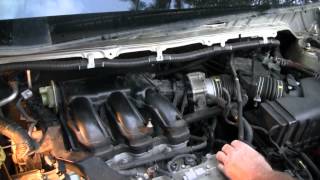
- Access to the rear bank of cylinders (1, 3, 5) is notoriously difficult and requires removing the air intake assembly, throttle body, and the upper intake manifold plenum. This significantly increases labor time compared to a misfire on the front bank.
- Owner Repair Story: Road Trip Breakdown: An owner on YouTube documented getting a flashing P0305 code during a road trip. The symptom felt like a tire vibration. He was able to reach his arm behind the intake manifold to access and replace the cylinder 5 ignition coil in a Walmart parking lot without removing the plenum, confirming it can be done with patience. However, his misfire later returned, suggesting his issue was intermittent or had multiple causes, leading him to try fuel injector cleaner next.
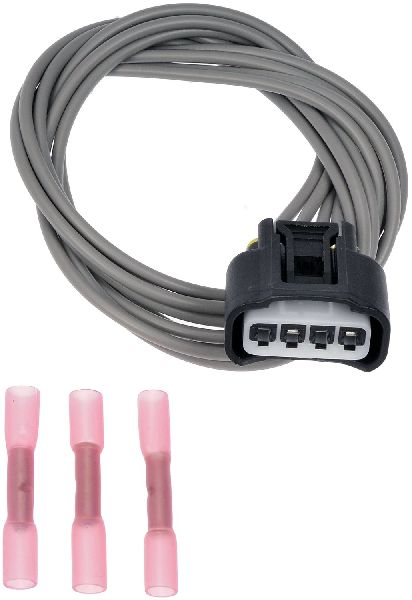
- Brittle Ignition Coil Connectors: → Shop Ignition Coil Due to heat and age, the plastic connectors for the ignition coils become extremely brittle. It is very common for the locking tabs to break when you try to disconnect them. Owners often resort to zip ties to secure the connectors after a repair or purchase replacement pigtail connectors.
Mechanic-Grade Diagnostic Values
- Fuel Injector Resistance — expected: 13.4 to 14.2 Ω at 20°C (68°F). Failure: Resistance outside of this range indicates a faulty injector coil.
- Engine Compression Pressure — expected: Standard: 12.5 kg/cm² (178 psi). Minimum: 10.0 kg/cm² (142 psi).. Failure: Pressure below minimum, or a difference between cylinders greater than 1.0 kg/cm² (15 psi), indicates mechanical engine wear (rings, valves, head gasket).
- Fuel Pressure at Fuel Rail — expected: 44-50 psi (for 1998+ Toyota models). Failure: Significantly lower pressure indicates a weak fuel pump or clogged filter; higher pressure could indicate a faulty regulator.
- Scan Tool Misfire Counter Threshold (MIL On) — expected: An excessive misfire rate (approx. 20-50 misfires per 1,000 revolutions) must be detected multiple times.. Failure: The ECU uses this logic to confirm a persistent misfire before setting a code. A flashing MIL is triggered by a higher rate that endangers the catalytic converter.
Hidden / Shadow Codes Worth Checking
- Mode 6 Misfire Counters: The ECU tracks misfire events for each cylinder even before they are frequent enough to set a P030x code. This data can show which cylinder is having intermittent issues. (see via A professional scan tool like Toyota Techstream or an advanced OBD-II scanner with Mode 6 capability. Select 'Misfire Data' or similar menu. Note that counters may reset after turning the ignition off if a code is not stored.)
Scan Tool Commands That Help
- Toyota Techstream: Active Test: Fuel Cut — When P0305 is present, you can command the ECU to stop sending fuel to cylinder 5. If the engine's running condition does not change, it confirms cylinder 5 was not contributing, pointing to an issue with that cylinder. If the engine runs worse, the misfire is intermittent.
Real Owner Repair Stories
- YouTube user 'Anonymous Garage' (2006 Toyota Sienna) — P0305, engine shaking.
❌ Tried (didn't work) Initially put in another used coil which also turned out to be bad, causing a P0302 after the swap.
✅ What actually fixed it The owner swapped the original cylinder 5 ignition coil with the cylinder 2 coil by reaching behind the intake manifold with a 10mm wrench, without removing the manifold. The code moved to P0302, confirming the original coil from cylinder 5 was bad. Replacing it with a new Denso coil resolved the issue. - YouTube user 'limpson boy' (2004 Toyota Highlander with 3MZ-FE engine (215k miles)) — Rough running, stuttering, white smoke from engine bay, loud hissing sound, and codes P0300, P0304, P0306, P0356, P1578, C1201 after a valve cover gasket replacement.
❌ Tried (didn't work) Visual inspection of connectors and hoses initially revealed nothing obvious.
✅ What actually fixed it The cause was a disconnected PCV hose on the intake manifold side. The connection point was not visible and had to be found by feeling for it by hand while tracing the hissing sound. Reconnecting the hose immediately fixed the rough idle, misfires, and lean conditions. - NHTSA ODI #10448450 — An owner reported that while on the way to the dealer, they felt the vehicle misfiring. The technician found multiple codes including P0304, P0305, and P0306, and determined the #6 ignition coil was malfunctioning, recommending its replacement to see if other codes cleared.
"I Checked Everything" — The Actual Cause
- In one documented case on a 3MZ-FE engine, multiple misfire and lean codes were caused by a PCV hose that had become completely disconnected from its port on the intake manifold after a recent repair. This created a massive, unmetered air leak. Because the hose was hidden from view, the technician had to locate it by tracing a loud hissing sound by hand. A smoke test would have likely found this, but it's an example of a non-obvious vacuum leak that can be missed during a simple visual inspection.
OEM Part Supersession History
90919-02244→90919-02266, 90919-A2001— Part revision and consolidation by Toyota.
Heads up: Aftermarket parts may also cross-reference to 90919-02243. Always verify fitment with VIN.
Model Year Variations Within This Range
- 2007-2010: From 2007 onwards, the 3.5L 2GR-FE engine became the primary option, replacing the 3.3L 3MZ-FE in most trims. The 2GR-FE has different components and specifications. For example, the fuel injector resistance for the 2GR-FE is 11.6-12.4 Ω, while the 3MZ-FE is 13.4-14.2 Ω. Using diagnostic values or parts from the wrong engine will lead to misdiagnosis.
Diagnostic Flowchart
Real Owner Stories
Aggregated from forums and TSBs cited above. Mileages and costs reflect what owners reported in those sources.
Toyota Sienna 3MZ-FE V6
Symptoms: Flashing P0305 code during a road trip with symptoms that felt like a tire vibration.
What fixed it: Replaced the cylinder 5 ignition coil in a parking lot by reaching behind the intake manifold. The misfire later returned, suggesting an intermittent issue or multiple causes, leading the owner to try fuel injector cleaner next.
Source hint: YouTube owner documented repair (cited in Vehicle Specific Issues)
1st Gen Lexus RX V6
Symptoms: Engine misfires triggering a P0305 code.
What fixed it: Swapped the ignition coil from cylinder 5 to cylinder 4. The code changed to P0304, confirming the coil was bad. Replaced the faulty ignition coil.
Source hint: clublexus.com - Thread: 'Engine misfires, p0305, cylinder 5 misfire'
2009 Toyota Sienna
Symptoms: Persistent P0305 misfire.
What fixed it: Unresolved in thread; owner replaced the spark plug, ignition coil, and fuel injector for cylinder 5, but the misfire persisted. A mechanic suggested a possible head gasket issue or a needed computer update.
Source hint: reddit.com/r/MechanicAdvice - Thread: '2009 Toyota Sienna P0305 misfires help'
Related OBD-II Codes
Frequently Asked Questions
Do I have to remove the intake manifold to replace the cylinder 5 ignition coil on my 3.3L Sienna?
Why did the plastic connector break when I unplugged the ignition coil?
Should I replace all the spark plugs and coils if only cylinder 5 is misfiring?
What is the standard compression pressure for the 3MZ-FE engine if I suspect internal damage?
Does TSB L-SB-0045-12 Rev apply to my 2004-2010 Sienna?
What is the correct resistance specification for the fuel injectors on the 3MZ-FE?
Helpful Videos
We Have This Part in Stock


The information in this article is provided for general reference and educational purposes only. Vehicle specifications, procedures, and part compatibility can vary by production date, trim level, and region. Always consult your vehicle's factory service manual and verify part numbers before purchasing or performing repairs. Safety-critical components such as airbags, seat belts, and braking systems should be installed by a qualified professional.
- Toyota Sienna:
- 🧭 Diagnostic Flowchart
- 🎬 Helpful Videos
- 🛍️ Shop This Part
- What's Unique About the 2004-2010 Toyota Sienna
- Symptoms You May Notice
- Most Likely Causes
- Rare But Worth Checking
- Diagnosis Steps
- Parts You'll Likely Need
- Related Codes That Often Appear With This One
- Technical Service Bulletins (TSBs) & Recalls
- Platform-Specific Known Issues
- Mechanic-Grade Diagnostic Values
- Hidden / Shadow Codes Worth Checking
- Scan Tool Commands That Help
- Real Owner Repair Stories
- "I Checked Everything" — The Actual Cause
- OEM Part Supersession History
- Model Year Variations Within This Range
- Real Owner Stories
- Toyota Sienna 3MZ-FE V6
- 1st Gen Lexus RX V6
- 2009 Toyota Sienna
- Related OBD-II Codes
- Frequently Asked Questions
- 🎟️ Get 5% Off