

P0306 on 2016-2020 Acura MDX: Cylinder 6 Misfire Causes and Fixes
P0306 on a 2016-2020 Acura MDX indicates a misfire in cylinder 6. The most common causes are a failed ignition coil or a worn spark plug. If those don't solve it, a faulty fuel injector is the next likely culprit, a known issue on this engine family. A coil and plug replacement is an easy DIY fix for under $100.
- P0306 on a 2016-2020 MDX is a misfire on the cylinder closest to the driver's side headlight.
- Always diagnose in order: start by swapping the ignition coil, then the spark plug. These are the most likely and cheapest fixes.
- Do not ignore this code. A flashing check engine light means you risk damaging your catalytic converter, turning a sub-$100 repair into a $1500+ problem.
- If coils and plugs don't fix it, the problem is likely a fuel injector, which is a more involved repair.
- Be aware of the TSBs and recalls for this vehicle; Acura has actively investigated misfire causes and other engine issues on this platform.
What's Unique About the 2016-2020 Acura MDX
The 2016-2020 Acura MDX uses a sophisticated direct-injected 3.5L J-series V6 engine. While generally reliable, Acura issued Technical Service Bulletins (TSBs) for this year range requesting dealers to collect parts from vehicles with P030x codes, specifically noting that the issue was traced to the fuel injectors. A related Honda TSB for the same engine family explicitly states that debris from the manufacturing process can cause fuel injectors to clog or fail, leading to misfires. Owner complaints frequently link this misfire code to subsequent catalytic converter failure codes (P0420/P0430), highlighting the importance of a prompt repair.
Diagnostic Flowchart
Tap your situation to follow the diagnostic path that matches what you're seeing on this vehicle.
Symptoms You May Notice
- Flashing or solid Check Engine Light
- Rough or vibrating idle
- Noticeable loss of power, especially during acceleration.
- Hesitation or stumbling when pressing the gas pedal.
- Reduced fuel economy
- Unusual exhaust smell (like gasoline or 'rotten eggs')
- Engine shaking or shuddering.
- Replacing only the spark plug when the ignition coil was the actual point of failure.
- Replacing catalytic converters due to codes P0420 or P0430 without first fixing the root cause of the misfire that damaged them.
- Repeatedly replacing coils and plugs when the underlying issue is a faulty fuel injector, valves needing adjustment, or a required CKP relearn.
Most Likely Causes
- Faulty Ignition Coil 🔴 High Probability → Shop Ignition Coil Coil-on-plug systems are common failure points on many modern engines as they age. Heat cycles can cause the internal windings or electronics to fail. This is the most frequent and easiest-to-diagnose cause.
How to confirm: Swap the ignition coil from cylinder 6 with an adjacent cylinder (e.g., cylinder 5). Clear the codes and drive the vehicle. If the code changes to P0305, the coil is bad. This is a proven diagnostic step confirmed by many owners.
Typical fix: Replace the faulty ignition coil. It is often recommended to replace the corresponding spark plug at the same time.
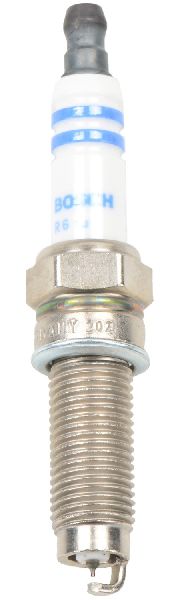
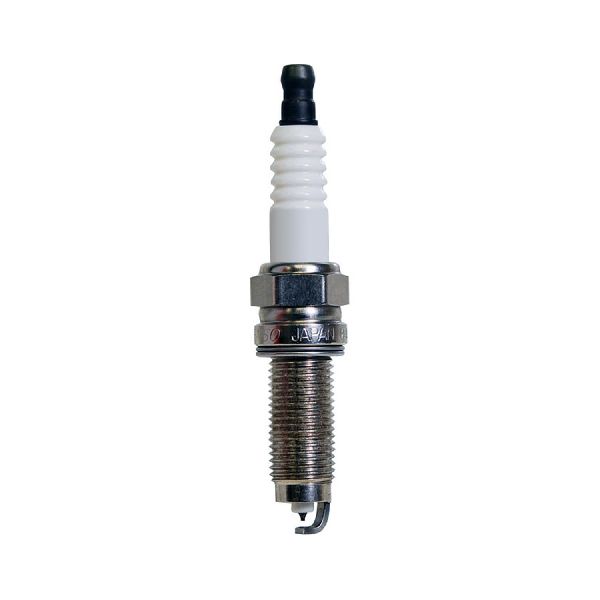
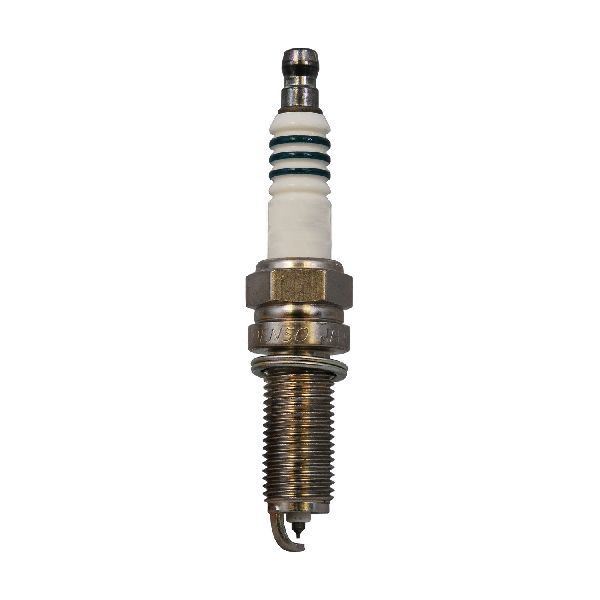
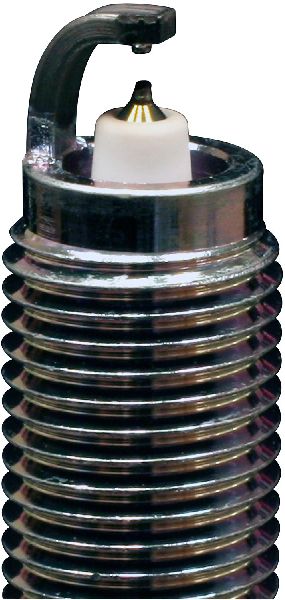
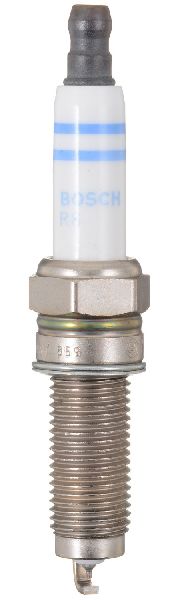
Est. part cost: $60-$90 - Worn or Fouled Spark Plug 🔴 High Probability → Shop Spark Plug Spark plugs are a regular maintenance item. The recommended service interval for the OEM NGK Laser Iridium plugs is around 100,000 miles, but they can fail earlier or become fouled by oil or carbon.
How to confirm: After ruling out the coil, remove the spark plug from cylinder 6. Inspect it for wear (worn electrode), oil fouling, or heavy carbon deposits. A cracked porcelain insulator can also cause a misfire.
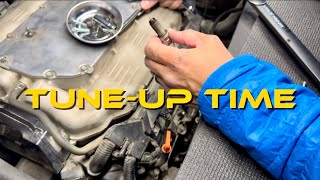
Typical fix: Replace the spark plug. It is best practice to replace all six spark plugs at the same time 🎬 Watch: Step-by-step guide to replacing your MDX spark plugs. to ensure even performance and avoid future misfires on other cylinders.
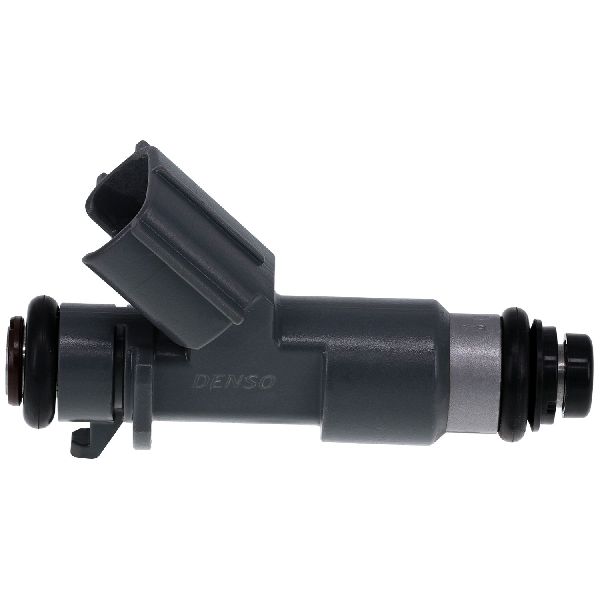
Est. part cost: $15-$25 per plug - Clogged or Faulty Fuel Injector 🟡 Medium Probability → Shop Fuel Injector The 2016-2020 MDX uses a direct injection fuel system. Acura's own TSBs requested parts collection to investigate injectors for this exact issue. A Honda TSB for platform-mate vehicles with the same engine (J35Y6) explicitly identifies the cause as 'Debris from the high pressure pump or the fuel injector machining process can cause internal wear or clogging inside the injector.' This makes injector failure a known, documented problem for this engine family.
How to confirm: This is a more advanced diagnosis. After ruling out the coil and plug, the fuel injector is the next logical step. A mechanic can perform a fuel injector balance test. You can also swap the injector with another cylinder (similar to the coil swap), but this is a much more labor-intensive job requiring intake manifold removal.
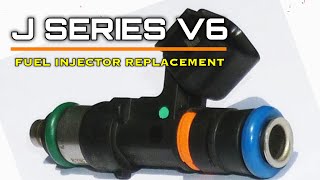
Typical fix: Replace the faulty fuel injector. Due to the known issue, some owners elect to replace all three injectors on the affected bank (Bank 2 for cylinder 6) at the same time. The corrective action in the related Honda TSB is to replace the injectors. 🎬 See this walkthrough on replacing J-series fuel injectors.
Est. part cost: $80-$130
Rare But Worth Checking
- Valves Out of Adjustment: Honda J-series engines are known for requiring periodic valve adjustments. The exhaust valve clearances, in particular, tend to tighten over many miles (85k-105k). When the clearance becomes too tight, the valve may not close completely, causing a loss of compression and misfires, which are often more noticeable on a cold engine. If the vehicle has over 100,000 miles and the common causes have been ruled out, a valve adjustment should be performed. 🎬 Watch: How to perform a Honda V6 valve adjustment.
- Crankshaft Position (CKP) Sensor Relearn Needed: In some cases, particularly after the battery has been disconnected for an extended period or after major service like a timing belt replacement, the PCM can lose its learned crankshaft position pattern. This can lead to false misfire codes, including P0306, even after plugs and coils are replaced. A dealership or a shop with an advanced scan tool (like the Honda HDS or Autel MaxiSYS) must perform a 'CKP Pattern Relearn' procedure to resolve the issue.
- Low Engine Compression: A mechanical engine issue like worn piston rings, a leaking head gasket, or a burnt valve can cause a loss of compression in cylinder 6, leading to a persistent misfire. A compression test and a cylinder leak-down test are needed to diagnose this. A leak-down test can help pinpoint if the leak is from piston rings, intake valves, or exhaust valves.
- Clogged EGR Passages: While less common on newer models, clogged EGR (Exhaust Gas Recirculation) passages in the intake manifold can cause misfires, particularly once the engine warms up and the EGR valve opens. If the passages for cylinder 6 are blocked, it can disrupt the air/fuel mixture and trigger a misfire.
Diagnosis Steps
- Read the code with an OBD-II scanner and check for any other pending or stored codes. Note the freeze frame data if available.
- Locate cylinder 6. On the J35 engine, the cylinders are numbered 1-2-3 on the rear bank (near the firewall) and 4-5-6 on the front bank (near the radiator), from passenger to driver side. Cylinder 6 is the front-most cylinder on the driver's side.
- Swap the ignition coil from cylinder 6 with the coil from cylinder 5. Clear the codes and test drive.
- If the code returns as P0305, the ignition coil is faulty and needs replacement.
- If the code remains P0306, swap the spark plug from cylinder 6 with cylinder 5. Clear codes and test drive.
- If the code returns as P0305, the spark plug is faulty. It's best to replace all six.
- If the code remains P0306, the issue is likely with the fuel injector, wiring, or a mechanical problem. Inspect the fuel injector wiring for damage.
- At this point, if you are not equipped for advanced diagnostics, professional service is recommended. A mechanic will investigate the fuel injector, check for the need of a CKP relearn, inspect valve clearances, and perform compression/leak-down tests to isolate the fault.
Parts You'll Likely Need
- Ignition Coil
(OEM #30520-5G0-A01)— This is the most common failure point for a single-cylinder misfire. Heat and vibration cause them to fail over time.
Trusted brands: Denso (OEM supplier), NGK, Delphi
OEM price range: $85-$100
Aftermarket price range: $50-$80 - Spark Plug
(OEM #NGK DILZKR7B11G)— Spark plugs are a maintenance item that wear out, causing a weak or inconsistent spark.
Trusted brands: NGK (OEM)
OEM price range: $20-$30
Aftermarket price range: $15-$25 - Fuel Injector
(OEM #16450-R70-A01)— A known failure point for this engine family, as documented in Honda service bulletins. Clogging from manufacturing debris is a specific cause. Failure prevents proper fuel delivery to cylinder 6.
Trusted brands: Acura/Honda (OEM), Denso (OEM supplier), Beck/Arnley
OEM price range: $100-$130
Aftermarket price range: $70-$100
Related Codes That Often Appear With This One
- P0300 — If the misfire is intermittent or affects other cylinders, a P0300 (Random Misfire Detected) code may appear alongside P0306.
- P0301-P0305 — If other cylinders are also misfiring, their respective codes will be stored. This could point to a systemic issue like a bad batch of fuel, clogged injectors on multiple cylinders, or the need for a valve adjustment.
- P0430 — This code means 'Catalyst System Efficiency Below Threshold Bank 2'. Cylinder 6 is in Bank 2 (the front bank, near the radiator). A persistent misfire in cylinder 6 dumps unburnt fuel into the exhaust, which overheats and destroys the catalytic converter, triggering this expensive secondary code.
- P0420 — This code is for 'Catalyst System Efficiency Below Threshold Bank 1'. While less common to see with a P0306 alone, it can appear if multiple cylinders on both banks are misfiring.
Technical Service Bulletins (TSBs) & Recalls
- BTI&08252021901: For 2017-2020 MDX V6s, Acura requested parts collection prior to repair for MIL on with DTCs P0300-P0306 to better understand the condition.
- BPAS04242017901: For 2016 MDX models, Acura requested vehicle inspection prior to repair for misfire codes P0301-P0306 to fully understand the cause.
Platform-Specific Known Issues
- Acura issued TSB #BTI&08252021901 for 2017-2020 MDX models and TSB #BPAS04242017901 for 2016 models. These bulletins requested dealers collect parts from vehicles with misfire codes P0300-P0306, specifically noting the issue had been 'traced to the fuel injectors' to help AHM investigate the root cause.
- Honda, Acura's parent company, issued TSB 18-025 for platform-mate vehicles (Pilot, Odyssey) with the same J35Y6 engine. It states the cause for P030x misfires is 'Debris from the high pressure pump or the fuel injector machining process can cause internal wear or clogging inside the injector.' The fix is to replace the fuel injectors.
- Owner complaints filed with the NHTSA show a pattern of P0306 appearing with catalyst efficiency codes like P0430 and P0420, confirming that an unfixed misfire leads to expensive exhaust system damage.
Mechanic-Grade Diagnostic Values
- Ignition Coil Primary Winding Resistance — expected: 0.49 - 0.57 Ohms (general specification). Failure: A reading outside of this range, or an open loop (OL) reading, indicates a faulty coil.
- Ignition Coil Secondary Winding Resistance — expected: 9.5 - 11.1 kOhms (general specification). Failure: A reading significantly outside this range suggests the internal windings are failing.
- Fuel Injector Resistance (High Impedance) — expected: 10 - 18 Ohms. Failure: A reading below 10 Ohms or an open loop (OL) reading indicates a failed injector coil.
- Fuel Injector Flow Rate (OEM Part 16450-R70-A01) — expected: 310cc/min @ 43.5 PSI (3 bar). Failure: This is a baseline spec for bench testing; a flow test showing significantly lower volume indicates clogging.
- Live Misfire Count (via HDS or Mode $06) — expected: 0 counts at idle and under load on a healthy cylinder.. Failure: Any count incrementing on cylinder 6 confirms a real-time misfire is occurring.
Hidden / Shadow Codes Worth Checking
- Mode $06, Monitor ID $A2-$A7: These are not traditional codes but raw data monitors for misfire counts. On many Honda/Acura vehicles, Monitor IDs $A2 through $A7 correspond to the misfire counters for cylinders 1 through 6. Accessing this data can show low-level misfires that haven't yet triggered a full P0306 code. (see via An advanced OBD-II scanner capable of displaying Mode $06 data. The data is presented in hexadecimal and may need to be converted to decimal to see the actual number of misfire events counted during the last drive cycle.)
Scan Tool Commands That Help
- Honda Diagnostic System (HDS) or equivalent: CKP Pattern Relearn — This procedure is critical after a battery has been disconnected for a long time, the PCM has been replaced, or after major engine work. It forces the PCM to relearn the subtle variations of the crankshaft position sensor, and failing to perform it can cause false misfire codes like P0306 even when no mechanical fault exists.
- Honda Diagnostic System (HDS): Misfire Data List (e.g., CYL6 MISFIRE) — Use this to view live misfire counts for each specific cylinder. This is the most direct way to confirm if the misfire is currently happening and if a repair attempt (like swapping a coil) has moved the problem to another cylinder.
- Honda Diagnostic System (HDS): Clear Commands — After replacing a component like a CKP sensor or injectors, this command in the HDS should be used to clear all learned data, DTCs, and freeze data, ensuring the PCM starts fresh with the new parts. A generic scanner's 'Clear Codes' function may not be as thorough.
Wiring & Ground Locations
- Cylinder 6 Injector Connector — On the fuel rail, connected to the front-most fuel injector on the driver's side of the engine.. This is a 2-pin oval connector. Check for corrosion, pushed-out pins, or harness damage here. A poor connection will prevent the injector from firing correctly, causing a P0306.
- Engine/Transmission Ground Straps — Common locations for main grounds on Honda/Acura platforms include a strap from the chassis to the transmission housing and another from the chassis to an engine mount bracket (often on the passenger side).. A corroded or loose main ground can cause widespread electrical issues, including weak spark and erratic sensor readings, which can manifest as a misfire code. These should be checked for tightness and corrosion.
- G201 / G301 (example ground points) — These are common ground point designators in Honda wiring diagrams, often located on the thermostat housing or intake manifold support brackets.. The ignition coils and fuel injectors for Bank 2 (including cylinder 6) may share a common ground point. If this specific ground becomes loose or corroded, it can cause misfires on one or more cylinders in that bank.
Real Owner Repair Stories
- ScannerDanner Forum (2012 Acura MDX 3.7L V6 (similar J-series engine)) — Severe misfire on cylinders 2, 4, and 6 that would start exactly 10 seconds after starting the engine. Flashing check engine light. Codes P0302, P0304, P0306, P0300, and a history code for P0355 (Crank Sensor).
❌ Tried (didn't work) The technician confirmed coil control was present and scoped the CKP sensor, which appeared to have a good pattern. The battery had died multiple times prior to the shop visit.
✅ What actually fixed it After jump-starting the vehicle, the technician found a 'CKP pattern not learned' status in the scan tool data. Performing the 'CKP Pattern Relearn' procedure with the scan tool completely resolved the misfire issue. The repeated battery death had caused the PCM to lose this critical learned data.
"I Checked Everything" — The Actual Cause
- In cases where a smoke test for vacuum leaks comes back clean and ignition/fuel parts seem okay, the root cause can be purely electronic or logical. A prime example is the need for a CKP Pattern Relearn. All physical components will test perfectly, but the PCM's lost memory of the crankshaft's signature causes it to misinterpret normal rotational speed fluctuations as misfires. No amount of physical parts replacement will fix this; it requires a specific scan tool command.
When the Usual Fixes Don't Work
- While the most common fixes for a P0306 are the ignition coil and spark plug, a significant number of cases on this specific platform are not resolved by these parts. As documented in Acura's own service bulletins and numerous owner experiences, the next most likely cause is a faulty fuel injector due to a known manufacturing issue. Furthermore, an often-overlooked but critical fix is performing a 'CKP Pattern Relearn' with a dealer-level scan tool, especially if the battery has been recently replaced or disconnected. One owner story confirmed that persistent, multi-cylinder misfires that appeared unsolvable were fixed instantly by this software procedure, not by replacing any hardware.
OEM Part Supersession History
30520-5G0-A01→Current— This is the primary part number for the ignition coil for this vehicle.
Heads up: Acura also lists part number 30520-5G0-S01. While they appear similar, ensure you are using the exact part number specified for your vehicle's VIN to avoid compatibility issues.16450-R70-A01→Current— This fuel injector part number has been used by Honda/Acura for many years across numerous V6 models.
Heads up: No supersession found. This part remains the standard OEM replacement. Its wide usage confirms it is a common Denso-style direct injector.
Model Year Variations Within This Range
- 2016-2020: The primary engine is the J35Y5 (direct injection, 290 hp). It features both VTEC and Variable Cylinder Management (VCM), with the VCM system acting on the front bank of cylinders (4, 5, and 6). The very similar J35Y6 engine is used in Honda platform mates.
- 2017-2020: A significant facelift occurred in 2017. While the core J35Y5 engine remained, PCM software and diagnostic strategies may have been updated. This is supported by Acura issuing separate TSBs for misfire investigations for 2016 models versus 2017-2020 models.
Helpful Videos

We Have This Part in Stock

The information in this article is provided for general reference and educational purposes only. Vehicle specifications, procedures, and part compatibility can vary by production date, trim level, and region. Always consult your vehicle's factory service manual and verify part numbers before purchasing or performing repairs. Safety-critical components such as airbags, seat belts, and braking systems should be installed by a qualified professional.
- Acura MDX:
- 🧭 Diagnostic Flowchart
- 🎬 Helpful Videos
- 🛍️ Shop This Part
- What's Unique About the 2016-2020 Acura MDX
- Symptoms You May Notice
- Most Likely Causes
- Rare But Worth Checking
- Diagnosis Steps
- Parts You'll Likely Need
- Related Codes That Often Appear With This One
- Technical Service Bulletins (TSBs) & Recalls
- Platform-Specific Known Issues
- Mechanic-Grade Diagnostic Values
- Hidden / Shadow Codes Worth Checking
- Scan Tool Commands That Help
- Wiring & Ground Locations
- Real Owner Repair Stories
- "I Checked Everything" — The Actual Cause
- When the Usual Fixes Don't Work
- OEM Part Supersession History
- Model Year Variations Within This Range
- 🎟️ Get 5% Off