

P0306 on 2005-2008 Audi A4 3.2L V6: Cylinder 6 Misfire Causes and Fixes
Code P0306 on a B7 Audi A4 3.2L FSI indicates a misfire in cylinder 6. The most common causes are a failed ignition coil or a worn spark plug. If replacing these doesn't solve the issue, the next most likely cause is significant carbon buildup on the intake valves, a known issue with this direct-injection engine. In some cases, this code can be an early symptom of a more serious timing chain tensioner problem.
- For a P0306 code, always start your diagnosis by swapping the cylinder 6 ignition coil with another cylinder to see if the misfire follows.
- If coils and spark plugs don't fix the issue, the cause is very likely carbon buildup on the intake valves, a known weakness of this engine.
- Do not ignore a flashing Check Engine Light. Pull over safely to prevent expensive damage to your catalytic converters.
- When replacing ignition coils or spark plugs, using quality OEM brands like Bosch or NGK is highly recommended for longevity and performance.
What's Unique About the 2005-2008 Audi A4
The BKH 3.2L V6 is one of Audi's early Fuel Stratified Injection (FSI) engines. This direct-injection technology is inherently prone to heavy carbon buildup on the intake valves. Unlike traditional port injection systems, fuel is sprayed directly into the combustion chamber, so it never washes over and cleans the intake valves. Over time, oil vapors from the crankcase ventilation system bake onto the hot valves, restricting airflow and leading to misfires that can be difficult to diagnose if you only focus on ignition or fuel system components. This engine is also known for timing chain tensioner and guide failures, which can cause camshaft timing to deviate and trigger misfires on one or both banks. A rattle on cold startup is a key symptom.
Symptoms You May Notice
- Rough or vibrating idle
- Hesitation or stumbling during acceleration
- Noticeable loss of engine power
- Flashing or solid Check Engine Light
- Reduced fuel economy
- Smell of unburnt gasoline from the exhaust
- Difficulty starting the engine
- Replacing only the spark plug without testing the ignition coil. The coil is a more frequent failure point, and the 'coil swap' test is a crucial first step.
- Replacing fuel system components before checking for carbon buildup. Given how common carbon issues are on this engine, it should be investigated before assuming a more complex fuel delivery problem.
- Replacing a camshaft position sensor without checking timing chain phase deviation (e.g., VCDS Measuring Block 93). The sensor is often correctly reporting a mechanical timing problem.
Most Likely Causes
- Faulty Ignition Coil 🔴 High Probability → Shop Ignition Coil Ignition coils are a very common failure point on Audi/VW vehicles from this era due to heat and electrical stress.
How to confirm: Swap the ignition coil from cylinder 6 with another cylinder (e.g., cylinder 5). Clear the codes and drive the vehicle. If the code changes to P0305, the ignition coil is faulty. This is the definitive first diagnostic step.
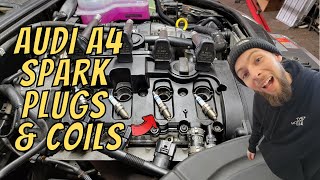
Typical fix: Replace the faulty ignition coil. Many owners choose to replace all six at once as a preventative measure 🎬 Watch: Easy DIY guide for replacing V6 coils and plugs, especially if they are original.
Est. part cost: $30-$60 per coil - Worn Spark Plug 🔴 High Probability → Shop Spark Plug Spark plugs are a regular maintenance item and can cause a single-cylinder misfire when they wear out or become fouled by carbon or oil.
How to confirm: After ruling out the ignition coil, remove the spark plug from cylinder 6. Inspect it for wear (worn electrode), damage (cracked ceramic), or fouling (e.g., black, sooty deposits or wet with fuel). A spark plug well leaking oil from a failed valve cover gasket can also ruin a plug and coil.
Typical fix: Replace the spark plug in cylinder 6. It is best practice to replace all six spark plugs at the same time if they are near the end of their service life.
Est. part cost: $15-$25 per plug - Carbon Buildup on Intake Valves 🟡 Medium Probability This is a well-documented, systemic issue with FSI (direct injection) engines. The lack of fuel washing over the intake valves allows carbon from the PCV system to bake on, restricting airflow and causing misfires.
How to confirm: This requires a visual inspection. The intake manifold must be removed to access the intake ports. A borescope can then be used to view the condition of the valves. Significant black, crusty deposits indicate a problem.
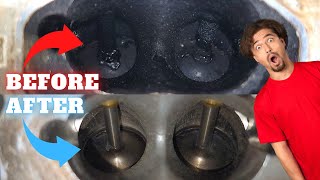
Typical fix: The intake valves must be manually cleaned. The most effective method is walnut shell blasting, which uses crushed walnut shells under high pressure to scour the carbon away without damaging the metal surfaces. 🎬 See how to perform a walnut shell carbon cleaning This is a labor-intensive job.
Est. part cost: $50-$100 for materials if DIY, but shop costs are primarily labor, often ranging from $600-$1200. - Failed Fuel Injector ⚪ Low Probability → Shop Fuel Injector Direct injectors operate under high pressure and can fail over time, either by becoming clogged or sticking open/closed. A leaking injector can cause a rich condition and foul the spark plug.
How to confirm: This is more difficult to diagnose. A mechanic can perform a fuel injector balance test. Another sign can be a spark plug that is excessively wet with fuel after repeated misfires. Swapping injectors between cylinders is possible but much more labor-intensive than swapping coils. Using a scan tool to monitor fuel trims on Bank 2 can also provide clues.
Typical fix: Replace the faulty fuel injector. It's often recommended to replace the full set if one fails and the vehicle has high mileage. New seals are required upon reinstallation. 🎬 Watch: How to remove injectors and install new seals
Est. part cost: $100-$200 per injector
Rare But Worth Checking
- Low Compression: If ignition and fuel components are confirmed good, a compression test on cylinder 6 is necessary to check for mechanical engine problems like a bad valve, worn piston rings, or even jumped timing from a failed timing chain guide. This is a worst-case scenario.
- Vacuum Leak: A vacuum leak from a cracked hose or failed gasket (like the intake manifold gasket) can introduce unmetered air and cause misfires. While it often affects multiple cylinders and may present with a P0300 (random misfire) code, a leak localized near the cylinder 6 intake runner could cause a single-cylinder misfire.
- Failing Timing Chain Tensioners/Guides: A known issue on the 3.2L FSI is the wear of plastic timing chain guides and hydraulic tensioners. This can cause the camshaft timing to become retarded, leading to misfires, often across a full bank (P0304, P0305, P0306) and accompanied by camshaft position codes like P0024. A rattle on cold startup is a key symptom.
- Camshaft Position Sensor Failure: → Shop Engine Camshaft A failing camshaft sensor can cause misfires, but it typically affects all cylinders in one bank (e.g., P0304, P0305, P0306) and will usually be accompanied by a specific camshaft sensor code like P0346 or P0390.
Diagnosis Steps
- Read the code with an OBD-II scanner to confirm P0306 and check for any other pending or stored codes, especially timing-related codes.
- Ignition Coil Test: Swap the ignition coil from cylinder 6 with the one from cylinder 5 (an adjacent and easy-to-access cylinder on the same bank).
- Clear the codes and drive the car until the Check Engine Light returns.
- Re-scan the codes. If the code is now P0305, the ignition coil is the problem. Replace it.
- Spark Plug Inspection: If the code remains P0306, the coil is likely good. Remove the spark plug from cylinder 6. Inspect for wear, corrosion, or fouling. Check for oil in the spark plug tube, which indicates a leaking valve cover gasket. Replace plug if necessary.
- Check for Carbon Buildup: If new coils and plugs do not resolve the misfire, the next step is to inspect for carbon buildup. This requires removing the intake manifold and using a borescope to inspect the intake valves of cylinder 6.
- Fuel Injector Test: If the valves are clean, the fuel injector is the next suspect. This is a more involved test and may require a professional. A simple check is to see if the spark plug is wet with fuel, indicating a possible leaking injector.
- Mechanical Health Test: Listen for a timing chain rattle on cold starts. If present, and especially if accompanied by timing codes, investigate the timing system. As a final step, perform a compression test on cylinder 6 to rule out any internal mechanical engine damage.
Parts You'll Likely Need
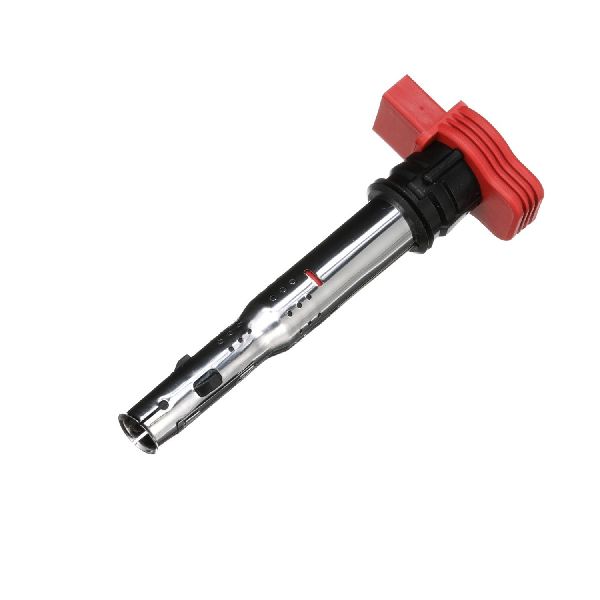
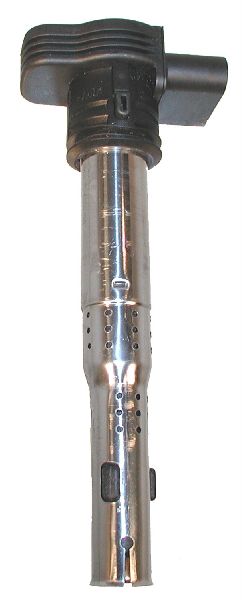
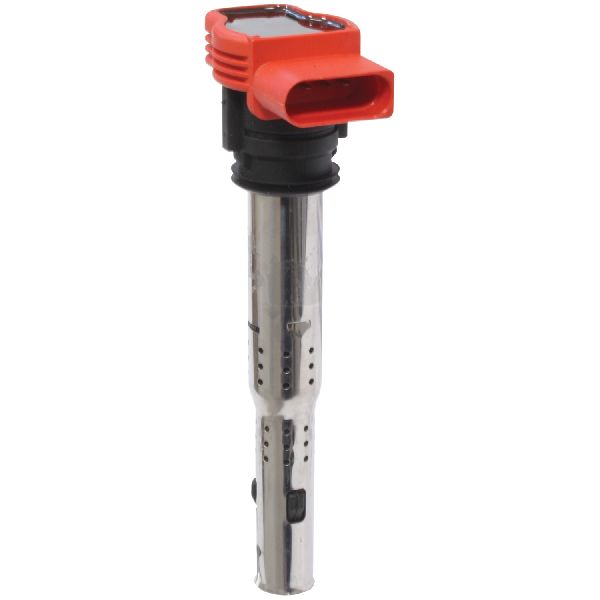
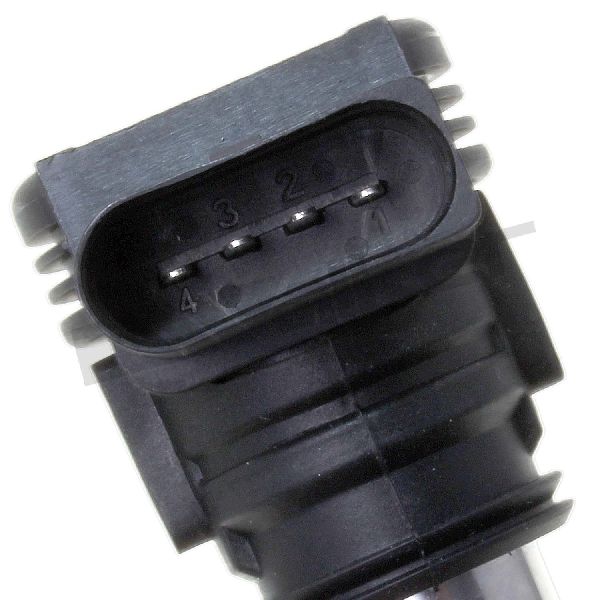
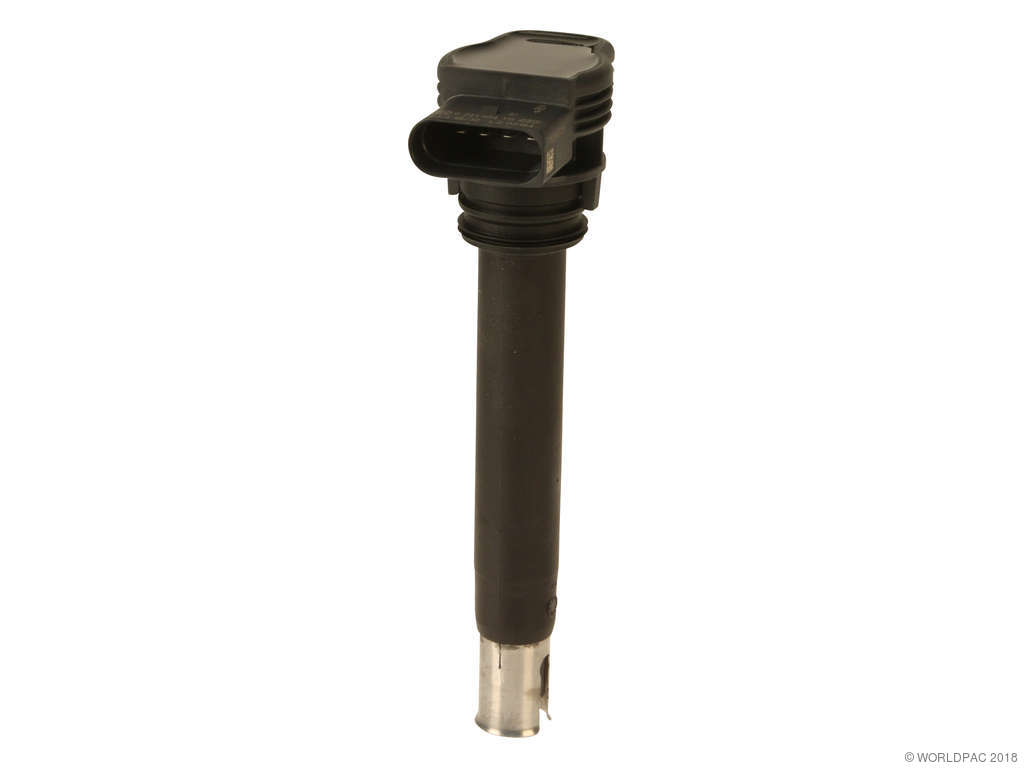
- Ignition Coil
(OEM #06E905115G)— This is the most common cause of a single-cylinder misfire on this engine. The original part number may have been superseded; 06E905115E/F/G are common replacements.
Trusted brands: Bosch, NGK, Eldor
OEM price range: $50-$70
Aftermarket price range: $30-$50
Related Codes That Often Appear With This One
- P0300 — If the misfire is intermittent or starting to affect other cylinders, a P0300 (Random/Multiple Cylinder Misfire) may be stored alongside P0306.
- P0304, P0305 — If other cylinders on the same bank (Bank 2: cylinders 4, 5, 6) are also misfiring, it points towards a common cause like a vacuum leak, clogged catalytic converter on that bank, or a failing timing chain tensioner for Bank 2.
- P0024 — This code indicates 'Camshaft Position B - Timing Over-Advanced or System Performance (Bank 2)'. It frequently appears with Bank 2 misfires (P0304, P0305, P0306) and strongly suggests a problem with the timing chain system or cam adjuster on that bank.
Technical Service Bulletins (TSBs) & Recalls
- TSB 2019948: This informational TSB acknowledges that MIL-on conditions with misfire codes (P0300, P0301-P0306) can be caused by carbon deposits on the intake valves of FSI engines and refers technicians to the appropriate manual cleaning procedure.
- TSB Bulletin #A0124212069038_5: This bulletin provides information when the MIL is illuminated and cylinder misfires are present, specifically citing codes P0300 through P0306.
- TSB Bulletin #A0123912069038_5: A manufacturer service bulletin notes that DTCs P0300, P0301, P0302, P0303, P0304, P0305, and P0306 may be associated with an illuminated MIL.
Platform-Specific Known Issues
- Severe Carbon Buildup: As an FSI engine, the BKH V6 is highly susceptible to carbon deposits on intake valves, requiring manual cleaning (walnut blasting) every 60k-80k miles to prevent misfires and power loss. Audi released TSB 2019948 which discusses misfire codes (P030x) as a symptom of this and points towards mechanical cleaning as the solution.
- Timing Chain System Wear: The plastic timing chain guides and hydraulic tensioners are a known weak point. Wear leads to chain slack, causing a distinct rattle on cold starts and eventually leading to camshaft timing errors that can trigger misfires and catastrophic engine failure if ignored. This is a very labor-intensive repair as the chains are on the rear of the engine.
Mechanic-Grade Diagnostic Values
- High-Pressure Fuel Rail Pressure (HPFP) — expected: 30 to 120 bar (435 to 1740 PSI), depending on engine load. At idle, specified pressure is often around 33 bar.. Failure: Actual pressure reading matches the low-pressure system (around 6-7 bar), indicating the HPFP is not building pressure.
- Low-Pressure Fuel System Pressure — expected: Approximately 6 bar (87 PSI).. Failure: Significantly lower pressure indicates a failing in-tank fuel pump or clogged filter, which can starve the HPFP.
- Fuel Injector Resistance — expected: Approximately 12 to 13 ohms at room temperature.. Failure: A reading significantly outside this range suggests an internal injector fault.
- VCDS Misfire Counter (Group 015) — expected: 0 counts at idle and under load.. Failure: The counter for cylinder 6 increments, confirming the misfire detected by the ECU.
- VCDS Fuel Pressure (Group 140) — expected: Field 2 (specified) and Field 3 (actual) should be closely matched.. Failure: A large discrepancy between specified and actual pressure points to a fuel delivery problem (pump, sensor, or leak).
Scan Tool Commands That Help
- VCDS (VAG-COM): Engine- -> Output Tests- -> Fuel Injector N84 (Cylinder 6) — To individually activate the cylinder 6 injector and listen for a clicking sound, confirming electrical operation. This test is performed with the engine off.
- VCDS (VAG-COM): Engine- -> Meas. Blocks- -> Group 015 — To monitor the live misfire counter for cylinder 6 (and cylinders 4, 5) to see if the misfire is constant, intermittent, or load-dependent.
- VCDS (VAG-COM): Engine- -> Meas. Blocks- -> Group 140 — To monitor specified vs. actual high-pressure fuel rail pressure. This is critical for diagnosing issues with the HPFP or fuel pressure sensor.
- VCDS (VAG-COM): Engine- -> Long Adaptation- -> Channels 71-76 — After replacing a fuel injector, the new injector's calibration code must be entered into the corresponding channel for the cylinder it was installed in (e.g., Channel 76 for cylinder 6). Failure to do so can cause rough running and fuel trim issues.
Wiring & Ground Locations
- G12 — Located at the center of the firewall in the engine bay.. This is a primary engine ground point. Corrosion or a loose connection here can cause various electrical issues, including weak spark or erratic sensor readings that could lead to a misfire.
- Cylinder 6 Injector (N84) Wiring — The injector is located on the driver's side (US) of the engine, at the rear-most cylinder. The wiring runs in a harness along the fuel rail.. Damage to the wiring or the connector for the cylinder 6 injector will cause it to stop firing, directly leading to a P0306 code.
- Cylinder 6 Ignition Coil (N328) Wiring — The coil is located directly on top of the cylinder 6 spark plug, at the rear of the driver's side (US) of the engine.. A damaged connector or wiring to the coil for cylinder 6 will prevent it from firing, causing a P0306 code. The plastic connector clips can become brittle with heat and age.
OEM Part Supersession History
06E905115→06E905115A, B, C, D, E, F, and G are all subsequent revisions.— Revisions were made to improve reliability and performance, addressing premature failure issues in earlier versions.
Heads up: All revisions (A through G) are generally considered interchangeable and are an upgrade over the original part. Using the latest available revision (e.g., 'G') is recommended.
Model Year Variations Within This Range
- 2005.5-2008: The B7 generation was a significant refresh of the B6. For the 3.2L V6, there were no major mechanical changes within the 2005-2008 model years that would significantly alter the diagnosis of a P0306 code. The primary causes (coils, plugs, carbon buildup) are consistent across this entire range.
Diagnostic Flowchart
Other Known Issues on This Vehicle
Issues unrelated to this code that are worth knowing about as an owner of this generation:
- Timing Chain Tensioner & Guide Failure 🔴 High — Common on vehicles over 80,000-100,000 miles. A rattle on cold start is the primary warning sign. Failure can be catastrophic.
- Intake Valve Carbon Buildup 🔴 High — Considered a routine maintenance issue for FSI engines. Typically requires cleaning every 60,000-80,000 miles to prevent misfires and power loss. (Ref: TSB 2019948)
- Thermostat Failure 🟠 Medium — The thermostat commonly fails in the 'open' position, preventing the engine from reaching operating temperature, triggering code P0128, and causing poor fuel economy and heating.
- High-Pressure Fuel Pump (HPFP) Failure 🟠 Medium — The HPFP can fail over time, leading to fuel pressure codes (like P2293), hesitation, and hard starting. While more infamous on the 2.0T, the 3.2L also experiences failures.
- Oil Leaks (Valve Covers, Timing Covers) 🟠 Medium — As the engine ages, gaskets and seals become brittle. The valve cover gaskets and upper timing chain cover seals are frequent leak points.
Used vs. New Parts: Buying Guide for This Vehicle
When a used part is the smart pick: For this repair, buying a used ignition coil from a reputable auto recycler can be a cost-effective diagnostic step or a temporary fix. It is not recommended for long-term replacement. Other major components like fuel injectors or intake manifolds can be considered if from a low-mileage, verified donor car.
Donor-vehicle mileage cap: roughly under 70000 miles for the part to have meaningful remaining life.
What to inspect on the donor part:
- For an ignition coil, check for cracks in the plastic housing or corrosion on the electrical connector.
- For a larger component like an intake manifold, ensure all ports are clean, there are no visible cracks, and all sensor connections are intact.
- Verify the donor vehicle was not involved in a front-end collision that could have damaged engine components.
OEM-only on this vehicle (don't cheap out):
- High-Pressure Fuel Pump (HPFP)
- Fuel Injectors (due to the need for precise calibration and the labor involved in replacement)
- Timing Chain Components (Tensioners, Guides)
Aftermarket brands forum-validated for this vehicle:
- Ignition Coils: Bosch, NGK, Eldor (often the OEM supplier)
- Spark Plugs: NGK, Bosch
Brands owners have reported issues with on this vehicle:
- Unbranded, no-name ignition coils and injectors from online marketplaces. These often have a very high failure rate and may not perform to OEM specifications, causing persistent issues.
Real Owner Stories
Aggregated from forums and TSBs cited above. Mileages and costs reflect what owners reported in those sources.
2007 Audi A4 3.2L FSI
Symptoms: Misfires on cylinders 4, 5, and 6 (P0304, P0305, P0306) along with an intermittent shake at idle and a cam position code (P0024).
What fixed it: The combination of codes pointed towards a timing-related issue on Bank 2.
Source hint: AudiWorld forum thread titled 'Please help! 2007 A4 3.2L Right Bank Misfires CEL Intermittent Shake Idle'
Audi A4 B8 3.2L FSI
Symptoms: EPC light and multiple misfire codes including P0306; spark plugs on the affected cylinders were found to be wet with fuel.
What fixed it: The wet plugs suggested a potential fuel injector failure or a rich running condition.
Source hint: Reddit r/MechanicAdvice thread titled 'EPC light Audi A4 B8 3.2L FSI'
Documented NHTSA Reports
NHTSA ODI #11693004
Symptoms: An owner reported a "Drive System Malfunction – Contact Service" message accompanied by diagnostic trouble codes P2179, P025C, P0087, and P0306. The incident resulted in an inability to steer or move the vehicle in a high-traffic area.
Related OBD-II Codes
Frequently Asked Questions
Is there an official Audi TSB for misfires caused by carbon buildup on the 3.2L FSI engine?
How can I tell if my P0306 code is a simple ignition coil failure or a more expensive timing chain issue?
How often does the 3.2L FSI V6 require intake valve cleaning to prevent codes like P0306?
Can a leaking valve cover gasket cause a P0306 misfire on my A4?
What is the recommended method for cleaning the intake valves on this specific Audi engine?
Helpful Videos
We Have This Part in Stock


The information in this article is provided for general reference and educational purposes only. Vehicle specifications, procedures, and part compatibility can vary by production date, trim level, and region. Always consult your vehicle's factory service manual and verify part numbers before purchasing or performing repairs. Safety-critical components such as airbags, seat belts, and braking systems should be installed by a qualified professional.
- Audi A4:
- 🧭 Diagnostic Flowchart
- 🎬 Helpful Videos
- 🛍️ Shop This Part
- What's Unique About the 2005-2008 Audi A4
- Symptoms You May Notice
- Most Likely Causes
- Rare But Worth Checking
- Diagnosis Steps
- Parts You'll Likely Need
- Related Codes That Often Appear With This One
- Technical Service Bulletins (TSBs) & Recalls
- Platform-Specific Known Issues
- Mechanic-Grade Diagnostic Values
- Scan Tool Commands That Help
- Wiring & Ground Locations
- OEM Part Supersession History
- Model Year Variations Within This Range
- Other Known Issues on This Vehicle
- Used vs. New Parts: Buying Guide for This Vehicle
- Real Owner Stories
- 2007 Audi A4 3.2L FSI
- Audi A4 B8 3.2L FSI
- Documented NHTSA Reports
- NHTSA ODI #11693004
- Related OBD-II Codes
- Frequently Asked Questions
- 🎟️ Get 5% Off