

P0306 on 2011-2015 Audi Q7 3.0T: Cylinder 6 Misfire Causes and Fixes
P0306 on a 2011-2015 Audi Q7 3.0T most often means a faulty ignition coil or a worn-out spark plug on cylinder 6. This is a common and straightforward DIY fix, with parts costing between $70 and $150. If that doesn't solve it, suspect a failed PCV valve, carbon buildup on the intake valves, or a leaking supercharger intercooler, all well-documented issues on this specific engine.
- P0306 is a misfire on cylinder 6, located on the driver's side closest to the windshield.
- The most likely fix is a new ignition coil and spark plug for cylinder 6. Always diagnose by swapping the coil first to confirm it's the faulty part.
- If ignition parts don't fix the issue, the most likely platform-specific causes are a failed PCV valve, carbon buildup on intake valves, or a leaking supercharger intercooler.
- Do NOT drive if the check engine light is flashing, as you can quickly destroy your catalytic converter, a very expensive repair.
- Check with an Audi dealer for any open TSBs, as a software update may resolve the issue without replacing parts.
What's Unique About the 2011-2015 Audi Q7
While ignition parts are the most common culprits for a P0306 code, the Audi 3.0T supercharged engine has several well-documented weak points that can also cause this specific misfire. Carbon buildup on intake valves is a significant issue inherent to the direct-injection design, often causing misfires under load that can trigger a P130A 'Cylinder Disabling' code. Additionally, the supercharger houses two internal air-to-water intercoolers that can leak coolant directly into the intake path, with cylinders 3 and 6 being particularly susceptible due to their location. Finally, the PCV (oil separator) valve is a known failure item whose diaphragm can tear, creating a large vacuum leak and causing misfires, often accompanied by a distinct whistling sound at idle.
Symptoms You May Notice
- Flashing or solid Check Engine Light
- Rough or vibrating idle
- Engine hesitation or stumbling during acceleration
- Noticeable loss of power
- Fuel smell from the exhaust
- High-pitched whistling or sucking noise from the engine bay at idle (if PCV has failed)
- Slow, unexplained coolant loss from the expansion tank (if intercooler is leaking)
- Sweet smell of coolant from the exhaust (if intercooler is leaking)
- Replacing only the spark plug when the ignition coil was the actual problem.
- Replacing fuel injectors before ruling out ignition components and carbon buildup.
- Assuming a major mechanical failure before checking for common issues like a failed PCV valve or carbon deposits.
- Repeatedly replacing ignition parts when the true cause is a slow coolant leak from an internal supercharger intercooler fouling the spark plug.
Most Likely Causes
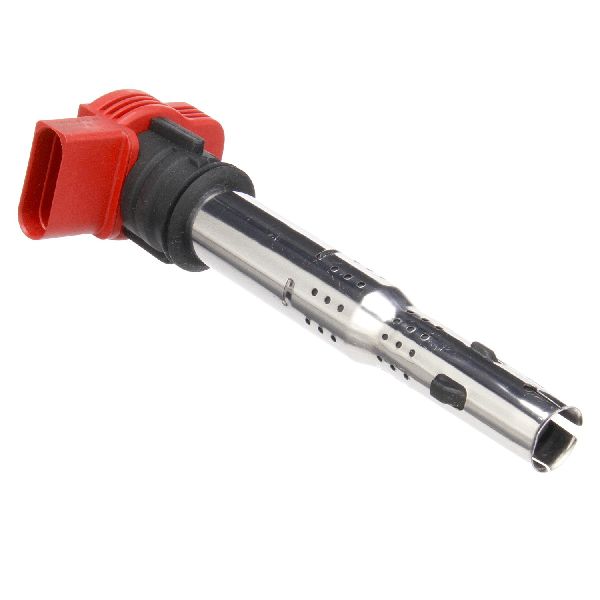
- Faulty Ignition Coil 🔴 High Probability → Shop Ignition Coil Ignition coils are common wear-and-tear items that fail from constant heat cycles in the engine bay. Many owners consider them a routine replacement item around 60,000-80,000 miles.
How to confirm: Swap the ignition coil from cylinder 6 with another cylinder (e.g., cylinder 5). Clear the codes and run the engine. If the code changes to P0305, the ignition coil is bad.
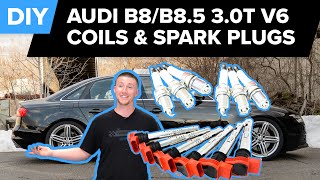
Typical fix: Replace the faulty ignition coil. The OEM part number has been superseded multiple times, with the latest version being 06E905115G (which replaces F, E, D, etc.). It is best practice to replace all six coils and spark plugs 🎬 Watch: Step-by-step ignition coil and spark plug replacement guide. at the same time, especially on higher mileage vehicles. Many owners upgrade to the red ignition coils from the Audi R8 for their perceived reliability.
Est. part cost: $40-$80 per coil for OEM brands like Bosch, NGK, or Eldor. - Worn or Fouled Spark Plug 🔴 High Probability → Shop Spark Plug Spark plugs are a regular maintenance item with a service interval of around 40,000-55,000 miles. Oil from a failing PCV system or coolant from a leaking intercooler can foul the plug in cylinder 6 prematurely, causing a misfire.
How to confirm: After confirming the ignition coil is good, remove the spark plug from cylinder 6. Inspect it for a worn electrode, heavy carbon deposits, or oil/coolant fouling. A white or pinkish crusty deposit on the plug is a strong indicator of a coolant leak. Compare it to a plug from a non-misfiring cylinder.
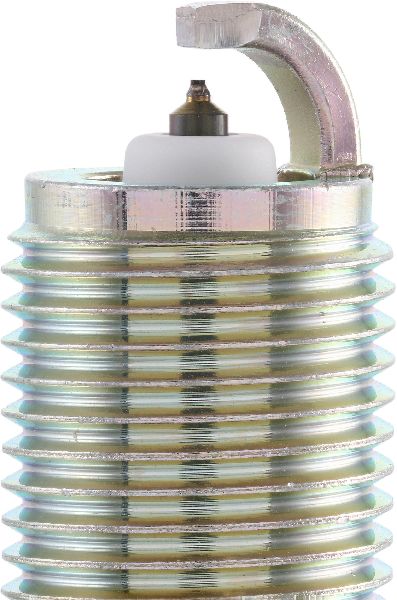
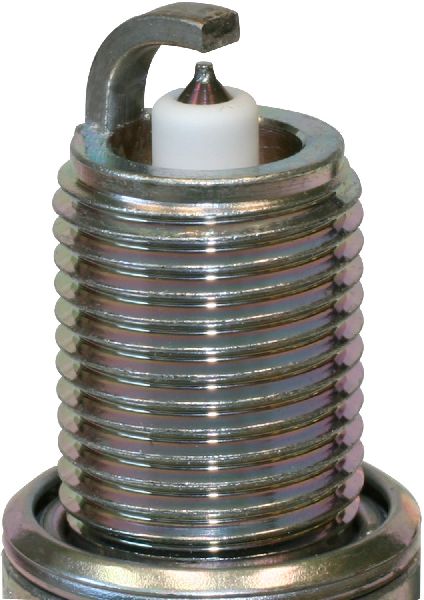
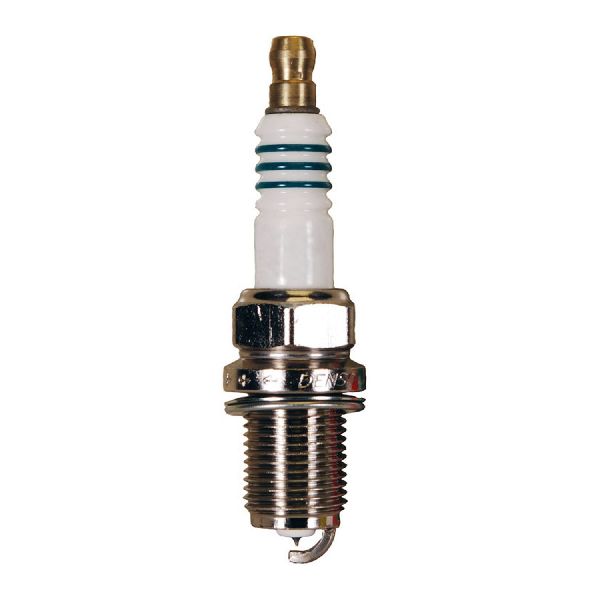
Typical fix: Replace the spark plug. It is highly recommended to replace all six spark plugs as a set. The recommended OEM-spec plug is the NGK PFR8S8EG.
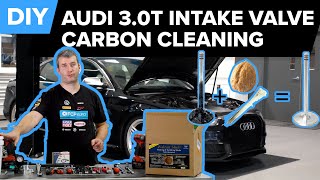
Est. part cost: $15-$35 per plug. - Carbon Buildup on Intake Valves 🟡 Medium Probability As a direct-injection (TFSI) engine, fuel is not sprayed over the intake valves to clean them. Oil vapor from the PCV system bakes onto the hot valves, restricting airflow and causing misfires, especially under heavy load or at high RPM. This issue often becomes significant after 60,000-80,000 miles.
How to confirm: This requires a borescope inspection of the intake ports and valves, which usually involves removing the supercharger. Misfires that only occur at high RPM or under heavy load are a strong indicator. Audi issued TSB 2033768/1 which discusses misfires under load (often with code P130A) caused by carbon buildup.
Typical fix: The intake valves must be manually cleaned. The most effective method is walnut shell blasting, which is typically performed by a professional shop for $700-$1500. 🎬 See how to perform a DIY walnut blast carbon cleaning.
Est. part cost: $50-$100 in cleaning supplies, but shop labor is significant. - Failed PCV Valve (Oil Separator) 🟡 Medium Probability → Shop PCV Valve The rubber diaphragm inside the PCV assembly is known to tear over time, creating a large, unmetered vacuum leak that disrupts the air-fuel ratio and causes misfires.
How to confirm: Listen for a high-pitched whistling or sucking sound at idle. With the engine running, try to remove the oil filler cap. If it is held down by strong vacuum and is difficult to remove, the PCV diaphragm has failed.
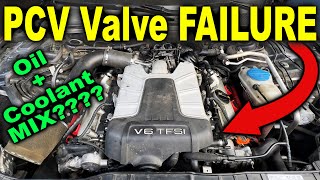
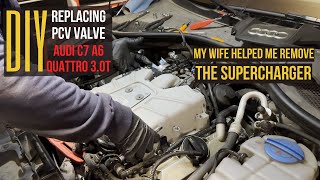
Typical fix: Replace the PCV valve assembly. This is a labor-intensive job as the PCV valve is located in the engine valley, under the supercharger. The latest OEM part number is 06E103547AC, 🎬 Watch this walkthrough on how to replace the PCV valve. which supersedes previous versions like 06E103547Q and 06E103547F.
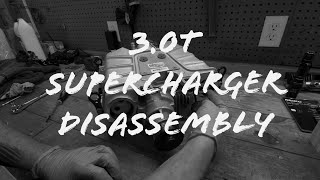
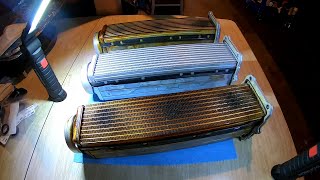
Est. part cost: $150-$275 for the OEM part. - Leaking Supercharger Intercooler Core ⚪ Low Probability → Shop Turbocharger The 3.0T engine uses two air-to-water intercoolers (charge air coolers) located inside the supercharger. These can develop internal leaks, sending coolant directly into the intake airstream and causing misfires, particularly in the rearmost cylinders like #3 and #6.
How to confirm: The primary symptom is a slow, mysterious loss of coolant from the expansion tank with no visible external leaks or puddles. A fouled spark plug with white/pink crusty deposits is another key sign. Diagnosis requires removing the supercharger to visually inspect for dried coolant residue in the intake ports or pressure testing the cores.
Typical fix: The supercharger must be removed to replace the faulty intercooler core(s). The OEM part number for the core is 06E145621S. Due to the labor involved, it is highly recommended to replace both cores, the PCV valve, and the thermostat at the same time.
Est. part cost: $300-$450 per core.
Rare But Worth Checking
- Clogged or Faulty Fuel Injector: → Shop Fuel Injector While not as common on the 3.0T as on other Audi engines, a fuel injector can become clogged or fail, leading to a misfire. Diagnosis is more involved and replacement requires removing the supercharger. Swapping injectors between cylinders can confirm the fault but is labor-intensive.
- Clogged Catalytic Converter (Bank 2): If a misfire has been ignored for a long time, it can damage the catalytic converter. A clogged cat can then create excessive backpressure, causing misfires on all cylinders in that bank (4, 5, and 6). This will often be accompanied by a P0430 code.
- Failing Timing Chain Tensioners: A rattle on cold startup that lasts for 1-3 seconds is a sign of failing timing chain tensioners, an issue covered by Audi TSB 151628. While this is a known issue on the 3.0T, it is less likely to cause an isolated P0306 code without other timing-related faults also being present. This is an extremely labor-intensive repair as the timing components are at the rear of the engine.
Diagnosis Steps
- Read the fault codes with an OBD-II scanner to confirm P0306 and check for any other codes (e.g., P130A, P0300).
- Locate cylinder 6, which is on the driver's side, closest to the windshield.
- Perform an 'ignition swap test': Swap the ignition coil from cylinder 6 with the coil from cylinder 5 (the middle cylinder on the same side).
- Clear the codes, run the engine, and re-scan. If the misfire code has moved to P0305, the ignition coil is faulty and must be replaced.
- If the code remains P0306, the coil is likely good. Remove the spark plug from cylinder 6 and inspect it for wear, fouling, or damage. A white/pink crusty deposit is a strong indicator of a coolant leak from the supercharger intercooler.
Parts You'll Likely Need
- Ignition Coil
(OEM #06E905115G)— This is the most common cause of a single-cylinder misfire on the 3.0T engine.
Trusted brands: Bosch, NGK, Genuine VW/Audi
OEM price range: $50-$80
Aftermarket price range: $35-$60 - Spark Plug — A worn or fouled spark plug is the second most likely cause and is a standard maintenance item.
Trusted brands: NGK, Bosch
OEM price range: $20-$30
Aftermarket price range: $15-$25 - PCV Valve / Oil Separator
(OEM #06E103547AC)— The diaphragm is prone to tearing, causing a significant vacuum leak that leads to misfires. Replacement is recommended any time the supercharger is removed for other service.
Trusted brands: Genuine VW/Audi, Vaico, Hengst
OEM price range: $200-$275
Aftermarket price range: $100-$180
Related Codes That Often Appear With This One
- P130A — This is an Audi-specific code for 'Cylinder Disabling'. The ECM intentionally shuts down fuel to cylinder 6 to protect the catalytic converter from damage when a persistent, damaging misfire is detected.
- P0300 — This indicates 'Random/Multiple Cylinder Misfire'. If the root cause is a system-wide problem like a large vacuum leak from a bad PCV valve, multiple cylinders will misfire.
- P0304, P0305 — Misfires on the other cylinders of the same bank (Bank 2). This points towards a shared problem like a clogged catalytic converter for that bank or severe carbon buildup in the intake runners for cylinders 4, 5, and 6.
- P0430 — This code means 'Catalyst System Efficiency Below Threshold (Bank 2)'. It often appears after a long period of misfires on Bank 2, as the unburnt fuel from the misfires has damaged the catalytic converter.
Technical Service Bulletins (TSBs) & Recalls
- TSB 2033768/1: Addresses cylinder misfire faults (P0301-P0306) accompanied by P130A (Cylinder Disabling), often caused by carbon buildup restricting airflow under heavy load. It instructs dealers to contact the Technical Assistance Center (TAC).
- Bulletin #01138920337681: Confirms that a cylinder misfire fault (DTC P0301 – P0306) with DTC P130A is stored in the engine control module (ECM), J623 (address word 01).
Platform-Specific Known Issues
- A TSB (A0124212069038_5) exists for some models where the ECM software is too sensitive and can set false misfire codes; a dealer software update is the fix.
- Another TSB (2033768) notes that P030x codes appearing with P130A under heavy load are often due to severe carbon buildup, and an extended warranty may apply to certain 2011-2013 models.
Mechanic-Grade Diagnostic Values
- VCDS Misfire Counter (Live Data) — expected: Using VCDS software, monitor Measuring Block Groups 015 (Cyl 1-3) and 016 (Cyl 4-6). The counters for each cylinder should remain at or near zero at idle and under load.. Failure: A rapidly increasing count on cylinder 6 confirms the misfire location in real-time, which is useful for diagnosing intermittent issues.
- High-Pressure Fuel Pump (HPFP) Rail Pressure — expected: At idle, pressure is lower, but under load it should be able to reach up to 200 bar (2900 PSI) on a stock system.. Failure: Significantly lower pressure than requested by the ECM under load can indicate a failing HPFP, leading to lean misfires across multiple cylinders.
- Low-Pressure Fuel Pump (LPFP) Feed Pressure — expected: Approximately 4.0 to 6.0 bar (58 to 87 PSI) feeding the HPFP.. Failure: Pressure dropping below this range will starve the HPFP, causing misfires, particularly under high engine load.
- Knock Sensor Mounting Bolt Torque — expected: 20 Nm (15 ft-lbs).. Failure: An improperly torqued sensor (either too loose or too tight) will not correctly transmit engine vibrations, potentially leading to incorrect knock detection or fault codes. This is critical if the sensor has been recently disturbed or replaced.
Hidden / Shadow Codes Worth Checking
- Misfire Counters (via Measuring Blocks): The ECU continuously tracks misfire events for each cylinder, even if they aren't frequent enough to set a P030x code. Accessing this live data can show which cylinder is having intermittent issues. (see via Use a VAG-specific scan tool like VCDS (VAG-COM) and view Measuring Block Groups 015 and 016.)
- Mode $06 Misfire Data: Generic OBD-II scanners can access Mode $06 data, which contains non-continuous monitor test results. This includes misfire counts per cylinder from the last driving cycle, which can identify a problem cylinder before a permanent code is stored. (see via Use an OBD-II scan tool that supports Mode $06 functionality.)
Scan Tool Commands That Help
- VCDS (VAG-COM): Measuring Value Blocks (MVB) - Groups 015 & 016 — This is the primary method for confirming an active misfire on a specific cylinder in real-time. Use this while the engine is running to see if the misfire count for cylinder 6 increases at idle, under load, or when cold/hot, which helps isolate the conditions of the fault.
- VCDS (VAG-COM): Advanced Measuring Values - Fuel Pressure — If you suspect a fuel delivery issue (e.g., misfires on multiple cylinders or under high load), use this function to log both 'Fuel pressure' (high pressure) and 'Fuel pump: specified value' (low pressure). Comparing the actual vs. specified pressure can diagnose a failing LPFP or HPFP.
Wiring & Ground Locations
- Main Engine Ground Strap — One primary engine-to-chassis ground strap is located to the left of the alternator, running in a U-shape to connect to the underside of the chassis frame rail.. A poor engine ground can cause a host of electrical issues, including weak spark and erratic sensor readings, which can lead to misfires. Ensuring this connection is clean and tight is a crucial step in diagnosing any electrical fault.
- Ground Point 640 — Located in the engine compartment on the left side.. This is one of the specified grounding points for engine bay components. A corroded or loose connection here could affect the ignition or injection system.
- Plenum Chamber Grounds — Ground points are located in the plenum chamber (the area below the windshield) in the center (608) and on the right side (609).. The ECM and other critical electronics are often housed or routed through this area. A bad ground here can cause unpredictable behavior from the engine management system.
Real Owner Repair Stories
- AudiWorld Forums user (2012 Audi S4 3.0T (same engine and common issues)) — EPC light, rough running, poor acceleration, P0305 (Cylinder 5 Misfire).
❌ Tried (didn't work) Replacing ignition coils, Replacing spark plugs
✅ What actually fixed it A pressure test of the supercharger cooling system revealed a fine mist of coolant leaking from one of the internal intercooler cores. Replacing both intercooler cores located inside the supercharger assembly resolved the misfire. - Ross-Tech Forums user (2012 Audi Q7 3.0T) — Misfires on cylinders 4, 5, and 6.
❌ Tried (didn't work) Swapping MAF sensors, Checking for vacuum leaks with soap and water
✅ What actually fixed it The user discovered that slightly pulling up the oil dipstick (introducing a controlled vacuum leak) caused the misfire counters to drop to zero. This pointed towards a complex air-fuel mixture problem, likely related to a faulty PCV system creating too much crankcase vacuum, rather than a simple ignition or injector fault.
"I Checked Everything" — The Actual Cause
- The most common scenario for this engine is a leaking supercharger intercooler. A standard smoke test introduces low-pressure smoke into the intake system to find air leaks to the atmosphere (vacuum leaks), but it cannot detect an internal coolant leak from the intercooler core into the intake air path. The diagnosis requires a cooling system pressure test or supercharger removal for visual inspection.
OEM Part Supersession History
06E905115D, 06E905115E, 06E905115F→06E905115G— Internal revisions to improve reliability and prevent premature failure.06E103547F, 06E103547Q→06E103547AC— Improved diaphragm material and design to reduce the likelihood of tearing, which causes a major vacuum leak.
Model Year Variations Within This Range
- 2011-2015: The 3.0T engines in this Q7 generation (e.g., CJTA, CNRB) are part of the EA837 family and are mechanically very similar regarding misfire causes. However, a later version of this engine, the 'CREC', was introduced in other refreshed Audi models. Some high-performance aftermarket parts, like certain high-pressure fuel pump (HPFP) upgrade kits, explicitly state they do NOT fit the CREC engine, which is an important distinction for owners sourcing parts.
- 2011-2012: Early models within this generation were noted to have a higher incidence of water pump failures compared to later years. While not a direct cause of a single-cylinder misfire, an impending cooling system issue could be related.
Diagnostic Flowchart
Real Owner Stories
Aggregated from forums and TSBs cited above. Mileages and costs reflect what owners reported in those sources.
Audi 3.0T (S4/A6/Q5)
Symptoms: Experienced misfires accompanied by a P130A Cylinder Disabling code, specifically occurring under heavy engine load.
What fixed it: Identified severe carbon buildup restricting airflow and resolved it following the guidance in TSB 2033768.
Source hint: Audizine.com thread titled 'Misfires on 3.0t S4 A6 Q5 P130A Cylinder Disabling'
Audi A6 3.0T
Symptoms: Had a persistent misfire that would not go away even after replacing all the standard ignition and fuel components.
What fixed it: Eventually traced the persistent misfire to an underlying mechanical problem after ruling out coils, plugs, and injectors.
Source hint: AudiWorld.com thread 'Persistent misfire 2863931'
2014 Audi S4 3.0T
Symptoms: Experienced a 'cylinder disabling' fault where the ECU shut down the cylinder to protect the engine during a persistent misfire event.
What fixed it: Diagnosed the persistent misfire that was triggering the ECU's protective cylinder disabling mode.
Source hint: Ross-Tech forum post by a user with a 2014 S4
Related OBD-II Codes
Frequently Asked Questions
Does TSB 2033768/1 apply to my 2011-2015 Audi Q7 3.0T?
I have a P0306 code and hear a high-pitched whistling noise at idle. What does this mean?
Why is my Q7 slowly losing coolant with a P0306 code, but there are no visible puddles?
How do I know if my Q7's P0306 is just a false misfire code?
What are the correct OEM ignition coils and spark plugs for the 3.0T Q7?
How much does it cost to fix carbon buildup on the intake valves of the 3.0T?
Helpful Videos
We Have This Part in Stock


The information in this article is provided for general reference and educational purposes only. Vehicle specifications, procedures, and part compatibility can vary by production date, trim level, and region. Always consult your vehicle's factory service manual and verify part numbers before purchasing or performing repairs. Safety-critical components such as airbags, seat belts, and braking systems should be installed by a qualified professional.
- Audi Q7:
- 🧭 Diagnostic Flowchart
- 🎬 Helpful Videos
- 🛍️ Shop This Part
- What's Unique About the 2011-2015 Audi Q7
- Symptoms You May Notice
- Most Likely Causes
- Rare But Worth Checking
- Diagnosis Steps
- Parts You'll Likely Need
- Related Codes That Often Appear With This One
- Technical Service Bulletins (TSBs) & Recalls
- Platform-Specific Known Issues
- Mechanic-Grade Diagnostic Values
- Hidden / Shadow Codes Worth Checking
- Scan Tool Commands That Help
- Wiring & Ground Locations
- Real Owner Repair Stories
- "I Checked Everything" — The Actual Cause
- OEM Part Supersession History
- Model Year Variations Within This Range
- Real Owner Stories
- Audi 3.0T (S4/A6/Q5)
- Audi A6 3.0T
- 2014 Audi S4 3.0T
- Related OBD-II Codes
- Frequently Asked Questions
- 🎟️ Get 5% Off