

P0306 on 2013-2020 Audi Q7: Cylinder 6 Misfire Causes and Fixes
Code P0306 on an Audi Q7 most often means you need a new ignition coil and spark plug for cylinder 6. This is a common issue and a straightforward DIY fix, with parts costing between $70 and $150 for the pair. However, on the 3.0T engine, a failed PCV valve or leaking supercharger intercooler are also strong possibilities that should be investigated.
- P0306 means cylinder 6 is misfiring. On the V6 Q7, this is the cylinder on the driver's side closest to the cabin.
- The most likely and easiest fix is to replace the ignition coil and spark plug for cylinder 6.
- If the Check Engine Light is flashing, pull over and stop driving to prevent catastrophic damage to your catalytic converter.
- If new plugs and coils don't solve the problem, investigate Audi-specific issues like a failed PCV valve (listen for a whistle) or carbon buildup on the intake valves.
- An owner complaint filed with the NHTSA shows this code can lead to a sudden and dangerous loss of vehicle control, so it should be addressed immediately.
What's Unique About the 2013-2020 Audi Q7

While spark plugs and ignition coils are the top suspects on any car, the 2013-2020 Audi Q7's direct-injection engines (both 2.0T and 3.0T) have other common failure points that cause misfires. A failed PCV valve can create a massive vacuum leak, and carbon buildup on the intake valves can choke airflow to the cylinders. Specifically for the 3.0T supercharged engine, leaking internal intercoolers are a known issue that can drip coolant directly into the intake ports for cylinders 3 and 6, causing persistent misfires that can be mistaken for other issues.
Diagnostic Flowchart

Tap your situation to follow the diagnostic path that matches what you're seeing on this vehicle.
Generation note: This range covers two Q7 generations: the first (Typ 4L, 2013-2015) and the second (Typ 4M, 2016-2020). The 3.0L supercharged V6 was common in both, while the 2.0L turbo I4 was primarily in the second generation. The root causes of a P0306 misfire like ignition failures, PCV issues, and carbon buildup are common to both generations, though specific part numbers may vary. The leaking supercharger intercooler is specific to the 3.0T engine.
Symptoms You May Notice
- Rough or vibrating idle
- Solid or flashing Check Engine Light
- Noticeable loss of engine power and sluggish acceleration
- Hesitation or stumbling when pressing the gas pedal
- Reduced fuel economy
- Smell of gasoline from the exhaust
- "Drive System Malfunction" warning on the dashboard [ODI #11693004]
- Sweet smell of coolant from the exhaust (if caused by intercooler leak)
- Replacing an oxygen (O2) sensor. A faulty O2 sensor would typically cause a fuel trim code (e.g., P0174) or misfire codes across the entire cylinder bank (P0304, P0305, P0306), not just an isolated P0306.
Most Likely Causes

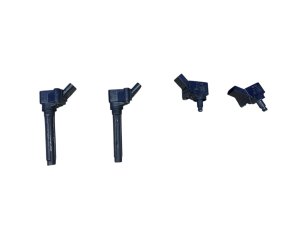
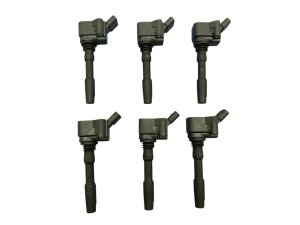
- Faulty Ignition Coil 🔴 High Probability → Shop Ignition Coil Ignition coils are a very common failure point on modern Audi engines due to high heat and electrical stress. They are considered a wearable item with a typical life of 60,000-80,000 miles.
How to confirm: Swap the ignition coil from cylinder 6 with another cylinder (e.g., cylinder 4 on the same bank). Clear the codes and drive the car. If the code changes to P0304, the coil is bad. This is the most effective initial diagnostic step.
Typical fix: Replace the faulty ignition coil. It is best practice to replace all six coils at the same time for preventative maintenance, especially on higher mileage vehicles.
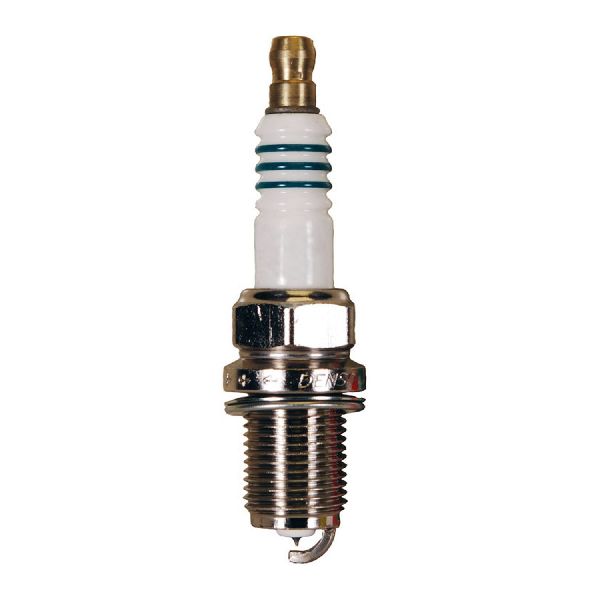
Est. part cost: $40-$80 per coil - Worn or Fouled Spark Plug 🔴 High Probability → Shop Spark Plug Spark plugs are a regular maintenance item with a service interval around 40,000-55,000 miles. Excessive oil consumption, a known issue on some of these engines, can foul the plugs prematurely, leading to misfires. Coolant from a leaking intercooler can also foul the plug in cylinder 6.
How to confirm: After confirming the coil is good, inspect the spark plug from cylinder 6. Look for wear on the electrode, heavy black carbon deposits, or evidence of oil/coolant fouling. Compare it to a plug from a healthy cylinder.
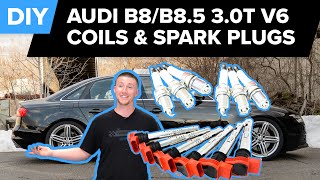
Typical fix: Replace the spark plug. It is highly recommended to replace all spark plugs as a set, especially if their service interval is near. Always replace plugs when replacing coils. 🎬 Watch: Step-by-step spark plug and ignition coil replacement guide.
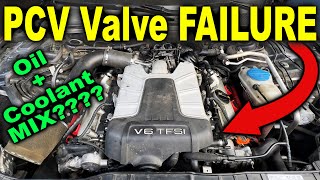
Est. part cost: $15-$30 per plug - Failed PCV Valve (Oil Separator) 🟡 Medium Probability → Shop PCV Valve The diaphragm inside the PCV valve assembly is made of rubber that can tear over time, creating a large, unmetered vacuum leak. This disrupts the air-fuel ratio and commonly causes misfires, sometimes accompanied by a whistling noise.
How to confirm: Listen for a distinct whistling or hissing sound from the engine bay at idle. Another definitive test is to try removing the oil filler cap while the engine is running; if there is extreme suction making it very difficult to remove, the PCV has likely failed.
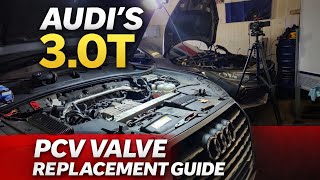
Typical fix: Replace the entire PCV valve assembly. On the 3.0T engine, this part is located in the engine valley, under the supercharger, making replacement a labor-intensive job that often includes replacing supercharger gaskets. 🎬 See this walkthrough for replacing the PCV valve assembly.
Est. part cost: $150-$250 - Clogged or Faulty Fuel Injector 🟡 Medium Probability → Shop Fuel Injector These engines use direct injection, where the injector sprays fuel directly into the combustion chamber. They operate under high pressure and can become clogged with carbon deposits over time, leading to poor fuel atomization.
How to confirm: This is more difficult to diagnose. It involves swapping the fuel injector with another cylinder, which requires significant disassembly and special tools. A professional can perform a flow test on the injector.
Typical fix: Clean or replace the fuel injector for cylinder 6. It's often recommended to replace all injectors on a high-mileage engine or at least the three on the same bank.
Est. part cost: $100-$250 per injector - Carbon Buildup on Intake Valves 🟡 Medium Probability Direct injection engines lack the fuel spray from port injection that naturally cleans intake valves. Oil vapor from the PCV system bakes onto the hot valves, forming hard carbon deposits that restrict airflow and cause misfires, especially on cold starts.
How to confirm: Requires a borescope to visually inspect the intake valves. This involves removing the intake manifold or, on the 3.0T, the supercharger.
Typical fix: The intake valves must be manually cleaned. The most effective method is walnut shell blasting, a procedure where crushed walnut shells are blasted at the valves to remove deposits without damaging the metal. This is a labor-intensive job.
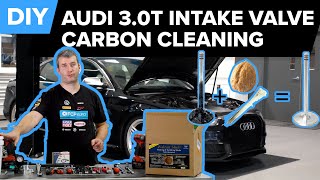
Est. part cost: $600-$1500 at a professional shop. 🎬 Watch: How to perform a DIY intake valve carbon cleaning.
Rare But Worth Checking
- Low Engine Compression: This indicates a serious internal engine problem, such as worn piston rings, a failing head gasket, or a problem with the cylinder head valves. A compression test is needed to confirm.
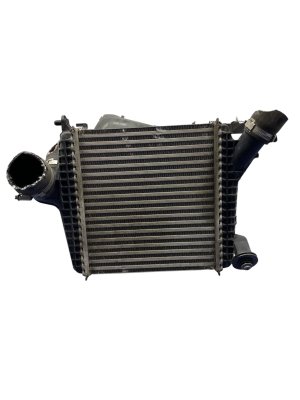
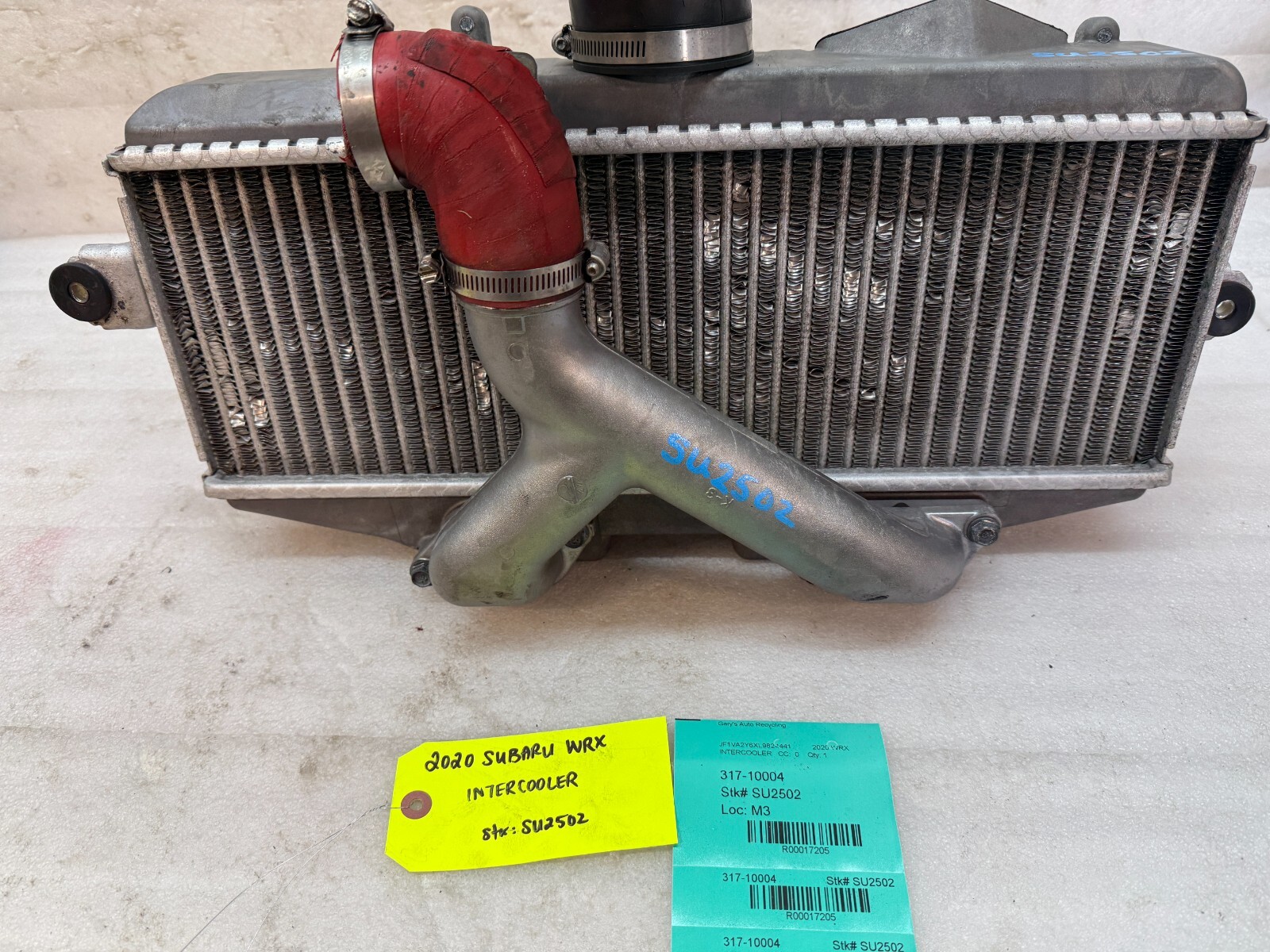
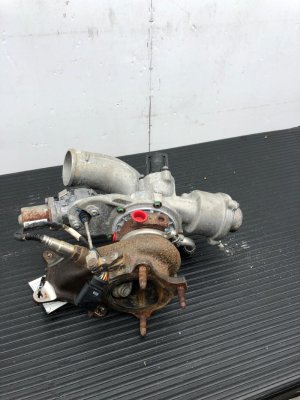
- Leaking Supercharger Intercooler (3.0T Engine): → Shop Turbocharger The liquid-to-air intercoolers (charge air coolers) housed within the supercharger assembly can develop internal leaks. This allows coolant to seep directly into the intake ports, most commonly affecting cylinders 3 and 6 due to their location. Key symptoms are mysterious coolant loss with no external drips and a sweet smell from the exhaust. Diagnosis requires removing the supercharger to inspect for coolant residue.
- Clogged Catalytic Converter: A clogged or failing catalytic converter on Bank 2 can create excessive backpressure, causing misfires on cylinders 4, 5, and 6. This is often a consequence of long-term oil consumption or a persistent misfire dumping unburnt fuel.
Diagnosis Steps
- Read the fault codes using an OBD-II scanner to confirm P0306 and check for any other codes, which can provide crucial clues (e.g., P0300, P0430).
- Identify cylinder 6. On the 3.0T V6, it is on the driver's side (Bank 2), closest to the windshield.
- Perform an 'ignition swap test'. Swap the ignition coil from cylinder 6 with the coil from another cylinder (e.g., cylinder 4). Clear the codes, run the engine, and re-scan. If the code is now P0304, you have a bad coil.
- If the misfire remains on cylinder 6, inspect the spark plug. Pull the plug from cylinder 6 and check for heavy carbon deposits, oil fouling, coolant residue (white/pink crust), or a worn electrode. If it looks bad, replace it. It's best to swap plugs with another cylinder to see if the fault follows, confirming the plug is the issue.
- If ignition components are good, check for a PCV system failure. With the engine running, listen for a loud whistle or sucking sound. Carefully try to remove the oil filler cap; if it's held down by very strong vacuum, the PCV diaphragm is likely torn.
- For 3.0T engines, investigate a potential intercooler leak. Check the coolant reservoir for a slowly dropping level with no visible external leaks. A sweet smell from the exhaust is another key indicator. Confirmation requires supercharger removal to inspect for coolant inside the intake ports.
- If the above steps don't identify the cause, the issue may be a clogged fuel injector or significant carbon buildup on the intake valves. A borescope can be used to inspect the valves.
- As a final diagnostic for a persistent misfire, a mechanic should perform a compression test to rule out internal engine mechanical problems like piston rings or valve issues.
Parts You'll Likely Need

- Ignition Coil
(OEM #06E905115G (supersedes 06E905115F, E, D, etc.))— This is the most common failure part for a single-cylinder misfire on an Audi Q7. They are a known wear item.
Trusted brands: Bosch, NGK, Eldor, APR (upgraded)
OEM price range: $60-$90
Aftermarket price range: $35-$70 - Spark Plug
(OEM #NGK PFR8S8EG or equivalent)— A routine maintenance item that can wear out or become fouled by oil or coolant, causing a misfire. It's best practice to replace these when replacing a coil.
Trusted brands: NGK, Bosch
OEM price range: $25-$40
Aftermarket price range: $15-$30 - PCV Valve / Oil Separator
(OEM #06E103547AC (supersedes 06E103547Q, F, C))— The diaphragm is prone to tearing, causing a significant vacuum leak that leads to misfires. On the 3.0T, it's a 'while you're in there' job if the supercharger is removed for any other reason (like carbon cleaning or intercooler replacement).
Trusted brands: Genuine VW/Audi, Vaico
OEM price range: $200-$275
Aftermarket price range: $100-$180 - Supercharger Intercooler Core (Charge Air Cooler) — Specific to the 3.0T engine, these can leak coolant internally directly into the intake path for cylinder 6, causing a persistent, hard-to-diagnose misfire.
Trusted brands: Genuine VW/Audi, Mahle
OEM price range: $300-$450 per core
Aftermarket price range: $200-$350 per core
Related Codes That Often Appear With This One
- P0300 — If the underlying cause, like a large vacuum leak from a bad PCV valve or a clogged catalytic converter, is severe enough, it can cause misfires on multiple random cylinders.
- P0304, P0305 — Misfires on the other cylinders of the same bank (Bank 2 is the driver's side, cylinders 4-5-6). This points to a shared problem like a clogged catalytic converter, a bank-wide vacuum leak, or a failing O2 sensor for that bank.
- P130A — This Audi-specific code is noted in TSB #01138920337681 as appearing alongside cylinder misfire faults (P0301-P0306), indicating a specific condition recognized by the manufacturer. It can be triggered by significant carbon buildup causing misfires under heavy load.
- P0430 — Catalyst System Efficiency Below Threshold (Bank 2). This code often appears after a long period of misfires on Bank 2, as the unburnt fuel damages the catalytic converter.
Technical Service Bulletins (TSBs) & Recalls
- A0124212069038_5 / 24-70: Mentions misfire codes P0300-P0306 and points to a required software update to correct misfire detection sensitivity.
- 01138920337681: Links misfire codes P0301-P0306 with the Audi-specific code P130A.
- A0123802069038_4: General bulletin regarding MIL illumination for cylinder misfires.
- 2058038 / 01 23 36: Discusses misfires under certain conditions with winter blend fuel, addressable by a software update.
Platform-Specific Known Issues

- Water Intrusion in Spark Plug Wells: → Shop Spark Plug Especially after a pressure wash of the engine bay, water can pool in the spark plug wells. If the ignition coil boot seal is not perfect, this water can cause the spark to arc to the cylinder head instead of the spark plug, causing a misfire. One owner found a 'swimming pool' in the cylinder 6 well after experiencing a P0306.
Mechanic-Grade Diagnostic Values
- Ignition Coil Primary Resistance — expected: Approximately 0.5 ohms (example value, varies by manufacturer). Failure: A reading of OL (Open Line) or significantly higher resistance indicates a failed primary winding.
- VCDS Misfire Counter (Live Data) — expected: 0 counts at idle and under load on all cylinders.. Failure: A rapidly increasing number for a specific cylinder (e.g., Cylinder 6) confirms an active misfire.
Scan Tool Commands That Help
- VCDS (VAG-COM): Advanced Measuring Values — To monitor live misfire counts for each cylinder. Go to Engine -> Adv. Meas. Values, then select items like 'Misfire sum' and 'Cylinder 6 misfire counter'. This helps confirm if the misfire is constant or only occurs under specific conditions (load, RPM).
- VCDS (VAG-COM): Measuring Blocks (older, non-UDS modules) — On older control modules, misfire counters are found in specific groups. Go to Engine -> Measuring Blocks and check Group 015 for cylinders 4-6.
Wiring & Ground Locations
- Engine Ground Strap — On the 3.0T engine, a key ground strap is located on the right (passenger) side of the engine compartment, near the alternator, connecting to the frame.. A corroded or loose engine ground can cause a weak spark across all cylinders, leading to intermittent and hard-to-diagnose misfires. While it usually causes random misfires (P0300), it can sometimes manifest on a single, more sensitive cylinder first.
- Injector Connector (N84) — The electrical connector for the cylinder 6 fuel injector is designated as N84 in some wiring diagrams.. When diagnosing a persistent P0306 after ruling out ignition, checking for voltage and signal at this specific connector is a critical step to confirm if the injector is receiving commands from the ECM.
- ECM Connector (T94) — The main engine control unit has a large, 94-pin connector often designated as T94.. In rare cases of wiring faults, a technician may need to test for continuity for the cylinder 6 ignition coil and injector circuits from this main connector back to the component.
Real Owner Repair Stories
- AudiWorld Forum User (Audi Q7 3.0T (year not specified, but within range)) — Persistent P0306 misfire, especially under load.
❌ Tried (didn't work) Replaced all spark plugs, Replaced all ignition coils, Cleaned fuel injectors
✅ What actually fixed it The thermostat was failing, causing the engine to run slightly out of its optimal temperature range. This subtly affected the air/fuel mixture enough to cause a consistent misfire on one cylinder under load. Replacing the thermostat and water pump resolved the P0306 code.
OEM Part Supersession History
06E103547F / Q / AC→06E103547AF (for CREC engine)— The PCV valve (oil separator) for the 3.0T engine has undergone multiple revisions. Later versions were designed to address oil consumption issues by changing the internal crankcase pressure regulation from 30 mbar to 150 mbar.
Heads up: Using an incorrect pressure-spec PCV valve for your engine's software tune can lead to oil consumption or seal issues. It is critical to match the part to the specific engine code (e.g., CREC).06H905110G / H / L→06H905110P— Ignition coils for the EA839 3.0T engine (2020+ models) have been revised multiple times to improve reliability and performance.
Heads up: While older revisions may fit, it is always recommended to use the latest available part number and replace all coils as a set to ensure consistent performance.
Model Year Variations Within This Range
- 2013-2015 (Typ 4L): These first-generation models are more prone to issues like thermostat and water pump failure made of older plastic composites. They may also have earlier revisions of the PCV valve.
- 2016-2020 (Typ 4M): The second-generation Q7 introduced the 'CREC' revision of the 3.0T engine and later the EA839 3.0T single-turbo V6 (in 2020 models). While still susceptible to carbon buildup and PCV failure, part numbers for components like the PCV valve are specific to these later engines.
Helpful Videos
Used OEM Parts in Stock
New Aftermarket Parts Available

The information in this article is provided for general reference and educational purposes only. Vehicle specifications, procedures, and part compatibility can vary by production date, trim level, and region. Always consult your vehicle's factory service manual and verify part numbers before purchasing or performing repairs. Safety-critical components such as airbags, seat belts, and braking systems should be installed by a qualified professional.
- Audi Q7:
- 🧭 Diagnostic Flowchart
- 🎬 Helpful Videos
- 🛍️ Shop This Part
- What's Unique About the 2013-2020 Audi Q7
- Symptoms You May Notice
- Most Likely Causes
- Rare But Worth Checking
- Diagnosis Steps
- Parts You'll Likely Need
- Related Codes That Often Appear With This One
- Technical Service Bulletins (TSBs) & Recalls
- Platform-Specific Known Issues
- Mechanic-Grade Diagnostic Values
- Scan Tool Commands That Help
- Wiring & Ground Locations
- Real Owner Repair Stories
- OEM Part Supersession History
- Model Year Variations Within This Range
- 🎟️ Get 5% Off