

P0306 on 2019-2021 Audi Q8: Cylinder 6 Misfire Causes and Fixes
P0306 on a 2019-2021 Audi Q8 means cylinder 6 is misfiring. The most common causes are a failed ignition coil or a worn spark plug. Swapping the coil from cylinder 6 to another cylinder is the fastest way to confirm a bad coil. In some cases, a software update may be required to fix false misfire detection.
- P0306 means cylinder 6 (driver's side, rear) is misfiring.
- Do not drive if the check engine light is flashing to prevent expensive catalytic converter damage.
- The most likely cause is a bad ignition coil, which can be easily diagnosed by swapping it with another cylinder's coil.
- If it's not the coil, it's likely the spark plug. It is recommended to replace all six plugs and coils at once for best results.
- If the simple fixes don't work, the issue could be a fuel injector or require a software update from an Audi dealer.
What's Unique About the 2019-2021 Audi Q8
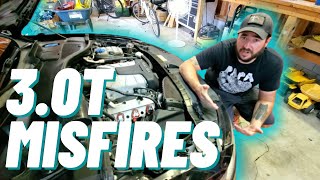
The 2019-2021 Audi Q8 uses the EA839 (engine code DCBD) 3.0L turbocharged V6, an engine co-developed with Porsche. While generally reliable, misfires on this modern direct-injection engine are often straightforward ignition component failures. However, forum discussions and TSBs point to some specific nuances. Audi has released software updates under TSBs like A0124212069038_5 to address false misfire detection, particularly on Bank 2 (cylinders 4, 5, 6) under certain conditions. Additionally, some owners have reported recurring misfires on Bank 2, sometimes related to issues beyond simple plugs and coils, warranting a methodical diagnosis. 🎬 Watch: How to diagnose a misfire on the Audi 3.0T engine A more serious, though less common, issue on the EA839 engine family is premature rocker arm failure, which can cause ticking noises and eventually lead to misfires and significant engine damage if ignored. Some reports also indicate a higher-than-average number of failures on cylinder 6, though the statistical significance is debated.
Diagnostic Flowchart
Tap your situation to follow the diagnostic path that matches what you're seeing on this vehicle.
Symptoms You May Notice
- Flashing or solid Check Engine Light
- Rough or vibrating idle
- Hesitation or stumbling during acceleration
- Noticeable loss of engine power
- Reduced fuel economy
- Engine running rough
- Smell of unburnt gasoline from the exhaust
- Replacing only the spark plug when the ignition coil was the actual cause.
- Replacing fuel system components like the fuel pump when the issue is isolated to a single cylinder's ignition system.
- Attributing a persistent misfire to plugs/coils when it is actually a mechanical issue like a rocker arm or a software issue requiring a TSB-guided update.
Most Likely Causes
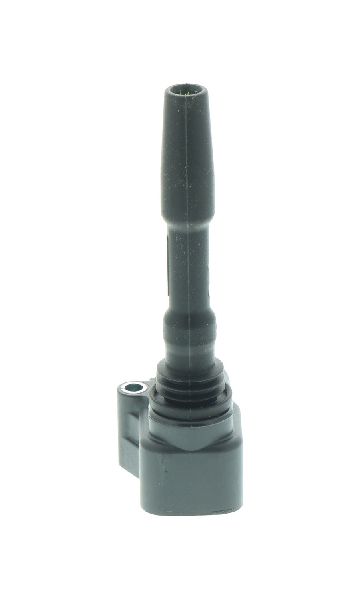
- Faulty Ignition Coil 🔴 High Probability → Shop Ignition Coil Ignition coils are common wear-and-tear items on most modern engines, including Audi's 3.0T. Heat cycles eventually cause the internal windings to fail, preventing a strong spark. Mismatched or non-OEM coils can also cause issues.
How to confirm: Swap the ignition coil from cylinder 6 with an adjacent cylinder (e.g., cylinder 5). Clear the codes and drive the vehicle. If the code changes to P0305, the ignition coil is faulty.
Typical fix: Replace the faulty ignition coil. It is best practice to replace all six coils and spark plugs at the same time to ensure consistent performance and prevent future failures.
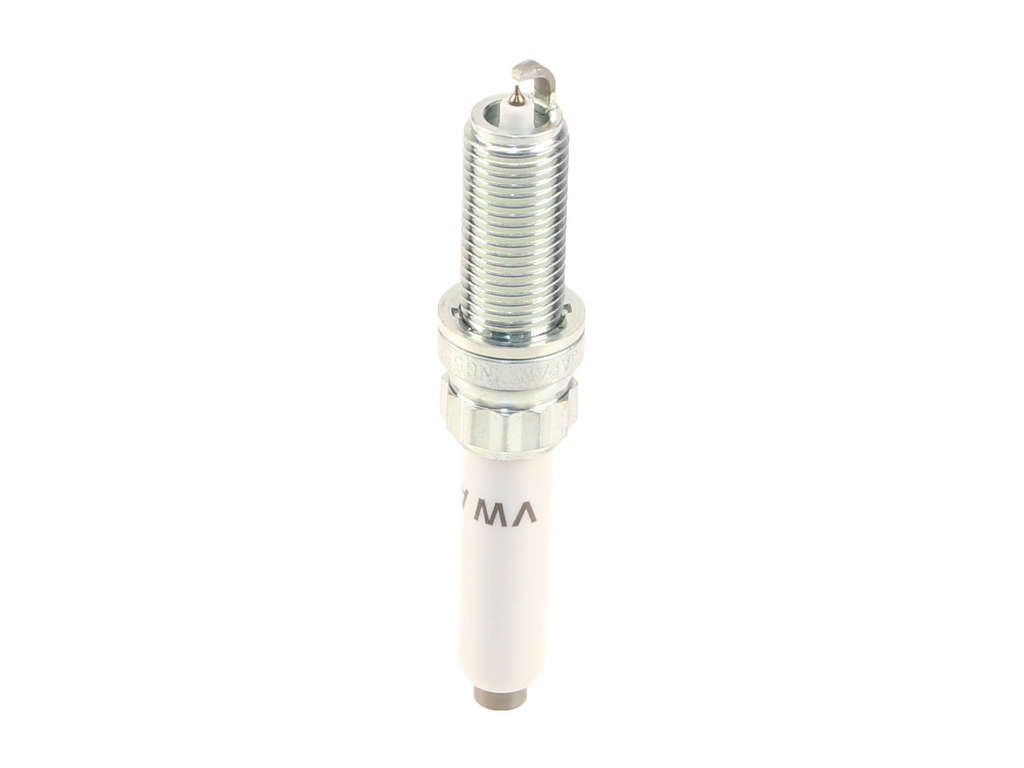
Est. part cost: $40-$80 per coil - Worn Spark Plug 🔴 High Probability → Shop Spark Plug Spark plugs have a finite service life, typically recommended for replacement every 40,000 miles on this engine. A worn electrode, incorrect gap, or carbon/oil fouling can prevent a strong, consistent spark, leading to a misfire.
How to confirm: After confirming the coil is good, remove the spark plug from cylinder 6. Inspect it for wear, oil fouling, or damage. A fouled plug in cylinder 6 while others look clean points to a localized issue. Compare it to a new plug. If it's worn or fouled, it's the likely cause.
Typical fix: Replace the spark plug. It is highly recommended to replace all six spark plugs as a set to maintain balanced engine performance.
Est. part cost: $15-$30 per plug - Faulty Fuel Injector 🟡 Medium Probability → Shop Fuel Injector Direct injection fuel injectors operate under high pressure and can become clogged or fail electronically over time, leading to improper fuel delivery for a specific cylinder. A dead injector can result in a clean-looking spark plug despite a persistent misfire.
How to confirm: This is more difficult to diagnose for a DIYer. It involves swapping injectors between cylinders, which is a labor-intensive job. A professional can use a scan tool to monitor fuel trims or perform an injector balance test. An unusually clean spark plug on the misfiring cylinder can be an indicator.
Typical fix: Replace the faulty fuel injector. This requires removing the fuel rail and should be done carefully to avoid fuel spills.
Est. part cost: $100-$250 per injector - Engine Control Module (ECM) Software ⚪ Low Probability → Shop Engine Control Module (ECM) Audi has issued multiple Technical Service Bulletins (TSBs), including 2069038/5, for the EA839 engine family, indicating that outdated software can incorrectly interpret crankshaft speed and falsely set misfire codes, particularly for Bank 2 (cylinders 4-6).
How to confirm: A dealership or qualified shop with access to Audi's ODIS diagnostic system can check the current software version against the latest available version mentioned in the TSB. The TSB specifically states "The software needs to be updated. The optimized software will correct the misfire and prevent the MIL from illuminating."
Typical fix: Update the ECM software to the latest version. This must be performed by a dealer or a specialized independent shop with the correct tools.
Est. part cost: $0 under warranty, or 1-2 hours of labor
Rare But Worth Checking
- Carbon Buildup on Intake Valves: Direct injection engines like the EA839 are prone to carbon accumulation on the back of the intake valves because fuel is injected directly into the cylinder, bypassing the cleaning effect on the valves. This buildup can disrupt airflow, causing misfires, rough idle, and sluggish acceleration, especially during cold starts.
- Low Compression / Mechanical Engine Issue: Though rarer, a mechanical problem can cause a persistent P0306. On the EA839, this can be due to a failing rocker arm, a known issue particularly in 2018-2019 models but seen in others. The failure of needle bearings in the rocker arm can cause ticking, scoring of the camshaft, and eventually misfires. In severe cases, this can lead to low compression from improper valve operation or other internal damage. A compression and leak-down test are required to diagnose this.
- Failed PCV System: A failed Positive Crankcase Ventilation (PCV) valve or breather hose can create a significant vacuum leak. On the EA839, the check valves in the breather hose are a known failure point, which can lead to an incorrect air-fuel mixture, rough idle, oil leaks, and misfire codes like P0306. 🎬 See this walkthrough on how to replace the PCV valve
Diagnosis Steps
- Read the trouble codes with an OBD-II scanner and confirm P0306 is present. Note any other codes, like P0300, P0304, P0305, or P130A.
- Check for a flashing Check Engine Light. If flashing, do not drive the vehicle to avoid catalytic converter damage.
- Identify cylinder 6. On the 3.0L V6, it is on the driver's side (US models), closest to the firewall.
- Swap the ignition coil from cylinder 6 with the coil from cylinder 5 (middle coil on the driver's side).
- Clear the codes and start the engine. Let it idle and/or drive it briefly to see if the Check Engine Light returns.
- Re-scan for codes. If the code is now P0305, the ignition coil is bad and needs replacement.
- If the code remains P0306, the coil is likely good. Proceed to the next step.
- Swap the spark plug from cylinder 6 with the one from cylinder 5. Clear codes and test again. Inspect the plug from cylinder 6 for fouling, wear, or damage.
- If the code moves to P0305, the spark plug is faulty. If it remains P0306, the issue is not the plug or coil.
- Check with an Audi dealer for any open recalls or applicable TSBs, specifically mentioning TSB 2069038/5 (or its latest revision) regarding misfire detection software.
- If software, plugs, and coils are ruled out, the issue is likely a faulty fuel injector, a wiring issue, or a mechanical engine problem.
- Perform a compression test on cylinder 6 to rule out mechanical issues like bad rings or valve train problems. Compare the reading to the other cylinders; they should be consistent.
- If compression is good, the problem is likely a fuel injector or wiring. Further professional diagnosis may be required.
Parts You'll Likely Need
- Ignition Coil
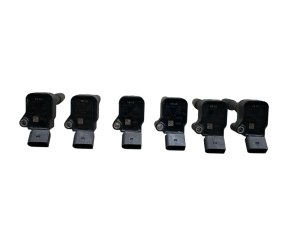
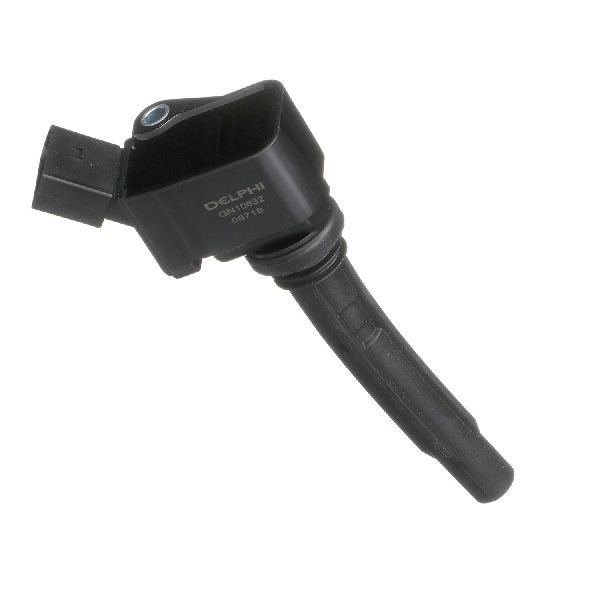
(OEM #06L905110K (or superseding part number))— This is the most frequent cause of a single-cylinder misfire on this engine. They are a common failure point due to high heat and voltage.
Trusted brands: Bosch, NGK, Eldor, Bremi
OEM price range: $60-$90
Aftermarket price range: $40-$70 - Spark Plug
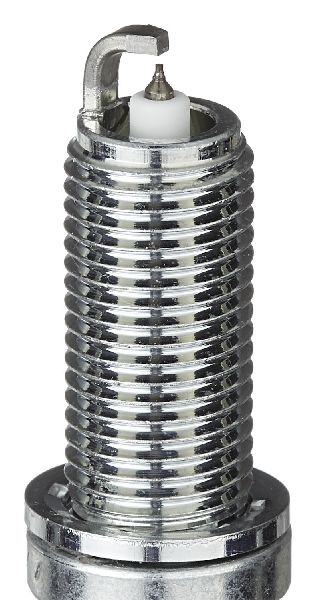
(OEM #06M905606F)— As a regular maintenance item, a worn or fouled spark plug is the second most likely cause of a misfire.
Trusted brands: NGK (SILKGR9A7ES), Bosch
OEM price range: $25-$40
Aftermarket price range: $15-$30
Related Codes That Often Appear With This One
- P0300 — Indicates random/multiple cylinder misfires. If the misfire on cylinder 6 is intermittent or accompanied by misfires on other cylinders, P0300 may be stored as well.
- P0304, P0305 — Misfires on adjacent cylinders in the same bank (Bank 2 is cylinders 4, 5, 6). This could point to a systemic issue affecting the entire bank, such as a vacuum leak near that bank's intake runner, a fuel delivery problem, or the software issue noted in Audi TSBs.
- P130A — This Audi-specific code often translates to "hide cylinder" or cylinder deactivation. The ECM may set this code and shut down the injector to the misfiring cylinder (in this case, cylinder 6) to protect the catalytic converter from unburnt fuel.
- P0171 — System Too Lean (Bank 1). While this code points to Bank 1, a vacuum leak from a failed PCV system can be significant enough to affect the entire engine, causing a lean condition and misfires on any cylinder.
Technical Service Bulletins (TSBs) & Recalls
- A0124212069038_5 / 2069038/5: Addresses MIL illumination for misfire DTCs P0300-P0306. The technical background states, "The software needs to be updated. The optimized software will correct the misfire and prevent the MIL from illuminating." This TSB supersedes previous versions and applies to the Q8 with the DCBD engine.
- TSB 2054182: A Pending Service Solution (PSS) specifically for "3.0 TFSI Bank 2 engine misfires – Q8/Q7 (DCBD engine)" which was later replaced by the main TSB 2069038.
Platform-Specific Known Issues
- Audi has issued TSB #A0124212069038_5 (also listed as 2069038/5) which mentions DTCs P0300-P0306 for 2019 models. The fix is a software update for the ECM (J623) to correct false misfire detection.
- A recurring issue of misfires on all three cylinders of Bank 2 (4, 5, 6) has been reported by some owners. In one forum thread, a dealer initially blamed 'winter blend fuel' before acknowledging a known issue that Audi was investigating.
Mechanic-Grade Diagnostic Values
- Ignition Coil Primary Winding Resistance — expected: 0.4 to 2.0 ohms. Failure: A reading outside this range (open circuit or short) indicates a faulty coil.
- Ignition Coil Secondary Winding Resistance — expected: 6,000 to 10,000 ohms (6kΩ - 10kΩ). Failure: A reading significantly outside this range indicates a failure in the secondary windings.
Scan Tool Commands That Help
- VCDS (VAG-COM): Advanced Measuring Values (Blocks 015, 016) — To monitor the live misfire counter for each individual cylinder. This is useful for detecting intermittent misfires that may not be severe enough to trigger a CEL immediately but are still occurring. The counter must show 'enabled' to be actively monitoring.
- ODIS (Official Dealer Software): Guided Fault Finding (GFF) — This is the dealer-level procedure that walks a technician through a structured diagnostic plan based on the fault code. It can run automated tests, check software versions, and access technical bulletins (TPI) that are not publicly available.
- VCDS (VAG-COM): Data Logging — To log engine speed, boost pressure, and misfire counts during a drive cycle. This is critical for diagnosing misfires that only occur under specific conditions, such as high boost, which could indicate an incorrect spark plug gap for a tuned vehicle.
Wiring & Ground Locations
- Main Engine Ground Cable — Connects from the vehicle body/frame rail to the engine mount bracket, typically on the passenger side.. A poor main engine ground can cause a variety of electrical issues, including weak spark and erratic sensor readings that can lead to misfires. This connection should be checked for corrosion and tightness.
- Ignition Coil Ground — The ignition coils are grounded via a brown wire in the engine harness, which typically leads to a ground point on the firewall or intake manifold.. A specific ground issue for the ignition coil bank could cause weak spark on multiple cylinders. On some Audi engines, a ground point near the center of the firewall (G12) is responsible for grounding the brown wire of the ignition coils.
- Battery Ground Point — The main 12V battery's negative terminal is connected to the chassis, often at the front plenum chamber wall or on a suspension strut tower under the hood.. While a total failure is obvious, a loose or corroded main ground connection can cause intermittent and hard-to-diagnose electrical problems, including misfires.
Real Owner Repair Stories
- Reddit user on r/Audi (2020 Audi SQ5 (B9) with EA839 3.0T engine, 17,000 miles) — Persistent misfires on cylinder 6.
❌ Tried (didn't work) Not specified, but the issue progressed beyond simple ignition or fuel component swaps.
✅ What actually fixed it The engine was diagnosed with low compression in cylinder 6, leading to a complete engine replacement. The user noted that many similar failures in their area (Arizona) were also on cylinder 6, especially on tuned vehicles in high heat.
OEM Part Supersession History
06L905110F, 06L905110H, and others→06L905110K— Standard part evolution for improved reliability and performance. Later revisions often address issues seen in earlier parts.
Heads up: The part 06L905110K replaces several previous versions including 06L905110C, D, E, F, and H. While older versions may fit, using the latest revision (K or newer) is recommended for best performance.
Model Year Variations Within This Range
- 2018-2019: Early production EA839 engines (primarily in 2018 models but extending into some 2019s) had a higher incidence of rocker arm failure. While the P0306 code could appear on any year, if accompanied by a distinct valvetrain ticking noise on an earlier model, rocker arms become a much higher probability cause.
Helpful Videos

Used OEM Parts in Stock
New Aftermarket Parts Available


The information in this article is provided for general reference and educational purposes only. Vehicle specifications, procedures, and part compatibility can vary by production date, trim level, and region. Always consult your vehicle's factory service manual and verify part numbers before purchasing or performing repairs. Safety-critical components such as airbags, seat belts, and braking systems should be installed by a qualified professional.
- Audi Q8:
- 🧭 Diagnostic Flowchart
- 🎬 Helpful Videos
- 🛍️ Shop This Part
- What's Unique About the 2019-2021 Audi Q8
- Symptoms You May Notice
- Most Likely Causes
- Rare But Worth Checking
- Diagnosis Steps
- Parts You'll Likely Need
- Related Codes That Often Appear With This One
- Technical Service Bulletins (TSBs) & Recalls
- Platform-Specific Known Issues
- Mechanic-Grade Diagnostic Values
- Scan Tool Commands That Help
- Wiring & Ground Locations
- Real Owner Repair Stories
- OEM Part Supersession History
- Model Year Variations Within This Range
- 🎟️ Get 5% Off