

P0306 on 2007-2013 BMW 3-Series (N54): Cylinder 6 Misfire Causes and Fixes
On the BMW N54 engine, a P0306 code is most often a failed ignition coil, spark plug, or fuel injector on cylinder 6. A simple diagnostic is to swap the coil and plug to another cylinder to see if the code follows. Expect to pay $40-$80 for a coil/plug, or over $250 for a single injector.
- P0306 on an N54 engine means cylinder 6 is misfiring.
- Always diagnose in this order: ignition coil, then spark plug, then fuel injector.
- The easiest DIY diagnostic is to swap the coil and plug from cylinder 6 to another cylinder and see if the misfire code follows.
- If replacing the fuel injector, you MUST use the latest available index (Index 12) and code it to the engine computer (DME).
- Do not ignore a flashing Check Engine Light, as it can lead to costly catalytic converter damage.
What's Unique About the 2007-2013 BMW 3-Series (E90/E92/E93)
The BMW N54 engine is a high-performance, direct-injected, twin-turbocharged engine known for a few specific weaknesses that directly cause misfires. Unlike more basic engines where a misfire is almost always a simple spark plug or coil, the N54 adds faulty fuel injectors to the list of very common culprits. These piezoelectric injectors have gone through at least 12 revisions (called 'indexes'), with older versions being notoriously prone to leaking, clogging, or failing electronically. Additionally, as a direct-injection engine, the N54 is highly susceptible to carbon buildup on intake valves, which doesn't get cleaned by fuel spray. This buildup can restrict airflow and cause misfires that are harder to diagnose.
Symptoms You May Notice
- Rough or vibrating idle
- Hesitation or stumbling during acceleration
- Noticeable loss of engine power
- Flashing or solid Check Engine Light
- Increased fuel consumption
- Engine stalling
- Smell of unburnt fuel from the exhaust
- Replacing only the spark plug when the ignition coil was the actual problem.
- Replacing the High-Pressure Fuel Pump (HPFP) for a single-cylinder misfire. While HPFP failure is common on the N54, it typically causes misfires on multiple cylinders (random misfire P0300) or the entire bank, along with long crank times.
- Replacing injectors with an incorrect or old index number, or failing to code the new injector to the DME, which will cause it to perform poorly.
Most Likely Causes
- Faulty Ignition Coil 🔴 High Probability → Shop Ignition Coil The coil-on-plug ignition coils on the N54 are a known wear item and a very common failure point leading to single-cylinder misfires. They are sensitive to heat and vibration and degrade over time. Many owners on forums recommend upgrading from the original Bosch coils to the newer Eldor brand coils for improved reliability, identifiable by their metal casing.
How to confirm: Swap the ignition coil from cylinder 6 with another cylinder (e.g., cylinder 5). Clear the codes and drive. If the code changes to P0305, the coil is faulty.
Typical fix: Replace the faulty ignition coil. It is best practice to replace all six coils at the same time to prevent future misfires, especially if they are original or old.
Est. part cost: $35-$60 per coil - Worn or Fouled Spark Plug 🔴 High Probability → Shop Spark Plug The N54 engine, especially when tuned, is hard on spark plugs. The recommended change interval is relatively short (around 45,000 miles for a stock engine, and as low as 15,000-20,000 for tuned cars).
How to confirm: After confirming the coil is good, inspect the spark plug from cylinder 6. Look for heavy carbon deposits, oil fouling (indicating a valve cover gasket leak), or a worn electrode. You can also swap the plug to another cylinder to see if the misfire follows.
Typical fix: Replace the spark plug. It is highly recommended to replace all six spark plugs at once with the correct OEM type (e.g., Bosch ZGR6STE2) and heat range for your engine's state of tune.
Est. part cost: $15-$25 per plug - Failed Fuel Injector 🔴 High Probability → Shop Fuel Injector The direct-injection piezoelectric injectors on the N54 are a well-documented, high-failure item. Early 'index' versions are particularly unreliable and can leak, clog, or fail electronically. Cylinder 6 is often cited as failing due to heat, as it is at the end of the fuel rail and runs the hottest.
How to confirm: If swapping the coil and plug doesn't move the misfire, the injector is the next likely cause. A leaky injector may cause a puff of white/grey smoke on startup or a strong fuel smell. A professional diagnosis involves checking fuel trims with a BMW-specific scan tool and may require a boroscope to look for a wet piston top after the car sits.
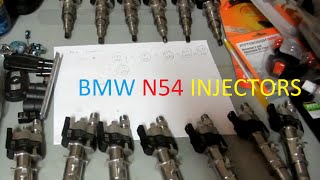
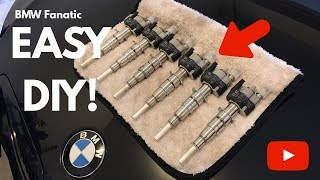
Typical fix: Replace the fuel injector. It is critical to use the latest 'Index 12' injectors (Part #13538616079). The new injector must be coded to the DME using a capable scan tool (like INPA or ISTA) by inputting the calibration value printed on the injector. It's recommended to replace injectors in banks (1-3 or 4-6) or all six at once.
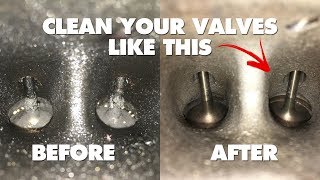
Est. part cost: $250-$400 per injector - Carbon Buildup on Intake Valves 🟡 Medium Probability As a direct-injection engine, fuel is sprayed directly into the cylinder, not over the intake valves. This means there's no fuel to clean the valves, and oil vapors from the PCV system bake onto them, causing carbon buildup that restricts airflow and can cause misfires, especially on cold starts.
How to confirm: This requires a visual inspection using a boroscope inserted into the intake ports. This is typically done after other causes are ruled out. The service is recommended every 30,000-50,000 miles as preventative maintenance.
Typical fix: The intake valves need to be cleaned. The most effective and common method is walnut shell blasting. This service typically costs between $400 and $700 at an independent shop.
Est. part cost: $0 (service cost is labor)
Rare But Worth Checking
- DME MOSFET Failure: The DME (engine computer) has transistors (MOSFETs) that control the fuel injectors. These can fail, typically causing a persistent misfire on one cylinder that does not resolve with a new injector, coil, or plug. This is often accompanied by a BMW-specific code like '30BA' or '30BB' (Injector control, cylinder X). This requires sending the DME to a specialist for repair of the board.
- Low Compression: A mechanical engine issue like a burnt valve, damaged piston, or bad piston ring could cause a misfire. A compression test on cylinder 6 would be needed to confirm this after all other ignition and fuel causes have been eliminated. This is a rare but severe possibility.
Diagnosis Steps
- Read the fault codes with a BMW-capable OBD-II scanner to confirm P0306 and check for any other related codes (e.g., fuel mixture, injector electrical faults).
- Start with the easiest and most common fix: the ignition system. Swap the ignition coil from cylinder 6 to cylinder 5.
- Clear the codes, drive the car until the check engine light returns, and re-scan. If the code is now P0305 ('Cylinder 5 Misfire'), the ignition coil is bad and needs to be replaced.
- If the code remains P0306, the coil is likely good. Put the original coil back on cylinder 6. Now, swap the spark plug from cylinder 6 to cylinder 4.
- Clear codes, drive, and re-scan. If the code is now P0304, the spark plug is faulty.
- If the code remains P0306 after swapping the coil and plug, the issue is likely the fuel injector or a more complex problem.
- Before replacing the injector, use a BMW-specific scanner to check for codes like 30BA or 30BB. If these are present, the DME's injector driver (MOSFET) may be faulty, not the injector itself.
- If no electrical fault codes are present, the injector is the prime suspect. Replacement requires removing the fuel rail and the new injector must be coded to the DME with its specific calibration value.
- If a new, properly coded injector does not fix the misfire, the next step is to inspect for severe carbon buildup on the intake valves for cylinder 6 using a borescope.
- If valves are clean, a compression test should be performed to rule out mechanical engine problems like piston rings or valves.
Parts You'll Likely Need
- Ignition Coil
(OEM #12138657273 (Eldor), 12138616153 (Bosch))— This is one of the most common failure points for a single-cylinder misfire on the N54 engine. Many enthusiasts prefer the Eldor brand for its perceived durability.
Trusted brands: Eldor, Bosch, Delphi
OEM price range: $50-$70
Aftermarket price range: $35-$55 - Spark Plug
(OEM #12120037244 (Bosch ZGR6STE2))— Spark plugs are a regular maintenance item and a frequent cause of misfires due to wear or fouling. It's critical to use the correct plug and replace them as a set.
Trusted brands: Bosch, NGK
OEM price range: $15-$25
Aftermarket price range: $10-$20 - Fuel Injector (Index 12)
(OEM #13538616079)— The piezoelectric injectors are a notorious weak point. Leaking or failed injectors are a primary cause of misfires that aren't fixed by plugs or coils. Only the latest index should be used.
Trusted brands: BMW (Genuine)
OEM price range: $250-$400
Aftermarket price range: Not Recommended
Related Codes That Often Appear With This One
- P0300 — Random/Multiple Cylinder Misfire Detected. If the problem causing the P0306 (like a vacuum leak or fuel pump issue) starts to affect other cylinders, P0300 may appear as well.
- P0305 — Cylinder 5 Misfire. Cylinders 5 and 6 are on the same bank and are the hottest running cylinders, making their components (especially injectors) prone to similar failures.
- 29E0 or 29E1 — Fuel Mixture Control codes (BMW-specific). These often accompany injector-related misfires, as a leaking or clogged injector throws off the air-fuel ratio that the DME is trying to maintain.
- 30BA or 30BB — These are BMW-specific codes for an injector fault that points towards an electrical issue, often a failed MOSFET driver in the DME rather than the injector itself.
Technical Service Bulletins (TSBs) & Recalls
- SI B13 03 12: This Service Information bulletin from BMW addresses issues with the high-pressure fuel system and injectors on the N54 engine, including warranty extensions for certain components.
- SI B13 08 15: A Technical Service Bulletin related to a supersession of injector part numbers, specifically for the S63 engine but relevant to the N54 as the injectors are cross-compatible.
Platform-Specific Known Issues
- Fuel Injector Failure: Early index injectors (below 11) have a very high failure rate. It is critical to use the latest version (Index 12) and code them to the DME.
- Intake Valve Carbon Buildup: A common issue on all direct-injection engines, including the N54, requiring periodic cleaning (walnut blasting) typically every 50,000-70,000 miles to prevent performance issues and misfires.
- High-Pressure Fuel Pump (HPFP) Failure: While typically causing multiple cylinder misfires, a failing HPFP is a hallmark issue of the N54 platform and worth noting as part of the overall fuel system health.
Mechanic-Grade Diagnostic Values
- Piezo Fuel Injector Resistance — expected: Approx. 200 kΩ (± 40 kΩ). However, many functional injectors test in the 1.7-2.0 MΩ range, making this test unreliable for confirming a good part, but a dead short or open circuit indicates failure.. Failure: Reading of 0 ohms (short circuit) or infinite/open circuit.
- Low-Pressure Fuel Pump (LPFP) Pressure — expected: Should target ~72 PSI (5 Bar) regardless of load.. Failure: Dropping into the 40-50 PSI range under load can starve the HPFP and cause misfires.
- High-Pressure Fuel Pump (HPFP) Rail Pressure — expected: Around 700 PSI at idle, ramping up to over 2,200 PSI under load.. Failure: Dropping below 1500 PSI under load is a strong indicator of a failing HPFP, though this typically causes multi-cylinder misfires.
- Short Term Fuel Trims (STFT) — expected: On a stock tune, should be very low, around 2-3%. On a tuned car, brief peaks up to 32% on throttle application can be normal, stabilizing between 10-15%.. Failure: Maxing out at +34% indicates the DME is adding as much fuel as it can to compensate for a lean condition (e.g., a clogged injector or vacuum leak). Maxing out at -34% indicates a rich condition (e.g., a leaking injector).
- DME Injector Driver (MOSFET) Test — expected: Using a multimeter in diode/continuity mode, testing between the ground pin and the two source pins on the MOSFET should show a reading on one pin (e.g., ~137) and open on the other.. Failure: A reading of 0 or a short circuit on both pins indicates the MOSFET has failed and is shorted to ground.
Hidden / Shadow Codes Worth Checking
- 30BA / 30BB: DME digital motor electronics, internal failure. 30BA corresponds to bank 1 (cylinders 1-3) and 30BB to bank 2 (cylinders 4-6). These codes strongly point to a failed injector driver (MOSFET) on the DME board itself, not the injector. (see via BMW-specific scanners like INPA, ISTA, or advanced tools like MHD Flasher.)
- 29D2: Combustion misfires, cylinder 6. This is the BMW-specific equivalent of the generic P0306 code and will often be stored alongside it. Other related codes are 29D1 (Cyl 5) and 29D0 (Cyl 4). (see via BMW-specific scanners.)
- 2E7C: BSD (Bit Serial Data) line fault. While not a direct misfire code, a fault on the BSD bus can cause communication issues with modules like the alternator or water pump, leading to voltage irregularities that can sometimes manifest as misfires or other strange engine behavior. (see via BMW-specific scanners.)
Scan Tool Commands That Help
- INPA/ISTA: Injector Coding/Calibration — This is mandatory after replacing any fuel injector. The new injector's multi-digit calibration value must be entered into the DME for the corresponding cylinder. Failure to do so will result in poor performance, incorrect fueling, and persistent misfires.
- INPA/ISTA: Reset Adaptations — After replacing major fuel or air components (injectors, fuel pumps, sensors), it is crucial to reset all engine adaptations. This clears the long-term adjustments the DME has learned and allows it to build new tables based on the new hardware.
- ISTA: Misfire Detection Test Plan — ISTA contains guided diagnostic plans. For a misfire, it will walk the technician through a series of checks, including monitoring engine smoothness values per cylinder to confirm the misfire location and suggesting component swaps.
Wiring & Ground Locations
- DME Injector Driver (MOSFET) — Inside the DME (engine computer), which is located in the electronics box (E-box) in the engine bay, under the passenger side cabin air filter housing.. For a P0306, the MOSFET for cylinder 6 can fail, creating a short. This is a common failure on the MSD80 DME used in early N54s (approx. 2007-2008). The failure causes a persistent misfire that cannot be fixed by replacing the injector, plug, or coil.
- Cylinder 6 Injector Connector — Directly on top of the fuel injector for cylinder 6, under the engine's plastic acoustic cover. Cylinder 6 is the rearmost cylinder, closest to the firewall.. A loose or corroded connector can interrupt the signal to the injector, causing a misfire. During spark plug or coil replacement, it's possible to accidentally dislodge this connector, leading to a misfire immediately after the service.
- Engine Ground Straps — There are several, but a key one runs from the engine block (near the passenger side motor mount) to the chassis. Another is located near the oil filter housing.. A corroded or loose main engine ground can cause a host of electrical gremlins, including weak spark and erratic sensor readings that can lead to misfires. While it usually causes multiple/random misfires, it can sometimes present on a single cylinder.
Real Owner Repair Stories
- YouTube channel 'vehicular DIY' (2008 BMW E90 335i (N54)) — Persistent cylinder 6 misfire, especially at high RPM, that was not resolved by typical fixes.
❌ Tried (didn't work) Replacing spark plugs, Replacing ignition coils, Replacing the fuel injector (Index 12)
✅ What actually fixed it The injector bore in the cylinder head was suspected to have a poor seal. The owner replaced the Teflon seal and the metal decoupling element on the injector. As an extra measure, he wrapped the injector body with high-temperature Teflon tape where it seats in the head to create a tighter seal. This completely resolved the high-RPM misfire, suggesting a loss of compression/combustion pressure around the injector was the root cause. - Bimmerpost forum user (N54-powered BMW) — Sudden severe misfire across one entire bank (cylinders 1, 2, and 3), with very rough running.
❌ Tried (didn't work) Initial thought was plugs or injectors, but the failure of an entire bank at once pointed elsewhere.
✅ What actually fixed it The user skipped straight to testing the DME. A continuity check on the injector driver MOSFETs revealed a shorted MOSFET for cylinder #1. The user desoldered the failed MOSFET and soldered in a new, upgraded replacement for about $15 in parts, which completely fixed the issue. This prevented a costly and incorrect replacement of all injectors and a new DME at the dealer. - Reddit user on r/n54 (2008 BMW 535i (N54)) — Horrible misfiring immediately after installing new spark plugs and ignition coils.
❌ Tried (didn't work) Triple-checking all work., Pulling the new plugs to inspect them.
✅ What actually fixed it The user had accidentally partially unplugged an electrical connector for one of the fuel injectors while working. Plugging the injector connector back in securely resolved the misfire completely.
OEM Part Supersession History
13537537317 (Index 1-2)→13537565138 (Index 1-7)— Initial design improvements.
Heads up: These early indexes are highly prone to failure and should not be used. It is not recommended to mix injectors with an index of 10 or lower with those that are 11 or higher.13537565138→13537585261— Further design revisions for reliability.13537585261→13538616079 (Index 12)— Major revision to the final, most reliable version.
Heads up: This is the current recommended part. The injector itself is stamped with 13537585261-12. A parallel part number, 13538648937, also exists and is identical internally, originating from a service bulletin for S63 engines but is fully compatible with the N54.
Model Year Variations Within This Range
- 2007 - late 2008: These early models were equipped with the MSD80 DME. This version is highly susceptible to injector driver (MOSFET) failure, which causes persistent misfires and 30BA/30BB fault codes.
- Late 2008 - 2013: These later models use the updated MSD81 DME. The MSD81 has redesigned, more robust MOSFETs and a stronger power supply, making it significantly less likely to fail in the same way as the MSD80. An MSD80-to-MSD81 swap is a common and permanent upgrade for owners of early cars.
Diagnostic Flowchart
Other Known Issues on This Vehicle
Issues unrelated to this code that are worth knowing about as an owner of this generation:
- High-Pressure Fuel Pump (HPFP) Failure 🔴 High — Extremely common, can occur at any mileage. Many have been replaced under warranty/recall, but failures persist. Symptoms include long cranks, engine stalling, and reduced power. (Ref: BMW extended the warranty to 10 years/120,000 miles and issued recalls. TSB SI B13 03 12 is one of several documents related to this.)
- Turbocharger Wastegate Rattle 🟠 Medium → Shop Turbocharger — Common as the engine accumulates mileage (typically over 60,000 miles). Caused by wear in the wastegate actuator rod and bushings. Results in a rattling noise on deceleration. (Ref: BMW extended the warranty on turbochargers for this issue to 8 years/82,000 miles.)
- Electric Water Pump & Thermostat Failure 🔴 High — Prone to sudden failure, typically between 50,000 and 80,000 miles. Can cause rapid overheating and leave you stranded.
- Oil Filter Housing Gasket (OFHG) Leak 🔴 High — Very common leak point. The gasket hardens and leaks oil onto the serpentine belt, which can cause the belt to slip, shred, and potentially be ingested into the engine through the main crank seal, leading to catastrophic engine failure.
- Valve Cover & Gasket Leak 🟠 Medium — The plastic valve cover is prone to cracking from heat cycles, and the gasket degrades over time, causing oil leaks onto the exhaust manifold and spark plugs.
- Cracked Plastic Charge Pipe 🟠 Medium — The factory plastic charge pipe becomes brittle with heat and age and can crack under boost, causing a sudden loss of power and a loud whoosh sound. This is especially common on tuned vehicles.
Used vs. New Parts: Buying Guide for This Vehicle
When a used part is the smart pick: Used parts are generally not recommended for the primary causes of P0306 on an N54 due to the high failure rate of wear items. However, sourcing a used MSD81 DME from a junkyard for an upgrade from an MSD80 can be a cost-effective strategy, provided you use a service to clone your original DME's data to it.
Donor-vehicle mileage cap: roughly under 80000 miles for the part to have meaningful remaining life.
What to inspect on the donor part:
- For a DME, ensure the casing is not cracked or water damaged.
- Check the donor vehicle's VIN to confirm it's from a later model year (2009+) to increase the chance of it being an MSD81.
- Never buy used injectors, spark plugs, or ignition coils for the N54.
OEM-only on this vehicle (don't cheap out):
- Fuel Injectors: Aftermarket or counterfeit N54 injectors are notoriously unreliable. Only purchase Genuine BMW injectors (Index 12) from a reputable vendor like FCP Euro or a dealer.
- DME/ECU: While a used OEM unit can be cloned, do not use aftermarket ECU repair services that are not highly reputable specialists in BMW DMEs.
Aftermarket brands forum-validated for this vehicle:
- Ignition Coils: Eldor (OEM supplier, considered an upgrade over original Bosch), Bosch (OEM), Delphi.
- Upgraded Ignition Systems: Precision Raceworks offers a popular kit that converts to a different style of coil for high-horsepower applications, which can prevent DME MOSFET failure.
- Spark Plugs: Bosch (OEM), NGK (often preferred for tuned applications, requires correct heat range).
Brands owners have reported issues with on this vehicle:
- Any unbranded or suspiciously cheap fuel injectors found on sites like eBay or Amazon. They are often counterfeit or remanufactured old-index injectors that will fail quickly.
- Cheap, unbranded ignition coils. Stick to OEM or reputable OE-supplier brands.
Real Owner Stories
Aggregated from forums and TSBs cited above. Mileages and costs reflect what owners reported in those sources.
2016 BMW 3-Series N54
Symptoms: A random P0306 misfire that appeared and then seemed to resolve itself intermittently.
What fixed it: The discussion identified this as a likely first symptom of a failing ignition coil or spark plug.
Source hint: e90post.com thread titled 'P0306 Misfire Code' (2016)
2011 BMW 3-Series N54
Symptoms: Misfire code P0306; owner was unsure if they needed new plugs or a coil.
What fixed it: Diagnostic advice was to swap the coil to another cylinder to confirm the fault before purchasing parts.
Source hint: e90post.com thread titled 'P306 Misfire Code, Need new plugs? Coil?' (2011)
2021 BMW 3-Series N54 — ~60000 miles
Symptoms: Performance issues and misfires caused by carbon buildup on intake valves.
What fixed it: Professional walnut blasting service.
Cost: $375-$1000
Source hint: e90post.com thread titled 'Fair price for a shop to walnut blast a N54' (2021)
Related OBD-II Codes
Frequently Asked Questions
Which ignition coils are recommended for the N54 engine to prevent recurring P0306 codes?
Does BMW have a service bulletin regarding the fuel injectors on my 3-Series?
Can I mix different versions of fuel injectors if I only need to replace the one in cylinder 6?
How often should I perform walnut blasting on my E90 to avoid carbon-related misfires?
What spark plugs should I use for my N54 3.0L Twin-Turbo?
Is it true that I have to 'code' the new injector after replacing it?
Helpful Videos

The information in this article is provided for general reference and educational purposes only. Vehicle specifications, procedures, and part compatibility can vary by production date, trim level, and region. Always consult your vehicle's factory service manual and verify part numbers before purchasing or performing repairs. Safety-critical components such as airbags, seat belts, and braking systems should be installed by a qualified professional.
- BMW 3-Series (E90/E92/E93):
- 🧭 Diagnostic Flowchart
- 🎬 Helpful Videos
- What's Unique About the 2007-2013 BMW 3-Series (E90/E92/E93)
- Symptoms You May Notice
- Most Likely Causes
- Rare But Worth Checking
- Diagnosis Steps
- Parts You'll Likely Need
- Related Codes That Often Appear With This One
- Technical Service Bulletins (TSBs) & Recalls
- Platform-Specific Known Issues
- Mechanic-Grade Diagnostic Values
- Hidden / Shadow Codes Worth Checking
- Scan Tool Commands That Help
- Wiring & Ground Locations
- Real Owner Repair Stories
- OEM Part Supersession History
- Model Year Variations Within This Range
- Other Known Issues on This Vehicle
- Used vs. New Parts: Buying Guide for This Vehicle
- Real Owner Stories
- 2016 BMW 3-Series N54
- 2011 BMW 3-Series N54
- 2021 BMW 3-Series N54 — ~60000 miles
- Related OBD-II Codes
- Frequently Asked Questions
- 🎟️ Get 5% Off