

P0306 on 2008-2009 Cadillac STS: Cylinder 6 Misfire Causes and Fixes
P0306 indicates a misfire on cylinder 6. On the 2008-2009 Cadillac STS, this is most often caused by a failed ignition coil or a worn spark plug. A simple diagnostic is to swap the cylinder 6 coil with another cylinder (e.g., cylinder 4) to see if the code follows. Expect to pay $30-$70 for a new ACDelco ignition coil.
- P0306 on a 2008-2009 STS is a misfire on cylinder 6, most often due to a bad ignition coil or spark plug.
- A simple and effective first diagnostic step is to swap the cylinder 6 ignition coil with one from another cylinder to see if the fault code moves.
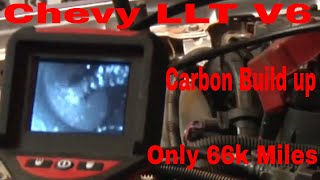
- If your STS has the 3.6L V6 engine, be aware that carbon buildup on the intake valves is a known issue that can cause misfires.
- Do not ignore a flashing check engine light, as it signals a severe misfire that can cause expensive damage to your catalytic converter.
What's Unique About the 2008-2009 Cadillac STS
The 2008-2009 STS was available with two different engines: the 3.6L direct-injected V6 (LLT) and the 4.6L Northstar V8 (LH2). While both can suffer from common ignition failures, the 3.6L V6 is particularly known for carbon buildup on intake valves, which can disrupt airflow and cause misfires; GM addressed this in TSB #PIP5029A. The Northstar V8 is more prone to vacuum leaks from aging PCV hoses and intake components. Additionally, GM issued TSB #PIP5038B regarding potential electrical issues, like poor grounds at locations G109 and G112, that can damage ignition coils on these platforms.
Diagnostic Flowchart
Tap your situation to follow the diagnostic path that matches what you're seeing on this vehicle.
Symptoms You May Notice
- Check Engine Light is on or flashing
- Rough or vibrating idle
- Engine hesitates or stumbles during acceleration
- Noticeable loss of engine power
- Reduced fuel economy
- Smell of unburned gasoline from the exhaust
- Replacing only the spark plug when the ignition coil is the actual cause.
- Replacing ignition components when the true cause is carbon buildup on the intake valves (on the 3.6L V6 engine).
- Replacing an oxygen sensor that is correctly reporting a rich or lean condition caused by the misfire itself.
Most Likely Causes
- Faulty Ignition Coil 🔴 High Probability → Shop Ignition Coil Ignition coils are a common failure item on many modern engines. TSB #PIP5038B notes that heat stress can damage coils, potentially due to electrical issues like poor grounds or ECM faults. This is the most frequent cause of a single-cylinder misfire.
How to confirm: Swap the ignition coil from cylinder 6 with an adjacent cylinder (e.g., cylinder 4). Clear the codes and drive the vehicle. If the code changes to P0304, the ignition coil is faulty. Cylinder 6 is the rearmost cylinder on the driver's side for both the V6 and V8 engines.
Typical fix: Replace the failed ignition coil. 🎬 Watch: Step-by-step guide to replacing STS coils and spark plugs. It is often wise to replace the corresponding spark plug at the same time. Use a small amount of dielectric grease on the inside of the boot to ensure a good seal and prevent moisture.
Est. part cost: $30 - $70 - Worn or Fouled Spark Plug 🔴 High Probability → Shop Spark Plug Spark plugs are a regular maintenance item with a finite lifespan. An incorrect gap, carbon fouling, oil contamination from a leaky valve cover gasket, or a cracked insulator can prevent a proper spark.
How to confirm: After confirming the ignition coil is good, remove the spark plug from cylinder 6. Inspect it for wear, carbon tracking, oil fouling, or damage to the ceramic insulator. Compare it to a new plug.
Typical fix: Replace the spark plug. It is best practice to replace all spark plugs as a set to ensure even performance. Ensure new plugs are torqued to the correct specification (typically 13-15 ft-lbs for these engines).
Est. part cost: $8 - $20 per plug - Carbon Buildup on Intake Valves (3.6L V6 LLT Engine) 🟡 Medium Probability The 3.6L V6 uses direct injection (DI), where fuel is sprayed directly into the cylinder. This means fuel no longer washes over the intake valves, allowing carbon deposits to build up over time. This buildup can impede airflow and cause misfires, especially on cold starts, an issue acknowledged by GM in TSB #PIP5029A.
How to confirm: This requires a visual inspection of the intake valves, which usually involves removing the intake manifold. A borescope can be used to see the valves without complete disassembly.
Typical fix: The intake valves need to be cleaned. This is typically done via walnut shell blasting, a chemical cleaning process (as outlined in TSB #PIP5029A), 🎬 See how to perform a professional intake port valve cleaning. or manual scraping if the cylinder head is removed.
Est. part cost: $0 (if manually cleaning) - $100 (for cleaning materials/service) - Faulty Fuel Injector ⚪ Low Probability → Shop Fuel Injector A fuel injector can become clogged or fail electronically, preventing the correct amount of fuel from reaching cylinder 6. On GM direct injection engines, wiring harness chafing is also a known issue that can cause injector circuit faults, as noted in TSB #PIP4924D.
How to confirm: Use a 'noid light' to verify the injector is receiving an electrical pulse from the PCM. You can also listen to the injector with a mechanic's stethoscope for a steady clicking sound. Swapping injectors is a definitive test but is labor-intensive as it requires removing the intake manifold.
Typical fix: Replace the faulty fuel injector. It's often recommended to replace them in sets for balanced fueling, along with their seals.
Est. part cost: $40 - $120
Rare But Worth Checking
- Vacuum Leak: A leak in the intake manifold gasket near the cylinder 6 runner can lean out the mixture for just that cylinder, causing a misfire. On the Northstar V8, aging PCV hoses are a common source 🎬 Watch: How to change coil packs on a Northstar engine. of vacuum leaks. A loose intake manifold bolt near the affected cylinder has also been reported by owners as a cause.
- Low Engine Compression: Internal engine problems like a burnt valve, worn piston rings, or a failed head gasket can cause a persistent misfire that won't be fixed by ignition or fuel parts. A compression test is needed to diagnose this.
- Poor Electrical Grounds: TSB #PIP5038B specifically calls out checking and cleaning ignition coil grounds (G109 and G112 on the STS) as a critical step, as a poor connection can cause intermittent misfires and damage coils. These grounds are located on the engine block.
- Stretched Timing Chain (3.6L V6 LLT Engine): The 3.6L LLT engine is known for premature timing chain wear, often caused by extended oil change intervals. While this usually triggers timing-specific codes like P0008, it can disrupt cam timing enough to cause misfires.
Diagnosis Steps
- Read the trouble codes with an OBD-II scanner and check for any other pending or stored codes, paying close attention to freeze-frame data.
- Note the cylinder numbering. On the 3.6L V6, cylinder 6 is the rear-most cylinder on the driver's side (Bank 2). On the 4.6L V8, it is also the third cylinder back on the driver's side (Bank 2).
- Swap the ignition coil from cylinder 6 with another cylinder (e.g., cylinder 4). Clear the codes and run the engine to see if the misfire code moves to the new cylinder (P0304). If it does, the coil is bad.
- If the misfire remains on cylinder 6, swap the spark plug with another cylinder. If the code moves, the spark plug is bad. Inspect the spark plug tube for oil, which would indicate a leaking valve cover gasket.
- If the code still remains on cylinder 6, inspect the ignition coil connector and wiring for damage, corrosion, or loose pins.
- Check the fuel injector for cylinder 6. Use a noid light to confirm it's receiving a signal or listen for a consistent clicking with a stethoscope. If possible, check its resistance or swap it with another cylinder.
- If ignition and fuel delivery seem okay, investigate platform-specific issues: check for vacuum leaks (especially on the V8) or consider carbon buildup (on the V6).
- Check and clean engine grounds, specifically G109 and G112 on the engine block, as recommended by TSB #PIP5038B.
- As a final step for persistent misfires, perform a compression test on cylinder 6 to rule out mechanical engine damage.
Parts You'll Likely Need
- Ignition Coil
(OEM #ACDelco D501C (for 3.6L V6 LLT), ACDelco D515C (for 4.6L V8 LH2))— This is the most frequent cause of a single-cylinder misfire on the STS. Heat and vibration cause the internal windings to fail over time, an issue noted in GM service bulletins.
Trusted brands: ACDelco, Delphi, TRQ
OEM price range: $50-$80
Aftermarket price range: $30-$60 - Spark Plug
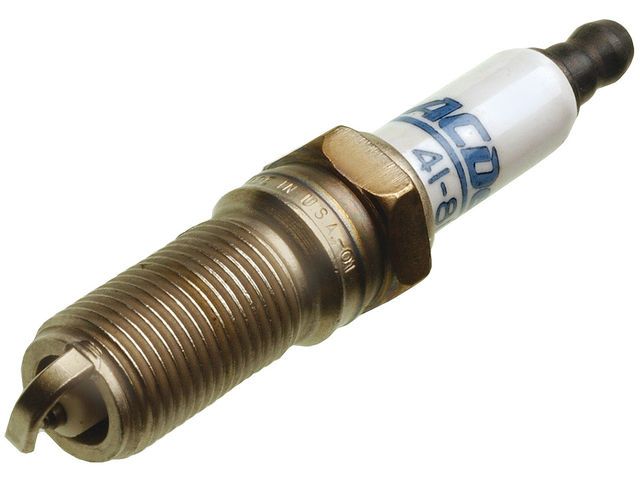
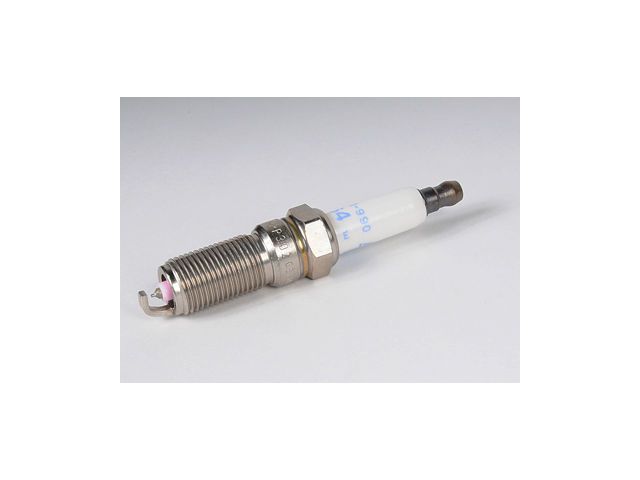
(OEM #ACDelco 41-107 (Iridium, for 3.6L V6 LLT), ACDelco 41-990 (Platinum, for 4.6L V8 LH2))— As a standard wear item, a worn or fouled spark plug is a very common cause for a misfire. It's recommended to replace them at regular intervals. Iridium plugs are specified for the LLT engine.
Trusted brands: ACDelco, NGK, Bosch
OEM price range: $12-$20
Aftermarket price range: $8-$15 - Fuel Injector
(OEM #ACDelco 12669384 (for 3.6L V6 LLT))— Though less common than ignition parts, a clogged or failed injector will cause a persistent misfire on one cylinder.
Trusted brands: ACDelco, Bosch, Standard Motor Products
OEM price range: $50 - $120
Aftermarket price range: $40 - $90
Related Codes That Often Appear With This One
- P0300 — If the misfire is intermittent or affects other cylinders, a P0300 (Random/Multiple Misfire) may be stored alongside P0306.
- P0356 — This code indicates a malfunction in the ignition coil control circuit for cylinder 6. It often appears with P0306 and points more directly to an electrical issue with the coil or its wiring, as noted in TSB #PIP5038B.
- P0206 — This code indicates a fault in the fuel injector circuit for cylinder 6. If you see P0306 and P0206 together, the problem is almost certainly related to the fuel injector or its wiring, not the ignition system.
Technical Service Bulletins (TSBs) & Recalls
- PIP5038B: Addresses multiple engine misfire DTCs (P0300-P0306, P0351-P0356) and points to causes like heat-stressed coils, poor electrical grounds (G109, G112), or bad battery connections.
- PIP5029A / 16-NA-383: Addresses engine misfires on direct-injected GM engines (including the 3.6L LLT) caused by heavy carbon deposits on intake valves, which may be worse on cold starts.
- PIP4924D: While not directly for P0306, this TSB is relevant as it highlights a known issue of fuel injector wiring harness chafing on many GM platforms with the 3.6L engine, which can lead to injector circuit codes and misfires.
Platform-Specific Known Issues
- TSB #PIP5038B mentions that a variety of misfire and ignition coil circuit codes (including P0306 and P0356) can be caused by heat-stressed coils, poor electrical grounds, or bad battery connections. It specifically advises checking and cleaning the main ignition coil ground points G109 and G112 on the STS engine block.
- The 3.6L LLT V6 engine is known for significant carbon accumulation on the back of intake valves, which can cause misfires that seem like ignition problems. TSB #PIP5029A (and its successors) describes this issue and recommends a chemical decarbonization procedure.
- A user on CadillacForums with a similar 3.6L LLT engine in a CTS traced a persistent P0306 to a loose upper intake manifold bolt near the cylinder 6 runner, which created a small vacuum leak. Tightening the bolt resolved the misfire.
Mechanic-Grade Diagnostic Values
- Fuel Injector Coil Resistance (3.6L LLT V6) — expected: 1.25 - 2.5 Ohms. Failure: A reading near zero indicates a shorted coil; an infinite reading indicates an open coil.
- Fuel Injector Coil Resistance (4.6L LH2 V8) — expected: 11 - 16 Ohms. Failure: A reading significantly outside this range indicates a faulty high-impedance injector coil.
- Low-Pressure Fuel System Pressure (3.6L LLT V6) — expected: 380-410 kPa (55-60 psi) at idle. Failure: Pressure significantly below this range points to a weak in-tank fuel pump or clogged filter.
- High-Pressure Fuel System Pressure (3.6L LLT V6) — expected: Varies with load, from ~508 psi (35 bar) at idle to over 1,740 psi (120 bar) at wide-open throttle.. Failure: If a scan tool shows the actual pressure failing to meet the desired pressure commanded by the ECM, it indicates a problem with the high-pressure pump or its regulator.
- Ignition Coil Primary Resistance (General) — expected: 0.4 - 2.0 Ohms. Failure: A reading outside this range suggests a faulty primary winding.
Hidden / Shadow Codes Worth Checking
- Mode $06 Misfire Counts: While not a hidden code, professional scan tools can access Mode $06 data which contains misfire counters for each specific cylinder. This allows a technician to see not just the current trip's misfires that triggered the P0306, but also historical misfire data from previous drive cycles, even if they weren't severe enough to set a code. This can help identify an intermittent problem. (see via A professional-grade scan tool with Mode $06 diagnostic capabilities.)
Scan Tool Commands That Help
- GDS2 / Tech2: Cylinder Power Balance Test — This function allows the technician to sequentially disable the fuel injector for each cylinder while monitoring the RPM drop. If disabling cylinder 6 results in little or no change in RPM compared to other cylinders, it confirms that cylinder 6 is not contributing power, isolating the misfire.
- GDS2 / Tech2: Injector Balance Test — This test fires each injector for a set duration and measures the corresponding drop in fuel rail pressure. An injector that causes a significantly different pressure drop than the others is likely clogged or faulty. This is useful for diagnosing a fuel-related misfire after ignition components have been ruled out.
Wiring & Ground Locations
- G107 (4.6L V8) — On the rear side of the right (passenger side) cylinder head.. This is a primary engine-to-chassis ground. A poor connection here can cause a host of electrical issues, including weak spark or erratic sensor readings that could lead to misfires.
- G100 (4.6L V8) — On the rear side of the right cylinder head.. This is another critical ground point on the V8 engine block that ensures proper grounding for various engine components.
- Fuel Injector Harness (3.6L V6) — Routed over the intake plenum, near valve cover bolts, and along the side of the cylinder head.. TSB #PIP4924D specifically identifies this harness as being prone to chafing against engine components, which can cause an open or short in the cylinder 6 injector circuit, leading to a P0306 and often a P0206 code.
OEM Part Supersession History
12611545, 12632255→12669384, 12638530— Improved design or change in manufacturer for the 3.6L LLT fuel injector.
Heads up: While later part numbers are generally backward compatible, it is always best to use a matched set of injectors for consistent fuel flow.Unknown→ACDelco D501C (replaces GM 12629037)— Part consolidation and design updates for the 3.6L V6 ignition coil.12610626, 12618542→ACDelco D515C (replaces GM 12632479)— Design updates for the ignition coil used on later 3.6L V6 engines and some V8s, though fitment on the 4.6L Northstar for this specific year is not explicitly confirmed by all sources.
Heads up: The D515C is listed for the 2010-2011 STS, but not explicitly for the 2008-2009 4.6L V8. The correct coil for the 4.6L V8 in these years is often listed as D501C's predecessor or a different part number entirely. Verify by VIN.
Model Year Variations Within This Range
- 2008-2009: The 2008 model year marked a significant update for the STS, including the introduction of the 3.6L direct-injection (LLT) V6 engine, which replaced the previous port-injected LY7. The LLT engine produces more power (302 hp vs 255 hp) but is also susceptible to carbon buildup on intake valves, a problem not seen on the earlier LY7.
Helpful Videos
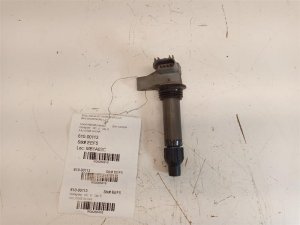
Used OEM Parts in Stock
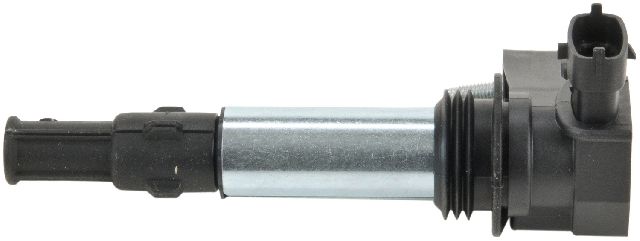
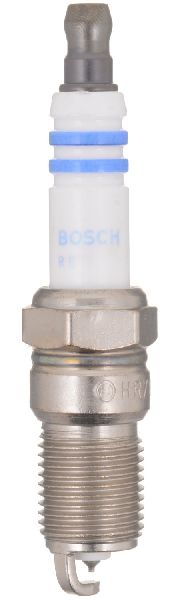
New Aftermarket Parts Available



The information in this article is provided for general reference and educational purposes only. Vehicle specifications, procedures, and part compatibility can vary by production date, trim level, and region. Always consult your vehicle's factory service manual and verify part numbers before purchasing or performing repairs. Safety-critical components such as airbags, seat belts, and braking systems should be installed by a qualified professional.
- Cadillac STS:
- 🧭 Diagnostic Flowchart
- 🎬 Helpful Videos
- 🛍️ Shop This Part
- What's Unique About the 2008-2009 Cadillac STS
- Symptoms You May Notice
- Most Likely Causes
- Rare But Worth Checking
- Diagnosis Steps
- Parts You'll Likely Need
- Related Codes That Often Appear With This One
- Technical Service Bulletins (TSBs) & Recalls
- Platform-Specific Known Issues
- Mechanic-Grade Diagnostic Values
- Hidden / Shadow Codes Worth Checking
- Scan Tool Commands That Help
- Wiring & Ground Locations
- OEM Part Supersession History
- Model Year Variations Within This Range
- 🎟️ Get 5% Off