

P0306 on 2009-2017 Chevrolet Traverse: Cylinder 6 Misfire Causes and Fixes
P0306 on a 2009-2017 Traverse is a misfire on cylinder 6. The most common cause is a failed ignition coil or a worn spark plug. Since cylinder 6 is on the difficult-to-access rear bank against the firewall, it's wise to replace all three rear coils and all six spark plugs at once. Other known causes on this specific engine include carbon buildup on intake valves and stretched timing chains. Expect parts to cost $150-$300 for a full ignition tune-up.
- P0306 signifies a misfire on cylinder 6, which is located on the difficult-to-access rear bank against the firewall.
- The most probable cause is a bad ignition coil or a worn spark plug.
- Due to the high labor cost of removing the intake manifold, it is strongly advised to replace all three rear ignition coils and all six spark plugs simultaneously.
- If the Check Engine Light is flashing, stop driving immediately to prevent expensive catalytic converter damage.
- If new ignition components do not resolve the issue, investigate platform-specific problems like carbon buildup on intake valves or, in more serious cases, stretched timing chains.
What's Unique About the 2009-2017 Chevrolet Traverse
The 2009-2017 Traverse with the 3.6L V6 is known for several specific issues that can cause a P0306 misfire. Beyond common ignition coil failures, these direct-injection engines are highly susceptible to carbon buildup on intake valves, which can disrupt airflow and cause misfires, particularly on cold starts. Furthermore, early models with the LLT engine are notorious for premature timing chain stretching, which can alter valve timing and lead to misfire codes, often accompanied by P0008 or P0017. Cylinder 6 is located on the front bank (Bank 2) against the radiator, making access for diagnosis and repair significantly easier than for the rear bank cylinders (1, 3, 5).
Symptoms You May Notice
- Check Engine Light is on or flashing
- Rough idle or engine shaking
- Noticeable loss of power and sluggish acceleration
- Hesitation or stumbling when accelerating
- Reduced fuel economy
- Fuel smell from the exhaust
- Popping or backfiring sounds from the engine bay
- Replacing only the cylinder 6 spark plug and coil without addressing the other plugs/coils on the hard-to-access rear bank, leading to a similar failure on cylinder 2 or 4 shortly after.
- Replacing fuel injectors or other components before thoroughly testing the ignition system, which is the most likely culprit.
- Replacing camshaft or crankshaft position sensors when no timing-specific codes (like P0017) are present.
Most Likely Causes
- Faulty Ignition Coil 🔴 High Probability → Shop Ignition Coil Ignition coils are a very common failure item on the GM 3.6L V6 engine. Heat stress over time causes the internal windings to fail. GM issued a TSB (PIP5038) for some 2009 models regarding heat-stressed coils that could be damaged by an ECM fault. Manufacturer TSB Bulletin #PIP5038B further notes that technicians may find codes P0300 through P0306 alongside ignition coil circuit codes P0351-P0356.
How to confirm: Swap the ignition coil from cylinder 6 with another cylinder (e.g., cylinder 4 on the same front bank). Clear the codes and drive. If the code changes to P0304, the ignition coil is faulty. A multimeter can also be used to test the coil's resistance. Primary winding should be ~0.8-1.2 Ohms and secondary should be ~5.0-7.0 kOhms.
Typical fix: Replace the faulty ignition coil. Since cylinder 6 is on the easily accessible front bank, it is not strictly necessary to replace all three coils on that bank, but it is good preventative maintenance if they are original.
Est. part cost: $30-$70 per coil - Worn or Fouled Spark Plugs 🔴 High Probability → Shop Spark Plug
How to confirm: After ruling out the ignition coil, remove the spark plug from cylinder 6. Inspect it for wear (worn electrode), carbon fouling, oil contamination, or cracks in the ceramic insulator. The recommended spark plug gap for the ACDelco 41-109 is typically 0.043 inches.
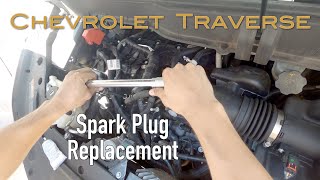
Typical fix: Replace the spark plug. Given the 100,000-mile service interval, it is best practice to replace all six spark plugs 🎬 Watch: Step-by-step guide to replacing plugs and removing the intake manifold. if they are near or past their service life.
Est. part cost: $10-$20 per iridium spark plug - Carbon Buildup on Intake Valves 🟡 Medium Probability The LLT is a direct-injection (GDI) engine. Fuel is injected directly into the cylinder, so it never washes over the intake valves. Oil vapor from the PCV system bakes onto the hot valves, creating hard carbon deposits that disrupt airflow and cause misfires, especially on cold starts. GM has acknowledged this issue across many GDI engines in TSB PIP5029E.
How to confirm: This requires a borescope inspection of the intake ports and valves, which involves removing the upper intake manifold.
Typical fix: Professional cleaning of the intake valves, typically through walnut blasting. This service removes the carbon deposits without damaging the engine. Some owners report success with chemical cleaning methods, but walnut blasting is considered more effective.
Est. part cost: $0 (service cost is labor, typically $500-$1000) - Stretched Timing Chains ⚪ Low Probability The early 3.6L LLT V6 is infamous for premature timing chain stretching. This was often attributed to an overly optimistic Oil Life Monitoring System (OLMS) calibration leading to oil degradation and poor lubrication. A stretched chain can cause camshafts to be out of sync with the crankshaft, leading to misfires. GM issued Special Coverage Adjustment 11340C for 2009 models to address this, which included an ECM reprogram to shorten oil change intervals.
How to confirm: Check for other related codes like P0008, P0016, P0017, or P0018. A professional diagnosis is needed to measure chain deflection, often by checking camshaft deviation angles with a high-end scan tool.
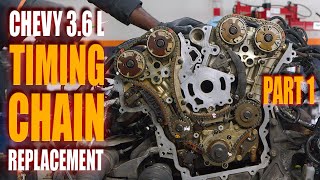
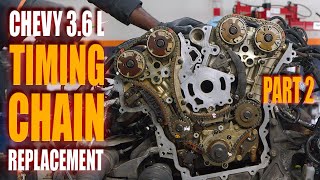
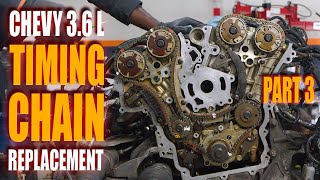
Typical fix: This is a major and expensive repair that involves replacing all three timing chains, tensioners, and guides. The engine often needs to be partially or fully removed from the vehicle. 🎬 Watch: A professional step-by-step guide to replacing the 3.6L timing chains.
Est. part cost: $400-$800 for a complete kit
Rare But Worth Checking
- Clogged or Faulty Fuel Injector: → Shop Fuel Injector While less common than ignition issues, a clogged direct injector can cause a misfire. It can be difficult to diagnose without specialized tools and may require swapping injectors between cylinders to confirm. Resistance values differ by engine: ~11-15 Ohms for LLT and ~1.2-1.8 Ohms for LFX.
- Damaged Injector Wiring Harness: GM TSB #PIP4924D notes that the fuel injector wiring harness can rub against the engine cover or other components and short out, causing injector circuit codes (like P2149 for bank 2, which includes cylinder 6) and misfires.
- Low Engine Compression: A mechanical issue like a worn piston ring, a bad valve, or a failed head gasket can cause a lack of compression, leading to a persistent misfire that does not respond to ignition or fuel system repairs. This requires a compression test to confirm.
- Failed PCV Orifice: → Shop PCV Valve The fixed orifice PCV system is integrated into the rear (Bank 1) valve cover. When it clogs, it can increase crankcase pressure, forcing oil past seals and into the combustion chamber, which can foul spark plugs and cause misfires. While cylinder 6 is on the opposite bank, severe pressure issues can affect all cylinders. The fix requires replacing the entire valve cover.
Diagnosis Steps
- Read the trouble codes with an OBD-II scanner and note any other codes present. Check the freeze-frame data to see the engine conditions when the misfire occurred.
- Confirm the location of cylinder 6. On the Traverse's transverse 3.6L V6, it is on the front bank (closest to the radiator), on the passenger side. The cylinders are arranged 2-4-6 (front) and 1-3-5 (rear).
- Test the ignition system. Swap the ignition coil from cylinder 6 with the coil from cylinder 4 (middle cylinder on the front bank). Clear the codes and drive the vehicle. If the code changes to P0304, the ignition coil is bad and needs to be replaced.
- If the misfire does not move with the coil, inspect the spark plug for cylinder 6. Look for excessive wear, fouling, or damage. Replace if necessary.
- If the ignition system checks out, the next steps involve more complex diagnosis. Consider a fuel injector issue, carbon buildup, or a mechanical compression problem.
- Inspect the fuel injector wiring harness for any signs of chafing or damage, particularly where it runs over the engine, as noted in TSB PIP4924D.
- If timing codes (like P0008/P0017) are present, the timing chains should be professionally inspected for stretching.
- If no other cause is found, a professional may need to perform a compression test and a borescope inspection for carbon buildup.
Parts You'll Likely Need
- Ignition Coil
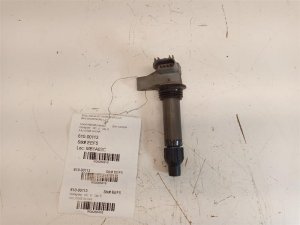
(OEM #12632479 (ACDelco D515C))— This is the most common cause of a single-cylinder misfire on the 3.6L V6 engine.
Trusted brands: ACDelco (OEM), Delphi (GN10493), NGK (48941), Denso
Related Codes That Often Appear With This One
- P0300 — If the misfire condition is intermittent or affects other cylinders, a P0300 (Random Misfire) may be stored alongside P0306. This can point towards a common cause like carbon buildup or a vacuum leak.
- P0302, P0304 — Cylinders 2, 4, and 6 are all on the front bank (Bank 2). A failure on one (P0306) may soon be followed by failures on the others due to shared conditions and age of components.
- P0008, P0017 — These codes indicate an engine timing issue (Engine Position System Performance). If you see them with a P0306, it strongly suggests the misfire is a symptom of a stretched timing chain.
Technical Service Bulletins (TSBs) & Recalls
- PIP5038B: Misfire with DTC P0300 and/or P0301-P0306 - Possible Heat Stressed Ignition Coil
- PIP4924D: Multiple DTCs and/or Crank/No Start, Stall, Misfire - Inspect Fuel Injector Harness
- PIP5029E: Engine Misfires Due To Major Carbon Deposits On The Intake And/Or Exhaust Valves
- 11340C: Special Coverage Adjustment - Timing Chain Wear
- 14404B: Special Coverage Adjustment - Broken 3-5-Reverse Wave Plate
- 14329: Special Coverage Adjustment - Power Steering Pump Wear
Platform-Specific Known Issues
- Real Owner Experience: P0306 on a 2012 Traverse: A user on traverseforum.com with a 2012 Traverse at 144,000 miles reported a P0306 code with a flashing check engine light. They noted the engine was running rough. Other forum members advised swapping the coil from cylinder 6 with cylinder 4 to confirm the failure. The consensus was that if the plugs and coils were original, it was best to replace all six plugs and at least the three front coils (2, 4, 6) due to the vehicle's high mileage.
Mechanic-Grade Diagnostic Values
- Ignition Coil Primary Resistance — expected: 0.8 - 1.2 Ohms. Failure: A reading of infinity (Open Loop) or significantly outside this range.
- Ignition Coil Secondary Resistance — expected: 5.0 - 7.0 kOhms (5,000 - 7,000 Ohms). Failure: A reading of infinity (Open Loop) or significantly outside this range.
- Fuel Injector Resistance (2009-2012 LLT Engine) — expected: 11.0 - 15.0 Ohms. Failure: A reading far outside this range, indicating a failed high-impedance injector.
- Fuel Injector Resistance (2013-2017 LFX Engine) — expected: 1.2 - 1.8 Ohms. Failure: A reading outside this very narrow range, indicating a failed low-impedance injector.
- Low-Side Fuel Pressure (Key On, Engine Off) — expected: 55 - 60 PSI. Failure: Pressure significantly below this range indicates a weak in-tank fuel pump or clogged filter.
Hidden / Shadow Codes Worth Checking
- Misfire History Counter (Live Data): A professional scan tool can display a live, running count of misfire events for each cylinder, even if the count isn't high enough to set a hard P030x code. This is invaluable for confirming the misfire is isolated to cylinder 6. (see via Accessible in the engine data list or misfire data graph function on a GM Tech 2, GDS2, or equivalent high-end scan tool.)
Scan Tool Commands That Help
- GDS2 / Tech2: Cylinder Power Balance Test — This function sequentially disables each fuel injector and measures the corresponding drop in engine RPM. If disabling cylinder 6's injector causes little or no change in RPM, it definitively confirms that cylinder 6 was not contributing power, isolating the fault without swapping parts.
- GDS2 / Tech2: Active Fuel Injector Test (AFIT) — After ruling out ignition issues, this command fires the cylinder 6 injector and measures the fuel rail pressure drop. A smaller pressure drop compared to other cylinders indicates a clogged or failing injector.
- GDS2 / Tech2: Crankshaft Position Variation Learn (CASE Relearn) — This procedure should be performed after major engine work (like a timing chain replacement) or if false misfires are suspected after other repairs. It recalibrates the ECM's interpretation of the crankshaft position sensor signal to ensure accurate misfire detection.
Wiring & Ground Locations
- Bank 2 Cylinder Layout — The front bank of cylinders, closest to the radiator. From driver's side to passenger side, the cylinders are 2, 4, 6. Cylinder 6 is on the passenger side.. Correctly identifying cylinder 6 is the first step. It is on the easily accessible front bank, contrary to some common assumptions.
- G102 / G103 — These are primary engine block grounds, typically located on the rear of the cylinder heads or engine block.. A loose or corroded engine ground can cause a variety of erratic electrical issues, including weak spark or faulty sensor readings that can lead to misfire codes.
- Injector Harness Chafing Point — The wiring harness for the fuel injectors, particularly where it runs over the top of the engine and near the valve covers.. As noted in TSB #PIP4924D, this harness can rub through on sharp edges of the engine, causing a short in the injector circuit for cylinder 6, leading to a misfire and potentially an injector circuit code.
"I Checked Everything" — The Actual Cause
- A common scenario for a random misfire (P0300) accompanied by lean codes (P0171/P0174) on the 3.6L V6 is passing a smoke test, yet still having a vacuum-related issue. The hidden cause is often a clogged fixed PCV orifice inside the rear (Bank 1) valve cover. This clog increases crankcase pressure, forcing oil vapor and unmetered air into the intake system through seals and gaskets, fouling spark plugs and creating a lean condition that a smoke test won't find. The fix is to replace the entire rear valve cover assembly.
OEM Part Supersession History
12651450→12693218, and later 12700436— Updates to the timing chain kits to improve durability and address premature stretching issues on the 3.6L V6 engine.
Heads up: When replacing timing chains, it is critical to use the entire updated kit, which includes new chains, guides, and tensioners, as mixing old and new design parts is not recommended.
Model Year Variations Within This Range
- 2009-2012: These models use the 3.6L LLT engine. Key features include a separate aluminum intake manifold, a Bosch ECM, and high-impedance fuel injectors (~11-15 Ohms). These engines are more susceptible to the timing chain stretching issue.
- 2013-2017: These models use the updated 3.6L LFX engine. It features cylinder heads with integrated exhaust manifolds, a composite intake manifold, a Delphi ECM, and low-impedance fuel injectors (~1.2-1.8 Ohms). The timing chain design was improved, making them less prone to failure than the early LLT engines.
Diagnostic Flowchart
Other Known Issues on This Vehicle
Issues unrelated to this code that are worth knowing about as an owner of this generation:
- Premature Timing Chain Stretching 🔴 High — Very common on 2009-2012 LLT engines, typically between 70,000 and 120,000 miles. Often linked to extended oil change intervals. (Ref: Special Coverage Adjustment 11340C (Expired) extended warranty to 10 years/120,000 miles for 2009 models.)
- Cracked 3-5-R Transmission Wave Plate 🔴 High — Common on 2009 models with the 6T70/6T75 transmission, leading to loss of 3rd, 5th, and Reverse gears. Can occur as early as 30,000 miles but more common closer to 100,000. (Ref: Special Coverage Adjustment 14404B (Expired) covered repairs for 10 years/120,000 miles.)
- Power Steering Pump Failure or Noise 🟠 Medium — Widespread issue causing whining noises, fluid leaks, or a sudden loss of power assist, particularly at low speeds. Affects 2009-2011 models most. (Ref: Special Coverage Adjustment 14329 covered pump replacement for 10 years/150,000 miles. TSB 10-02-32-002A addresses system noise.)
- Leaking Water Pump 🟠 Medium — The water pump seal is a common failure point, leading to coolant leaks on the passenger side of the engine. Often occurs after 100,000 miles.
- Clogged PCV Orifice / High Oil Consumption 🟠 Medium → Shop PCV Valve — The fixed PCV orifice in the rear valve cover can clog, leading to increased crankcase pressure, high oil consumption, and fouled spark plugs.
Used vs. New Parts: Buying Guide for This Vehicle
When a used part is the smart pick: For this repair, a used part is a reasonable choice for a valve cover (to fix a PCV issue) or an intake manifold if it's cracked. Buying used ignition coils or fuel injectors is risky as they are common wear items with no easy way to determine their remaining lifespan.
Donor-vehicle mileage cap: roughly under 80000 miles for the part to have meaningful remaining life.
What to inspect on the donor part:
- For a valve cover, ensure there are no cracks and the integrated PCV baffle is not visibly sludged up.
- For an intake manifold, check for cracks, especially around mounting points and seams.
- Verify the donor vehicle's year to ensure you are getting the correct part for an LLT vs. LFX engine, as the intake manifolds are different.
OEM-only on this vehicle (don't cheap out):
- Timing Chain Kit: Given the history of premature failures, only use a new, updated OEM (ACDelco) or a highly reputable aftermarket kit. Avoid used timing components entirely.
Aftermarket brands forum-validated for this vehicle:
- Ignition Coils: Delphi, Denso, NGK are considered reliable alternatives to ACDelco.
- Spark Plugs: NGK or Bosch Iridium plugs are solid choices if ACDelco is unavailable.
Brands owners have reported issues with on this vehicle:
- Unnamed or 'white-box' ignition coils and sensors from online marketplaces often have high failure rates and should be avoided to prevent repeat repairs.
Real Owner Stories
Aggregated from forums and TSBs cited above. Mileages and costs reflect what owners reported in those sources.
2012 Chevrolet Traverse 3.6L V6 — 144000 miles
Symptoms: Check engine light was flashing and the engine was running noticeably rough.
What fixed it: The owner was advised to swap coils to confirm the failure; the consensus for resolution at this mileage was replacing all six spark plugs and the three front-bank ignition coils.
Source hint: traverseforum.com thread titled 'P0306 Misfire Cylinder 6'
2011 Chevrolet Traverse 3.6L V6 — 60000 miles
Symptoms: Experienced a P0306 code indicating a misfire on cylinder 6.
What fixed it: The owner successfully resolved the issue by replacing the ignition coil on cylinder 6.
Source hint: traverseforum.com thread titled 'P0306 on 2011 Traverse'
Chevrolet Traverse 3.6L V6 — NHTSA Report
Symptoms: An owner reported that the car started to shake, buck, and slow down before the engine light came on with code P0306.
What fixed it: A dealer found intermittent codes P0305 and P0306 and performed an emissions service and cleaning to address the issue (NHTSA ODI #10689415).
Source hint: NHTSA ODI #10689415
Related OBD-II Codes
Frequently Asked Questions
Where is cylinder 6 located on my Chevrolet Traverse 3.6L V6?
Is there a TSB for ignition coil failures on the 2009 Traverse?
My 2011 Traverse has a P0306 code; do I need to replace all the coils?
Does the 3.6L LLT engine have a specific issue with carbon buildup causing misfires?
Is the timing chain issue on my 2009 Traverse covered by GM?
What spark plugs should I use for my Traverse to fix a P0306?
Helpful Videos

We Have This Part in Stock

The information in this article is provided for general reference and educational purposes only. Vehicle specifications, procedures, and part compatibility can vary by production date, trim level, and region. Always consult your vehicle's factory service manual and verify part numbers before purchasing or performing repairs. Safety-critical components such as airbags, seat belts, and braking systems should be installed by a qualified professional.
- Chevrolet Traverse:
- 🧭 Diagnostic Flowchart
- 🎬 Helpful Videos
- 🛍️ Shop This Part
- What's Unique About the 2009-2017 Chevrolet Traverse
- Symptoms You May Notice
- Most Likely Causes
- Rare But Worth Checking
- Diagnosis Steps
- Parts You'll Likely Need
- Related Codes That Often Appear With This One
- Technical Service Bulletins (TSBs) & Recalls
- Platform-Specific Known Issues
- Mechanic-Grade Diagnostic Values
- Hidden / Shadow Codes Worth Checking
- Scan Tool Commands That Help
- Wiring & Ground Locations
- "I Checked Everything" — The Actual Cause
- OEM Part Supersession History
- Model Year Variations Within This Range
- Other Known Issues on This Vehicle
- Used vs. New Parts: Buying Guide for This Vehicle
- Real Owner Stories
- 2012 Chevrolet Traverse 3.6L V6 — 144000 miles
- 2011 Chevrolet Traverse 3.6L V6 — 60000 miles
- Chevrolet Traverse 3.6L V6 — NHTSA Report
- Related OBD-II Codes
- Frequently Asked Questions
- 🎟️ Get 5% Off