

P0306 on 2018-2023 Chevrolet Traverse: Cylinder 6 Misfire Causes and Fixes
P0306 means the #6 cylinder is misfiring. This is most often caused by a bad ignition coil or a worn spark plug. Since cylinder 6 is on the rear bank (closest to the firewall), replacing these parts requires removing the intake manifold, so it's wise to replace all three rear coils and all six spark plugs at once to avoid repeat labor.
- P0306 on a 2018-2023 Traverse points to a misfire in cylinder 6, which is on the rear bank against the firewall.
- The most probable causes are a bad ignition coil or a worn spark plug.
- Repairing cylinder 6 requires removing the intake manifold, a 4/5 difficulty DIY job. Due to the labor, it is critical to replace all three rear ignition coils, all six spark plugs, and the intake gaskets at the same time.
- Do not drive the vehicle if the check engine light is flashing, as this can quickly damage the catalytic converter, leading to a much more expensive repair.
- If new coils and plugs do not fix the issue, the next most likely cause is a faulty fuel injector.
What's Unique About the 2018-2023 Chevrolet Traverse
The 3.6L V6 LGY engine in the Traverse is a direct-injection engine, which makes it prone to carbon buildup on the intake valves over time, a potential cause of misfires. The most significant platform-specific challenge for a P0306 code is the location of cylinder 6. 🎬 Watch: Understanding the causes and fixes for a P0306 code. It's on the rear bank, and accessing its ignition coil and spark plug requires the removal of the upper intake manifold, making the repair more labor-intensive than for the front cylinders. This design is shared with platform mates like the Buick Enclave and GMC Acadia.
Symptoms You May Notice
- Flashing or solid Check Engine Light
- Rough or shaking idle
- Engine hesitation or stumbling during acceleration
- Noticeable loss of power
- Reduced fuel economy
- Possible raw fuel smell from the exhaust
- Replacing only the cylinder 6 spark plug and coil without replacing the others on the rear bank. Given the labor to remove the intake manifold, it's inefficient and risks a repeat job when another coil or plug fails soon after.
- Assuming a vacuum leak is at the manifold gasket when a smaller, harder-to-find vacuum hose is cracked or disconnected.
Most Likely Causes
- Faulty Ignition Coil 🔴 High Probability → Shop Ignition Coil Coil-on-plug systems are common failure points due to constant heat exposure. While no specific recalls exist, coil failure is a known issue on the GM 3.6L V6.
How to confirm: Swap the ignition coil from cylinder 6 with another cylinder (e.g., cylinder 2 on the front bank). Clear the codes and drive the vehicle. If the code changes to P0302, the ignition coil is faulty. This is the most definitive DIY diagnostic step.
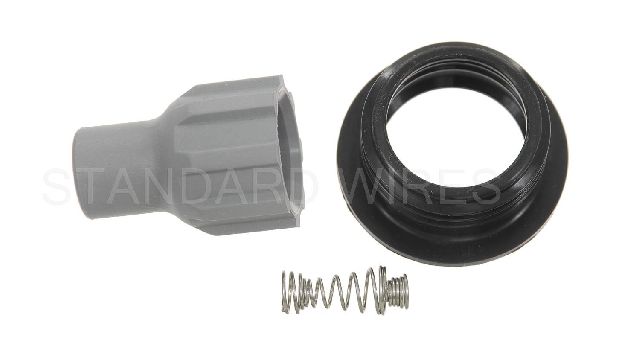
Typical fix: Replace the faulty ignition coil. It is highly recommended to replace all three coils on the rear bank (cylinders 1, 3, 5) at the same time due to the 2.5+ hours of labor involved in accessing them.
Est. part cost: $30-$70 per coil - Worn or Fouled Spark Plug 🔴 High Probability → Shop Spark Plug Because accessing the rear bank of plugs requires intake manifold removal, spark plug changes are often delayed beyond the recommended 60,000-100,000 mile service interval, 🎬 Watch: Step-by-step guide to replacing spark plugs on the 3.6L V6. leading to wear and misfires.
How to confirm: After removing the ignition coil, remove the spark plug and inspect it. Look for a worn-down electrode, heavy carbon deposits, oil fouling, or a cracked porcelain insulator.
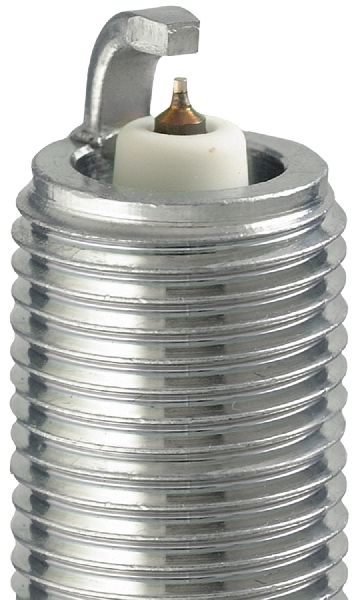
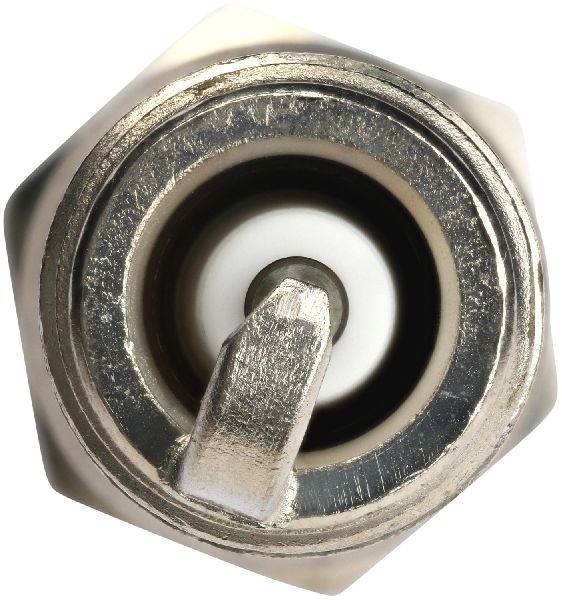
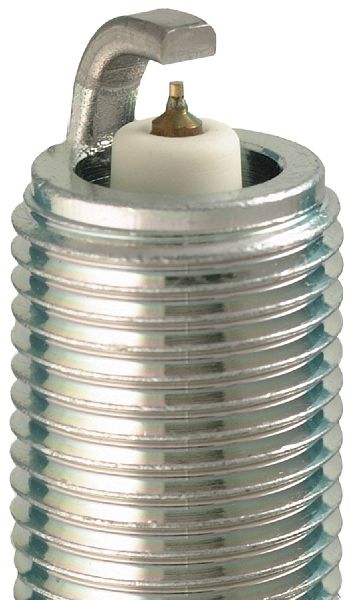
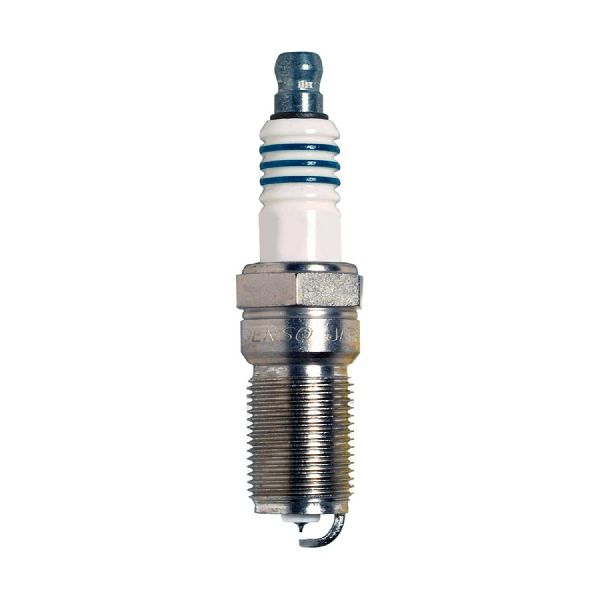
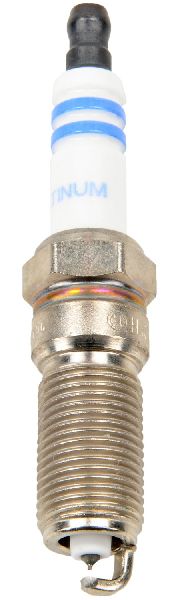
Typical fix: Replace the spark plug. It is best practice to replace all six spark plugs (typically Iridium type) at the same time, especially since the intake manifold must be removed for the rear bank.
Est. part cost: $10-$25 per plug - Clogged or Faulty Fuel Injector 🟡 Medium Probability → Shop Fuel Injector Leaking or clogged fuel injectors are a known issue on GM direct-injection (GDI) engines and can cause rich/lean conditions or misfires in a specific cylinder.
How to confirm: This is more difficult to diagnose. A professional can perform a fuel injector balance test. A DIY method is to check fuel trims with an advanced OBD-II scanner; abnormal short-term or long-term fuel trim on Bank 2 can point to an injector issue. Swapping injectors between cylinders is possible but very labor-intensive.
Typical fix: Replace the faulty fuel injector. Like coils and plugs, accessing the rear bank injectors requires intake manifold removal, so replacing them as a set is often recommended if one fails.
Est. part cost: $50-$120 per injector - Intake Manifold Gasket Leak ⚪ Low Probability → Shop Engine Intake Manifold The intake manifold gaskets are disturbed every time the rear coils or plugs are serviced. If not replaced or seated correctly, they can cause a vacuum leak that leans out the mixture for the rear bank cylinders, leading to misfires.
How to confirm: With the engine running, spray brake cleaner or a propane torch (unlit) around the intake manifold sealing area. If the engine RPM changes, a leak is present. A professional smoke test is a more precise and safer method.
Typical fix: Replace the upper and lower intake manifold gaskets. This should be done automatically whenever the manifold is removed for other service.
Est. part cost: $40-$80 for a gasket set
Rare But Worth Checking
- Internal Engine Issues (Low Compression): While rare, severe issues like a bad piston, worn rings, or cylinder head problems can cause a persistent P0306. GM has issued TSB 18-NA-115 for rare instances of block porosity causing coolant leaks into a cylinder, leading to cold-start misfires that may set a P0300 code. A compression test is needed to confirm mechanical integrity.
- Valvetrain Problems: Issues with lifters, rockers, or camshaft actuators can cause misfires. TSB PIP5493B (now superseded) discussed misfires related to rocker arm and camshaft actuator issues on some GM 3.6L engines. This usually requires advanced diagnostics and listening for valvetrain noise.
Diagnosis Steps
- Confirm the code P0306 is present using an OBD-II scanner. Check for any other stored codes and review Freeze Frame data to see the conditions when the misfire occurred.
- Check live data for fuel trims on Bank 2 (the rear bank). Highly positive long-term fuel trim could suggest a vacuum leak affecting that bank.
- Perform an ignition coil swap. Move the ignition coil from cylinder 6 to cylinder 2 (an easily accessible front cylinder). Clear the codes and drive. If the code returns as P0302, the coil is bad.
- If the misfire remains on cylinder 6 (P0306 returns), the coil is likely good. The next step is to inspect the spark plug, which requires removing the intake manifold.
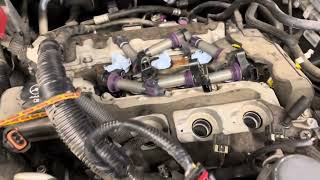
- Plan for Intake Manifold Removal. 🎬 See this walkthrough for removing the manifold and replacing coils. Accessing cylinder 6 requires this step. It is strongly recommended to have new intake gaskets, all six spark plugs, and the three rear ignition coils on hand before starting.
- Remove the intake manifold. Inspect the spark plug for cylinder 6. Regardless of its condition, replace all six spark plugs and the three rear ignition coils (1, 3, 5) while access is available.
- While the manifold is off, inspect for signs of a leaking intake gasket (e.g., dirt tracks, damage) and clean the mating surfaces thoroughly before installing the new gaskets.
- If spark and ignition components are replaced and the misfire persists, the issue is likely fuel or mechanical. The fuel injector for cylinder 6 is the next logical suspect.
- A compression test on cylinder 6 should be performed if ignition and fuel system checks do not resolve the issue. Low compression (e.g., below 100-120 PSI or more than 15% different from other cylinders) indicates a serious internal engine problem.
Parts You'll Likely Need
- Ignition Coil
(OEM #12674754)— This is one of the two most common failure points for a P0306 code. Due to the labor involved, it's recommended to replace all three rear coils if one fails.
Trusted brands: ACDelco (OE), Delphi, NGK, Denso
OEM price range: $50-$80
Aftermarket price range: $30-$60 - Spark Plug (Iridium)
(OEM #12680223)— Spark plugs are a routine maintenance item and a primary cause of misfires. It is essential to replace them all when accessing the difficult-to-reach rear bank.
Trusted brands: ACDelco (OE), NGK
OEM price range: $15-$25
Aftermarket price range: $10-$20 - Intake Manifold Gasket Set
(OEM #12680085)— These gaskets must be replaced whenever the intake manifold is removed to service the rear bank of coils and plugs to prevent vacuum leaks.
Trusted brands: ACDelco (OE), Fel-Pro
OEM price range: $50-$90
Aftermarket price range: $30-$60
Related Codes That Often Appear With This One
- P0300 — If the misfire becomes more widespread due to a systemic issue like a major vacuum leak or fuel delivery problem, a P0300 (Random/Multiple Cylinder Misfire) code may appear alongside P0306.
- P0301, P0303, P0305 — If a problem affects the entire rear bank of cylinders, such as a leaking intake manifold gasket for that bank, you may see misfire codes for the other cylinders on that bank as well.
Technical Service Bulletins (TSBs) & Recalls
- 18-NA-115: Addresses a rare condition of engine block porosity causing cold start misfires due to coolant leakage into a cylinder.
- PIP5493B (Superseded): Discussed potential misfires (P0300-P0306) caused by issues with rocker arms or camshaft actuators on some GM 3.6L engines.
- Bulletin #PIP5038B: Notes that vehicles may have a Service Engine Soon Malfunction Indicator Lamp on with Diagnostic Trouble Codes ranging from P0300 to P0306 and P0351 to P0356.
Platform-Specific Known Issues
- Carbon buildup on the intake valves is a known issue for the 3.6L direct-injection engine and can cause misfires, particularly on cold starts. This issue is not easily fixed and may require professional walnut blasting service.
- TSB 18-NA-115 describes a rare condition of engine block porosity that can cause coolant to leak into a cylinder, resulting in a cold-start misfire (often P0300) that disappears when warm.
Mechanic-Grade Diagnostic Values
- Cylinder Compression — expected: 100-150 PSI and consistent across all cylinders (within 15% of each other). Failure: A reading below 100 PSI, or a value that is more than 15% lower than the average of the other cylinders, indicates a mechanical engine problem.
Hidden / Shadow Codes Worth Checking
- Misfire Counters: While not a 'code' in the traditional sense, GM's GDS2 factory scan tool allows a technician to view live misfire counters for each individual cylinder. This is more granular than Mode 6 data and can show misfires as they happen, even if they aren't frequent enough to set a DTC. This helps confirm if the misfire is constant or intermittent. (see via GM GDS2 (Global Diagnostic System 2) or high-end professional scan tools with GM-specific software.)
Scan Tool Commands That Help
- GDS2 / Professional Scan Tool: Cylinder Power Balance — This graphical test helps to quickly identify a weak cylinder by comparing the RPM contribution of each cylinder. It can help confirm the misfire is on cylinder 6 before disassembly.
- GDS2 / Professional Scan Tool: Injector Balance Test — Used after ignition issues have been ruled out. This test fires each injector for a set amount of time and measures the corresponding drop in fuel pressure to see if the cylinder 6 injector is flowing significantly more or less fuel than the others.
Wiring & Ground Locations
- G110 / G113 — On the previous generation Traverse, these critical engine grounds were located on the engine block or at the engine-to-transmission mounting stud. G110 was at the right rear of the engine. G113 was at the engine-to-transmission stud. Their locations are likely similar on the 2018+ models and are critical for the ECM and ignition system.. The Engine Control Module (ECM) and ignition coils rely on clean, tight engine grounds. A loose or corroded ground at these locations can cause insufficient spark energy, erratic sensor readings, and phantom misfires that are difficult to diagnose.
- ECM Connector X2 — This is one of the main connectors at the Engine Control Module.. Based on diagrams from a similar GM 3.6L engine, the control circuit for the cylinder 6 ignition coil is a specific pin on this connector. A voltage drop test between the coil connector and the ECM connector pin can identify a wiring issue (corrosion, break) in the harness without having to replace the ECM.
Real Owner Repair Stories
- YouTube channel 'Hands On Auto Training' (2015 Chevrolet Traverse (previous generation, but illustrates a critical diagnostic principle)) — Multiple intermittent electrical issues, including the dash displaying a foreign language. Problems would disappear when a scan tool was plugged into the DLC.
❌ Tried (didn't work) Initial diagnosis was confusing due to the wide range of intermittent symptoms.
✅ What actually fixed it A bad body ground at G302, located at the base of the right-side B-pillar. The scan tool was providing a temporary ground path through pins 4 and 5 of the DLC, which is why the symptoms vanished when it was connected. This highlights how a seemingly unrelated ground can cause major powertrain and communication issues. - NHTSA ODI #10689415 — An owner reported that the car started to shake, buck, and slow down before the engine light came on. A dealer found an intermittent P0306 code and performed an emission service, but the issue returned 60 days later with codes P0305 and P0306.
OEM Part Supersession History
12621750, 12658183, 12573190→12674754 (current)— Standard part evolution for improved durability, winding protection, and performance.
Heads up: The current part number, 12674754, is the correct and direct replacement for the earlier parts on this application.
Model Year Variations Within This Range
- 2022-2023: The Traverse received a mid-cycle refresh for the 2022 model year, which included updated exterior styling and interior features. However, the powertrain, consisting of the 3.6L LGY V6 and 9-speed automatic transmission, was carried over without significant changes. Therefore, the causes and diagnostic procedures for a P0306 code are identical for all years in the 2018-2023 range.
Diagnostic Flowchart
Other Known Issues on This Vehicle
Issues unrelated to this code that are worth knowing about as an owner of this generation:
- Shift to Park Message 🟠 Medium — Very common on 2018-2019 models. A message appears and the vehicle won't shut off completely, causing battery drain. (Ref: TSB 19-NA-206 describes a fix involving a new shifter harness/microswitch.)
- Transmission Shudder (9-Speed 9T65) 🟠 Medium — Commonly reported, especially between 40k-100k miles. A vibration or shudder is felt during light acceleration or between shifts. (Ref: TSB 18-NA-091 suggests a software update for some cases. Fluid changes are the common remedy.)
- Start/Stop Accumulator Bolt Failure 🔴 High — Affects a large number of 2018-2020 models. Missing bolts can cause a transmission fluid leak, loss of propulsion, and fire risk. (Ref: Recall N202313440.)
- Half-Shaft Retaining Ring Missing 🔴 High — Affects a specific batch of 2023 models. Can lead to loss of drive power or vehicle rollaway. (Ref: Recall 23V042000.)
Used vs. New Parts: Buying Guide for This Vehicle
When a used part is the smart pick: For this specific repair, using used parts is strongly discouraged. The primary failures are wear-and-tear items (plugs, coils, injectors) located in a difficult-to-access area. The labor cost to remove the intake manifold is significant, making the risk of a premature failure of a used part a poor economic choice.
What to inspect on the donor part:
- Not applicable, as used parts are not recommended for this repair.
OEM-only on this vehicle (don't cheap out):
- Engine Control Module (ECM). If the ECM is the confirmed cause, using a new or professionally remanufactured OEM unit is critical to ensure proper software and function. Used ECMs can create complex issues with anti-theft systems and vehicle-specific programming.
Aftermarket brands forum-validated for this vehicle:
- Ignition Coils: Denso, Delphi, NGK are reputable alternatives to ACDelco.
- Spark Plugs: NGK is an OE supplier and a trusted alternative to ACDelco.
- Intake Gaskets: Fel-Pro is a highly-regarded aftermarket gasket manufacturer, often considered equal to or even preferred over OEM by some technicians for its robust designs.
Brands owners have reported issues with on this vehicle:
- Unnamed, 'white-box' ignition coils and injectors sold on online marketplaces. These parts often have a high failure rate and may not meet original equipment specifications for performance and longevity.
Real Owner Stories
Aggregated from forums and TSBs cited above. Mileages and costs reflect what owners reported in those sources.
2020 Chevrolet Traverse 3.6L V6 — 87000 miles
Symptoms: The owner reported a noticeable shudder while driving.
What fixed it: The community advised diagnosing for a misfire requiring spark plug or coil replacement, or checking for the common transmission shudder issue.
Source hint: reddit.com/r/ChevyTraverse
2018-2023 Chevrolet Traverse 3.6L V6
Symptoms: Misfire codes (P030X) occurring specifically on the rear bank cylinders.
What fixed it: Replacing all three rear bank coils and all six spark plugs while the intake manifold was removed for access.
Source hint: traverseforum.com
NHTSA ODI #10689415
Symptoms: An owner reported that while driving, the vehicle began to shake, buck, and lose speed, accompanied by a Check Engine Light.
What fixed it: A dealership identified an intermittent P0306 code and performed an emission service; however, the misfire returned shortly after with both P0305 and P0306 codes.
Related OBD-II Codes
Frequently Asked Questions
Why is it recommended to replace all three rear ignition coils on my Traverse if only cylinder 6 is misfiring?
Does TSB 18-NA-115 apply to my P0306 code?
Could my P0306 misfire be related to the transmission shudder I'm feeling?
Is there a specific TSB for rocker arm or camshaft issues causing misfires on the 3.6L engine?
How often should I change the spark plugs on my 2018-2023 Traverse to prevent misfires?
Can a leaking intake manifold gasket cause a P0306 code?
Helpful Videos
We Have This Part in Stock

The information in this article is provided for general reference and educational purposes only. Vehicle specifications, procedures, and part compatibility can vary by production date, trim level, and region. Always consult your vehicle's factory service manual and verify part numbers before purchasing or performing repairs. Safety-critical components such as airbags, seat belts, and braking systems should be installed by a qualified professional.
- Chevrolet Traverse:
- 🧭 Diagnostic Flowchart
- 🎬 Helpful Videos
- 🛍️ Shop This Part
- What's Unique About the 2018-2023 Chevrolet Traverse
- Symptoms You May Notice
- Most Likely Causes
- Rare But Worth Checking
- Diagnosis Steps
- Parts You'll Likely Need
- Related Codes That Often Appear With This One
- Technical Service Bulletins (TSBs) & Recalls
- Platform-Specific Known Issues
- Mechanic-Grade Diagnostic Values
- Hidden / Shadow Codes Worth Checking
- Scan Tool Commands That Help
- Wiring & Ground Locations
- Real Owner Repair Stories
- OEM Part Supersession History
- Model Year Variations Within This Range
- Other Known Issues on This Vehicle
- Used vs. New Parts: Buying Guide for This Vehicle
- Real Owner Stories
- 2020 Chevrolet Traverse 3.6L V6 — 87000 miles
- 2018-2023 Chevrolet Traverse 3.6L V6
- NHTSA ODI #10689415
- Related OBD-II Codes
- Frequently Asked Questions
- 🎟️ Get 5% Off