

P0306 on 2011-2018 Dodge Charger: Cylinder 6 Misfire Causes and Fixes
P0306 indicates a misfire in cylinder 6. For the 3.6L V6, this is often a symptom of a serious cylinder head issue covered by a warranty extension (X56) for 2011-2013 models, which extends coverage to 10 years or 150,000 miles. For all engines, start by checking the ignition coil and spark plug for cylinder 6. A coil swap is a simple diagnostic test. For Hemi V8s, a persistent P0306 can be a sign of internal engine damage like a failed lifter and worn camshaft.
- P0306 is a misfire on cylinder 6. The most common, easy-to-fix causes are a bad ignition coil or a worn spark plug.
- A simple DIY diagnostic is to swap the cylinder 6 ignition coil with another cylinder's coil. If the trouble code follows the coil, you've found the problem.
- If you have a 2011-2013 Charger with the 3.6L V6, a P0306 code is a strong indicator of the known cylinder head defect. Contact a Dodge dealer with your VIN to check for warranty extension coverage before paying for repairs.
- Driving with a flashing check engine light can quickly damage your catalytic converter, turning a small repair into a very expensive one.
What's Unique About the 2011-2018 Dodge CHARGER
For the 2011-2018 Dodge Charger, the cause of a P0306 code heavily depends on the engine. On models with the 3.6L Pentastar V6, especially from 2011-2013, this code is a well-documented symptom of a potential left-side cylinder head failure due to defective valve seats. This issue was so common that Chrysler issued Technical Service Bulletin (TSB) 09-002-14 and a warranty extension (X56) to address it. For Hemi V8 engines (5.7L, 6.4L), the causes are more typical, often related to ignition components or, in some high-mileage cases, camshaft and lifter wear associated with the Multi-Displacement System (MDS), commonly known as the 'Hemi tick'.
Diagnostic Flowchart
Tap your situation to follow the diagnostic path that matches what you're seeing on this vehicle.
Symptoms You May Notice
- Check Engine Light (CEL) is on or flashing
- Rough idle or engine shaking
- Hesitation or stumbling during acceleration
- Noticeable loss of engine power
- Reduced fuel economy
- Smell of unburnt fuel from the exhaust
- A persistent ticking or tapping sound from the engine bay (especially in Hemi V8s indicating a possible lifter issue)
- Replacing only the spark plug when the ignition coil is the actual cause.
- Replacing ignition parts on a 2011-2013 3.6L V6 when the root cause is the known cylinder head issue, leading to wasted time and money. Always consider the TSB for these specific models.
- Mistaking a vacuum leak for a faulty component. A cracked hose or bad intake gasket can lean out the mixture on one cylinder and cause a misfire.
Most Likely Causes
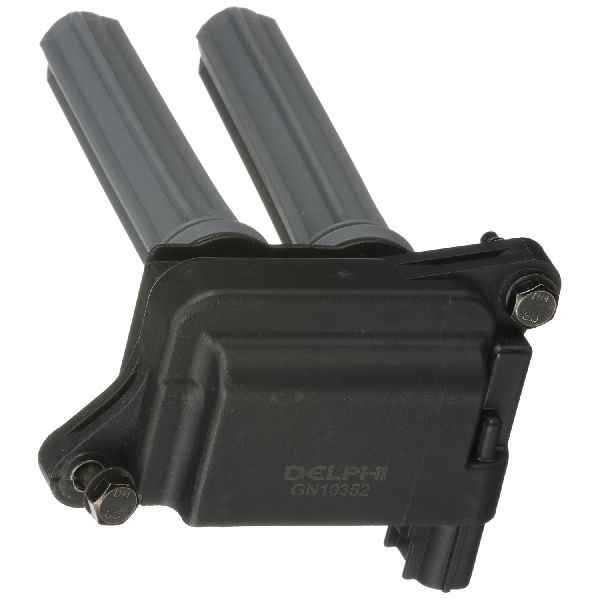
- Faulty Ignition Coil 🔴 High Probability → Shop Ignition Coil Coil-on-plug systems are common failure points due to constant exposure to high heat and vibration. It's a frequent issue across all engine options and a primary suspect for any single-cylinder misfire.
How to confirm: The easiest way to confirm a bad coil is to swap the ignition coil from cylinder 6 with another cylinder (e.g., cylinder 4). Clear the codes and drive the vehicle. If the code changes to P0304, the coil is faulty. This is a widely recommended first diagnostic step in owner forums.
Typical fix: Replace the faulty ignition coil. It's often recommended to replace the corresponding spark plug at the same time.
Est. part cost: $30-$75 - Worn or Fouled Spark Plug 🔴 High Probability → Shop Spark Plug Spark plugs are a regular maintenance item with a finite lifespan. Plugs on the 3.6L V6 can be difficult to access, especially those under the intake manifold, leading to deferred maintenance. Hemi engines use 16 spark plugs (two per cylinder), increasing the chance of a single plug failing.
How to confirm: Remove the spark plug from cylinder 6 and inspect it for wear (worn electrode), carbon fouling, oil, or coolant contamination. A fuel-soaked plug points towards an ignition or compression issue, while a clean-looking plug might point away from spark as the root cause.
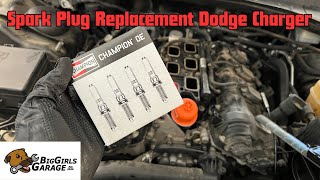
Typical fix: Replace the spark plug in cylinder 6. It is best practice to replace all spark plugs at the same time 🎬 Watch: Step-by-step guide to changing spark plugs on the 3.6L V6. for even performance and to avoid future misfires.
Est. part cost: $10-$25 per plug - Cylinder Head Failure (3.6L Pentastar V6 Only) 🟡 Medium Probability → Shop Engine Cylinder Head Early (2011-2013) 3.6L Pentastar engines had a manufacturing defect with the valve seats on the left cylinder head (cylinders 2, 4, 6), causing compression loss and misfires. This was addressed by TSB 09-002-14 and warranty extension X56 (10 years/150,000 miles).
How to confirm: If ignition and fuel system checks pass, a cylinder leak-down test is the definitive diagnostic step. Per TSB 09-002-14, a leakage of 25% or more on cylinder 2, 4, or 6 confirms the internal engine problem. Technicians often hear air escaping through the exhaust or intake when performing this test.
Typical fix: Replacement of the left cylinder head with an updated part. This is a major repair. Check with a Dodge dealer with your VIN to see if your vehicle is covered under the X56 warranty extension, even if you are not the original owner.
Est. part cost: $500-$1500 for a remanufactured head assembly - Faulty Fuel Injector ⚪ Low Probability → Shop Fuel Injector Injectors can become clogged with fuel deposits or fail electrically over time, though it's less common than ignition issues. A clogged injector will cause a lean misfire, while a stuck-open injector can cause a rich condition and potentially hydro-lock the cylinder.
How to confirm: After ruling out spark and compression, you can test the injector. A more involved diagnostic is to swap the fuel injector from cylinder 6 with another cylinder. If the misfire code follows the injector, it needs to be replaced. This is more labor-intensive than a coil swap, especially on the 3.6L where the intake manifold must be removed.
Typical fix: Replace the faulty fuel injector. It's often recommended to replace all injectors on that bank for balanced fueling.
Est. part cost: $40-$100
Rare But Worth Checking
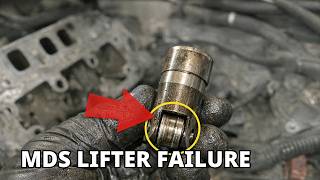
- Worn Camshaft Lobe / Failed Lifter (Hemi V8): → Shop Engine Camshaft The 5.7L and 6.4L Hemi engines can suffer from a 'Hemi tick' caused by a failed roller lifter, often on a cylinder with MDS (Multi-Displacement System). The needle bearings in the lifter fail, causing the roller to stop spinning and grind a flat spot on the camshaft lobe. This will cause a persistent misfire on the affected cylinder (like P0306) and requires significant internal engine repair, including a new camshaft and a full set of lifters. 🎬 Watch: How to identify the Hemi tick and camshaft failure.
- Worn Rocker Arms (3.6L Pentastar V6): → Shop Engine Rocker Arm In higher mileage Pentastar engines, the roller rocker arms can fail, often presenting with a loud ticking noise. Similar to the Hemi lifter issue, a failed rocker arm can damage the camshaft lobe, leading to a misfire. This is a mechanical failure that requires removing the valve cover for inspection. Some mechanics recommend replacing lifters and rockers as a preventative measure if doing a cylinder head replacement.
Diagnosis Steps
- Read the code with an OBD-II scanner and confirm P0306 is present. Note any other codes, as they can provide critical clues (e.g., P0302, P0304, P0206).
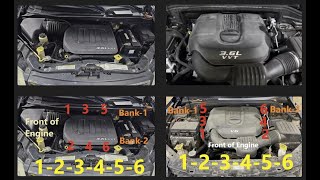
- Identify Cylinder 6. 🎬 See this video to correctly locate Bank 1 and Bank 2. On the 3.6L V6, it's the rearmost cylinder on the passenger side (front of the engine). On Hemi V8s, it's the third cylinder back on the passenger side.
- Perform an Ignition Coil Swap. This is the simplest and most effective first step. Swap the ignition coil from cylinder 6 with another cylinder (e.g., cylinder 4, which is easier to access). Clear the codes and run the engine. If the code changes to P0304, the ignition coil is bad and needs replacement.
- Inspect the Spark Plug. If the code remains P0306, remove the spark plug from cylinder 6. Check for wear, damage, or fouling (black soot, white ash, or oil). Compare it to a plug from a working cylinder. Replace if necessary. A plug that smells strongly of fuel suggests a lack of spark or compression.
- Check the Fuel Injector. If the coil and plug are good, the next step is to check the fuel injector. You can listen for a clicking sound from the injector with a mechanic's stethoscope. A more definitive test is to swap the injector with another cylinder, but this is labor-intensive as it requires removing the fuel rail.
- For 2011-2013 3.6L V6 Models: If the above steps don't resolve the issue, immediately suspect the cylinder head. Contact a Dodge dealer with your VIN to check for X56 warranty coverage. The definitive test is a cylinder leak-down test; a result of 25% or more leakage confirms the need for head replacement per TSB 09-002-14.
- For Hemi V8 Models: If spark and fuel are confirmed good, listen carefully for a persistent ticking noise ('Hemi tick'). This sound, combined with a persistent misfire, strongly indicates a failed lifter and damaged camshaft, requiring internal engine inspection.
Parts You'll Likely Need
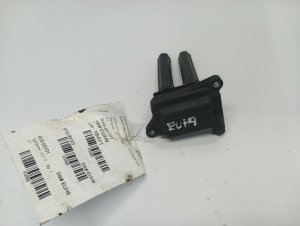
- Ignition Coil
(OEM #68223569AD (3.6L, 2016+), 5149168AH (3.6L, 2011-2015), 68238603AA (Hemi V8))— This is the most common failure point for a single-cylinder misfire. Heat and vibration cause the internal windings to fail over time.
Trusted brands: Mopar
Related Codes That Often Appear With This One
- P0300 — If the problem causing the P0306 is severe or intermittent, it may also cause random misfires on other cylinders, triggering a P0300 (Random/Multiple Cylinder Misfire) code. This is common with the Pentastar head issue.
- P0302, P0304 — On 3.6L V6 engines, seeing P0306 along with P0302 and/or P0304 strongly points to the common left cylinder head failure, as all these cylinders are on the same bank and covered by TSB 09-002-14.
- P0206 — This code indicates a fault in the fuel injector circuit for cylinder 6. Seeing P0306 and P0206 together strongly suggests the problem is with the fuel injector for cylinder 6 or its wiring, rather than spark or compression.
Technical Service Bulletins (TSBs) & Recalls
- TSB 09-002-14 Rev. B: This is the key document for the 3.6L Pentastar issue. It outlines the diagnostic procedure (cylinder leak-down test) for misfire codes P0300, P0302, P0304, or P0306 on 2011-2013 models. It authorizes the replacement of the left cylinder head if leakage is 25% or greater.
- Warranty Extension X56: This is not a TSB but a warranty extension from Chrysler related to TSB 09-002-14. It extends the warranty on the left cylinder head to 10 years or 150,000 miles from the vehicle's in-service date for affected 2011-2013 vehicles.
Platform-Specific Known Issues
- 3.6L Pentastar V6 (2011-2013): Cylinder Head Defect: → Shop Engine Cylinder Head These models are subject to TSB 09-002-14, which describes a known issue with the left cylinder head causing misfires on cylinders 2, 4, and/or 6. The cause is excessive wear of the valve seats. The fix is a cylinder head replacement, which may be covered under the X56 warranty extension (10 years/150,000 miles).
- 5.7L/6.4L Hemi V8: 'Hemi Tick' and Lifter Failure: These engines can develop a 'Hemi tick' from a failed MDS lifter. The lifter's roller seizes, which then grinds down and destroys the corresponding camshaft lobe. This results in a valve that no longer opens correctly, causing a persistent misfire (like P0306). The repair is extensive, requiring a new camshaft and a full set of lifters.
Mechanic-Grade Diagnostic Values
- Ignition Coil Primary Resistance (3.6L Pentastar) — expected: 0.46 - 0.9 Ohms. Failure: A reading outside of this range indicates a faulty coil.
- Ignition Coil Secondary Resistance (3.6L Pentastar) — expected: 6,000 - 15,700 Ohms (6.0kΩ - 15.7kΩ). Failure: A reading outside of this range indicates a faulty coil winding.
- Fuel Pressure (Hemi V8, Key On, Engine Off) — expected: Approximately 58 PSI (± 2 PSI). Failure: Significantly lower pressure (e.g., below 50 PSI) after priming indicates a weak fuel pump or a leak in the system.
- Mode $06 Misfire Counts — expected: 0 or very low counts per cylinder over a drive cycle.. Failure: A high number of misfire events logged for cylinder 6 confirms the misfire, even if the Check Engine Light is not flashing. This data can be accessed with many advanced OBD-II scanners.
Scan Tool Commands That Help
- wiTECH (Chrysler/Dodge Dealer Tool): OBD II Monitors -> 'Which cylinder is misfiring' — This function provides a real-time and historical count of misfire events for each individual cylinder. It is extremely useful for confirming that the misfire is isolated to cylinder 6 and for verifying the repair after work has been completed.
- wiTECH (Chrysler/Dodge Dealer Tool): Cylinder Contribution Test / Injector Kill Test — This bidirectional command allows a technician to disable individual fuel injectors one at a time. When cylinder 6's injector is disabled, if there is no change in engine RPM or smoothness, it confirms that cylinder 6 was not contributing, pointing to a problem with that cylinder's ignition, fuel, or compression.
Wiring & Ground Locations
- Cylinder 6 Fuel Injector Wire — At the fuel injector connector for the rearmost cylinder on the passenger side (3.6L V6) or third cylinder back on the passenger side (Hemi V8).. The signal wire for the cylinder 6 injector is typically a Black/Red wire. The other wire (shared by all injectors) is a Red wire for power from the relay. Verifying signal pulse with a noid light or multimeter on the Black/Red wire can rule out a wiring or PCM driver issue.
- Cylinder Head Grounds — On both the driver and passenger side cylinder heads, there are threaded studs used for grounding points. For example, a stud holding an intake manifold bracket on the driver's side head is a key ground location.. A poor ground connection at the cylinder head can cause weak or intermittent spark for the ignition coils mounted on that head. This can lead to a persistent or hard-to-diagnose misfire. Owners have reported success in resolving electrical issues by adding redundant grounds to these points.
- Main Chassis/Engine Grounds — Key grounding points include the driver's side strut tower (where the negative battery cable connects), a cable from that stud to the engine block, and straps from the block to the chassis/K-member.. Corrosion or looseness at these main points can create system-wide low voltage, affecting the performance of all electronic components, including the ignition and fuel systems, potentially causing misfires.
Real Owner Repair Stories
- RamForum.com user (2014 Ram 1500 (shared 5.7L Hemi platform), 77k miles) — Persistent P0306 code.
❌ Tried (didn't work) Swapping spark plugs, Swapping ignition coil to another cylinder
✅ What actually fixed it The user suspected a lifter/cam failure, a common issue on Hemi engines. After the initial diagnostics failed, the next step recommended by a shop and forum members was to inspect the valvetrain by removing the valve cover, which would likely lead to a camshaft and lifter replacement.
OEM Part Supersession History
5149168AH→5149168AI, then 5149168AJ— Standard part revision and improvement for the 3.6L Pentastar V6 ignition coil.
Heads up: The latest part number, 5149168AJ, is the correct service replacement for the earlier versions on 2011-2015 models.Unknown early PNs for 2011-2012 models.→RL141353AC (and later revisions)— The original left cylinder head for the 3.6L Pentastar V6 was prone to valve seat failure. The updated part has hardened valve guides and seats to correct this defect.
Heads up: When replacing a failed 2011-2013 left cylinder head, it is critical to use the updated part number to permanently resolve the issue.
Model Year Variations Within This Range
- 2011-2013: Models with the 3.6L Pentastar V6 in this range are susceptible to a left cylinder head failure (affecting cylinders 2, 4, and 6). This was addressed in production starting mid-2012. A P0306 on these specific years should immediately raise suspicion of the cylinder head issue, which was covered by warranty extension X56.
- 2011-2015 vs 2016-2018: The OEM part number for the 3.6L V6 ignition coil changes. Early models use 5149168AH (or its supersessions), while later models may use a different part number like 68223569AD. Always verify by VIN.
Helpful Videos
Used OEM Parts in Stock
New Aftermarket Parts Available


The information in this article is provided for general reference and educational purposes only. Vehicle specifications, procedures, and part compatibility can vary by production date, trim level, and region. Always consult your vehicle's factory service manual and verify part numbers before purchasing or performing repairs. Safety-critical components such as airbags, seat belts, and braking systems should be installed by a qualified professional.
- Dodge CHARGER:
- 🧭 Diagnostic Flowchart
- 🎬 Helpful Videos
- 🛍️ Shop This Part
- What's Unique About the 2011-2018 Dodge CHARGER
- Symptoms You May Notice
- Most Likely Causes
- Rare But Worth Checking
- Diagnosis Steps
- Parts You'll Likely Need
- Related Codes That Often Appear With This One
- Technical Service Bulletins (TSBs) & Recalls
- Platform-Specific Known Issues
- Mechanic-Grade Diagnostic Values
- Scan Tool Commands That Help
- Wiring & Ground Locations
- Real Owner Repair Stories
- OEM Part Supersession History
- Model Year Variations Within This Range
- 🎟️ Get 5% Off