

P0306 on 2020-2025 Ford Explorer Hybrid: Cylinder 6 Misfire Causes and Fixes
On a 2020-2025 Ford Explorer with the 3.3L Hybrid V6, code P0306 is most often caused by a failed ignition coil on cylinder #6. A worn spark plug is the second most likely cause. Cylinder #6 is on the driver's side against the firewall, making access more difficult. A DIY fix is possible for those with mechanical experience, with a new Motorcraft coil costing around $40-$80.
- P0306 means cylinder #6 is misfiring, located on the driver's side closest to the firewall.
- The most likely cause is a bad ignition coil, which can be easily diagnosed with a 'swap test'.
- A worn spark plug is the second most likely cause.
- Do not drive if the check engine light is flashing to avoid expensive catalytic converter damage.
- This is a common DIY repair for the most likely causes, requiring basic tools.
What's Unique About the 2020-2025 Ford Explorer
The 3.3L Cyclone V6 in the Explorer Hybrid uses a reliable coil-on-plug ignition system, which is a common failure point for misfires on most modern engines. While the hybrid system adds complexity, the root causes for a single-cylinder misfire like P0306 are typically conventional: ignition, fuel, or compression. For this specific engine, cylinder #6 is located on the driver's side (Bank 2) closest to the firewall, which can make access more challenging than the front cylinders. Unlike some EcoBoost models, replacing the rear coils does not typically require removing the intake manifold, though it is a tight workspace.
Symptoms You May Notice
- Solid or flashing Check Engine Light
- Rough or vibrating idle
- Hesitation or stumbling during acceleration
- Noticeable loss of engine power
- Reduced fuel economy
- Potential for bucking or jerking sensations
- Smell of raw gasoline from the exhaust, indicating unburnt fuel.
- Replacing the spark plug when the ignition coil is the actual culprit. The 'swap test' for the coil should always be the first step as it's free and definitive.
- Replacing fuel system components before thoroughly testing the ignition system, which is the most common point of failure for a single-cylinder misfire.
- Assuming a rough run condition is a misfire when it could be a software issue correctable by a PCM update, as noted in TSB 22-2046.
Most Likely Causes
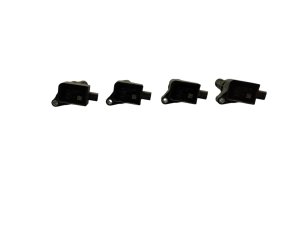
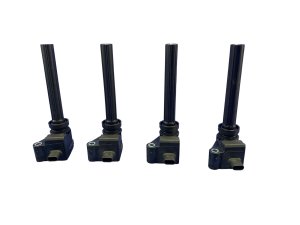
- Faulty Ignition Coil 🔴 High Probability → Shop Ignition Coil Coil-on-plug systems are subjected to constant heat and vibration, making them a common wear item on most modern engines. The rear bank location of cylinder 6 can trap more heat, potentially accelerating failure.
How to confirm: Perform a 'swap test'. Swap the ignition coil from cylinder #6 with an adjacent, easier-to-access cylinder (like #4 or #5). Clear the codes and drive. If the code returns as P0304 or P0305, the coil is confirmed bad.
Typical fix: Replace the faulty ignition coil. It is generally recommended to use a quality OEM replacement like Motorcraft (part number may vary, DG-595 is a possibility).
Est. part cost: $40-$80 - Worn or Fouled Spark Plug 🟡 Medium Probability → Shop Spark Plug Spark plugs are a regular maintenance item. Ford specifies a 100,000-mile service interval, but factors like fuel quality, idling, and driving habits can cause them to wear out or become fouled prematurely.
How to confirm: After confirming the ignition coil is good, inspect the spark plug from cylinder #6. Look for a worn electrode, heavy carbon deposits, oil fouling, or a cracked insulator. The correct OEM plug is typically a Motorcraft SP-580-X (CYFS-12Y-T4X), which is an iridium plug. The gap should be between 1.25–1.35 mm (0.049–0.053 in).
Typical fix: Replace the spark plug. If the vehicle has high mileage, it is best practice to replace all six spark plugs at the same time to ensure consistent performance. Use of a small amount of anti-seize on the threads is debated but can prevent seizing in the aluminum heads.
Est. part cost: $15-$25 per plug - Faulty Fuel Injector ⚪ Low Probability → Shop Fuel Injector While less common than ignition issues, fuel injector failures can occur. A stuck-open injector can cause a rich misfire and a strong smell of gas.
How to confirm: Use a mechanic's stethoscope to listen for a consistent clicking sound from the injector on cylinder #6. Compare it to the sound of other injectors. If it's silent or sounds different, it may be faulty. A more advanced method is to swap the injector with another cylinder, but this is significantly more labor-intensive.
Typical fix: Replace the faulty fuel injector and its seals.
Est. part cost: $50-$120
Rare But Worth Checking
- Low Compression: This indicates a mechanical engine problem like a bad valve, worn piston rings, or a head gasket leak. While rare on a newer vehicle, it's possible and should be checked if ignition and fuel system issues are ruled out. A compression test is required for diagnosis. A recall on some 2020-2022 Police Interceptor models with the 3.3L engine for connecting rod bearing failure that could lead to engine seizure highlights a potential, though extreme, cause of compression loss. Additionally, in other Ford models like the Escape, NHTSA ODI #11621299 notes that a P0306 can sometimes be determined to be caused by coolant leaking into the engine block.
- Wiring Harness Issue: The wiring or connector to the ignition coil or fuel injector for cylinder #6 could be damaged or loose. This can be caused by chafing against other components. A visual inspection is the first step. Customer Satisfaction Program 24M01 specifically calls for an inspection of the engine wire harness for chafing that could cause a rough run or misfire condition. Manufacturer TSB #TSB 25-2569 also notes that P0301-P0306 codes may be due to the engine harness contacting a hose crimp end or spring clip.
- Stuck EVAP Purge Valve: A canister purge valve stuck open can create a vacuum leak that leads to misfires, often affecting multiple cylinders but sometimes setting a single code initially. This may also be accompanied by an EVAP system code like P0456.
- Exhaust Restrictions: Although documented on the 3.5L EcoBoost, TSB #TSB 19-2286 indicates that a misfire condition with DTC P0300 through P0306 may be due to internal components of the muffler being assembled improperly.
Diagnosis Steps
- Confirm the code P0306 with an OBD-II scanner. Note any other codes present, especially P0300 or P0316.
- Identify cylinder #6. On the 3.3L V6, the cylinders are numbered 1-2-3 on the passenger side (front to back) and 4-5-6 on the driver's side (front to back). Cylinder #6 is on the driver's side, closest to the firewall.
- Perform an ignition coil 'swap test'. Swap the coil from cylinder #6 with cylinder #5. This requires an 8mm socket. Clear the codes, run the engine, and rescan. If the code changes to P0305, you have a bad coil.
- If the code remains P0306, the coil is likely good. Proceed to inspect the spark plug. Remove the plug from cylinder #6 using a 5/8" spark plug socket and extension. Check for wear, damage, or fouling.
- If the plug looks questionable, replace it (Motorcraft SP-580-X is a common part number). If it looks good, you can perform a spark plug swap test similar to the coil test.
- If the misfire is still on cylinder #6, inspect the wiring and connector for the ignition coil and fuel injector for any visible damage, paying attention to potential chafing spots mentioned in service programs.
- Listen to the fuel injector on cylinder #6 with a stethoscope or long screwdriver. It should have a steady, rhythmic clicking sound. If it is silent or irregular, the injector may be faulty.
- If all of the above steps fail to identify the issue, a mechanical problem is possible. Perform a compression test on cylinder #6 to check for internal engine issues. Also consider a vacuum leak from sources like a stuck EVAP purge valve.
Parts You'll Likely Need
- Ignition Coil
(OEM #DG-595 (verify with VIN))— This is the most common cause of a single-cylinder misfire on modern coil-on-plug engines.
Trusted brands: Motorcraft
OEM price range: $60-$90
Aftermarket price range: $40-$70 - Spark Plug
(OEM #SP-580-X (CYFS-12Y-T4X))— As a routine maintenance item, a worn or fouled spark plug is the second most likely cause of a misfire.
Trusted brands: Motorcraft
OEM price range: $15-$25
Aftermarket price range: $10-$20
Related Codes That Often Appear With This One
- P0300 — If the misfire becomes more widespread or is caused by a systemic issue like a vacuum leak, a P0300 (Random/Multiple Cylinder Misfire) code may appear alongside P0306.
- P0316 — This code indicates a misfire was detected within the first 1,000 engine revolutions at startup. It often accompanies a specific cylinder misfire code like P0306 to provide more context.
- P0304 — A misfire on cylinder 4, which is on the same bank as cylinder 6. Seeing both codes together could point to a problem affecting the entire driver's side bank, like a localized vacuum leak or wiring issue.
Technical Service Bulletins (TSBs) & Recalls
- TSB 22-2046
- TSB 21-2158: Notes that misfires including P0306, hesitation, and/or lack of power may be due to various software parameters within the PCM.
- TSB 25-2569: Highlights that P0301-P0306 may be caused by the engine harness contacting components like hose crimp ends.
- TSB 19-2286: Mentions misfire conditions P0300 through P0306 can be caused by improperly assembled internal muffler components.
Platform-Specific Known Issues
- TSB 22-2046: Issued for some 2020-2021 models with the 3.3L hybrid engine for hesitation, bucking, or delayed acceleration at low speeds. This is a software issue corrected by a PCM reprogram and may not store a DTC, but could be mistaken for a misfire.
- Customer Satisfaction Program 24M01: For certain 2020 models with the 3.3L engine, this extends the warranty for the front catalytic converters and mandates an inspection of the engine wire harness for chafing that could cause a rough run/misfire condition. The warranty is extended to 15 years or 150,000 miles.
- Recall on Police Interceptor 3.3L Engines: A recall was issued for 2020-2022 Police Interceptor Utility models (including hybrids) for connecting rod bearing failure that could lead to engine seizure and fire risk. While not a direct cause for a typical P0306, it represents a potential catastrophic failure mode for this engine family.
Mechanic-Grade Diagnostic Values
- Ignition Coil Primary Resistance — expected: ~0.4 Ohms. Failure: A significantly higher reading (open circuit) or a reading of 0 ohms (short circuit) indicates a failed coil.
- Mode $06 Misfire Count — expected: Value of 0 for cylinder 6.. Failure: Any count greater than zero indicates that the PCM has detected misfire events on cylinder 6, even if not enough to set a check engine light. This is useful for tracking intermittent misfires.
Hidden / Shadow Codes Worth Checking
- Mode $06, Test ID $53 (non-CAN) or $A2-$AF (CAN): This is not a DTC but raw data from the PCM's misfire monitor. For CAN-bus vehicles like the 2020+ Explorer, Test IDs like $A9 represent misfire data for a specific cylinder (e.g., cylinder 8). The specific ID for cylinder 6 (e.g., $A7) will show the number of misfires in the last 10 drive cycles and the current drive cycle. This allows a technician to see misfire events that haven't yet reached the threshold to trigger a P0306 code. (see via A professional scan tool or advanced DIY software like FORScan is required to access Mode $06 data.)
Scan Tool Commands That Help
- Ford IDS (or FORScan): Power Balance Test — This is a primary diagnostic step to visually confirm the P0306 code. The test graphically displays the RPM contribution of each cylinder in real-time. A cylinder with a misfire will show a significant, consistent drop in its graph compared to the others. It's used to verify the misfire is active and to gauge its severity under different engine loads and RPMs.
- Ford IDS (or FORScan): Injector Kill / Disable — After confirming the misfire with a power balance test, a technician can use this function to manually shut off the fuel injector for cylinder 6. If disabling the injector causes no change in the engine's idle quality, it confirms that cylinder was not contributing in the first place. If disabling a *good* cylinder causes the engine to run worse, it confirms that cylinder was working properly.
- Ford IDS (or FJDS): Misfire Monitor Neutral Profile Correction — This relearn procedure should be performed after replacing major rotating or timing components like the crankshaft sensor or timing chain. It calibrates the PCM's profile of the crankshaft's rotational signature, which is what it uses to detect misfires. Failure to perform this can lead to false misfire codes after a major repair.
Wiring & Ground Locations
- Cylinder 6 Ignition Coil Connector — On top of the ignition coil for cylinder 6, which is located on the driver's side of the engine, closest to the firewall.. The connector itself or the wiring leading to it can become damaged from heat and vibration, causing an intermittent or total loss of signal to the coil. The pins should be checked for corrosion or looseness (poor pin fitment).
- PCM Connector — The Powertrain Control Module (PCM) is typically located in the engine bay. The specific pin for the cylinder 6 ignition coil control signal needs to be identified from a wiring diagram.. In rare cases, a fault can exist at the PCM connector or within the PCM itself. A technician might perform a continuity test from the coil connector back to the PCM connector to rule out a break in the wire. A generic Ford 104-pin PCM pinout shows ignition coil control wires on pins like 26, 52, etc., but the specific pin for this vehicle must be verified.
- Connector C1198 — On the driver's side frame rail, often near the electric brake booster.. While primarily associated with EVAP codes on 2020-2022 Explorers, Ford TSBs SSM 50348 and SSM 51247 highlight this connector as a major weak point for corrosion and pin fitment issues. It carries multiple Voltage Reference (VREF) signals. A fault here can cause erratic sensor readings and, while less common for a single cylinder misfire, could contribute to complex electrical issues that manifest as a misfire.
Real Owner Repair Stories
- YouTube channel 'Ford Boss Me' (2020 Ford Explorer Hybrid (Police Interceptor) with 20,000 miles) — Severe cold start misfire, rough running. No specific codes were mentioned, but the symptoms are identical to a P030X condition.
❌ Tried (didn't work) Initial diagnosis was difficult as scan tool data did not point to a specific ignition or fuel concern.
✅ What actually fixed it Due to the ambiguity and the need to get a police vehicle back in service, the Ford engineer hotline recommended a comprehensive repair. The final fix was replacing all six port injectors, all six direct injectors, and all six spark plugs. The mechanic noted that the high-pressure fuel lines are torque-to-yield and must also be replaced when performing this service. - Ford Truck Enthusiasts Forum user (2000 Lincoln Navigator (older vehicle, but demonstrates diagnostic process)) — Engine died while driving, then ran rough with P0306 after replacing a blown fuse.
❌ Tried (didn't work) Replaced coil on cylinder 6, Replaced spark plug on cylinder 6, Swapped coil, plug, and fuel injector with other cylinders; the misfire stayed on cylinder 6.
✅ What actually fixed it The user's diagnostic process correctly ruled out the common components (plug, coil, injector). A responding technician suggested the next steps were to check for voltage at the coil and injector connectors, and if those were good, the problem was likely a faulty PCM (Powertrain Control Module) driver for that cylinder. The thread ended before the final resolution was posted, but it highlights the diagnostic path when common fixes fail. - NHTSA ODI #11681823 — An owner reported that a diagnostic machine retrieved DTCs P0300, P0304, P0305, P0306, and P0352, indicating several cylinder misfires. The vehicle was towed to the dealer for further diagnosis.
OEM Part Supersession History
SP-580, CYFS12YT4→SP-580-X (CYFS-12Y-T4X)— Standard part evolution, potentially for improved durability or material composition.
Heads up: Older part numbers like CYFS12F3, CYFS12Y3, and CYFS12YT3 are also replaced by the current part. Using the latest revision is always recommended for best performance and longevity.
Model Year Variations Within This Range
- 2020-2023: The 3.3L V6 Hybrid powertrain was available on Limited and Platinum trims during these years. For the 2024 model year, Ford discontinued the hybrid option for the retail Explorer, though it may remain for fleet (Police Interceptor) use.
- 2020-2021: TSB 22-2046 applies specifically to these model years for a PCM software update to correct hesitation issues that could be misdiagnosed as a misfire.
Diagnostic Flowchart
Other Known Issues on This Vehicle
Issues unrelated to this code that are worth knowing about as an owner of this generation:
- 10R60 Transmission Harsh/Delayed Shifting 🔴 High — Extremely common across 2020+ models. One of the most frequent owner complaints filed with the NHTSA. (Ref: Multiple TSBs issued, including TSB 23-2176 and TSB 24-2046, often recommending PCM/TCM software updates or valve body/CDF clutch drum repairs.)
- Rear Axle Mounting Bolt Fracture 🔴 High — Affects over 250,000 vehicles from 2020-2022. Can lead to driveshaft separation and vehicle rollaway. (Ref: Multiple recalls issued (e.g., 22V-255, 23V-199). The initial software-based fix was investigated by NHTSA for being insufficient.)
- 360-Degree Camera System Failure 🟠 Medium — Very common, leading to multiple recalls affecting hundreds of thousands of 2020-2023 Explorers. Symptoms include a blue or black screen. (Ref: Multiple recalls, including 21S44 and 23S23.)
- 12-Volt Battery Drain 🟡 Low — Reported on 2020-2021 models, can cause no-start situations. The complex electronics are sensitive to battery health.
- Hesitation/Bucking at Low Speeds (Software) 🟠 Medium — Common enough on 2020-2021 Hybrids to warrant a specific TSB. Feels like a powertrain fault but is software-related. (Ref: TSB 22-2046)
Used vs. New Parts: Buying Guide for This Vehicle
When a used part is the smart pick: For this repair, sourcing used parts is generally not recommended for the primary failure components. However, if a wiring connector or a section of the engine harness is damaged, obtaining a pigtail connector from a salvage yard vehicle can be a cost-effective and reliable repair method, provided the donor part is in excellent condition.
Donor-vehicle mileage cap: roughly under 50000 miles for the part to have meaningful remaining life.
What to inspect on the donor part:
- For a wiring pigtail, inspect for any signs of corrosion (green or white powder) on the pins or sockets.
- Ensure the plastic connector body is not brittle, cracked, or showing signs of heat damage.
- Check that the locking tab is intact and functional.
- Verify the wires are flexible and the insulation is not cracked or peeling.
OEM-only on this vehicle (don't cheap out):
- Ignition Coils
- Spark Plugs
- Fuel Injectors
Aftermarket brands forum-validated for this vehicle:
- Motorcraft (for all ignition and fuel components)
- NGK (for spark plugs, if an alternative to Motorcraft is desired)
Brands owners have reported issues with on this vehicle:
- Unnamed or 'white box' ignition coils and fuel injectors from online marketplaces. These often have high failure rates and may not meet OEM specifications, leading to a repeat of the P0306 code.
Real Owner Stories
Aggregated from forums and TSBs cited above. Mileages and costs reflect what owners reported in those sources.
2013 Ford Explorer Limited V6
Symptoms: Rough running and a noticeable smell of gas coming from the tailpipe.
What fixed it: Discussion centered on diagnosing whether the failure was the ignition coil or a fuel injector, as the gas smell indicated unburnt fuel reaching the exhaust.
Source hint: Ford Truck Enthusiasts Forum - '2013 Explorer Limited V6 Rough Running, Then Check Engine and P0306...'
2020 Ford Explorer 3.3L Hybrid
Symptoms: Hesitation, bucking, or delayed acceleration at low speeds.
What fixed it: PCM reprogram per TSB 22-2046.
Source hint: TSB 22-2046
2023 Ford Explorer
Symptoms: Several cylinder misfires detected including P0300, P0304, P0305, and P0306.
What fixed it: The vehicle was towed to the dealer for diagnosis after a certified mechanic retrieved the codes (NHTSA ODI #11681823).
Source hint: NHTSA ODI #11681823
Related OBD-II Codes
Frequently Asked Questions
My 2020 Explorer Hybrid is bucking at low speeds but there is no Check Engine Light; is this P0306?
Is there an extended warranty that covers engine issues on my 2020 Explorer 3.3L?
Which spark plugs should I use for my 3.3L Cyclone V6 Hybrid to fix a P0306?
Where is cylinder #6 located on the 3.3L V6 engine?
Could my P0306 code be related to the Police Interceptor recall?
Can I use a coil from another cylinder to test if my Cylinder 6 coil is bad?
Helpful Videos

Used OEM Parts in Stock
New Aftermarket Parts Available


The information in this article is provided for general reference and educational purposes only. Vehicle specifications, procedures, and part compatibility can vary by production date, trim level, and region. Always consult your vehicle's factory service manual and verify part numbers before purchasing or performing repairs. Safety-critical components such as airbags, seat belts, and braking systems should be installed by a qualified professional.
- Ford Explorer:
- 🧭 Diagnostic Flowchart
- 🎬 Helpful Videos
- 🛍️ Shop This Part
- What's Unique About the 2020-2025 Ford Explorer
- Symptoms You May Notice
- Most Likely Causes
- Rare But Worth Checking
- Diagnosis Steps
- Parts You'll Likely Need
- Related Codes That Often Appear With This One
- Technical Service Bulletins (TSBs) & Recalls
- Platform-Specific Known Issues
- Mechanic-Grade Diagnostic Values
- Hidden / Shadow Codes Worth Checking
- Scan Tool Commands That Help
- Wiring & Ground Locations
- Real Owner Repair Stories
- OEM Part Supersession History
- Model Year Variations Within This Range
- Other Known Issues on This Vehicle
- Used vs. New Parts: Buying Guide for This Vehicle
- Real Owner Stories
- 2013 Ford Explorer Limited V6
- 2020 Ford Explorer 3.3L Hybrid
- 2023 Ford Explorer
- Related OBD-II Codes
- Frequently Asked Questions
- 🎟️ Get 5% Off