

P0306 on 2017-2021 Ford GT: Cylinder 6 Misfire Causes and Fixes
P0306 on a Ford GT indicates a misfire in cylinder 6. Before replacing parts, check the vehicle's usage history. Ford TSBs state that multiple cold starts without reaching operating temperature can cause this code. If not due to usage, the most likely causes are a faulty ignition coil or spark plug. Cylinder 6 is located on the driver's side (left bank), closest to the firewall.
- P0306 signifies a misfire in cylinder 6.
- Crucially, for the Ford GT, check for a history of multiple cold starts without a full warm-up drive cycle before replacing any parts, as this is a known issue documented by Ford.
- If a part has failed, the most likely culprits are the ignition coil or the spark plug for cylinder 6.
- A flashing Check Engine Light indicates a severe misfire that can damage the catalytic converter; avoid driving the vehicle in this condition.
- The OEM ignition coil is part number DG-585 and the OEM spark plug is SP-583.
What's Unique About the 2017-2021 Ford GT
The Ford GT's high-output 3.5L EcoBoost V6 is a finely tuned, high-performance engine. Unlike more common applications of the 3.5L EcoBoost, the GT has specific Technical Service Bulletins (TSBs) that point to a unique sensitivity. These TSBs (SSM 50616, SSM 49536, SSM 49028) suggest that multiple cold engine start-ups without driving the car long enough to reach full operating temperature can cause temporary misfire codes, including P0306. This is a critical first diagnostic check before assuming a component has failed. The direct injection nature of the engine can lead to fuel droplet accumulation on plugs during short cold cycles, leading to fouling and temporary misfires.
Diagnostic Flowchart
Tap your situation to follow the diagnostic path that matches what you're seeing on this vehicle.
Symptoms You May Notice
- Check Engine Light is on or flashing
- Rough or vibrating engine idle
- Engine may buck or jerk during acceleration
- Noticeable loss of engine power
- Hard starting
- Smell of raw fuel from the exhaust
- Replacing ignition parts without first considering the vehicle's operating conditions as specified in the Ford TSBs.
- Assuming the cause is a major component failure before performing basic diagnostic swaps of coils and plugs.
Most Likely Causes
- Vehicle Operating Conditions 🔴 High Probability As per Ford TSBs SSM 50616, SSM 49536, and SSM 49028, these high-performance vehicles can log misfire DTCs if subjected to multiple cold starts without being driven to full operating temperature. This is often due to spark plug fouling from rich cold-start fuel mixtures.
How to confirm: Question the owner about recent vehicle usage. If multiple short trips or cold starts have occurred, this is a likely cause. Clear the code and perform a proper drive cycle, including allowing the engine to reach and maintain full operating temperature for at least 15-20 minutes.
Typical fix: Advise the owner on proper driving cycles per the owner's guide. No parts replacement is needed if this is the cause.
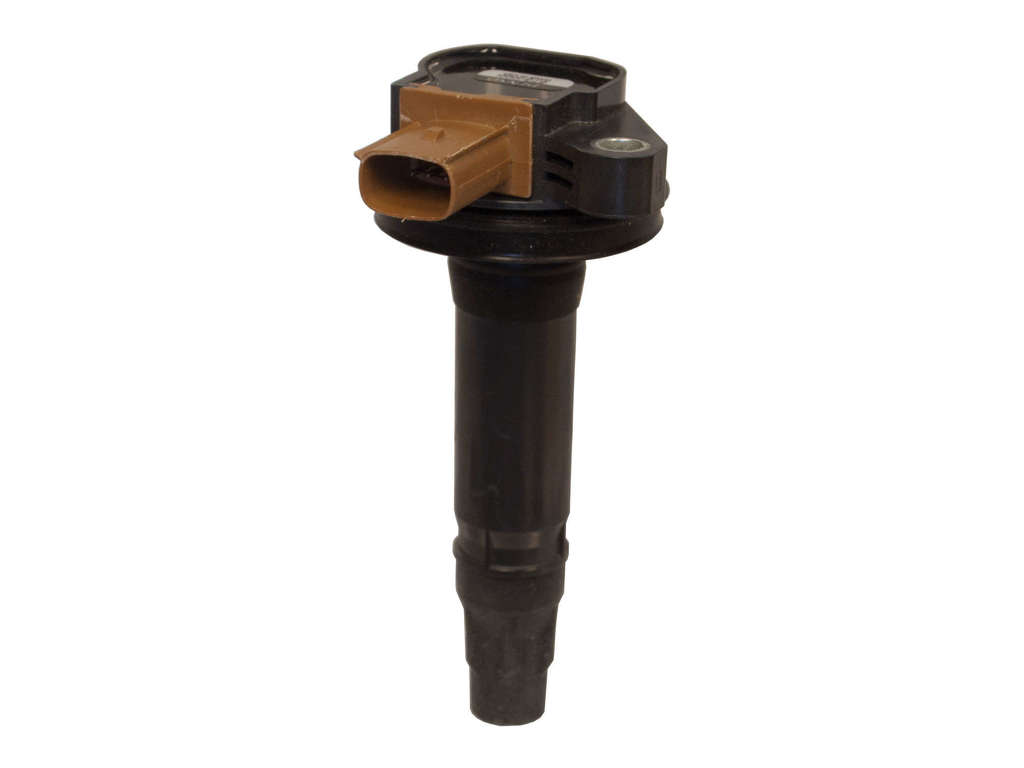
Est. part cost: $0 - Faulty Ignition Coil 🟡 Medium Probability → Shop Ignition Coil Coil-on-plug systems are a common failure point on modern engines due to high heat and vibration. It's a frequent cause for misfire codes across many Ford models, including other 3.5L EcoBoost platforms like the F-150. For the 2020 model year, Ford upgraded the GT to higher-energy ignition coils.
How to confirm: Swap the ignition coil from cylinder 6 with another cylinder (e.g., cylinder 5). Clear the codes and drive the vehicle. If the code changes to P0305, the ignition coil is faulty. 🎬 Watch: How to diagnose a cylinder misfire and swap coils.
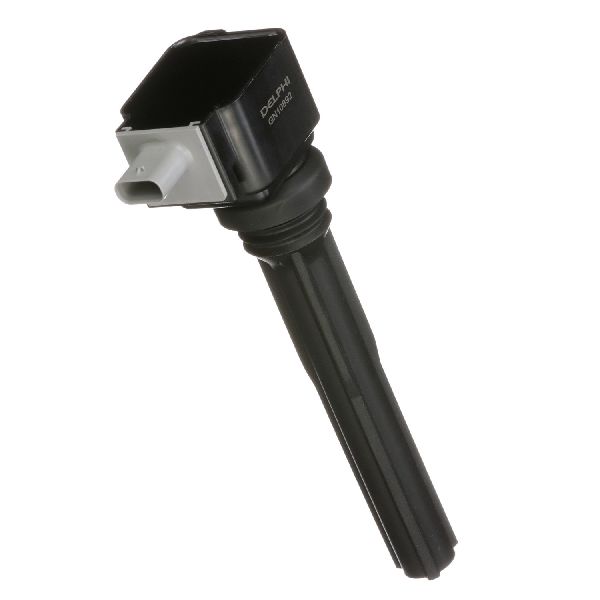
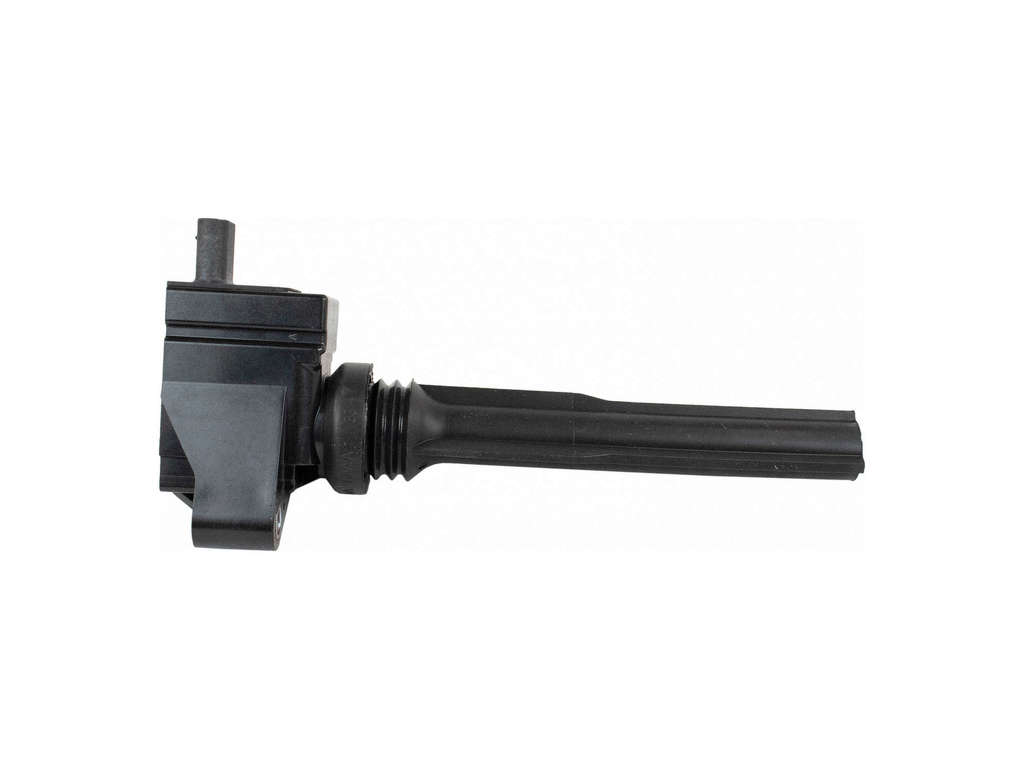
Typical fix: Replace the faulty ignition coil. The OEM part number is Motorcraft DG-585.
Est. part cost: $75-$125 - Worn or Fouled Spark Plug 🟡 Medium Probability → Shop Spark Plug Spark plugs are a regular maintenance item. High-performance turbocharged engines can be harder on plugs, leading to faster wear or fouling. The TSBs also recommend inspecting the spark plugs as a primary step. The specified spark plug gap is 0.028–0.031 in (0.7–0.8 mm).
How to confirm: After confirming the coil is good, remove the spark plug from cylinder 6. Inspect it for wear (worn electrode), damage (cracked porcelain), or fouling from oil or carbon. Check the gap.
Typical fix: Replace the spark plug. It is best practice to replace all six spark plugs 🎬 See this easy walkthrough for replacing 3.5L EcoBoost spark plugs. at the same time. The OEM part number is Motorcraft SP-583.
Est. part cost: $15-$30 per plug - Faulty Fuel Injector ⚪ Low Probability → Shop Fuel Injector While less common than ignition issues, a clogged or failing fuel injector can prevent the correct amount of fuel from reaching cylinder 6. Direct injection engines like the EcoBoost can be susceptible to injector issues over time.
How to confirm: This is a more advanced diagnostic step. A professional can perform a fuel injector balance test. A DIY method involves swapping injectors between cylinders, but this is labor-intensive. One owner on a Mustang forum with a P0306 narrowed it down to a clogged injector by swapping them.
Typical fix: Clean or replace the faulty fuel injector.
Est. part cost: $100-$250
Rare But Worth Checking
- Internal Engine Issues: In rare cases, a misfire can be caused by a loss of compression due to issues like a worn piston ring or a problem with a valve. This would require a compression test to diagnose and is a major repair.
- Crankshaft Position Sensor Failure: A failing crankshaft position sensor can sometimes cause erratic misfire codes before it fails completely and triggers its own specific codes (like P0335).
- Carbon Buildup on Intake Valves: Direct injection engines can suffer from carbon buildup on the back of the intake valves over time, as fuel is no longer sprayed over them to keep them clean. Severe buildup can restrict airflow to a cylinder and cause a misfire. This typically occurs at higher mileage.
Diagnosis Steps
- Read the code with an OBD-II scanner and check for any other codes, particularly P0300 and P0316.
- Review the vehicle's recent usage. Ask if it has been started multiple times without being driven until fully warm, as per Ford TSBs SSM 50616, 49536, and 49028.
- If cold start issues are suspected, clear the codes, perform a proper warm-up and drive cycle (e.g., 15-20 minutes of varied driving), and see if the code returns.
- If the code returns, locate cylinder 6. On the Ford 3.5L EcoBoost, the engine banks are numbered 1-2-3 for the passenger side (Bank 1, right side) and 4-5-6 for the driver's side (Bank 2, left side), front to back. Cylinder 6 is the cylinder on the driver's side closest to the firewall.
- Swap the ignition coil from cylinder 6 with an adjacent, easier-to-access cylinder on the same bank (e.g., cylinder 5).
- Clear the codes and run the engine. If the code changes to P0305, the ignition coil from cylinder 6 is bad and must be replaced.
- If the code remains P0306, swap the spark plug from cylinder 6 with the one from the cylinder you just used for the coil swap.
- Clear the codes and run the engine again. If the code now moves, the spark plug is the culprit. Inspect the old plug for signs of wear, fouling, or damage.
- If the misfire still remains on cylinder 6, inspect the wiring and connector to the ignition coil and fuel injector for any damage, corrosion, or looseness.
- If all of the above checks out, more advanced diagnostics are needed, such as a fuel injector test, an engine compression test, or checking for vacuum leaks. These are best left to a professional technician.
Parts You'll Likely Need
- Ignition Coil
(OEM #DG-585)— This is one of the most common causes for a single-cylinder misfire. The coil provides the high voltage needed to create a spark.
Trusted brands: Motorcraft, Hitachi, Delphi, Denso
OEM price range: $75-$125
Aftermarket price range: $40-$80 - Spark Plug
(OEM #SP-583)— Spark plugs are a wear item and can become fouled or degraded, leading to a weak or nonexistent spark. Ford TSBs specifically call for their inspection. This part is confirmed to fit 2019-2022 Ford GT models.
Trusted brands: Motorcraft, NGK
OEM price range: $20-$30
Aftermarket price range: $10-$20
Related Codes That Often Appear With This One
- P0300 — This code for 'Random Misfire Detected' often appears alongside a specific cylinder misfire code if the issue is intermittent or affecting multiple cylinders. The Ford TSBs for the GT explicitly list P0300 with the individual cylinder codes.
- P0316 — This code means 'Misfire Detected on Startup (First 1000 Revolutions)'. It is also explicitly mentioned in the Ford TSBs and points towards a misfire condition that is present immediately after starting the engine, which aligns with the 'cold start' issue.
Technical Service Bulletins (TSBs) & Recalls
- SSM 50616: '...2017-2022 Ford GT vehicles may exhibit a runs rough or hard start...with DTC P0300, P0301, P0302, P0303, P0304, P0305, P0306 and/or P0316. Prior to performing any diagnostics, determine if the vehicle operating conditions may have resulted in multiple cold engine start-ups...'
- SSM 49536: '...2017-2021 Ford GT vehicles may exhibit a runs rough or hard start...with DTC P0300, P0301, P0302, P0303, P0304, P0305, P0306 and/or P0316. Prior to performing any diagnostics, determine if the vehicle operating conditions may have resulted in multiple cold engine start-ups...'
- SSM 49028: '...2017-2020 Ford GT vehicles may exhibit a runs rough or hard start...with DTC P0300, P0301, P0302, P0303, P0304, P0305, P0306 and/or P0316. Prior to performing any diagnostics, determine if the vehicle operating conditions may have resulted in multiple cold engine start-ups...'
Platform-Specific Known Issues
- A series of Technical Service Bulletins (SSM 50616, SSM 49536, SSM 49028) were issued by Ford for 2017-2021 GT models. They state that a rough run, hard start, and misfire codes (P0300-P0306, P0316) can be caused by multiple cold engine start-ups without allowing the engine to reach normal operating temperature. Technicians are advised to investigate this operating condition before performing other diagnostics.
Mechanic-Grade Diagnostic Values
- Ignition Coil Primary Resistance — expected: ~0.5 Ohms. Failure: A reading of OL (open) or a significant deviation from the specification.
- Ignition Coil Secondary Resistance — expected: 6.0 - 6.2k Ohms. Failure: A reading of OL (open) or a significant deviation from the specification.
- Fuel Injector Resistance (GDI) — expected: 1 to 2 Ohms. Failure: A reading outside of this range, indicating a potential injector coil fault.
- Low-Side Fuel Pressure (at idle) — expected: 40-60 PSI. Failure: Pressure significantly below this range can indicate a weak in-tank fuel pump.
- High-Side Fuel Pressure (at WOT) — expected: 1,500 to 2,150 PSI. Failure: If the actual pressure lags the requested pressure by more than 200 PSI, it could indicate a failing high-pressure fuel pump (HPFP) or injector issue.
- Mode $06 Misfire Counts — expected: Zero or very low counts for cylinder 6 (Test ID $A2-$A7, Component ID $06).. Failure: A high number of misfire counts logged for cylinder 6, even without a current CEL, indicates an intermittent issue.
Hidden / Shadow Codes Worth Checking
- P0356: Ignition Coil 'F' Primary/Secondary Circuit. This code specifically points to an electrical fault in the ignition coil circuit for cylinder 6, rather than just a misfire. (see via This is a standard DTC but is often seen with P0306. If P0356 is present, the diagnosis should focus immediately on the coil and its wiring, as the PCM has detected a circuit malfunction.)
Scan Tool Commands That Help
- Ford IDS (or compatible tools like FORScan, high-end Snap-on): Power Balance Test — This graphical test displays the power contribution of each cylinder in real-time. A significant drop or erratic line for cylinder 6 confirms the misfire and helps visualize its severity under different engine loads.
- Ford IDS (or compatible tools like FORScan, high-end Snap-on): Misfire Monitor Neutral Profile Correction — This procedure must be performed after major engine or transmission repairs, or replacement of the PCM or crankshaft sensor. Failure to do so can cause the PCM to incorrectly interpret crankshaft speed variations and set false misfire codes. The procedure involves revving the engine past 3,500 RPM and letting it return to idle several times until a counter on the scan tool reaches zero.
Wiring & Ground Locations
- Cylinder 6 Ignition Coil Connector — On the driver's side (Bank 2) of the engine, the rearmost coil closest to the firewall.. This 3-pin connector provides power, ground, and the trigger signal from the PCM to the ignition coil. The ground is controlled by the PCM driver. Damage to the wiring or a loose/corroded connector can directly cause a P0306 and/or P0356 code. The locking tab can become brittle with heat cycles.
- PCM Connector — The Ford Performance controls pack manual for the 3.5L EcoBoost shows a large black PCM connector that hangs off the engine harness.. An improperly seated main PCM connector can cause a host of issues, including misfire codes for multiple or single cylinders due to poor signal integrity for the coil and injector drivers.
OEM Part Supersession History
HL3Z-12029-A→DG-585— Standard part number update and consolidation.
Heads up: DG-585 is the direct replacement for HL3Z-12029-A and is compatible. Aftermarket listings confirm this interchange.
Model Year Variations Within This Range
- 2020-2021: For the 2020 model year, the Ford GT's engine was updated to produce 660 horsepower (up from 647). This update included revised engine calibration, gallery-cooled pistons, and 'higher-energy' ignition coils. While the base part number for the coil may not have changed, the internal specification was improved. This may make 2020+ coils more robust, but pre-2020 coils are still compatible.
Helpful Videos

We Have This Part in Stock

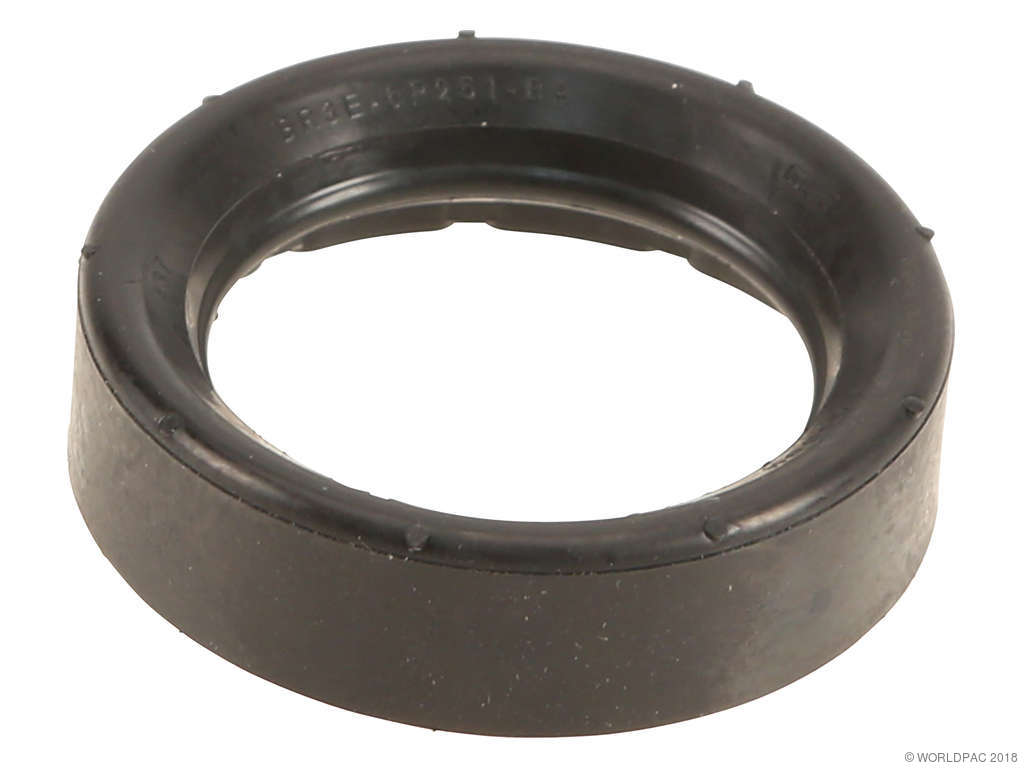

The information in this article is provided for general reference and educational purposes only. Vehicle specifications, procedures, and part compatibility can vary by production date, trim level, and region. Always consult your vehicle's factory service manual and verify part numbers before purchasing or performing repairs. Safety-critical components such as airbags, seat belts, and braking systems should be installed by a qualified professional.
- Ford GT:
- 🧭 Diagnostic Flowchart
- 🎬 Helpful Videos
- 🛍️ Shop This Part
- What's Unique About the 2017-2021 Ford GT
- Symptoms You May Notice
- Most Likely Causes
- Rare But Worth Checking
- Diagnosis Steps
- Parts You'll Likely Need
- Related Codes That Often Appear With This One
- Technical Service Bulletins (TSBs) & Recalls
- Platform-Specific Known Issues
- Mechanic-Grade Diagnostic Values
- Hidden / Shadow Codes Worth Checking
- Scan Tool Commands That Help
- Wiring & Ground Locations
- OEM Part Supersession History
- Model Year Variations Within This Range
- 🎟️ Get 5% Off