

P0306 on 2019-2025 Genesis G70 3.3T: Cylinder 6 Misfire Causes and Fixes
P0306 indicates a misfire in cylinder 6. On the G70 3.3T, this is most commonly caused by a faulty ignition coil or a worn spark plug. Cylinder 6 is on the driver's side bank (Bank 2), which is the front, easier-to-access bank, making DIY replacement of the coil and plug feasible for many owners.
- P0306 is a misfire on cylinder 6, the rearmost cylinder on the driver's side.
- The most likely cause is a bad ignition coil, followed by a worn spark plug.
- Diagnosis is straightforward: swap the coil, then the plug, to another cylinder to see if the fault code follows the part.
- Unlike misfires on the passenger side, fixing a P0306 does not require removing the intake manifold and is a manageable DIY job.
- If the Check Engine Light is flashing, stop driving immediately to prevent expensive catalytic converter damage.
What's Unique About the 2019-2025 Genesis G70
The Genesis G70's Lambda II 3.3T is a high-performance, twin-turbocharged, direct-injection (GDi) engine. While powerful, these engines are known to be sensitive to spark plug condition, especially if tuned. Unlike cylinders 1, 3, and 5 on the passenger side (Bank 1, rear), cylinder 6 is located on the driver's side (Bank 2, front) at the rearmost position on that bank. This location is more accessible and does not typically require removing the intake manifold for service, making diagnosis and repair of a P0306 code significantly less labor-intensive than for misfires on the opposite bank (e.g., P0301, P0303, P0305).
Symptoms You May Notice
- Rough or vibrating idle.
- Hesitation or stumbling during acceleration.
- Noticeable loss of engine power.
- Flashing or solid Check Engine Light.
- Smell of raw gasoline from the exhaust.
- Popping or backfiring sounds from the exhaust.
- Decreased fuel economy.
- Replacing oxygen sensors. While a faulty O2 sensor can affect the air-fuel mixture, it will typically set its own specific trouble codes and affect an entire engine bank (e.g., P015x), not just a single cylinder.
Most Likely Causes
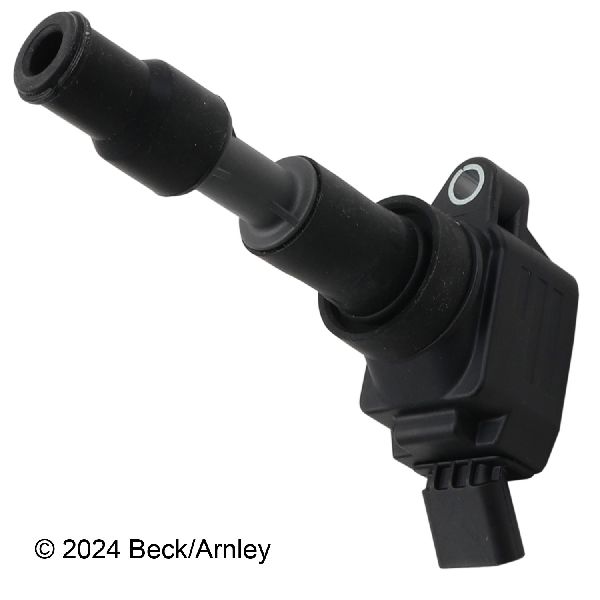
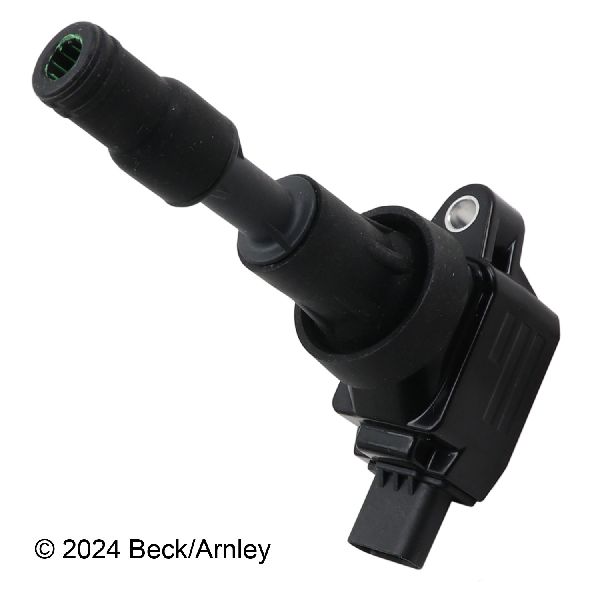
- Faulty Ignition Coil 🔴 High Probability → Shop Ignition Coil Ignition coils are common wear items that fail from heat and age. The high-output 3.3T engine places significant demand on the ignition system, and owner forums are filled with reports of coil failures causing misfires.
How to confirm: Swap the ignition coil from cylinder 6 with another cylinder on the same bank (e.g., cylinder 4). Clear the codes and drive the vehicle. If the code changes to P0304, the ignition coil is faulty. This is the definitive DIY diagnostic step.
Typical fix: Replace the faulty ignition coil. It is often recommended to replace all three coils on the same bank if they are original and high-mileage, but a single replacement is acceptable.
Est. part cost: $50-$100 - Worn or Fouled Spark Plug 🔴 High Probability → Shop Spark Plug The GDi engine design can lead to faster spark plug wear. Genesis specifies a replacement interval of 42,000 miles. Many owners on forums report misfire codes appearing right around this mileage, confirming the importance of this interval. Tuned vehicles may require changes as early as 15,000-20,000 miles.
How to confirm: After ruling out the coil, remove the spark plug from cylinder 6. Inspect it for wear (rounded electrode), carbon fouling (black soot), oil fouling (wet appearance), or damage. The OEM NGK plugs should be gapped to ~0.028", but many owners of tuned cars prefer a tighter gap of ~0.022".
Typical fix: Replace the spark plug. It is best practice to replace all six spark plugs at the same time to ensure even performance and avoid repeated labor.
Est. part cost: $90-$180 for a set of six OEM NGK plugs - Clogged Fuel Injector 🟡 Medium Probability → Shop Fuel Injector As a direct injection (GDi) engine, the fuel injectors are located inside the combustion chamber and are exposed to extreme heat and pressure. Carbon buildup can clog the nozzle over time, disrupting the spray pattern and causing a misfire.
How to confirm: This is more difficult to diagnose. A professional can perform a fuel injector balance test. A strong smell of fuel on the oil dipstick can be a sign of a leaking injector, which is a serious issue.
Typical fix: Professional fuel system cleaning or replacement of the faulty injector. If one injector is clogged, others may be as well.
Est. part cost: $100-$250 per injector
Rare But Worth Checking
- Carbon Buildup on Intake Valves: A known issue with all GDi engines. Oil vapor from the PCV system bakes onto the back of the intake valves. Since fuel is injected directly into the cylinder, it doesn't wash the valves clean. This can disrupt airflow into cylinder 6, causing a misfire, especially on higher mileage cars (60k+ miles). This usually requires professional 'walnut blasting' to clean, which can cost between $600 and $1,200.
- Low Compression: This indicates a serious internal engine problem such as a worn piston ring, a bad valve, or a failing head gasket. A compression test on cylinder 6 will confirm this. This is rare but would require significant engine repair.
- High-Pressure Fuel Pump (HPFP) Failure: While a failing HPFP often causes multiple or random misfires (P0300) and a P0088 code, it's a known issue on this platform that could initially manifest as a single-cylinder misfire. There is a warranty extension (TSB 25-FL-002G) for the HPFP on some 2019-2023 G70 models.
Diagnosis Steps
- Read the code with an OBD-II scanner and confirm P0306 is present. Note any other codes, especially P0300 or P0088.
- Check the freeze frame data to see the engine conditions (RPM, load, temperature) when the misfire occurred.
- Identify cylinder 6. On the 3.3T V6, it is the rearmost cylinder on the driver's side (Bank 2).
- Swap the ignition coil from cylinder 6 with the coil from cylinder 4 (the middle cylinder on the same bank).
- Clear the codes, drive the vehicle, and rescan. If the code is now P0304, the ignition coil is bad and needs replacement.
- If the code remains P0306, swap the spark plug from cylinder 6 with cylinder 4. Clear codes and re-test. If the code moves to P0304, the spark plug is the culprit.
- If the misfire still remains on cylinder 6, the issue is likely a fuel injector or a mechanical problem. Inspect the fuel injector wiring and connector for any visible damage.
- Perform a compression test on cylinder 6 to rule out mechanical engine issues. Compare the reading to the other cylinders on Bank 2.
- If compression is good, the next likely cause is a clogged fuel injector or carbon buildup on the intake valves, which may require professional diagnosis and service.
Parts You'll Likely Need
- Ignition Coil (Bank 2 / Front)
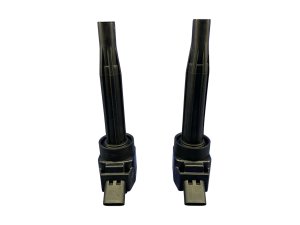
(OEM #27301-3L100)— This is the most common failure part for a single-cylinder misfire. Bank 2 (driver's side, cylinders 2-4-6) uses a different coil than Bank 1. This part number is for the front bank.
Trusted brands: Hyundai/Genesis (OEM), NGK, Delphi
OEM price range: $70-$100
Aftermarket price range: $50-$80 - Iridium Spark Plugs (Set of 6)
(OEM #18852-09070)— Spark plugs are a routine maintenance item with a 42k mile interval and a frequent cause of misfires. It's best practice to replace all six at once.
Trusted brands: NGK (SILZKR8E8G), Denso
OEM price range: $120-$180
Aftermarket price range: $90-$150
Related Codes That Often Appear With This One
- P0300 — If the misfire is intermittent or affects multiple cylinders, a P0300 (Random/Multiple Cylinder Misfire Detected) may be stored alongside P0306.
- P0302, P0304 — If other cylinders on the same bank (Bank 2, driver's side) are also misfiring, it could point to a more systemic issue like a clogged catalytic converter for that bank or a vacuum leak affecting only that side.
- P0088 — This code for 'Fuel Rail/System Pressure - Too High' is a strong indicator of a failing High-Pressure Fuel Pump (HPFP), which has been known to cause misfires on this platform. A warranty extension exists for this issue.
Technical Service Bulletins (TSBs) & Recalls
- 24-01-032G (Recall 019G): Addresses a potential oil leak from the left turbocharger oil feed pipe due to heat degradation. The fix involves replacing the pipe with an all-metal version.
- 25-FL-002G (Warranty Extension Z05G): Extends the warranty on the High-Pressure Fuel Pump (HPFP) to 15 years/150,000 miles for issues causing DTC P0088 and potential misfires.
Platform-Specific Known Issues
- A recall was issued for the left-hand turbocharger oil feed pipe on 2019-2022 G70 3.3T models (NHTSA Campaign 24V191 / TSB 24-01-032G), which could leak oil onto the exhaust and cause a fire. This highlights the high-heat environment near the engine's firewall.
- A warranty extension (TSB 25-FL-002G) was issued for the High-Pressure Fuel Pump (HPFP) on some 2019-2023 G70 models, which can cause loss of power and misfire codes like P0088.
- Owner Experience: A user on the r/GenesisG70 subreddit with a 2021 G70 reported multiple misfires that were traced by the dealer to aftermarket spark plugs having been installed by a previous owner, highlighting the sensitivity to correct parts.
Scan Tool Commands That Help
- Genesis GDS (Global Diagnostic System): Live Data / Current Data -> Misfire Counter — Use this to view the raw, real-time misfire count for each individual cylinder. This is essential for confirming the misfire is isolated to cylinder 6 and for checking if intermittent misfires are occurring on other cylinders that haven't yet triggered a code.
Wiring & Ground Locations
- Engine Control Module (ECM) — Located in the engine bay on the driver's side, just ahead of the brake fluid reservoir and next to the strut tower.. The ECM controls both spark and fuel injection. Any corrosion on its connectors or a poor ground connection can cause erratic signals, potentially leading to misfires. The nearby harness is also a known chafe point.
- Engine Harness Chafe Point - ECM/TCM Bracket — On the driver's side, where the engine wiring harness passes the black metal bracket holding the ECM and TCM.. A TSB for other GM vehicles using a similar harness routing strategy notes that engine vibration can cause the harness to rub against the sharp edge of this bracket, potentially shorting out the ignition coil or injector circuits for Bank 2 cylinders, including cylinder 6.
- Engine Harness Chafe Point - Upper Control Arm — On the driver's side, where the engine harness routes near the upper control arm and shock tower bolt.. Engine movement can cause the harness to make contact with the upper control arm or shock tower bolt, leading to chafing and potential shorts to ground for circuits related to the Bank 2 cylinders (2, 4, 6).
- Main Engine Harness Ground — Typically bolted directly to the engine block or cylinder head, often near the alternator.. A loose or corroded main engine ground can cause unstable voltage for all engine sensors and actuators, including the ignition coils and fuel injectors, leading to intermittent and hard-to-diagnose misfires.
OEM Part Supersession History
27301-3C000→27301-3L100— This appears to be a standard part number update for ignition coils used across various Hyundai/Genesis V6 engines. The newer -3L100 part is specified for the G70 3.3T.
Heads up: While older part numbers like 27301-3C100 or 27301-3F100 may physically fit, using the exact specified part (27301-3L100 for Bank 2) is critical to ensure correct dwell time and spark energy for the GDi engine.
Model Year Variations Within This Range
- 2019-2021: These are the pre-facelift models. They feature an 8-inch infotainment screen and different front/rear fascia styling. Mechanically, the 3.3T engine and its common failure points for P0306 are identical to later models.
- 2022-2023: This is the mid-cycle facelift. It introduced new exterior styling (split headlights/taillights), a larger 10.25-inch infotainment screen, and a variable exhaust option that adds 3 horsepower. The core 3.3T engine, ignition system, and fuel system related to P0306 remain unchanged.
- 2024-2025: The base 2.0T engine was replaced by a more powerful 2.5T engine. However, the optional 3.3T V6 engine carries over with no significant mechanical changes affecting the diagnosis of a P0306 code. Brembo brakes became standard.
Diagnostic Flowchart
Other Known Issues on This Vehicle
Issues unrelated to this code that are worth knowing about as an owner of this generation:
- Left-Hand Turbocharger Oil Feed Pipe Leak 🔴 High → Shop Turbocharger — Common enough to trigger a safety recall (NHTSA 24V191) on 2019-2022 models. Caused by heat degradation of the original pipe assembly. (Ref: Recall 019G / TSB 24-01-032G)
- High-Pressure Fuel Pump (HPFP) Failure 🟠 Medium — Affects some 2019-2023 models, leading to stalling, loss of power, and P0088 codes. Widespread enough for a warranty extension. (Ref: Warranty Extension Z05G / TSB 25-FL-002G)
- Premature Rear Differential Bushing Wear 🟡 Low — The soft factory bushings can wear out, causing a 'thunk' on acceleration or shifts. More common on aggressively driven or modified cars. Aftermarket solid bushings are a popular upgrade.
- Front Suspension Clunking Noises 🟡 Low — Owners report clunking or knocking sounds over bumps, often traced to failing front struts or sway bar end links, sometimes replaced under warranty.
- Sunroof Rattles and Water Leaks 🟡 Low — Early models in particular were prone to sunroof assembly rattles and creaks. Clogged drain hoses can also cause water to leak into the cabin. (Ref: TSB 24-BD-008G-1)
Used vs. New Parts: Buying Guide for This Vehicle
When a used part is the smart pick: A used ignition coil from a low-mileage, verified donor vehicle (e.g., a rear-end collision) can be a cost-effective choice, as it is a simple plug-and-play component. Other electronic sensors or the engine wiring harness could also be sourced used, provided they are meticulously inspected.
Donor-vehicle mileage cap: roughly under 40000 miles for the part to have meaningful remaining life.
What to inspect on the donor part:
- For ignition coils, check for cracks in the plastic housing or browning/discoloration near the boot, which indicates excessive heat exposure.
- For a wiring harness, inspect every connector for broken tabs, corrosion, or pushed-out pins. Look for any signs of non-factory tape, splices, or rodent damage.
- Never buy used parts from a flood-damaged vehicle, as hidden corrosion will cause future electrical failures.
OEM-only on this vehicle (don't cheap out):
- Spark Plugs: These are a maintenance item with a defined lifespan and should always be purchased new.
- Fuel Injectors (GDi): Due to the high pressures and tight tolerances, new OEM or reputable remanufactured units are strongly recommended over used injectors of unknown history.
Aftermarket brands forum-validated for this vehicle:
- Ignition Coils: NGK, Delphi, and Denso are reputable OEM suppliers and trusted aftermarket choices.
- Performance Coils: Worms Racing is mentioned in enthusiast forums as a performance aftermarket option for the 3.3T.
Brands owners have reported issues with on this vehicle:
- Unbranded/Generic 'Amazon/eBay' Coils: Forum users across many platforms report high failure rates, with some failing immediately or within a year. While cheap, they are often a false economy.
- BWD / Standard Motor Products (SMP): Some professional technicians have reported a decline in quality and high failure rates for these brands' ignition coils in recent years, particularly on Toyota applications, suggesting potential quality control issues.
Real Owner Stories
Aggregated from forums and TSBs cited above. Mileages and costs reflect what owners reported in those sources.
2021 Genesis G70 3.3T
Symptoms: Multiple misfires and rough running.
What fixed it: The dealer traced the issue to aftermarket spark plugs installed by a previous owner and replaced them with the correct parts.
Source hint: vehicle_specific_issues - Reddit r/GenesisG70 user report
2023 Genesis G70 3.3T
Symptoms: Sudden power loss and rough running after a cold start, accompanied by multiple misfire codes.
What fixed it: The High-Pressure Fuel Pump (HPFP) was identified as the likely culprit, consistent with the symptoms of P0088.
Source hint: Reddit r/GenesisG70 - Discussion on Misfires and HPFP Failure
Related OBD-II Codes
Frequently Asked Questions
Does the 3.3T engine have a specific spark plug replacement interval I should follow to avoid P0306?
Is there a recall for the 2019-2022 G70 3.3T that could be related to engine heat and misfires?
My G70 is losing power and showing P0088 along with P0306; is this covered under warranty?
What spark plugs should I use for my G70 3.3T to avoid misfire codes?
Where is cylinder 6 located on the Genesis G70 3.3T V6?
Can I just swap parts to diagnose P0306 on this car?
Helpful Videos
Used OEM Parts in Stock
New Aftermarket Parts Available


The information in this article is provided for general reference and educational purposes only. Vehicle specifications, procedures, and part compatibility can vary by production date, trim level, and region. Always consult your vehicle's factory service manual and verify part numbers before purchasing or performing repairs. Safety-critical components such as airbags, seat belts, and braking systems should be installed by a qualified professional.
- Genesis G70:
- 🧭 Diagnostic Flowchart
- 🎬 Helpful Videos
- 🛍️ Shop This Part
- What's Unique About the 2019-2025 Genesis G70
- Symptoms You May Notice
- Most Likely Causes
- Rare But Worth Checking
- Diagnosis Steps
- Parts You'll Likely Need
- Related Codes That Often Appear With This One
- Technical Service Bulletins (TSBs) & Recalls
- Platform-Specific Known Issues
- Scan Tool Commands That Help
- Wiring & Ground Locations
- OEM Part Supersession History
- Model Year Variations Within This Range
- Other Known Issues on This Vehicle
- Used vs. New Parts: Buying Guide for This Vehicle
- Real Owner Stories
- 2021 Genesis G70 3.3T
- 2023 Genesis G70 3.3T
- Related OBD-II Codes
- Frequently Asked Questions
- 🎟️ Get 5% Off