

P0306 on 2017-2022 Genesis G90: Cylinder 6 Misfire Causes and Fixes
P0306 indicates a misfire in cylinder 6. On both the 3.3T V6 and 5.0L V8 engines, this is most often caused by a faulty ignition coil or a worn spark plug. Accessing cylinder 6 on the driver's side is difficult and typically requires removing the upper intake manifold, making the repair more complex and costly than a simple plug change.
- P0306 on a G90 is most likely a bad ignition coil or spark plug in cylinder 6 (driver's side).
- Repair is complex and expensive for a DIYer, as the intake manifold must be removed to access cylinder 6 on the 3.3T V6.
- If new coils and plugs don't fix the issue, the next most likely cause is carbon buildup on the intake valves, a known issue with GDI engines.
- Do not ignore a flashing Check Engine Light, as it signals a severe misfire that can cause expensive catalytic converter damage.
- Always replace the intake manifold gaskets when performing this repair to prevent future vacuum leaks.
What's Unique About the 2017-2022 Genesis G90
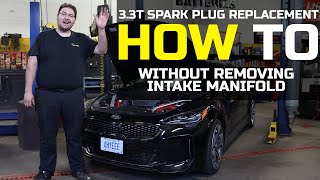
The Genesis G90's Lambda (3.3T) and Tau (5.0L) engines are both Gasoline Direct Injection (GDI) designs. This technology is prone to two primary causes of misfires: ignition component failure and carbon buildup on the intake valves. Unlike port-injected engines, fuel does not wash over the intake valves, allowing oil vapor from the PCV system to bake into hard carbon deposits that can restrict airflow and cause a misfire. The most significant challenge for a P0306 code on the V6 is that cylinder 6 is the rearmost cylinder on the driver's side, and accessing its coil and spark plug requires the complete removal of the upper intake manifold, 🎬 See how to change 3.3T plugs without removing the intake manifold. a labor-intensive job.
Symptoms You May Notice
- Rough or vibrating idle
- Hesitation or stumbling during acceleration
- Noticeable loss of engine power
- Flashing or solid Check Engine Light
- Reduced fuel economy
- Possible popping sounds from the exhaust
- Unusual smell from the exhaust due to unburnt fuel
- Replacing only the spark plug when the ignition coil is the actual failure.
- Replacing ignition components repeatedly when the root cause is heavy carbon buildup on the intake valves.
- Replacing an oxygen sensor, which is unlikely to cause a single-cylinder misfire.
- Assuming the front and rear ignition coils are interchangeable on the 3.3T V6; they are not.
Most Likely Causes
- Faulty Ignition Coil 🔴 High Probability → Shop Ignition Coil Coil-on-plug systems are a common failure point. The rear bank on the V6 (where cylinder 6 is) experiences more heat soak, potentially shortening coil life. The V6 uses two different coil part numbers for the front and rear banks; they are not interchangeable.
How to confirm: The easiest way to confirm a bad coil is to swap it with an easier-to-access cylinder (e.g., swap the coil from cylinder 6 with cylinder 2). Clear the codes and drive the vehicle. If the code changes to P0302, the ignition coil is faulty. This requires removing the intake manifold on the V6.
Typical fix: Replace the faulty ignition coil. It is often recommended to replace all coils and spark plugs on the same bank (Bank 2) at the same time, especially if they are original and high-mileage, given the labor involved in accessing them.
Est. part cost: $40-$90 per coil - Worn Spark Plug 🟡 Medium Probability → Shop Spark Plug Spark plugs are a regular maintenance item. The recommended service interval for the 3.3T is around 42,000 miles, but plugs can fail earlier, especially on turbocharged engines. GDI engines are harder on plugs than port-injected engines.
How to confirm: After ruling out the ignition coil, swap the spark plug from cylinder 6 with another cylinder. If the misfire code follows the plug, the spark plug is the issue. Visually inspect the old plug for wear, fouling, or damage. A bent electrode tip on a new plug can indicate an installation issue or internal problem.
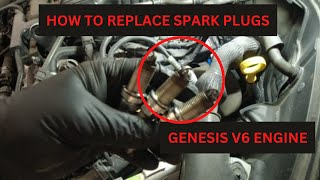
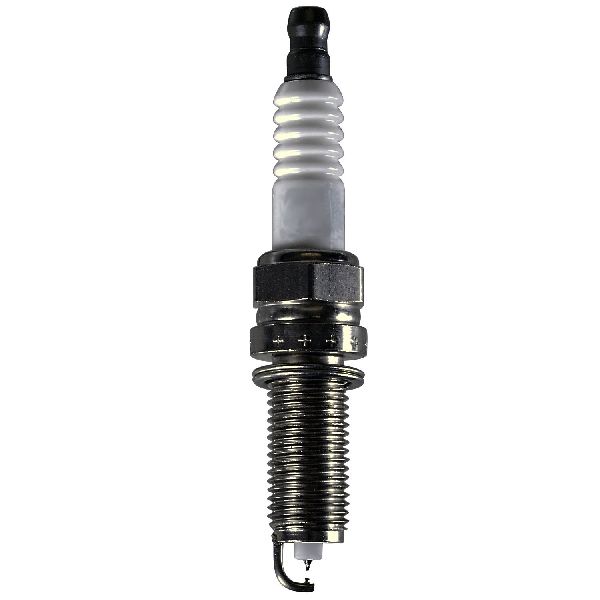
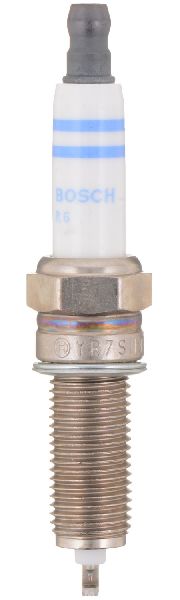
Typical fix: Replace the spark plug. It is best practice to replace all spark plugs at the same time with OEM-spec iridium plugs to ensure consistent performance. Due to the labor to access cylinder 6, replacing all six (or eight on the V8) is strongly advised. 🎬 Watch: Step-by-step guide to replacing spark plugs on the Genesis V6.
Est. part cost: $15-$40 per plug - Carbon Buildup on Intake Valves 🟡 Medium Probability As GDI engines, the intake valves are not cleaned by fuel spray. Oil vapors from the PCV system can bake onto the valves, restricting airflow and causing misfires, especially at idle and low RPMs. This issue becomes more prevalent with higher mileage.
How to confirm: This can only be confirmed by visually inspecting the intake ports and valves with the intake manifold removed, typically with a borescope. If the valves are coated in thick, black carbon deposits, this is a likely contributor or root cause.
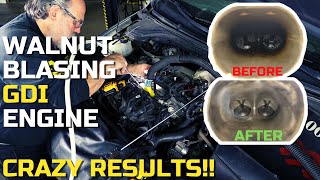
Typical fix: The intake valves must be cleaned. This is typically done through walnut blasting, a process that uses crushed walnut shells to safely blast away deposits without damaging the metal. Aerosol chemical cleaners can be used as a preventative measure or for light buildup but are often ineffective for heavy, baked-on deposits. 🎬 Watch: How walnut blasting removes heavy carbon buildup from GDI valves. Professional cleaning can cost between $600 and $1200.
Est. part cost: $15 for DIY aerosol can, $600-$1200 for professional walnut blasting service.
Rare But Worth Checking
- Clogged or Faulty Fuel Injector: → Shop Fuel Injector If ignition components and carbon buildup are ruled out, the fuel injector for cylinder 6 is the next logical suspect. GDI injectors operate under very high pressure and can fail or become clogged over time. Swapping the injector with another cylinder is a definitive test, but it is a labor-intensive job.
- Vacuum Leak: A leak in the intake manifold gasket near the runner for cylinder 6 can lean out the air/fuel mixture and cause a misfire. This should be checked when the intake manifold is removed for other service. The gasket should always be replaced when the manifold is removed.
- Low Engine Compression: This is the least likely and most serious cause. Issues like a burnt valve, worn piston rings, or damaged cylinder walls can cause a loss of compression in cylinder 6, leading to a persistent misfire. A compression test is needed to diagnose this, followed by a cylinder leak-down test if compression is low.
- Wiring or Ground Issue: A damaged wire or poor ground connection for the ignition coil or fuel injector on cylinder 6 can cause an intermittent or persistent misfire. This is often overlooked, especially if other work has been recently performed in the engine bay.
Diagnosis Steps
- Confirm the code P0306 with a quality OBD-II scanner. Note if the Check Engine Light is solid or flashing and check for any other stored codes.
- Determine the engine (3.3T V6 or 5.0L V8) to understand the service procedure.
- For the 3.3T V6, the intake manifold must be removed to access cylinder 6. For the 5.0L V8, access is tight but may not require manifold removal. Plan to replace the intake manifold gasket upon reassembly.
- Once access is gained, swap the ignition coil from cylinder 6 with the coil from an accessible cylinder on the opposite bank (e.g., cylinder 2).
- Reassemble enough to run the engine, clear the codes, and see if the misfire code returns for the new cylinder (e.g., P0302). If it does, the coil is bad.
- If the code remains P0306, the coil is likely good. Swap the spark plug from cylinder 6 with the plug from the other cylinder and repeat the test.
- If the code remains P0306, the problem is not the coil or plug. While the intake manifold is off, use a borescope to inspect the intake ports for cylinder 6 for heavy carbon buildup.
- If no significant carbon is present, the issue is likely a faulty fuel injector, a wiring problem to the coil/injector, or a mechanical compression issue. At this stage, testing the fuel injector signal with a noid light or performing a compression test is necessary. Professional diagnosis is recommended if you are not equipped for these tests.
Parts You'll Likely Need
- Ignition Coil (Bank 2 / Rear for 3.3T)
(OEM #27310-3L000)— This is the most common cause of a P0306 misfire. On the V6, the rear bank uses a different part number than the front. This part is specific to the rear, firewall-side cylinders (Bank 2 on G90).
Trusted brands: Hyundai/Genesis (OEM), Delphi, NGK
OEM price range: $70-$100
Aftermarket price range: $40-$75 - Spark Plug (3.3T V6)
(OEM #18852-09070)— Spark plugs are a maintenance item and the second most likely cause of a misfire. OEM plugs are typically NGK.
Trusted brands: NGK (OEM), Denso
OEM price range: $30-$40
Aftermarket price range: $15-$25 - Spark Plug (5.0L V8)
(OEM #18870-11071)— A common maintenance part that can fail and cause a misfire. OEM is the recommended choice.
Trusted brands: Hyundai/Genesis (OEM), NGK, Denso
OEM price range: $25-$35
Aftermarket price range: $15-$25 - Intake Manifold Gasket Set — Required when removing the intake manifold to access cylinder 6 on the 3.3T V6. It is critical to replace this to prevent vacuum leaks upon reassembly.
Trusted brands: Hyundai/Genesis (OEM), Mahle, Fel-Pro
OEM price range: $50-$80
Aftermarket price range: $30-$60
Related Codes That Often Appear With This One
- P0300 — If multiple cylinders are misfiring randomly, you may see P0300 (Random/Multiple Cylinder Misfire Detected) alongside P0306. This could point to a systemic issue like a vacuum leak, low fuel pressure, or widespread carbon buildup.
- P0302, P0304 — Misfire codes for other cylinders on the same bank (Bank 2, driver's side) could point to a shared issue like a vacuum leak on that side of the intake manifold or a clogged catalytic converter for that bank.
Technical Service Bulletins (TSBs) & Recalls
- NHTSA RECALL 24V-191 (Campaign 019G): Affects 3.3T engines. The left turbocharger oil feed pipe can degrade and leak oil onto the exhaust manifold, creating a fire risk. While not directly causing a misfire, it highlights the high-heat environment for components on the driver's side of the engine.
Platform-Specific Known Issues
- Difficult access to Bank 2 (driver's side) cylinders, especially on the 3.3T V6, requires removal of the intake manifold, significantly increasing labor time and cost for what is normally a simple repair.
- Gasoline Direct Injection (GDI) engines are susceptible to carbon buildup on intake valves, which can cause misfires that are often misdiagnosed as ignition problems.
- A recall was issued for the low-pressure fuel pump on some 2017-2022 G90 models with the 3.3T engine, which could fail and cause the engine to stall. While not a direct cause of a single-cylinder misfire, it's a known fuel system issue for this platform.
Mechanic-Grade Diagnostic Values
- Ignition Coil Secondary Resistance (5.0L V8) — expected: ~6.1k Ohms. Failure: A significantly higher or lower reading, or an open circuit (infinite resistance), indicates a faulty coil.
- Spark Plug Resistance (5.0L V8) — expected: ~5,000 Ohms (5k Ohms). Failure: A reading far outside this value suggests an internal failure of the plug's resistor.
- Low-Pressure Fuel System Pressure — expected: Above 40 PSI. Failure: Pressure below this specification indicates a problem with the in-tank low-pressure fuel pump or its supply circuit.
- Mode 6 Misfire Counter — expected: Near zero for cylinder 6 over a drive cycle.. Failure: A high or rapidly increasing count for cylinder 6 confirms the misfire, even if it's intermittent and not always felt by the driver.
Hidden / Shadow Codes Worth Checking
- Mode 6, Test ID $A2-$AF: While not a 'shadow code' in the traditional sense, Hyundai/Genesis vehicles store raw misfire counts for each cylinder under Mode 6 data. This data can be accessed with a professional scan tool (like the Hyundai GDS) and is more sensitive than the threshold required to set a P0306 code. It allows a technician to see small or intermittent misfires that haven't yet triggered the Check Engine Light. (see via Use an advanced OBD-II scanner or the dealer-level Hyundai GDS that supports Mode 6 data viewing. Look for test IDs corresponding to cylinder misfire counts.)
Scan Tool Commands That Help
- Hyundai GDS (Global Diagnostic System) or equivalent advanced scanner: Cylinder Power Balance Test — This function allows a technician to individually deactivate fuel injectors or ignition coils for each cylinder and observe the corresponding drop in engine RPM. If deactivating cylinder 6 causes little or no change in RPM, it confirms that cylinder was not contributing power, verifying the misfire without having to physically swap parts first.
- Hyundai GDS (Global Diagnostic System) or equivalent advanced scanner: Misfire Data / History — Used to view the raw misfire counts for each cylinder over current and previous drive cycles. This is invaluable for diagnosing intermittent misfires or confirming the fault is isolated to cylinder 6.
Wiring & Ground Locations
- Bank 2 Injector/Coil Ground — On the 3.8L (similar architecture to 3.3T/5.0L), a key ground point for the driver's side (Bank 2) components is located on the intake manifold itself.. Cylinder 6 is on Bank 2. If the intake manifold was removed for a previous repair (like a spark plug change) and this ground was not properly cleaned or tightened, it can cause a weak spark or erratic fuel injector operation specifically for that bank, leading to a P0306 code.
- Main Engine Bay Ground — On the driver's side of the engine bay, located on the chassis frame rail, sometimes covered by a small black plastic cap.. While not specific to one cylinder, a poor main ground can cause a host of unpredictable electrical issues, including sensor and ignition system faults. Verifying this connection is clean and tight is a fundamental step in any electrical diagnosis.
- Ignition Coil Connector — Directly on top of each ignition coil.. The connector itself is a female, oval-shaped plug. The plastic can become brittle from heat cycles, and the locking tab can break. The pins inside can also lose tension or corrode, causing a poor connection that mimics a failed coil.
Real Owner Repair Stories
- Aggregated from r/GenesisG70 and r/GenesisGV70 forum posts (Genesis G70/GV70 with 3.3T V6 (shared engine architecture), various mileages (19k, 47k, 55k)) — Solid or flashing Check Engine Light with P0301, P0303, or other Bank 2 misfire codes.
❌ Tried (didn't work) In some cases, owners were concerned about more complex issues like fuel pumps or carbon buildup.
✅ What actually fixed it In the vast majority of reported cases, the fix was replacing the faulty ignition coil on the corresponding cylinder. In one case, the spark plug was also noted as being extremely fouled ('bllllackkkkk'), confirming the need to replace plugs and coils together.
"I Checked Everything" — The Actual Cause
- A common scenario for a persistent P0306 after ignition components have been replaced is carbon buildup. A technician may perform a smoke test to check for vacuum leaks and find none. The ignition coil and spark plug for cylinder 6 may be replaced, but the misfire returns, especially at idle. The actual cause, not detectable by a smoke test, is a significant layer of carbon on the intake valves for cylinder 6, which is restricting airflow and causing the misfire. The final fix is a walnut blasting service to mechanically clean the valves.
When the Usual Fixes Don't Work
- While the vast majority of P0306 codes on this platform are resolved by replacing the ignition coil and/or spark plug, there are documented cases where this does not solve the problem. In these instances, the next most likely culprit is significant carbon buildup on the intake valves, a common issue for GDI engines that requires professional cleaning (walnut blasting). Less common, but still possible, is a failing fuel injector or a wiring/ground issue, particularly a loose ground on the intake manifold after a recent spark plug service.
OEM Part Supersession History
35320-3L000→35326-3L000— Part revision or manufacturer change for the high-pressure fuel pump on the 3.3T engine.
Heads up: Always use the latest part number for repairs.31111-3T000→31111-3N000-AS— Part revision for the low-pressure fuel pump assembly.
Heads up: The new part number is the correct service replacement.27310-3L000 (Bank 2/Rear)→N/A— N/A
Heads up: This is the coil for the rear bank (firewall side) on the 3.3T V6. The front bank uses a different part (e.g., 27310-3L030). They are not interchangeable.
Model Year Variations Within This Range
- 2017-2022: The G90 received a significant facelift for the 2020 model year, changing the exterior and interior styling. However, the core Lambda 3.3T and Tau 5.0L powertrains, along with their respective ignition and fuel systems, remained fundamentally the same. Therefore, the causes and diagnostic procedures for a P0306 code are consistent across the entire 2017-2022 model range.
Diagnostic Flowchart
Other Known Issues on This Vehicle
Issues unrelated to this code that are worth knowing about as an owner of this generation:
- Cracking Left Turbo Oil Feed Pipe (3.3T) 🔴 High — Common enough to trigger a safety recall (NHTSA 24V-191). The pipe can become brittle from heat and leak oil onto the hot exhaust manifold. (Ref: Recall 24V-191 / Campaign 019G)
- GDI Carbon Buildup on Intake Valves 🟠 Medium — A common issue on all GDI engines, including the 3.3T and 5.0L. Becomes noticeable after 60,000-80,000 miles, causing rough idle, hesitation, and eventually misfires if not addressed.
- Limited Aftermarket Parts Support 🟡 Low — Owners report that for certain non-maintenance parts (e.g., specific suspension or steering components), aftermarket options are scarce, forcing reliance on more expensive OEM parts from the dealer.
- Coolant Leaks (5.0L V8) 🟠 Medium — Some reports indicate coolant leaks from the radiator or water pump can occur on V8 models, typically around 70,000 miles.
- Timing Chain Tensioner Wear (3.3T) 🟠 Medium — While less common on the G90 specifically, the Lambda V6 family can be prone to a brief startup rattle, indicating wear in the hydraulic timing chain tensioners. This is exacerbated by infrequent oil changes.
Used vs. New Parts: Buying Guide for This Vehicle
When a used part is the smart pick: For this repair, used parts are generally not recommended for the primary failure items (coils, plugs, injectors). However, a used intake manifold from a reputable salvage yard is a viable option if the original was damaged during removal.
Donor-vehicle mileage cap: roughly under 60000 miles for the part to have meaningful remaining life.
What to inspect on the donor part:
- For an intake manifold, ensure no cracks, all mounting points are intact, and there is no significant warping on gasket surfaces.
- For any used electrical connector or harness, inspect for brittle plastic, corrosion on pins, and any signs of previous repair (splices, tape).
OEM-only on this vehicle (don't cheap out):
- Spark Plugs: Due to the high labor cost of access, using anything other than OEM (NGK) or equivalent high-quality iridium plugs is a false economy.
- Ignition Coils: While quality aftermarket options exist, cheap, unbranded coils have a high failure rate. Sticking with OEM or a known OEM supplier like Delphi is the safest choice.
- Fuel Injectors: GDI injectors are high-precision components. OEM is strongly recommended to ensure proper function and avoid introducing new issues.
Aftermarket brands forum-validated for this vehicle:
- Ignition Coils: Delphi, Denso, NGK.
- Spark Plugs: NGK (OEM supplier), Denso.
Brands owners have reported issues with on this vehicle:
- Unbranded 'economy' or 'white-box' ignition coils and spark plugs from online marketplaces. The initial savings are often negated by premature failure and the need to repeat the labor-intensive repair.
Real Owner Stories
Aggregated from forums and TSBs cited above. Mileages and costs reflect what owners reported in those sources.
Genesis G90 3.3T V6
Symptoms: Owner experienced a persistent P0306 code even after replacing the spark plug and ignition coil.
What fixed it: The issue was identified as potentially being a faulty fuel injector or a mechanical compression issue after standard ignition fixes failed.
Source hint: Reddit r/MechanicAdvice - P0306 still remains after changing the spark plug and ignition coil
Genesis G90 3.3T V6 — ~50000 miles
Symptoms: Owner performed preventative maintenance to combat carbon buildup on the intake valves of the GDI engine.
What fixed it: Used CRC GDI IVD Intake Valve & Turbo Cleaner aerosol to maintain the intake valves and turbocharger.
Cost: $15-$15
Source hint: BobIsTheOilGuy - Genesis G90 3.3T - CRC GDI IVD Intake Valve & Turbo Cleaner
Related OBD-II Codes
Frequently Asked Questions
Why is the labor for replacing the cylinder 6 ignition coil so expensive on my G90 3.3T?
Can I swap the ignition coils between the front and rear banks of my V6 G90 to troubleshoot P0306?
Does the low-pressure fuel pump recall (24V-191) cause the P0306 misfire?
How often should I change the spark plugs on my 3.3T GDI engine to prevent misfires?
Is there a way to clean carbon buildup on my G90's intake valves without a full teardown?
Does the turbocharger oil feed pipe leak mentioned in TSBs affect cylinder 6?
Helpful Videos
Used OEM Parts in Stock
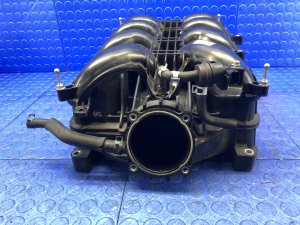
New Aftermarket Parts Available

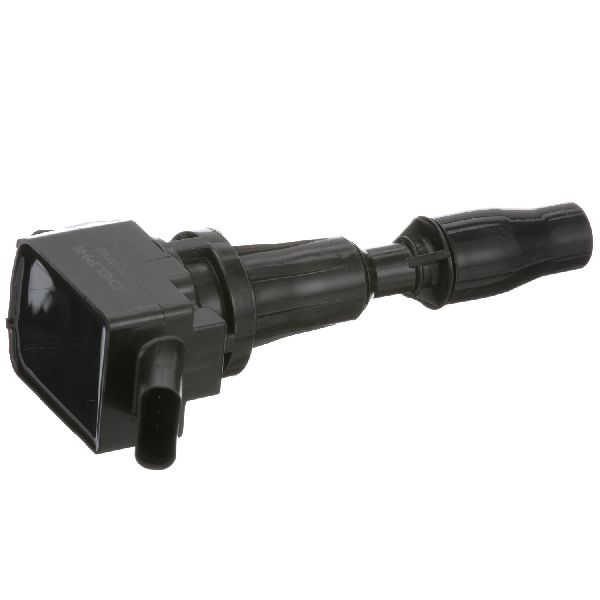
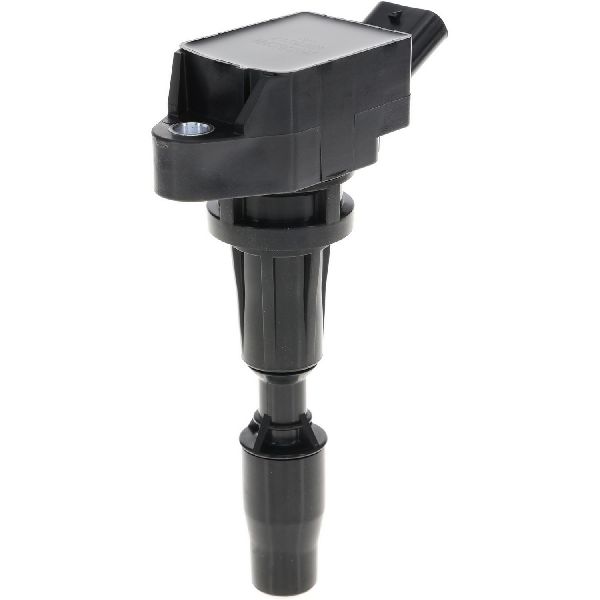

The information in this article is provided for general reference and educational purposes only. Vehicle specifications, procedures, and part compatibility can vary by production date, trim level, and region. Always consult your vehicle's factory service manual and verify part numbers before purchasing or performing repairs. Safety-critical components such as airbags, seat belts, and braking systems should be installed by a qualified professional.
- Genesis G90:
- 🧭 Diagnostic Flowchart
- 🎬 Helpful Videos
- 🛍️ Shop This Part
- What's Unique About the 2017-2022 Genesis G90
- Symptoms You May Notice
- Most Likely Causes
- Rare But Worth Checking
- Diagnosis Steps
- Parts You'll Likely Need
- Related Codes That Often Appear With This One
- Technical Service Bulletins (TSBs) & Recalls
- Platform-Specific Known Issues
- Mechanic-Grade Diagnostic Values
- Hidden / Shadow Codes Worth Checking
- Scan Tool Commands That Help
- Wiring & Ground Locations
- Real Owner Repair Stories
- "I Checked Everything" — The Actual Cause
- When the Usual Fixes Don't Work
- OEM Part Supersession History
- Model Year Variations Within This Range
- Other Known Issues on This Vehicle
- Used vs. New Parts: Buying Guide for This Vehicle
- Real Owner Stories
- Genesis G90 3.3T V6
- Genesis G90 3.3T V6 — ~50000 miles
- Related OBD-II Codes
- Frequently Asked Questions
- 🎟️ Get 5% Off