

P0306 on 2018-2019 Honda Odyssey: Cylinder 6 Misfire Causes and Fixes
On a 2018-2019 Honda Odyssey, code P0306 is most often caused by faulty fuel injectors. Debris from the manufacturing process of the high-pressure fuel pump or injectors can cause them to clog or fail. Honda has a warranty extension for this specific issue covering affected vehicles for 10 years or 150,000 miles. Before paying for any repairs, it is critical to have a Honda dealer check your VIN for eligibility under TSB 21-010.
- P0306 on a 2018-2019 Odyssey is most likely caused by a known fuel injector defect.
- Honda has a 10-year/150,000-mile warranty extension for this specific problem. Always check your VIN with a dealer before paying for repairs.
- If the check engine light is flashing, pull over and have the vehicle towed to prevent catastrophic damage to the catalytic converter.
- If the issue isn't the injectors, the next most likely causes are a bad ignition coil or a worn spark plug, which can be diagnosed by swapping parts between cylinders.
What's Unique About the 2018-2019 Honda ODYSSEY

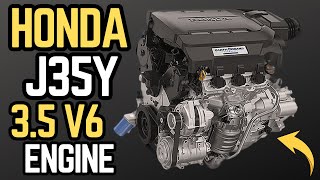
The 2018-2019 Odyssey, with its direct-injected 3.5L V6 (J35Y6) engine, is highly susceptible to a specific fuel injector problem. Debris from the high-pressure pump or from the fuel injector machining process can cause internal wear or clogging inside one or more injectors. This issue is so widespread across multiple Honda models using this engine that Honda issued Technical Service Bulletin A18-025, which was later superseded by bulletins 20-100 and 21-010, and a corresponding warranty extension program to address it.
Symptoms You May Notice

- Flashing or solid Check Engine Light
- Rough or vibrating idle
- Hesitation or stumbling during acceleration
- Noticeable loss of engine power
- Reduced fuel economy
- "Emission System Problem" message on the dashboard
- Engine may vibrate or run unevenly
- Replacing only the spark plug or ignition coil when the root cause is the fuel injector. This may temporarily seem to fix the issue, but the misfire will likely return.
- Replacing a catalytic converter for a P0420 or P0430 code without first addressing the underlying misfire codes. The TSBs note that the PCM can misinterpret sensor data from a misfiring cylinder and incorrectly flag the converter.
Most Likely Causes

- Faulty Fuel Injectors 🔴 High Probability → Shop Fuel Injector A known manufacturing defect can cause debris from the high-pressure pump or injector machining process to clog or damage the direct fuel injectors on this engine. This is documented in Honda TSB 21-010 and is the subject of a warranty extension for 10 years/150,000 miles.
How to confirm: Check for accompanying codes like P219A/P219B (air-fuel ratio imbalance) or other cylinder misfires (P0300-P0305). The presence of these codes alongside a P030x code makes the injector issue highly likely. A Honda dealer must check your vehicle's VIN to confirm eligibility for the warranty extension.
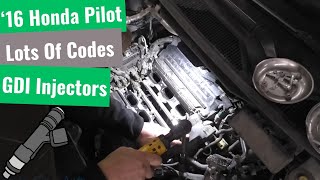
Typical fix: Replace all six fuel injectors with the updated part kit. This repair is often covered under Honda's warranty extension. The procedure requires removing the intake manifold. 🎬 See this walkthrough of the GDI fuel injector replacement process.
Est. part cost: $240-$350 for a full set of OEM injectors. - Failed Ignition Coil 🟡 Medium Probability → Shop Ignition Coil
How to confirm: Swap the ignition coil from cylinder 6 with another cylinder (e.g., cylinder 5, which is next to it on the front bank). Clear the codes and drive the vehicle. If the code changes to P0305, the ignition coil is faulty.
Typical fix: Replace the single failed ignition coil. It is often recommended to replace the corresponding spark plug at the same time.
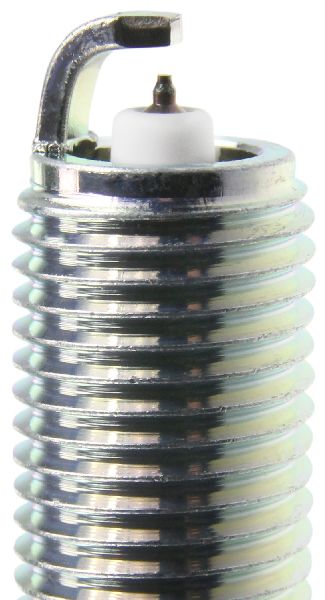
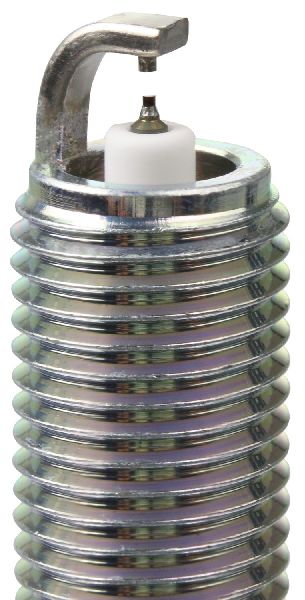
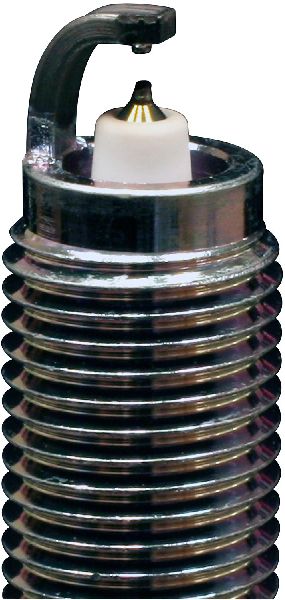
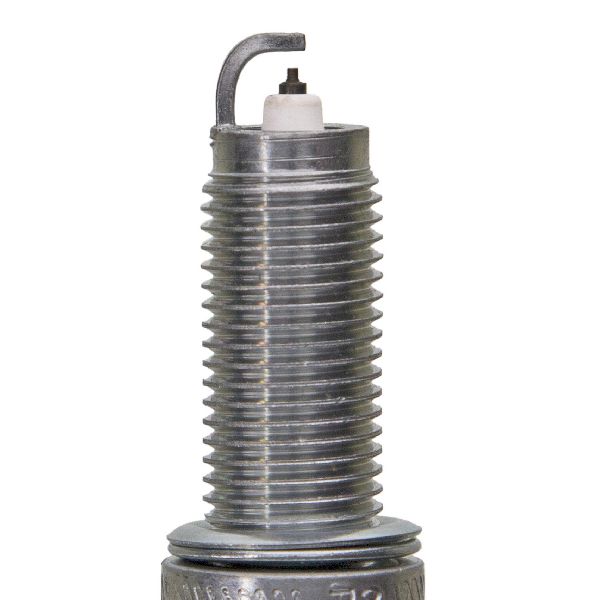
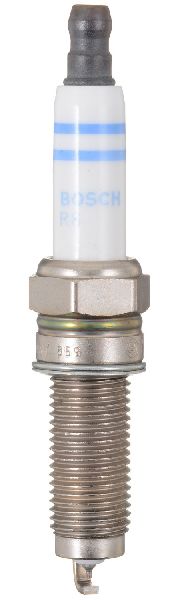
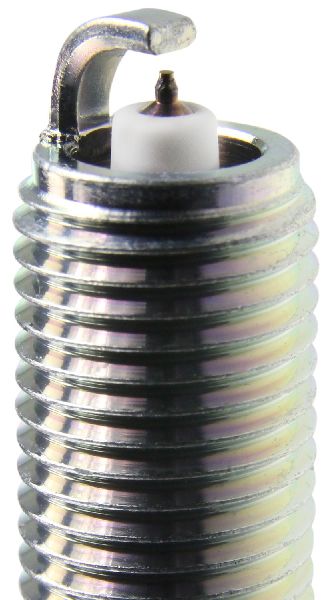
Est. part cost: $80-$110 for one OEM coil. - Worn or Fouled Spark Plug 🟡 Medium Probability → Shop Spark Plug Spark plugs are a normal wear item and require periodic replacement. The J35Y engine uses iridium plugs, which have a long life but can still fail or become fouled, especially if other issues like oil consumption are present.
How to confirm: Remove the spark plug from cylinder 6 and inspect it for wear, carbon fouling, or damage to the electrode. Compare it to a new plug.
Typical fix: Replace the spark plug. It is best practice to replace all six spark plugs at the same time to maintain consistent performance.
Est. part cost: $15-$25 per iridium spark plug.
Rare But Worth Checking
- Low Engine Compression: While less common, internal engine issues like a leaking valve or worn piston rings can cause a persistent misfire that isn't resolved by replacing ignition or fuel parts. This requires a mechanical compression test to diagnose.
- Carbon Buildup on Intake Valves: Direct injection engines like the J35Y are prone to carbon buildup on the intake valves over time, as fuel is no longer sprayed over them to keep them clean. At higher mileage (60k-100k+), this can lead to rough idle, hesitation, and misfires. This typically requires a professional cleaning service like walnut blasting.
Diagnosis Steps

- Read all stored trouble codes with an OBD-II scanner.
- If any combination of P030x, P219A/B, or P0420/P0430 codes are present, immediately suspect the fuel injector issue. The vehicle must have over 5,000 miles for the TSB to apply.
- Contact a Honda dealer with your VIN. Ask them to check for eligibility under the warranty extension detailed in TSB 21-010. If eligible, the dealer will perform the repair for free.
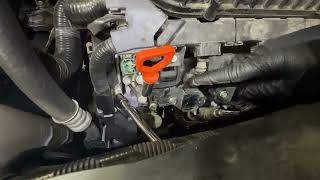
- If only P0306 is present and you wish to diagnose further, perform a diagnostic swap. Move the ignition coil from cylinder 6 to cylinder 5 (front bank, middle). 🎬 Watch: Helpful tips for accessing the ignition coils and spark plugs.
- Clear the codes and drive the vehicle. If the code returns as P0305, the ignition coil is bad and needs replacement.
- If the code remains P0306, swap the spark plug from cylinder 6 to cylinder 4 (front bank, passenger side). Clear codes and drive.
- If the code returns as P0304, the spark plug is bad.
- If the code remains P0306 after swapping the coil and plug, the fuel injector for cylinder 6 is the most likely cause. Refer back to step 3 and insist on the warranty check.
- If the vehicle is not eligible for warranty and all else fails, a mechanical compression test may be needed to check for internal engine problems like worn rings or valve issues.
Parts You'll Likely Need
- Fuel Injector Set (Kit of 6)
(OEM #16010-RLV-315)— This is the definitive fix for the most common cause of misfires on this vehicle, as specified by Honda's service bulletins. This part number is the updated kit that replaces the previous version, 16010-RLV-305. The kit includes all 6 injectors, O-rings, and seals.
Trusted brands: Honda (Genuine)
OEM price range: $235-$350 - Ignition Coil
(OEM #30520-RLV-A01)— A common failure point for any vehicle and a primary cause of a single-cylinder misfire.
Trusted brands: Honda (Genuine), NGK, Denso
OEM price range: $80-$110
Aftermarket price range: $40-$70 - Spark Plug
(OEM #NGK DILZKR7B11G (Honda P/N: 12290-R9P-A01))— A standard maintenance item that can cause misfires when worn. The OEM specified plug is an NGK Laser Iridium plug.
Trusted brands: NGK, Denso
OEM price range: $20-$30
Aftermarket price range: $15-$25
Related Codes That Often Appear With This One
- P0300 — This is a random/multiple cylinder misfire code. It often appears with P0306 when the fuel injector issue begins to affect more than one cylinder.
- P0301, P0302, P0303, P0304, P0305 — These are misfire codes for the other cylinders. Seeing them alongside P0306 strongly points to the common fuel injector problem affecting the entire engine.
- P219A / P219B — These codes indicate an air-fuel ratio imbalance between cylinders. They are explicitly mentioned in Honda's TSB 21-010 as being directly related to the faulty fuel injector issue.
- P0420 / P0430 — These codes indicate low catalytic converter efficiency. The PCM software can misinterpret sensor inputs from the misfire and incorrectly flag the catalytic converter. The TSB directs technicians to address the misfire/injector issue first when these codes are present together.
Technical Service Bulletins (TSBs) & Recalls
- A18-025: 'MIL Comes On with DTC P0300-P0306 or P219A/B'. This is the primary bulletin identifying the fuel injector issue due to manufacturing debris.
- 20-100: 'Warranty Extension: MIL Comes On with DTC P0420/P0430, P030x, and/or P219A/B (With Software Update)'. This bulletin supersedes A18-025 for certain vehicles and adds a software update component to the repair procedure.
- 21-010: 'Warranty Extension: MIL Comes On with DTC P0420/P0430, P030x, and/or P219A/B (Without Software Update)'. This is the most current bulletin for the 2018-2019 Odyssey, detailing th
Platform-Specific Known Issues
- A widespread fuel injector problem affects 2018-2019 Odysseys. Honda TSB A18-025 (later superseded by 20-100 and 21-010) identifies that 'debris from the high pressure pump or the fuel injector machining process can cause internal wear or clogging inside one or more injectors'. In response, American Honda extended the warranty on fuel injectors to 10 years or 150,000 miles for eligible vehicles. An owner complaint filed in 2023 for a 2019 Odyssey noted that their mechanic found an extended warranty from Honda for codes P0300-P0306.
- Owners who have had the repair done under warranty report that the dealer replaces the entire set of six fuel injectors, which is the official corrective action prescribed by Honda.
Mechanic-Grade Diagnostic Values
- Ignition Coil Primary Resistance — expected: Approximately 0.5 to 2.5 ohms. Failure: A reading in the hundreds of ohms or an open circuit (OL) indicates a faulty coil.
- Ignition Coil Secondary Resistance — expected: Approximately 2,500 to 5,000 ohms (2.5kΩ to 5.0kΩ) for a four-stroke engine coil. Failure: A very high reading (e.g., mega-ohms) or an open circuit (OL) points to a failed coil. A technician noted a bad coil having a resistance over 100 ohms higher than other good coils (1835 ohms vs ~1724 ohms).
- High-Pressure Fuel System Pressure — expected: Approximately 2,000-3,000 psi. Failure: A code like P0087 (Fuel Rail Pressure Too Low) often accompanies injector issues or a failing high-pressure fuel pump.
- Ignition Coil Hold-Down Bolt Torque — expected: 12 Nm (9 ft-lbs). Failure: N/A - This is an installation specification.
Hidden / Shadow Codes Worth Checking
- Mode $06 Data: Mode $06 provides access to the results of the PCM's self-tests for specific components before a standard DTC is set. For misfires, a technician can view raw misfire counts per cylinder to see if cylinder 6 is registering misfires even if the count is not yet high enough to trigger the P0306 code continuously. (see via A professional scan tool with Mode $06 capability, such as the Honda HDS or an advanced generic scanner.)
Scan Tool Commands That Help
- Honda HDS (Honda Diagnostic System): Misfire Counter / On-Board Snapshot — Use this to view the specific conditions (engine speed, load, temperature) when the misfire was first detected. It can also show live misfire counts for each cylinder to confirm the fault is on cylinder 6.
- Honda HDS (Honda Diagnostic System): Cylinder AF Test (Air-Fuel Test) — This function can help determine if there is an air-fuel imbalance in a specific cylinder, which would point towards a faulty fuel injector rather than a spark-related issue.
- Honda HDS (Honda Diagnostic System): PCM Reset — After a repair, a PCM reset clears all learned values, DTCs, and freeze data. This is more comprehensive than a simple DTC clear and is often required after replacing major components.
Wiring & Ground Locations
- Cylinder 6 Fuel Injector Connector — On the front bank of the engine (closest to the radiator), on the driver's side.. This is the electrical connection for the fuel injector on the misfiring cylinder. It is a 2-pin, female, oval-shaped connector. Technicians may need to test for power and signal at these pins or inspect the pigtail for damage before replacing the injector.
- G407 — A wiring diagram shows a ground point labeled G407 involved in the starting system. While not directly tied to the ignition system in the provided diagram, poor grounds can cause a wide range of intermittent electrical issues, including misfires.. A poor engine or PCM ground can cause erratic sensor readings and actuator performance. Verifying major ground connections are clean and tight is a fundamental step in diagnosing electrical faults.
OEM Part Supersession History
16010-RLV-305→16010-RLV-315— The original fuel injectors were prone to failure from internal debris. The -315 part is the updated replacement kit designed to resolve this issue.
Model Year Variations Within This Range
- 2018-2019: There are no significant differences in the 3.5L V6 engine or its core components between the 2018 and 2019 models. The primary cause of P0306 related to the fuel injectors applies equally to both years. Some higher trims in 2019 received a 10-speed automatic transmission that was only on Touring/Elite trims in 2018, but this does not affect the engine misfire diagnosis.
Helpful Videos
We Have This Part in Stock

The information in this article is provided for general reference and educational purposes only. Vehicle specifications, procedures, and part compatibility can vary by production date, trim level, and region. Always consult your vehicle's factory service manual and verify part numbers before purchasing or performing repairs. Safety-critical components such as airbags, seat belts, and braking systems should be installed by a qualified professional.
- Honda ODYSSEY:
- 🎬 Helpful Videos
- 🛍️ Shop This Part
- What's Unique About the 2018-2019 Honda ODYSSEY
- Symptoms You May Notice
- Most Likely Causes
- Rare But Worth Checking
- Diagnosis Steps
- Parts You'll Likely Need
- Related Codes That Often Appear With This One
- Technical Service Bulletins (TSBs) & Recalls
- Platform-Specific Known Issues
- Mechanic-Grade Diagnostic Values
- Hidden / Shadow Codes Worth Checking
- Scan Tool Commands That Help
- Wiring & Ground Locations
- OEM Part Supersession History
- Model Year Variations Within This Range
- 🎟️ Get 5% Off