

P0306 on 2017-2019 Honda Ridgeline: Cylinder 6 Misfire Causes and Fixes
On a 2017-2019 Ridgeline, P0306 is most often caused by a faulty fuel injector, a known issue covered by Honda's Technical Service Bulletin 21-010. This TSB supersedes A18-025 and extends the warranty for this specific problem to 10 years or 150,000 miles. The fix involves replacing all six fuel injectors. While spark plugs and ignition coils can also be culprits, the injectors are a very high-probability cause for this specific vehicle and are often the first part to be replaced under warranty
- P0306 on a 2017-2019 Ridgeline is very often caused by faulty fuel injectors, a known issue acknowledged by Honda with a TSB and warranty extension.
- Before spending money, check if your vehicle's VIN is eligible for the warranty extension covering the fuel injector replacement.
- Standard diagnostic steps like swapping the ignition coil and spark plug are still valid to rule out simpler causes first.
- If the check engine light is flashing, pull over safely and have the vehicle towed to prevent catastrophic damage to the catalytic converter.
- The issue is often accompanied by codes P219A or P219B, which further points to the fuel injector problem.
What's Unique About the 2017-2019 Honda RIDGELINE
The 2017-2019 Ridgeline uses the J35Y6 direct-injection V6 engine. While reliable, this platform has a documented issue with fuel injectors. Honda issued TSB 21-010, which states that debris from the manufacturing process of the high-pressure fuel pump or the fuel injectors themselves can cause clogging or internal damage. This leads to misfires and air-fuel ratio imbalance codes. This manufacturing flaw makes a fuel injector failure a much more common cause for a P0306 on this truck compared to many other vehicles, where spark plugs or coils are the primary suspects.
Diagnostic Flowchart
Tap your situation to follow the diagnostic path that matches what you're seeing on this vehicle.
Symptoms You May Notice
- Rough or vibrating idle
- Hesitation or stumbling during acceleration
- Noticeable loss of engine power
- Flashing or solid Check Engine Light
- Reduced fuel economy
- A "fish bite" sensation while driving, where the truck jerks intermittently.
- Replacing only the spark plug or ignition coil without considering the high probability of a fuel injector issue, as documented in Honda's TSBs. This can lead to wasted time and money.
- A dealership service advisor being unaware of or unwilling to apply the warranty extension (TSB 21-010), initially quoting the customer for the full repair cost. Owners have had to present the TSB information to get the repair covered.
Most Likely Causes
- Faulty Fuel Injectors 🔴 High Probability → Shop Fuel Injector Honda TSB 21-010 explicitly states that debris from the high-pressure fuel pump or injector machining process can cause clogging or internal wear. This leads to misfires (P0300-P0306) and air-fuel ratio codes (P219A/P219B). Due to this known defect, American Honda extended the warranty for the fuel injectors to 10 years or 150,000 miles for affected vehicles.
How to confirm: A technician can perform a cylinder AF (air-fuel) test using the Honda Diagnostic System (HDS). However, the TSB states that if a P0306 code is present (with or without other codes like P219B), the corrective action is to replace the fuel injectors. Many owners report dealers proceeding directly to injector replacement under warranty once the code is confirmed.
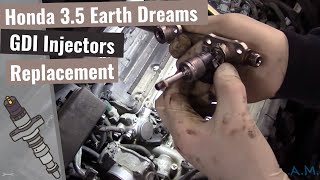
Typical fix: Replace all six fuel injectors as a set using the official Honda Fuel Injector Kit 🎬 Watch this step-by-step walkthrough for replacing your fuel injectors. (part #06160-RLV-305). The repair also involves replacing the fuel joint pipe.
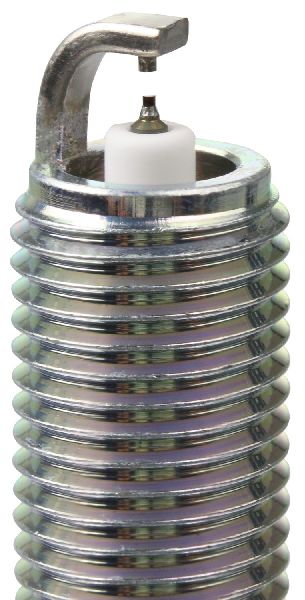
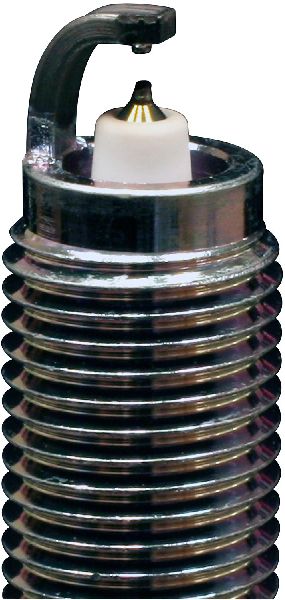
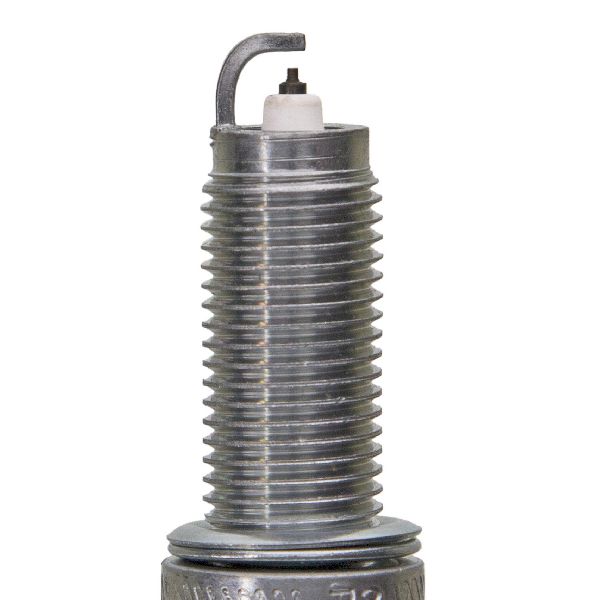
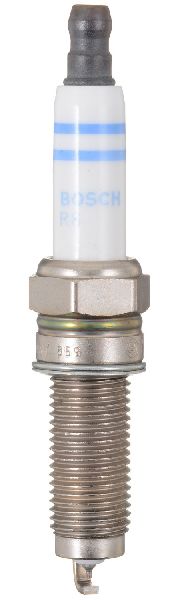
Est. part cost: $300-$500 for the OEM kit from online retailers, up to $900 from a dealer. - Worn Spark Plugs 🟡 Medium Probability → Shop Spark Plug Spark plugs are a standard wear item. The J35Y6 engine uses Iridium plugs which have a long life, but they can still fail or become fouled, especially if other issues like oil consumption are present.
How to confirm: Remove the spark plug from cylinder 6 and inspect it for wear (worn electrode), fouling (black, sooty, or oily deposits), or damage. Compare it to a plug from another cylinder. A worn or fouled plug is a clear indicator for replacement.
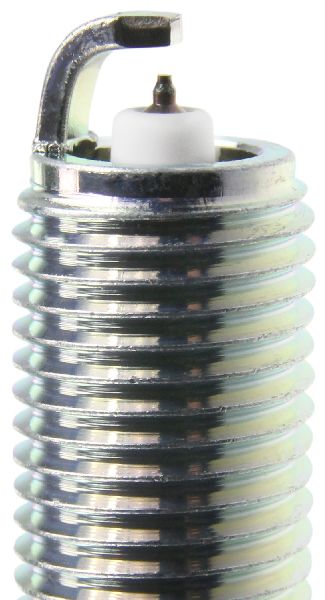
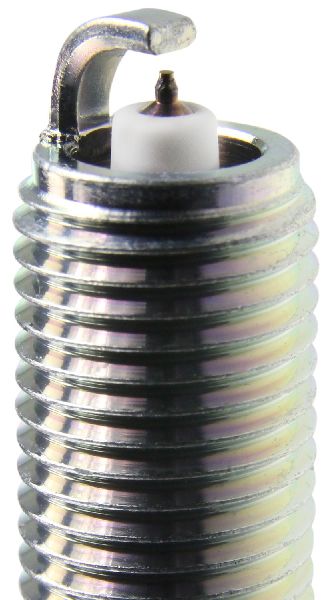
Typical fix: Replace the spark plug. It is best practice to replace all six spark plugs at the same time if they are near the end of their service life (typically around 100,000 miles). The OEM plug is an NGK Laser Iridium.
Est. part cost: $20-$35 per plug for OEM NGK plugs. - Failed Ignition Coil 🟡 Medium Probability → Shop Ignition Coil
How to confirm: Swap the ignition coil from cylinder 6 with another cylinder (e.g., cylinder 5). Clear the codes and drive the vehicle. If the code changes to P0305, the ignition coil is faulty. This is a definitive and cost-free diagnostic step. 🎬 See how to identify a shorted ignition coil yourself.
Typical fix: Replace the failed ignition coil. It is generally acceptable to replace only the failed coil.
Est. part cost: $80-$120 for an OEM-branded coil (e.g., Denso, Hitachi). - Valves Out of Adjustment ⚪ Low Probability Honda J-series engines require periodic valve clearance adjustments, typically around 100,000 miles or if they become noisy. If a valve is too tight, it won't seal properly, causing a loss of compression and a misfire.
How to confirm: Perform a valve clearance inspection and adjustment. This is a more involved mechanical job that requires removing the valve covers.
Typical fix: Adjust the valve clearances to manufacturer specifications.
Est. part cost: $20-$40 for valve cover gaskets.
Rare But Worth Checking
- Internal Engine Damage: An owner complaint for a 2017 model mentioned a P0306 code that was diagnosed as a 'lower engine problem'. Additionally, a recall (NHTSA 23V-751) was issued for some 2015-2019 vehicles with the J35Y6 engine due to a crankshaft manufacturing defect that could lead to connecting rod bearing failure. While rare, a persistent P0306 after other causes are ruled out could indicate a serious mechanical issue like piston ring failure or camshaft wear.
- Carbon Buildup on Intake Valves: Because the J35Y6 is a direct-injection engine, fuel does not wash over the back of the intake valves. Over time, oil vapors from the PCV system can bake onto the valves, causing carbon buildup that restricts airflow and can lead to misfires, especially on cold starts. This typically becomes a problem at higher mileage (60,000-100,000+ miles) and may require a manual or chemical cleaning service (walnut blasting).
Diagnosis Steps
- Read the codes with an OBD-II scanner and note any other codes present, especially P0300, other P030x codes, or P219A/B.
- Check your vehicle's VIN against Honda's warranty extension for this issue (TSB 21-010). The repair may be covered free of charge. Many owners report success by calling Honda of America or presenting the TSB to a dealer.
- Locate cylinder 6. On the Ridgeline's transverse V6, the bank closer to the firewall (rear bank) contains cylinders 1-2-3 (passenger to driver). The bank closer to the radiator (front bank) contains cylinders 4-5-6 (passenger to driver). Cylinder 6 is on the front bank, closest to the driver's side.
- If not pursuing warranty repair, perform the 'swap test'. Swap the ignition coil from cylinder 6 with the coil from cylinder 5. Clear the codes and drive. If the code returns as P0305, the coil is bad.
- If the misfire remains on cylinder 6, swap the spark plug from cylinder 6 with the one from cylinder 5. If the code changes to P0305, the spark plug is the culprit.
- If the misfire still remains on cylinder 6 after swapping the coil and plug, the problem is highly likely to be the fuel injector, as per Honda's extensive documentation.
- As a final, more advanced step, a mechanic can perform a compression test to rule out mechanical engine issues like poor valve sealing or worn piston rings.
Parts You'll Likely Need
- Fuel Injector Kit
(OEM #06160-RLV-305)— This is the most probable cause for a P0306 on this vehicle, as documented by Honda TSB 21-010. The injectors are prone to clogging or failure from manufacturing debris. The kit includes all 6 injectors and required seals/pipes.
Trusted brands: Honda (OEM)
OEM price range: $300-$500 for the kit online, up to $900+ at a dealer.
Aftermarket price range: Not recommended due to the specific nature of the OEM defect and warranty. - Ignition Coil
(OEM #30520-RLV-A01)— A common failure item on any modern engine that can cause a single-cylinder misfire. It's a primary suspect after ruling out the injector warranty.
Trusted brands: Honda (OEM), Denso, Hitachi, NGK
OEM price range: $80-$120
Aftermarket price range: $40-$70 - Spark Plug
(OEM #12290-R70-A01 (NGK ILZKR7B11))— A standard maintenance item. A fouled or worn spark plug cannot create a proper spark for combustion.
Trusted brands: NGK (OEM), Denso
OEM price range: $20-$35
Related Codes That Often Appear With This One
- P0300 — A random misfire code that can appear alongside a specific cylinder misfire if the issue is intermittent or affecting multiple cylinders. It is explicitly mentioned in TSB 21-010.
- P0301, P0302, P0303, P0304, P0305 — Misfire codes for other cylinders. If multiple codes are present, it strongly points towards the common fuel injector issue described in TSB 21-010, which mandates replacing all six injectors.
- P219A / P219B — These codes indicate an air-fuel ratio imbalance. They are explicitly mentioned in TSB 21-010 as being caused by the same faulty fuel injector issue that triggers the P030x misfire codes. The presence of P219B with P0306 is a very strong indicator of the injector problem.
Technical Service Bulletins (TSBs) & Recalls
- A18-025: MIL Comes On with DTC P0300-P0306 or P219A/B. [Now Superseded]
- 20-100: Warranty Extension: MIL Comes On with DTC P0420/P0430, P030x, and/or P219A/B (With Software Update). [Now Superseded by 21-010]
- 21-010: Warranty Extension: MIL Comes On with DTC P0420/P0430, P030x, and/or P219A/B (Without Software Update). This is the current, primary TSB for the fuel injector issue.
Platform-Specific Known Issues
- TSB 21-010 (Supersedes A18-025, 20-100): This is the key document for this issue. It covers 2017-2019 Ridgeline, Pilot, and 2018-19 Odyssey models. It identifies manufacturing debris in the fuel system as the cause for misfires (P030x) and air-fuel ratio codes (P219A/B). The official repair is to replace all fuel injectors. American Honda extended the warranty for this specific repair to 10 years or 150,000 miles for eligible vehicles, and owners may be eligible for reimbursement if they already paid for the repair.
- NHTSA Recall 23V-751: While not directly causing a single-cylinder misfire, a recall was issued for 2016-2019 models (including Ridgeline) for an improperly manufactured crankshaft that could lead to connecting rod bearing seizure and catastrophic engine failure. This underscores the importance of not ignoring persistent engine noises or misfires.
- Owner Forum Experiences: Owners on forums like 'Ridgeline Owners Club' and Reddit frequently discuss this exact issue. A common story involves a dealer initially denying warranty coverage, only to relent when the owner presents TSB 21-010. These threads are a valuable resource for owners navigating the repair process.
Mechanic-Grade Diagnostic Values
- Low-Pressure Fuel System — expected: 390-440 kPa (57-64 psi) at idle. Failure: Pressure outside of this range indicates a problem with the low-pressure fuel pump or regulator.
- Fuel Injector Resistance — expected: Approximately 1.5-2.0 ohms, with a YouTuber measuring 2.2 ohms on a similar Honda engine.. Failure: A reading significantly outside this range, or an open circuit (infinite resistance), indicates a failed injector coil. All injectors should have similar resistance.
Scan Tool Commands That Help
- Honda Diagnostic System (HDS): Misfire Counter Data Stream — To confirm in real-time which cylinder is misfiring and how frequently, even if no hard code is set. A technician can view individual misfire counts for all six cylinders to pinpoint the issue.
- Honda Diagnostic System (HDS): CKP Pattern Clear / CKP Pattern Learn — This procedure is required after repairing a misfire, or replacing a crankshaft position (CKP) sensor or PCM. It re-learns the subtle variations in the crankshaft position wheel, which is essential for accurate misfire detection. Failure to perform this can result in 'ghost' misfire codes being set after a repair has been completed.
- Honda Diagnostic System (HDS): On-Board Snapshot Data — When a misfire DTC is set, the HDS captures a snapshot of engine conditions (freeze data) at the moment the fault occurred. This data is crucial for a technician to understand the conditions (e.g., engine speed, load, temperature) that trigger the misfire.
Wiring & Ground Locations
- Engine Hanger Ground — The owner's manual specifies the engine hanger as a primary grounding point for jump-starting, which requires removing the engine cover to access. This indicates it is a main engine ground.. A poor engine ground can cause a weak or inconsistent spark across all cylinders, potentially leading to intermittent misfires. While not specific to cylinder 6, verifying major engine grounds is a fundamental step in diagnosing electrical issues, including misfires.
Real Owner Repair Stories
- Honda-Tech forum user (2006 Honda Odyssey with 3.5L J-series engine (similar architecture)) — Sudden onset of all misfire codes (P0300-P0306), rough running, but able to drive. Random relay clicking sound from the driver's seat.
❌ Tried (didn't work) Swapped spark plug and ignition coil from cylinder 6 with another cylinder; the problem remained on cylinder 6.
✅ What actually fixed it The user diagnosed that the fuel injector for cylinder #6 was receiving 12V power but was not getting the ground pulse signal from the PCM. The final diagnosis pointed towards a faulty PCM driver for that specific injector circuit.
OEM Part Supersession History
16010-5PA-305→06160-5PA-305— This is a part number supersession for a 4-cylinder Honda fuel injector kit.
Heads up: While not the part for the Ridgeline V6, this demonstrates a common Honda practice of updating injector kits with new part numbers. The Ridgeline V6 kit is 06160-RLV-305. It is critical to use the correct part number for the specific engine.
Model Year Variations Within This Range
- 2017-2019: The 2017-2019 Ridgeline models use a 6-speed automatic transmission. For the 2020 model year, this was replaced by a 9-speed ZF automatic transmission. While this doesn't directly affect the P0306 code cause, it's a significant powertrain difference within the same generation.
Helpful Videos
We Have This Part in Stock

The information in this article is provided for general reference and educational purposes only. Vehicle specifications, procedures, and part compatibility can vary by production date, trim level, and region. Always consult your vehicle's factory service manual and verify part numbers before purchasing or performing repairs. Safety-critical components such as airbags, seat belts, and braking systems should be installed by a qualified professional.
- Honda RIDGELINE:
- 🧭 Diagnostic Flowchart
- 🎬 Helpful Videos
- 🛍️ Shop This Part
- What's Unique About the 2017-2019 Honda RIDGELINE
- Symptoms You May Notice
- Most Likely Causes
- Rare But Worth Checking
- Diagnosis Steps
- Parts You'll Likely Need
- Related Codes That Often Appear With This One
- Technical Service Bulletins (TSBs) & Recalls
- Platform-Specific Known Issues
- Mechanic-Grade Diagnostic Values
- Scan Tool Commands That Help
- Wiring & Ground Locations
- Real Owner Repair Stories
- OEM Part Supersession History
- Model Year Variations Within This Range
- 🎟️ Get 5% Off