

P0306 on 2012-2017 Hyundai Azera: Cylinder 6 Misfire Causes and Fixes
P0306 indicates a misfire in cylinder 6. On the 3.3L GDI Azera, this is most often a failed ignition coil or a worn spark plug. Crucially, cylinder 6 is on the FRONT bank of the engine (near the radiator), making it easily accessible. This is a simple DIY repair that does NOT require removing the intake manifold.
- P0306 on this Azera means cylinder 6 (rear bank, driver's side) is misfiring.
- The most likely cause is a bad ignition coil or spark plug, but replacement is difficult because the intake manifold must be removed for access.
- While the manifold is off, it is wise to inspect for carbon buildup on the intake valves, a common issue with this GDI engine.
- Listen carefully for any engine knocking. This engine has a known defect with rod bearings that is covered by an extended warranty, and a misfire can be an early symptom.
- Always use new intake manifold gaskets when reassembling.
What's Unique About the 2012-2017 Hyundai Azera
The Lambda II 3.3L is a Gasoline Direct Injection (GDI) engine. Unlike older port-injected engines, GDI engines are known to be susceptible to carbon buildup on the intake valves, as fuel is no longer sprayed over them to provide a cleaning effect. This buildup can disrupt airflow and is a common cause of misfires on this platform, especially at higher mileage. While a simple ignition component is the most likely cause for P0306, this underlying GDI-related issue is a key factor to consider during diagnosis for other misfire codes or multiple misfires.
Symptoms You May Notice
- Check Engine Light is on (solid or flashing)
- Rough or shaky idle
- Engine hesitation or stumbling during acceleration
- Noticeable loss of engine power
- Reduced fuel economy
- Possible smell of raw fuel from the exhaust
- Assuming Cylinder 6 is on the rear bank. This is the most common mistake, leading to unnecessary work and cost. Always verify cylinder location for your specific engine.
- Replacing oxygen sensors. O2 sensors report on combustion efficiency; they do not typically cause a single-cylinder misfire.
- Replacing the catalytic converter. A misfire can damage a catalytic converter, but a bad converter does not cause a single-cylinder misfire.
Most Likely Causes
- Faulty Ignition Coil 🔴 High Probability → Shop Ignition Coil
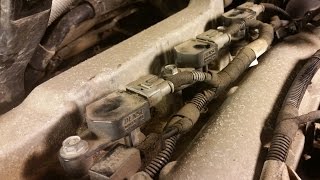
How to confirm: Swap the ignition coil from cylinder 6 with another cylinder on the front bank (e.g., cylinder 4). Clear the codes and drive. If the code changes to P0304, the ignition coil is the faulty part. This is a very easy test as cylinder 6 is easily accessible.
Typical fix: Replace the failed ignition coil. This is a simple, single-bolt replacement. Many owners choose to replace the spark plug at the same time.
Est. part cost: $45-$90 - Worn or Fouled Spark Plug 🔴 High Probability → Shop Spark Plug
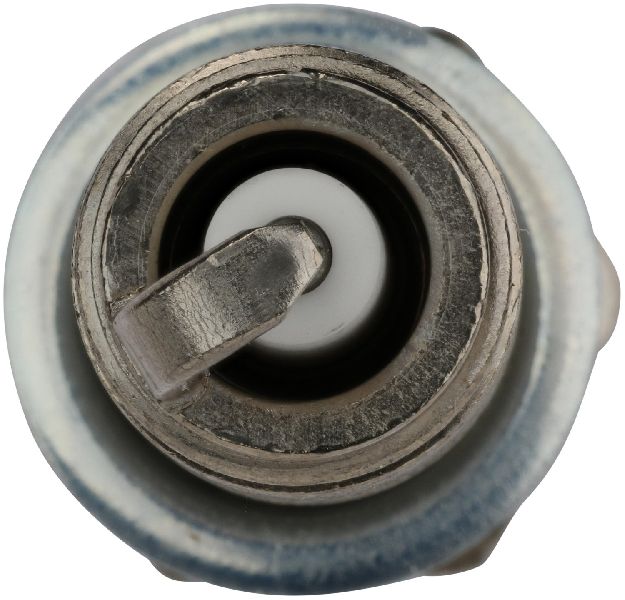
How to confirm: After ruling out the coil, swap the spark plug from cylinder 6 with another cylinder. If the misfire code follows the spark plug, the plug is bad. Visually inspect the plug for wear, oil fouling, or carbon tracking.
Typical fix: Replace the spark plug. It is best practice to replace all six spark plugs at the manufacturer's recommended service interval (typically 90-100k miles), but replacing just the single plug for cylinder 6 is possible due to its easy access. The rear three plugs require intake manifold removal. 🎬 Watch: Step-by-step guide for a full V6 spark plug tune-up.
Est. part cost: $15-$30 per plug - Carbon Buildup on Intake Valves ⚪ Low Probability This is a common issue on GDI engines like the Lambda II 3.3L. However, it is less likely to cause a single, isolated misfire on an easily serviced cylinder. It's more likely to cause multiple or random misfires (P0300).
How to confirm: This requires visual inspection using a borescope inserted into the intake port, which is typically done after the intake manifold has been removed for other service.
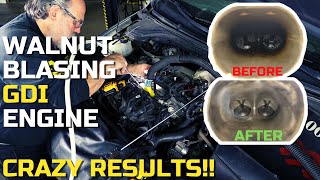
Typical fix: The intake valves need to be manually or chemically cleaned, most often through a process called walnut shell blasting. 🎬 See how walnut blasting removes heavy GDI carbon buildup. This is a labor-intensive job.
Est. part cost: $10-$30 for cleaning chemicals, or $300-$600 for a professional walnut blasting service. - Clogged or Faulty Fuel Injector ⚪ Low Probability → Shop Fuel Injector GDI injectors operate under very high pressure and can become clogged or fail electronically.
How to confirm: This is more difficult for a DIYer. A professional can perform a fuel injector balance test using a bidirectional scan tool like the Hyundai GDS. You can also check the resistance of the injector with a multimeter or listen for its clicking sound with a mechanic's stethoscope.
Typical fix: Replace the faulty fuel injector. The high-pressure fuel line may also need to be replaced upon reassembly.
Est. part cost: $70-$150
Rare But Worth Checking
- Internal Engine Failure (Rod Bearing Wear): The Lambda II 3.3L GDI has known issues with premature connecting rod bearing wear, which can lead to catastrophic engine failure. If the P0306 code is accompanied by a knocking noise from the engine and/or code P1326, stop driving immediately and have it professionally inspected. Hyundai has issued warranty extensions and software updates (KSDS) for this issue.
- Timing and Valve Train Issues: While less common for a single cylinder, mechanical failures in the timing system can trigger misfire codes. For instance, NHTSA ODI #11606626 describes a case where P0306 was present alongside P0018 and P0300, requiring the replacement of the intake camshaft, CVVT, and timing chain tensioner.
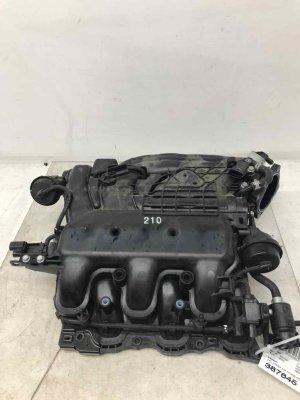
- Leaking Intake Manifold Gasket: → Shop Engine Intake Manifold A vacuum leak from a failed gasket can cause a misfire. However, since cylinder 6 is on the front bank, a leak at the main plenum gasket would likely affect multiple cylinders, not just cylinder 6 in isolation.
- Low Engine Compression: A mechanical issue like a burnt valve or worn piston rings can cause a persistent misfire that ignition or fuel parts won't fix. A compression test on cylinder 6 will confirm or deny this possibility.
- Failed PCV Valve: → Shop PCV Valve A PCV (Positive Crankcase Ventilation) valve that is stuck open can create a vacuum leak, disrupting the air-fuel ratio and potentially causing misfires. Symptoms can include a rough idle, oil consumption, or a hissing noise from the engine. If the valve is stuck closed, it can lead to increased crankcase pressure and cause oil leaks from gaskets and seals.
Diagnosis Steps
- Read the code with an OBD-II scanner and confirm P0306 is present. Note any other codes, especially P1326.
- Identify cylinder 6. It is on the front bank (near the radiator), on the driver's side. Access is direct and does not require removing any major components.
- Perform an 'ignition swap test'. Unplug the connector and remove the single bolt holding the ignition coil for cylinder 6. Swap this coil with the coil from cylinder 4 (middle cylinder, front bank).
- Clear the codes, start the engine, and let it run. If the code returns as P0304, the ignition coil is faulty and needs replacement.
- If the code remains P0306, the coil is likely good. Perform the same swap test with the spark plugs. Move the cylinder 6 plug to cylinder 4, and the cylinder 4 plug to cylinder 6.
- Clear codes and test again. If the code is now P0304, the spark plug was the issue. Replace it.
- If the code is still P0306 after swapping the coil and plug, the problem is not a simple ignition component. Inspect the wiring and connector for the ignition coil and fuel injector on cylinder 6 for any damage.
- At this point, the issue could be a faulty fuel injector, a wiring problem, or a mechanical engine issue (low compression). Further professional diagnosis is recommended.
- A compression test on cylinder 6 is the next logical step to rule out mechanical damage.
Parts You'll Likely Need
- Ignition Coil
(OEM #27301-3C000 (supersedes 27301-3C010))— This is one of the most common failure points for a single-cylinder misfire.
Trusted brands: Hyundai (OEM), Delphi, NGK, Denso
OEM price range: $70-$90
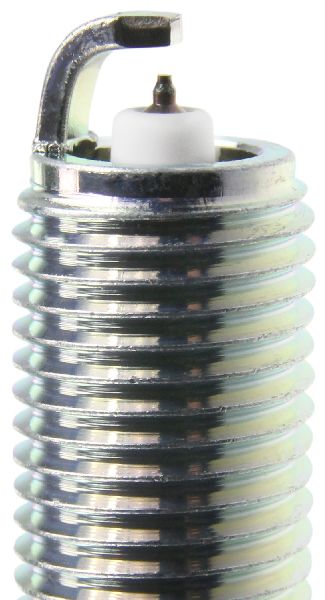
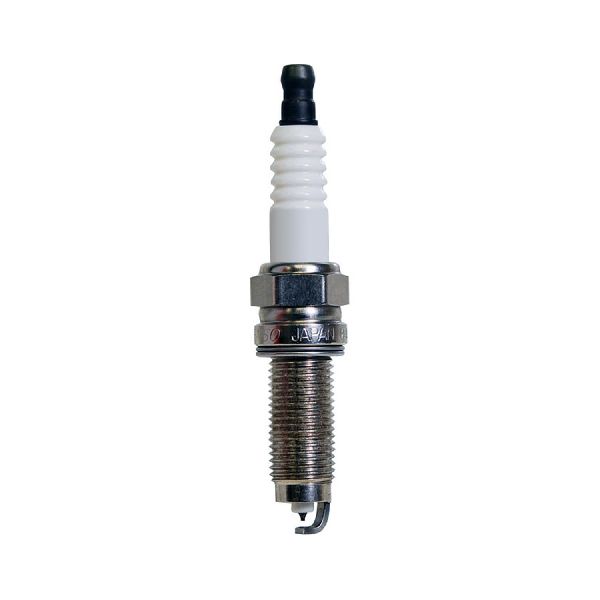
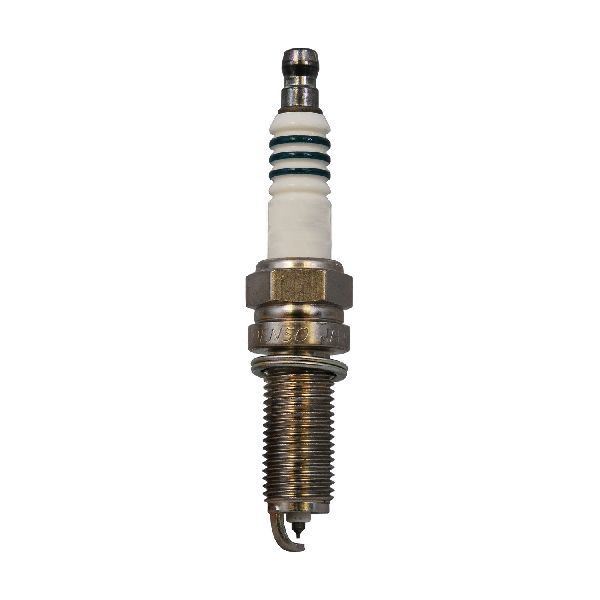
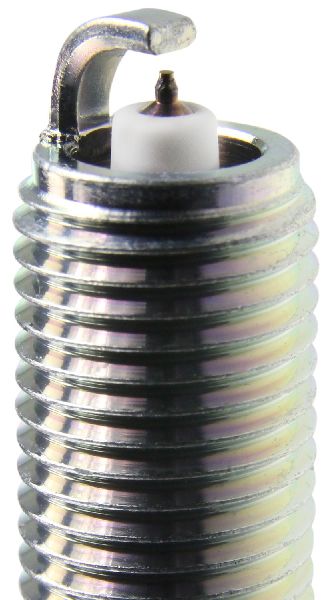
Aftermarket price range: $45-$70 - Iridium Spark Plug
(OEM #18846-11070)— Spark plugs are a routine maintenance item and a primary cause of misfires as they wear out.
Trusted brands: NGK (SILZKR7B11), Denso (SXU22HCR11S)
OEM price range: $25-$35
Aftermarket price range: $15-$25 - Upper Intake Manifold Gasket
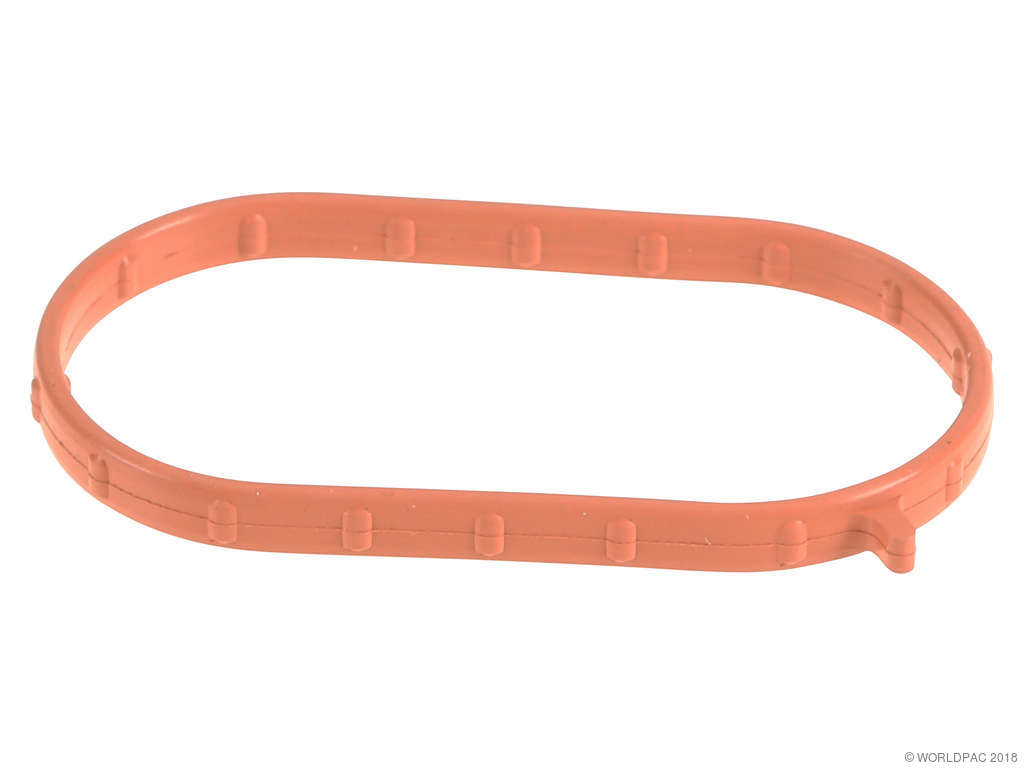
(OEM #29215-3CFA1)— This is NOT required for a P0306 repair. It is only needed if servicing the rear bank of cylinders (1, 3, 5) for other misfire codes.
Trusted brands: Hyundai (OEM), Mahle, Fel-Pro
OEM price range: $25-$35
Aftermarket price range: $15-$25 - GDI Fuel Injector
(OEM #35310-3C560)— A less common cause for a single misfire, replaced only after ignition parts and wiring are confirmed to be good.
Trusted brands: Hyundai (OEM)
OEM price range: $120-$180
Aftermarket price range: $70-$150
Related Codes That Often Appear With This One
- P0300 — If multiple cylinders are misfiring randomly, P0300 (Random/Multiple Cylinder Misfire) may appear alongside P0306. This could point to a more systemic issue like a large vacuum leak, low fuel pressure, or severe carbon buildup affecting all cylinders.
- P1326 — This is a critical Hyundai/Kia specific code for the Knock Sensor Detection System (KSDS). It indicates the engine computer has detected vibrations consistent with rod bearing failure. It was added via a software update (Campaign 966) to detect this specific known issue. If you see P1326, stop driving and contact a dealer to check for warranty coverage, as engine failure is imminent.
- P0171 — A 'System Too Lean (Bank 1)' code can appear if a vacuum leak is the root cause of the misfire. A failing PCV valve stuck open can sometimes trigger this code along with a misfire code.
Technical Service Bulletins (TSBs) & Recalls
- source — Describes a common issue with the steering coupling, which is unrelated to a P0306 code but is a frequent problem on this vehicle.
Platform-Specific Known Issues
- The Lambda II 3.3L GDI engine is subject to a warranty extension (Campaign TXXM) to 15 years/150,000 miles for connecting rod bearing wear. This can cause engine knocking, stalling, and eventual catastrophic failure. A misfire code can be an early symptom, so any audible engine knock should be investigated immediately under this program.
- As a GDI engine, significant carbon accumulation on the intake valves is a well-documented issue that can cause misfires and general performance problems.
Mechanic-Grade Diagnostic Values
- Low-Pressure Fuel Pump Pressure — expected: 64.5 - 66.0 PSI. Failure: Pressure below this range indicates a weak in-tank fuel pump, which could cause misfires, though it would typically affect multiple cylinders.
- High-Pressure Fuel Pump (HPFP) Pressure — expected: Up to 150 Bar (approx. 2175 PSI) at the fuel rail.. Failure: Significantly lower pressure under load, or erratic readings, point to a failing HPFP. This would usually cause multiple misfire codes or a specific fuel pressure code.
- Ignition Coil Primary Winding Resistance — expected: While a specific value for this OEM coil is not published, a typical modern COP coil has a primary resistance of 0.5 to 2.0 Ohms. A reading of infinity (open) or zero (short) indicates a failed coil.. Failure: A reading outside the typical range, or a significant difference compared to the other coils on the engine.
- ECM Control Signal for Ignition Coil #6 — expected: A pulsed ground signal when the engine is running. The primary voltage at the coil should be around 300-400V during the pulse event.. Failure: No pulse from the ECM indicates a wiring problem or a failed ECM driver circuit.
Scan Tool Commands That Help
- Hyundai GDS (Global Diagnostic System): Power Balance Test / Cylinder Cut-out Test — To confirm a misfire on a specific cylinder without swapping parts. The tool deactivates the fuel injector for each cylinder one by one; a significant drop in RPM should be observed. If there is no change in RPM when cylinder 6 is deactivated, it confirms that cylinder was not contributing power.
- Hyundai GDS (Global Diagnostic System): Fuel Injector Balance Test — To measure the pulse width variance for each injector. This can identify a clogged or electronically failing injector that isn't delivering the correct amount of fuel.
- Hyundai GDS (Global Diagnostic System): Reset Adaptive Values — After replacing a component like a fuel injector or performing carbon cleaning, this function resets the engine's long-term fuel trims and other learned values to their default state, allowing the ECM to relearn based on the new parts.
Wiring & Ground Locations
- ECM Connector CLG-A, Pin 43 — This pin is on the main connector to the Engine Control Module (ECM).. This is the specific control output pin from the ECM that sends the signal to fire the ignition coil for cylinder #6. A technician can back-probe this pin to verify if the ECM is sending the command to fire, helping to distinguish between a wiring, coil, or ECM fault.
- Ground Points G19, GE11, GM04 — These are various engine and chassis ground points. For example, GM04 is located at the top left side of the dash. G19 is another ground distribution point.. A poor ground connection for the engine sensors or the ECM itself can cause erratic behavior, including misfires. Verifying that the main engine-to-chassis ground straps and sensor grounds are clean and tight is a crucial step in diagnosing persistent electronic issues.
OEM Part Supersession History
27301-3C010→27301-3C000— Standard part revision and consolidation by the manufacturer. The newer part number is the current replacement for a wide range of Hyundai/Kia V6 engines.
Heads up: The two part numbers are interchangeable for this vehicle.
Model Year Variations Within This Range
- 2012-2017: The core engine (Lambda II 3.3L GDI) and its management system remained largely consistent throughout this generation, which was redesigned for 2012. No significant variations affecting the diagnosis of P0306 are noted. The horsepower rating was a consistent 293 hp.
Diagnostic Flowchart
Other Known Issues on This Vehicle
Issues unrelated to this code that are worth knowing about as an owner of this generation:
- Worn MDPS Steering Coupler 🟠 Medium — Very common. Causes a distinct clicking or clunking sound when turning the steering wheel at low speeds. Typically occurs between 50,000 and 100,000 miles. (Ref: TSB 17-ST-001, Warranty Extension TXX7)
- Connecting Rod Bearing Failure 🔴 High — A known, serious defect in some Lambda II engines, though less common than in the 4-cylinder Theta II engines. Can lead to catastrophic engine failure. Often preceded by a knocking noise and the P1326 trouble code. (Ref: Associated with P1326 and KSDS update (Campaign 966). Hyundai has offered warranty extensions for related engine issues.)
- Carbon Buildup on Intake Valves 🟠 Medium — Common to all GDI engines, including the Lambda II. Becomes problematic at higher mileage (60,000+ miles), causing misfires, rough idle, and performance loss. Not a defect, but a consequence of GDI technology.
- High Oil Consumption 🟠 Medium — Some owners report increased oil consumption as the engine ages, typically past 100,000 miles. Can be caused by stuck piston rings. Requires regular monitoring of oil levels to prevent engine damage.
Used vs. New Parts: Buying Guide for This Vehicle
When a used part is the smart pick: For this repair, a used ignition coil from a low-mileage donor vehicle is a reasonable choice to save money, as it's an external, easily-swapped component. However, given the relatively low cost of new aftermarket coils, many owners opt for new parts for peace of mind.
Donor-vehicle mileage cap: roughly under 60000 miles for the part to have meaningful remaining life.
What to inspect on the donor part:
- Check for cracks or damage to the plastic housing of the ignition coil.
- Inspect the electrical connector for corrosion or bent pins.
- Look at the rubber boot for tears, swelling, or signs of oil contamination.
- If possible, ask for the VIN of the donor car to verify its mileage and that it wasn't from a front-end collision.
OEM-only on this vehicle (don't cheap out):
- GDI Fuel Injector: While aftermarket options exist, OEM injectors are recommended due to the precise calibration and high pressures of the GDI system. A faulty aftermarket injector can cause performance issues or fuel leaks.
- High-Pressure Fuel Pump (HPFP): This is a known failure point on many Hyundai/Kia GDI engines. Using a used pump is risky unless it's from a very low-mileage vehicle. A new OEM pump is the safest bet for a lasting repair.
Aftermarket brands forum-validated for this vehicle:
- Ignition Coils: Denso, Delphi, NGK.
- Spark Plugs: NGK, Denso are the OEM suppliers and are highly recommended.
Brands owners have reported issues with on this vehicle:
- Unbranded, 'no-name' ignition coils from online marketplaces. While very cheap, they have a high failure rate and can cause persistent misfires or even damage the ECM.
Real Owner Stories
Aggregated from forums and TSBs cited above. Mileages and costs reflect what owners reported in those sources.
2014 Hyundai Azera Limited 3.3L GDI V6
Symptoms: The owner documented the process of replacing spark plugs, noting the significant difference in accessibility between the front bank and the rear bank which requires full intake removal.
What fixed it: Replacement of spark plugs using specific NGK brand plugs.
Source hint: YouTube: 2014 Hyundai Azera Limited 3.3 GDI V6 Spark Plug Replacement - by Mr. Law Jones
2012-2017 Hyundai Azera 3.3L GDI V6 — ~75000 miles
Symptoms: Distinct clicking or clunking sound when turning the steering wheel at low speeds.
What fixed it: Motor Driven Power Steering (MDPS) coupling replacement.
Source hint: TSB 17-ST-001: MOTOR DRIVEN POWER STEERING (MDPS) COUPLING REPLACEMENT
2012-2017 Hyundai Azera 3.3L GDI V6
Symptoms: Engine knocking, stalling, and potential catastrophic failure; sometimes preceded by a misfire code.
What fixed it: Investigation and potential repair under Campaign TXXM for connecting rod bearing wear.
Source hint: vehicle_specific_issues: Campaign TXXM warranty extension
Hyundai V6 Owner Report
Symptoms: An owner reported a series of misfire codes including P0303, P0304, P0305, and P0306. A service writer verbally advised that the misfire was detected in cylinder 5, but the diagnostic codes indicated multiple cylinder failures including cylinder 6.
What fixed it: Professional diagnosis of the misfire across multiple cylinders.
Source hint: NHTSA ODI #10508566
Related OBD-II Codes
Frequently Asked Questions
Where is cylinder 6 located on my 2012-2017 Hyundai Azera 3.3L?
Is there a warranty extension that covers engine issues on my Azera?
Do I need to remove the intake manifold to fix a P0306 code?
What is the recommended spark plug replacement interval for the 3.3L GDI engine?
Could the clicking sound in my steering wheel be related to the P0306 misfire?
Is carbon buildup a common cause for misfires on the Azera 3.3L?
Helpful Videos
Used OEM Parts in Stock
New Aftermarket Parts Available

The information in this article is provided for general reference and educational purposes only. Vehicle specifications, procedures, and part compatibility can vary by production date, trim level, and region. Always consult your vehicle's factory service manual and verify part numbers before purchasing or performing repairs. Safety-critical components such as airbags, seat belts, and braking systems should be installed by a qualified professional.
- Hyundai Azera:
- 🧭 Diagnostic Flowchart
- 🎬 Helpful Videos
- 🛍️ Shop This Part
- What's Unique About the 2012-2017 Hyundai Azera
- Symptoms You May Notice
- Most Likely Causes
- Rare But Worth Checking
- Diagnosis Steps
- Parts You'll Likely Need
- Related Codes That Often Appear With This One
- Technical Service Bulletins (TSBs) & Recalls
- Platform-Specific Known Issues
- Mechanic-Grade Diagnostic Values
- Scan Tool Commands That Help
- Wiring & Ground Locations
- OEM Part Supersession History
- Model Year Variations Within This Range
- Other Known Issues on This Vehicle
- Used vs. New Parts: Buying Guide for This Vehicle
- Real Owner Stories
- 2014 Hyundai Azera Limited 3.3L GDI V6
- 2012-2017 Hyundai Azera 3.3L GDI V6 — ~75000 miles
- 2012-2017 Hyundai Azera 3.3L GDI V6
- Hyundai V6 Owner Report
- Related OBD-II Codes
- Frequently Asked Questions
- 🎟️ Get 5% Off