

P0306 on 2006-2010 Hyundai Sonata 3.3L V6: Cylinder 6 Misfire Causes and Fixes
This code means cylinder 6 is misfiring. On the 3.3L V6 Sonata, this is almost always a bad ignition coil or a worn spark plug. Cylinder 6 is on the front bank (near the radiator), making it easy to access and diagnose. A DIY fix is very common, costing $40-$100 for a new coil and plug.
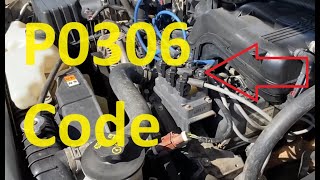
- P0306 on this Sonata points to a misfire on cylinder 6, which is conveniently located on the front bank near the radiator, making it easy to access.
- The most likely cause is a bad ignition coil. Use the 'swap test' to confirm this before buying parts.
- The second most likely cause is a worn-out spark plug. Always check for oil in the spark plug tube, as a leaking valve cover gasket is a common related failure.
- Do not drive extensively if the Check Engine Light is flashing, as this can destroy your catalytic converter, turning a simple repair into a very expensive one.
- Because cylinder 6 is easy to reach, this is a great DIY diagnostic and repair for beginners, often requiring only basic hand tools.
What's Unique About the 2006-2010 Hyundai Sonata
For the 2006-2010 'NF' generation Sonata with the 3.3L Lambda V6, the cylinder layout is key. Unlike many V6 engines where the even-numbered cylinders are on the difficult-to-access rear bank, on this transverse-mounted engine, Bank 2 (cylinders 2, 4, and 6) is located at the front of the engine bay, near the radiator. This makes accessing cylinder 6 for diagnosis and repair significantly easier than accessing the rear cylinders (1, 3, 5), which are tucked under the intake manifold. This accessibility is a major advantage for DIY repairs and is a defining characteristic of this specific fault on this platform.
Symptoms You May Notice
- Check Engine Light is on and steady
- Check Engine Light is flashing (indicates a severe misfire)
- Rough or vibrating idle
- Hesitation or stumbling during acceleration
- Noticeable loss of engine power
- Reduced fuel economy
- A smell of gasoline from the exhaust
- Replacing the oxygen sensor. An O2 sensor will not cause a single-cylinder misfire code like P0306, although a misfire can sometimes trigger related O2 sensor codes.
- Replacing the catalytic converter. A persistent misfire can destroy a catalytic converter by dumping raw fuel into it, but a bad converter does not cause the initial misfire.
Most Likely Causes
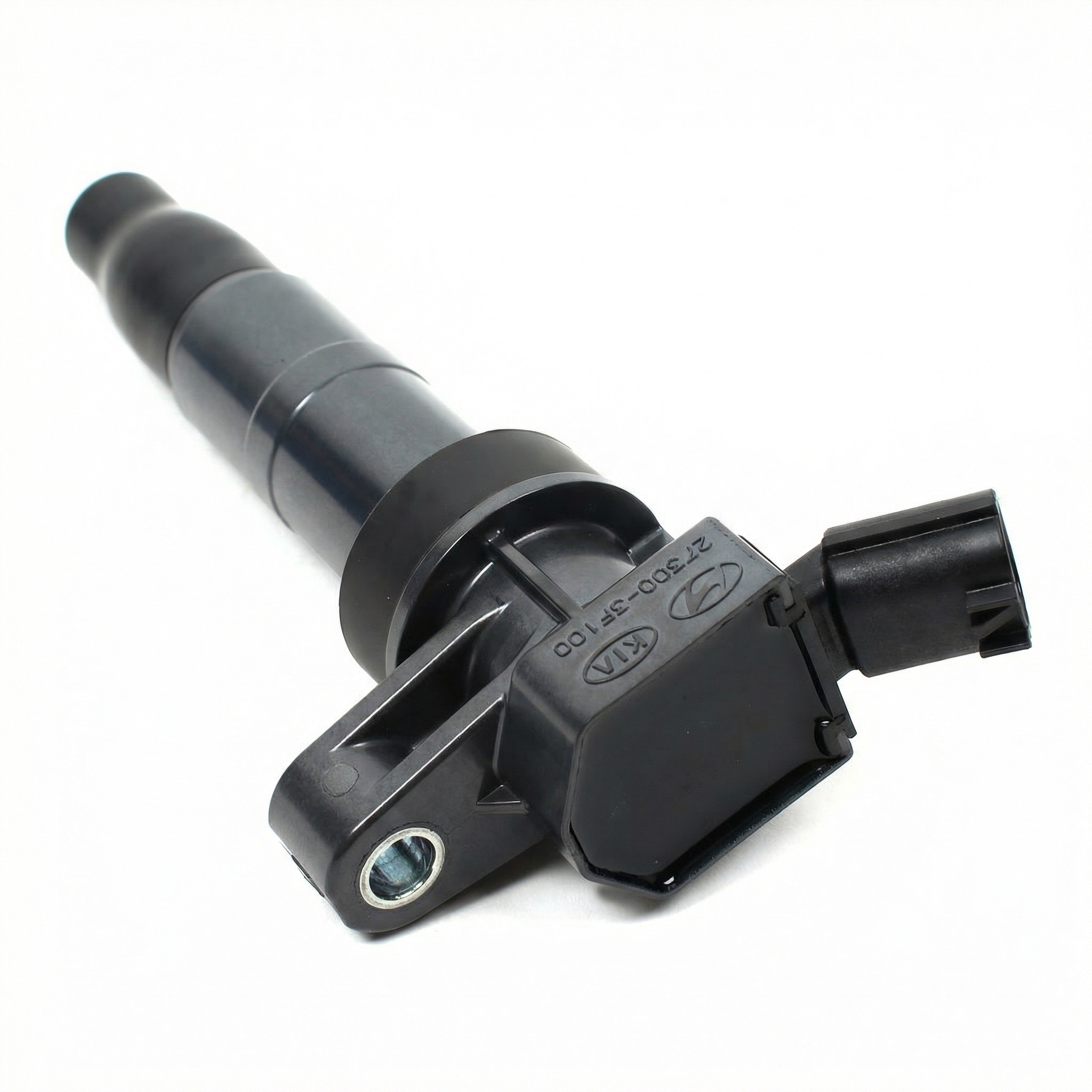
- Faulty Ignition Coil 🔴 High Probability → Shop Ignition Coil Coil-on-plug ignition systems are common failure points on most vehicles as they age due to constant heat cycles and vibration. The Lambda V6 is no exception, and this is the most frequent cause for a single-cylinder misfire.
How to confirm: Perform the 'swap test': Swap the ignition coil from cylinder 6 with the coil from another cylinder on the same bank (e.g., cylinder 4). Clear the codes and drive. If the code changes to P0304, the ignition coil is confirmed to be faulty. This is a definitive and free diagnostic step.
Typical fix: Replace the failed ignition coil. It is often recommended to replace all three coils on the front bank if they are original and high-mileage, but replacing just the failed one is also a common repair.
Est. part cost: $40-$80 - Worn or Fouled Spark Plug 🔴 High Probability → Shop Spark Plug
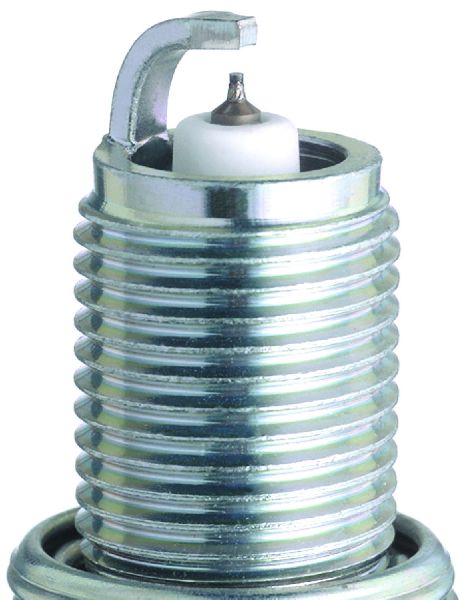
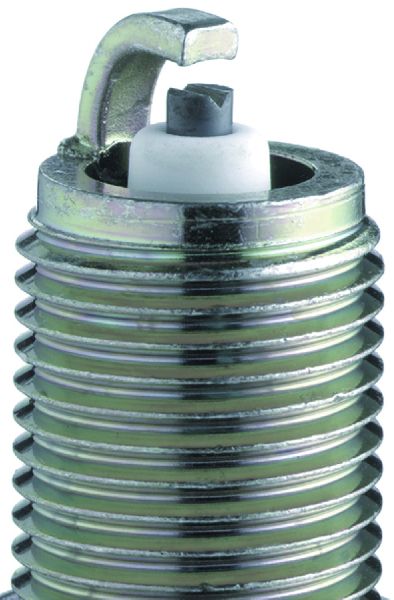
How to confirm: After ruling out the ignition coil, remove the spark plug from cylinder 6. Inspect it for wear (rounded electrode), carbon fouling, oil contamination, or an incorrect gap. Compare it to a new plug. Oil on the plug threads is a strong indicator of a leaking valve cover gasket.
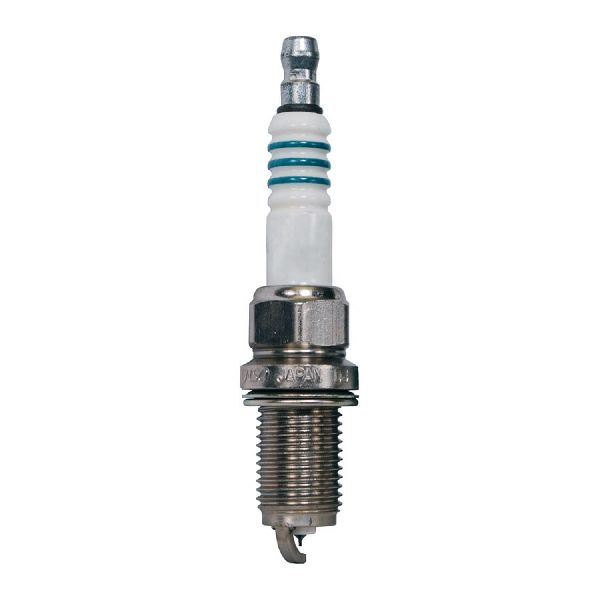
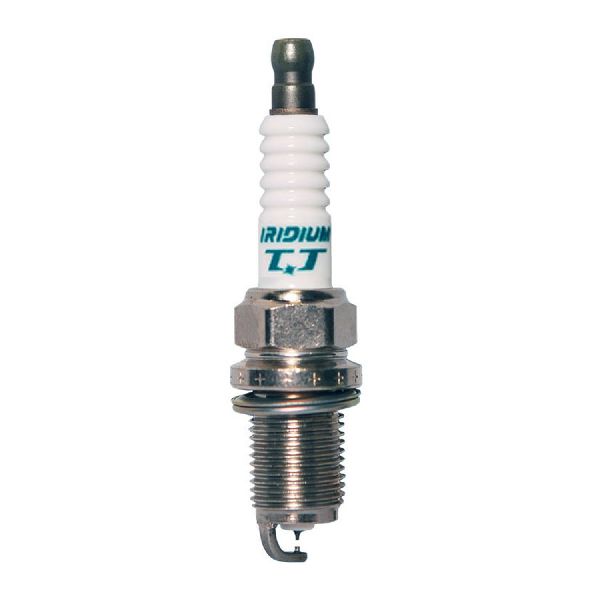
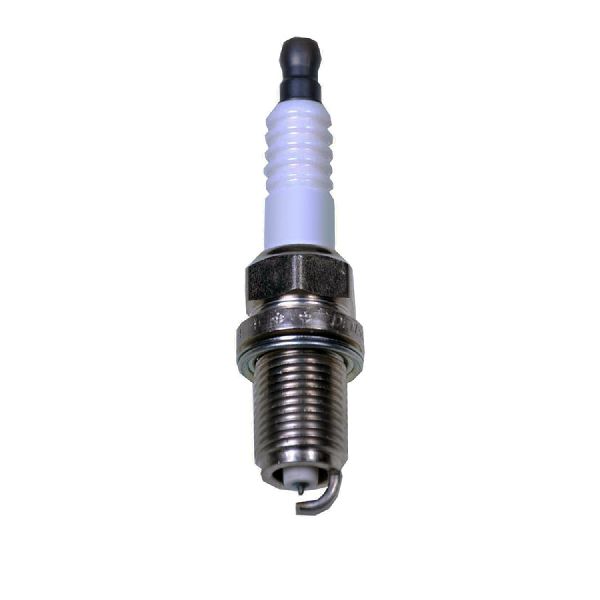
Typical fix: Replace the spark plug. It is best practice to replace all six spark plugs at the same time to ensure even performance and avoid future misfires. Use OEM-spec iridium plugs (e.g., NGK IFR5G-11) for longevity.
Est. part cost: $10-$20 per plug - Leaking Valve Cover Gasket 🟡 Medium Probability The rubber valve cover gaskets on the 3.3L V6 are known to become hard and brittle over time, causing oil to leak. Because of the engine's design, this oil often seeps into the spark plug tubes, flooding the spark plug and ignition coil boot, which directly causes a misfire.
How to confirm: When you remove the ignition coil for cylinder 6, inspect the coil boot and the spark plug well for the presence of liquid engine oil. Any oil found here confirms the valve cover gasket and tube seals have failed.
Typical fix: Replace the valve cover gasket for the front bank (Bank 2), along with the integrated spark plug tube seals and the bolt grommets. Thoroughly clean all oil out of the spark plug well before installing the new spark plug and coil.
Est. part cost: $30-$60 for the gasket set - Clogged or Faulty Fuel Injector ⚪ Low Probability → Shop Fuel Injector
How to confirm: If ignition components are good, the fuel injector is the next suspect. A mechanic's stethoscope can be used to listen for a consistent 'clicking' sound from the injector, indicating it's actuating. A more definitive test involves swapping the injector with another cylinder, but this is a more involved job requiring the removal of the fuel rail.
Typical fix: Replace the failed fuel injector for cylinder 6. It is often recommended to replace all injectors on the same fuel rail if they are high-mileage.
Est. part cost: $50-$150
Rare But Worth Checking
- Intake Manifold Gasket Leak: → Shop Engine Intake Manifold A vacuum leak near the runner for cylinder 6 can lean out the air/fuel mixture, causing a misfire. This is more likely if other service has recently been performed that required removing the intake manifold.
- Low Engine Compression: A mechanical issue like a burnt valve, worn piston rings, or a failing head gasket can cause a persistent P0306 that is not fixed by replacing ignition or fuel parts. This requires a compression test to diagnose and is a much more serious engine problem.
Diagnosis Steps
- Read the code from the OBD-II port using a scanner to confirm P0306 and check for any other codes.
- Identify cylinder 6. On the 2006-2010 Sonata 3.3L V6, the cylinders are numbered 1-3-5 on the rear bank (firewall side) and 2-4-6 on the front bank (radiator side). Cylinder 6 is on the front bank, driver's side.
- Perform the 'Ignition Coil Swap Test'. Swap the ignition coil from cylinder 6 with the coil from cylinder 4. Clear the codes and run the engine. If the code returns as P0304, the ignition coil is bad and needs replacement.
- If the code remains P0306, inspect the spark plug and well. Remove the coil and then the spark plug from cylinder 6. Check for oil in the spark plug tube, which indicates a leaking valve cover gasket. Inspect the plug for wear, damage, or fouling.
- If the plug is old or fouled, replace it. It's best to replace all six at once. If oil was present in the well, the front valve cover gasket set must be replaced to permanently fix the issue.
- If the coil and plug are good and the well is dry, the problem may be the fuel injector. Listen for a clicking sound with a stethoscope. Diagnosis beyond this point may require professional tools.
- Check for vacuum leaks around the intake manifold, especially if work has been done recently. Listen for hissing sounds with the engine running.
- If all else fails, perform a compression test on cylinder 6 to check for mechanical engine problems. A significant loss of compression points to a serious internal issue.
Parts You'll Likely Need
- Ignition Coil
(OEM #27301-3C000)— This is the most common cause of a single-cylinder misfire. The coil provides the high voltage needed to fire the spark plug.
Trusted brands: Hyundai/Kia OE, Denso (673-8312), NGK (48935), Delphi (GN10560), Mando (21A0120)
OEM price range: $70-$100
Aftermarket price range: $40-$80 - Iridium Spark Plug
(OEM #NGK: IFR5G-11)— Spark plugs are a routine maintenance item and a primary cause of misfires as they wear out. Oil fouling from a leaking gasket can also ruin a good plug.
Trusted brands: NGK, Denso
OEM price range: $15-$25
Aftermarket price range: $10-$20 - Valve Cover Gasket Kit (Front/Bank 2)
(OEM #22441-3C110)— If oil is found in the spark plug well, the gasket has failed and is causing the misfire by fouling the plug and coil. This is a very common failure mode.
Trusted brands: Hyundai/Kia OE, Fel-Pro, Mahle (VS50750R)
OEM price range: $40-$60
Aftermarket price range: $25-$45
Related Codes That Often Appear With This One
- P0300 — If the misfire is intermittent or affects multiple cylinders, a P0300 (Random/Multiple Cylinder Misfire) may be stored alongside P0306.
- P0302, P0304 — If a systemic issue like a leaking intake gasket or low fuel pressure is affecting the entire front bank (Bank 2), you may see misfire codes for the other cylinders on that bank as well.
Technical Service Bulletins (TSBs) & Recalls
- TSB 09-FL-004: Addresses MIL on with misfire DTCs P0300-P0306 for 2006-2009 3.3L/3.8L engines, providing updated diagnostic procedures.
- TSB 08-FL-002-2: Predecessor to the above TSB, also covering misfire diagnostics related to rich fuel trim conditions on Lambda V6 engines.
Platform-Specific Known Issues
- A known and critical issue on the 3.3L Lambda engine is the front valve cover gasket leaking oil directly onto the alternator, which is located below the front cylinder bank. This can cause premature alternator failure. If you are replacing the gasket for a P0306 code, it's critical to inspect the alternator below for oil contamination and clean it thoroughly.
Mechanic-Grade Diagnostic Values
- Fuel Injector Coil Resistance — expected: 12 to 16 Ohms. All injectors should measure within 0.5 Ohms of each other.. Failure: A reading outside this range, or one injector that deviates significantly from the others, points to a faulty injector.
- Ignition Coil Primary Resistance — expected: ~0.660 Ohms. Failure: A significantly higher reading (open circuit) or a reading of 0 ohms (short circuit) indicates a failed coil.
- Fuel Pressure (MPI System) — expected: ~49-50 PSI. Failure: Pressure significantly below this range indicates a weak fuel pump or clogged filter. Significantly higher pressure can indicate a failed fuel pressure regulator.
- ECM Ground Circuit Resistance — expected: 1 Ohm or less. Failure: Resistance higher than 1 Ohm indicates a poor ground connection, which can cause erratic behavior from sensors and actuators controlled by the ECM.
Hidden / Shadow Codes Worth Checking
- Live Misfire Counter per Cylinder: The dealer-level GDS scan tool can display a live counter of misfire events for each individual cylinder. This is more granular than a generic P0306 code and can help diagnose intermittent or borderline misfires that haven't yet met the threshold to set a hard code. (see via Hyundai GDS (Global Diagnostic System) scan tool, under 'Current Data' or 'Data Analysis'.)
- Cycles of Misfire Data (PID): This is a data parameter seen on some advanced scan tools. It is NOT a count of misfires. It is a counter indicating how many times the engine has completed the cycle for the misfire detection monitor to run. A counting number shows the monitor is active. (see via Advanced OBD-II scanner datastream.)
Scan Tool Commands That Help
- Hyundai GDS (or equivalent high-level scanner): Injector Balance Test / Power Balance — To identify a weak cylinder that isn't caused by ignition. The tool sequentially disables one injector at a time and measures the RPM drop. If disabling the cylinder 6 injector causes little or no change in RPM, it confirms that cylinder was not contributing power.
- Hyundai GDS: ECU Reprogramming / Software Update — To apply factory software updates that may address misfire detection logic. TSB 09-FL-004 specifically provides updated diagnostic procedures which may be tied to an ECM software update.
Wiring & Ground Locations
- ECM (Engine Control Module) — In the engine bay, on the driver's side, near the air filter housing and behind the battery. It has two large multi-pin connectors.. The ECM is the source of the command signal for both the ignition coil and the fuel injector for cylinder 6. Poor connections or corrosion at the ECM pins can cause a misfire.
- Main Engine-to-Chassis Ground — Typically a heavy braided strap connecting the engine block or transmission housing directly to the vehicle's chassis/frame rail.. A weak or corroded main ground can cause unstable voltage for all engine electronics, including the ignition system, leading to weak spark and intermittent misfires.
- Ignition Coil Ground (96270-3K200) — This specific ground cable is listed for the ignition system.. A dedicated ground for the ignition coils ensures a stable path for the high-current side of the coil's operation. A fault in this specific ground could cause a weak spark on one or more cylinders.
When the Usual Fixes Don't Work
- In some difficult diagnostic cases, owners have reported replacing all common failure items—spark plugs, ignition coils (sometimes multiple sets), fuel injectors, and even the fuel pump—without resolving a P0306 or related bank 2 misfire codes. One detailed account described a misfire that would only occur a few minutes after a cold start and could be cleared by restarting the engine once hot. This behavior points away from a simple failed component and towards a more complex issue, such as a faulty ECU driver, a wiring harness problem that is sensitive to temperature, or an issue with the engine's transition from open-loop to closed-loop operation. If you have replaced the coil and plug and the misfire persists, especially with temperature-related symptoms, further diagnosis of the wiring and ECU is required before continuing to replace parts.
OEM Part Supersession History
27301-3C000→27301-3C010— Standard part revision, likely for improved reliability or manufacturing process.
Heads up: The parts are interchangeable. When ordering, you will likely receive the newer 27301-3C010 part number.
Model Year Variations Within This Range
- 2006-2008: These models are equipped with the initial Lambda 3.3L V6 engine (G6DB), producing approximately 234 horsepower. It features variable valve timing on the intake camshafts only.
- 2009-2010: Following a 2009 model year refresh, these Sonatas received an updated Lambda II 3.3L V6 (G6DF). Power was increased to 249 horsepower, primarily through the addition of a Variable Intake System (VIS). Some sources also indicate the addition of dual CVVT (intake and exhaust). While a VIS fault typically causes issues across a full bank, it's a key difference in the engine architecture.
Diagnostic Flowchart
Other Known Issues on This Vehicle
Issues unrelated to this code that are worth knowing about as an owner of this generation:
- Front/Rear Subframe Corrosion 🔴 High — Common in 'Salt Belt' states, can occur at any mileage. Leads to suspension component detachment. (Ref: Recalls NHTSA 13V354000 and Campaign 089 (NHTSA 09V124000) were issued for inspection and replacement/rust-proofing of subframes.)
- Rattling Noise on Startup (Timing Chain Tensioner) 🟠 Medium — Typically appears after 80,000 miles. A brief rattle on cold start indicates the tensioner is losing oil pressure. (Ref: No specific recall, but a widely documented issue. Addressed by replacing the tensioner with an updated part.)
- Faulty Accelerator Pedal Position Sensor (APPS) 🟠 Medium — Can occur intermittently, causing the vehicle to enter 'limp mode' with reduced power. (Ref: No recall, but a common complaint for this generation. The sensor is integrated into the accelerator pedal assembly.)
- Transmission Output Speed Sensor Failure 🟡 Low — Common failure part that can cause harsh or incorrect shifting and trigger a Check Engine Light (Code P0722). (Ref: No recall, but a well-known repair. The sensor is relatively inexpensive and accessible.)
- Parking Lights Staying On / Draining Battery 🟡 Low — An uncommon but frustrating electrical issue caused by an internal short in the in-cabin fuse box (Junction Block). (Ref: No recall. The only fix is to replace the entire interior fuse box assembly.)
Used vs. New Parts: Buying Guide for This Vehicle
When a used part is the smart pick: For this vehicle, a used OEM fuel injector from a reputable salvage yard can be a reasonable choice, as widespread injector failure is not a common complaint on the 3.3L Lambda engine. This can be preferable to a new, unbranded aftermarket part. Major mechanical parts like a cylinder head or engine block, if needed for a compression-related failure, are also prime candidates for used purchase.
Donor-vehicle mileage cap: roughly under 80000 miles for the part to have meaningful remaining life.
What to inspect on the donor part:
- For an injector, ensure the electrical connector is not cracked or corroded and the nozzle tip is clean.
- For an ignition coil, check for cracks in the plastic housing and ensure the boot is pliable, not dry-rotted.
- Check the donor vehicle's VIN to ensure it wasn't part of a flood or major fire.
- Ask for the mileage of the donor vehicle if possible.
OEM-only on this vehicle (don't cheap out):
- Spark Plugs: Always use new, OEM-specification (NGK or Denso) iridium plugs. The cost savings on cheap plugs are not worth the risk of poor performance and short life.
- Gaskets: While good aftermarket gaskets exist (Fel-Pro, Mahle), OEM valve cover gaskets often provide the best fit and longevity.
Aftermarket brands forum-validated for this vehicle:
- Ignition Coils: Denso, NGK, Delphi, Mando
- Gaskets: Fel-Pro, Mahle
Brands owners have reported issues with on this vehicle:
- Unbranded 'white-box' ignition coils and fuel injectors from online marketplaces. These often have a high failure rate and may not meet OEM specifications for performance and durability, leading to repeat repairs.
Real Owner Stories
Aggregated from forums and TSBs cited above. Mileages and costs reflect what owners reported in those sources.
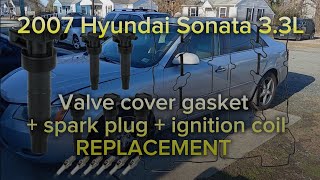
2007 Hyundai Sonata 3.3L V6
Symptoms: Misfire occurring with oil contamination found in the spark plug wells during disassembly.
What fixed it: Replacement of the front valve cover gasket, spark plugs, and ignition coils.
Source hint: YouTube video "2007 Hyundai Sonata 3.3L Valve cover +spark plugs and ignition coils replacement" by channel 'G G'
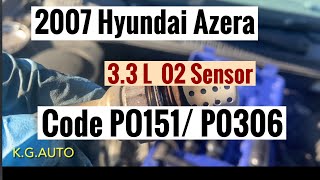
2007 Hyundai Azera 3.3L V6
Symptoms: P0306 misfire code appearing alongside an O2 sensor code (P0151).
What fixed it: Troubleshooting the misfire in conjunction with Bank 2 sensor issues.
Source hint: YouTube video "2007 Hyundai Azera 3.3L O2 Sensor Bank 2 Sensor 1 Code PO151 & PO306"
Documented NHTSA Reports
An owner reported a misfire in cylinder 6 (P0306) alongside codes for other cylinders. A service writer verbally advised that the misfire was detected in cylinder 5, but the diagnostic scan confirmed P0306 (NHTSA ODI #10508566).
In another case involving a similar Hyundai Lambda engine, a technician pulled codes P0300, P0302, P0304, and P0306; the recommended repairs included replacing the left intake camshaft, CVVT, and timing chain tensioner (NHTSA ODI #11606626).
Related OBD-II Codes
Frequently Asked Questions
Where is cylinder 6 located on my 2006-2010 Sonata 3.3L V6?
Is there a TSB for misfire codes like P0306 on the 3.3L Lambda engine?
Can a leaking valve cover gasket cause the P0306 code on my Sonata?
What specific spark plugs should I use for the 3.3L V6 to prevent misfires?
I have a P0306 and my alternator just failed; are these related?
How can I tell if my P0306 is caused by a bad coil without buying new parts?
Helpful Videos
Used OEM Parts in Stock
New Aftermarket Parts Available


The information in this article is provided for general reference and educational purposes only. Vehicle specifications, procedures, and part compatibility can vary by production date, trim level, and region. Always consult your vehicle's factory service manual and verify part numbers before purchasing or performing repairs. Safety-critical components such as airbags, seat belts, and braking systems should be installed by a qualified professional.
- Hyundai Sonata:
- 🧭 Diagnostic Flowchart
- 🎬 Helpful Videos
- 🛍️ Shop This Part
- What's Unique About the 2006-2010 Hyundai Sonata
- Symptoms You May Notice
- Most Likely Causes
- Rare But Worth Checking
- Diagnosis Steps
- Parts You'll Likely Need
- Related Codes That Often Appear With This One
- Technical Service Bulletins (TSBs) & Recalls
- Platform-Specific Known Issues
- Mechanic-Grade Diagnostic Values
- Hidden / Shadow Codes Worth Checking
- Scan Tool Commands That Help
- Wiring & Ground Locations
- When the Usual Fixes Don't Work
- OEM Part Supersession History
- Model Year Variations Within This Range
- Other Known Issues on This Vehicle
- Used vs. New Parts: Buying Guide for This Vehicle
- Real Owner Stories
- 2007 Hyundai Sonata 3.3L V6
- 2007 Hyundai Azera 3.3L V6
- Documented NHTSA Reports
- Related OBD-II Codes
- Frequently Asked Questions
- 🎟️ Get 5% Off