

P0306 on 2009-2014 Jaguar XF: Cylinder 6 Misfire Causes and Fixes
P0306 indicates a misfire on cylinder 6. On the Jaguar XF, this is most often caused by a faulty ignition coil or a worn spark plug. Swapping the coil from cylinder 6 with another is a quick way to diagnose the problem. For the 5.0L V8 and 3.0L V6 engines, faulty fuel injectors are also a significant and well-documented cause.
- P0306 on a 2009-2014 Jaguar XF means cylinder 6 is misfiring.
- The most likely culprits are a bad ignition coil or a worn spark plug, which are relatively easy and inexpensive to fix.
- A simple diagnostic step is to swap the ignition coil from cylinder 6 with another cylinder to see if the misfire code follows the coil.
- Do not ignore this code. Driving with a misfire can lead to costly damage to your catalytic converters.
- Be aware that Jaguar has noted fuel quality as a potential cause for misfires on these models, so a clogged fuel injector is a possibility if ignition parts check out.
What's Unique About the 2009-2014 Jaguar XF
For the 2009-2014 Jaguar XF, particularly models with the 5.0L V8 (AJ133) and 3.0L V6 (AJ126) direct injection engines, fuel injectors are a more common failure point than on many other vehicles. While ignition components are primary suspects, multiple owner accounts and even TSBs point to injector issues. A Jaguar TSB (SSM-63697) specifically mentions that poor fuel quality can restrict fuel flow, leading to misfire codes like P0306. Furthermore, the direct injection design can lead to carbon buildup on intake valves, which can disrupt airflow and contribute to misfires, though this seems less severe on Jaguars compared to other DI engines.
Diagnostic Flowchart
Tap your situation to follow the diagnostic path that matches what you're seeing on this vehicle.
Generation note: This range covers the first generation Jaguar XF (X250), including the 2012 model year facelift. The code P0306 is only applicable to the V6 and V8 engine options (3.0L, 4.2L, 5.0L) and not the 2.0L 4-cylinder engine introduced in the facelift.
Symptoms You May Notice
- Flashing or solid Check Engine Light
- Rough or vibrating engine idle.
- Hesitation or stumbling during acceleration.
- Noticeable loss of engine power.
- Reduced fuel economy
- Engine may stall when stopped
- Smell of raw gasoline from the exhaust.
- Replacing oxygen sensors. While a faulty O2 sensor can cause performance issues, it will typically set its own specific codes and is unlikely to cause a single-cylinder misfire like P0306.
Most Likely Causes
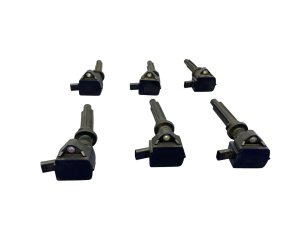
- Faulty Ignition Coil 🔴 High Probability → Shop Ignition Coil Ignition coils are a common wear item on many modern engines, including Jaguar's, due to high heat and electrical stress. Oil leaking from the valve cover gaskets can also pool in the spark plug wells and damage the coils.
How to confirm: Swap the ignition coil from cylinder 6 with an adjacent cylinder (e.g., cylinder 4). Clear the codes and drive the car. If the code changes to P0304, the ignition coil is faulty.
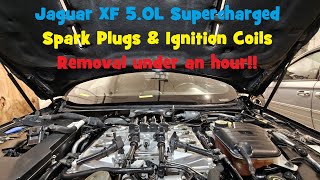
Typical fix: Replace the faulty ignition coil. It is often recommended to replace all coils and spark plugs at the same time, especially on higher mileage vehicles, as the labor to access the rear cylinders is significant. 🎬 Watch: How to remove coils and spark plugs in under an hour.
Est. part cost: $40-$90 per coil - Worn or Fouled Spark Plug 🔴 High Probability → Shop Spark Plug Spark plugs have a finite service life (recommended interval is often 80,000-96,000 miles) and can become worn or fouled by carbon or oil deposits, leading to a weak or inconsistent spark.
How to confirm: After confirming the coil is good, inspect the spark plug from cylinder 6. Look for wear on the electrode, cracks in the porcelain, or heavy carbon/oil deposits. Compare it to a plug from a known good cylinder.
Typical fix: Replace the spark plug. It is best practice to replace all spark plugs as a set to ensure even performance, especially if their age is unknown.
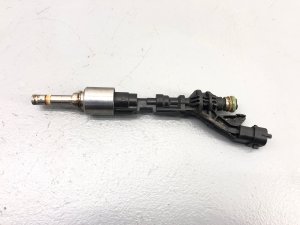
Est. part cost: $15-$30 per plug - Clogged or Faulty Fuel Injector 🟡 Medium Probability → Shop Fuel Injector A Jaguar TSB (SSM-63697) directly links misfire codes to poor fuel quality restricting fuel components. Forum discussions for the 5.0L V8 frequently cite failing injectors causing misfires, sometimes with a strong smell of fuel. One owner on JaguarForums noted a dealer replacing two injectors under warranty for an intermittent misfire on a 2012 XF.
How to confirm: This is more complex. A professional can perform a fuel injector balance test. A DIY method involves listening for a consistent clicking sound from the injector with a mechanic's stethoscope. Swapping injectors between cylinders is possible but is significantly more labor-intensive than swapping coils.
Typical fix: Replace the faulty fuel injector. Some specialists offer ultrasonic cleaning and flow testing services. Due to the difficulty of access, some owners elect to replace all injectors on the affected bank at once. 🎬 See this pro hack to save money on injector replacement.
Est. part cost: $70-$200 per injector
Rare But Worth Checking
- Vacuum Leak: A vacuum leak near cylinder 6's intake runner can lean out the air/fuel mixture, causing a misfire. Common sources on these engines include deteriorated PCV hoses or failed upper intake manifold gaskets. A hissing noise at idle is a common symptom.
- Low Engine Compression: Internal engine issues like a worn piston ring, a bad valve, or a failing head gasket can cause a loss of compression in cylinder 6, preventing proper combustion. On the 5.0L V8, worn timing chain guides and tensioners are a known issue that can cause the chain to jump time, leading to piston-to-valve contact and catastrophic compression loss. A cold-start rattle is a key warning sign of timing chain issues.
- Intake Valve Carbon Buildup: The direct injection (DI) systems on the 3.0L and 5.0L engines do not spray fuel over the intake valves. This allows oil vapor from the PCV system to bake onto the valves, forming carbon deposits that can restrict airflow and cause misfires. While Jaguars seem less prone to this than some other brands, it can still be a contributing factor, especially on higher-mileage engines. Manual cleaning (e.g., walnut blasting) is required to remove significant buildup.
Diagnosis Steps
- Read the code with an OBD-II scanner to confirm P0306 and check for any other codes, such as P0300 or P0316.
- Determine the location of cylinder 6. For Jaguar V-engines (LHD models), Bank 1 is the passenger side (cylinders 1, 3, 5 front to back) and Bank 2 is the driver's side (cylinders 2, 4, 6 front to back). Cylinder 6 is the rearmost cylinder on the driver's side, closest to the firewall.
- Swap the ignition coil from cylinder 6 with the coil from cylinder 4 (an easier-to-access cylinder on the same bank). Clear the codes and run the engine. If the code changes to P0304, the coil is bad.
- If the misfire remains on cylinder 6, remove the spark plug. Inspect it for wear, damage, or fouling (black and sooty for rich, white for lean, oily for internal leaks). Replace if necessary.
- If the coil and plug are good, the next likely cause is the fuel injector. Listen for a steady clicking from the injector with a mechanic's stethoscope. Check fuel trims with an advanced scanner; high trims on Bank 2 could point to an injector or vacuum leak issue.
- Inspect for vacuum leaks around the intake manifold near cylinder 6, paying close attention to the PCV hoses and intake gaskets.
- If all else fails, perform an engine compression test on cylinder 6 to check for mechanical engine problems. A leak-down test can further pinpoint the source of compression loss (piston rings, intake/exhaust valves, or head gasket).
Parts You'll Likely Need
- Ignition Coil
(OEM #AJ811373, C2P26702, 8W93-12A366-DA (5.0L/3.0L); 6R83-12A366-BA (4.2L))— This is the most frequent cause of a single-cylinder misfire. They are subject to high heat and electrical loads, causing them to fail over time.
Trusted brands: Bosch, Delphi, NGK, Genuine Jaguar
OEM price range: $70-$120
Aftermarket price range: $40-$90 - Spark Plug
(OEM #C2Z28434 (NGK SILZKAR7E8S for 3.0L/5.0L))— A worn or fouled spark plug cannot create the strong spark needed for complete combustion. It's a routine maintenance item and a common cause of misfires.
Trusted brands: NGK, Denso, Bosch
OEM price range: $20-$35
Aftermarket price range: $15-$25 - Fuel Injector
(OEM #C2D24386, C2D47177 (5.0L/3.0L))— Specifically cited in a TSB for this vehicle platform as a potential cause of misfires due to fuel contamination, and a widely reported failure item on the direct-injection engines.
Trusted brands: Bosch, Genuine Jaguar
OEM price range: $150-$250
Aftermarket price range: $70-$150
Related Codes That Often Appear With This One
- P0300 — If the misfire is intermittent or affects multiple cylinders, a P0300 (Random/Multiple Cylinder Misfire Detected) may be stored alongside P0306.
- P0316 — This code indicates a misfire was detected within the first 1,000 engine revolutions on startup. It is often seen with specific cylinder misfire codes and is mentioned in TSB JTB00533NAS1, which suggests a potential PCM software update may be needed if it occurs on a cold start.
- P1314 / P1316 — These are Jaguar-specific codes indicating 'Misfire Rate Catalyst Damage Fault' for Bank 2 (P1314) or a general misfire fault (P1316). They signify the misfire is severe enough to potentially damage the catalytic converter.
Technical Service Bulletins (TSBs) & Recalls
- JTB00533NAS1: Mentions P0306 in a list of potential misfire codes that may appear with code P0316 (misfire on startup). Recommends a PCM software update if the misfire occurs only on cold starts (coolant temp below 75°C).
- SSM-63697: Cites poor fuel quality or fuel contaminants as a cause for misfire codes (P0301-P0308) and associated engine vibration at idle.
- SSM71932: While not directly for the XF, this TSB for the F-Pace SVR acknowledges premature timing chain tensioner wear in high-output 5.0L applications, which is relevant context for the platform.
Platform-Specific Known Issues
- TSB SSM-63697 indicates that poor fuel quality can lead to restricted fuel components and cause misfire codes, including P0306.
- TSB JTB00533NAS1 groups P0306 with a range of other misfire codes (P0300-P0308) and the startup misfire code P0316, suggesting a common diagnostic path. For cold start misfires, this TSB indicates a PCM software update may be the solution.
- On 5.0L V8 engines (especially 2010-2014), prema
Mechanic-Grade Diagnostic Values
- High-Pressure Fuel Rail Pressure (5.0L & 3.0L DI engines) — expected: Approx. 500-600 PSI at idle, up to 2100 PSI under load.. Failure: Significantly lower pressure under load (e.g., 550 PSI at WOT) indicates a failing high-pressure fuel pump.
- Low-Pressure Fuel Rail Pressure (4.2L PI engine) — expected: Approx. 320 kPa (46 PSI) while running.. Failure: Pressure significantly below specification indicates a failing in-tank fuel pump or filter issue.
- Low-Pressure Fuel Pump Feed to HPFPs (5.0L & 3.0L DI engines) — expected: Should be under 65 PSI.. Failure: Low pressure from the in-tank pump will starve the high-pressure pumps, causing issues under load.
- Ignition Coil Primary Resistance — expected: Approx. 0.75 ohms, but this test is not conclusive.. Failure: An 'open' reading indicates a dead coil, but a coil that reads within spec can still be faulty under heat and load.
Hidden / Shadow Codes Worth Checking
- N/A (No specific code names found): Jaguar's dealer-level tool (SDD) can detect performance anomalies that have not yet triggered a standard P-code. For example, a high-RPM misfire caused by a failing high-pressure fuel pump was diagnosed by a dealer without any codes being stored in the PCM. (see via Jaguar Symptom Driven Diagnostics (SDD) software.)
Scan Tool Commands That Help
- Jaguar SDD (Symptom Driven Diagnostics): Symptom-Driven Diagnostic Path — When standard code reading and parts swapping fails. The user inputs the symptom (e.g., misfire) and the software runs a guided test plan, analyzing relevant modules and live data to recommend a repair, which is more advanced than just reading a code.
- Jaguar SDD (Symptom Driven Diagnostics): Live Data Monitoring (Fuel Pressure) — To diagnose fuel delivery issues on direct injection models. A technician can monitor both low and high-pressure fuel readings to see if they meet specifications at idle and under load, which can identify a failing HPFP or in-tank pump.
Wiring & Ground Locations
- G1D120 / G1D129 / etc. — Main engine compartment ground points are typically located on the chassis rails behind the headlights or at the rear of the engine compartment. For example, G1D129 is cited as being behind the left headlight assembly.. The ignition coil and fuel injector for cylinder 6 rely on a solid ground connection to function. A corroded or loose ground point for the engine harness could cause an intermittent misfire that is difficult to trace. The official Jaguar Electrical Wiring Diagrams (Section 414-01) should be consulted for the exact ground point for the cylinder 6 circuits.
Real Owner Repair Stories
- JaguarForums user 'Mufc' (2010 Jaguar XKR (5.0L V8 Supercharged)) — Misfire and loss of power only at elevated engine speeds (above 4000 RPM). No check engine light or stored codes.
❌ Tried (didn't work) Owner suspected ignition coils.
✅ What actually fixed it A dealer diagnosed the issue using advanced tools. The two high-pressure mechanical fuel pumps were faulty. Replacing the pumps restored full performance. - YouTube channel 'NoNonsenseKnowHow' (Jaguar XF S (3.0L V6 Diesel, similar manifold design)) — 'Restricted Performance' warning light and slow acceleration, but only after the car was fully warmed up (e.g., an hour of motorway driving).
❌ Tried (didn't work) Initial diagnosis was difficult as the problem was not present on a cold engine.
✅ What actually fixed it A crack was found in the plastic inlet manifold. The crack would expand when hot, creating a massive air leak that the MAF sensor couldn't account for, triggering limp mode. The tell-tale sign was oily residue on the manifold under its sponge cover. - JaguarForums user 'Rick7311' (Jaguar XJ12 (V12, but diagnostic principle applies)) — Persistent P0306 and P1313 (misfire codes) after extensive parts replacement.
❌ Tried (didn't work) Replaced all spark plugs, spark plug wires, both coil packs, both MAP sensors, both IACVs, and had all fuel injectors professionally cleaned and tested.
✅ What actually fixed it The thread concluded with the user being advised to perform a deep-dive inspection of the ECU for physical damage, such as broken solder joints or leaking capacitors, as the final remaining possibility. This points to a rare but possible PCM driver failure.
"I Checked Everything" — The Actual Cause
- A common edge case is a cracked plastic intake manifold. A standard smoke test on a cold engine may show no leaks. However, once the engine reaches full operating temperature after extended driving, the plastic expands, opening the crack and causing a significant unmetered air leak. This leads to a lean misfire and 'Restricted Performance' mode that seems to appear for no reason. The fix is to inspect the manifold for hairline cracks or replace it.
When the Usual Fixes Don't Work
- In several documented cases, particularly on the 5.0L direct-injection engine, a misfire felt at high RPM did not store a P0306 code at all. After extensive diagnosis, the root cause was found to be failing high-pressure fuel pumps that could not supply enough fuel under heavy load. This indicates that while P0306 points to a combustion event failure, the true root cause can sometimes be a mechanical fuel delivery issue that precedes the cylinder event, and it may not always trigger the corresponding code.
Model Year Variations Within This Range
- 2009-2010: Early models primarily used the 4.2L V8 engine, which is port-injected. Misfire diagnosis on these models focuses on coils, plugs, injectors, and vacuum leaks, but does not involve high-pressure fuel pumps or intake valve carbon buildup. Fuel rail pressure is low (approx. 46 PSI).
- 2010-2014 (V8) / 2013-2014 (V6): Later models use 5.0L V8 and 3.0L V6 direct-injection (DI) engines. These add complexity, with potential causes including failing high-pressure fuel pumps (HPFPs), clogged injectors from fuel quality, and long-term potential for intake valve carbon buildup. Diagnosis may require checking both low and high-pressure fuel systems.
- 2012-2014: Models from 2012 onward were part of the X250 facelift and were equipped with an 8-speed ZF automatic transmission, replacing the previous 6-speed. This does not directly impact P0306 causes but is a key identifier for the later vehicles in this range.
Helpful Videos
We Have This Part in Stock

The information in this article is provided for general reference and educational purposes only. Vehicle specifications, procedures, and part compatibility can vary by production date, trim level, and region. Always consult your vehicle's factory service manual and verify part numbers before purchasing or performing repairs. Safety-critical components such as airbags, seat belts, and braking systems should be installed by a qualified professional.
- Jaguar XF:
- 🧭 Diagnostic Flowchart
- 🎬 Helpful Videos
- 🛍️ Shop This Part
- What's Unique About the 2009-2014 Jaguar XF
- Symptoms You May Notice
- Most Likely Causes
- Rare But Worth Checking
- Diagnosis Steps
- Parts You'll Likely Need
- Related Codes That Often Appear With This One
- Technical Service Bulletins (TSBs) & Recalls
- Platform-Specific Known Issues
- Mechanic-Grade Diagnostic Values
- Hidden / Shadow Codes Worth Checking
- Scan Tool Commands That Help
- Wiring & Ground Locations
- Real Owner Repair Stories
- "I Checked Everything" — The Actual Cause
- When the Usual Fixes Don't Work
- Model Year Variations Within This Range
- 🎟️ Get 5% Off