

P0306 on 2014-2020 Kia Cadenza: Cylinder 6 Misfire Causes and Fixes
On the 2014-2020 Kia Cadenza 3.3L V6, code P0306 is almost always a bad ignition coil or a worn spark plug on cylinder 6. Since cylinder 6 is on the easily accessible front bank of the engine, this is a simple and cheap DIY fix, often costing under $100 for parts.
- P0306 on a 2014-2020 Cadenza means cylinder 6 is misfiring.
- Cylinder 6 is on the front bank (by the radiator), making the ignition coil and spark plug very easy to access and replace.
- The most likely cause is a bad ignition coil, followed by a worn spark plug. Start your diagnosis by swapping the coil with a neighboring one.
- If you have a 2014-2017 model and are losing coolant, investigate TSB ENG254 regarding a head gasket warranty extension.
- Do not let a mechanic charge you for removing the intake manifold to fix a P0306; it is not necessary for this specific cylinder.
What's Unique About the 2014-2020 Kia Cadenza
The key difference for this code on the Kia Cadenza with the 3.3L V6 is the location of cylinder 6. Unlike in some other Kia/Hyundai models with the same engine (like the Sorento, where cylinder 6 is on the rear bank), cylinder 6 in the Cadenza is located on the front bank of the engine, closest to the radiator, on the driver's side. This makes it extremely easy to access for diagnosis and repair, turning a potentially complex job into a simple one that doesn't require removing the intake manifold.
Generation note: The 2014-2020 range covers the first (VG; 2014-2016) and second (YG; 2017-2020) generations of the Kia Cadenza. Both generations use the Lambda II 3.3L GDI V6 (G6DH), and the causes and fixes for P0306 are consistent across them. A notable TSB for head gasket issues applies to 2014-2017 models.
Symptoms You May Notice
- Rough or vibrating idle
- Hesitation or stumbling during acceleration
- Noticeable loss of engine power
- Flashing or solid Check Engine Light
- Reduced fuel economy
- Engine may sound different or have a popping noise
- Smell of unburnt gasoline from the exhaust
- Replacing rear bank ignition coils or spark plugs. The code P0306 specifically points to cylinder 6 on the front bank. Do not remove the intake manifold unless you have a code for a rear cylinder (P0301, P0303, P0305).
Most Likely Causes
- Failed Ignition Coil 🔴 High Probability → Shop Ignition Coil Ignition coils are a common failure item on most modern engines as they age from heat cycles. For this code, it is the most likely culprit, especially on vehicles with over 60,000 miles.
How to confirm: Swap the ignition coil from cylinder 6 with the coil from another cylinder (e.g., cylinder 4, which is also on the front bank). Clear the codes and run the engine. If the code changes to P0304, the ignition coil is faulty. This is the definitive DIY diagnostic step. 🎬 See a breakdown of common causes and fixes for the P0306 code.
Typical fix: Replace the faulty ignition coil. Since it's an easy job, you can replace just the one, but replacing all three on the front bank is good preventative maintenance.
Est. part cost: $40-$80 - Worn or Fouled Spark Plug 🔴 High Probability → Shop Spark Plug Spark plugs are a routine maintenance item that wear out over time. The original equipment NGK Iridium plugs have a service life of around 90,000 miles, but can fail sooner. An old or fouled plug can't produce a strong enough spark to ignite the fuel mixture.
How to confirm: After ruling out the ignition coil, remove the spark plug from cylinder 6. Inspect it for wear (worn electrode), carbon fouling (black soot), or oil contamination. Compare it to a new plug. 🎬 Watch this walkthrough for replacing spark plugs on the 3.3L engine. A plug wet with fuel can also indicate a leaking injector.
Typical fix: Replace the spark plug in cylinder 6. It is highly recommended to replace all six spark plugs if they are due for service.
Est. part cost: $15-$25 per plug - Clogged GDI Fuel Injector 🟡 Medium Probability → Shop Fuel Injector Gasoline Direct Injection (GDI) engines like the Lambda II operate with high-pressure fuel systems. The injectors can become clogged with carbon deposits over time, disrupting fuel flow. Some owners have reported leaking injectors which can foul the spark plug and wash oil from the cylinder walls.
How to confirm: This is more difficult to confirm without professional tools. A scan tool can monitor fuel trims. A mechanic can perform an injector balance test. A DIY method is to listen to the injector with a mechanic's stethoscope; it should have a regular, crisp clicking sound.
Typical fix: The fuel injector needs to be professionally cleaned or replaced. This is a more complex job than replacing a coil or plug.
Est. part cost: $70-$150 per injector - Carbon Buildup on Intake Valves 🟡 Medium Probability A well-documented issue with GDI engines is that fuel is injected directly into the cylinder, so it never washes over and cleans the intake valves. Carbon can build up, restrict airflow to cylinder 6, and cause a misfire, especially on engines over 80,000 miles.
How to confirm: This requires visual inspection with a borescope, which involves removing the intake manifold to see the valves. This is a significant job.
Typical fix: The intake valves need to be cleaned, typically through a process called 'walnut blasting'. This is a professional service and can cost several hundred dollars.
Est. part cost: $0 (service only)
Rare But Worth Checking
- Leaking Head Gasket / Head Bolt Failure: The Lambda II engine family has a known issue with head bolts that can cause the head gasket to leak coolant into the cylinder, causing a misfire. Kia issued a warranty extension (WTY039 / TSB ENG254) for 2014-2017 Cadenzas to 15 years/180,000 miles for this specific issue. Symptoms include coolant loss, white smoke from the exhaust, and engine overheating. If you have these symptoms, this is a strong possibility and should be investigated by a dealer.
- Low Engine Compression: Internal engine damage, such as a burnt valve or worn piston rings, can cause a persistent misfire that doesn't resolve with ignition or fuel system parts. A compression test is needed to confirm this. Excessive oil consumption can be a symptom of this issue. In similar Kia models with the 3.3L engine, NHTSA ODI #11716567 notes that a P0306 code was linked to internal engine failure and failing piston rings, often accompanied by oil levels being one or more quarts low.
- Intake Manifold Gasket Leak: → Shop Engine Intake Manifold A vacuum leak from a failed lower intake manifold gasket can lean out the air/fuel mixture for a specific cylinder bank, potentially causing a misfire. A technician can perform a smoke test to identify such leaks.
Diagnosis Steps
- Confirm the code is P0306 using an OBD-II scanner. Note if the check engine light is flashing and if any other codes are present.
- Locate cylinder 6. On the 3.3L V6 in a transverse layout, the front bank (near the radiator) contains cylinders 2, 4, and 6 from passenger to driver side. Cylinder 6 is on the driver's side. The rear bank (near the firewall) contains cylinders 1, 3, and 5.
- Swap the ignition coil from cylinder 6 with the coil from cylinder 4 (the middle cylinder on the front bank). This is a simple procedure involving a single 10mm bolt per coil.
- Clear the codes with the scanner and start the engine. Let it run for a few minutes, and rev it gently.
- Re-scan for codes. If the code is now P0304, the ignition coil you moved is bad and needs to be replaced. Purchase a new coil (OEM part 27301-3C000 or equivalent) and install it.
- If the code remains P0306, the issue is not the coil. Turn off the engine and move the coil back to its original position.
- Remove the spark plug from cylinder 6. Inspect it for heavy wear, fouling, or damage. If it looks old, is wet with fuel, or is covered in black soot, replace it. It's best practice to replace all six if they are due for service.
- If the coil and spark plug are good, the issue is likely more complex. At this point, consider a clogged fuel injector, carbon buildup on the intake valves, or a compression issue. These typically require professional diagnosis with specialized tools like a fuel pressure gauge, borescope, or compression tester.
Parts You'll Likely Need
- Ignition Coil
(OEM #27301-3C000)— This is the most common cause of a single-cylinder misfire on this engine and is the easiest part to replace for diagnosis. This part number is superseded by 27301-3C010.
Trusted brands: Kia/Hyundai (OEM), Delphi, NGK, Denso
OEM price range: $60-$90
Aftermarket price range: $40-$70 - Spark Plug
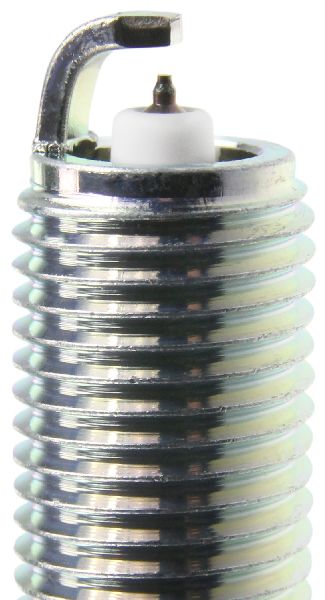
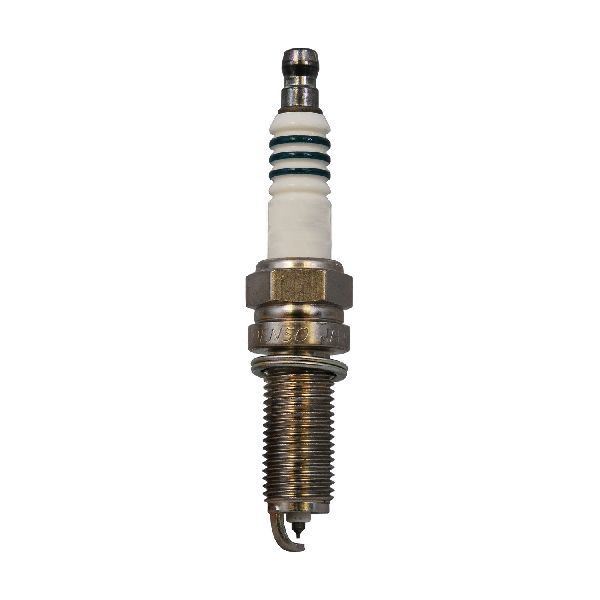
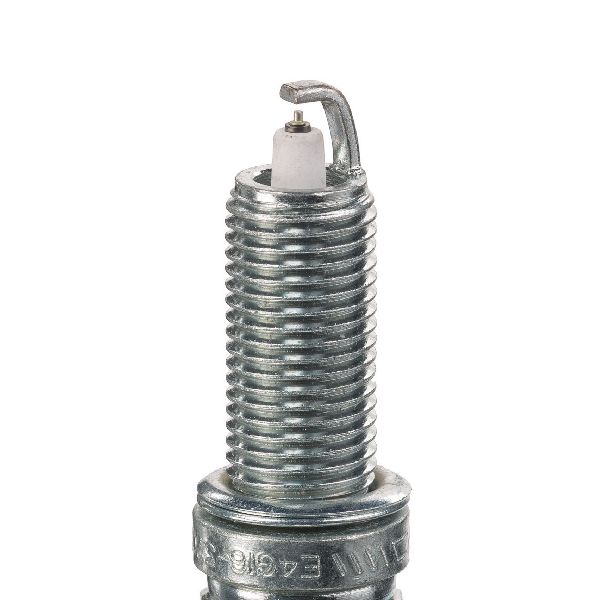
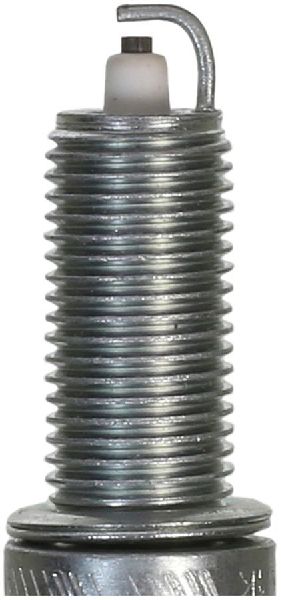
(OEM #18846-11070)— Spark plugs are a standard maintenance item. A worn plug is a very common cause for a misfire code. The OEM plug is an NGK SILZKR7B11.
Trusted brands: NGK (SILZKR7B11), Denso (VXUH22I), Champion (9023)
OEM price range: $20-$30
Aftermarket price range: $15-$25
Related Codes That Often Appear With This One
- P0300 — If the condition causing the P0306 is intermittent or starting to affect other cylinders, a P0300 (Random/Multiple Cylinder Misfire) code may also be stored.
- P0304, P0302 — If you get one of these codes after swapping the ignition coil from cylinder 6, it confirms the coil is the faulty component.
Technical Service Bulletins (TSBs) & Recalls
- ENG254 (WTY039) - Warranty extension for 2014-2017 Cadenza models for engine coolant leaks from the cylinder head gasket area, extending coverage to 15 years/180,000 miles. Symptoms include coolant loss, coolant smell, or overheating.
- WTY034 (TSB FUE067) - Warranty extension for 2017-2020 Cadenza models for the high-pressure fuel pump, which can fail and cause rough running, hesitation, and DTC P0088. Coverage is extended to 15 years/180,000 miles.
Platform-Specific Known Issues
- Carbon buildup on intake valves is a common characteristic of the Lambda II GDI engine and can lead to misfires over time.
- A warranty extension (WTY039 / TSB ENG254) was issued for 2014-2017 models due to potential head gasket coolant leaks, which can cause misfires.
- Fuel system issues can trigger a cascade of codes; NHTSA ODI #11513767 and #11499800 describe instances where P0306 appeared alongside P0087 (low fuel pressure) and P0506 (idle control system), suggesting that fuel delivery problems can cause widespread misfiring across multiple cylinders.
Mechanic-Grade Diagnostic Values
- High-Pressure Fuel System (GDI) — expected: Up to 150 Bar (approx. 2175 PSI). Failure: Pressure significantly below target under load can cause lean misfires. Pressure too high can trigger a P0088 code, which is a known issue on 2017-2020 models.
- Ignition Coil Primary/Secondary Resistance — expected: Specific values are not published in general service data; comparison is the primary method.. Failure: When testing with a multimeter, a faulty coil will show significantly different resistance values (primary and secondary windings) compared to a known-good coil from another cylinder.
- Fuel Injector Resistance — expected: Typically 12-15 ohms for high-impedance injectors, but GDI injectors vary. Comparison between injectors is the most reliable method.. Failure: An injector reading open (infinite resistance) or shorted (zero resistance) is faulty. A reading that deviates significantly from the other five injectors indicates a problem.
Scan Tool Commands That Help
- Kia GDS (Global Diagnostic System): Misfire Data Analysis / Cylinder Power Balance Test — Use this after basic coil/plug swaps fail. It provides real-time misfire counts for each cylinder and can individually deactivate fuel injectors to measure the RPM drop. A cylinder with a small RPM drop when deactivated indicates a pre-existing weakness (bad injector, low compression, etc.), confirming it is not contributing its full power.
- Kia GDS (Global Diagnostic System): Fuel System Actuation Tests — If a fuel delivery issue is suspected, this function allows a technician to command the high-pressure fuel pump and other fuel system components to verify their operation outside of normal engine running conditions.
Wiring & Ground Locations
- Cylinder 6 Ignition Coil Connector — Top of the engine, front bank (closest to radiator), driver's side. The connector plugs directly into the ignition coil held in by a 10mm bolt.. This connector provides power, ground, and the trigger signal from the ECM to the coil. A damaged connector, corroded pins, or broken wire here will prevent the coil from firing, directly causing a P0306.
- Cylinder 6 Fuel Injector Connector — On the fuel rail for the front bank, below the ignition coil, corresponding to the #6 cylinder position. Access is more restricted than the coil.. This connector provides the signal from the ECM to fire the fuel injector. A fault in this connector or its wiring will prevent fuel from being injected into cylinder 6, causing a misfire.
- Main Engine Ground Strap — Typically a thick, braided wire connecting the engine block or cylinder head to the vehicle's chassis/frame rail in the engine bay.. A loose or corroded main engine ground can cause a weak spark across all cylinders, leading to random misfires (P0300) or a single-cylinder misfire on the most sensitive cylinder under certain conditions.
Real Owner Repair Stories
- YouTube channel 'RB The Mechanic' (2014 Kia Cadenza) — Check Engine Light with code P0306 stored.
❌ Tried (didn't work) The video proceeds directly to the most likely cause.
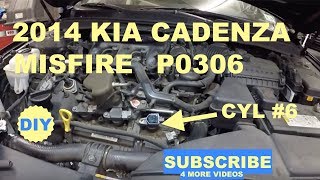
✅ What actually fixed it The P0306 code was resolved by replacing the ignition coil on cylinder 6. The video confirms cylinder 6 is on the front bank, driver's side, and shows the simple replacement process using a 10mm socket. - NHTSA ODI #11653245 — An owner reported a sudden loss of power and difficulty maintaining speed. Diagnostic scanning revealed P0306 along with P0304, P0302, and P0300, rendering the vehicle undrivable and requiring it to be towed for professional repair.
- NHTSA ODI #11575366 — A driver experienced a severe misfire condition where the vehicle threw codes P0306, P0302, and P0304. Upon inspection, it was discovered the engine was missing 5 quarts of oil without a warning light, leading to timing-related codes (P0019, P0024) and multiple cylinder misfires.
"I Checked Everything" — The Actual Cause
- While no specific Cadenza stories were found, a common pattern on GDI engines that can cause misfire-like symptoms without a vacuum leak is a faulty or sticking PCV (Positive Crankcase Ventilation) valve. On the 3.3L V6, the PCV valve is located in a difficult-to-access position behind and below the throttle body, making it an often-overlooked component during diagnosis. A stuck-open PCV valve can create a vacuum leak that the ECU cannot properly compensate for, leading to a lean condition and potential misfires.
OEM Part Supersession History
27301-3C000→27301-3C010— The exact reason is not officially documented, but supersessions typically involve minor improvements to internal materials or windings for improved durability or performance.
Heads up: The parts are fully interchangeable. When ordering, you will likely receive 27301-3C010 even if you search for the original number.
Model Year Variations Within This Range
- 2017-2020 (YG Generation): The engine was updated (designated G6DM) and retuned for slightly less horsepower (290 vs 293) but improved fuel economy. It was paired with a new 8-speed automatic transmission, replacing the previous 6-speed. These models are also subject to a specific warranty extension (WTY034) for high-pressure fuel pump failure, which was not issued for the earlier 2014-2016 models.
Diagnostic Flowchart
Other Known Issues on This Vehicle
Issues unrelated to this code that are worth knowing about as an owner of this generation:
- Head Gasket Leak / Head Bolt Failure 🔴 High — Common enough for Kia to issue a 15-year/180,000-mile warranty extension. Affects 2014-2017 models primarily. (Ref: WTY039 / TSB ENG254)
- Excessive Oil Consumption 🔴 High — Reported by numerous owners, can begin at any mileage. May be caused by worn piston rings or other internal issues. Can lead to engine damage if level is not monitored closely.
- Intake Valve Carbon Buildup 🟠 Medium — An inherent issue with all GDI engines, including the Lambda II. Typically becomes problematic after 80,000 miles, causing rough idle and misfires.
- Timing Chain Tensioner Failure 🟠 Medium — Primarily affects 2014-2016 models. A faulty tensioner can cause a rattling or chatter noise on cold startup. If ignored, it can lead to timing chain slack and potential engine damage. (Ref: TSB ENG148R1)
- Electrical System Faults 🟡 Low — The 2014 model year in particular has complaints regarding faults with the infotainment system, dashboard display, and other electrical components.
Used vs. New Parts: Buying Guide for This Vehicle
When a used part is the smart pick: For a P0306 diagnosis, using used parts is generally not recommended. The cost savings on wear items like ignition coils and spark plugs are minimal and carry a high risk of premature failure. A used fuel injector is only viable if it has been professionally cleaned, flow-tested, and comes with a warranty.
Donor-vehicle mileage cap: roughly under 50000 miles for the part to have meaningful remaining life.
What to inspect on the donor part:
- For a used injector, ask for the flow test report.
- Avoid any electronic parts showing signs of corrosion, cracking, or heat damage.
- For mechanical parts, verify the donor vehicle's mileage and check for a clean service history if possible.
OEM-only on this vehicle (don't cheap out):
- GDI Fuel Injector: Aftermarket GDI injectors can have inconsistent flow rates, leading to persistent performance issues. OEM is the safest choice.
- High-Pressure Fuel Pump: Given the complexity and known TSB for this part, using a genuine OEM replacement is critical for reliability.
Aftermarket brands forum-validated for this vehicle:
- Ignition Coils: Denso, Delphi, NGK (often the OEM supplier)
- Spark Plugs: NGK, Denso
Brands owners have reported issues with on this vehicle:
- Unbranded 'white box' ignition coils and injectors from online marketplaces like Amazon or eBay. These frequently have high failure rates and do not adhere to OEM specifications.
Real Owner Stories
Aggregated from forums and TSBs cited above. Mileages and costs reflect what owners reported in those sources.
2014 Kia Cadenza 3.3L GDI V6 — 62000 miles
Symptoms: Rattling noise on startup.
What fixed it: Replacement of the timing chain tensioner under TSB ENG148R1.
Cost: $2500-$2500
Source hint: CarComplaints.com
Kia Cadenza 3.3L GDI V6 — 76000 miles
Symptoms: Ticking noise and eventual engine failure.
What fixed it: The owner was informed that bad lifters and camshafts were installed at the factory.
Source hint: Reddit r/kia - 'Cadenza engine failure' thread
Related OBD-II Codes
Frequently Asked Questions
Is the P0306 misfire on my 2014-2017 Cadenza covered by a warranty extension?
How do I find cylinder 6 on my 3.3L V6 Cadenza?
Could a high-pressure fuel pump failure cause my 2017-2020 Cadenza to misfire?
What is the recommended spark plug service interval for the Lambda II GDI engine?
Why is carbon buildup a specific concern for my Cadenza's P0306 code?
What part number should I look for if I need to replace the ignition coil?
Helpful Videos

Used OEM Parts in Stock
New Aftermarket Parts Available

The information in this article is provided for general reference and educational purposes only. Vehicle specifications, procedures, and part compatibility can vary by production date, trim level, and region. Always consult your vehicle's factory service manual and verify part numbers before purchasing or performing repairs. Safety-critical components such as airbags, seat belts, and braking systems should be installed by a qualified professional.
- Kia Cadenza:
- 🧭 Diagnostic Flowchart
- 🎬 Helpful Videos
- 🛍️ Shop This Part
- What's Unique About the 2014-2020 Kia Cadenza
- Symptoms You May Notice
- Most Likely Causes
- Rare But Worth Checking
- Diagnosis Steps
- Parts You'll Likely Need
- Related Codes That Often Appear With This One
- Technical Service Bulletins (TSBs) & Recalls
- Platform-Specific Known Issues
- Mechanic-Grade Diagnostic Values
- Scan Tool Commands That Help
- Wiring & Ground Locations
- Real Owner Repair Stories
- "I Checked Everything" — The Actual Cause
- OEM Part Supersession History
- Model Year Variations Within This Range
- Other Known Issues on This Vehicle
- Used vs. New Parts: Buying Guide for This Vehicle
- Real Owner Stories
- 2014 Kia Cadenza 3.3L GDI V6 — 62000 miles
- Kia Cadenza 3.3L GDI V6 — 76000 miles
- Related OBD-II Codes
- Frequently Asked Questions
- 🎟️ Get 5% Off