

P0306 on 2018-2023 Kia Stinger 3.3T: Cylinder 6 Misfire Causes and Fixes
P0306 on a Kia Stinger 3.3T indicates a misfire in cylinder 6. The most common causes are a faulty ignition coil or a worn spark plug. Since cylinder 6 is on the rear bank against the firewall, the intake manifold must be removed for access, making the repair more labor-intensive. However, some skilled mechanics have demonstrated methods to perform the repair without removing the manifold, using specific tools and techniques.
- P0306 means cylinder 6 is misfiring, which is on the difficult-to-access rear bank of the engine.
- The most likely cause is a bad ignition coil, followed closely by a worn spark plug.
- Due to the high labor cost of removing the intake manifold, always replace all three rear ignition coils and all six spark plugs at the same time.
- If the Check Engine Light is flashing, stop driving to avoid destroying the catalytic converters.
- On higher mileage (40k+) Stingers, consider having the intake valves cleaned for carbon buildup while the manifold is off.
What's Unique About the 2018-2023 Kia Stinger
The Kia Stinger's Lambda II 3.3T is a twin-turbo, Gasoline Direct Injection (GDI) engine. While ignition components are the primary suspects for a P0306, GDI engines are also prone to carbon buildup on intake valves over time, which can restrict airflow and cause misfires. Additionally, cylinder 6 is located on the passenger side of the rear bank of the V6 (closest to the firewall), making access to its ignition coil and spark plug significantly more difficult than the front cylinders. The standard procedure requires removing the intake manifold, but some owners and shops have developed techniques to complete the job without manifold removal, saving time.
Symptoms You May Notice
- Flashing or solid Check Engine Light
- Rough or vibrating idle
- Engine hesitation or stumbling during acceleration
- Noticeable loss of engine power
- Reduced fuel economy
- Smell of raw gasoline from the exhaust
- Replacing only the spark plug when the ignition coil was the actual point of failure.
- Replacing oxygen (O2) sensors, which might be triggered by the misfire but are not the root cause.
Most Likely Causes
- Faulty Ignition Coil 🔴 High Probability → Shop Ignition Coil Ignition coils are a common failure item on many modern engines due to high heat. The rear bank, where cylinder 6 is located, often has less airflow, potentially leading to higher temperatures and premature failure. Owner forums for the Stinger and its platform-mate, the Genesis G70, show numerous instances of coil failure.
How to confirm: The easiest way to confirm a bad coil is to swap the ignition coil from cylinder 6 with one from an easily accessible cylinder on the front bank (e.g., cylinder 2, 4). Clear the codes and run the engine. If the misfire code changes to the cylinder you moved the coil to (e.g., P0302), the ignition coil is faulty.
Typical fix: Replace the faulty ignition coil. Due to the high labor involved in removing the intake manifold, it is highly recommended to replace all three rear ignition coils (cylinders 1, 3, 5 or 2, 4, 6 depending on bank) and all six spark plugs at the same time.
Est. part cost: $70-$110 per OEM coil - Worn or Fouled Spark Plug 🔴 High Probability → Shop Spark Plug
How to confirm: After ruling out the ignition coil, inspect the spark plug from cylinder 6. Look for wear on the electrode, cracks in the ceramic insulator, or fouling from oil or carbon. The recommended service interval for spark plugs is around 40,000-45,000 miles, but can be shorter on tuned vehicles.
Typical fix: Replace the spark plug. It is best practice to replace all six spark plugs as a set to ensure even performance and avoid future labor costs. Tuned vehicles often require a smaller spark plug gap (e.g., 0.022") to prevent spark blowout under high boost, which can be set using a specific gapping tool and feeler gauge.
Est. part cost: $15-$30 per plug - Carbon Buildup on Intake Valves 🟡 Medium Probability As a GDI engine, fuel is injected directly into the cylinder, so it never washes over the back of the intake valves. Over time, oil vapor from the crankcase ventilation (PCV) system can bake onto the hot valves, forming hard carbon deposits that restrict airflow and cause misfires. This is more common on vehicles with over 40,000-60,000 miles. Many owners install aftermarket oil catch cans to reduce this buildup.
How to confirm: This requires visual inspection of the intake valves, usually with a borescope inserted through the intake port after the manifold is removed. Significant black buildup confirms the issue.
Typical fix: The most effective solution is a professional intake valve cleaning service, often called 'walnut blasting,' where crushed walnut shells are used to abrasively clean the valves without damaging the engine. This is typically done when the intake manifold is already off for another repair. Some owners use aerosol intake cleaners like Seafoam as a preventative measure, though this is less effective on heavy deposits.
Est. part cost: $0 (service only) - Clogged or Faulty Fuel Injector ⚪ Low Probability → Shop Fuel Injector While less common than ignition issues, GDI injectors operate under very high pressure and can become clogged or fail electronically. Some owners have reported failing high-pressure fuel pumps (HPFP) causing misfires across multiple cylinders. A manufacturer report for a similar Kia powertrain, NHTSA ODI #11499800, notes that codes including P0306 and P0087 (low fuel pressure) appeared together, suggesting fuel system involvement.
How to confirm: Diagnosing a faulty injector is more complex. It involves checking its resistance with a multimeter or observing its spray pattern, which requires specialized tools and removal. A technician can also perform a fuel injector balance test.
Typical fix: Replace the faulty fuel injector. Like coils and plugs, if one injector has failed, it may be wise to replace others on the same bank as a preventative measure.
Est. part cost: $100-$200 per injector
Rare But Worth Checking
- Low Engine Compression: In higher-mileage engines, a persistent misfire that isn't resolved by ignition or fuel system parts could be due to a mechanical issue like a burnt valve, worn piston rings, or a damaged cylinder head. NHTSA ODI #11716567 describes a case where P0306 was accompanied by a low oil level and internal engine failure involving a failing piston ring.
- Vacuum Leak: A leak in the intake manifold gasket near cylinder 6 could allow unmetered air into the cylinder, leaning out the air-fuel mixture and causing a misfire. This can be found using a smoke test.
Diagnosis Steps
- Read the trouble codes with an OBD-II scanner and confirm P0306 is present. Note any other codes.
- If the Check Engine Light is flashing, limit driving immediately to prevent catalytic converter damage.
- Perform an ignition coil swap. Move the coil from cylinder 6 (rear bank, passenger's side) to an accessible front cylinder (e.g., cylinder 2, front bank, passenger's side). Clear the codes and see if the misfire code follows the coil (e.g., changes to P0302). If it does, the coil is bad.
- If the misfire remains on cylinder 6, the next step involves accessing the rear bank. While some professionals can do this without removing the intake manifold, the standard procedure is to remove it.
- Once accessed, inspect the spark plug for wear, damage, or incorrect gap. Replace if in doubt, preferably as a full set of six.
- While the intake manifold is off, it is an ideal time to inspect the intake valves for carbon buildup using a borescope.
- If valves are clean and ignition parts are good, suspect a fuel injector issue. This may require professional diagnosis to test the injector's function.
- As a final step for a persistent misfire, perform an engine compression test on cylinder 6 to rule out mechanical problems like bad valves or piston rings.
Parts You'll Likely Need
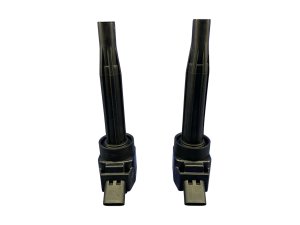
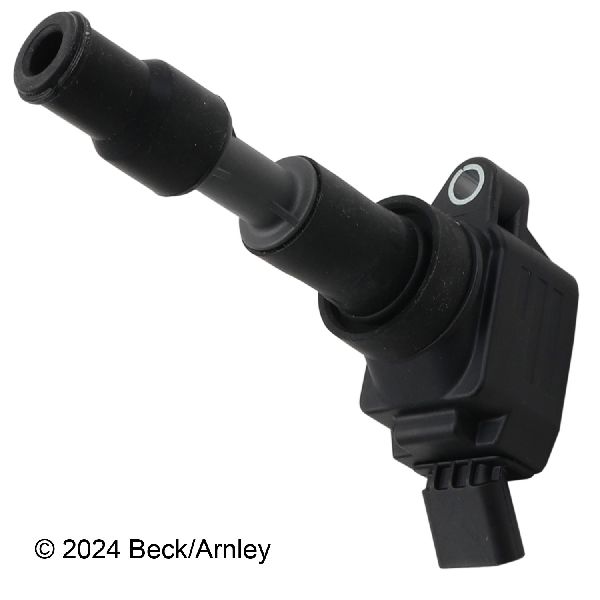
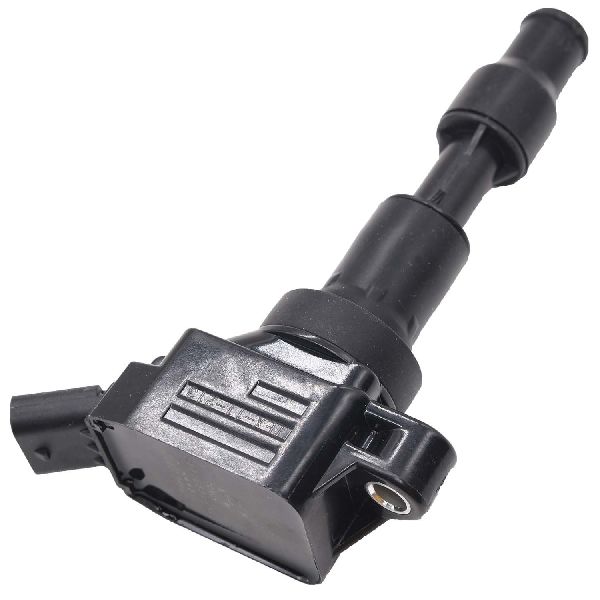
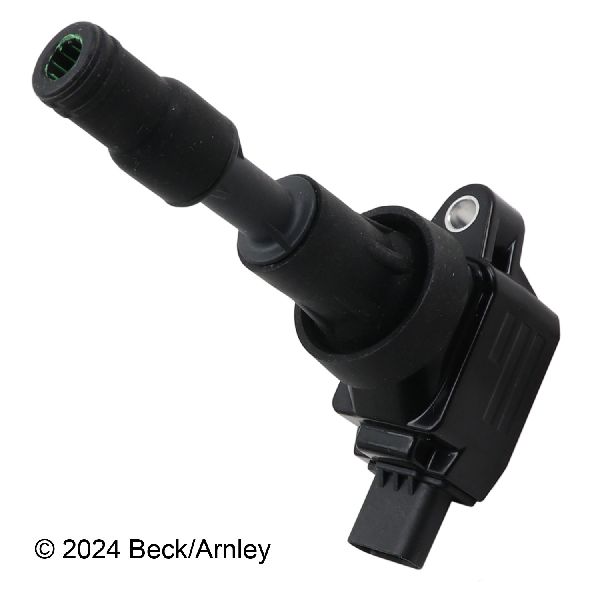
- Ignition Coil (Rear Bank)
(OEM #27310-3L000)— This is the most common cause of a single-cylinder misfire on this engine. The rear bank coils are known to fail. Note that front and rear bank coils have different part numbers and are not interchangeable.
Trusted brands: Kia/Hyundai (OEM), Delphi, NGK
OEM price range: $75-$110
Aftermarket price range: $40-$80 - Iridium Spark Plug
(OEM #SILZKR8E8G (NGK))— Spark plugs are a routine maintenance item and a frequent cause of misfires as they wear out.
Trusted brands: NGK, Denso, HKS
OEM price range: $20-$30
Aftermarket price range: $15-$25 - Intake Manifold Gasket Set
(OEM #28411-3L100 (Upper) and 29215-3L100 (Lower/Surge Tank))— Required for reinstallation whenever the intake manifold is removed to access the rear coils, plugs, or injectors. It is not reusable.
Trusted brands: Kia/Hyundai (OEM), Mahle, Fel-Pro
OEM price range: $40-$70
Aftermarket price range: $20-$50
Related Codes That Often Appear With This One
- P0300 — If the misfire is intermittent or affects multiple cylinders, a generic 'Random Misfire' code may be stored alongside the specific cylinder code.
- P0301, P0302, P0303, P0304, P0305 — If other cylinder misfire codes are present, it could point to a more systemic issue like a bad batch of fuel, a vacuum leak affecting an entire cylinder bank, or a failing high-pressure fuel pump. NHTSA ODI #11513767 notes a case where P0306 appeared with a long list of other misfire and oxygen sensor codes (P0133, P0137).
Platform-Specific Known Issues
- Recall SC196 / NHTSA 20V-519: Risk of engine compartment fire due to potential electrical short in the Hydraulic Electronic Control Unit (HECU). Owners were advised to park outside and away from structures until the recall repair, which involves installing a new fuse kit, is performed.
- Recall NHTSA 24V-191: Affects many 3.3T models. The left-hand turbocharger oil feed pipe can degrade from heat, crack, and leak oil onto the hot exhaust manifold, creating a serious fire risk. The fix is to replace the pipe with an improved stainless steel version.
Mechanic-Grade Diagnostic Values
- Ignition Coil Primary Resistance — expected: 0.3 to 1.5 ohms. Failure: A reading outside this range indicates a faulty coil.
- Ignition Coil Secondary Resistance — expected: 5,000 to 15,000 ohms (5k-15k Ω). Failure: A reading outside this range suggests an internal break or short in the secondary windings.
- Ignition Timing at Wide-Open Throttle (WOT) — expected: 15-17 degrees on 98 octane fuel. Failure: Significantly lower timing, such as 11-13 degrees, indicates the ECU's knock control system is actively retarding timing, which can be a symptom of poor fuel quality or other issues causing pre-detonation.
Scan Tool Commands That Help
- Kia GDS (Global Diagnostic System): Cylinder Power Balance Test — This dealer-level function can confirm a weak contribution from cylinder 6. It works by deactivating individual fuel injectors and measuring the RPM drop for each cylinder. A significantly smaller RPM drop when cylinder 6 is deactivated confirms it is not producing its share of power, helping to isolate the issue to that specific cylinder before disassembly.
- Advanced OBD-II Scanner (e.g., iCarsoft): Live Data Stream / Misfire Counter — Before performing any physical work, use the live data function to monitor the misfire count for each cylinder in real-time. This confirms that cylinder 6 is the primary and consistent source of the misfire, as opposed to random misfires (P0300) across all cylinders.
Wiring & Ground Locations
- 91860-J5010 — Main ground strap connecting the engine block to the vehicle chassis.. A corroded or loose main engine ground can cause a host of erratic electronic issues, including weak spark or incorrect sensor readings that could lead to a misfire code. While not a primary cause, it's a foundational check for any electrical diagnosis.
- Cylinder 6 Ignition Coil Connector — On top of the valve cover for cylinder 6, on the rear bank (firewall side), passenger side of the engine.. This 4-pin connector provides power and the trigger signal to the ignition coil. The wiring harness in this hot, tight area can become brittle over time. A visual inspection for cracked insulation or loose pins is critical, especially when the intake manifold is removed for access.
Real Owner Repair Stories
- YouTube user (Ford Van (demonstrating a universal P0306 diagnosis)) — Check engine light, engine misfiring.
❌ Tried (didn't work) Replacing the ignition coil with a cheap aftermarket part from an 8-pack. The misfire returned a day later.
✅ What actually fixed it Replacing the faulty ignition coil with another new one from the same multi-pack resolved the issue, but the experience highlights the unreliability of low-quality aftermarket electronic parts. The user also noted that after running with the misfire for weeks, the O2 sensors began to throw codes, demonstrating how a primary fault can cause secondary, misleading codes. - Reddit user in r/StingerGT (2018 Kia Stinger GT2) — Engine stumbling/hesitation when flooring it.
❌ Tried (didn't work) Initially checked spark plug gaps, found 4 or 5 had lost their proper gap. Re-gapping them temporarily fixed the stumble.
✅ What actually fixed it The stumbling issue returned four months later. The owner was confident that replacing both the spark plugs (with HKS) and the ignition coils (with aftermarket performance coils) would permanently resolve the misfire under load. - NHTSA ODI #11653245 — An owner reported very little power and difficulty maintaining speed. Diagnostic codes P0304, P0306, P0302, P0300, and P0019 were found, rendering the vehicle undrivable and requiring a tow to a shop.
- NHTSA ODI #11575366 — A report describes a vehicle throwing codes P0300, P0019, P0024, P0302, P0304, and P0306. Upon inspection, the engine was found to be missing 5 quarts of oil with no warning light, resulting in three cylinders misfiring and timing issues.
OEM Part Supersession History
27310-3L000 (and others for early models)→27310-3L030— General part evolution and potential durability improvements.
Heads up: While physically interchangeable, some owners on forums have noted repeated failures with earlier coil versions, suggesting later part numbers may be more robust. When replacing, it is advisable to use the latest available OEM part number.
Model Year Variations Within This Range
- 2022-2023: Models from 2022 onward received mechanical refreshes, including tweaks to the ECU and TCU software and an updated fuel pump. While not directly tied to P0306, these changes may affect overall engine operation and diagnostic logic compared to 2018-2021 models.
- 2021+: For the 2021 model year, Kia introduced a refreshed Stinger with revised styling and a new 10.25-inch infotainment screen. For the 2022 model year, the 3.3L V6 received a variable exhaust system that increased power slightly by 3 hp. These changes do not fundamentally alter the diagnosis for P0306.
Diagnostic Flowchart
Other Known Issues on This Vehicle
Issues unrelated to this code that are worth knowing about as an owner of this generation:
- Front Brake Shudder/Vibration 🟠 Medium — Very common. Owners report vibration under braking, often within 20,000 miles. The cause is debated but often attributed to pad material deposits on rotors, not warped rotors. (Ref: No official recall, but it is a widely known issue. Many owners resolve it by switching to aftermarket brake pads and having the OEM rotors machined.)
- Paint Micro-Blistering/Bubbling 🟡 Low — Reported by some owners, particularly on certain colors like Micro Blue. Bubbles can appear on trunk lids and other panels. Can also be caused by improper paint repair conditions.
- Fading/Staining of Black Chrome Window Trim 🟡 Low — Commonly reported issue where the dark chrome window trim develops a hazy, stained, or faded appearance that is difficult to clean. Some attribute it to harsh chemicals in automatic car washes. (Ref: A recall was issued in Australia for this issue, but not in North America. Owners often resort to polishing the trim or covering it with vinyl wrap.)
- HECU (Hydraulic Electronic Control Unit) Fire Risk 🔴 High — Affects 2018-2021 models. An electrical short within the HECU can occur, potentially causing an engine compartment fire even when the car is turned off. (Ref: Recall SC196 / NHTSA 20V-519)
- Left Turbocharger Oil Feed Pipe Leak 🔴 High → Shop Turbocharger — Affects a wide range of 2018-2023 models. The oil feed pipe can crack and leak oil onto the exhaust, posing a significant fire risk. (Ref: Recall NHTSA 24V-191)
Used vs. New Parts: Buying Guide for This Vehicle
When a used part is the smart pick: For this repair, buying used parts is generally not recommended, especially for wear items like ignition coils and spark plugs. The high labor cost to access cylinder 6 means you should use new, high-quality parts to ensure the repair lasts. A used structural component like an engine cover or bracket from a donor car would be acceptable if needed.
Donor-vehicle mileage cap: roughly under 40000 miles for the part to have meaningful remaining life.
What to inspect on the donor part:
- For any used part, verify the donor vehicle's mileage and check for signs of damage or excessive wear.
- Avoid parts from vehicles that show signs of front-end collision or fire damage.
OEM-only on this vehicle (don't cheap out):
- Intake Manifold Gaskets: These are single-use gaskets and must be new to ensure a proper seal. Using old gaskets will almost certainly cause a vacuum leak.
- Ignition Coils and Spark Plugs: Given the high labor cost, using new OEM or reputable aftermarket parts is critical. The risk of a premature failure from a used coil outweighs any potential cost savings.
Aftermarket brands forum-validated for this vehicle:
- Spark Plugs: NGK (OEM supplier), HKS (performance upgrade)
- Ignition Coils: Delphi, NGK, Worms Racing (performance upgrade)
Brands owners have reported issues with on this vehicle:
- Unbranded, low-cost ignition coil multi-packs from online marketplaces have been reported by owners to have high failure rates, sometimes failing within days of installation.
Real Owner Stories
Aggregated from forums and TSBs cited above. Mileages and costs reflect what owners reported in those sources.
2018-2023 Kia Stinger 3.3T GDi V6 — ~40000 miles
Symptoms: Owners discuss the necessity of oil catch cans to prevent carbon buildup on intake valves in the GDI engine which leads to misfires.
What fixed it: Installation of aftermarket oil catch cans to reduce oil vapor from the PCV system baking onto hot valves.
Source hint: Stinger Forum - Valve stem cleaning issues
2018-2023 Kia Stinger 3.3T GDi V6 — ~20000 miles
Symptoms: Vibration under braking, often attributed to pad material deposits on rotors rather than warped rotors.
What fixed it: Switching to aftermarket brake pads and having the OEM rotors machined.
Source hint: Reddit r/kiastinger - Durable solution to front-brake shudder
Related OBD-II Codes
Frequently Asked Questions
I have a P0306 on my 3.3T Stinger; should I be worried about the turbo oil feed pipe recall?
Is there a specific recall for electrical issues that might coincide with engine codes on my Stinger?
Why is cylinder 6 specifically prone to misfires compared to the front cylinders?
How often should I change the spark plugs on my tuned Stinger to avoid P0306?
Can I clean the intake valves myself to fix a GDI-related misfire?
Should I replace all the coils if only cylinder 6 is misfiring?
Helpful Videos
![How to Fix P0306 Engine Code in 3 Minutes [2 DIY Methods / Only $4.76]](https://img.youtube.com/vi/5HTrtkSEHH4/mqdefault.jpg)
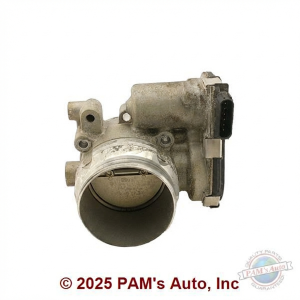
Used OEM Parts in Stock
New Aftermarket Parts Available


The information in this article is provided for general reference and educational purposes only. Vehicle specifications, procedures, and part compatibility can vary by production date, trim level, and region. Always consult your vehicle's factory service manual and verify part numbers before purchasing or performing repairs. Safety-critical components such as airbags, seat belts, and braking systems should be installed by a qualified professional.
- Kia Stinger:
- 🧭 Diagnostic Flowchart
- 🎬 Helpful Videos
- 🛍️ Shop This Part
- What's Unique About the 2018-2023 Kia Stinger
- Symptoms You May Notice
- Most Likely Causes
- Rare But Worth Checking
- Diagnosis Steps
- Parts You'll Likely Need
- Related Codes That Often Appear With This One
- Platform-Specific Known Issues
- Mechanic-Grade Diagnostic Values
- Scan Tool Commands That Help
- Wiring & Ground Locations
- Real Owner Repair Stories
- OEM Part Supersession History
- Model Year Variations Within This Range
- Other Known Issues on This Vehicle
- Used vs. New Parts: Buying Guide for This Vehicle
- Real Owner Stories
- 2018-2023 Kia Stinger 3.3T GDi V6 — ~40000 miles
- 2018-2023 Kia Stinger 3.3T GDi V6 — ~20000 miles
- Related OBD-II Codes
- Frequently Asked Questions
- 🎟️ Get 5% Off