

P0306 on 2006-2014 Mercedes-Benz C-Class: Cylinder 6 Misfire Causes and Fixes
P0306 means cylinder 6 is misfiring. On the M272 V6 engine, this is most often a bad ignition coil or a worn spark plug. A simple DIY test is to swap the coil from cylinder 6 to cylinder 5. If the code changes to P0305, you've found the bad coil. A new coil costs between $40 and $90.
- P0306 on this C-Class is a misfire on the rearmost cylinder on the driver's side.
- Always start diagnosis by swapping the cylinder 6 ignition coil with another cylinder; this is a simple, fast, and free test that often finds the problem.
- Do not ignore a flashing check engine light, as it can lead to costly catalytic converter damage.
- If basic ignition parts don't fix the issue, the problem is likely specific to the M272 engine: either the intake manifold or, on earlier models, the balance shaft.
- Be aware of the engine serial number on pre-2009 models to assess the risk of the balance shaft issue.
What's Unique About the 2006-2014 Mercedes-Benz C-Class (W203/W204)
While any car can have a misfire, the M272 engine in this C-Class has two well-known weaknesses that can cause a P0306 code if a simple coil or plug isn't the culprit. First, the plastic levers on the intake manifold are prone to breaking, causing incorrect air-fuel mixtures and often triggering codes like P2004 or P2006 alongside the misfire. Second, and more seriously, M272 engines built before roughly mid-2008 can suffer from premature wear of an internal balance shaft sprocket due to improperly hardened metal. This was the subject of a class-action lawsuit and can lead to timing-related misfires, usually accompanied by codes P0016/P0017, and is a very expensive repair.
Generation note: The 2006-2014 range covers the end of the W203 generation (2006-2007) and the entire W204 generation (2008-2014). Both used the M272 engine. The most critical issue, balance shaft wear, primarily affects earlier engines with serial numbers below 2729..30 468993, found in the W203 and early W204 models (pre-2009). The W204 featured a more refined chassis and updated electronics compared to the W203.
Symptoms You May Notice
- Rough or shaky idle
- Hesitation or stumbling during acceleration
- Noticeable loss of engine power
- Flashing or solid Check Engine Light
- Reduced fuel economy
- Engine stalling
- Engine jerking during acceleration
- Replacing the oxygen (O2) sensor. A bad O2 sensor can cause performance issues, but it will not cause a misfire isolated to a single cylinder. It would more likely affect an entire bank of cylinders.
- Replacing the Mass Airflow (MAF) sensor. A faulty MAF sensor will typically affect all cylinders randomly and cause different codes (like P0300), not an isolated P0306.
Most Likely Causes
- Faulty Ignition Coil 🔴 High Probability → Shop Ignition Coil Ignition coils are a common wear item on most modern engines, and the M272 is no exception. Constant exposure to heat and vibration causes them to fail over time.
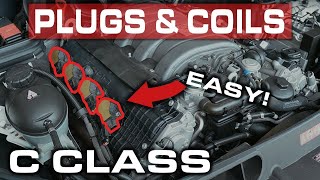
How to confirm: Swap the ignition coil from cylinder 6 with the one from cylinder 5. This requires a T30 Torx bit. Clear the codes and run the engine. If the code changes to P0305, the coil is confirmed bad.
Typical fix: Replace the faulty ignition coil. It is often recommended to replace the corresponding spark plug at the same time. Many owners choose to replace all 6 coils if they are original and the vehicle has high mileage.
Est. part cost: $40-$90 - Worn or Fouled Spark Plug 🔴 High Probability → Shop Spark Plug Spark plugs have a finite service life (typically around 60,000 miles on the M272) and can become worn or fouled with carbon, preventing a proper spark.
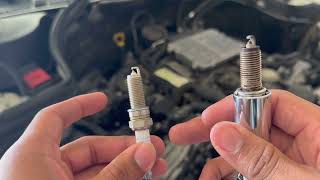
How to confirm: After confirming the coil is good, remove the spark plug from cylinder 6 using a thin-walled 5/8" or 16mm spark plug socket. Inspect it for wear, damage, or heavy carbon/oil deposits. Compare it to a new plug.
Typical fix: Replace the spark plug. It is best practice to replace all 6 spark plugs at once if they are near the end of their service interval to ensure even performance.
Est. part cost: $10-$20 per plug - Faulty Fuel Injector 🟡 Medium Probability → Shop Fuel Injector
How to confirm: Listen to the injector with a mechanic's stethoscope; it should have a consistent clicking sound. A more definitive test is to swap the injector with another cylinder, similar to the coil test, though this is more labor-intensive as it involves the fuel rail. A P0206 code (Injector Circuit/Open) strongly points to a bad injector or wiring. In some cases, fuel delivery issues can be systemic; for instance, NHTSA ODI #11723123 notes that a faulty fuel feed line on similar Mercedes-Benz models can lead to rough idling, stalling, and codes ranging from P0300 to P0306.
Typical fix: Replace the faulty fuel injector. The fuel rail may need to be removed.
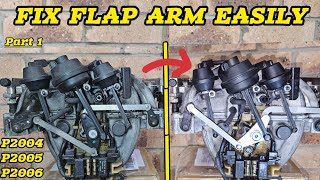
Est. part cost: $70-$150 - Broken Intake Manifold Runner Flap/Lever 🟡 Medium Probability → Shop Engine Intake Manifold The M272 intake manifold uses plastic components for its variable-length runners. A small plastic lever on the front of the manifold that actuates the flaps is notoriously brittle and often breaks, causing vacuum leaks or improper airflow to the cylinders.
How to confirm: Visually inspect the front of the intake manifold for a broken plastic lever. A more thorough diagnosis may require a smoke test to check for vacuum leaks. The presence of codes P2004, P2005, or P2006 is a strong indicator of this failure.
Typical fix: In the past, the entire intake manifold had to be replaced. Today, robust aluminum repair kits are widely available to replace just the failed external lever, which is a much more cost-effective solution. If the internal flaps have failed, the manifold must be replaced.
Est. part cost: $30-$100 (repair kit) or $500-$800 (new manifold)
Rare But Worth Checking
- Worn Balance Shaft Sprocket: This is a catastrophic and expensive failure affecting M272 engines with serial numbers up to 2729..30 468993 (roughly pre-2009 models). It usually throws timing codes (P0016/P0017) first, but can cause misfires as timing becomes erratic. This repair can cost thousands of dollars as it requires engine removal.
- Low Engine Compression: Caused by internal issues like a burnt valve, worn piston rings, or a bad head gasket. A compression test on cylinder 6 is required to confirm. As seen in one forum, this can be caused by scarred cylinder walls, requiring a major engine teardown.
- Clogged Catalytic Converter: A clogged catalytic converter can create excessive backpressure, leading to misfires, often on an entire cylinder bank (e.g., P0304, P0305, P0306 together). This is often a consequence of long-term, unaddressed misfires dumping raw fuel, not the initial cause.
- Faulty Engine Control Module (ECU/ECM): → Shop Engine Control Module (ECM) In very rare cases, the driver circuit for the cylinder 6 coil or injector can fail within the ECU itself. This is expensive and should only be considered after all other possibilities, including wiring harness issues, are exhausted.
Diagnosis Steps
- Read the code with an OBD-II scanner and confirm P0306 is present. Note any other codes, especially P0300, P0016/P0017, or P2004/P2006.
- If the Check Engine Light is flashing, avoid driving the vehicle to prevent catalytic converter damage.
- Swap the ignition coil from cylinder 6 (driver's side, rear) to cylinder 5 (driver's side, middle). This requires a T30 Torx driver.
- Clear the codes and start the engine. Let it idle until the Check Engine Light returns.
- If the code is now P0305, the ignition coil is faulty and must be replaced.
- If the code remains P0306, the coil is likely good. Proceed to inspect the spark plug for cylinder 6. Replace if it is worn, fouled, or if its service interval is due.
- If the plug and coil are good, the next likely causes are a faulty fuel injector or a vacuum leak from the intake manifold.
- Visually inspect the front of the intake manifold for the broken black plastic actuator lever. A smoke test can definitively identify a vacuum leak.
- If no vacuum leaks are found, consider testing the fuel injector. This can be done by swapping it with another cylinder, but this is a more involved job.
- If all of the above check out, more serious mechanical diagnostics like a compression test are needed to check for internal engine problems.
- If timing codes P0016/P0017 are present on a pre-2009 model, investigate the balance shaft sprocket as the likely root cause.
Parts You'll Likely Need
- Ignition Coil
(OEM #A2729060060)— This is the most common failure part for a single-cylinder misfire on the M272 engine.
Trusted brands: Bosch, Delphi, NGK, Genuine Mercedes-Benz
OEM price range: $70-$100
Aftermarket price range: $40-$70 - Spark Plug
(OEM #A0041591803 / A0041594903)— A common wear item that is often replaced along with the ignition coil as a preventative measure.
Trusted brands: Bosch (YR7MPP33), NGK
OEM price range: $15-$25 per plug
Aftermarket price range: $10-$20 per plug
Related Codes That Often Appear With This One
- P0300 — This is a 'Random Misfire' code. It often appears with single-cylinder misfire codes like P0306 when the misfire is intermittent or a systemic issue like a vacuum leak is beginning to affect multiple cylinders.
- P0304, P0305 — Misfires on cylinders 4 and 5. If you see misfires on the entire driver's side bank (4, 5, and 6), it points towards a systemic issue like a vacuum leak from the intake manifold on that side, a clogged catalytic converter for that bank, or a faulty O2 sensor.
- P0016, P0017 — These are 'Crankshaft/Camshaft Position Correlation' codes. If you see these along with P0306 on an early M272, it is a very strong indicator of the failing balance shaft sprocket issue.
- P2004, P2006 — These codes for 'Intake Manifold Runner Control Stuck Open/Closed' point directly to the common intake manifold flap failure, which is a known cause of misfires on the M272.
- P0206 — This code indicates a fault in the 'Cylinder 6 Injector Circuit'. Seeing this with P0306 makes the fuel injector or its wiring the primary suspect, rather than a spark or coil issue.
Technical Service Bulletins (TSBs) & Recalls
- S-B-03.30/08i: Addresses the premature wear of the balance shaft sprocket on M272 engines.
Platform-Specific Known Issues
- Balance Shaft Sprocket Wear: Early M272 engines (before S/N 2729..30 468993) used a sprocket made of a softer metal that wears prematurely, causing incorrect engine timing and misfires. This is a major, engine-out repair. Mercedes issued TSB S-B-03.30/08i regarding this issue.
- Intake Manifold Failure: The plastic components controlling the variable intake runners are a common point of failure, leading to vacuum leaks and performance issues.
Mechanic-Grade Diagnostic Values
- Fuel Pressure (Key On, Engine Running) — expected: ~3.8 bar (55 PSI). Failure: Significantly lower pressure can indicate a weak fuel pump, causing lean conditions and misfires.
- Mode 6 Misfire Counter (per 1000 revolutions) — expected: Near zero on a healthy cylinder.. Failure: A consistently high or incrementing count on cylinder 6, even before a CEL is triggered, points to an intermittent misfire issue. A count of 50+ in a drive cycle is notable but may not be enough to set a code.
- Engine Smooth Running Test (XENTRY/DAS) — expected: Values for all cylinders should be relatively even and close to zero.. Failure: A cylinder showing a consistently higher positive or negative value is being compensated for by the ECU, indicating a combustion anomaly (misfire). A spike in the value for cylinder 6 confirms it as the source of the rough running.
Hidden / Shadow Codes Worth Checking
- Mode 6 Misfire Data: Advanced scanners can access Mode 6 data, which shows raw misfire counts for each cylinder before they cross the threshold to trigger a P030x code. This is invaluable for diagnosing intermittent misfires that don't immediately set a light. (see via An advanced OBD-II scanner with Mode 6 capability or professional systems like Mercedes XENTRY/DAS.)
Scan Tool Commands That Help
- Mercedes XENTRY/DAS: Engine Smooth Running Test — This live data function is used to pinpoint which cylinder is causing a rough idle when the misfire is subtle or intermittent. It displays the ECU's corrective actions for each cylinder's rotational speed, making it easy to spot the offender.
- Mercedes XENTRY/DAS: Compression Test — This is a relative compression test that cranks the engine without firing and measures the rotational speed of each cylinder. It can quickly identify a cylinder with a potential mechanical compression issue (like a bad valve or piston ring) without needing a manual gauge initially.
- Mercedes XENTRY/DAS: Fuel System Adjustments / Adaptations Reset — After replacing components like fuel injectors or an O2 sensor that was causing a rich/lean condition, resetting fuel adaptations can help the engine relearn and run smoothly faster.
Wiring & Ground Locations
- Engine to Chassis Ground Strap — Typically a braided cable running from the engine block or bell housing area to the vehicle's chassis/frame.. A corroded or loose main engine ground can cause a weak spark, erratic sensor readings, and intermittent misfires that are difficult to trace. It affects the entire ignition system's return path.
- ECU/SAM Ground Points — On the W204, there are multiple ground points. Key ones are located in the engine bay on the inner fenders/strut towers and under the passenger floor/carpet area where water can sometimes accumulate.. The Engine Control Unit (ECU) relies on clean ground connections. A poor ground at these points can cause the ECU to misinterpret data or send weak signals to the ignition coils and fuel injectors, potentially causing a misfire code for a specific cylinder.
- W10 - Battery Ground Point — On the W211 (similar architecture), this is the main battery ground point at the right front of the engine bay.. Corrosion at the primary vehicle ground point can introduce resistance into the entire electrical system, leading to a host of issues including insufficient voltage for proper ignition coil function.
Real Owner Repair Stories
- MHH Auto forum user (Mercedes C-Class with M272 V6) — Persistent P0300 and P0306 codes that would appear about a minute after starting the engine.
❌ Tried (didn't work) Swapped coils, spark plugs, and injectors, Verified correct engine timing, Performed a compression test (all cylinders good), Disassembled engine, honed cylinder 6 walls, installed new piston rings, Had cylinder head checked by a machine shop, Replaced the Engine Control Module (ECU) with a known-good used unit
✅ What actually fixed it The user was at the point of cutting open the wiring harness to run new wires to the coil and injector for cylinder 6, as a continuity test showed the existing wires were good, but this was the last remaining possibility after every other mechanical and electronic part was swapped or verified. The final outcome was not posted, but the story highlights the extreme lengths required when a wiring harness issue is suspected despite passing basic tests. - YouTube video by a mobile mechanic (2009 Mercedes-Benz C300 (M272)) — Misfires on cylinders 1, 2, and 3 (entire Bank 1) immediately after an intake manifold replacement.
❌ Tried (didn't work) Replaced spark plugs, Swapped ignition coils, Checked for exhaust backpressure (was okay), Performed a leak-down test on the misfiring cylinders (was okay)
✅ What actually fixed it The mechanic checked generic OBD-II live data and saw that short-term fuel trim for Bank 1 was pegged at +25% (max enrichment). This pointed to a faulty upstream O2 sensor for Bank 1, which was causing the ECU to dump fuel, fouling the plugs and causing the misfires. Replacing the Bank 1 upstream O2 sensor resolved all misfires.
"I Checked Everything" — The Actual Cause
- In a documented case on an M272 engine, misfires across an entire bank (e.g., P0304, P0305, P0306) occurred after an intake manifold replacement. A smoke test for vacuum leaks came back clean. The actual cause was a failed upstream O2 sensor for that bank, which was commanding a full rich condition (+25% fuel trim), fouling the plugs and causing the misfires. The ECU was trying to compensate for what it thought was a massive lean condition (vacuum leak), but the sensor itself was the problem.
When the Usual Fixes Don't Work
- While the vast majority of P0306 codes are fixed by a new coil or spark plug, there are many documented cases where this did not solve the problem. One owner on MBWorld forums experienced misfires on the entire driver's side bank (P0304, P0305, P0306) and after replacing plugs and swapping coils, the issue persisted. The problem was ultimately traced to a bad catalytic converter for that bank. Another common scenario that mimics a single-cylinder misfire is a failing upstream O2 sensor, which can cause an entire bank to run excessively rich, fouling plugs and leading to misfire codes on multiple cylinders in that bank, even if only one code appears initially.
OEM Part Supersession History
A0001501980, A0001502780→A2729060060— Component revision and consolidation by Mercedes-Benz over the production run.
Heads up: While multiple part numbers exist, A2729060060 is the most current OEM number for the M272 engine coil. Using older stock or incorrect revisions may lead to premature failure. Always verify with VIN.
Model Year Variations Within This Range
- 2006-2008: Engines in this range (with serial numbers below 2729..30 468993) are susceptible to balance shaft sprocket wear. A P0306 accompanied by P0016/P0017 codes on these earlier models is a strong indicator of this specific, severe failure.
- 2006-2007 (W203) vs 2008-2014 (W204): The W203 and W204 are different chassis generations. While they share the M272 engine, the W204 has a more advanced electrical architecture and different interior/exterior components. However, the primary causes for a P0306 misfire on the M272 engine itself remain consistent across both generations.
Diagnostic Flowchart
Other Known Issues on This Vehicle
Issues unrelated to this code that are worth knowing about as an owner of this generation:
- Balance Shaft Sprocket Wear 🔴 High — Common on M272 engines with serial numbers up to 2729..30 468993 (roughly pre-2008/2009 models). Failure can occur between 60,000-100,000 miles (100,000-150,000 km). (Ref: Subject of a class-action lawsuit and multiple technical discussions, but no official recall.)
- Intake Manifold Runner Flap Failure 🟠 Medium → Shop Engine Intake Manifold — Very common across all years of the M272 engine. The plastic actuator lever often breaks, causing performance issues and fault codes.
- Electronic Steering Lock (ESL) Failure 🟠 Medium — A common issue on the W204 platform where the ESL module fails, preventing the car from starting and locking the steering wheel.
- 7G-Tronic (722.9) Conductor Plate Failure 🔴 High — Affects pre-facelift models (before 2011) with the 7-speed automatic transmission. Failure of internal speed sensors on the conductor plate can cause harsh shifting or limp mode.
- Camshaft Adjuster Solenoid Oil Leaks 🟡 Low → Shop Engine Camshaft — Solenoids can leak oil, which can then wick through the wiring harness and potentially damage the engine control unit (ECU). A known issue that led to updated, isolated 'pigtail' harnesses being offered as a fix.
Used vs. New Parts: Buying Guide for This Vehicle
When a used part is the smart pick: For this repair, buying used parts is generally not recommended for the primary failure items. However, if a larger component like the Engine Control Module (ECU) is diagnosed as faulty, a professionally tested, used unit from a reputable salvage yard with a warranty can be a cost-effective alternative to a new dealer part, provided it can be properly coded to the vehicle.
Donor-vehicle mileage cap: roughly under 80000 miles for the part to have meaningful remaining life.
What to inspect on the donor part:
- For an ECU: Ensure the donor vehicle was not in a flood or fire. Look for a clean part with no corrosion on the pins.
- For an Intake Manifold: Visually inspect the plastic actuator arms and linkages. If they are already broken or feel brittle, the part is not worth buying. Ask for the donor vehicle's mileage.
- Never buy used ignition coils or spark plugs.
OEM-only on this vehicle (don't cheap out):
- Engine Control Module (ECU/ECM): While a used part is an option, aftermarket/rebuilt ECUs for this platform have a poor reputation. A new OEM unit or a properly vetted used OEM unit is the safest choice.
- Intake Manifold: While aftermarket repair kits for the external lever are popular and effective, complete aftermarket intake manifolds can have quality control issues. An OEM Pierburg manifold is the recommended replacement if the entire unit is needed.
Aftermarket brands forum-validated for this vehicle:
- Ignition Coils: Bosch, Delphi, NGK
- Spark Plugs: Bosch, NGK
- Intake Manifold Repair Kit: Uro Parts (aluminum version), various other metal kits are available.
Brands owners have reported issues with on this vehicle:
- Unbranded/"White-box" ignition coils and sensors from online marketplaces. These often have a very high failure rate and can cause further diagnostic confusion.
Real Owner Stories
Aggregated from forums and TSBs cited above. Mileages and costs reflect what owners reported in those sources.
2007 Mercedes-Benz C-Class M272 V6
Symptoms: The owner experienced a P0306 code. They attempted to swap the coil pack to another cylinder, but the misfire code did not move to the new cylinder.
What fixed it: The discussion suggested investigating broader causes such as O2 sensors, catalytic converters, and fuel trim values when the standard coil swap failed to move the code.
Source hint: Code P0306 - MBWorld.org Forums
2013 Mercedes-Benz C300 M272 V6
Symptoms: Check engine light, white smoke, and misfires on cylinders 4 and 6 (P0304 and P0306).
What fixed it: The presence of a low fuel pressure code (P008792) suggested the misfires were caused by a fuel delivery issue.
Source hint: 2013 C300 - Check Engine Light / white smoke / misfires - MBWorld.org Forums
Mercedes-Benz E-Class W211 AMG
Symptoms: Multiple misfire codes including P0300 and P0306 occurring after the engine warmed up, accompanied by a large loss of power.
What fixed it: Inspection revealed coolant on the spark plugs, indicating a internal leak rather than a simple ignition failure.
Source hint: Large loss of power P0300 to P0306 - MBWorld.org Forums
Mercedes-Benz M272 V6
Symptoms: Persistent cylinder 6 misfire. Technician swapped coils, plugs, and injectors and checked timing, but the misfire remained.
What fixed it: Engine disassembly revealed scarred cylinder walls as the root cause of the persistent P0306.
Source hint: Mercedes M272 cyl 6 misfire - MHH AUTO
Mercedes-Benz E350
Symptoms: An owner reported symptoms including rough idling, reduced gas mileage, stalling, and check engine lights with codes P0300 through P0306.
What fixed it: NHTSA ODI #11723123 describes these symptoms in relation to a recalled fuel feed line.
Source hint: NHTSA ODI #11723123
Related OBD-II Codes
Frequently Asked Questions
Does TSB S-B-03.30/08i regarding balance shaft sprocket wear apply to my 2006 C-Class?
I have a P0306 and a P2004 code on my W204; do I need to replace the whole intake manifold?
What tools do I need to swap the ignition coils to test for a P0306 on my M272 engine?
How often should I be changing the spark plugs on my C350 to prevent misfire codes?
Where is cylinder 6 located on the Mercedes-Benz M272 V6 engine?
Can I keep driving my C-Class if the Check Engine Light is flashing with the P0306 code?
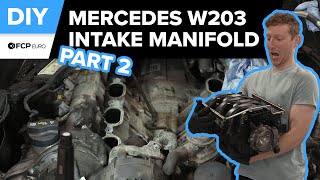
Helpful Videos


The information in this article is provided for general reference and educational purposes only. Vehicle specifications, procedures, and part compatibility can vary by production date, trim level, and region. Always consult your vehicle's factory service manual and verify part numbers before purchasing or performing repairs. Safety-critical components such as airbags, seat belts, and braking systems should be installed by a qualified professional.
- Mercedes-Benz C-Class (W203/W204):
- 🧭 Diagnostic Flowchart
- 🎬 Helpful Videos
- What's Unique About the 2006-2014 Mercedes-Benz C-Class (W203/W204)
- Symptoms You May Notice
- Most Likely Causes
- Rare But Worth Checking
- Diagnosis Steps
- Parts You'll Likely Need
- Related Codes That Often Appear With This One
- Technical Service Bulletins (TSBs) & Recalls
- Platform-Specific Known Issues
- Mechanic-Grade Diagnostic Values
- Hidden / Shadow Codes Worth Checking
- Scan Tool Commands That Help
- Wiring & Ground Locations
- Real Owner Repair Stories
- "I Checked Everything" — The Actual Cause
- When the Usual Fixes Don't Work
- OEM Part Supersession History
- Model Year Variations Within This Range
- Other Known Issues on This Vehicle
- Used vs. New Parts: Buying Guide for This Vehicle
- Real Owner Stories
- 2007 Mercedes-Benz C-Class M272 V6
- 2013 Mercedes-Benz C300 M272 V6
- Mercedes-Benz E-Class W211 AMG
- Mercedes-Benz M272 V6
- Mercedes-Benz E350
- Related OBD-II Codes
- Frequently Asked Questions
- 🎟️ Get 5% Off