

P0306 on 2010-2011 Saab 9-5 2.8T: Cylinder 6 Misfire Causes and Fixes
The most common cause for a P0306 code on the Saab 9-5 2.8T V6 is a failed ignition coil on cylinder 6. A worn spark plug is the next most likely culprit. Cylinder 6 is located on the easier-to-access FRONT bank of cylinders. Replacing a single ignition coil costs between $40-$90 for the part and is a common DIY fix.
- P0306 on your Saab 9-5 almost always points to a bad ignition coil or spark plug on cylinder 6.
- Cylinder 6 is on the rear bank against the firewall, making it more difficult to access than the front cylinders.
- The easiest diagnostic step is to swap the cylinder 6 ignition coil with one from the front bank to see if the misfire code follows the coil.
- Due to the labor involved in accessing the rear bank, it is highly recommended to replace all three rear ignition coils and all six spark plugs at the same time.
- Be extremely careful with plastic hoses and connectors when working near the back of the engine, as they become brittle and break easily.
What's Unique About the 2010-2011 Saab 9-5
The 2010-2011 Saab 9-5 uses the GM-sourced B284 2.8T V6 engine, also known as the LP9. The cylinder numbering for this transverse V6 is: Cylinders 1, 3, and 5 on the rear bank (against the firewall) and cylinders 2, 4, and 6 on the front bank (near the radiator). This means a P0306 fault is for cylinder 6 on the easily accessible front bank, making diagnosis and repair much simpler than for the rear bank cylinders. Heat buildup in the tight engine bay is still a primary contributor to premature ignition coil failure across the entire engine.
Symptoms You May Notice
- Rough or shaky idle
- Hesitation or stumbling during acceleration
- Noticeable loss of engine power
- Flashing Check Engine Light (indicates a severe, catalyst-damaging misfire)
- Solid Check Engine Light
- Reduced fuel economy
- Engine backfiring or popping sounds, especially under load
- Replacing only the spark plug when the ignition coil is the actual point of failure. The coil-on-plug design means the coil itself is the most common culprit.
- Assuming cylinder 6 is on the difficult-to-access rear bank. On this specific engine, it is on the front bank.
Most Likely Causes
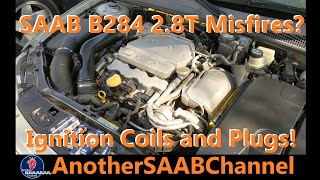
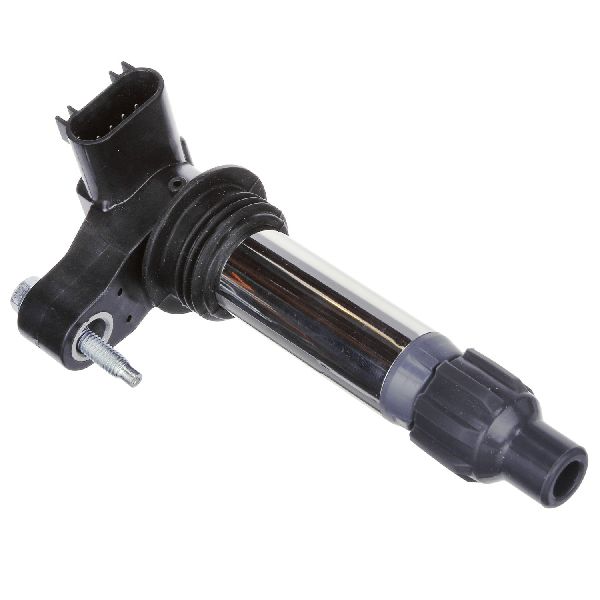
- Failed Ignition Coil 🔴 High Probability → Shop Ignition Coil The B284 engine bay is compact, leading to significant heat that degrades ignition coils over time. This is the most common failure item for misfires on this engine. 🎬 See how to handle P0300 codes and replace 2.8T coils.
How to confirm: Swap the ignition coil from cylinder 6 with one from another front cylinder (e.g., cylinder 2 or 4). Clear the codes and run the engine. If the code changes to P0302 or P0304 respectively, the coil is faulty. Cylinder 6 is on the front bank, making this swap relatively easy.
Typical fix: Replace the failed ignition coil. Since cylinder 6 is on the accessible front bank, replacing just the single failed coil is common. However, many owners replace all three front coils, or all six, as a preventative measure.
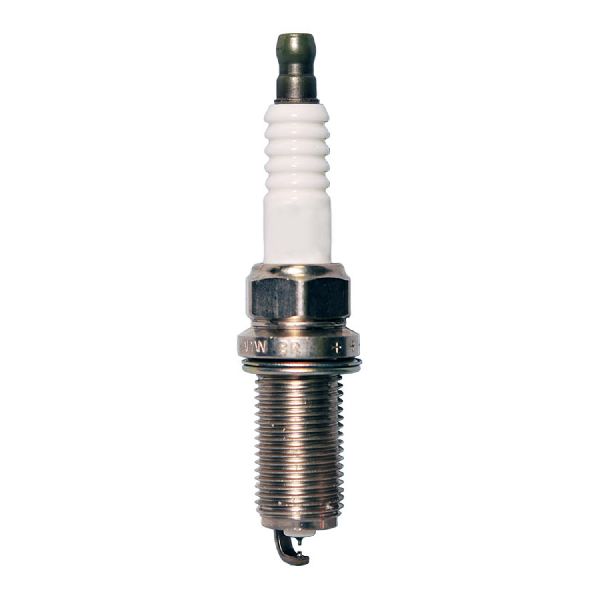
Est. part cost: $40 - $90 per coil - Worn or Fouled Spark Plug 🔴 High Probability → Shop Spark Plug Spark plugs are a regular maintenance item with a service interval of approximately 72,000 miles, but can wear sooner. If another issue like a leaky valve cover gasket has caused oil to foul the plug, a misfire can occur.
How to confirm: After ruling out the ignition coil, remove the spark plug from cylinder 6. Inspect it for wear (worn electrode), carbon buildup, oil fouling, or cracks in the ceramic insulator.
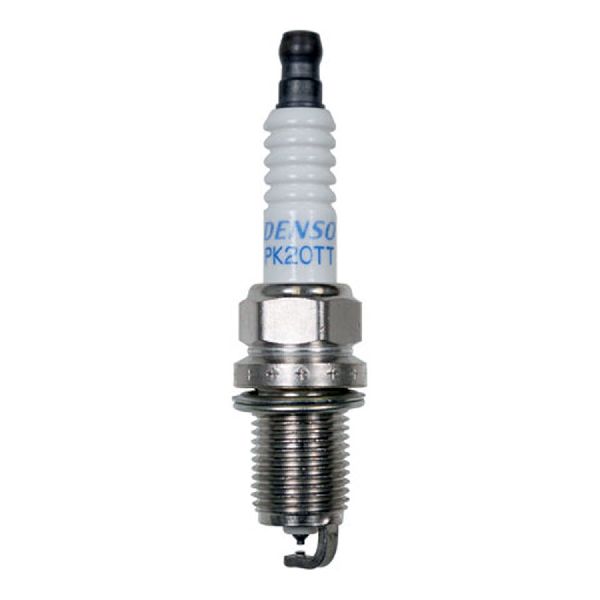
Typical fix: Replace the spark plug. It is best practice to replace all six spark plugs at the same time to ensure consistent performance. Ensure they are gapped correctly. 🎬 Watch: Step-by-step spark plug replacement for your 2010-2011 Saab 9-5. The recommended NGK plugs are often pre-gapped, but should always be checked. The recommended gap is typically 0.8mm - 0.85mm.
Est. part cost: $8 - $20 per plug - Faulty Fuel Injector 🟡 Medium Probability → Shop Fuel Injector Injectors can become clogged or fail electronically over time. While less common than ignition issues, it's a known failure point.
How to confirm: After ignition components are ruled out, listen to the injector with a mechanic's stethoscope for a consistent clicking sound. A more advanced method is to perform a fuel injector balance test. High resistance in the injector circuit can also cause a misfire code.
Typical fix: Replace the faulty fuel injector. In some cases, owners have successfully resolved injector-related misfires by using a high-quality fuel injector cleaner additive mixed with a low volume of fuel for a concentrated cleaning cycle. For a physical replacement, see this video guide: https://www.youtube.com/watch?v=WzQU9cCmJDc
Est. part cost: $50 - $150 per injector
Rare But Worth Checking
- Vacuum Leak: Brittle plastic vacuum lines are a known issue on the B284 engine. A leak near the intake manifold runner for cylinder 6 can lean out the mixture and cause a misfire. The brake booster vacuum line is a particularly common failure point.
- Low Engine Compression: Though less common, internal engine issues like a worn piston ring or a faulty valve can cause a loss of compression in cylinder 6, leading to a persistent misfire that ignition or fuel parts won't fix.
- Misfire Under High Load (Spark Blowout): A misfire that only occurs at wide-open throttle or under high boost can be caused by 'spark blowout,' where cylinder pressure is too high for the spark to jump the gap. This can be caused by worn plugs or, more commonly, a plug gap that is too wide. Some owners, especially on tuned vehicles, use a colder heat range plug (e.g., NGK LFR7AIX) to solve this.
Diagnosis Steps
- Confirm the P0306 code is present using an OBD-II scanner.
- Note if the Check Engine Light is solid or flashing. A flashing light indicates a severe misfire that could damage the catalytic converter.
- Since cylinder 6 is on the front bank, access the ignition coil. It is the coil on the far-right when facing the engine.
- Swap the coil from cylinder 6 with the coil from cylinder 4 (middle, front).
- Clear the codes, start the engine, and let it run for a few minutes. Re-scan for codes.
- If the code has moved to P0304, the ignition coil you moved is faulty and must be replaced.
- If the P0306 code returns, the problem is not the coil. Turn off the engine and remove the spark plug from cylinder 6.
- Inspect the spark plug for excessive wear, damage, or fouling. The correct gap is around 0.8-0.85mm. Replace if necessary.
- If the coil and plug are good, the next step is to investigate the fuel injector for cylinder 6. Try a concentrated dose of fuel system cleaner first.
- If fuel and ignition systems are confirmed to be working, check for vacuum leaks, especially around the intake manifold and brake booster line.
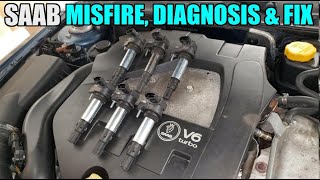
- As a final step, a mechanical compression test should be performed 🎬 Watch: A mechanic's guide to diagnosing and fixing Saab misfires. on cylinder 6 to rule out internal engine problems.
Parts You'll Likely Need
- Ignition Coil
(OEM #12632479 (GM), 93167559 (Saab))— This is the most frequent failure item causing a P0306 code due to engine heat.
Trusted brands: Bosch (0 221 604 112), ACDelco (D517C), Delphi (GN10494)
OEM price range: $70 - $110
Aftermarket price range: $40 - $90 - Spark Plug
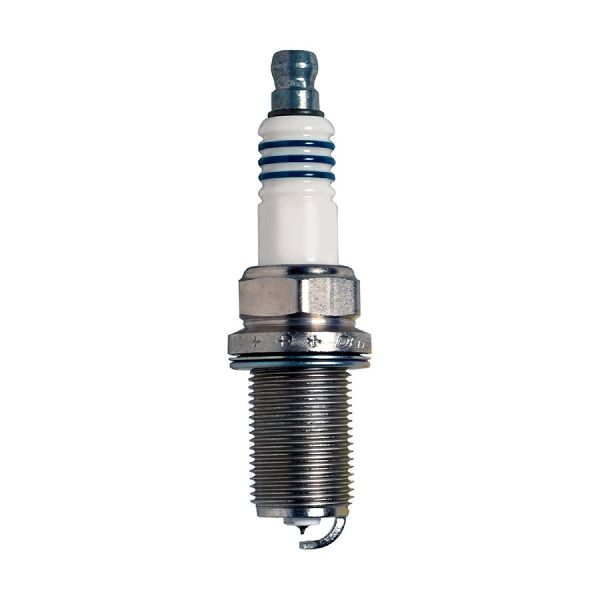
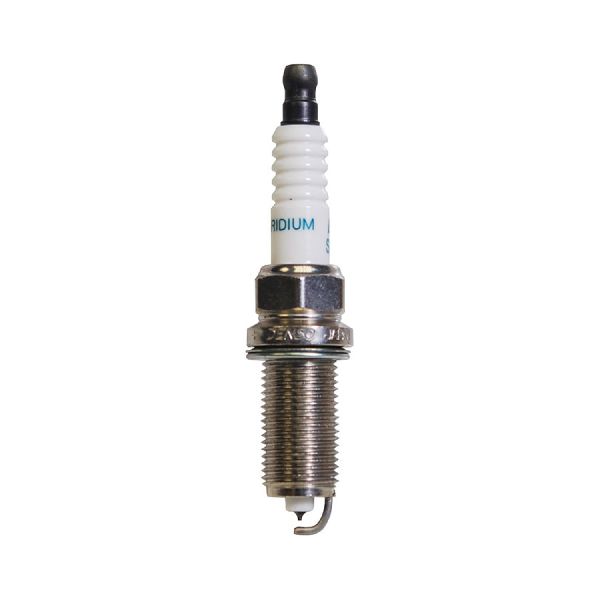
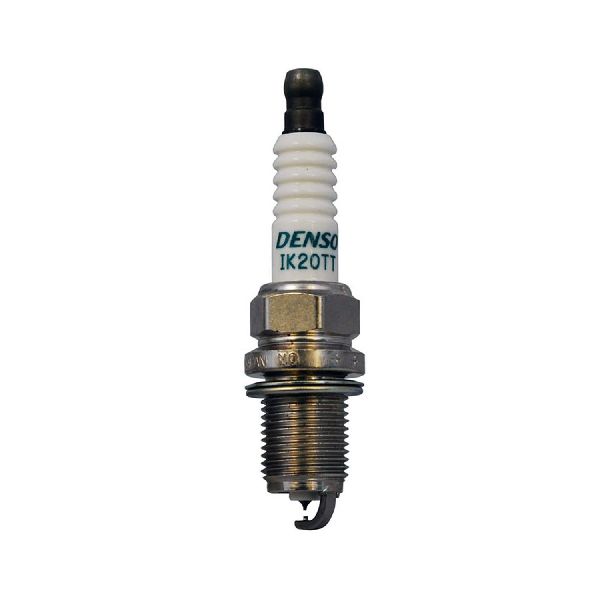
(OEM #12788884 (Saab))— As a standard wear item, a worn spark plug is a common cause of misfires. The recommended plug is an NGK Iridium or Platinum model.
Trusted brands: NGK PLFR6C-10G (OEM Platinum), NGK LFR6AIX (Iridium), NGK LFR7AIX (Colder, for tuned/high load)
OEM price range: $15 - $25
Aftermarket price range: $8 - $20
Related Codes That Often Appear With This One
- P0300 — If the misfire is intermittent or affects multiple cylinders, a P0300 (Random/Multiple Cylinder Misfire Detected) may be stored alongside the P0306 code.
Platform-Specific Known Issues
- Cylinder Numbering Confusion: It is critical to know that the front bank is 2-4-6 and the rear bank is 1-3-5. A P0306 is a front-bank cylinder, which is easy to access.
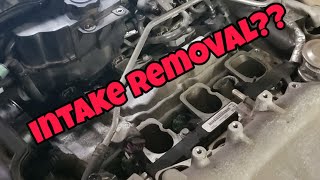
- Rear Bank Access: While not required for P0306, accessing the rear bank (cylinders 1, 3, 5) is difficult. It requires removing the engine control unit (ECU) and its mounting bracket, along with carefully disconnecting several vacuum lines and electrical connectors.
- Brittle Plastics: The plastic vacuum lines and connectors in the engine bay become very brittle with age and heat, and can easily break during any repair, leading to further issues if not replaced. The brake booster vacuum line is a common culprit.
Mechanic-Grade Diagnostic Values
- Fuel Pressure (Key On, Engine Off) — expected: 345-414 kPa (50-60 psi). Failure: Pressure below this range indicates a weak fuel pump or clogged filter.
- Fuel Injector Balance Test (Pressure Drop Variance) — expected: The pressure drop for each injector should be within 20% of the average pressure drop of the other injectors.. Failure: An injector with a pressure drop significantly different from the average is likely faulty or clogged.
Hidden / Shadow Codes Worth Checking
- Misfire Current Counters: This is not a DTC, but a live data parameter accessible with a Tech2 or equivalent high-end scan tool. It shows a real-time count of misfire events per cylinder, which is more sensitive than the check engine light. It can identify an intermittent misfire on cylinder 6 before it's frequent enough to set a permanent P0306. (see via Tech2 Scan Tool or equivalent GM-capable scanner, under engine data or misfire data menus.)
Scan Tool Commands That Help
- Tech2: Cylinder Power Balance Test — Used to isolate a misfiring cylinder when the cause is uncertain. The tool disables one injector at a time and measures the corresponding drop in engine RPM. A cylinder with a minimal or no RPM drop when disabled is the one that is not contributing correctly.
- Tech2: Fuel Injector Balance Test — Used after ruling out ignition problems. This test measures the pressure drop in the fuel rail as each injector is pulsed. It can identify a clogged or electrically failing injector on cylinder 6 by comparing its pressure drop to the others.
- Tech2: Misfire Counter Reset — After performing a repair (like swapping a coil), this function resets the live misfire counters to zero, allowing for immediate confirmation of the fix without needing to complete a full drive cycle.
Wiring & Ground Locations
- G25 — Main battery ground cable connection point on the gearbox.. A poor main ground connection at the transmission can cause a host of electrical issues, including weak spark or erratic sensor readings that could lead to a misfire code.
- G2 — On the left-hand structural member behind the headlamp, serves as a primary chassis ground.. This is a critical chassis ground point. Corrosion or looseness here can affect multiple systems, including the Engine Control Module and ignition system power.
- G7 (V6) — On a console/bracket on the front of the left-hand (rear) end of the engine.. This is a specific engine ground. While P0306 is on the front bank, a poor engine block ground can affect the entire ignition system's return path, potentially causing weak spark on any cylinder.
Real Owner Repair Stories
- Reddit r/mechanics (Saab 9-3 with B284 2.8T engine (same as 9-5), tuned to ~290hp) — Car drives fine normally, but at Wide Open Throttle (WOT) with boost, it starts jerking and backfiring. CEL flashes during the event but goes away.
❌ Tried (didn't work) Returning the tune to stock (misfire was still present, though less severe).
✅ What actually fixed it The community consensus and common fix for this specific symptom (misfire only under high boost) is 'spark blowout' due to an incorrect spark plug heat range or excessive plug gap. The solution is to install colder heat range spark plugs (e.g., NGK LFR7AIX) and ensure the gap is set correctly, often slightly smaller for tuned applications.
OEM Part Supersession History
12618542→12632479— Standard part revision and improvement by the manufacturer (GM/Saab).
Heads up: The new part number 12632479 is a direct replacement for the older 12618542. There are no known incompatibility issues.
Diagnostic Flowchart
Real Owner Stories
Aggregated from forums and TSBs cited above. Mileages and costs reflect what owners reported in those sources.
Saab 2.8T V6 (B284)
Symptoms: Engine misfires caused by extreme heat in the engine bay degrading the ignition components.
What fixed it: Replaced the ignition coils. The owner noted that because of the heat, they don't mind replacing the coils every couple of years as preventative maintenance.
Source hint: saabcentral.com forum thread
Opel/Vauxhall Vectra 2.8 V6 (Z28NET)
Symptoms: Engine choking and hesitating, throwing both P0302 and P0306 misfire codes.
What fixed it: After replacing spark plugs and swapping ignition coils failed to resolve the issue, the owner used a concentrated dose of fuel injector cleaner. The problem completely resolved after driving 40-50 km.
Source hint: Vectra Klub Polska Forum thread 'Z28NET chłodniej dusi się rano'
Saab B284 Engine
Symptoms: Engine misfire symptoms triggering diagnostic codes.
What fixed it: Diagnosed the faulty cylinder by utilizing the front bank's 2-4-6 layout to perform a coil swap diagnostic procedure, isolating the bad ignition coil for replacement.
Source hint: YouTube video 'Weakest of Weeks: Diagnosing & Fixing SAAB MISFIRE Issues'
Related OBD-II Codes
Frequently Asked Questions
Where is cylinder 6 located on the 2010-2011 Saab 9-5 2.8T V6?
Why do ignition coils fail so frequently on the B284 engine?
How can I test if the ignition coil is causing my P0306 code?
What is the correct spark plug gap for the Saab 9-5 2.8T?
I replaced the coil and spark plug, but P0306 is still there. What else should I check?
Do I need to remove the ECU to fix a P0306 code?
Helpful Videos
We Have This Part in Stock

The information in this article is provided for general reference and educational purposes only. Vehicle specifications, procedures, and part compatibility can vary by production date, trim level, and region. Always consult your vehicle's factory service manual and verify part numbers before purchasing or performing repairs. Safety-critical components such as airbags, seat belts, and braking systems should be installed by a qualified professional.
- Saab 9-5:
- 🧭 Diagnostic Flowchart
- 🎬 Helpful Videos
- 🛍️ Shop This Part
- What's Unique About the 2010-2011 Saab 9-5
- Symptoms You May Notice
- Most Likely Causes
- Rare But Worth Checking
- Diagnosis Steps
- Parts You'll Likely Need
- Related Codes That Often Appear With This One
- Platform-Specific Known Issues
- Mechanic-Grade Diagnostic Values
- Hidden / Shadow Codes Worth Checking
- Scan Tool Commands That Help
- Wiring & Ground Locations
- Real Owner Repair Stories
- OEM Part Supersession History
- Real Owner Stories
- Saab 2.8T V6 (B284)
- Opel/Vauxhall Vectra 2.8 V6 (Z28NET)
- Saab B284 Engine
- Related OBD-II Codes
- Frequently Asked Questions
- 🎟️ Get 5% Off