

P0306 on 2007-2016 Toyota Sienna: Cylinder 6 Misfire Causes and Fixes
The P0306 code on a Toyota Sienna with the 3.5L V6 engine indicates a misfire in cylinder #6. The most common cause is a failed ignition coil. A simple DIY test is to swap the coil from cylinder #6 with another cylinder (like #4) and see if the code follows. If it does, a new Denso ignition coil costs around $45-$75. Cylinder #6 is conveniently located in the front bank by the radiator, making this a very accessible repair.
- P0306 means cylinder #6 is misfiring.
- The most likely cause is a bad ignition coil, which is an easy DIY fix for this specific cylinder.
- A simple diagnostic is to swap the #6 coil with the #4 coil to see if the code changes to P0304.
- Cylinder #6 is on the front bank of the engine (near the radiator), so you do NOT need to remove the intake manifold to access it.
- If the Check Engine Light is flashing, stop driving to avoid damaging the catalytic converter.
What's Unique About the 2007-2016 Toyota Sienna
The 2GR-FE is a very reliable engine, but like many modern V6s, its ignition coils are a common failure point as the vehicle ages. For the Sienna, cylinder #6 is located in the front bank (closest to the radiator), making it significantly easier to access than the rear cylinders (1, 3, 5). This is a major advantage for DIY repair, as replacing a coil or spark plug on this cylinder does not require removing the intake manifold, saving hours of labor and hundreds of dollars in shop costs.
Generation note: This range covers the end of the second generation (XL20, 2007-2010) and the beginning of the third generation (XL30, 2011-2016). Both generations used the 2GR-FE 3.5L V6 engine, and the common causes and fixes for a P0306 code are largely the same. Part numbers for ignition coils and spark plugs are consistent across these years.
Symptoms You May Notice
- Rough idle or shaking/vibrating when stopped
- Hesitation or stumbling during acceleration
- Noticeable loss of engine power
- Reduced fuel economy
- Flashing Check Engine Light (indicates a severe misfire)
- Engine may sound louder or have a different exhaust note
- Simultaneous illumination of VSC and TRAC lights along with the Check Engine Light, as noted in some Toyota owner reports.
- Replacing the O2 sensors. While a misfire can affect O2 sensor readings, the sensors are rarely the cause of a specific cylinder misfire code like P0306.
- Replacing the Mass Airflow (MAF) sensor. A dirty or faulty MAF sensor will typically cause more general performance issues and random misfire codes (P0300) rather than a single cylinder misfire.
Most Likely Causes
- Faulty Ignition Coil 🔴 High Probability → Shop Ignition Coil Ignition coils are a very common wear item on the 2GR-FE engine due to constant heat cycles over many years and miles. They are the most frequent cause of a single-cylinder misfire.
How to confirm: Swap the ignition coil from cylinder #6 with the coil from cylinder #4 (also on the front bank). Clear the codes and drive. If the code changes to P0304, the coil is bad. If the code remains P0306, the coil is good. This is the definitive DIY diagnostic step.
Typical fix: Replace the faulty ignition coil. It is held in by a single 10mm bolt. It's often recommended to replace all three front coils at the same time if they are original and the vehicle has high mileage.
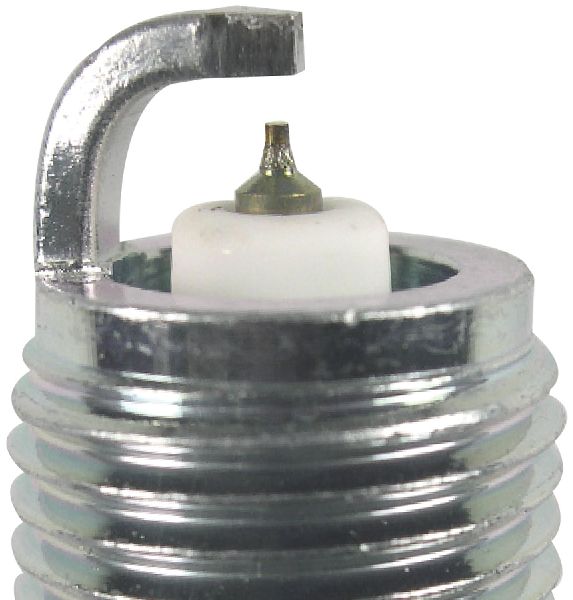
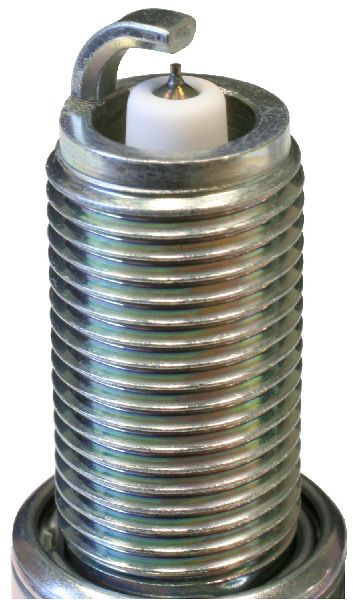
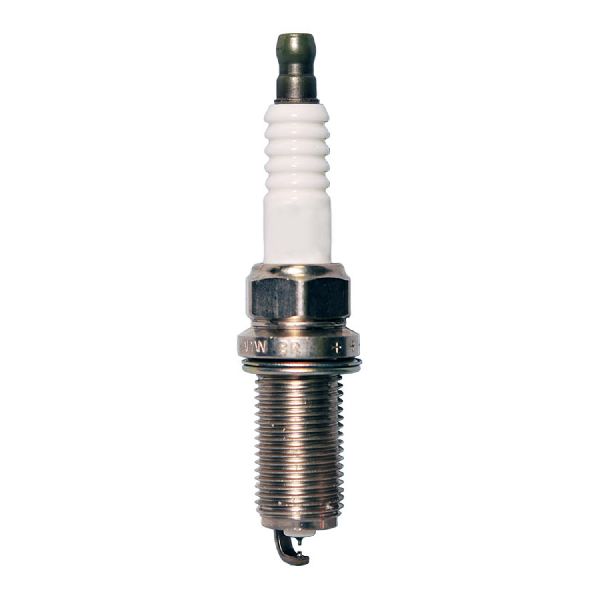
Est. part cost: $45-$75 for one OEM-quality (Denso) coil. - Worn or Fouled Spark Plug 🟡 Medium Probability → Shop Spark Plug Spark plugs are a maintenance item. The original iridium plugs have a long life (around 100,000-120,000 miles), but they do eventually wear out, leading to a weak spark and misfires.
How to confirm: After ruling out the ignition coil, remove the spark plug from cylinder #6. Inspect it for wear (rounded electrode), heavy carbon deposits, oil fouling, or a wet appearance from unburnt fuel. Compare it to a new plug or a plug from a known-good cylinder.
Typical fix: Replace the spark plug. If the vehicle is near or over 100,000 miles and the service history is unknown, it's best to replace all six spark plugs. Note that replacing the rear three plugs requires removing the intake manifold.
Est. part cost: $10-$20 per iridium spark plug. - Clogged or Faulty Fuel Injector ⚪ Low Probability → Shop Fuel Injector
How to confirm: This is more difficult to diagnose. A professional can perform a fuel injector balance test. A DIY method involves swapping the fuel injector from cylinder #6 to another cylinder (e.g., #4) and seeing if the misfire code follows, though this is a more involved job than swapping a coil. A wet spark plug (smelling of fuel) after confirming no spark can also point to a working injector but failed ignition.
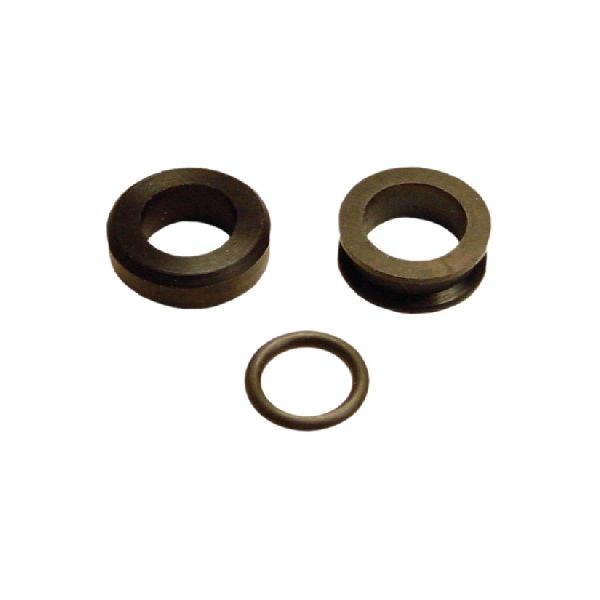
Typical fix: Replace the faulty fuel injector. It's recommended to replace the O-rings and seals on the fuel rail at the same time.
Est. part cost: $50-$150 for one injector.
Rare But Worth Checking
- Intake Manifold Gasket Leak: → Shop Engine Intake Manifold A vacuum leak near the runner for cylinder #6 can cause a lean condition and trigger a misfire. This is uncommon but can be diagnosed with a smoke test.
- Low Cylinder Compression: Internal engine issues like worn piston rings, a burnt valve, or a leaking head gasket can cause a misfire. NHTSA ODI #10820687 and #10816381 describe instances where a P0306 was caused by coolant entering the cylinder, confirmed via borescope or testing for seepage.
- Damaged Wiring Harness: The plastic connector for the ignition coil or fuel injector can become brittle and break. Rodent damage to wiring is also a possibility. A visual inspection of the harness leading to cylinder #6 components is recommended.
- VVT Gear Hardware: In rare cases across the Toyota platform, mechanical failures in the variable valve timing system can trigger misfire codes. NHTSA ODI #11228871 describes a situation where bolts holding the VVT gear to the intake cam were found to be an issue during diagnostics for P0306 and other codes.
Diagnosis Steps
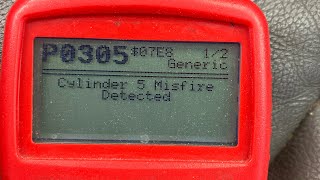
- Verify the code is P0306 using an OBD-II scanner. Note any other codes present.
- Check if the Check Engine Light is steady or flashing. A flashing light indicates a severe misfire that could damage the catalytic converter, so driving should be avoided.
- Locate cylinder #6. On the 2GR-FE in the Sienna, the cylinders are arranged with #2, #4, and #6 in the front (by the radiator) from passenger to driver side, and #1, #3, #5 in the rear (by the firewall). Cylinder #6 is the front-most cylinder on the driver's side.
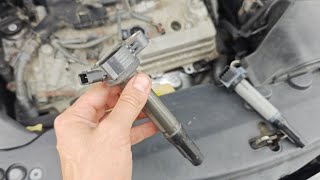
- Perform the 'coil swap test'. Disconnect the electrical connector and remove the 10mm bolt holding the ignition coil in cylinder #6. Do the same for cylinder #4. Swap the two coils, reinstall them, and clear the codes with the scanner.
- Drive the vehicle and wait for the Check Engine Light to return. If the new code is P0304, the ignition coil that is now in cylinder #4 is faulty and needs replacement.
- If the code remains P0306, the coil is likely good. Proceed to inspect the spark plug for cylinder #6. Remove the coil again and use a spark plug socket to remove the plug. Look for wear, fouling, or damage. Replace if necessary.
- If the plug and coil are good, the issue may be the fuel injector or wiring. This is a more complex diagnosis and may require professional assistance. A DIY test is to swap injectors to see if the code follows, but this is more involved.
- If none of the above solve the issue, consider rarer causes like a vacuum leak (perform a smoke test) or low compression (perform a compression test).
Parts You'll Likely Need
- Ignition Coil
(OEM #90919-02255 (Superseded by 90919-A2007))— This is the most common cause of a single-cylinder misfire on the 2GR-FE engine.
Trusted brands: Denso (OEM), NGK
OEM price range: $60-$90
Aftermarket price range: $35-$60 - Iridium Spark Plug
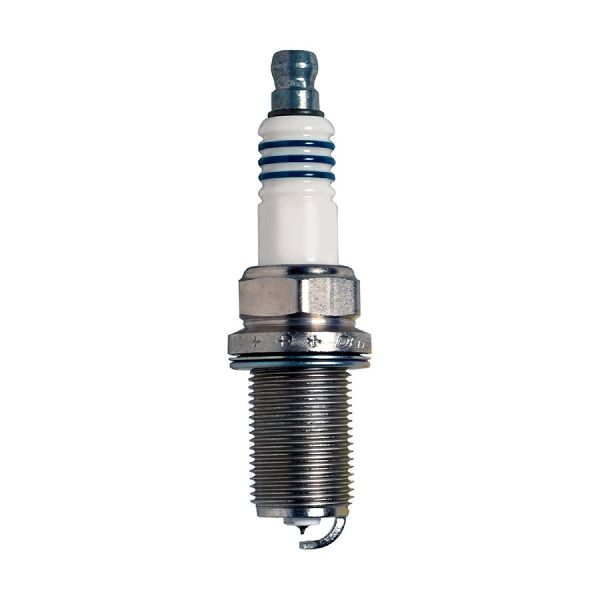
(OEM #90919-01233 (Denso SK20HR11))— A worn or fouled spark plug is the second most likely cause after the ignition coil.
Trusted brands: Denso (OEM), NGK
OEM price range: $15-$25
Aftermarket price range: $10-$18 - Fuel Injector
(OEM #23250-31050 / 23250-0P040)— A less common but possible cause if the ignition system components are confirmed to be working.
Trusted brands: Denso (OEM), Aisin
OEM price range: $120-$180
Aftermarket price range: $40-$90
Related Codes That Often Appear With This One
- P0300 — If the misfire is intermittent or starting to affect other cylinders, a P0300 (Random/Multiple Misfire) code may appear alongside P0306.
- P0356 — This code indicates a fault in the ignition coil primary or secondary circuit for cylinder #6. It points directly to an electrical failure of the coil or its wiring, often appearing with P0306 and strongly suggesting the coil is the culprit.
- P0304 — This code for a cylinder #4 misfire will often appear *during diagnosis* if a technician or owner swaps a known-bad coil from cylinder #6 to cylinder #4 to confirm the coil is the faulty component.
- P1603, P1604, P1605 — These codes relate to engine stalls, stability malfunctions, and rough idling, and have been documented in NHTSA ODI #11534554 as appearing alongside P0306.
Technical Service Bulletins (TSBs) & Recalls
- Bulletin #T-SB-0148-19: This manufacturer bulletin addresses misfire codes including P0306 (Cylinder 6 Misfire Detected) and provides a specific repair procedure for engines in the Toyota family sharing similar architecture.
- Limited Service Campaign (LSC) for VVT-i Oil Line: While not a direct cause of P0306, early 2GR-FE engines (up to 2010 models) had a rubber VVT-i oil line that could rupture, causing catastrophic oil loss and engine failure. A metal replacement line (Part No. 15772-31030) was issued. A massive oil pressure drop could potentially cause misfires before seizure.
- Warranty Enhancement Program ZE6: Toyota issued a warranty extension for cracked and/or sticky/melting dashboards on 2004-2010 Siennas due to heat and humidity. This is a common owner complaint but unrelated to engine performance.
Mechanic-Grade Diagnostic Values
- Fuel Pressure — expected: 304 to 343 kPa (44 to 50 psi) with engine running.. Failure: Pressure below this range may indicate a weak fuel pump or clogged filter. Pressure above may indicate a faulty pressure regulator.
- Fuel Injector Resistance — expected: 11.6 to 12.4 Ω at 20°C (68°F).. Failure: A reading outside this range indicates a faulty injector coil.
- Engine Compression Pressure (Manual Test) — expected: Standard: 1.4 MPa (199 psi). Minimum: 0.98 MPa (142 psi).. Failure: Pressure below the minimum, or a difference between any two cylinders greater than 0.1 MPa (15 psi), indicates a mechanical engine problem.
- Ignition Coil Primary Resistance (Aftermarket Reference) — expected: Approximately 0.5 Ω ± 0.1 Ω.. Failure: A significant deviation from this value on a known-good coil can be used as a baseline for testing a suspect coil. This is not an official Toyota spec but a value from an aftermarket supplier.
- Engine Idle Speed — expected: 600 to 700 rpm (in Park, with A/C off).. Failure: A rough or erratic idle below this range is a common symptom of a misfire.
Hidden / Shadow Codes Worth Checking
- Mode $06 Data: The ECM tracks misfire counts for each cylinder even before they are high enough to set a P030x code. This data can be viewed with an advanced scan tool. For CAN vehicles, look for Test IDs (TID) $A2 through $AD, where the Component ID (CID) corresponds to the cylinder number (e.g., CID $06 for cylinder 6). A high count on cylinder 6, even without a Check Engine Light, confirms it is the source of an intermittent issue. (see via Advanced OBD-II scanner or Toyota Techstream software.)
Scan Tool Commands That Help
- Toyota Techstream: Active Test: Control the Select Cylinder Fuel Cut — After a P0306 is confirmed, you can use this command to manually cut fuel to cylinder 6 while the engine is idling. A noticeable lack of change in engine smoothness when cylinder 6 is cut indicates that it was not contributing properly to begin with, confirming the misfire. This helps differentiate a real misfire from a sensor reporting error.
- Toyota Techstream: Active Test: Check the Cylinder Compression — If ignition and fuel components are ruled out, this non-invasive test can check for mechanical issues. The tool cranks the engine and measures the speed of each compression stroke. A cylinder with low compression will have less resistance, causing the crankshaft to speed up, which will be displayed as a higher RPM value for that cylinder in the test results.
Wiring & Ground Locations
- ECM Pin C55-35 (IGT6) — At the main Engine Control Module (ECM). The wire color is typically Green with a Red stripe (G-R).. This is the specific pin and wire that sends the trigger signal from the ECM to the ignition coil for cylinder #6. A continuity and voltage check can be performed here to rule out a wiring break or a faulty ECM driver if the coil and plug are good.
- Engine Harness Grounds — Key grounding points for the engine harness are located on the side of the cylinder heads, often under the intake or throttle body area. There are also smaller grounds on the valve covers. A poor ground connection can cause erratic behavior in sensors and actuators, including ignition coils.. A corroded or loose ground can cause a weak spark or intermittent coil operation. While it would typically cause multiple/random misfires, a localized grounding issue could affect a single cylinder. Cleaning these grounds is a good practice when troubleshooting elusive electrical issues.
Real Owner Repair Stories
- YouTube - Valeriu Moscalu (2008 Lexus RX350 (with 2GR-FE engine)) — Engine hesitation, P0306 code present.
❌ Tried (didn't work) Initial inspection showed the spark plug on cylinder 6 was wet with fuel, suggesting an ignition problem, not a fuel delivery problem.
✅ What actually fixed it The ignition coil from cylinder 6 was swapped with the coil from cylinder 4. The code was cleared, and after a test drive, a new code, P0304, appeared. This confirmed the ignition coil was faulty. Replacing the bad coil resolved the issue. - BobIsTheOilGuy forum user 'i_eat_burgers' (Vehicle with P0306 (specific model not mentioned, but behavior is relevant)) — P0306 code appeared immediately after performing a Seafoam treatment through a vacuum line.
❌ Tried (didn't work) Letting the engine run to 'clear itself out' did not resolve the code.
✅ What actually fixed it The user removed the spark plugs and found a hairline carbon deposit on one. After cleaning all the spark plugs with a wire brush, the engine idled normally and the Check Engine Light did not return. This suggests the treatment dislodged carbon which then fouled the plug. - NHTSA ODI #10816381 — An owner reported the engine ran rough and rumbled for a few seconds after each start before stopping. A diagnosis confirmed a P0306 code, and further testing revealed coolant was seeping into the #6 cylinder.
"I Checked Everything" — The Actual Cause
- In cases where a P0306 persists but a smoke test for vacuum leaks comes back clean, and the coil/plug have been ruled out, the next most likely causes are a partially clogged fuel injector or carbon buildup on the intake valves for cylinder #6. A smoke test cannot detect these internal flow issues. The injector isn't leaking externally, and the carbon is inside the cylinder head, so both require different diagnostic methods (injector balance test or borescope inspection) to find.
OEM Part Supersession History
90919-02255→90919-A2005, which was then superseded by 90919-A2007.— Part revision and improvement by the manufacturer.
Heads up: The supersession chain also includes 90919-A2002 and 90919-A2004. All are generally interchangeable for this application, but it is always best to use the latest revision (90919-A2007) when possible.
Model Year Variations Within This Range
- 2007-2010: Early 2GR-FE engines were fitted with a rubber section in the VVT-i oil supply line for the front cylinder bank. This line was prone to rupturing, causing a sudden and catastrophic loss of oil. It was subject to a Limited Service Campaign and replaced with an all-metal line (Part No. 15772-31030). While a failure would cause much bigger problems than just P0306, a sudden drop in oil pressure could induce misfires as an initial symptom.
Diagnostic Flowchart
Other Known Issues on This Vehicle
Issues unrelated to this code that are worth knowing about as an owner of this generation:
- Rupturing VVT-i Oil Line (Rubber Section) 🔴 High — Common on 2007-2010 models that have not had the updated part installed. Can fail without warning, leading to catastrophic engine failure from oil starvation. (Ref: Limited Service Campaign (LSC) issued by Toyota.)
- Water Pump Failure 🟠 Medium — The water pump is a known weak point on the 2GR-FE, often failing earlier than expected (e.g., 80k-120k miles). Failure usually begins with a growling noise or a small leak from the weep hole.
- Sticky / Melting Dashboard 🟡 Low — Very common in hot, humid climates on 2004-2010 models. The dashboard surface becomes sticky and creates a dangerous glare on the windshield. (Ref: Warranty Enhancement Program ZE6.)
- Power Sliding Door Failure 🟠 Medium — A very common complaint across all years. The cable inside the door mechanism is prone to fraying and breaking, causing the door to become inoperable.
Used vs. New Parts: Buying Guide for This Vehicle
When a used part is the smart pick: A used OEM (Denso) ignition coil from a reputable auto recycler can be a very cost-effective diagnostic tool. If swapping a used coil to cylinder 6 fixes the problem, or swapping the suspect coil to another cylinder causes the code to follow, you have a definitive diagnosis for the cost of a cheap part.
Donor-vehicle mileage cap: roughly under 100000 miles for the part to have meaningful remaining life.
What to inspect on the donor part:
- Check for cracks in the plastic housing or epoxy seal at the top.
- Ensure the electrical connector and its locking tab are not brittle or broken.
- Inspect the metal contacts inside the connector for corrosion (should be clean and shiny).
- Avoid parts that are covered in oil or show signs of extreme heat exposure.
OEM-only on this vehicle (don't cheap out):
- Ignition Coils: The overwhelming consensus from mechanics and owners is to use only OEM Denso or NGK coils. Aftermarket coils, especially cheap 'no-name' brands, have a very high failure rate on Toyota engines.
Aftermarket brands forum-validated for this vehicle:
- Denso (This is the Original Equipment Manufacturer)
- NGK (A highly respected OEM supplier with a strong reputation for ignition components)
Brands owners have reported issues with on this vehicle:
- Unbranded coil packs from Amazon/eBay.
- BWD / Standard Motor Products (SMP) have been reported by some users to have a high failure rate in Toyota applications.
- Bosch ignition coils are generally high quality but some professional technicians report compatibility issues specifically with Toyota's ignition system.
Real Owner Stories
Aggregated from forums and TSBs cited above. Mileages and costs reflect what owners reported in those sources.
2011 Toyota Sienna 3.5L V6 — 110000 miles
Symptoms: Intermittent misfiring of the front bank of cylinders while getting up to speed on the highway, flashing check engine light, ABS, and VSC lights come on, and the van goes into limp mode.
What fixed it: Replaced the coils, plugs, and intake plenum gaskets using OEM Denso parts.
Source hint: r/MechanicAdvice
2011-2020 Toyota Sienna 3.5L V6
Symptoms: Single-cylinder misfire requiring a visual guide for ignition coil replacement.
What fixed it: Replacement of the ignition coil on the affected cylinder.
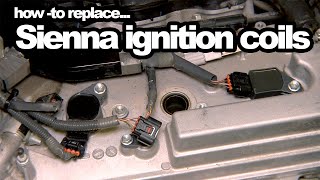
Source hint: YouTube - 'How to Replace Ignition Coils 2011-2020 Toyota Sienna 3.5L V6' by 1A Auto
2007-2016 Toyota Sienna 3.5L V6
Symptoms: P030x codes occurring on the front bank of the engine.
What fixed it: Swapping coils on the front bank to diagnose, followed by replacing the faulty ignition coil.
Source hint: siennachat.com
NHTSA ODI #11534554
Symptoms: A service department diagnosed multiple misfire codes including P0300, P0301, P0302, P0303, and P0306, alongside codes for engine stalling and stability malfunction.
What fixed it: Spark plug replacement was identified as part of the diagnostic findings.
Related OBD-II Codes
Frequently Asked Questions
Where is cylinder #6 located on my 2GR-FE engine?
Does the VVT-i oil line TSB for 2007-2010 Siennas cause the P0306 code?
Is the sticky or melting dashboard on my 2004-2010 Sienna related to my engine misfire?
Can I swap coils to test the misfire on this specific engine?
Do I need to remove the intake manifold to fix a P0306?
What specific spark plugs should I use for my Sienna?
Helpful Videos
![How to Fix TOYOTA P0306 Engine Code in 3 Minutes [2 DIY Methods / Only $4.76]](https://img.youtube.com/vi/4njr9vdacdM/mqdefault.jpg)
We Have This Part in Stock


The information in this article is provided for general reference and educational purposes only. Vehicle specifications, procedures, and part compatibility can vary by production date, trim level, and region. Always consult your vehicle's factory service manual and verify part numbers before purchasing or performing repairs. Safety-critical components such as airbags, seat belts, and braking systems should be installed by a qualified professional.
- Toyota Sienna:
- 🧭 Diagnostic Flowchart
- 🎬 Helpful Videos
- 🛍️ Shop This Part
- What's Unique About the 2007-2016 Toyota Sienna
- Symptoms You May Notice
- Most Likely Causes
- Rare But Worth Checking
- Diagnosis Steps
- Parts You'll Likely Need
- Related Codes That Often Appear With This One
- Technical Service Bulletins (TSBs) & Recalls
- Mechanic-Grade Diagnostic Values
- Hidden / Shadow Codes Worth Checking
- Scan Tool Commands That Help
- Wiring & Ground Locations
- Real Owner Repair Stories
- "I Checked Everything" — The Actual Cause
- OEM Part Supersession History
- Model Year Variations Within This Range
- Other Known Issues on This Vehicle
- Used vs. New Parts: Buying Guide for This Vehicle
- Real Owner Stories
- 2011 Toyota Sienna 3.5L V6 — 110000 miles
- 2011-2020 Toyota Sienna 3.5L V6
- 2007-2016 Toyota Sienna 3.5L V6
- NHTSA ODI #11534554
- Related OBD-II Codes
- Frequently Asked Questions
- 🎟️ Get 5% Off