

P0307 on 2004-2009 Dodge Durango 5.7L Hemi: Cylinder 7 Misfire Causes and Fixes
P0307 indicates a misfire in cylinder 7. On the 5.7L Hemi, this is most often caused by a bad ignition coil or worn spark plugs. If a rhythmic ticking noise is present, suspect a more serious internal engine problem related to lifter failure, a known and well-documented issue with these engines that can damage the camshaft.
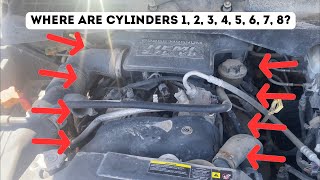
- P0307 is a misfire on cylinder 7, located at the back of the engine on the driver's side.
- Always start diagnosis by swapping the ignition coil from cylinder 7 with another cylinder. This is a fast, free, and effective test.
- If the check engine light is flashing, stop driving immediately to prevent catastrophic damage to the catalytic converter.
- If you hear a persistent ticking sound from the engine, the problem is likely a serious mechanical failure of a lifter and camshaft, a known issue on this engine.
What's Unique About the 2004-2009 Dodge Durango
While P0307 is a generic misfire code, on the 5.7L Hemi engine it can be a precursor to a significant and well-documented mechanical failure. These engines, particularly those with the Multi-Displacement System (MDS) introduced in 2006, are known for a 'Hemi Tick' which can be caused by a failing valve lifter. The lifter's roller bearing can seize due to oiling issues, which then grinds down the corresponding camshaft lobe. This prevents the valve from opening properly, resulting in a persistent misfire that cannot be fixed with simple ignition or fuel parts. Therefore, any P0307 code accompanied by a ticking noise requires immediate and serious attention to prevent catastrophic engine damage. The issue is more prevalent on vehicles with high idle time, such as police vehicles.
Symptoms You May Notice
- Rough or shaky idle
- Engine hesitation or stumbling during acceleration
- Noticeable loss of power
- Flashing or solid Check Engine Light
- Increased fuel consumption
- A rhythmic ticking or tapping sound from the engine, especially near the driver's side valve cover, that increases with RPM (indicates potential lifter failure).
- Engine may not idle and require throttle input to stay running.
- Replacing only one of the two spark plugs for the cylinder, leaving a worn or faulty plug in place.
- Replacing fuel injectors or other components before performing the simple ignition coil swap test.
- Ignoring a persistent engine tick and focusing only on ignition components, when the root cause is a mechanical lifter/camshaft issue.
Most Likely Causes
- Faulty Ignition Coil 🔴 High Probability → Shop Ignition Coil Coil-on-plug systems are a common failure point on many vehicles as they age. Heat and vibration contribute to their eventual breakdown. This is a primary and frequent cause for a single-cylinder misfire.
How to confirm: The easiest way to confirm a bad coil is to swap the ignition coil from cylinder 7 with another cylinder (e.g., cylinder 5, which is next to it, or cylinder 1 at the front). Clear the codes and drive the vehicle. If the misfire code changes to P0305 or P0301, the coil is faulty.
Typical fix: Replace the faulty ignition coil. It is often recommended to replace the corresponding spark plugs at the same time.
Est. part cost: $25-$60 - Worn or Fouled Spark Plugs 🔴 High Probability → Shop Spark Plug The 5.7L Hemi engine uses two spark plugs per cylinder (16 total), increasing the statistical chance of a single plug failing. They are a standard maintenance item that wears out over time. The recommended spark plug is often a Champion or NGK copper plug, with a specific heat range.
How to confirm: After ruling out the coil, inspect both spark plugs from cylinder 7. Look for wear on the electrode, carbon buildup, oil fouling, or incorrect gap. Since they are a routine maintenance item, replacement is a good idea if they are old.
Typical fix: Replace the spark plugs for cylinder 7. Best practice is to replace all 16 spark plugs at once to ensure even performance and avoid future misfires. Ensure they are gapped correctly before installation.
Est. part cost: $5-$15 per plug - Failed Hydraulic Lifter / Worn Camshaft Lobe 🟡 Medium Probability → Shop Engine Camshaft The 5.7L Hemi with MDS (2006-onwards) is known for lifter failures, often due to oiling issues, especially with extended idling or incorrect oil viscosity (5W-20 is critical). The lifter's roller bearing can seize, which then grinds down the camshaft lobe, causing the valve to not open properly and resulting in a misfire. This is often referred to as the 'Hemi Tick'.
How to confirm: This is typically diagnosed when a persistent ticking noise accompanies the misfire code and replacing the coil, plug, and injector does not resolve the issue. A mechanic will need to perform a physical inspection of the valvetrain, which involves removing the valve covers and intake manifold. A compression test on cylinder 7 showing low or no pressure is also a strong indicator.
Typical fix: This is a major engine repair that involves replacing all lifters (especially the MDS lifters), the camshaft, and often the head gaskets and other related components. It is labor-intensive and expensive.
Est. part cost: $800-$2000 for a full camshaft and lifter kit. - Faulty Fuel Injector ⚪ Low Probability → Shop Fuel Injector
How to confirm: After ruling out spark-related issues, the fuel injector is the next component to check. You can listen for a clicking sound from the injector with a mechanic's stethoscope. A more definitive test is to swap the injector from cylinder 7 with another cylinder (e.g., cylinder 5) and see if the misfire code follows. This requires de-pressurizing and removing the fuel rail.
Typical fix: Replace the faulty fuel injector. On higher mileage vehicles, replacing them as a full set is sometimes recommended for reliability.
Est. part cost: $40-$90
Rare But Worth Checking
- Failed MDS Solenoid: The Multi-Displacement System (MDS) deactivates cylinders to save fuel. A solenoid for cylinder 7 could fail or become clogged, causing issues. One owner reported fixing a P0307 code by replacing the MDS solenoids located under the intake manifold. The Mopar part number for the 2005-2009 era is 53032152AE, which supersedes previous versions.
- Intake Manifold Gasket Leak: → Shop Engine Intake Manifold A vacuum leak from a failed intake manifold gasket near the port for cylinder 7 can lean out the air/fuel mixture enough to cause a misfire on just that cylinder. This can be diagnosed with a smoke test.
- Broken Valve Spring: A less common but documented failure on Hemi engines is a broken valve spring. This will cause a complete loss of compression in the cylinder. One owner on a forum confirmed a broken valve spring on cylinder 7 was the cause of their P0307 after basic ignition swaps failed.
- PCM (Powertrain Control Module) Failure: In very rare cases, after all other mechanical and electrical components have been ruled out, the driver circuit within the PCM for the cylinder 7 ignition coil can fail. This would require replacing and reprogramming the PCM.
- Dropped Valve Seat: On pre-2009 5.7L Hemi engines, it is a known (though uncommon) failure for a valve seat to loosen and 'drop' into the cylinder, especially after an overheating event. This causes a catastrophic loss of compression and a persistent P0307. The damage is often severe, requiring cylinder head replacement or a full engine rebuild.
Technical Service Bulletins (TSBs) & Recalls
- Bulletin #1400322REVA: A manufacturer service bulletin notes that for certain models, a customer may describe a rough idle or misfire while driving, which may be associated with diagnostic trouble code P0307.
- Bulletin #18-073-20: This bulletin addresses various power train issues and software enhancements related to codes including P0307 and air-fuel ratio imbalances (P219A/P219B).
- Bulletin #18-035-26: This record lists P0307 as a potential cylinder misfire code that may be present alongside catalyst efficiency codes like P0420 or P0430.
- Bulletin #18-094-16: Manufacturer documentation identifies P0307 as a possible misfire code occurring in conjunction with other sensor circuit issues, such as P0335 (Crankshaft Position Sensor) or P0122 (Throttle Position Sensor).
Diagnosis Steps
- Read the code with an OBD-II scanner and confirm P0307 is present. Note any other codes, such as P0300 or P3449.
- Listen for an engine ticking noise. A prominent, rhythmic tick from the driver's side of the engine strongly suggests a mechanical lifter issue, which is a common and serious problem on this engine.
- Locate cylinder 7 (rearmost on the driver's side).
- Swap the ignition coil from cylinder 7 with the coil from cylinder 5 (the one in front of it) or cylinder 1 (front of the driver's side bank). Clear the codes and run the engine. If the code changes to P0305 or P0301, the ignition coil is bad and needs replacement.
- If the code remains P0307, inspect and replace the two spark plugs for cylinder 7. Check for wear, damage, or fouling. It's best to replace all 16 plugs if they are due for service.
- If the misfire persists, inspect the wiring and connector for the cylinder 7 ignition coil and fuel injector for any damage or corrosion.
- Test the fuel injector. You can swap it with another cylinder's injector to see if the code follows. This is more involved as it requires removing the fuel rail.
- If all ignition and fuel components check out, a mechanical problem is highly likely. Perform a compression test on cylinder 7. Low or zero compression points towards a problem like a broken valve spring, failed lifter, or wiped camshaft lobe.
- For persistent issues, especially with a ticking noise or low compression, the vehicle should be taken to a professional for inspection of the camshaft and lifters, as this is a known failure point requiring significant disassembly.
Parts You'll Likely Need
- Ignition Coil
(OEM #56028138AF)— This is one of the most common failure items causing a single-cylinder misfire. It's a relatively easy and inexpensive part to replace.
Trusted brands: Mopar, NGK
Related Codes That Often Appear With This One
- P0300 — If the condition causing the misfire on cylinder 7 begins to affect other cylinders, or if the root cause is a major mechanical failure like a wiped camshaft, a P0300 (Random/Multiple Cylinder Misfire) code may also be triggered.
- P3449 — This is a manufacturer-specific code for 'Cylinder 7 Deactivation/Intake Valve Control Circuit/Open'. If there is an issue with the MDS solenoid or its wiring for cylinder 7, it will often appear alongside the P0307 misfire code.
- P1417 — On Hemi engines, this code relates to 'Cylinder 7 Reactivation Control Performance'. Its presence alongside P0307 strongly points towards a failure in the MDS system for that cylinder, very often a mechanical lifter/camshaft failure.
Platform-Specific Known Issues
- Hemi Lifter/Camshaft Failure: The 5.7L Hemi engine is widely known for developing a 'Hemi Tick' caused by the failure of a hydraulic valve lifter, often related to the MDS system. This failure can destroy the corresponding camshaft lobe, leading to a persistent misfire code like P0307 that cannot be fixed by replacing ignition or fuel parts. This is a significant mechanical repair.
Mechanic-Grade Diagnostic Values
- Ignition Coil Primary Resistance — expected: Approximately 0.550 ohms. Some sources state a range of 0.49-0.57 ohms.. Failure: A reading significantly higher or lower than the specification, or an open circuit (OL).
- Ignition Coil Secondary Resistance — expected: 9.5 - 11.1 kOhms.. Failure: A reading outside of this range indicates a faulty coil winding.
- Fuel Injector Resistance — expected: Approximately 12.0 - 14.5 ohms. One source specifies 12 ohms +/- 1.2 ohms, while another states 14.5 ohms +/- 1.2 ohms. A good practice is to measure all injectors; they should be very close to each other.. Failure: An injector with a resistance reading significantly different from the others on the engine.
- MDS Solenoid Resistance — expected: Approximately 9 ohms.. Failure: A reading significantly higher or lower than 9 ohms suggests a faulty solenoid.
- Fuel Pressure — expected: The fuel system should maintain a steady 58 psi +/- 5 psi.. Failure: Low or fluctuating fuel pressure can cause misfires, though it would typically affect multiple cylinders and set other codes.
Hidden / Shadow Codes Worth Checking
- Mode $06, Test ID $53, Component ID $07: This is a standard OBD-II function, not a proprietary code, that shows the raw misfire count for cylinder 7 for the current and last 10 drive cycles. It is extremely useful for identifying intermittent misfires that haven't yet triggered a P0307. (see via An advanced OBD-II scanner that supports Mode $06 data. The OEM Chrysler/Dodge tool, wiTECH, can also display this information.)
Scan Tool Commands That Help
- wiTECH or equivalent professional scanner: Cylinder Kill / Injector Kill Test — This bidirectional command allows a technician to manually disable the fuel injector for cylinder 7 while the engine is running. If disabling the injector causes no change in engine RPM or smoothness, it confirms that cylinder 7 was not contributing power, verifying the misfire.
- wiTECH or equivalent professional scanner: MDS Solenoid Actuation Test — This test allows the technician to command the MDS solenoid for cylinder 7 on and off. Listening with a stethoscope for a click can confirm if the solenoid is electrically functional. This helps differentiate between a bad solenoid, a wiring issue, or a mechanical problem within the lifter.
Wiring & Ground Locations
- G100 (5.7L) — Located on the rear of the right cylinder head.. This is a primary engine ground. A poor connection here can cause a host of electrical issues, including weak spark or erratic sensor readings that could lead to misfire codes.
- Injector/Coil Harness Grounds — There are small ground wires with eyelets at the back of each fuel injector/coil harness, near the rear of the intake manifold. They attach to studs on the top of the special bolts that hold the coolant pipes to the back of the cylinder heads.. These are the specific grounds for the ignition and fuel injection harnesses. A loose or corroded ground on the driver's side bank (which includes cylinder 7) is a direct potential cause for a P0307 misfire due to insufficient power or a floating ground for the coil or injector.
Real Owner Repair Stories
- JeepGarage.org forum user (2009 Jeep Grand Cherokee 5.7L Hemi (similar engine)) — P0307 and P0300. Engine ran rough under acceleration with a flashing check engine light.
❌ Tried (didn't work) Not specified, but implied that basic ignition/fuel part swaps did not work.
✅ What actually fixed it The root cause was a failed lifter on cylinder 7 which had destroyed the camshaft lobe. A complete replacement of the camshaft, all lifters, timing chain, and related gaskets was required. - DodgeForum.com user (2004 Dodge Durango 5.7L Hemi) — Hesitation and shaking above 40mph, flashing check engine light with codes P0300 and P0307.
❌ Tried (didn't work) Replaced all 16 spark plugs, Replaced cylinder 7 ignition coil, Replaced cylinder 7 fuel injector, Replaced all spark plug wires, Used Seafoam and fuel injector cleaner
✅ What actually fixed it The user was advised by others that the next step was to check for a broken or cracked valve spring, a known issue. The final resolution was not posted, but the story is valuable for showing the list of common parts that can be replaced without fixing a deeper mechanical issue.
OEM Part Supersession History
53032152AC, 53032152AD→53032152AE, 68060345AA— Standard part evolution for improved reliability or material changes for the MDS Solenoid.
Model Year Variations Within This Range
- 2004-2008: These 'pre-Eagle' Hemi engines are more susceptible to dropped valve seats, which can cause a P0307. The failure is often linked to heat soak after shutdown.
- 2006-2009: These models feature the Multi-Displacement System (MDS). This makes them prone to MDS-lifter failure on cylinders 1, 4, 6, and 7, which is a primary cause of P0307 when accompanied by a ticking noise.
Diagnostic Flowchart
Other Known Issues on This Vehicle
Issues unrelated to this code that are worth knowing about as an owner of this generation:
- 545RFE Transmission Solenoid Pack Failure 🟠 Medium — Common issue as the vehicle ages, often presenting after 80,000 miles. Leads to harsh shifting or being stuck in 'limp mode'. (Ref: No specific recall, but it is a widely known failure point often associated with code P0700.)
- Totally Integrated Power Module (TIPM) Failure 🔴 High — While more prominent in the next generation (2011-2013), electrical issues stemming from the power distribution center can occur, causing random electrical problems like fuel pump failure, horn going off, or starter issues. (Ref: Multiple recalls and a class-action lawsuit affected other Chrysler vehicles with similar TIPMs, but not always this specific model year range directly.)
- Fuel Filler Neck / Gas Tank Spill-Over 🟡 Low — A common complaint where the fuel pump nozzle shuts off prematurely during refueling, or fuel splashes back out of the filler neck. This is often caused by a faulty check valve in the fuel tank.
- Front Suspension Upper Control Arm Bushing Wear 🟠 Medium — The front upper control arm bushings are a known wear item, leading to clunking noises over bumps and alignment issues.
- HVAC Blend Door Actuator Failure 🟡 Low — Failure of the plastic gears in the blend door actuators is common, resulting in clicking noises from the dashboard and an inability to control air temperature or direction.
Used vs. New Parts: Buying Guide for This Vehicle
When a used part is the smart pick: Used parts can be a cost-effective option for external, easily-swapped components like ignition coils, fuel injectors, or an entire fuel rail assembly. Given the high failure rate of new aftermarket lifters, some mechanics even prefer low-mileage used OEM lifters over new, unproven brands.
Donor-vehicle mileage cap: roughly under 80000 miles for the part to have meaningful remaining life.
What to inspect on the donor part:
- For ignition coils, check for cracks in the housing and ensure the boot is pliable with no signs of arcing (white or black carbon tracks).
- For fuel injectors, inspect the plastic connector for brittleness and ensure the O-rings are intact (though they should be replaced anyway).
- Ask for the VIN of the donor vehicle to verify its year and mileage; avoid parts from vehicles with known engine failure or high idle time.
OEM-only on this vehicle (don't cheap out):
- Camshaft and Lifters: This is the most critical area. Due to widespread quality issues with aftermarket Hemi lifters, using genuine Mopar parts is strongly recommended by forum veterans and specialists to avoid repeat failures. If performing an MDS delete, use OEM non-MDS lifters.
- PCM/ECM: While used modules can work, they require professional programming to match the vehicle's VIN and options. A reputable remanufacturer who can pre-program the module is a safer bet than a junkyard part.
Aftermarket brands forum-validated for this vehicle:
- Lifters: Johnson Hylift (A2335), Morel, and Gatorman are cited as high-quality aftermarket options, often considered superior to OEM. COMP Cams is also a popular choice for non-MDS conversion kits.
- Ignition Coils: NGK is a reputable alternative to Mopar.
- Oil Pump (often replaced with cam/lifters): Melling high-volume pumps or OEM 'Hellcat' pumps (for 2009+ models) are common upgrades to improve oiling.
Brands owners have reported issues with on this vehicle:
- Lifters: Enginetech lifters are reported by some users to be noisy and prone to failure. Unbranded, generic lifter kits from eBay or Amazon are highly discouraged due to the high labor cost of a repeat job. Some users on forums also advise against COMP Cams lifters, citing quality control issues.
Real Owner Stories
Aggregated from forums and TSBs cited above. Mileages and costs reflect what owners reported in those sources.
2007 Dodge Ram 5.7L Hemi
Symptoms: P0307 code persisted after changing spark plugs.
What fixed it: Replacement of the lifter assembly after a dealer diagnosed a missing exhaust valve pushrod and a damaged lifter that would not 'spring back'.
Source hint: P0307 Misfire Cylinder #7 on 2007 5.7 - RamForum.com
2004 Dodge Ram 1500 5.7L Hemi
Symptoms: P0307 code, engine would not idle, and the vehicle exhibited popping and shaking.
What fixed it: Replacement of a broken valve spring on cylinder 7, confirmed after removing the valve cover.
Source hint: #7 cylinder misfire - DodgeForum.com
2006 Dodge Ram 5.7L Hemi — 210000 miles
Symptoms: P0307 code accompanied by the 'Hemi tick'.
What fixed it: While the owner replaced lifters, cam, head gasket, and timing chain, the source suggests further investigation into a potential clog in the fuel rail for that cylinder.
Source hint: Cylinder 7 Misfire - RamForum.com
Related OBD-II Codes
Frequently Asked Questions
Why is my 5.7L Hemi making a rhythmic ticking sound along with the P0307 code?
Which spark plugs should I use for my Durango's 5.7L Hemi to avoid misfires?
Does the Multi-Displacement System (MDS) on my 2006+ Durango contribute to cylinder 7 misfires?
What is the correct oil viscosity to prevent lifter-related P0307 codes in the Hemi V8?
Where is cylinder 7 located on my Durango's engine?
Can I just swap parts to see if the P0307 code moves to another cylinder?
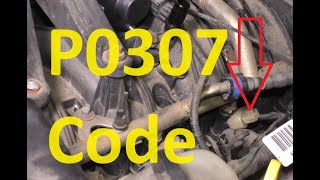
Helpful Videos


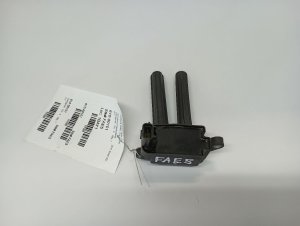
Used OEM Parts in Stock
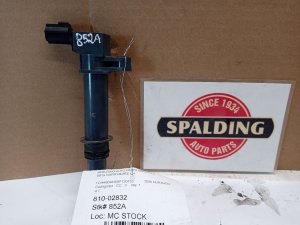
New Aftermarket Parts Available


The information in this article is provided for general reference and educational purposes only. Vehicle specifications, procedures, and part compatibility can vary by production date, trim level, and region. Always consult your vehicle's factory service manual and verify part numbers before purchasing or performing repairs. Safety-critical components such as airbags, seat belts, and braking systems should be installed by a qualified professional.
- Dodge Durango:
- 🧭 Diagnostic Flowchart
- 🎬 Helpful Videos
- 🛍️ Shop This Part
- What's Unique About the 2004-2009 Dodge Durango
- Symptoms You May Notice
- Most Likely Causes
- Rare But Worth Checking
- Technical Service Bulletins (TSBs) & Recalls
- Diagnosis Steps
- Parts You'll Likely Need
- Related Codes That Often Appear With This One
- Platform-Specific Known Issues
- Mechanic-Grade Diagnostic Values
- Hidden / Shadow Codes Worth Checking
- Scan Tool Commands That Help
- Wiring & Ground Locations
- Real Owner Repair Stories
- OEM Part Supersession History
- Model Year Variations Within This Range
- Other Known Issues on This Vehicle
- Used vs. New Parts: Buying Guide for This Vehicle
- Real Owner Stories
- 2007 Dodge Ram 5.7L Hemi
- 2004 Dodge Ram 1500 5.7L Hemi
- 2006 Dodge Ram 5.7L Hemi — 210000 miles
- Related OBD-II Codes
- Frequently Asked Questions
- 🎟️ Get 5% Off