

P0307 on 2010-2013 GMC Sierra Denali: Cylinder 7 Misfire Causes and Fixes
P0307 indicates a misfire on cylinder 7. On this truck, the most common causes are a bad spark plug, ignition coil, or a loose spark plug wire. However, a failed Active Fuel Management (AFM) lifter is a very common and more serious cause specific to this engine. A simple ignition part fix can be under $100, while an AFM lifter repair can exceed $2,000.
- P0307 is a misfire on cylinder 7, the rearmost cylinder on the driver's side.
- Always check for simple fixes first: a loose spark plug wire (per TSB PIP4819A), a bad spark plug, or a failed ignition coil.
- A distinct engine ticking noise is a major red flag for a collapsed Active Fuel Management (AFM) lifter, a very common and serious issue on this engine.
- If the Check Engine Light is flashing, stop driving immediately to prevent catastrophic damage to the catalytic converter.
- Due to the known AFM lifter issues, if basic ignition repairs don't solve the code, a mechanical inspection of the valvetrain is the next logical step.
What's Unique About the 2010-2013 Gmc SIERRA DENALI
The 2010-2013 Sierra Denali is typically equipped with a 6.2L V8 engine (RPO code L94) featuring Active Fuel Management (AFM). This system deactivates cylinders 1, 4, 6, and 7 under light loads to improve fuel economy. The specialized hydraulic lifters used for these AFM cylinders are a notorious failure point. They can collapse, get stuck, or even come apart internally, preventing the valve from opening and causing a persistent P0307 misfire, often accompanied by a distinct ticking noise. This makes a mechanical issue a much higher probability on this truck compared to vehicles without AFM.
Diagnostic Flowchart
Tap your situation to follow the diagnostic path that matches what you're seeing on this vehicle.
Symptoms You May Notice
- Flashing or solid Check Engine Light
- Rough or shaking idle
- Engine hesitation or stumbling during acceleration
- Noticeable loss of power, especially under load
- A distinct ticking or tapping noise from the engine, particularly the driver's side, which can indicate a failed lifter
- "Service StabiliTrak" message on the dashboard, as the misfire can affect sensor readings used by the traction control system
- Rich smell of unburned fuel from the exhaust
- Replacing only the spark plug without checking the wire or coil.
- Assuming the issue is a simple tune-up part when a ticking noise is present, which strongly suggests a more serious AFM lifter failure.
- Replacing oxygen sensors. O2 sensor codes can appear due to the misfire dumping unburned fuel, but they are a symptom, not the cause.
Most Likely Causes
- Failed Active Fuel Management (AFM) Lifter 🔴 High Probability → Shop Engine Valve Lifter Cylinder 7 is one of the four cylinders deactivated by the AFM system. The specialized lifters for these cylinders have a well-documented high failure rate, where they collapse, stick, or break internally, failing to open the valve.
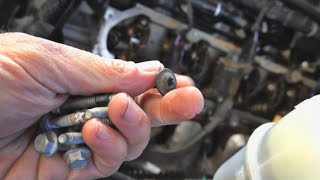
How to confirm: Listen for a distinct ticking/tapping noise from the driver's side of the upper engine. After ruling out spark and fuel, the definitive test is to remove the driver's side valve cover and visually inspect the rocker arms 🎬 Watch: How to diagnose a collapsed AFM lifter on cylinder 7 for cylinder 7 (rearmost cylinder) while the engine is briefly running. If a rocker arm is not moving or has limited movement, the lifter has failed.
Typical fix: This is a major repair. It involves replacing the failed lifter(s), lifter guides, and gaskets. The camshaft must also be inspected for damage, as a failed lifter's roller can seize and grind down the cam lobe, necessitating camshaft replacement. Many owners and shops opt to install an 'AFM Delete Kit' at this time to prevent future failures. This involves replacing all AFM lifters with standard lifters, replacing the valley cover, and reprogramming the ECU to disable the AFM system. 🎬 Watch: A simple way to disable AFM and prevent lifter failure
Est. part cost: $200-$800 for an AFM lifter kit, or $400-$1000 for a full AFM delete kit. Costs can rise significantly if the camshaft is damaged. - Loose or Damaged Spark Plug Wire 🟡 Medium Probability → Shop Spark Plug GM issued a Technical Service Bulletin (TSB #PIP4819A) specifically mentioning that loose-fitting spark plug wires can cause misfires (P0300-P0308) on these engines. The connection at the coil or plug can become weak over time.
How to confirm: Visually inspect the spark plug wire for cylinder 7 (rearmost on the driver's side). Ensure it is securely clicked into place at both the ignition coil and the spark plug. Check for any signs of arcing (white marks, black soot) or physical damage to the boot or wire.
Typical fix: Replace the spark plug wire set. It is best practice to replace them as a complete set to ensure uniform resistance and connection quality. An example OEM part number is ACDelco 9748RR.
Est. part cost: $40-$100 for a quality set of wires. - Worn or Fouled Spark Plug 🟡 Medium Probability → Shop Spark Plug
How to confirm: Remove the spark plug from cylinder 7. Inspect it for wear (rounded electrode), fouling (black, oily, or white deposits), or physical damage. A healthy plug should have a light tan color. An oil-fouled plug on cylinder 7 can be an early sign of other AFM-related issues like oil consumption.
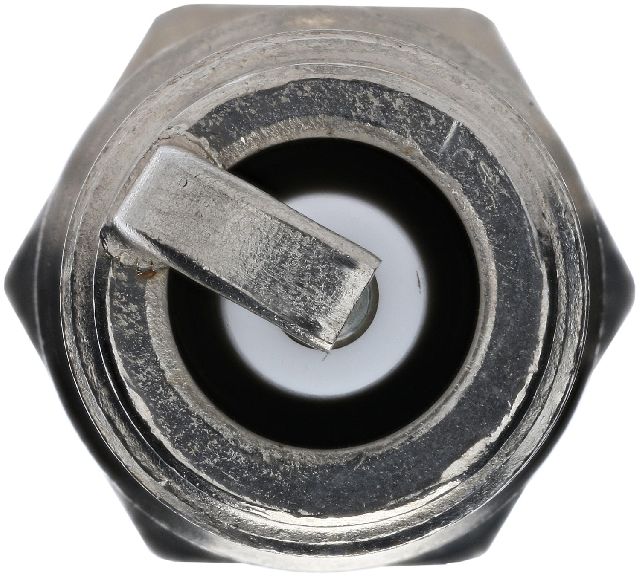
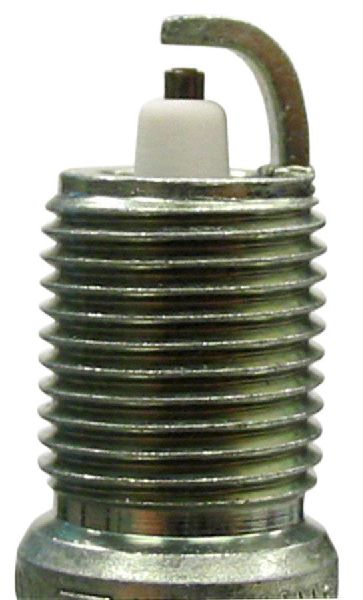
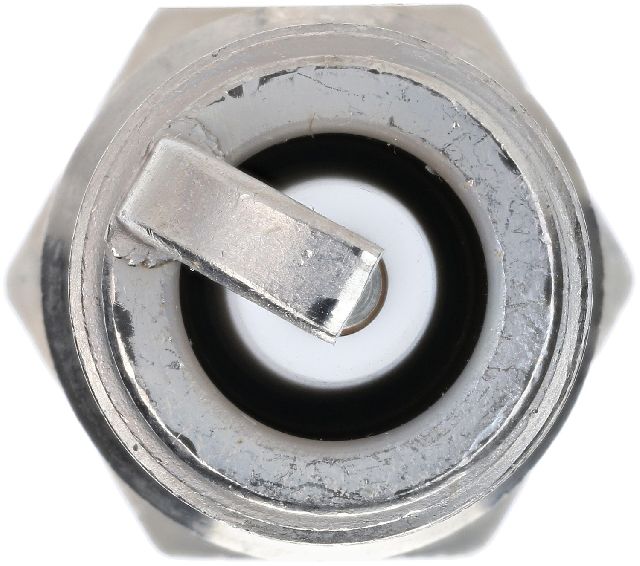
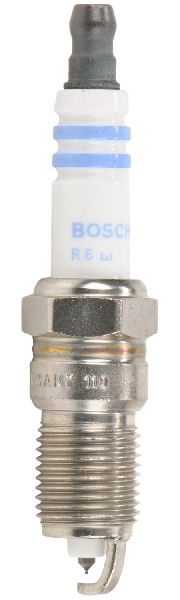
Typical fix: Replace the spark plug. It is recommended to replace all 8 spark plugs at the same time for consistent performance. Use the specified Iridium plugs, such as ACDelco 41-110. These plugs are pre-gapped and should not be adjusted.
Est. part cost: $8-$15 per spark plug. - Failed Ignition Coil 🟡 Medium Probability → Shop Ignition Coil
How to confirm: Swap the ignition coil from cylinder 7 with another cylinder (e.g., cylinder 1, which is the frontmost on the driver's side). Clear the codes and drive the vehicle. If the code changes to P0301, the ignition coil is faulty.
Typical fix: Replace the failed ignition coil. OEM brands like ACDelco are recommended for reliability.
Est. part cost: $30-$70 per coil. - Clogged or Faulty Fuel Injector ⚪ Low Probability → Shop Fuel Injector
How to confirm: After confirming spark is good, you can test the injector. A professional can perform a fuel injector balance test. A DIY method is to swap the cylinder 7 injector with another cylinder and see if the misfire code follows. Some owners report success by listening for the injector's 'click' with a mechanic's stethoscope.
Typical fix: Replace the faulty fuel injector. It is sometimes recommended to clean the fuel rail during replacement, as debris can theoretically accumulate.
Est. part cost: $50-$120 per injector.
Rare But Worth Checking
- Worn Camshaft Lobe: → Shop Engine Camshaft This is often a direct result of a failed AFM lifter. If a lifter's roller seizes, it can quickly grind down the corresponding lobe on the camshaft, requiring both to be replaced as a set.
- Low Engine Compression: Caused by more severe internal engine issues like a bent valve, leaking valve seals, or worn piston rings. A compression test can diagnose this. A leak-down test can further pinpoint the source of the leak.
Diagnosis Steps
- Read the code with an OBD-II scanner to confirm P0307 and check for any other codes.
- Listen for a distinct ticking or tapping noise from the driver's side of the engine. A tick strongly points towards a potential AFM lifter issue.
- Inspect the spark plug wire for cylinder 7 (rearmost cylinder on the driver's side). Ensure it is fully seated and not damaged, per TSB #PIP4819A.
- Swap the ignition coil from cylinder 7 with another cylinder (e.g., cylinder 1). Clear the codes and see if the misfire moves to P0301. If it does, the coil is bad.
- If the misfire remains on cylinder 7, remove and inspect the spark plug for wear, damage, or fouling. Replace if necessary.
- If spark components are good, the next likely causes are a fuel injector or a mechanical problem.
- If a ticking noise is present, proceed with diagnosing the AFM lifter. Remove the driver's side valve cover and observe rocker arm movement on cylinder 7 while the engine is running for a few seconds. Lack of movement confirms a collapsed lifter.
- If no ticking is present, consider testing or swapping the fuel injector for cylinder 7 with another cylinder.
- If all else fails, perform an engine compression test on cylinder 7 to check for internal mechanical problems like bad valves or rings.
Parts You'll Likely Need
- Active Fuel Management (AFM) Lifter
(OEM #12648846)— A well-documented, high-failure part on this engine that directly causes misfires on AFM cylinders (1, 4, 6, and 7).
Trusted brands: ACDelco, Delphi
OEM price range: $40-$60 per lifter
Aftermarket price range: $25-$45 per lifter - Ignition Coil
(OEM #12611424)— A common failure point for single-cylinder misfires. Easy to diagnose by swapping with another cylinder.
Trusted brands: ACDelco, Delphi, NGK
OEM price range: $50-$70
Aftermarket price range: $30-$50 - Spark Plug
(OEM #41-110)— Spark plugs are a standard maintenance item and a primary cause of misfires as they wear out. The correct plug is ACDelco 41-110, which is an Iridium plug pre-gapped to 0.040 inches.
Trusted brands: ACDelco, NGK
OEM price range: $10-$15
Aftermarket price range: $8-$12 - Spark Plug Wire Set
(OEM #9748RR)— TSB #PIP4819A specifically calls out loose wires as a cause for misfires on this engine. Wires degrade over time, causing weak spark.
Trusted brands: ACDelco, NGK
OEM price range: $90-$150
Aftermarket price range: $60-$100
Related Codes That Often Appear With This One
- P0300 — If the misfire on cylinder 7 is severe or intermittent, it can affect the engine's overall rotational balance, causing the PCM to also log a P0300 (Random/Multiple Cylinder Misfire) code.
- C0561 — The engine misfire can cause erratic signals from the crankshaft position sensor. The StabiliTrak/Traction Control system relies on this data, and an inconsistent signal can trigger a fault code and a 'Service StabiliTrak' message.
Technical Service Bulletins (TSBs) & Recalls
- PIP4819A — Engine Misfire, MIL On, DTC P0300-P0308 — Instructs technicians to inspect for and replace loose-fitting spark plug wires as a potential cause for single or multiple cylinder misfires.
- 19-NA-219 — Engine Misfire/Tick Noise — Provides diagnostic guidance for engine tick noises and misfires that are not resolved by standard procedures, pointing towards worn camshaft lobes or collapsed AFM lifters as potential causes.
Platform-Specific Known Issues
- TSB #PIP4819A: Addresses engine misfires (P0300-P0308) and instructs technicians to inspect for and replace loose-fitting spark plug wires as a potential cause.
- TSB #19-NA-219: Provides diagnostic tips for misfires that are not resolved by initial diagnosis, pointing towards causes like collapsed AFM lifters, worn cam lobes, or sticking valves.
- Active Fuel Management (AFM) Lifter Failure: The most significant known issue. The lifters for cylinders 1, 4, 6, and 7 are prone to collapsing, causing a dead misfire. This is a common and costly repair.
Mechanic-Grade Diagnostic Values
- Fuel Injector Resistance — expected: Approx. 12.5 Ohms at 68°F (20°C). Failure: A reading that is significantly higher, lower (shorted), or open (OL). All injectors should measure within 0.5 Ohms of each other.
- Ignition Coil Primary Resistance — expected: 0.4 - 2.0 Ohms. Failure: A reading outside of this range. Note: A coil can have correct resistance and still be faulty under load.
- Ignition Coil Secondary Resistance — expected: 6,000 - 10,000 Ohms (6k-10k Ω). Failure: A reading significantly outside of this range.
- Fuel System Pressure (KOER) — expected: 55 - 62 PSI (approx. 4 bar). Failure: Pressure that is significantly lower may indicate a weak fuel pump. Pressure that bleeds down quickly after shutdown indicates a leaking injector or faulty check valve.
- Engine Compression (Cranking) — expected: Approx. 180-190 PSI per cylinder, with less than 15% variation between cylinders.. Failure: Significantly lower compression on cylinder 7 indicates a mechanical issue (valves, rings, or a non-activating lifter).
Hidden / Shadow Codes Worth Checking
- Mode 6, OBDMID $A8, TID $0C: Provides the raw misfire count for cylinder 7 during the current or last driving cycle, even if the count is not high enough to set a P0307 trouble code. (see via A professional scan tool capable of displaying Mode $06 data.)
- Mode 6, OBDMID $A8, TID $0B: Provides the 'Exponentially Weighted Moving Average' of misfire counts for cylinder 7 over the last 10 driving cycles, indicating a history of intermittent misfires. (see via A professional scan tool capable of displaying Mode $06 data.)
Scan Tool Commands That Help
- GDS2 / Tech2 (or equivalent professional scanner): Cylinder Power Balance Test — This is a primary diagnostic step after checking for spark. The tool deactivates each cylinder's fuel injector one by one and measures the corresponding drop in engine RPM. If disabling cylinder 7 results in little or no RPM drop compared to other cylinders, it confirms that cylinder 7 is not contributing power.
- GDS2 / Tech2: AFM Solenoid Control — In advanced diagnostics, a technician can command the AFM solenoids on and off to test the functionality of the Valve Lifter Oil Manifold (VLOM) and see if it affects the misfire, helping to isolate a VLOM issue from a mechanically failed lifter.
Wiring & Ground Locations
- Cylinder 7 Ignition Coil Control — Pin 34 of the X2 (J2) ECM connector. The wire is typically Purple/White.. This is the specific wire that sends the command signal from the Engine Control Module (ECM) to the cylinder 7 ignition coil. A break or short in this wire will prevent the coil from firing, causing a P0307. It's a critical point for electrical testing with a multimeter or oscilloscope.
- G103 — On the front of the right (passenger side) cylinder head.. This is a primary engine ground point. A loose or corroded connection here can cause erratic behavior in sensors and actuators on the engine, including the ignition system, potentially leading to misfires.
- Engine Block to Chassis/Firewall Ground Strap — Typically a braided strap located at the rear of the engine, connecting the back of a cylinder head to the vehicle's firewall or frame.. This ground strap is notorious for corroding or breaking. A poor connection here forces the ignition system's ground path through other, smaller circuits, which can cause weak spark, misfires, and a host of other difficult-to-diagnose electrical issues.
Real Owner Repair Stories
- Chevrolet Forum user 'zigblazer' (2008 Silverado 5.3L (similar AFM system and P0307 issue)) — Persistent P0307 and P0300, rough idle, and rich fuel trims (-20%) even after replacing injectors and intake gaskets.
❌ Tried (didn't work) Swapping ignition coil with cylinder 1, Swapping spark plug with cylinder 3, Swapping spark plug wire with cylinder 5, Verifying strong spark with a spark tester, Compression test (showed good compression of 180-190 PSI), Swapping fuel injector with cylinder 1
✅ What actually fixed it The owner discovered a broken piston in cylinder 7. Despite the good compression test reading (which can be misleading), the piston failure was the root cause. The final fix was a complete engine rebuild. - Reddit user 'zeus99es' (Chevy Tahoe with AFM (similar system)) — P0307 code appeared with a random, minute rough idle.
❌ Tried (didn't work) Clearing the code initially.
✅ What actually fixed it The owner suspected an intermittent AFM lifter issue. As a temporary fix and diagnostic step, they began driving the truck exclusively in 'M5' (Manual 5th gear), which prevents the V8-to-V4 AFM transition. This stopped the code from returning, strongly indicating the fault was within the AFM system and not a constant ignition or fuel problem. The long-term plan was a full AFM delete. - YouTube video by 'TheLateModelTech' (2016 Chevrolet 5.3L with P0307 (similar AFM system)) — Persistent P0307 misfire that could not be fixed with standard tune-up parts.
❌ Tried (didn't work) Spark plugs, Spark plug wires, Ignition coils
✅ What actually fixed it The mechanic performed a definitive visual test by removing the driver's side valve cover. With the engine running, it was clear that one of the rocker arms for cylinder 7 was not moving, confirming a collapsed/failed AFM lifter. The video shows the failed lifter had come apart in two pieces.
"I Checked Everything" — The Actual Cause
- In some cases, a P0307 misfire can persist even after ignition components are verified and a smoke test for vacuum leaks comes back clean. The root cause can be a faulty solenoid within the Valve Lifter Oil Manifold (VLOM), located in the engine valley under the intake manifold. This solenoid controls oil pressure to the AFM lifters. If it fails, it can prevent the lifter for cylinder 7 from functioning correctly, but since it's an oil-pressure-related failure and not a vacuum leak, a smoke test will not identify it.
OEM Part Supersession History
12648846 (and others like 12571595, 12619820, 12639516)→12698945— GM has updated the AFM lifter design multiple times to improve reliability and address the high failure rate.
Heads up: The newest generation of lifters for 'DFM' (Dynamic Fuel Management) engines are generally backward-compatible with older 'AFM' engines, but always verify with the supplier.
Model Year Variations Within This Range
- 2010-2013: The 6.2L V8 in the 2010-2013 Denali is the L94, which includes Active Fuel Management (AFM). The preceding 2009 models often had the L9H engine, which is virtually identical but did NOT have AFM. Therefore, the high probability of an AFM lifter failure as a cause for P0307 is specific to the 2010+ model years in this generation.
Helpful Videos
We Have This Part in Stock

The information in this article is provided for general reference and educational purposes only. Vehicle specifications, procedures, and part compatibility can vary by production date, trim level, and region. Always consult your vehicle's factory service manual and verify part numbers before purchasing or performing repairs. Safety-critical components such as airbags, seat belts, and braking systems should be installed by a qualified professional.
- Gmc SIERRA DENALI:
- 🧭 Diagnostic Flowchart
- 🎬 Helpful Videos
- 🛍️ Shop This Part
- What's Unique About the 2010-2013 Gmc SIERRA DENALI
- Symptoms You May Notice
- Most Likely Causes
- Rare But Worth Checking
- Diagnosis Steps
- Parts You'll Likely Need
- Related Codes That Often Appear With This One
- Technical Service Bulletins (TSBs) & Recalls
- Platform-Specific Known Issues
- Mechanic-Grade Diagnostic Values
- Hidden / Shadow Codes Worth Checking
- Scan Tool Commands That Help
- Wiring & Ground Locations
- Real Owner Repair Stories
- "I Checked Everything" — The Actual Cause
- OEM Part Supersession History
- Model Year Variations Within This Range
- 🎟️ Get 5% Off