

P0307 on 2018-2021 GMC Yukon: Cylinder 7 Misfire Causes and Fixes
P0307 means cylinder 7 is misfiring. Start by checking the spark plug and ignition coil. However, be aware that these engines are known for Active Fuel Management (AFM) lifter failures, which is a common, more serious cause for this specific code and requires significant engine repair.
- P0307 is a misfire on cylinder 7 (rear, driver's side).
- Always perform the simple diagnostic swaps first: move the ignition coil, then the spark plug, to see if the misfire follows the part.
- Listen for a distinct engine ticking noise; this is a strong clue pointing towards the most common serious issue: a failed AFM lifter.
- If the check engine light is flashing, pull over immediately to prevent catastrophic damage to your catalytic converter.
- Due to the known AFM lifter issues, if a new spark plug and coil don't fix the P0307 code, the next step is a mechanical diagnosis (compression test) and likely a major engine repair.
What's Unique About the 2018-2021 Gmc YUKON
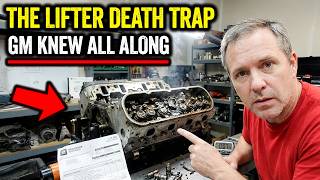
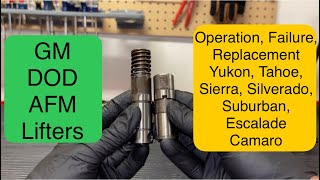
The 2018-2021 GMC Yukon is equipped with V8 engines (5.3L L83 or 6.2L L86/L87) that feature 🎬 Watch: Why these V8 engines are prone to lifter failure. Active Fuel Management (AFM) or Dynamic Fuel Management (DFM). This system deactivates certain cylinders, including cylinder 7, to improve fuel economy under light loads. The specialized hydraulic lifters used for this system are a well-documented, widespread failure point. They can collapse, get stuck, or come apart internally, preventing the valve from opening and causing a persistent misfire on that cylinder. Therefore, while a P0307 can be a simple ignition issue, it is frequently a symptom of a more serious internal engine problem related to the AFM/DFM system on this specific vehicle.
Diagnostic Flowchart
Tap your situation to follow the diagnostic path that matches what you're seeing on this vehicle.
Symptoms You May Notice
- Check Engine Light is on or flashing
- Rough idle or engine vibration
- Engine hesitation or stumbling during acceleration
- Noticeable loss of power
- Engine ticking or tapping noise, especially on startup, which may intensify with acceleration
- Reduced fuel economy
- Service StabiliTrak warning message may appear
- Replacing only the spark plug when the underlying cause is a failing AFM lifter. The new plug will quickly become fouled by the non-combusting cylinder, and the P0307 code will return.
- Replacing ignition coils and plugs repeatedly without performing a compression test to check for mechanical engine problems, which are highly common on this platform.
Most Likely Causes
- Failed Active Fuel Management (AFM/DFM) Lifter 🔴 High Probability → Shop Engine Valve Lifter The AFM/DFM lifters are a known weak point in this engine family (L83, L86, L87). They can collapse, get stuck, or come apart due to issues with the internal locking pins or oil pressure problems. Cylinder 7 is one of the AFM-controlled cylinders. GM has issued multiple Technical Service Bulletins, including #23-NA-043, directly addressing internal lifter concerns causing misfires.
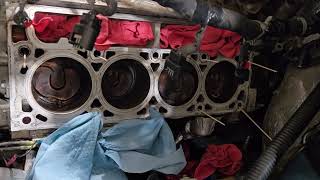
How to confirm: After ruling out ignition and fuel issues, a distinct ticking noise is a strong clue. A compression test will likely show low or zero compression on cylinder 7. The definitive test is to remove the driver's side valve cover and observe the rocker arms on cylinder 7 while the engine is running or being cranked. If a rocker arm is not moving, it confirms a collapsed lifter.
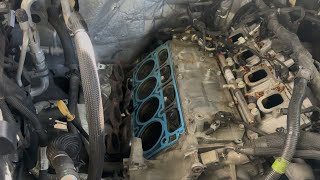
Typical fix: This is a major repair. It involves removing the cylinder head to replace the failed lifter and lifter guide. Per TSB #23-NA-043, if the vehicle has under 16,000 miles, all lifters on both banks should be replaced; over 16,000 miles, only the affected bank needs replacement. The camshaft must be inspected for damage, as a failed lifter roller can quickly destroy the cam lobe, requiring camshaft replacement as well. Many owners opt for an 'AFM Delete' at this time, replacing all AFM components with standard parts and reprogramming the ECU to prevent future failures. 🎬 Watch: AFM operation explained and how to perform a delete.
Est. part cost: $200-$800 for lifters, guides, gaskets, and head bolts. A full AFM delete kit with a new camshaft can cost $1500+. - Faulty Ignition Coil 🟡 Medium Probability → Shop Ignition Coil Coil-on-plug systems are common, and heat/vibration can cause coils to fail over time. It's a standard diagnostic step for any single-cylinder misfire.
How to confirm: Swap the ignition coil from cylinder 7 with another cylinder (e.g., cylinder 1). Clear the codes and run the engine. If the misfire code changes to P0301, the coil is bad.
Typical fix: Replace the faulty ignition coil. This is a simple, single-bolt replacement.
Est. part cost: $40-$90 - Worn or Fouled Spark Plug 🟡 Medium Probability → Shop Spark Plug
How to confirm: Remove the spark plug from cylinder 7 and inspect it for wear, carbon fouling, oil, or damage. A wet or heavily fouled plug can indicate a deeper problem like a failed lifter or injector. A simple test is to swap it with a plug from another cylinder to see if the misfire code follows the plug.
Typical fix: Replace the spark plug. It is best practice to replace all 8 spark plugs at the same time with high-quality Iridium plugs (e.g., ACDelco 41-123 or equivalent).
Est. part cost: $8-$20 per plug - Faulty Fuel Injector ⚪ Low Probability → Shop Fuel Injector These engines use direct injection. While reliable, injectors can become clogged or fail electronically. Some forum users note that debris can accumulate at the end of the fuel rail, potentially affecting the #7 injector.
How to confirm: This is more difficult to diagnose. A scan tool that can perform a fuel injector balance test can help. Swapping the injector with another cylinder is possible but labor-intensive. Listening to the injector with a mechanic's stethoscope can reveal if it's clicking like the others.
Typical fix: Replace the faulty fuel injector. One owner on a forum reported that after replacing failed lifters, a persistent misfire was only resolved after also replacing the injectors on that bank.
Est. part cost: $50-$150
Rare But Worth Checking
- Broken Valve Spring: While less common than a lifter failure, a broken valve spring can also cause a complete loss of compression on a cylinder and present with similar symptoms. It can only be diagnosed by removing the valve cover for visual inspection.
- Damaged Camshaft Lobe: → Shop Engine Camshaft A failed lifter can damage the camshaft lobe it rides on. If a lifter is replaced without inspecting the cam, the problem will quickly return. This is a common point of failure discussed in repair videos and forums.
- Bent Pushrod: A collapsed or stuck lifter can sometimes lead to a bent pushrod, which would also be discovered during the lifter replacement job.
- Faulty Valve Lifter Oil Manifold (VLOM): The VLOM (or DFM Oil Control Module on L87 engines) contains solenoids that direct oil pressure to activate/deactivate the lifters. A failure in the VLOM can cause lifter issues. Some sources recommend replacing it during a lifter job as a preventative measure.
Diagnosis Steps
- Confirm the P0307 code with an OBD-II scanner. Note if the check engine light is steady or flashing and check for any other stored codes.
- Swap the ignition coil from cylinder 7 (rearmost, driver's side) with another cylinder (e.g., cylinder 1, frontmost, driver's side). Clear the codes and drive the vehicle. If the code changes to P0301, the ignition coil is the problem.
- If the misfire remains on cylinder 7, inspect the spark plug. A wet, oily, or heavily carbon-fouled plug suggests a mechanical or fuel issue rather than a simple plug failure. You can swap the plug with another cylinder to be certain.
- Inspect the ignition coil wiring and connector for damage or corrosion.
- Listen for a distinct ticking/tapping noise from the driver's side valve cover area. This is a very strong indicator of a lifter issue.
- Perform a compression test on cylinder 7. A significantly lower reading (or zero) compared to other cylinders points to a mechanical problem like a failed lifter, broken valve spring, or piston ring issue.
- If compression is low, the definitive step is to remove the driver's side valve cover. Start the engine briefly (it will make a small mess) and observe the rocker arms on cylinder 7. If a rocker arm is not moving or is visibly loose, a collapsed/failed lifter is confirmed.
Parts You'll Likely Need
- Active Fuel Management (AFM) Lifters & Guide Kit
(OEM #12645725 (single AFM lifter), kits are also available)— This is the most common major failure causing a P0307 on this engine. The original lifters are prone to collapsing or sticking. It is recommended to replace them in sets.
Trusted brands: ACDelco, GM Genuine, Michigan Motorsports
OEM price range: $150-$250 for a set of 8
Aftermarket price range: $100-$200 for a set of 8 - Ignition Coil
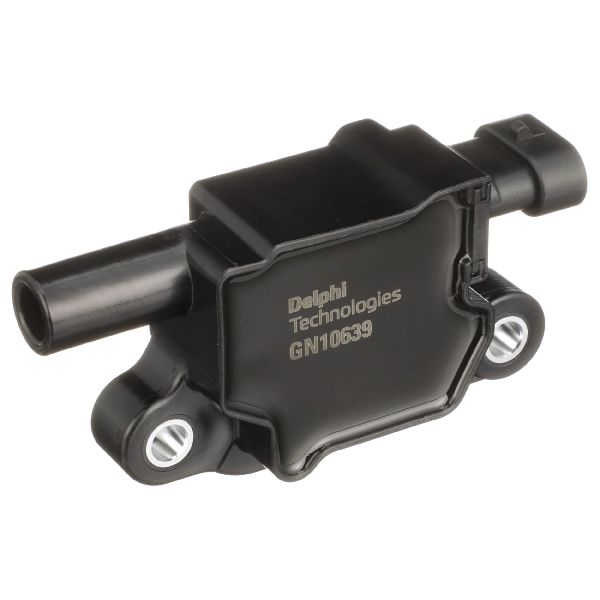
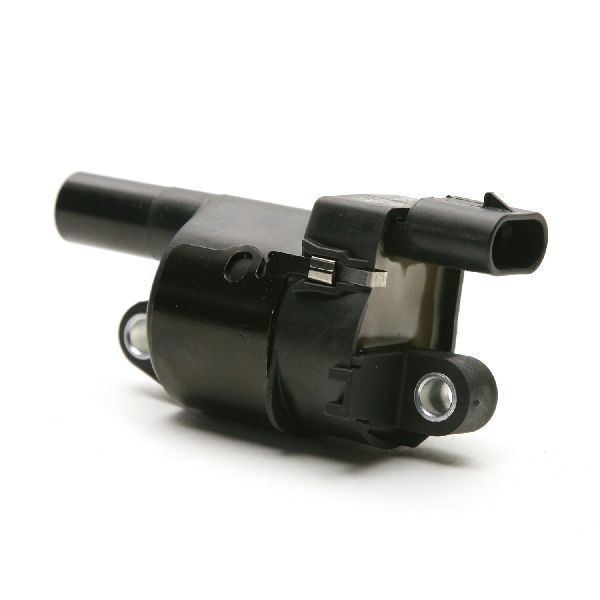
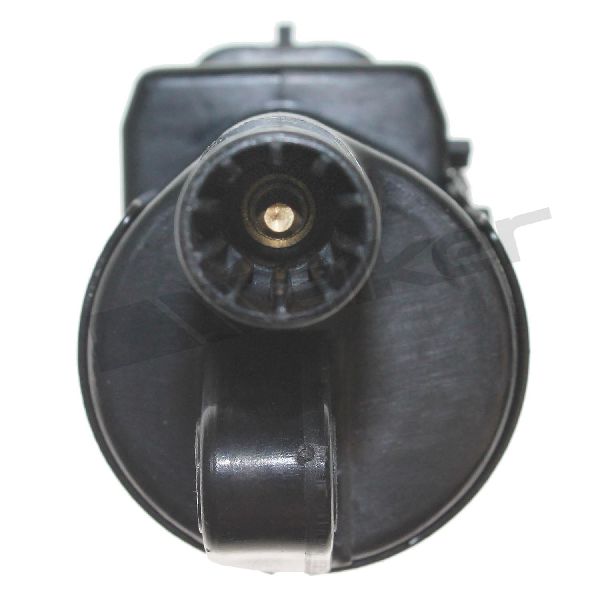
(OEM #12611424 (Superseded by 12739916))— A common failure point for any single-cylinder misfire. It's the first component to test via swapping.
Trusted brands: ACDelco (D510C), Delphi
OEM price range: $60-$90
Aftermarket price range: $30-$60 - Spark Plug
(OEM #12622564 (ACDelco 41-123))— A routine maintenance item and a common cause for a single-cylinder misfire. A fouled plug can also be a symptom of a larger issue like a failed lifter.
Trusted brands: ACDelco, NGK
OEM price range: $8-$20 per plug
Aftermarket price range: $6-$15 per plug
Related Codes That Often Appear With This One
- P0300 — P0300 indicates a random, multiple-cylinder misfire. It can appear alongside P0307 if the underlying issue, like a failing lifter, is beginning to affect engine stability more broadly or if other cylinders are also starting to have issues.
Technical Service Bulletins (TSBs) & Recalls
- Poor Engine Performance, Engine Misfires, Malfunction Indicator Lamp (MIL) Illuminated - DTC P0300-P0308 Set: This bulletin addresses an internal lifter concern that may cause misfires. It provides guidelines for replacing the lifters. For vehicles under 16,000 miles, it recommends replacing lifters on both banks. For vehicles over 16,000 miles, it recommends replacing lifters on only the affected bank.
Platform-Specific Known Issues
- A widespread and well-documented issue with the Active Fuel Management (AFM) and Dynamic Fuel Management (DFM) systems involves the valve lifters failing. This can happen at various mileages and often presents as a single-cylinder misfire, such as P0307, accompanied by a ticking noise. GM has issued multiple Technical Service Bulletins, including #23-NA-043, related to this exact issue.
Mechanic-Grade Diagnostic Values
- Ignition Coil Primary Resistance — expected: 0.4 to 2.0 Ohms. Failure: A reading outside of this range suggests a faulty coil. However, this test can be inconclusive; swapping coils is often a more reliable test.
- Ignition Coil Secondary Resistance — expected: 6,000 to 10,000 Ohms. Failure: A reading significantly outside this range indicates a failed coil.
- Low-Pressure Fuel System — expected: 50-60 PSI at idle. Failure: Low pressure could indicate a weak fuel pump, but is unlikely to cause a single-cylinder misfire unless an injector is more sensitive to low pressure.
- High-Pressure Fuel System (Direct Injection) — expected: 290 - 2176 PSI (Varies with engine load). Failure: Pressure that does not respond to engine load or is consistently low can indicate a failing high-pressure fuel pump.
Hidden / Shadow Codes Worth Checking
- Mode $06, TID $A8: This is not a DTC, but a monitor within the ECU. Test ID (TID) $A8 corresponds to the raw misfire count for cylinder 7. A high count here, even before a P0307 code is set, can confirm that cylinder 7 is the source of the problem. (see via A professional scan tool capable of viewing Mode $06 data.)
Scan Tool Commands That Help
- GDS2 (GM Dealer Tool) or equivalent professional scanner: Cylinder Power Balance Test — This test disables each cylinder one by one and measures the RPM drop. If disabling cylinder 7 causes little or no RPM drop compared to other cylinders, it confirms that cylinder 7 is not contributing power, pointing to a significant issue.
- GDS2 (GM Dealer Tool) or equivalent professional scanner: AFM/DFM Cylinder Deactivation System Test — This allows a technician to manually command the AFM/DFM solenoids on and off to test the electrical side of the system, helping to diagnose a faulty VLOM/DFM oil control module.
- GDS2 (GM Dealer Tool) or equivalent professional scanner: Fuel Injector Balance Test — Used to identify a clogged or failing fuel injector without removing it. The tool commands each injector to fire for a set time and measures the corresponding drop in fuel rail pressure.
Wiring & Ground Locations
- G103 — On the front of the driver's side (left) cylinder head.. This is a primary engine ground point. While another ground (G102) is listed as the main ground for the ignition coils, technicians often find that a loose or corroded G103 on the driver's side head can cause erratic behavior for components on that bank, which includes cylinder 7.
- Cylinder 7 Ignition Coil Connector — On the ignition coil for the rearmost cylinder on the driver's side.. This 4-pin connector provides power, ground, and the trigger signal from the ECM. Checking for voltage on the signal wire (typically Pin A) with a multimeter or scope can verify if the ECM is commanding the coil to fire.
- Engine Block to Chassis Ground Strap — A braided or heavy-gauge wire, typically from the rear of the engine block or transmission to the vehicle's firewall/frame.. A corroded or loose main ground strap can cause a multitude of electrical problems, including weak ignition spark across all cylinders, which could manifest as a misfire on the weakest cylinder first.
Real Owner Repair Stories
- GM-Trucks.com forum user (2018 Chevrolet Silverado 5.3L (L83) with 85,000 miles) — P0307 code, rough idle, and ticking noise.
❌ Tried (didn't work) Replaced spark plug on cylinder 7, Swapped ignition coil with another cylinder, Replaced fuel injector on cylinder 7
✅ What actually fixed it The final repair was replacing a collapsed AFM lifter on cylinder 7. Upon disassembly, the camshaft lobe for that cylinder was also found to be scored and damaged, requiring camshaft replacement as well. This is a common outcome when a lifter roller fails. - YouTube video by CrazedPerformanceRepair (2007 Chevrolet Tahoe 5.3L (similar GMT900 platform and AFM system)) — P0307 misfire code.
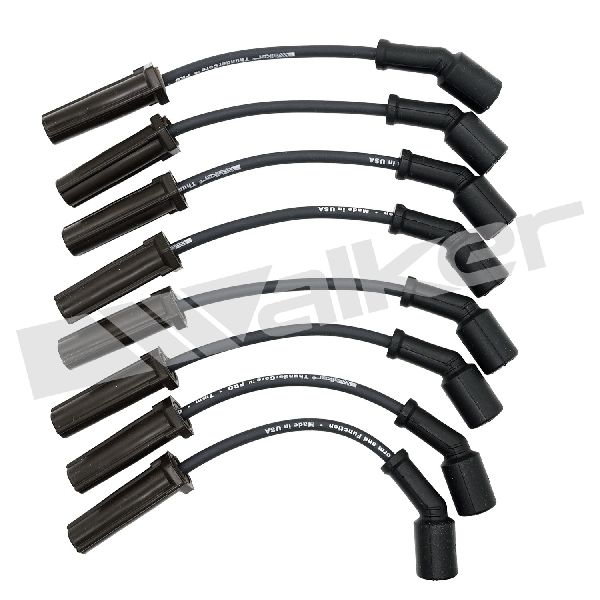
❌ Tried (didn't work) Replaced spark plugs, Replaced spark plug wires, Replaced ignition coil on cylinder 7
✅ What actually fixed it The issue was a faulty collapsed AFM lifter. The final repair involved replacing the lifter, modifying the VLOM, and reprogramming the ECU to permanently delete the AFM feature.
"I Checked Everything" — The Actual Cause
- In many P0307 cases on this platform, a smoke test for vacuum leaks will come back clean. This is because the root cause is often not an unmetered air leak, but a mechanical failure causing a loss of compression (e.g., a collapsed AFM lifter or a broken valve spring). Technicians who rely solely on a smoke test after checking ignition parts may miss the true mechanical nature of the failure.
OEM Part Supersession History
12611424→12739916— Standard part revision and update by the manufacturer.Older AFM Lifter Guides (e.g., 12571596)→12689035 (for non-AFM cams) or 12669185/12669184 (for AFM cams)— Updated design for better lifter retention and oil control.
Heads up: Using the wrong lifter guide can cause lifter rotation and catastrophic engine failure. It is critical to use the correct guide for the type of lifter and camshaft being installed (AFM vs. non-AFM/delete).
Model Year Variations Within This Range
- 2018 (6.2L) and all 5.3L engines in range: These engines use Active Fuel Management (AFM), which deactivates a fixed set of four cylinders (1, 7, 4, and 6) under light load.
- 2019-2021 (6.2L L87 only): The 6.2L L87 engine uses Dynamic Fuel Management (DFM), a more advanced system that can deactivate any number of cylinders in 17 different patterns. While the lifter failure mechanism is similar, the control module is more complex, and all eight cylinders have the failure-prone deactivating lifters, not just four.
Helpful Videos
We Have This Part in Stock

The information in this article is provided for general reference and educational purposes only. Vehicle specifications, procedures, and part compatibility can vary by production date, trim level, and region. Always consult your vehicle's factory service manual and verify part numbers before purchasing or performing repairs. Safety-critical components such as airbags, seat belts, and braking systems should be installed by a qualified professional.
- Gmc YUKON:
- 🧭 Diagnostic Flowchart
- 🎬 Helpful Videos
- 🛍️ Shop This Part
- What's Unique About the 2018-2021 Gmc YUKON
- Symptoms You May Notice
- Most Likely Causes
- Rare But Worth Checking
- Diagnosis Steps
- Parts You'll Likely Need
- Related Codes That Often Appear With This One
- Technical Service Bulletins (TSBs) & Recalls
- Platform-Specific Known Issues
- Mechanic-Grade Diagnostic Values
- Hidden / Shadow Codes Worth Checking
- Scan Tool Commands That Help
- Wiring & Ground Locations
- Real Owner Repair Stories
- "I Checked Everything" — The Actual Cause
- OEM Part Supersession History
- Model Year Variations Within This Range
- 🎟️ Get 5% Off