

P0307 on 2010-2014 Jaguar XJ 5.0L V8: Cylinder 7 Misfire Causes and Fixes
P0307 on a Jaguar XJ with the 5.0L V8 engine indicates a misfire in cylinder 7. The most common causes are a failed ignition coil or a worn spark plug. A clogged fuel injector is also a known issue on this platform. Expect to pay $150-$400 for a single coil or injector replacement at a shop.
- P0307 specifically points to a misfire on cylinder 7, which is on the driver's side of the 5.0L V8 engine.
- The most likely fix is replacing the ignition coil and spark plug for cylinder 7.
- A simple diagnostic test is to swap the coil from cylinder 7 with another cylinder to see if the fault code follows the coil.
- If the check engine light is flashing, stop driving immediately to prevent expensive damage to the catalytic converter.
- Due to a TSB, consider using a fuel injector cleaner or ensuring high-quality fuel, as clogged injectors are a known issue on this engine.
What's Unique About the 2010-2014 Jaguar XJ
The Jaguar XJ's 5.0L V8 (AJ133) is a direct-injection engine, making it sensitive to fuel quality and prone to carbon buildup on intake valves, which is not cleaned by fuel detergents. A Jaguar Technical Service Bulletin (TSB) specifically notes that poor fuel quality or contaminants can restrict fuel injectors, leading to misfires like P0307. Early versions of this engine (pre-2014) are also known for premature timing chain guide wear, which can cause timing to jump and lead to misfires, although this is a more catastrophic failure.
Diagnostic Flowchart
Tap your situation to follow the diagnostic path that matches what you're seeing on this vehicle.
Symptoms You May Notice
- Rough or vibrating idle
- Hesitation or stumbling during acceleration
- Reduced engine power and 'Restricted Performance' message on the dash
- Solid or flashing Check Engine Light
- Increased fuel consumption
- Strong smell of unburnt fuel from the exhaust
- Replacing oxygen sensors when the misfire is the root cause of abnormal exhaust readings.
- Assuming a major engine failure before performing basic diagnostic swaps of the coil and spark plug.
- Replacing a high-pressure fuel pump for a single-bank misfire, when the issue is more likely a stuck-open injector on that bank.
Most Likely Causes
- Faulty Ignition Coil 🔴 High Probability → Shop Ignition Coil Coil-on-plug systems are common failure points due to high heat and vibration in the engine bay. It is the most frequent and easiest to diagnose cause of a single-cylinder misfire.
How to confirm: Swap the ignition coil from cylinder 7 with another cylinder (e.g., cylinder 5 on the same bank). Clear the codes and drive the vehicle. If the code changes to P0305, the ignition coil is faulty.
Typical fix: Replace the faulty ignition coil. It is often recommended to replace the spark plug at the same time. Many owners choose to replace all 8 coils and plugs as a preventative measure if the vehicle has higher mileage.
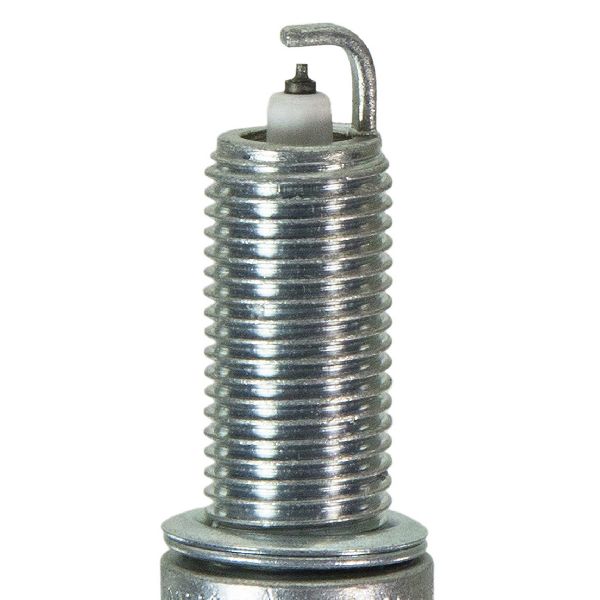
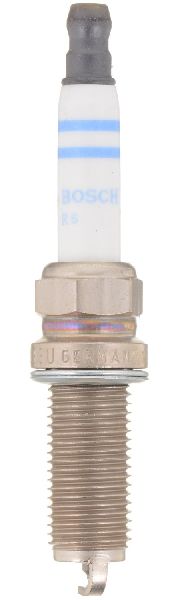
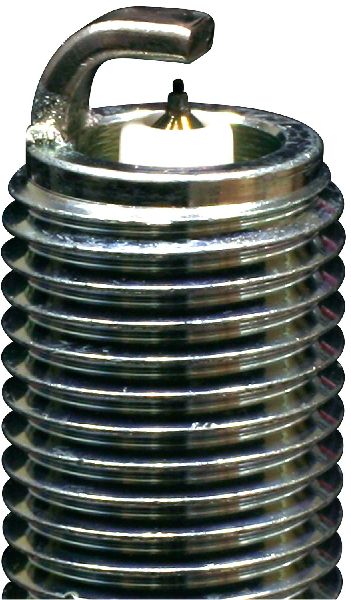
Est. part cost: $40-$175 - Worn or Fouled Spark Plug 🔴 High Probability → Shop Spark Plug Spark plugs are a routine maintenance item with a finite lifespan. High-performance, direct-injection engines like the 5.0L V8 can be demanding on plugs, leading to wear or fouling from oil or carbon over time.
How to confirm: After ruling out the coil, remove the spark plug from cylinder 7 and inspect it for wear, carbon fouling, oil, or damage to the electrode or insulator. A plug that appears wet with fuel can indicate a lack of spark or a stuck injector.
Typical fix: Replace the spark plug. It is best practice to replace all eight spark plugs as a set if they are near the end of their service life (typically 60,000-100,000 miles).
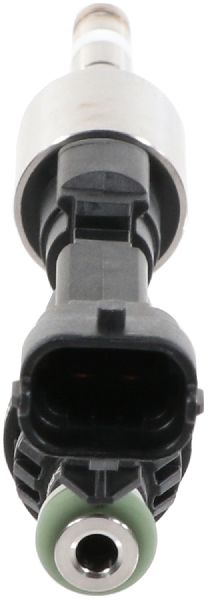
Est. part cost: $15-$30 per plug - Clogged or Faulty Fuel Injector 🟡 Medium Probability → Shop Fuel Injector The AJ133 is a direct-injection engine, and Jaguar issued TSB #SSM-63697 stating that poor fuel quality or contaminants can restrict fuel injectors, causing misfires. Several owners on JaguarForums.com have reported injector failures leading to misfires on one or more cylinders.
How to confirm: This is more difficult for a DIYer. A professional can perform a fuel injector balance test using Jaguar's SDD software. Swapping injectors between cylinders is possible but labor-intensive and requires special tools for this direct-injection engine. 🎬 See this pro hack for replacing injectors without special tools. An injector-specific code like P02F4 may accompany the P0307.
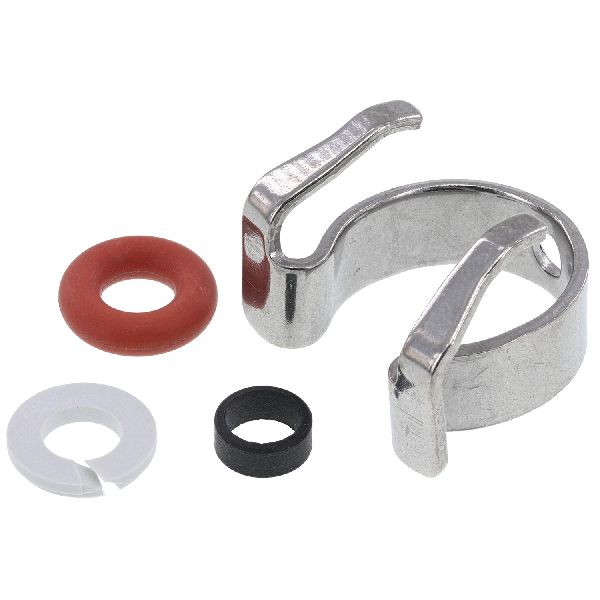
Typical fix: Replace the faulty fuel injector. This is a complex job due to the high-pressure fuel system and location of the injectors. It often requires replacement of the injector seals as well. Some sources suggest replacing injectors as a bank (all 4 on one side).
Est. part cost: $100-$250
Rare But Worth Checking
- Vacuum Leak: A leak in a vacuum hose or intake manifold gasket near cylinder 7 can lean out the air-fuel mixture, causing a misfire. On the 5.0L engine, check the integrity of the brake booster vacuum hose and PCV components.
- Low Compression / Timing Chain Issue: A serious mechanical issue, such as a worn piston ring, a poorly sealing valve, or a jumped timing chain can cause a loss of compression in cylinder 7. Early (pre-2014) AJ133 engines are known for timing chain tensioner and guide failure, which can cause chain slack, leading to misfires and eventually catastrophic engine damage if not addressed. A rattling noise on cold start is a key symptom. 🎬 Watch: How to identify that deadly 5.0L engine rattling noise.
- PCM Software Calibration: TSB #JTB00533NAS1 indicates that some cold-start misfires (with coolant temp below 75°C) can be caused by a fuel injection calibration issue, which requires a software update by a Jaguar dealer.
- Intake Valve Carbon Buildup: As a direct-injection engine, the intake valves are not washed by fuel. Over time, oil vapor from the PCV system can bake onto the valves, causing carbon buildup that restricts airflow and can lead to misfires. This is more likely to cause random misfires (P0300) but can manifest on a single cylinder. The fix is typically walnut-shell blasting of the intake ports.
Diagnosis Steps
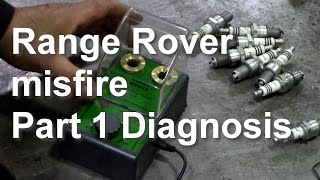
- Read the trouble codes with an OBD-II scanner and confirm P0307 is present. Note any other codes, 🎬 Watch: A professional diagnostic walkthrough for Jaguar misfire codes. such as P0300, P0316, or fuel pressure codes.
- Visually inspect the wiring and connector for the ignition coil and fuel injector on cylinder 7 for any damage or corrosion.
- Swap the ignition coil from cylinder 7 with an adjacent one (e.g., cylinder 5). Clear the codes and run the engine to see if the misfire code moves to the new cylinder (P0305). If it does, the coil is bad.
- If the misfire remains on cylinder 7, swap the spark plug from cylinder 7 with the one from the cylinder you just used. If the code moves, the spark plug is bad.
- If the misfire still remains on cylinder 7, the issue is likely a fuel injector, carbon buildup, or a mechanical problem.
- Listen to the fuel injector with a mechanic's stethoscope; it should have a regular, rhythmic clicking sound. Compare it to an adjacent injector.
- If a cold-start rattle is present, investigate the timing chain system immediately. This is a known issue on pre-2014 AJ133 engines and requires specialized repair.
- If the injector, coil, and plug are ruled out, perform a compression test on cylinder 7 to check for mechanical engine health. A significant loss of compression points to an internal engine problem like a valve or piston ring issue.
- For persistent cold-start misfires only, consult a dealer regarding TSB JTB00533NAS1 for a potential PCM software update.
Parts You'll Likely Need
- Ignition Coil
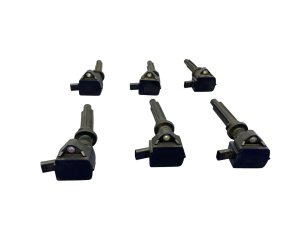
(OEM #AJ811378)— This is the most common failure part for a single-cylinder misfire on the Jaguar 5.0L V8.
Trusted brands: Bosch, NGK, Delphi, Genuine Jaguar
OEM price range: $100-$175
Aftermarket price range: $40-$90 - Spark Plug
(OEM #ILKAR7C10 (NGK Laser Iridium))— A worn or fouled spark plug is the second most likely cause and is a standard maintenance item that should be replaced with the coil.
Trusted brands: NGK, Bosch
OEM price range: $20-$30
Aftermarket price range: $15-$25 - Fuel Injector
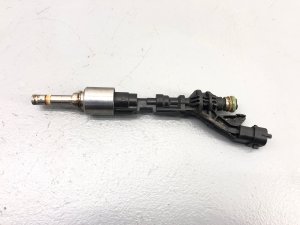
(OEM #LR079542 (Bosch 0261500298))— Mentioned in a TSB as a potential cause of misfires due to fuel contamination on this specific engine. Direct injection injectors can fail or become clogged.
Trusted brands: Bosch (OEM supplier)
OEM price range: $150-$250
Aftermarket price range: $80-$150
Related Codes That Often Appear With This One
- P0300 — This is a 'Random/Multiple Misfire' code. It may appear alongside P0307 if the misfire is intermittent or if other cylinders are also beginning to misfire, which could point to a systemic issue like a vacuum leak or fuel delivery problem.
- P0316 — This code means 'Misfire Detected on Startup (First 1000 Revolutions)'. It is often triggered with specific cylinder misfire codes and is mentioned in TSB JTB00533NAS1 for this engine as part of a potential software calibration issue.
- P1315 — This is a Jaguar-specific code for 'Persistent Misfire', which can cause catalyst damage. It indicates the misfire is severe and the ECU may enter 'Restricted Performance' mode to protect the engine and catalytic converters.
Technical Service Bulletins (TSBs) & Recalls
- JTB00533NAS1: Mentions P0307 as part of a group of misfire codes that can occur on cold starts, potentially due to a PCM calibration issue.
- SSM-63697: Identifies poor fuel quality or contaminants restricting fuel injectors as a cause for misfire codes, including P0307, on the 5.0L engine.
Platform-Specific Known Issues
- TSB #SSM-63697 explicitly links misfire codes, including P0307, on the 5.0L engine to issues caused by poor fuel quality or contaminants restricting fuel injectors.
- TSB #JTB00533NAS1 notes that a series of misfire codes (P0300-P0308) can occur during a cold start due to a PCM calibration issue, which may require a software update from a dealer.
- Early (pre-2014) AJ133 5.0L V8 engines are known for having weak timing chain guides made of plastic or aluminum, which can be worn down by the steel tensioner plunger, leading to chain slack, rattling on startup, and eventually misfires or catastrophic failure.
Mechanic-Grade Diagnostic Values
- High-Pressure Fuel System Pressure at Idle — expected: ~970 PSI. Failure: Significant drops in pressure under load or inability to maintain pressure at idle could indicate a failing high-pressure fuel pump (HPFP), though this usually affects an entire bank, not a single cylinder.
- Fuel Injector Pulse Width at Idle (via SDD) — expected: ~1.14 to ~1.24 ms. Failure: A significant deviation on one cylinder compared to others on the same bank can indicate a clogged or failing injector. The PCM will adjust pulse width based on O2 sensor feedback, so this must be interpreted along with fuel trim data.
- Ignition Coil Primary Resistance — expected: Approximately 0.75 ohms. Failure: An 'open' reading indicates a failed coil. However, due to internal electronics, a reading within spec does not guarantee the coil is good under load. A swap test is more definitive.
- Engine Ground Voltage Drop (during cranking) — expected: Well under 0.5V (500mV). Failure: A reading higher than 0.5V between the battery negative terminal and an engine ground point during cranking indicates a poor ground connection, which can cause myriad electrical issues, including misfires.
Hidden / Shadow Codes Worth Checking
- P1315: Persistent Misfire. This is a Jaguar-specific code indicating a misfire severe enough to potentially damage the catalytic converter. The ECU will often trigger 'Restricted Performance' mode when this code is set. (see via Most standard OBD-II scanners and Jaguar's SDD software.)
- Cylinder Air-Fuel Ratio Imbalance: Jaguar's diagnostic software can monitor cylinder-specific fueling errors that may not be caught by the general fuel system monitor. A rich condition on cylinder 7 could point to a leaking injector. (see via Jaguar Land Rover approved diagnostic equipment (SDD).)
Scan Tool Commands That Help
- Jaguar SDD (Symptom Driven Diagnostics): Injector Pulse Width Test — To compare the pulse width in milliseconds for each injector. This helps identify if the PCM is commanding a significantly different fuel amount for cylinder 7, pointing towards a compensation for another issue or an injector problem.
- Jaguar SDD (Symptom Driven Diagnostics): Cylinder Balance Test — This function measures the contribution of each cylinder to engine speed, helping to pinpoint a weak cylinder that may be caused by low compression, a faulty injector, or a spark issue.
- Jaguar SDD (Symptom Driven Diagnostics): Configure new modules - Powertrain control module — Required after replacing the PCM. Also used to apply software updates, such as the one mentioned in TSB JTB00533NAS1 for cold-start misfires.
Wiring & Ground Locations
- Fuel Injector 7 Connector — On the engine's left side (driver's side in LHD vehicles), at the 7th cylinder (third from the front).. The wiring harness or connector to the fuel injector can become damaged or corroded, leading to an intermittent or total loss of signal to the injector, causing a misfire.
- G1D131AS — Right side of the engine compartment.. This is a major ground point for components in the engine bay. A loose or corroded connection here can cause erratic behavior in various sensors and actuators, including the ignition and fuel systems.
- Engine Block Ground Strap — Typically located on the lower right side of the engine, connecting the engine block to the vehicle frame, often near the starter motor.. This is the main ground path for the engine. A poor connection can lead to a variety of electrical problems, including weak spark and incorrect sensor readings, which can cause misfires.
Real Owner Repair Stories
- Ford F150 Forum (same 5.0L engine family) (2013 Ford F-150 5.0L, 100k miles) — Slight vibration at idle, intermittent Check Engine Light for P0307. Later developed into severe power loss and flashing CEL under acceleration.
❌ Tried (didn't work) Replaced ignition coil on cylinder 7., Replaced spark plug and ignition coil on cylinder 7 again.
✅ What actually fixed it The issue was diagnosed as low compression in cylinder 7 (10% lower than others). The owner was advised that a cylinder head replacement ($4700) or engine replacement ($9600) was necessary. This highlights that after exhausting spark and fuel component swaps, a mechanical compression test is critical. - JaguarForums.com (2012 Jaguar XJ L 5.0L Supercharged) — Persistent misfire on Bank 2 (cylinders 2, 4, 6, 8) after an engine rebuild. Fuel trims were imbalanced (+10% Bank 1, -10% Bank 2).
❌ Tried (didn't work) Replaced all spark plugs and ignition coils on the affected bank., Swapped coils between banks., Used multiple types of fuel system cleaners (BG 44K, Techron, etc.)., Performed a smoke test for vacuum leaks (none found)., Tested MAF sensors., Reset adaptations.
✅ What actually fixed it The owner was still diagnosing at the time of the post, but had narrowed it down to a potential exhaust backpressure issue (clogged cat) or a problem with the variable valve timing (VVT) system on that bank, as all common ignition and fuel causes were ruled out.
OEM Part Supersession History
LR011964, C2P16489, 8W939F593AD→LR079542 (Bosch 0261500298)— Part revision and consolidation by the manufacturer.
Heads up: The listed part numbers are generally interchangeable for the 5.0L V8 in this year range.8W9312A366DA→AJ811378— Part revision for the ignition coil.
Model Year Variations Within This Range
- 2010-2013: Engines produced before ~2014 used timing chain guides with plastic/aluminum contact surfaces that are prone to wear from the tensioner. Later models were updated with more durable steel guide components. A P0307 accompanied by a cold-start rattle on an early model strongly suggests a timing chain issue.
Helpful Videos

Used OEM Parts in Stock
New Aftermarket Parts Available

The information in this article is provided for general reference and educational purposes only. Vehicle specifications, procedures, and part compatibility can vary by production date, trim level, and region. Always consult your vehicle's factory service manual and verify part numbers before purchasing or performing repairs. Safety-critical components such as airbags, seat belts, and braking systems should be installed by a qualified professional.
- Jaguar XJ:
- 🧭 Diagnostic Flowchart
- 🎬 Helpful Videos
- 🛍️ Shop This Part
- What's Unique About the 2010-2014 Jaguar XJ
- Symptoms You May Notice
- Most Likely Causes
- Rare But Worth Checking
- Diagnosis Steps
- Parts You'll Likely Need
- Related Codes That Often Appear With This One
- Technical Service Bulletins (TSBs) & Recalls
- Platform-Specific Known Issues
- Mechanic-Grade Diagnostic Values
- Hidden / Shadow Codes Worth Checking
- Scan Tool Commands That Help
- Wiring & Ground Locations
- Real Owner Repair Stories
- OEM Part Supersession History
- Model Year Variations Within This Range
- 🎟️ Get 5% Off