

P0307 on 2010-2014 Jaguar XK: Cylinder 7 Misfire Causes and Fixes
P0307 on a 2010-2014 Jaguar XK with the 5.0L V8 engine indicates a misfire on cylinder 7. The most common causes are a faulty ignition coil or a worn-out spark plug. A clogged fuel injector is also a known issue, as noted in a Jaguar TSB. Diagnosis typically involves swapping the coil and plug from cylinder 7 to another cylinder to see if the fault follows.
- P0307 is a misfire on cylinder 7, which is the third cylinder back on the driver's side.
- The most likely cause is a bad ignition coil or spark plug. A simple swap test can diagnose this in under an hour.
- Do not drive if the check engine light is flashing, as this can cause rapid and expensive damage to the catalytic converter.
- Due to a Jaguar TSB, if the coil and plug are good, a clogged fuel injector is a strong possibility. Using high-quality fuel may help prevent this issue.
What's Unique About the 2010-2014 Jaguar XK
The 2010-2014 Jaguar XK uses the AJ133 5.0L V8, a sophisticated direct-injection engine. While powerful, these engines are sensitive to fuel quality. Jaguar issued a Technical Service Bulletin (TSB SSM-63697) specifically stating that poor fuel quality can restrict fuel injectors, leading directly to misfire codes like P0307. This makes a clogged injector a more probable cause on this platform compared to many other vehicles. Additionally, as a direct-injection engine, the intake valves are not cleaned by fuel spray, making them susceptible to carbon buildup over time which can disrupt airflow and contribute to misfires.
Diagnostic Flowchart
Tap your situation to follow the diagnostic path that matches what you're seeing on this vehicle.
Symptoms You May Notice
- Flashing or solid Check Engine Light
- Engine vibration or rough idle, especially noticeable at a stop
- Hesitation or stumbling during acceleration
- Noticeable loss of engine power and 'Restricted Performance' message on the dash
- Sputtering or popping sound from the engine or exhaust
- Increased fuel consumption
- Smell of raw fuel from the exhaust
- Replacing oxygen (O2) sensors. While a faulty O2 sensor can affect the overall fuel mixture, it will not typically cause a single-cylinder misfire like P0307.
- Replacing the mass airflow (MAF) sensor. A bad MAF sensor would likely cause performance issues and multiple or random misfire codes (P0300), not a specific cylinder misfire.
Most Likely Causes
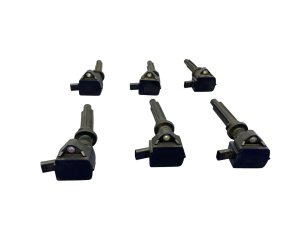
- Faulty Ignition Coil 🔴 High Probability → Shop Ignition Coil Coil-on-plug ignition coils are a common failure point on many modern engines due to constant exposure to high heat and vibration. Oil leaks from valve cover gaskets can also saturate the coil boots, causing failure.
How to confirm: Swap the ignition coil from cylinder 7 with another cylinder (e.g., cylinder 5 on the same bank). Clear the codes and run the engine. If the code changes to P0305, the coil is bad. Visually inspect the coil for cracks, burn marks, or corrosion.
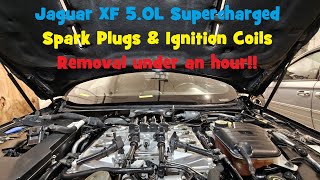
Typical fix: Replace the faulty ignition coil. It is often recommended to replace the spark plug at the same time 🎬 See this walkthrough for removing 5.0L coils and plugs., as a failing plug can strain a new coil.
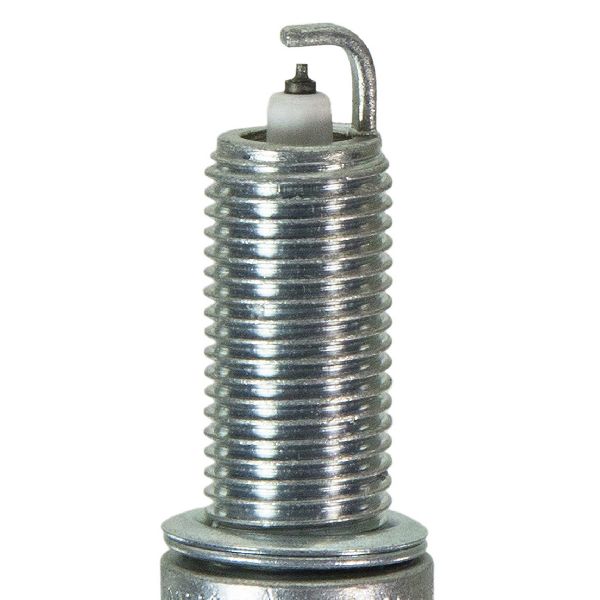
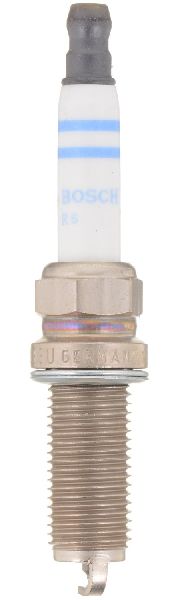
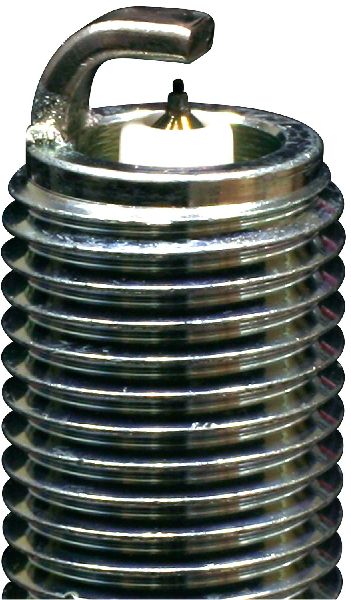
Est. part cost: $70-$120 - Worn Spark Plug 🔴 High Probability → Shop Spark Plug Spark plugs are a regular maintenance item with a finite lifespan. Worn electrodes, excessive carbon fouling, or cracks in the ceramic insulator can prevent a strong, consistent spark.
How to confirm: After confirming the coil is good, swap the spark plug from cylinder 7 with another cylinder. If the misfire code follows the plug, the plug is the issue. Visually inspect the plug for wear, oil fouling, or damage to the electrode or insulator.
Typical fix: Replace the spark plug. It is best practice to replace all 8 spark plugs if they are near the end of their service life (typically 60,000-100,000 miles) to ensure balanced performance.
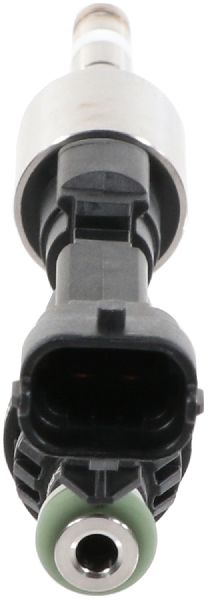
Est. part cost: $15-$25 per plug - Clogged or Faulty Fuel Injector 🟡 Medium Probability → Shop Fuel Injector Jaguar TSB #SSM-63697 explicitly links misfire codes on this engine to restricted fuel injectors caused by poor fuel quality or contaminants. As these are direct-injection (GDI) injectors, they can also become seized in the cylinder head due to carbon buildup, making removal difficult.
How to confirm: If swapping the coil and plug does not resolve the P0307 code, the injector is the next likely suspect. A professional can perform a fuel injector balance test. A DIY method is to listen to the injector with a mechanic's stethoscope; it should have a regular, rhythmic clicking sound. The presence of code P0207 (Injector Circuit Fault) alongside P0307 strongly points to an injector or wiring issue.
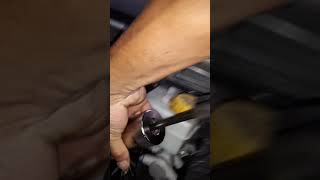
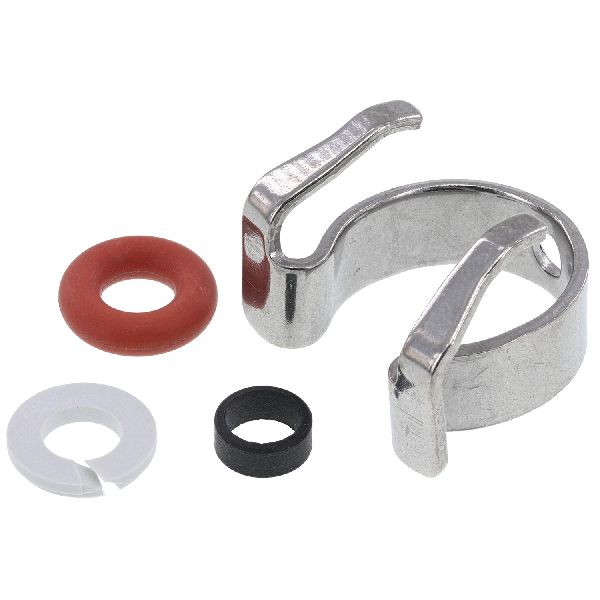
Typical fix: Replace the fuel injector for cylinder 7. This is a complex job on the 5.0L GDI engine, often requiring a special slide hammer puller 🎬 Watch: How to remove a fuel injector from this engine. (like tool 310-197) and new Teflon seals.
Est. part cost: $80-$150
Rare But Worth Checking
- Low Cylinder Compression: This indicates a more serious mechanical engine problem, such as a worn piston ring, a bad valve, or a head gasket issue. A compression test is needed to confirm this.
- Vacuum Leak: A vacuum leak from a cracked intake manifold or a failed gasket near cylinder 7's intake runner could lean out the air/fuel mixture and cause a misfire. A mechanic can use a smoke machine to find the leak.
- Wiring Harness or Connector Damage: The wiring or connector for the ignition coil or fuel injector on cylinder 7 could be damaged, corroded, or have a loose connection, causing an intermittent signal.
- Intake Valve Carbon Buildup: As a direct-injection engine, the AJ133 is prone to carbon deposits on the back of the intake valves, which are not washed by fuel. Severe buildup can restrict airflow into the cylinder, leading to misfires, especially on cold starts. This typically requires professional cleaning via walnut blasting.
Diagnosis Steps
- Read the code with an OBD-II scanner to confirm P0307 is present. Note any other codes, especially P0300, P0316, or P0207.
- Check for a flashing Check Engine Light. If flashing, avoid driving the vehicle to prevent catalytic converter damage.
- Swap the ignition coil from cylinder 7 with an easily accessible cylinder (e.g., cylinder 5 on the same bank). Clear the codes and run the engine. If the code changes to P0305, the ignition coil is faulty.
- If the code remains P0307, swap the spark plug from cylinder 7 with the one from the cylinder you just used for the coil test. Clear codes and re-test. If the code moves, the spark plug is bad.
- If the code still remains P0307, inspect the wiring and connector for the ignition coil and fuel injector on cylinder 7. Look for any signs of damage, corrosion, or loose connections.
- If the ignition and wiring are good, the fuel injector is the next most likely cause, especially given the TSB for this vehicle. Diagnosis may require a professional to test the injector's function or a DIYer to listen for its clicking sound.
- If the cause is still not found, investigate less common possibilities. Use a smoke machine to check for vacuum leaks around the intake manifold for cylinder 7.
- As a final step if all else fails, perform a cylinder compression test to rule out serious mechanical engine problems like bad valves or piston rings.
Parts You'll Likely Need
- Ignition Coil
(OEM #AJ811378)— This is the most common failure part for a single-cylinder misfire. It provides the high voltage needed to create a spark.
Trusted brands: Bosch, Denso, NGK, Delphi
OEM price range: $100-$140
Aftermarket price range: $70-$110 - Spark Plug
(OEM #ILKAR7C10 (NGK Laser Iridium))— As a routine maintenance item, a worn or fouled spark plug is a very common cause of a misfire.
Trusted brands: NGK, Bosch
OEM price range: $20-$30
Aftermarket price range: $15-$25 - Fuel Injector
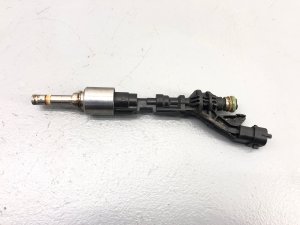
(OEM #LR079542 / C2D24386 (Bosch 0261500298))— A Jaguar TSB specifically identifies restricted fuel injectors as a cause for misfires on this engine, making it a more likely culprit than on other vehicles.
Trusted brands: Bosch (OEM supplier)
OEM price range: $110-$150
Aftermarket price range: $80-$120
Related Codes That Often Appear With This One
- P0300 — If the condition causing the P0307 misfire becomes more severe or is systemic (like a fuel delivery problem or major vacuum leak), it may start to affect other cylinders, leading to a P0300 Random/Multiple Misfire code.
- P0316 — This code indicates a misfire was detected within the first 1,000 engine revolutions on startup. It can appear with any P030x code and helps pinpoint when the misfire is occurring, often pointing towards issues like carbon buildup or weak components that struggle when cold.
- P0207 — This code specifically indicates a fault in the 'Cylinder 7 Injector Circuit'. If seen alongside P0307, it almost certainly confirms the problem is with the fuel injector for cylinder 7 or its wiring, not the ignition system.
Technical Service Bulletins (TSBs) & Recalls
- SSM-63697: Links misfire codes, including P0307, to poor fuel quality or contaminants restricting fuel injectors.
Platform-Specific Known Issues
- TSB #SSM-63697: Jaguar has officially noted that misfire codes (P0301-P0308) on this engine can be caused by poor fuel quality or contaminants restricting the fuel injectors. The TSB requests that faulty injectors be labeled by cylinder and returned for investigation.
- TSB #JTB00533NAS1: This bulletin notes that some cold-start misfires (with coolant temp below 75°C) can be caused by a fuel injection calibration issue, which requires a PCM software update by a Jaguar dealer.
Mechanic-Grade Diagnostic Values
- High-Pressure Fuel System Pressure at Idle — expected: ~970 PSI. Failure: Significant pressure drops under load or inability to maintain idle pressure. This usually affects a whole bank, not just one cylinder.
- Fuel Injector Pulse Width at Idle (via Jaguar SDD) — expected: ~1.14 to ~1.24 ms. Failure: A significant deviation on cylinder 7 compared to others on the same bank.
- Short Term Fuel Trim (STFT) — expected: Close to 0% at idle on a warm engine.. Failure: A consistently high positive percentage (e.g., +10% or more) on the bank containing cylinder 7 could indicate an unmetered air leak (vacuum leak) affecting that cylinder.
Scan Tool Commands That Help
- Jaguar SDD (Symptom Driven Diagnostics): Power Balance Test — After confirming spark and coil are good, this test electronically disables individual cylinders. If disabling cylinder 7 causes no change in engine RPM or smoothness, it confirms that cylinder is not contributing, strongly pointing to a fuel, compression, or mechanical issue.
- Jaguar SDD (Symptom Driven Diagnostics): High Pressure Fuel Pump (HPFP) Test — To verify the functionality of the high-pressure fuel pumps when low fuel pressure codes like P0087 are also present.
Wiring & Ground Locations
- Engine to Body Ground Strap — A braided strap located on the driver's side (US), running from the gearbox/bell housing area to the vehicle's chassis, near the catalytic converter.. This is a primary engine ground. Corrosion or breakage of this strap is common and can cause a wide range of electrical issues, including weak spark, erratic sensor readings, and misfires that are difficult to diagnose.
- Forward Chassis Ground Point — Located in the front driver's side wheel arch, toward the front of the car. Multiple wires connect to a single stud on the chassis.. This ground point is exposed to road spray and is highly susceptible to corrosion. A bad connection here can cause numerous electrical faults. It is known to be fragile and can break off when being inspected.
Real Owner Repair Stories
- Ford F150 Forum / YouTube (2013 Ford F-150 with 5.0L V8 (Coyote, a similar V8 architecture also prone to this issue)) — Check engine light with a single cylinder misfire code (P0308 in this case, but the root cause is applicable).
❌ Tried (didn't work) Replacing spark plugs, Swapping ignition coils, Fuel system cleaning treatments
✅ What actually fixed it The cylinder head was removed and a worn intake valve was discovered. The valve had 'sunk' into the head due to excessive wear on the valve face, causing a loss of compression to 90 PSI while other cylinders were at 160 PSI. The final fix was a valve job on the cylinder head.
OEM Part Supersession History
C2P16489, 8W939F593AD→LR079542 / C2D24386 (Bosch P/N: 0261500298)— Standard part evolution and consolidation across Jaguar Land Rover platforms.
Model Year Variations Within This Range
- 2010-2014 (approx.): Early AJ133 engines used timing chain tensioner guides made of a softer aluminum that was prone to premature wear from the steel tensioner plunger. This was revised around 2015 with guides that had a steel insert to prevent wear. Vehicles in the 2010-2014 range are more susceptible to this timing chain guide failure.
Helpful Videos
Used OEM Parts in Stock
New Aftermarket Parts Available

The information in this article is provided for general reference and educational purposes only. Vehicle specifications, procedures, and part compatibility can vary by production date, trim level, and region. Always consult your vehicle's factory service manual and verify part numbers before purchasing or performing repairs. Safety-critical components such as airbags, seat belts, and braking systems should be installed by a qualified professional.
- Jaguar XK:
- 🧭 Diagnostic Flowchart
- 🎬 Helpful Videos
- 🛍️ Shop This Part
- What's Unique About the 2010-2014 Jaguar XK
- Symptoms You May Notice
- Most Likely Causes
- Rare But Worth Checking
- Diagnosis Steps
- Parts You'll Likely Need
- Related Codes That Often Appear With This One
- Technical Service Bulletins (TSBs) & Recalls
- Platform-Specific Known Issues
- Mechanic-Grade Diagnostic Values
- Scan Tool Commands That Help
- Wiring & Ground Locations
- Real Owner Repair Stories
- OEM Part Supersession History
- Model Year Variations Within This Range
- 🎟️ Get 5% Off