

OBD-II Code P0308: Cylinder 8 Misfire
What P0308 means, why it triggers, and how to fix it
- Code P0308 indicates a misfire in cylinder 8, requiring immediate repair to prevent catalytic converter damage exceeding $1,500.
- Over 80% of P0308 codes stem from a failed ignition coil or a worn spark plug, both of which are DIY-friendly fixes taking under two hours.
- A flashing Check Engine Light means raw fuel is actively melting your catalytic converter; pull over immediately and tow the vehicle.
- Diagnose the issue for free by swapping the cylinder 8 ignition coil with cylinder 6; if the code changes to P0306, replace the coil.
What Does P0308 Mean?
Code P0308 indicates the Powertrain Control Module (PCM) detected cylinder number 8 is failing to fire correctly. This occurs when the air-fuel mixture fails to ignite. The PCM identifies this by tracking momentary slowdowns in the crankshaft's rotation using the crankshaft position sensor.
Technical definition: The official SAE/OBD-II definition for P0308 is "Cylinder 8 Misfire Detected." The PCM identifies a lack of combustion in cylinder 8 by monitoring micro-variations in the crankshaft's rotational speed. The '08' designates cylinder 8 as the fault source.
Can I Drive With P0308?
No — Do Not Drive. Do not drive with an active P0308 code. A misfire dumps unburned fuel into the exhaust, rapidly destroying the catalytic converter and causing severe engine damage. If the Check Engine Light flashes, pull over and shut off the engine immediately to prevent a $1,500 to $3,500 catalytic converter replacement.
Common Causes
- Faulty Ignition Coil (Very Common) — A failed ignition coil is the most frequent cause of a single-cylinder misfire. The coil provides the high voltage required to create a spark; when it fails, cylinder 8 goes dead.
- Worn or Defective Spark Plug (Very Common) — Spark plugs degrade over time and are a primary misfire trigger. A fouled, cracked, or worn spark plug in cylinder 8 cannot generate a spark strong enough to ignite the air-fuel mixture.
- Leaking Valve Cover / Spark Plug Tube Seal (Common) — A leaking valve cover gasket or spark plug tube seal allows engine oil to flood the spark plug well. This oil shorts out the ignition coil and spark plug, causing an immediate misfire.
- Faulty Fuel Injector (Common) — A clogged or electrically failed fuel injector in cylinder 8 starves the cylinder of fuel. This disrupts the precise air-fuel ratio required for combustion.
- Bad Spark Plug Wire (Less Common) — On older vehicles or specific V8s (like GM LS engines), a damaged spark plug wire prevents voltage from reaching the plug. Heat degradation is the primary cause of wire failure.
- Vacuum Leak (Less Common) — A vacuum leak near cylinder 8's intake runner pulls unmetered air into the cylinder. This creates a lean condition, causing a misfire and typically triggering P0171 or P0174 codes simultaneously.
- Low Engine Compression (Rare) — Internal mechanical failures—such as a collapsed lifter, worn piston rings, or a burnt valve—eliminate the compression required for ignition. This requires major engine repair.
- Faulty PCM or Wiring Issue (Rare) — A broken wire, short circuit, or rodent damage in the harness leading to cylinder 8's coil or injector mimics a component failure. PCM failure is the absolute last resort diagnosis.
Symptoms
- Rough Idle and Engine Shaking — The engine runs unevenly and vibrates violently, most noticeably when stopped in gear.
- Loss of Power and Hesitation — The vehicle feels sluggish, jerks, or hesitates during acceleration because cylinder 8 is dead.
- Fuel Smell from Exhaust — You will smell raw gasoline from the tailpipe because unburned fuel is passing straight through the exhaust system.
- Poor Fuel Economy — Gas mileage plummets as the engine runs inefficiently and dumps excess fuel to compensate.
- Engine Ticking or Chirping Noise — On GM AFM/DFM or Ram HEMI V8s, a rhythmic ticking accompanying P0308 indicates a collapsed lifter and worn camshaft.
- Check Engine Light is On or Flashing (also visible on scanner) — A solid light indicates a persistent fault. A flashing light warns of a severe, catalyst-damaging misfire.
Diagnostic Flowchart
Tap your situation to follow the diagnostic path that matches what you're seeing on this code.
Common Fixes & Costs
- Replace Ignition Coil(s) — Parts: $40-$100, Labor: $60-$150, ~1 hr book time (DIY)
- Replace Spark Plugs (Set of 8) — Parts: $40-$120, Labor: $150-$300, ~2 hr book time (DIY)
- Replace Fuel Injector — Parts: $100-$250, Labor: $150-$350, ~2.5 hr book time (Intermediate)
- Replace Valve Cover Gaskets and Tube Seals — Parts: $40-$120, Labor: $200-$450, ~3 hr book time (Intermediate)
- AFM/DFM Lifter and Camshaft Replacement — Parts: $600-$1,500, Labor: $1,800-$3,500, ~22 hr book time (Professional)
Used vs. New Parts: Buying Guide
When a used part is worth it: Buying used ignition coils is a high-risk option reserved strictly for older, high-mileage vehicles where budget is the absolute priority.
Donor-vehicle mileage cap: roughly under 60000 miles for the part to have meaningful remaining life.
Donor quality checklist:
- Buy only from reputable salvage yards providing donor vehicle mileage.
- Reject parts with cracked plastic, corrosion, or heat discoloration.
- Verify the exact OEM part number match.
Decision logic:
- If The cost of a new, premium aftermarket coil is less than one hour of shop labor → buy new. The warranty and reliability outweigh the minor savings.
- If Vehicle is over 150,000 miles and you are performing the repair yourself → a low-mileage used OEM coil is acceptable, but carries a risk of premature failure.
- If You are paying a mechanic for the repair → always buy a new part to avoid paying labor twice when the used part fails.
Warranty tradeoff: Salvage yard parts offer 30-90 day warranties. New aftermarket coils include 1-year to lifetime warranties.
Worst-case if a used part fails: 400-800 if the used part fails, requiring repeat labor and diagnostic fees.
What Happens If You Wait — Timeline
- 0-100 miles: Check Engine Light illuminates. A slight vibration is felt at idle. The misfire is intermittent. (MPG impact: 0-5%% · Added cost: $0)
- 100-500 miles: Rough idle becomes constant. Hesitation during acceleration is obvious. Unburned fuel begins entering the exhaust system. (MPG impact: 5-15%% · Added cost: $20-75 in wasted fuel.)
- 500-1,000 miles (or less if light is flashing): The catalytic converter overheats from raw fuel exposure. The internal ceramic substrate begins to melt. A sulfur 'rotten egg' smell appears. (MPG impact: 15-25%% · Added cost: $1,500 - $3,000 (Catalytic converter replacement required).)
- 1,000+ miles: Catalytic converter melts completely, blocking the exhaust. The engine loses severe power. Backpressure causes burnt exhaust valves or damaged piston rings. (MPG impact: 25-50%+% · Added cost: $3,500 - $7,000+ (Includes converter, sensors, and internal engine repairs).)
Cost of Not Fixing It
- 0-1 Month: Noticeable drop in fuel economy (5-15%), rough idle, and poor acceleration. Automatic emissions test failure. (Added cost: 50-150)
- 1-6 Months: Catastrophic failure of the catalytic converter due to overheating from unburned fuel. (Added cost: 1500-3000)
- 6+ Months: Severe internal engine damage, including washed cylinder walls, damaged piston rings, and burnt exhaust valves. (Added cost: 3500-7000)
Diagnosis Steps
- Read Codes and Freeze Frame Data
Use an OBD-II scanner to confirm P0308 and check for related codes (like P0174 or P0300). Review freeze frame data to see the exact RPM and engine load when the misfire occurred.
Tools: OBD-II Scanner (Beginner) - Visually Inspect Cylinder 8
Locate cylinder 8. Inspect for disconnected wires, cracked vacuum hoses, rodent damage on the harness, or oil pooled in the spark plug well.
Tools: Flashlight (Beginner) - Swap the Ignition Coil
Swap the cylinder 8 ignition coil with cylinder 6. Clear the codes and drive. If the code changes to P0306, the ignition coil is dead and must be replaced.
Tools: Basic hand tools (socket set) (Beginner) - Inspect and Swap the Spark Plug
If the coil swap didn't move the code, remove the cylinder 8 spark plug. Check for worn electrodes, cracked ceramic, or heavy carbon/oil fouling. Swap it with another cylinder to see if the misfire follows.
Tools: Spark plug socket, ratchet, extension (Intermediate) - Test the Fuel Injector
Listen to the cylinder 8 injector with a stethoscope; it should click rapidly. If silent, disconnect the electrical connector and measure the injector's internal resistance with a multimeter (typically 11-18 Ohms). An 'OL' reading means the injector is dead.
Tools: Mechanic's stethoscope, Multimeter (Intermediate) - Perform a Compression Test
If spark and fuel are functional, test the cylinder's mechanical health. Remove the spark plug, insert a compression gauge, and crank the engine. A reading below 100 PSI (or 15% lower than adjacent cylinders) indicates a burnt valve, bad rings, or a collapsed lifter.
Tools: Compression tester gauge (Advanced) - Analyze Live Misfire Data
Use an advanced scan tool to view Mode $06 live misfire counters. Watch cylinder 8 under load. A steadily climbing counter confirms an active misfire, even if you can't feel it in the cabin.
Tools: Advanced OBD-II Scanner (Advanced) - Test Ignition Coil Resistance
If you cannot swap coils, test the primary and secondary resistance using a multimeter. Compare the Ohms reading to the manufacturer's exact specifications. An 'OL' reading indicates an internal break.
Tools: Multimeter, Service Manual (Advanced) - Check Fuel Pressure
Connect a gauge to the fuel rail Schrader valve. Verify pressure meets spec (e.g., 50-60 PSI) with the key on, engine off. Low pressure usually causes P0300, but marginal pressure can affect the furthest cylinder first.
Tools: Fuel Pressure Gauge (Advanced) - Analyze Ignition Waveform
Connect an oscilloscope to the primary ignition circuit. A short spark line or low firing voltage pinpoints a weak coil, fouled plug, or lean condition under load.
Tools: Automotive oscilloscope (Professional) - Perform a Running Compression Test
Test compression while the engine idles. A low snap-throttle reading (failing to reach 80% of static compression) proves a worn camshaft lobe or restricted intake port.
Tools: Compression Tester Gauge (Professional)
When This Code Triggers (Freeze-Frame Conditions)
- Engine Coolant Temp: 180-200°F (Misfire detection is most accurate when the engine is fully warmed up and in closed-loop operation.)
- RPM: 1500-2500 (The misfire is often detected during steady-state cruising or under light acceleration.)
- Engine Load: 30-60% (Moderate engine load allows the PCM to clearly detect crankshaft speed variations.)
- Vehicle Speed: 35-55 mph (Highway cruising speeds provide a stable state, making misfire detection highly reliable.)
Related Codes
- P0300 — Indicates 'Random/Multiple Cylinder Misfire.' If paired with P0308, the issue is systemic (low fuel pressure, massive vacuum leak) rather than isolated to cylinder 8.
- P0301-P0307 — Misfire codes for other cylinders. Seeing these alongside P0308 rules out a single bad coil and points toward a widespread engine problem.
- P0171 / P0174 — Indicates 'System Too Lean.' If P0308 appears with P0174 (Bank 2 Lean), a vacuum leak near cylinder 8 is introducing unmetered air, causing the misfire.
- P0208 — Indicates 'Cylinder 8 Injector Circuit/Open.' The PCM detected an electrical fault in the injector wiring. This narrows the diagnosis directly to the cylinder 8 fuel injector.
Climate & Environmental Factors
- Cold Weather: Cold temperatures thicken engine oil, exacerbating lifter issues in AFM/DFM engines. Weak ignition coils struggle to ignite the dense, cold air-fuel mixture.
- High Humidity: Moisture causes high voltage to arc to the engine block instead of firing the spark plug, especially if coil boots or wires have micro-cracks.
- High Altitude: Thinner air creates a leaner operating environment, making marginal fuel delivery issues or weak sparks more pronounced.
How to Talk to a Mechanic About This Code
Say this: "I have a P0308 code. Please start by swapping the ignition coil and spark plug from cylinder 8 to another cylinder to see if the misfire follows the component. I want to confirm the failed part before replacing anything."
This proves you understand the correct diagnostic process. It prevents the shop from firing the 'parts cannon' and replacing expensive components without confirming the root cause.
Avoid saying:
- 'Just fix whatever's wrong'
- 'My check engine light is on, can you look at it?'
- 'Whatever you recommend'
Questions to ask before authorizing the repair:
- Did the misfire code move to the other cylinder when you swapped the coil?
- If the swap test failed, what were the exact resistance readings on the fuel injector?
- What was the compression reading for cylinder 8 compared to cylinder 6?
- Will you provide the old parts back to me?
- What is the warranty on the parts and labor?
Where to Take It: Dealer vs Independent vs Chain
- Dealer:
Recommended only if you suspect a major internal engine failure (lifters) or if the vehicle is under warranty.
Best for: Vehicles under powertrain warranty, Known manufacturer issues like GM AFM lifter failure or BMW N63 injector coding, Complex PCM reprogramming
Downsides: Highest labor rates ($180-$250+/hr), Strict adherence to replacing entire assemblies rather than individual components (Typical cost: +50% vs. baseline) - Independent Shop:
The best choice for 90% of P0308 cases. They can easily diagnose and repair coils, plugs, and injectors at a fair price.
Best for: Out-of-warranty vehicles, Standard diagnostics (coils, plugs, injectors, compression tests), Cost-effective major repairs
Downsides: Quality varies; vetting via ASE certifications and reviews is mandatory, May lack proprietary software for European injector coding (Typical cost: +0% vs. baseline) - Chain Shop:
Avoid for initial diagnosis. Acceptable only if you have already pinpointed the exact failed component yourself.
Best for: Pre-diagnosed part replacements (e.g., 'Replace the cylinder 8 coil'), Basic fluid maintenance
Downsides: High pressure to upsell unnecessary fuel system flushes, Inconsistent diagnostic skills for complex misfires (Typical cost: -10% vs. baseline)
When to Walk Away From the Repair
If the estimated repair cost exceeds 50% of the vehicle's private-party value, seriously consider selling or trading in the vehicle.
- Car worth $8000, fix is $250: Fix it. The repair is 3% of the vehicle's value.
- Car worth $8000, fix is $4000: Borderline. Get a second opinion before authorizing.
- Car worth $3500, fix is $3500: Walk away. The repair equals the car's value.
What Scan Tool You Need for This Code
Minimum: An OBD-II scanner that reads codes, clears codes, and displays live Mode $06 misfire data.
A $20 code reader only confirms P0308 exists. It cannot display live misfire counters, which are mandatory to verify if swapping a coil actually moved the misfire to a new cylinder.
Budget: BlueDriver Pro / Ancel BD310 (~$60-100) — Pairs with a smartphone to graph live cylinder-specific misfire counts. This is the perfect tool for DIYers to confidently diagnose a bad coil or plug.
Mid-range: Foxwell NT510 Elite / XTOOL A30D (~$150-250) — Offers limited bidirectional controls, allowing you to command the cylinder 8 fuel injector on and off to test it electronically.
Professional: Autel MaxiCOM MK808BT / Launch X431 CRP919XBT (~$450-600) — Provides full bidirectional controls for cylinder balance tests and advanced coding required for replacing injectors on European vehicles.
Rent vs buy: Auto parts stores read codes for free, but their basic readers lack live misfire data. Buying a $100 Bluetooth scanner pays for itself by preventing one misdiagnosed part replacement.
How to Clear the Code After You Fix It
- Use an OBD-II scan tool to clear the P0308 code.
- Perform a complete OBD-II drive cycle to allow the readiness monitors to run.
- Do not disconnect the battery; this resets all vehicle memory and delays emissions readiness.
Drive cycle (~30 minutes): Start cold. Idle for 3 minutes. Drive at a steady 55 mph for 10 minutes. Accelerate from 40 mph to 65 mph several times. Coast down to 20 mph without braking. Allow the vehicle to cool completely (8+ hours).
Readiness monitors affected: Misfire Monitor, Catalyst (CAT) Monitor, Oxygen (O2) Sensor Monitor, Evaporative (EVAP) System Monitor
Before emissions retest: drive at least 100 miles to fully set monitors.
Watch out for:
- The code returns immediately if the underlying mechanical or electrical fault was not repaired.
- Clearing the code right before an emissions test results in an automatic failure due to 'Not Ready' monitors.
Will This Fail Emissions / State Inspection?
Yes — this code typically fails an OBD-II emissions inspection.
- California: P0308 is an automatic failure. CARB requires all OBD readiness monitors to be 'Ready' post-repair, requiring extensive drive cycles.
- New York: The NYVIP3 program automatically fails any vehicle with an active P0308 code.
- Texas: An illuminated MIL and stored P0308 code causes an immediate failure during the county OBD inspection.
Most Commonly Affected Vehicles
- Chevrolet/GMC Silverado, Sierra, Tahoe, Yukon (2007-2024) — On 2014-2024 5.3L & 6.2L engines with Active/Dynamic Fuel Management (AFM/DFM), a persistent P0308 strongly indicates a collapsed valve lifter requiring camshaft replacement.
- Ford F-150, F-250/F-350 Super Duty, Mustang (2004-2023) — Failed coil-on-plug ignition coils are the primary cause. On the 7.3L 'Godzilla' V8, TSB 22-2257 addresses misfires caused by lifter and camshaft wear.
- Dodge/Ram 1500/2500 (5.7L HEMI V8) (2009-2024) — HEMI engines use two spark plugs per cylinder; both must be replaced. A persistent P0308 with a ticking noise indicates a failed MDS lifter ('Hemi tick').
- Nissan Titan, Armada (2004-2023) — On the 5.6L Endurance V8, P0308 is usually traced to a failing ignition coil. Cylinder 8 is difficult to access against the firewall, leading to deferred maintenance.
- Toyota Tundra, Sequoia (2007-2021) — The i-FORCE 5.7L V8 experiences P0308 primarily due to aged ignition coils or spark plugs. Failing fuel injectors are a secondary cause.
- BMW 5-Series, 7-Series, X5, X6 (N63 Engine) (2008-2019) — The N63 V8 is notorious for P0308 caused by failing fuel injectors or valve cover oil leaks. BMW issued Bulletin B001314 to address these widespread failures.
Manufacturer-Specific Notes
- General Motors (Chevrolet/GMC): On V8s with AFM/DFM, a P0308 that survives a coil and plug swap is almost always a collapsed valve lifter. This requires removing the cylinder heads to repair.
- Ford: Older 3-valve 5.4L V8s have spark plugs that break off in the cylinder head during removal. Modern 7.3L V8s have a TSB for camshaft delamination causing misfires.
- Chrysler/Dodge/Ram: HEMI V8s require two spark plugs per cylinder. TSB #18-006-24 updates overly sensitive PCM software that falsely triggers misfire codes on 2019-2021 models.
- BMW: Replacing a fuel injector on the N63 V8 requires coding the new injector's flow rate into the DME (engine computer) using an advanced scan tool.
Real Owner Stories
2020 Chevrolet Silverado 1500 with 30,000 miles
While driving, the check engine light began flashing, and an OBD-II scan revealed code P0308.
What they tried:
- Owner immediately feared the notorious GM lifter failure and considered selling the truck.
Outcome: Forum members advised starting with simple diagnostics. Swapping the ignition coil proved the coil was dead. A $60 replacement fixed the truck entirely.
Lesson: Never assume the worst-case scenario (like lifter failure) without ruling out a basic $60 ignition coil first.
2008 Ford F-150 4.6L with over 200,000 miles
Truck ran rough and threw P0308 alongside a lean code (P0174).
What they tried:
- Replaced ignition coils on cylinders 1 and 8 - misfire remained.
- Replaced spark plugs on cylinders 3 and 8 - misfire remained.
- Performed a smoke test to check for vacuum leaks - no leaks found.
Outcome: With spark and air leaks ruled out, the owner replaced the cylinder 8 fuel injector. This completely resolved the rough running and cleared all codes.
Lesson: When P0308 pairs with a lean code (P0174), it strongly points to a failing fuel injector starving the cylinder of fuel.
2006 Ram 1500 with 245,000 miles
Engine had a P0308 misfire and a loud, rhythmic ticking sound.
What they tried:
- Changed the spark plug - no improvement.
- Swapped ignition coils - the misfire stayed on cylinder 8.
Outcome: The owner removed the valve cover and found a rocker arm had fallen off due to a collapsed hydraulic lifter. The valve could not open, causing the misfire and the tick.
Lesson: A misfire code accompanied by a distinct ticking sound on a high-mileage V8 is a definitive indicator of valvetrain failure.
2011 Ram 1500 Hemi with 357,000 km
Truck ran rough with a P0308 code, worse when cold.
What they tried:
- Replaced spark plugs - no change.
- Swapped ignition coil - code remained P0308.
- Replaced fuel injector - no change.
Outcome: Before tearing down the engine for a suspected lifter failure, the owner inspected the wiring harness and found rodent damage on the injector wiring. Repairing the wire fixed the misfire.
Lesson: If the coil, plug, and injector are good, visually inspect the wiring harness for physical damage before authorizing internal engine repairs.
How to Prevent This Code From Triggering
- Replace spark plugs at the manufacturer's recommended interval (Every 60,000-100,000 miles) — Worn spark plugs have wider gaps, forcing the ignition coil to work harder. This extra strain overheats and destroys the coil prematurely.
- Perform regular oil changes with specified synthetic oil (Every 5,000-7,500 miles) — Clean oil is critical for hydraulic valve lifters, especially in AFM/DFM/MDS engines. Dirty oil causes lifter collapse, a major mechanical cause of P0308.
- Use Top Tier gasoline and a fuel system cleaner (Every fill-up (Top Tier); every 10,000 miles (cleaner)) — Detergents prevent carbon deposits from clogging fuel injectors, ensuring a proper spray pattern and preventing lean misfires.
- Address valve cover oil leaks immediately (During routine visual inspections) — Leaking gaskets allow oil to flood the spark plug tubes, shorting out the ignition coil and causing instant misfires.
Frequently Asked Questions
What does the '08' in P0308 mean?
The last two digits identify the specific misfiring cylinder. In this case, '08' points directly to cylinder number 8.
Where is cylinder 8 located?
On most Ford, GM, and Dodge V8s, cylinder 8 is the rearmost cylinder on the passenger side. Always verify with a cylinder diagram specific to your exact engine.
Is it safe to drive with a flashing check engine light?
No. A flashing light means raw fuel is actively melting your catalytic converter. Pull over immediately to prevent a $2,000 repair bill.
I replaced the spark plug and coil, why is the P0308 code still there?
You must manually clear the code with a scanner. If it returns, the issue is likely a clogged fuel injector, a vacuum leak, or a mechanical failure like low compression.
Can a bad O2 sensor cause a P0308 code?
No. A bad O2 sensor affects an entire bank of cylinders and triggers fuel trim codes, not a single-cylinder misfire code.
Should I replace all my spark plugs if only one is bad?
Yes. Spark plugs wear evenly; if one failed, the rest are near the end of their lifespan. Replacing the set prevents future misfires.
Can bad gas cause a P0308 code?
Bad gas affects the entire engine and triggers a P0300 (Random Misfire) code, not an isolated P0308 code.
What is the most common misdiagnosis for P0308?
The most common mistake is blindly replacing parts without testing. Always swap the ignition coil to another cylinder first to confirm it is actually dead.
Key Takeaways
- Code P0308 indicates a misfire in cylinder 8, requiring immediate repair to prevent catalytic converter damage exceeding $1,500.
- Over 80% of P0308 codes stem from a failed ignition coil or a worn spark plug, both of which are DIY-friendly fixes taking under two hours.
- A flashing Check Engine Light means raw fuel is actively melting your catalytic converter; pull over immediately and tow the vehicle.
- Diagnose the issue for free by swapping the cylinder 8 ignition coil with cylinder 6; if the code changes to P0306, replace the coil.
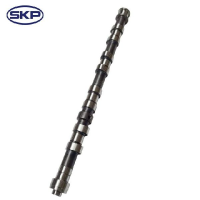
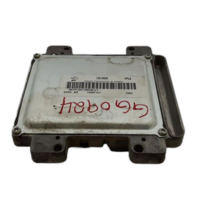
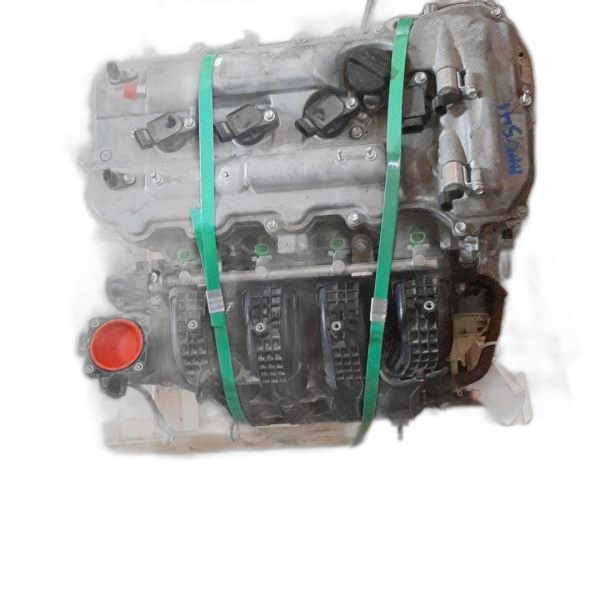
Shop the Parts Behind P0308
Below are the parts most often responsible for code P0308, ranked by how frequently each one is the actual culprit (per the diagnosis above). Tap any to see what we have for your vehicle.









The information in this article is provided for general reference and educational purposes only. Vehicle specifications, procedures, and part compatibility can vary by production date, trim level, and region. Always consult your vehicle's factory service manual and verify part numbers before purchasing or performing repairs. Safety-critical components such as airbags, seat belts, and braking systems should be installed by a qualified professional.
- 🧭 Diagnostic Flowchart
- 🛍️ Shop This Part
- What Does P0308 Mean?
- Can I Drive With P0308?
- Common Causes
- Symptoms
- Common Fixes & Costs
- Used vs. New Parts: Buying Guide
- What Happens If You Wait — Timeline
- Cost of Not Fixing It
- Diagnosis Steps
- When This Code Triggers (Freeze-Frame Conditions)
- Related Codes
- Climate & Environmental Factors
- How to Talk to a Mechanic About This Code
- Where to Take It: Dealer vs Independent vs Chain
- When to Walk Away From the Repair
- What Scan Tool You Need for This Code
- How to Clear the Code After You Fix It
- Will This Fail Emissions / State Inspection?
- Most Commonly Affected Vehicles
- Manufacturer-Specific Notes
- Real Owner Stories
- 2020 Chevrolet Silverado 1500 with 30,000 miles
- 2008 Ford F-150 4.6L with over 200,000 miles
- 2006 Ram 1500 with 245,000 miles
- 2011 Ram 1500 Hemi with 357,000 km
- How to Prevent This Code From Triggering
- Frequently Asked Questions
- What does the '08' in P0308 mean?
- Where is cylinder 8 located?
- Is it safe to drive with a flashing check engine light?
- I replaced the spark plug and coil, why is the P0308 code still there?
- Can a bad O2 sensor cause a P0308 code?
- Should I replace all my spark plugs if only one is bad?
- Can bad gas cause a P0308 code?
- What is the most common misdiagnosis for P0308?
- Key Takeaways
- 🎟️ Get 5% Off